
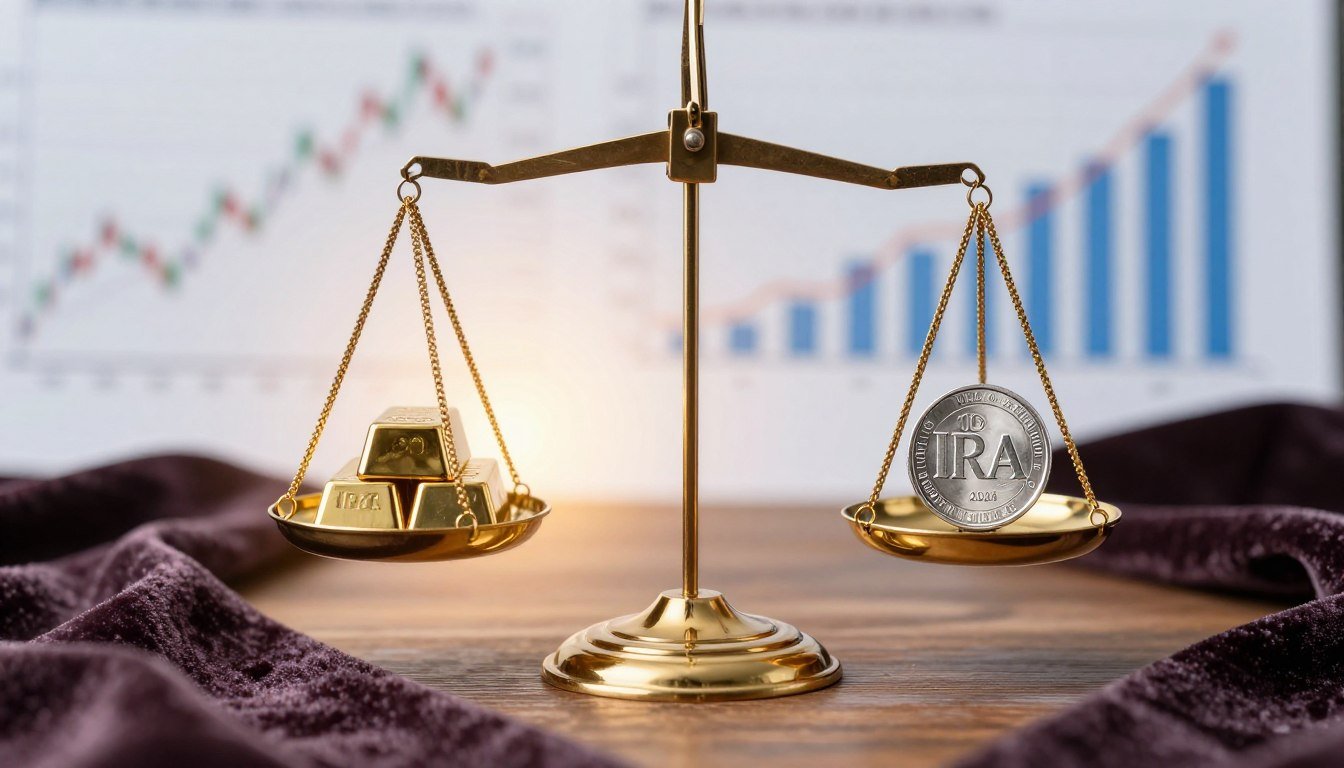
Last winter, a retired teacher told me she bought a small handful of coins after watching prices climb. She said she wanted protection and a shot at upside, not just safety. That choice started a conversation about what retirement assets should do: defend value or chase growth.
This piece looks at the practical trade-offs between a gold IRA and a silver IRA for U.S. investors in 2026. Recent gains pushed precious metals to record levels, with one metal up about 70% and the other over 125% last year. Those moves matter, but they are context, not a guarantee.
We’ll offer a no-hype roadmap: how physical iras work, what gets stored, why fees bite, and how time horizon and risk tolerance shape the right mix for retirement goals.
For a deeper look at the performance backdrop and what drove the big moves, see this concise recap.
Key Takeaways
- Recent market strength made both metals prominent choices for retirement planning.
- Gold often shields value; silver can amplify upside in bull runs.
- Decisions hinge on time horizon, fees, and how each metal fits your portfolio role.
- Physical storage, liquidity, and costs matter as much as price moves.
- The article gives a practical, U.S.-focused comparison to help investors decide.
Read the market recap for the data that frames this discussion.
Why precious metals are back in retirement planning for 2026
As headline risks mount, more investors are asking how precious metals could steady a retirement plan. Persistent inflation and rising federal debt have nudged these assets back into mainstream conversations. For many savers, the appeal is practical: a portion of savings that can hold value when stocks wobble.
Economic uncertainty tailwinds: inflation, federal debt, and “safe-haven” demand
Ongoing inflation and large government debt levels have increased safe-haven demand. When headlines turn negative, investors often reweight toward holdings that historically resist erosion of value.
What recent price action signals: gold up about 70% vs. silver up over 125%
Strong performance this year—one metal up ~70% and the other up over 125%—shows both sentiment and scarcity at work. That kind of rally signals investor interest, not guaranteed future gains.
- Stabilizing role: a measured allocation can help smooth retirement balances during downturns.
- Growth potential: higher volatility can offer bigger upside but adds short-term swings.
| Driver | Effect on demand | Implication for retirement |
|---|---|---|
| Inflation | Raises interest in precious metals | Helps preserve purchasing value |
| Supply constraints | Pushes prices higher | Can amplify portfolio gains |
| Market sentiment | Boosts speculative flows | Increases short-term volatility |
Bottom line: 2026 favors diversification over prediction. If your tolerance for risk is low, prioritize steady value. If you seek growth and accept swings, the demand dynamics may reward patience.
How a gold IRA and silver IRA actually work in the United States
Retirement savers who want a non‑traditional cushion often ask how precious metal holdings function inside an individual retirement account. A clear view of structure and steps helps you weigh benefits and costs before committing funds.
What a self-directed account means
A self-directed IRA lets you hold physical metals instead of the usual stocks and bonds held in many retirement account platforms. You still get the tax advantages of an individual retirement plan, but you choose alternative assets rather than mutual funds or equities.
The custodian and storage chain
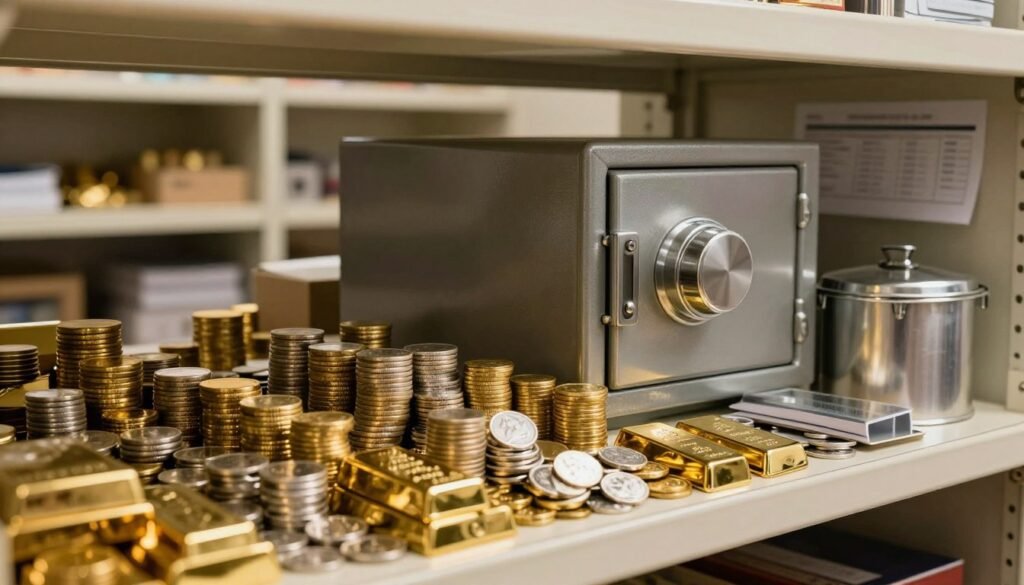
The account must be administered by an approved custodian. The custodian coordinates purchases and arranges for a qualified depository to store and insure the coins and bars. You cannot keep the metal at home if it sits in the retirement account.
Physical ownership rules and approved coins
- Ownership: the IRA owns the metal; you hold title through the account.
- Approved items: only coins and bars that meet fineness and eligibility rules qualify—collectibles often do not.
- Operational needs: storage and insurance are recurring costs that affect net returns and differ by metal because of per‑ounce value and volume.
Practical trade-offs
The tax‑advantaged structure can be a powerful benefit, but expect contribution limits and timing constraints on liquidations. Plan around those limits so volatility in prices does not force a rushed sale.
Gold IRA in 2026: the case for stability and wealth preservation
In 2026, some advisors argue that a low-volatility metal can serve as quiet insurance inside a retirement vehicle.
Why investors lean on a stable store of value when markets feel stretched
When headlines spike, many investors seek calm. Gold often acts as portfolio insurance, limiting drawdowns instead of chasing big short-term gains.
Deric Ned of GSE Retirement Services highlights federal debt and inflation as factors that amplify demand for a monetary safe-haven.
“For savers within 10–15 years of retirement, preserving purchasing power matters more than chasing upside.”
Who this approach fits best
If your retirement date is near, lower volatility reduces the chance you’ll sell at a loss during a panic. Jeff Clark and other experts point out that some metals swing far more, making steady value attractive.
| Role | Benefit | Retirement fit |
|---|---|---|
| Stabilizer | Controls drawdowns | Near-term horizon (10–15 years) |
| Value store | Preserves purchasing power | Income-focused goals |
| Portfolio buffer | Offsets stock volatility | Broad asset mix |
Silver IRA in 2026: the case for growth potential and accessibility
A lower per‑ounce entry point makes this commodity appealing for savers who want exposure to upside without waiting to amass a large balance.
Why growth matters: The metal tends to move more sharply in bull markets, delivering pronounced gains when momentum builds. That higher volatility can be a feature, not a flaw, for investors with time and discipline.
Why it can outperform in bull markets
Because swings are larger, returns can be magnified during rallies. Jeff Clark notes that these dynamics often let small positions participate in outsized moves.
Demand catalysts and industrial links
Supply constraints and steady industrial demand create a fundamentals-plus-momentum setup. Renewed interest from buyers and a real-world need in manufacturing help push silver prices faster than many expect.

Accessibility is real: a lower ounce price makes it easier for new accounts to diversify sooner. Still, performance cuts both ways.
Caution: This approach is not a quick bet. The goal is a measured allocation that aims for growth while respecting volatility and a planned liquidation window for retirement assets.
Silver vs Gold IRA: head-to-head comparison on the metrics that matter
A focused comparison on volatility, price, liquidity and role clarifies what each metal can do for a saver.
Volatility and drawdowns
Volatility matters because it shapes real account swings. Deric Ned notes silver can move two to three times more wildly than gold, which means bigger rallies and deeper dips.
That extra swing requires emotional discipline, clear rebalancing rules, and a time plan so short-term drops do not force poor decisions.
Per-ounce price and entry point
Per ounce costs shape accessibility. A lower ounce price lets smaller accounts buy more units and gain exposure quickly. Gold concentrates value into fewer ounces and less physical space.
Liquidity and selling flexibility
Liquidity is about ease of conversion to cash. Working with a custodian and approved depository, investors sell certified coins or bars, accept spreads, and plan for settlement timing.
Role in a portfolio and timing
Gold leans toward stability and value preservation. Silver tilts toward growth potential and higher volatility. With records above $4,500 per ounce for gold and $75 for silver, momentum may persist, but allocation and plan beat timing attempts.
Decide what you want the metal to do—protect or grow—and align choice with your time horizon and goals.
Costs and logistics that can make or break your returns
Fees and storage logistics quietly eat returns when physical metals sit in a retirement account. Small recurring charges add up, and execution matters as much as market direction.
Storage space realities
Concrete point: lower per ounce price means you need more physical volume to hold equal value. That translates into higher storage needs for silver compared with gold.
More volume can push you into higher storage tiers and raise the storage fees that a custodian passes along. For modest account balances, those extra storage costs can be surprisingly material.
Fee stack to plan for
Expect a setup fee, annual custodian charges, storage tiering, insurance, and transaction spreads when buying or selling coins. These recurring items are the “silent return killer” for many investors.
Choosing a custodian and storage provider
Prioritize transparency: clear fee schedules, reputable history, and explicit insurance limits. Ask about storage type, coverage amounts, and who handles claims.
Good execution reduces risk and lets the diversification benefits show up in net results.
| Item | What to check | Why it matters |
|---|---|---|
| Setup & annual fees | Exact amounts and billing | Direct impact on long-term costs |
| Storage & insurance | Tier, location, coverage limits | Protects assets and affects pricing |
| Transaction spreads | Buy/sell markups | Reduces realized gains |
How to decide your 2026 allocation between gold and silver inside an IRA
Deciding how much of your retirement to place in precious metals starts with a clear statement of what you want those holdings to achieve.
Match the metal to your goals
Stability: tilt toward gold for steadier value and lower short-term swings.
Growth: favor silver for higher upside potential if you can tolerate volatility.
Inflation or diversification: use both to hedge different shocks and round out the portfolio.
Time horizon and liquidation timing
If you may need cash sooner, prioritize smoother price behavior. Longer time lets investors seek bigger potential with more volatile metal.
Warning: poorly timed exits can erase gains—silver may lag when gold rises, so plan liquidation windows carefully.
Practical allocation ranges
Experts commonly recommend keeping precious metals to about 10% of total assets. Within that sleeve, choose a split you can hold through cycles.
| Allocation | Profile | When to use |
|---|---|---|
| 70% gold / 30% silver | Conservative balance | Near retirement, lower risk |
| 50% / 50% | Balanced approach | Mid time horizon, mixed goals |
| 30% gold / 70% silver | Aggressive growth | Long time horizon, higher risk |
Brett Elliott of APMEX notes both metals can be held and balanced. For more on account mechanics and planning, see understanding how a gold IRA works.
Conclusion
Conclusion
A clear, repeatable plan wins over headline chasing. Decide whether precious metals serve your retirement as stability or growth. Gold tends to offer steadier behavior; silver can offer bigger upside but with higher swings. Both metals reflect changing demand and prices at record levels, so be realistic about outcomes.
Remember operational reality: reliable storage, transparent costs, and timely liquidity matter. Those details affect net value as much as market moves.
Many investors find balance more useful than an either/or choice. Use modest allocations inside iras, set target splits like a 10% metals sleeve, and document time horizon and exit rules.
For 2026, define a target allocation, track fees, and follow rebalancing rules. Stick to the plan and you give your retirement the best chance to meet its goals.