
Category: Blog

  • SEP Gold IRA: How Business Owners are Protecting Profits with Precious Metals

    SEP Gold IRA: How Business Owners are Protecting Profits with Precious Metals

    When a small shop owner in Ohio watched a market crash erase a year of retained earnings, she vowed to find a steadier way. She moved part of her nest egg into a retirement structure that holds physical metals, under strict custodian and storage rules. That move changed how she thought about profits and long-term planning.

    This article frames a SEP approach aimed at U.S. owners who want to shield retirement outcomes while staying tax-aware and practical. You’ll learn that these accounts require an approved custodian, IRS-approved metals, and a secure depository instead of storing items at home.

    We will evaluate providers, explain the rules you can’t ignore, and offer a clear decision checklist. Expect head-to-head comparisons of well-known firms like Augusta and Birch, plus honest guidance on fees, service, and minimums.

    Key Takeaways

    • SEP structures let owners hold precious metals under IRA rules with custodian custody.
    • Physical gold must be IRS-approved and kept in an approved depository.
    • Compare fees, service, and minimums before committing capital.
    • We provide a checklist of rules, storage realities, and provider comparisons.
    • The goal is resilience for retained earnings and long-term retirement planning.

    Why business owners are adding physical gold to retirement accounts in today’s economy

    Faced with volatile markets and tightening margins, many entrepreneurs now consider adding a real-asset layer to their retirement accounts.

    Inflation and input-cost uncertainty make idle cash feel risky. When materials and wages climb, retained earnings and retirement balances can lose buying power fast.

    Inflation pressure and market volatility

    Owners report stress when equities whip back and forth and payroll waits on one good quarter. A portion of capital placed into gold can act as a stabilizer that does not move in lockstep with stocks bonds.

    Diversification without losing tax advantages

    Physical gold inside a properly structured gold ira or other iras offers tangible exposure while staying inside familiar retirement rules. It is a real-asset diversifier, not a guaranteed shield — prices can still shift.

    Practical takeaway: Treat metals allocation as a risk-management option tied to time horizon and cash flow. This keeps strategy steady and avoids headline-driven bets.

    What a SEP Gold IRA is and how it works for self-employed owners and small teams

    A SEP can add a practical layer to retirement planning by letting owners combine employer-style contributions with a self-directed sleeve that holds tangible assets.

    SEP basics versus Traditional and Roth accounts

    SEP stands for Simplified Employee Pension. It lets an owner make employer contributions on behalf of eligible staff. This structure suits solo practitioners and compact teams who want higher contribution flexibility.

    Traditional accounts are generally tax-deferred, meaning taxes apply on withdrawal. Roth accounts are taxed up front and can offer qualified tax-free withdrawals. Mapping a gold ira choice to either path depends on whether you prefer upfront or deferred tax treatment.

    How self-direction allows hold of precious metals

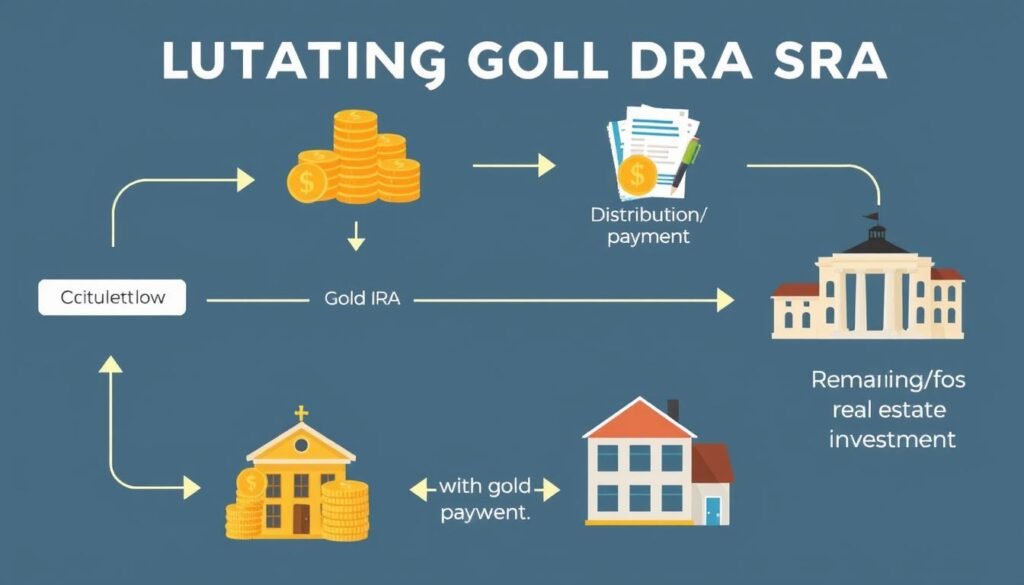
    A self-directed structure allows hold of precious metals instead of only stocks and funds. The key unlock is a custodian that supports physical products and an approved depository for storage.

    • Choose a custodian that accepts SEP setups.
    • Fund the account via contribution, transfer, or rollover.
    • Select IRA-approved metals and confirm storage at an approved depository.

    Remember: this remains an ira with contribution and distribution rules. The power is real, and so are the rules—next we’ll detail the compliance items you cannot skip.

    Gold IRA rules you can’t ignore as a business owner

    Clear compliance rules separate a smart retirement plan from a costly mistake.

    The first non-negotiable: you must work with a qualified custodian. The custodian owns the account title, executes purchases, and logs transactions. You cannot take personal possession of account metals — no garage safe, no private vault under your name.

    Custodian role and possession limits

    The custodian handles paperwork, transfers, and distributions. This role protects tax status and enforces IRA rules. Keep custodian confirmations and invoices with your records.

    IRS metal standards made simple

    Metals must come from approved refineries and meet fineness rules (commonly 99.5%+ for bullion). Collectible pieces often fail these standards and can be rejected.

    Which coins and bars commonly qualify

    Typical eligible items include widely recognized bullion coins and bars that meet purity and mint approvals. Coins and bars each have pros: coins can be easier to sell; bars often carry lower premiums.

    Storage and the role of approved depositories

    Storage must be in IRS-approved, insured facilities like Delaware Depository. Segregated storage, insurance, and controlled access protect compliance and resale value.

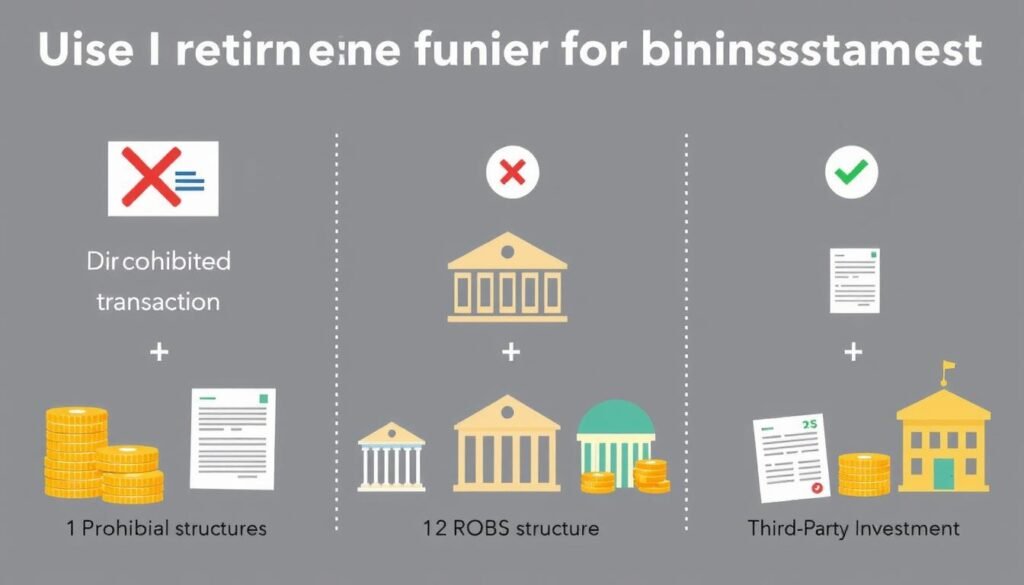
    • Non-negotiables: custodian, no personal possession, approved storage.
    • Keep invoices, custodian statements, product specs, and depository records to document every step.

    Gold IRA for small business: the decision checklist before you open an account

    Before you commit capital, run a short checklist that protects payroll and preserves runway.

    Start with cash stability. Confirm you have emergency reserves and enough operating cash. Do not fund retirement buys with money needed this quarter. That simple step avoids liquidity shocks.

    Cash flow reality check: minimums, timelines, and liquidity expectations

    Expect higher setup and storage fees than paper alternatives. Onboarding can take weeks and minimum purchase rules may apply. Selling is possible, but it rarely matches ETF speed. Model the long-term cost impact before you act.

    How to align metals allocation with your retirement time horizon

    Longer horizons let physical holdings smooth volatility. Short horizons favor liquid ETFs or equity exposure inside retirement accounts. Pick an allocation that matches your exit timeline and payroll needs.

    When a physical-retirement account fits better than ETFs or stocks

    Physical ownership gives tangible assets; ETFs and stocks are cheaper and easier to trade. Ask providers for a full fee schedule—setup, annual, storage, and insurance—and run a five-year cost model.

    Feature Physical account ETFs Gold stocks
    Fees Higher (storage, insurance) Low (management fees) Variable (broker commissions)
    Liquidity Moderate (sale + shipping) High (trade instantly) High (market-traded)
    Ownership Physical metals in custodial vault Paper claim to metal Company equity
    Income No dividends No dividends Possible dividends

    Decide strategy before product. If you plan to open gold ira, contact providers with clear questions and compare total cost over time. For context on balances and retirement planning, see an average IRA balance by age review.

    How we evaluated the best gold IRA companies for business owners

    We ranked providers by practical signals that matter to owners: trust, clear pricing, and smooth execution.

    Reputation and trust filters

    Better Business Bureau and Business Consumer Alliance ratings formed the first cut. High ratings and few unresolved complaints signal steady operations.

    Fee transparency and the true cost stack

    We broke fees into setup fee, annual custodian/admin fee, storage, and insurance. Cheap upfront offers often mask annual charges that erode returns.

    Minimums, service, and product depth

    Minimum purchase rules exclude many owners. We scored companies by who they serve and by the ease of account setup and rollovers.

    Customer service expectations and storage partners

    Top firms handle rollovers precisely, update timelines proactively, and fix paperwork quickly. We also checked depository ties, insurance practices, and fulfillment reliability.

    Scoring mindset: owners want clarity and execution. Our method favors ira companies that pair strong reputation with clear fees, robust product options (gold silver plus platinum and palladium), and dependable storage partners.

    Best overall experience for hands-on guidance: Augusta Precious Metals

    Augusta Precious Metals targets owners who want guided expertise and long-term stewardship of physical retirement holdings.

    Who it fits: larger deposits and people who value white-glove support over a DIY path. The firm markets a structured, education-first approach and a dedicated team that stays with your account.

    Key facts to self-qualify: there is a $50,000 minimum. Saying this up front helps owners decide quickly and avoid wasted time.

    • Fee snapshot: a one-time $50 custodian application, about $125 annual custodian/admin, and roughly $100 annual storage. Confirm current numbers before funding.
    • Service model: lifetime account support, educational materials, and a consultative sales and operations team.
    • Operational note: setup normally involves custodian + dealer + depository, so coordinated support can cut friction.

    “Augusta Precious places emphasis on coaching and clarity, not just product moves.”

    In short, augusta precious metals is the high-guidance option for owners with substantial capital who want confidence and hands-on help, not a lowest-cost entry. Review the stated fees and timeline before you commit.

    Best for transparency and cost clarity: Birch Gold Group

    For owners who want fees spelled out before they fund an account, Birch Gold Group simplifies the math.

    Why it fits: birch gold group publishes flat fees and clear minimums online. The commonly cited entry point is $10,000. That threshold helps owners plan cash flow and avoid surprises during setup.

    Fee and product snapshot

    Typical fee components listed include a $50 setup, about $125 management, and roughly $100 for storage and insurance. Ask for a written fee schedule before you fund an account.

    Product breadth and trust

    birch gold offers gold, silver, platinum, and palladium in coins, bars, and rounds. That range gives practical options depending on resale and cost goals.

    Feature Detail Why it matters
    Minimum $10,000 Helps owners model cash impact
    Fees $50 setup / $125 management / $100 storage Flat structure reduces surprise charges
    Ratings BBB A+; BCA AAA Trust anchors during due diligence

    Practical tradeoff: flat fees bring clarity but can feel heavy on smaller balances. Compare projected fee drag against account size before deciding.

    Best for first-time business owners opening a precious metals IRA: Goldco

    Starting a precious-metals account can feel overwhelming. Goldco positions itself as a friendly on-ramp by removing a common barrier: there is no minimum purchase requirement. That makes phased investing practical for owners who prefer to test the waters before committing large sums.

    Why it stands out: the lack of a minimum helps owners move in slowly. Goldco also emphasizes buy-back programs, which give a clearer exit and easier rebalancing when liquidity matters.

    Typical fees to confirm: expect a roughly $50 account setup, about $125 annual administration, and $100–$150 in storage and insurance depending on storage choice. Always ask for a written, all-in fee schedule before funding.

    Tradeoffs and service notes

    The product mix focuses on gold and silver rather than a wide slate of precious metals. That narrower scope suits owners who want core exposure but may disappoint strategies seeking platinum or palladium options.

    Customer service is the make-or-break factor for first-timers. Clear guidance on rollover paperwork, timelines, and next steps reduces mistakes and speeds setup. Ask potential providers how they handle rollovers and buy-back requests.

    • Accessibility: no minimum purchase requirement eases entry.
    • Liquidity confidence: strong buy-back emphasis.
    • Confirm: full fee list and BBB A+/BCA AAA references when you compare providers.

    “Accessibility and clear buy-back paths can make the first step less risky for owners.”

    Best for experienced investors who want flexible rollover support: American Hartford Gold

    Experienced investors often pick firms that move rollovers quickly and cleanly, cutting friction and preserving capital.

    Who it fits: owners and investors who already understand retirement mechanics and want efficient rollover execution rather than heavy onboarding education.

    Fee snapshot: tiered annual IRA fees make costs scale with value — roughly $75 for accounts at $100,000 or less and about $125 for accounts above $100,001. Typical storage runs near $100 annually but can vary by depository.

    Minimum purchase commonly cited is $10,000. That helps experienced owners decide if consolidation or a new account matches their funding plan.

    Why the rollover edge matters

    Speed and accuracy reduce tax risk and operational drag. American Hartford Gold emphasizes fewer document iterations and clearer timelines.

    Ask these questions:

    • How do storage fees change by depository?
    • What insurance coverages apply to my account?
    • How many steps are in a typical rollover and who manages each step?

    “If you value flexibility and process efficiency over classroom-style guidance, this provider deserves a close look.”

    Feature Detail Why it matters
    Tiered annual fee $75 ( $100k) Scales fairly as account value grows
    Minimum $10,000 Aligns with consolidation strategies
    Rollover support Fast, document-light process Reduces time and tax paperwork errors
    Storage ~$100/yr (varies) Confirm depository and insurance details

    Best educational tools for planning contributions and distributions: American Bullion

    American Bullion positions itself as an education-first partner for owners who want to understand the why before they allocate capital.

    Practical planning tools: guides, step-by-step retirement calculators, and concise explainers help map contributions and distributions to business cash flow. These tools reduce errors that can cost time and taxes.

    Custody and security at a glance

    The process keeps a qualified custodian coordinating purchases while an insured depository handles holding and access. Metals are kept at Delaware Depository with 24/7/365 monitoring, which reassures owners who value operational controls.

    Fees, service, and value

    Typical costs cited: a $25 setup fee and roughly $160 annual account charge. Compare that annual fee to the value of education; guided planning can prevent compliance mistakes that cost far more.

    “Education and clear tools can change a hesitant plan into a disciplined strategy.”

    • Check customer service channels (phone and email) and test responsiveness before you commit.
    • Confirm custodian duties, storage terms, and the depository’s monitoring practices in writing.
    • Use calculators to model contribution schedules and distribution timing against payroll needs.

    Best customer service when you want a high-touch team: Monetary Gold

    When paperwork deadlines and multiple custodians collide, a concierge team can save hours and reduce risk.

    Monetary Gold positions itself for owners who value rapid, human guidance. The firm holds BBB A+ and BCA ratings and offers concierge-style availability to help coordinate transfers and multiple accounts.

    Support promise: concierge-style availability and assisted decision-making

    Concièrge support reduces guesswork and paperwork errors. Staff walk you through rollovers, confirm custodial steps, and escalate issues when timelines slip.

    Cost consideration: storage and insurance fees that rise at higher balances

    Expect minimums typically quoted between $5,000 and $10,000 depending on custodian. Storage and insurance run about $100 up to $100,000 of metal, then roughly $1 per $1,000 after that.

    Model year-by-year cost impact before you sign. Premium service pays when it cuts friction, lowers tax risk, or saves time on critical moves.

    “Ask direct questions about spreads, buyback process, and escalation paths if timelines slip.”

    • Ask which custodian is used and confirm total fees.
    • Validate buyback terms and typical response times.
    • Decide whether premium service materially reduces your operational burden.

    Best for long-term learning and preparedness-minded investors: Noble Gold Investments

    Noble Gold Investments appeals to owners who plan with contingencies and prefer steady education over panic-driven moves.

    Why this fit matters: the firm emphasizes ongoing learning, periodic rebalancing conversations, and a preparedness mindset that treats disruption planning as leadership, not fear.

    A bustling office setting with a diverse group of professionals reviewing gold IRA investment strategies. In the foreground, two businesswomen in professional attire are analyzing charts on a laptop, while a businessman gestures confidently as he explains their options. The middle ground features a sleek wooden conference table adorned with gold coins and investment brochures. In the background, a large window reveals a city skyline, bathed in warm, natural sunlight that filters through, casting soft shadows across the room. A sense of focused determination and camaraderie fills the atmosphere, reflecting a blend of professionalism and investment foresight. The overall mood is optimistic and forward-thinking, emphasizing the significance of long-term financial security.

    Storage flexibility and regional depository options

    Noble Gold highlights regional depository choices, including Texas and other U.S. locations. That flexibility matters to investors who prefer perceived proximity and multiple custody partners.

    Regional options can affect fee schedules and insurance terms. Ask providers to show written fee differences by depository before you commit.

    • Preparedness over panic: plan allocations to support resilience while keeping retirement goals central.
    • Ongoing education: periodic check-ins and materials that help owners rebalance thoughtfully.
    • Evaluate fees: confirm whether location choices change storage or insurance costs.

    “Preparedness is a long-game skill—education and flexible custody choices help owners weather disruptions calmly.”

    Feature Noble Gold Investments Why it matters
    Focus Education & preparedness Supports long-term investor discipline
    Depository options Regional choices (including Texas) Perceived proximity; possible fee variance
    Minimums Varies by product and provider narrative Check thresholds to match cash flow
    Ideal investor Preparedness-minded owners Seeks learning, not a one-time trade

    Practical takeaway: treat precious metals as a proportional slice of retirement planning. Use Noble Gold if you want education, contingency planning, and custody flexibility that supports a steady, resilient strategy.

    Head-to-head comparison: fees, minimums, and what you get for the cost

    Compare what you actually pay and what you actually get: fees shape net returns more than headline yields.

    Start with the basics: setup, annual administration, storage, and insurance each reduce net performance differently. Setup hits once; annual charges compound year after year. Storage and insurance are recurring line items that scale with holdings.

    Typical minimums and what they signal

    $10,000 entry points like Birch suggest accessibility and clearer fee math. No-minimum options such as Goldco let owners phase in exposure. Premium models (Augusta) with $50,000 minimums target high-touch service and tailored guidance.

    Flat fees versus scaling fees

    Think of flat fees as fixed overhead and scaling fees as variable expense. Small accounts often do better with scaling fees that grow with value. Larger accounts can absorb flat fees and benefit from predictable billing.

    Practical checklist

    • Ask each company for a “total first-year cost” and a “total 5-year cost” estimate, including storage and insurance.
    • Weigh lowest fees against service quality, rollover speed, and buyback clarity.
    • Match provider style to your needs: education, concierge help, DIY transparency, or fast rollovers.
    Provider Typical minimum Notable fee model
    Birch $10,000 Flat setup + management + storage
    Goldco None No minimum; standard setup/admin/storage
    Augusta $50,000 Premium flat fees, high-touch service
    American Hartford $10,000 Tiered annual fees by account value
    Monetary Gold $5k–$10k Storage/insurance scaling after $100,000

    “Request clear, written cost estimates and compare total impact over multiple years.”

    Storage, custody, and security: how your physical gold is actually held

    Secure custody turns metal into a compliant retirement asset. The custodian administers the retirement account, keeps title records, and signs transaction paperwork. The depository provides the physical holding under IRS-approved trust rules.

    What a custodian does and where metals can be held

    The custodian records every purchase and sale, instructs transfers, and keeps compliance paperwork. They do not hold the vault keys; that role belongs to an approved depository. Personal possession breaks the tax status and creates major penalties and distribution risk.

    Depository highlights and institutional-grade facilities

    Top facilities such as Delaware Depository and IDS of Texas are insured, audited, and staffed around the clock. These are institutional-grade vaults, not simple storage lockers, with strict access controls and reporting to custodians.

    Segregated vs non-segregated: practical differences

    Segregated storage means your exact bars or coins sit in a dedicated bin. This often costs more but simplifies provenance on resale.

    Non-segregated (pooled) storage mixes holdings of the same type. It is cheaper but can complicate claims on specific items and may affect spreads at sale.

    • Ask what the insurance covers: transit, theft, and damage.
    • Request audit frequency and statement cadence from your custodian.
    • Confirm which depository the provider uses and the pricing differences between options.

    “Treat custody as operational leadership: secure inventory, protect data, and confirm people and processes.”

    How to open gold IRA the smart way as a business owner

    Begin by picking partners who handle SEP transfers smoothly and reduce paperwork headaches. That single decision often shortens setup time and lowers tax risk.

    Choose a custodian and provider team that supports SEP rollovers and transfers

    Pick a custodian experienced with SEP rollovers. A knowledgeable team will coordinate with your payroll and trustee records and limit back-and-forth paperwork.

    Fund the retirement account: transfer, rollover, or contribution within IRS limits

    Move funds by a trustee-to-trustee transfer, a rollover, or an eligible contribution. Contributions must follow annual IRS limits; confirm current caps with your tax advisor before funding.

    Select IRA-approved coins and bars, then confirm storage and insurance

    Buy only IRS-approved coins and bars that meet fineness standards. Then confirm the depository, segregation options, and insurance coverage in writing.

    Timeline expectations: why transfers can take weeks with some IRA companies

    Expect transfers and rollovers to take time—often one to three weeks. Plan around payroll cycles and tax filing deadlines to avoid liquidity strain.

    Owner operational checklist:

    • Lock in custodian and provider before moving funds; do not buy metal first.
    • Obtain written fee and timeline estimates from the provider.
    • Keep transaction IDs, custodian confirmations, and depository receipts.
    • Ask for written proof of insurance and segregation status if chosen.
    • Confirm how buybacks or sales are handled and documented.
    Step Action Why it matters
    Partner selection Choose custodian + provider with SEP experience Reduces paperwork and tax risk
    Funding route Transfer, rollover, or contribution Keeps trustee-to-trustee rules intact
    Product check Confirm coins/bars meet fineness rules Avoids ineligible assets and penalties
    Storage & insurance Get depository receipts and coverage details Protects asset custody and resale value

    Practical tip: request a written, multi-year cost estimate and compare providers. For deeper cost context, see this guide on understanding account costs at retire safe wealth.

    Mistakes that can drain returns and how to avoid them

    Small missteps—wrong coins, hidden spreads, or rising storage—shrink real returns fast.

    Avoid ineligible collectible items. Precious metals held in retirement accounts must meet IRS purity and mint standards. Buying collectible coins that fail those rules can void tax treatment and trigger penalties. Always confirm metal fineness and ask the custodian to approve the item before purchase.

    Watch spreads, markups, and buyback terms. The entry price versus spot and the dealer spread determine your real outcome, not just the headline spot price. Request written buyback policies and ask who sets repurchase prices. That clarity stops surprise losses at sale.

    A visually striking workspace focused on the theme of 'Gold IRA mistakes.' In the foreground, a concerned business owner in professional attire examines a cluttered desk filled with documents, calculators, and gold coins carelessly scattered, symbolizing financial missteps. The middle layer features a large monitor displaying charts and graphs with downward trends, highlighting poor investment choices. In the background, a window reveals a cloudy sky, casting a dim light, creating a tense atmosphere. Soft lighting accentuates the worried expression on the business owner’s face. The angle is slightly tilted to emphasize confusion and urgency. Overall, the mood is one of caution and reflection, illustrating potential pitfalls in managing a Gold IRA.

    Plan for fee drift. Annual administration, storage, and insurance add recurring cost that compounds over years. Small accounts suffer most. Run a five-year cost projection before you commit funds.

    Quick checklist to protect returns

    • Confirm eligibility and purity with custodian in writing.
    • Get buyback and price-setting rules on paper.
    • Ask for a multi-year fee and cost estimate.
    • Treat this as a long-term investment; avoid headline-driven trades.

    “Diversification with physical metals can hedge inflation, but the tradeoffs are fees, complexity, and no dividend income.”

    Mistake Why it matters How to avoid
    Buying collectible coins May be ineligible; risks tax penalties Confirm IRS-approved fineness and custodian sign-off
    Ignoring spreads/markups Reduces realized returns at purchase and sale Compare dealer spreads and request written buyback terms
    Underestimating recurring fees Annual charges compound and drag net performance Model 3–5 year total cost including storage and insurance

    Conclusion

    , A clear process beats a hasty buy when protecting long-term retirement outcomes.

    Business owners should view a gold ira as a targeted diversification tool. It works only with disciplined custody, IRS-approved metals, and insured depository storage. Keep allocations modest and tied to your broader plan.

    Focus decisions on five drivers: fees, minimums, storage model, custodian quality, and day-to-day customer service. Use BBB and BCA rating signals to shortlist providers, then confirm written fee schedules and eligible products before you fund an account.

    Next step: pick two or three firms, request full disclosures, verify depository options, and only then open the account. The aim is not to chase gold; it is to build a retirement strategy that endures different economic seasons.

    FAQ

    What is a SEP Gold IRA and who should consider one?

    A SEP Gold IRA is a Simplified Employee Pension plan that can hold physical precious metals through a self-directed retirement account. It’s designed for self-employed owners and small teams who want to protect retained earnings against inflation and market volatility while keeping tax-deferred status. Business owners with steady cash flow and a long-term retirement horizon typically benefit most.

    How does a self-directed structure let a retirement account hold precious metals?

    A self-directed IRA uses an approved custodian to manage account administration and ensure IRS compliance. The custodian facilitates purchases of IRS-approved coins and bars, coordinates storage at an approved depository, and handles required reporting—so the business owner gains exposure to physical metals without taking personal possession.

    What metals and products meet IRS standards for holding in these accounts?

    The IRS requires minimum purity levels and recognized refiners. Common qualifying items include widely recognized bullion coins and bars in gold, silver, platinum, and palladium. Your custodian or provider will confirm eligibility before purchase to avoid holding disallowed collectibles.

    Can I store metals at my office or take possession as the business owner?

    No. IRS rules prohibit personal possession of metals held in a retirement account. Metals must be stored with an IRS-approved depository—examples include the Delaware Depository—or another approved facility arranged by the custodian to maintain tax-qualified status and insured custody.

    What are the typical fees I should expect when opening this type of account?

    Expect an initial setup fee, annual custodian or administration fee, storage and insurance charges, plus dealer markups on product purchases. Some firms use flat fees while others scale by account value. Compare total cost projections over time, not just the headline setup price.

    How do companies like Augusta Precious Metals and Birch Gold Group differ?

    Augusta Precious Metals positions itself for larger deposits and white-glove guidance with a higher minimum. Birch Gold Group emphasizes fee transparency with published flat fees and clear minimums. Both offer gold, silver, and other metals, but their service models and minimums vary—pick the one that matches your deposit size and support needs.

    Are there providers better suited for first-time business owners?

    Yes. Providers such as Goldco cater to newcomers with no minimum purchase requirements and a focus on buy-back support. They often streamline onboarding and offer educational resources tailored to first-time investors.

    How should a small business owner decide allocation between metals and other assets?

    Align allocation with your retirement timeline, cash-flow needs, and risk tolerance. Use metals to diversify away from equities and bonds without abandoning tax advantages. A common approach is to dedicate a portion—based on comfort level—to physical metals while keeping sufficient liquidity for operations and near-term obligations.

    What mistakes drain returns when setting up a metals-backed retirement account?

    Avoid buying non-eligible “collectible” items, overlook dealer markups or buyback terms, and underestimate cumulative annual fees and storage costs. Also, insufficiently vetting custodian reputation and depository options can create compliance or liquidity problems later.

    How long does it take to open and fund a SEP account and buy metals?

    Timelines vary. Account setup and custodian onboarding can be quick, but transfers or rollovers often take several weeks. Purchases and delivery to the depository add more time. Plan for a multi-week process when timing contributions or rollovers.

    What should I look for in custodian and storage partners?

    Look for clear fee schedules, IRS-approved depository relationships (for example, Delaware Depository), insured and segregated storage options, and strong operational reliability. Confirm how they handle reporting, distributions, and transfers to avoid surprises.

    How do I compare fees and minimums across providers?

    Compare setup fees, annual administration, storage and insurance, and any transaction markups. Note typical minimums range from around ,000 to ,000. Evaluate flat-fee versus percentage-based schedules and run a multi-year cost estimate tied to your expected account size.

    Can I rollover an existing retirement account into a SEP that holds physical metals?

    Yes. Rollovers and transfers into a SEP using a self-directed custodian are common. Work with a provider experienced in SEP rollovers to manage paperwork and avoid taxable distributions during the transfer.

    Are buyback guarantees important when choosing a precious metals company?

    They matter. A reliable buyback policy improves liquidity when you need to convert metals back into cash. Evaluate the provider’s buyback history, terms, and any fees or spreads that apply.

    How do customer service and educational resources affect the experience?

    High-touch teams and strong educational tools—retirement planning guides, calculators, and clear answers about taxes and distributions—make setup and long-term management easier. Firms like American Bullion and Monetary Gold emphasize education and concierge support, which can be invaluable for planning.

    What are the pros and cons of segregated versus non-segregated storage?

    Segregated storage keeps your metals physically separated and identifiable, often at a higher cost. Non-segregated (pooled) storage is typically cheaper but means assets aren’t individually assigned. Weigh cost versus the peace of mind and recovery clarity you want.

    How do I ensure my chosen provider is reputable?

    Check Better Business Bureau and Business Consumer Alliance ratings, read verified customer reviews, and confirm transparency on fees, minimums, and custody partners. Reputation filters reduce risk and point you to providers with consistent customer service.

    What role does insurance play for metals held in a retirement account?

    Insurance protects against theft, damage, or loss while metals are in transit or in storage. Confirm whether storage fees include insurance and the coverage limits. Adequate insurance is a key part of preserving long-term value.

    Can I include platinum or palladium in a SEP precious metals account?

    Yes. Many custodians and dealers offer platinum and palladium in addition to gold and silver, provided the products meet IRS purity and refiner standards. These metals expand diversification options beyond the core pair.


  • Gold vs. Silver IRA: Why Silver Might Actually Be the Better 2026 Play

    Gold vs. Silver IRA: Why Silver Might Actually Be the Better 2026 Play

    Last winter, a retired teacher told me she bought a small handful of coins after watching prices climb. She said she wanted protection and a shot at upside, not just safety. That choice started a conversation about what retirement assets should do: defend value or chase growth.

    This piece looks at the practical trade-offs between a gold IRA and a silver IRA for U.S. investors in 2026. Recent gains pushed precious metals to record levels, with one metal up about 70% and the other over 125% last year. Those moves matter, but they are context, not a guarantee.


    We’ll offer a no-hype roadmap: how physical iras work, what gets stored, why fees bite, and how time horizon and risk tolerance shape the right mix for retirement goals.

    For a deeper look at the performance backdrop and what drove the big moves, see this concise recap.

    Key Takeaways

    • Recent market strength made both metals prominent choices for retirement planning.
    • Gold often shields value; silver can amplify upside in bull runs.
    • Decisions hinge on time horizon, fees, and how each metal fits your portfolio role.
    • Physical storage, liquidity, and costs matter as much as price moves.
    • The article gives a practical, U.S.-focused comparison to help investors decide.

    Read the market recap for the data that frames this discussion.

    Why precious metals are back in retirement planning for 2026

    As headline risks mount, more investors are asking how precious metals could steady a retirement plan. Persistent inflation and rising federal debt have nudged these assets back into mainstream conversations. For many savers, the appeal is practical: a portion of savings that can hold value when stocks wobble.

    Economic uncertainty tailwinds: inflation, federal debt, and “safe-haven” demand

    Ongoing inflation and large government debt levels have increased safe-haven demand. When headlines turn negative, investors often reweight toward holdings that historically resist erosion of value.

    What recent price action signals: gold up about 70% vs. silver up over 125%

    Strong performance this year—one metal up ~70% and the other up over 125%—shows both sentiment and scarcity at work. That kind of rally signals investor interest, not guaranteed future gains.

    • Stabilizing role: a measured allocation can help smooth retirement balances during downturns.
    • Growth potential: higher volatility can offer bigger upside but adds short-term swings.
    Driver Effect on demand Implication for retirement
    Inflation Raises interest in precious metals Helps preserve purchasing value
    Supply constraints Pushes prices higher Can amplify portfolio gains
    Market sentiment Boosts speculative flows Increases short-term volatility

    Bottom line: 2026 favors diversification over prediction. If your tolerance for risk is low, prioritize steady value. If you seek growth and accept swings, the demand dynamics may reward patience.

    How a gold IRA and silver IRA actually work in the United States

    Retirement savers who want a non‑traditional cushion often ask how precious metal holdings function inside an individual retirement account. A clear view of structure and steps helps you weigh benefits and costs before committing funds.

    What a self-directed account means

    A self-directed IRA lets you hold physical metals instead of the usual stocks and bonds held in many retirement account platforms. You still get the tax advantages of an individual retirement plan, but you choose alternative assets rather than mutual funds or equities.

    The custodian and storage chain

    The account must be administered by an approved custodian. The custodian coordinates purchases and arranges for a qualified depository to store and insure the coins and bars. You cannot keep the metal at home if it sits in the retirement account.

    Physical ownership rules and approved coins

    • Ownership: the IRA owns the metal; you hold title through the account.
    • Approved items: only coins and bars that meet fineness and eligibility rules qualify—collectibles often do not.
    • Operational needs: storage and insurance are recurring costs that affect net returns and differ by metal because of per‑ounce value and volume.

    Practical trade-offs

    The tax‑advantaged structure can be a powerful benefit, but expect contribution limits and timing constraints on liquidations. Plan around those limits so volatility in prices does not force a rushed sale.

    Gold IRA in 2026: the case for stability and wealth preservation

    In 2026, some advisors argue that a low-volatility metal can serve as quiet insurance inside a retirement vehicle.

    Why investors lean on a stable store of value when markets feel stretched

    When headlines spike, many investors seek calm. Gold often acts as portfolio insurance, limiting drawdowns instead of chasing big short-term gains.

    Deric Ned of GSE Retirement Services highlights federal debt and inflation as factors that amplify demand for a monetary safe-haven.

    “For savers within 10–15 years of retirement, preserving purchasing power matters more than chasing upside.”

    Who this approach fits best

    If your retirement date is near, lower volatility reduces the chance you’ll sell at a loss during a panic. Jeff Clark and other experts point out that some metals swing far more, making steady value attractive.

    Role Benefit Retirement fit
    Stabilizer Controls drawdowns Near-term horizon (10–15 years)
    Value store Preserves purchasing power Income-focused goals
    Portfolio buffer Offsets stock volatility Broad asset mix

    Silver IRA in 2026: the case for growth potential and accessibility

    A lower per‑ounce entry point makes this commodity appealing for savers who want exposure to upside without waiting to amass a large balance.

    Why growth matters: The metal tends to move more sharply in bull markets, delivering pronounced gains when momentum builds. That higher volatility can be a feature, not a flaw, for investors with time and discipline.

    Why it can outperform in bull markets

    Because swings are larger, returns can be magnified during rallies. Jeff Clark notes that these dynamics often let small positions participate in outsized moves.

    Demand catalysts and industrial links

    Supply constraints and steady industrial demand create a fundamentals-plus-momentum setup. Renewed interest from buyers and a real-world need in manufacturing help push silver prices faster than many expect.

    A shimmering silver coin stack in the foreground, symbolizing a Silver IRA, each coin reflecting soft light against a polished wooden surface. In the middle ground, a professional businessperson in smart attire examines financial documents, indicating the investment strategy in silver, with a focused expression. The background shows a sleek, modern office with large windows showcasing a bright, clear sky, symbolizing optimism for 2026. Warm, natural light floods the scene, creating a welcoming and hopeful atmosphere. Soft shadows add depth and dimension, emphasizing growth potential. The overall mood conveys professionalism and future-forward thinking, aligned with the strategic benefits of investing in silver.

    Accessibility is real: a lower ounce price makes it easier for new accounts to diversify sooner. Still, performance cuts both ways.

    Caution: This approach is not a quick bet. The goal is a measured allocation that aims for growth while respecting volatility and a planned liquidation window for retirement assets.

    Silver vs Gold IRA: head-to-head comparison on the metrics that matter

    A focused comparison on volatility, price, liquidity and role clarifies what each metal can do for a saver.

    Volatility and drawdowns

    Volatility matters because it shapes real account swings. Deric Ned notes silver can move two to three times more wildly than gold, which means bigger rallies and deeper dips.

    That extra swing requires emotional discipline, clear rebalancing rules, and a time plan so short-term drops do not force poor decisions.

    Per-ounce price and entry point

    Per ounce costs shape accessibility. A lower ounce price lets smaller accounts buy more units and gain exposure quickly. Gold concentrates value into fewer ounces and less physical space.

    Liquidity and selling flexibility

    Liquidity is about ease of conversion to cash. Working with a custodian and approved depository, investors sell certified coins or bars, accept spreads, and plan for settlement timing.

    Role in a portfolio and timing

    Gold leans toward stability and value preservation. Silver tilts toward growth potential and higher volatility. With records above $4,500 per ounce for gold and $75 for silver, momentum may persist, but allocation and plan beat timing attempts.

    Decide what you want the metal to do—protect or grow—and align choice with your time horizon and goals.

    Costs and logistics that can make or break your returns

    Fees and storage logistics quietly eat returns when physical metals sit in a retirement account. Small recurring charges add up, and execution matters as much as market direction.

    Storage space realities

    Concrete point: lower per ounce price means you need more physical volume to hold equal value. That translates into higher storage needs for silver compared with gold.

    More volume can push you into higher storage tiers and raise the storage fees that a custodian passes along. For modest account balances, those extra storage costs can be surprisingly material.

    Fee stack to plan for

    Expect a setup fee, annual custodian charges, storage tiering, insurance, and transaction spreads when buying or selling coins. These recurring items are the “silent return killer” for many investors.

    Choosing a custodian and storage provider

    Prioritize transparency: clear fee schedules, reputable history, and explicit insurance limits. Ask about storage type, coverage amounts, and who handles claims.

    Good execution reduces risk and lets the diversification benefits show up in net results.

    A close-up view of a neatly organized storage area emphasizing gold and silver investments, such as stacks of gold and silver coins and bullion bars meticulously arranged on sturdy shelves. The foreground features gleaming gold and silver items illuminated by warm, soft lighting that highlights their shine and value, creating a sense of security and wealth. In the middle, shiny metallic safes and containers are securely secured, symbolizing the importance of protecting assets. The background shows a dimly lit room with shelves filled with financial documents and market reports, suggesting the logistics behind investment decisions. The atmosphere is professional and calm, invoking trust and confidence in storage solutions for valuable investments. The composition is shot from a slightly elevated angle to capture the depth and organization of the storage space.

    Item What to check Why it matters
    Setup & annual fees Exact amounts and billing Direct impact on long-term costs
    Storage & insurance Tier, location, coverage limits Protects assets and affects pricing
    Transaction spreads Buy/sell markups Reduces realized gains

    How to decide your 2026 allocation between gold and silver inside an IRA

    Deciding how much of your retirement to place in precious metals starts with a clear statement of what you want those holdings to achieve.

    Match the metal to your goals

    Stability: tilt toward gold for steadier value and lower short-term swings.

    Growth: favor silver for higher upside potential if you can tolerate volatility.

    Inflation or diversification: use both to hedge different shocks and round out the portfolio.

    Time horizon and liquidation timing

    If you may need cash sooner, prioritize smoother price behavior. Longer time lets investors seek bigger potential with more volatile metal.

    Warning: poorly timed exits can erase gains—silver may lag when gold rises, so plan liquidation windows carefully.

    Practical allocation ranges

    Experts commonly recommend keeping precious metals to about 10% of total assets. Within that sleeve, choose a split you can hold through cycles.

    Allocation Profile When to use
    70% gold / 30% silver Conservative balance Near retirement, lower risk
    50% / 50% Balanced approach Mid time horizon, mixed goals
    30% gold / 70% silver Aggressive growth Long time horizon, higher risk

    Brett Elliott of APMEX notes both metals can be held and balanced. For more on account mechanics and planning, see understanding how a gold IRA works.

    Conclusion

    Conclusion

    A clear, repeatable plan wins over headline chasing. Decide whether precious metals serve your retirement as stability or growth. Gold tends to offer steadier behavior; silver can offer bigger upside but with higher swings. Both metals reflect changing demand and prices at record levels, so be realistic about outcomes.

    Remember operational reality: reliable storage, transparent costs, and timely liquidity matter. Those details affect net value as much as market moves.

    Many investors find balance more useful than an either/or choice. Use modest allocations inside iras, set target splits like a 10% metals sleeve, and document time horizon and exit rules.

    For 2026, define a target allocation, track fees, and follow rebalancing rules. Stick to the plan and you give your retirement the best chance to meet its goals.

    FAQ

    What is a self-directed precious metals retirement account and how does it differ from a traditional stock-and-bond IRA?

    A self-directed account gives you direct control to hold physical metals, approved coins, and bars instead of mutual funds or ETFs. Custodians still administer the account, but you choose metals purchases and a depository for storage. This setup adds tangible asset exposure to a retirement plan while keeping tax-advantaged status, unlike a typical brokerage IRA that limits you to securities.

    Why are precious metals returning to retirement conversations in 2026?

    Macroeconomic uncertainty—persistent inflationary pressure, rising federal debt, and episodic market volatility—has renewed investor interest in hard assets as a hedge. Metals gain attention because they historically preserve purchasing power and can reduce correlation with stocks and bonds during stress periods.

    How do recent price moves influence the choice between the two metals?

    Recent rally differences signal market sentiment: one metal often responds more sharply in bull phases, offering higher upside but larger swings. That can make it attractive for growth-focused allocations, while the other serves those prioritizing steady store-of-value characteristics.

    What physical ownership rules apply in a retirement account?

    Only IRS-approved coins and bullion qualify for tax-advantaged accounts. Metals must be held by an authorized depository; home storage is not permitted. Depositories provide segregation options and insurance, and custodians handle paperwork to keep the account compliant.

    Which metal typically suits investors seeking stability and preservation?

    Investors focused on capital preservation, short-to-medium time horizons, or deflation protection often prefer the more stable metal. It tends to have lower volatility and acts as a financial safe-haven during sharp stock market drawdowns.

    Which metal is better for investors targeting growth potential within a retirement account?

    The more volatile metal can outperform in strong commodity cycles because its price moves more dramatically, especially when industrial demand and supply constraints align with bullish market sentiment. That makes it a candidate for investors willing to accept larger swings for potential upside.

    How does per-ounce price affect entry for smaller retirement balances?

    Lower per-ounce units make one metal more accessible to those with limited starting capital, allowing more fractional or coin-based purchases and easier dollar-cost averaging. That accessibility helps build a tangible position without tying up large sums in a single purchase.

    What storage and logistics differences should I expect between the two metals?

    One metal is denser and stores more value per cubic inch, meaning less space and often lower long-term storage costs. The other takes more room for equivalent value, which can raise depository fees and handling costs over time.

    What fees should investors plan for when buying through a custodian and depository?

    Expect a fee stack that includes custodian administration charges, depository storage fees (segregated vs. pooled), insurance, and dealer markups on coins or bars. Compare fee schedules from custodians like Equity Trust or Millennium Trust and depositories with strong reputations and transparent pricing.

    How liquid are these metals when I want to convert holdings to cash?

    Liquidity depends on market depth and product type. Common government-minted coins and popular bullion bars trade quickly with narrow spreads. Less-recognized rounds or numismatic pieces can take longer and face wider discounts at sale.

    How should I decide allocation between the two metals for my 2026 retirement plan?

    Match metal roles to financial goals: use the steadier metal for hedging and preservation, and the more volatile option for growth tilt. Consider your time horizon, risk tolerance, and the percentage of total assets you’re comfortable assigning to tangible metals—many advisors suggest a modest slice, often 5–15%.

    Does industrial demand influence one metal’s outlook more than the other?

    Yes. One metal has significant industrial and technological uses, so growth in clean energy, electronics, or medical sectors can materially boost demand and price. Supply constraints in mining and refining also amplify that effect, creating catalysts beyond macro hedging.

    How do volatility and drawdowns typically compare between the two metals?

    The more growth-oriented metal can swing two to three times the volatility of the more stable metal. That translates to larger drawdowns during corrections but also stronger rallies when markets favor commodities and real assets.

    What role do record-high prices play when timing purchases in 2026?

    Record highs reflect accumulated demand and sentiment. They don’t guarantee future returns and can signal both momentum and overextension. Dollar-cost averaging and staged purchases help manage timing risk rather than trying to pick tops and bottoms.

    What practical steps should I follow to set up a metals-based retirement holding?

    Start by choosing a reputable custodian that supports physical metals, select IRS-approved products, select a secure depository with insurance and transparent segregation options, and document the funding method—either transfer, rollover, or contribution—so the investment remains tax-advantaged.

  • Is a Gold IRA a Bad Idea After Age 60? Pros, Cons, and RMDs

    Is a Gold IRA a Bad Idea After Age 60? Pros, Cons, and RMDs

    When Linda turned 62 she sat at her kitchen table with two statements and a pile of mail. One paper praised a precious metals retirement account as a shield. The other warned about fees and rules. She felt torn.

    CNBC Select defines a gold ira as a retirement account that holds physical metals and can diversify beyond stocks and bonds. That mix can calm risk, yet it often brings higher fees and extra rules.

    The real question is practical: when timelines shorten, does adding bullion protect savings or add costly complications? This guide promises clear pros and cons, required minimum distribution implications, and the key IRS rules that decide if this move fits your plan.

    We will compare metal-backed accounts to standard ira options and paper alternatives. Expect honest talk about market swings, liquidity, and steps to right-size an investment. With the right facts and trusted partners, you can choose what supports your retirement goals without sacrificing compliance or access.

    Key Takeaways

    • Physical metals can diversify a retirement strategy but may cost more than paper options.
    • Fees, storage rules, and IRS requirements can affect net benefits.
    • Market cycles move both ways; resilient planning beats headline chasing.
    • Compare metal accounts to traditional iras and paper holdings before deciding.
    • Right-size exposure and work with reputable dealers and custodians.

    Why the Gold IRA Question Hits Different After Age 60

    After age 60, retirement choices take on a new urgency because timelines tighten and access matters more. You may be near required distributions and need predictable access to assets. That changes how you rebalance and how much risk you can accept.

    Real-life pressures shape this chapter of planning: rising health costs, fixed income needs, and the desire to protect long-term purchasing power. Inflation and an unpredictable market make some retirees consider a gold ira as a partial hedge against losing value.

    Diversification is the goal, not abandonment. A modest allocation can reduce concentration risk in a portfolio while keeping stocks and bonds in the mix.

    How to think about protection and liquidity

    See modest exposure as “insurance positioning”: it may stabilize returns when traditional assets falter. But any move must match your time horizon and liquidity needs.

    • Approach changes after 60 with an emphasis on access and lower volatility.
    • Weigh inflation and market swings against the cost and rules of a metal-backed account.
    • Make a plan that fits withdrawals, custodian comfort, and long-term investments.

    What a Gold IRA Is and How It Works in Today’s Retirement Market

    A self-directed retirement account can include certified bullion alongside stocks and bonds. In plain terms, a gold ira is an individual retirement account designed to hold physical metals instead of only paper assets.

    The structure is simple: a custodian administers the ira while an IRS-approved depository provides compliant storage, insurance, and chain-of-custody. These steps keep tax benefits intact and meet purity standards.

    Approved precious metals include gold, silver, platinum, and palladium. Only IRS-approved coins and bars qualify, so popular collectibles often won’t meet the rules.

    Physical gold and other metals must stay at the depository — not at home. That separation protects your tax status and simplifies record keeping.

    • Use a metal-backed account as a diversification sleeve alongside stocks and bonds.
    • Check custodian fees, storage terms, and purity limits before you buy.
    • Upcoming sections will cover benefits, costs, and required minimum distributions so you can decide with confidence.
    Component Role What to check
    Custodian Administers the account, handles paperwork Fees, reputation, experience with self-directed accounts
    Depository Secure storage, insurance, chain-of-custody Location, insurance limits, audit access
    Metals Gold, silver, platinum, palladium Purity standards, approved products, liquidity

    Gold IRA for seniors: The Biggest Advantages Worth Paying Attention To

    A modest stake in certified metals can act as a shock absorber when stocks and bonds move in sync. That idea helps explain why many retirees consider precious metals as part of a broader plan.

    Inflation hedge and safe-haven behavior: Historically, tangible bullions have held value during periods of rising prices. Demand often rises in times of uncertainty, which can support price stability and protect purchasing power.

    Portfolio diversification: Adding a non-correlated asset can reduce overall volatility. A 5%–15% allocation is commonly discussed as a balanced range that may stabilize returns without overconcentration.

    Tax benefits that mirror traditional structures: These accounts can follow tax rules similar to Traditional or Roth setups. That means familiar tax-deferred or tax-free growth options depending on the account type you choose.

    Physical ownership vs. paper substitutes: Holding certified coins or bars at an approved depository gives tangible possession and chain-of-custody. ETFs and mining stocks trade more easily and can pay dividends or offer liquidity, but they lack the same physical tangibility.

    • Store of value: Many retirees use physical metals to preserve long-term value.
    • Stability tool: Safe-haven demand can help during market stress.
    • Balanced approach: Modest allocations often provide benefits without excessive risk.

    When a Gold IRA Can Be a Bad Idea After 60

    When timelines shorten, added expenses and paperwork can make a metals-backed account less attractive.

    Higher fees compared with standard retirement accounts

    Custodial and storage fees can meaningfully reduce returns. After 60, investors have less time to recover from a steady drag of costs. Small accounts feel this impact most.

    No dividends or interest income from physical gold

    Physical metal produces no cash flow. If income to cover living expenses matters, assets that pay dividends or interest may suit you better.

    Liquidity and timing risk when you may need cash sooner

    Selling metals can take days and include wide spreads. That timing risk can hurt retirees who need quick access to funds during an urgent withdrawal.

    Complexity risk: rules, paperwork, and compliance pitfalls

    Special storage rules and custodian procedures increase paperwork. Missteps can lead to penalties and unexpected taxes. Simpler accounts reduce that compliance burden.

    Pressure-test the fit: if low costs, steady income, and quick access top your priorities, a gold ira might not be the right choice. A metal-backed account is a tool, not a trophy—choose what serves your plan.

    Risk Impact on retirement What to check
    High fees Lower net returns, slower recovery Compare custodian, storage, and transaction fees
    No income Less cash flow for living expenses Balance with dividend-paying or bond holdings
    Liquidity Delay or loss when selling Ask about buyback policies and spreads
    Complex rules Risk of penalties and tax issues Verify compliant storage and written disclosures

    Required Minimum Distributions and Gold IRAs: What Seniors Need to Know

    When you approach required distribution age, planning cash needs in an account that stores coins or bars gets urgent.

    Traditional versus Roth treatment

    Traditional accounts generally require RMDs once you hit the IRS age threshold. That makes planning essential if physical holdings make up a large share of your assets.

    Roth accounts typically do not force RMDs for the original owner. Still, confirm current IRS guidance and speak with your custodian to avoid surprises.

    How distributions work with physical holdings

    When an account holds tangible metals, meeting an RMD can mean selling coins or bars or arranging an in-kind distribution. Each option has timing, valuation, and tax paperwork implications.

    Sales may take days and incur spreads. In-kind transfers require exact valuation and clear documentation to satisfy tax rules.

    Practical strategies to meet RMD cash needs

    • Keep a liquid buffer in a linked account so you avoid forced sales during a weak market.
    • Build an annual RMD calendar with your custodian: valuation, sale window, and distribution dates.
    • Document every step to reduce tax risk and streamline compliance.

    With a clear plan you can preserve long-term value while meeting short-term obligations. A simple RMD playbook removes stress and keeps your overall retirement strategy on track.

    IRS Rules That Can Make or Break Your Gold IRA

    IRS rules set strict standards that determine which precious metals can legally live inside a retirement account.

    Non-negotiables: The IRS requires specific purity and minting standards, a qualified custodian, and storage at an approved depository. Follow these requirements and you keep tax-advantaged status.

    An informative and visually engaging scene depicting the rules for a Gold IRA. In the foreground, a professional-looking middle-aged woman in business attire is seated at a desk, examining gold coins and IRS documents, symbolizing careful investment planning. These documents include bullet points or charts outlining key rules, subtly visible. The middle ground features a laptop displaying financial graphs and an ornate gold IRA certificate. The background shows a classy office with large windows allowing soft, diffused natural light. The atmosphere is serious yet optimistic, emphasizing responsibility and foresight in financial planning. The image should be rich in gold and green colors, conveying wealth and stability, without any text or overlays.

    Purity and approved products

    Only certain gold and other precious metals meet IRA eligibility. Buy through experienced custodians or dealers who market IRA-approved inventory. That lowers the risk of sudden disqualification.

    The collectibles trap

    Unapproved coins can be treated as collectibles. That reclassification can trigger unexpected taxes and steep penalties that erode savings. Demand written confirmation that each purchase meets IRS requirements before you fund it.

    Why home storage is a non-starter

    Home storage is prohibited. Compliant storage means an insured, audited depository under the custodian’s control. Violating storage rules often leads to taxes and penalties.

    Requirement Why it matters What to verify
    Purity standards Protects IRA status Written product specs and certs
    Custodian oversight Ensures compliance Custodian license and disclosures
    IRS-approved depository Meets storage rules Depository name and insurance proof
    Approved coins/products Avoids collectibles tax Dealer list of IRA-eligible items

    Compliance mindset: Treat rules and storage requirements as the price of admission. If you want to learn how to buy physical gold in an IRA, read this guide: buy physical gold in an IRA.

    Gold IRA Costs and Fees: What You’ll Pay and What to Demand in Writing

    Fees shape long-term returns more than headlines; understand the full cost stack before you sign anything.

    Typical fee categories include setup charges, annual custodian administration, storage and insurance, plus dealer markups or spreads. Each line reduces net value, so budget these into your plan.

    Real-world examples help set expectations. CNBC Select lists Birch Gold Group: $50 setup, $100 storage/insurance, $125 management with a $10,000 minimum. Goldco shows $50 setup, $100–$150 storage, $125 admin and no minimum. American Bullion: $25 setup, $160 annual. Augusta: $50 application, $125 annual, $100 storage and a $50,000 minimum.

    How pricing models affect accounts: flat fees reward larger balances but punish small accounts because fixed expenses are a higher percentage of funds. Tiered pricing can be fairer to mid-size investors.

    What to demand in writing

    • A complete fee schedule that lists setup, annual custodian, and storage charges.
    • Clear spread and markup disclosures on purchase and buyback prices.
    • Storage type (segregated vs. pooled) and insurance details.
    • Any first-year fee waivers or promotional terms documented.

    Hidden-fee red flags

    Watch for vague “management” add-ons, missing buyback terms, pressure sales, or unpublished minimums. If a custodian or dealer won’t put fees in writing, walk away.

    Fee type Typical range What to verify
    Setup $25–$50 One-time charge and refund policy
    Annual custodian/admin $75–$160 Exact billing cadence and included services
    Storage & insurance $100–$150 Segregated vs pooled, insurance limits
    Dealer markup / spread Varies by product Published buy/sell spreads and buyback policy

    Decision rule: the right gold ira choice has clear math, written fees, and predictable prices. Choose transparency over persuasion to protect your retirement funds.

    How to Open a Gold IRA and Fund It After 60

    A clear, simple process eases the decision to add certified metals to your retirement mix. Start by choosing a self-directed custodian that handles metal-backed accounts and confirms approved products and storage.

    Steps to open an account

    1. Pick a custodian experienced with self-directed iras and request their application.
    2. Complete the paperwork and provide ID and beneficiary info.
    3. Decide whether to transfer existing funds or make new contributions.

    Funding routes and practical notes

    • IRA-to-IRA transfer or rollover — often the simplest path to move existing funds without tax consequences.
    • New annual contributions — allowed if you meet income and eligibility rules and within 2025 limits.
    • Coordinate metal selection, depository storage, and written confirmations before any purchase.

    2025 contribution limits: $7,000 per year, or $8,000 if age 50+ (catch-up). These limits apply across all iras and affect how much new money you may add while you still work.

    Route Timing Tax impact
    Direct transfer Usually days to weeks No immediate taxes or withholding
    Indirect rollover 60-day window Risk of taxes and withholding if missed
    New contributions Per tax year Subject to annual limits and eligibility

    Plan alignment: Match your choice with retirement timing and tax strategy (traditional vs Roth). Keep a liquid buffer so required withdrawals do not force sales at a bad price.

    Rolling Over a 401(k) to a Gold IRA: The Cleanest Way to Avoid Taxes and Penalties

    Rolling a workplace plan into a metal-backed retirement account often prevents surprise taxes and keeps money moving without interruption.

    Direct rollover means the plan sends funds straight from the old custodian to the new IRA custodian. This way avoids withholding and is typically the simplest path.

    Indirect rollover gives you the funds first. You must redeposit the full amount within 60 days or face taxes and penalties. Many indirect transfers also trigger a 20% withholding, creating an out-of-pocket shortfall if you try to complete the rollover.

    Step-by-step checklist

    1. Confirm eligibility with your 401(k) plan administrator.
    2. Open a new gold ira with a qualified custodian and request transfer forms.
    3. Request a direct rollover (custodian-to-custodian) to avoid withholding.
    4. Once funds land, instruct the custodian to purchase approved metals per your investment plan.

    Timeline: transfers usually take days to a few weeks depending on plan and custodian processing. Do it by the rules and you reposition significant funds without costly mistakes. If you want to learn more about tax treatment and distributions, see this guide: do you pay tax on a gold.

    Choosing a Gold IRA Custodian and Dealer You Can Trust

    Choosing the right custodian can mean the difference between smooth distributions and costly errors.

    Trustworthy means proven experience with self-directed iras, deep knowledge of IRS rules, and systems built to support retirement workflows. Ask for evidence of past work with metal-backed accounts and written compliance procedures.

    Transparency benchmarks matter. Insist on published minimums, clear fees, and plain-English disclosures. Firms that hide markups or leave buyback terms vague create risk when you need cash or must meet an RMD.

    Customer support standards that matter

    Good support goes beyond friendliness. Look for teams that handle valuations, paperwork, and distribution coordination. This reduces errors that could trigger delays or tax problems.

    • Published fee schedules and written buyback policies.
    • Dedicated support for distribution timing and documentation.
    • Clear escalation paths and written confirmations at each step.

    Real examples: CNBC Select highlights firms that publish fees and minimums like Birch and those that emphasize concierge service and RMD tools similar to Monetary Gold. Use those criteria when vetting any dealer or custodian.

    Criterion Why it matters What to ask
    Experience with self-directed accounts Reduces process errors Years serving metal-backed iras and client references
    Fee transparency Predictable cost impact Published setup, annual, storage, and spread details
    Customer support Smooth RMDs and fewer compliance issues Dedicated rep, RMD calculator, and written timelines

    How to Compare Gold IRA Companies as a Buyer

    Choosing the right provider matters more than chasing headlines. A careful comparison protects retirement funds and reduces surprises during withdrawals or required distributions.

    How CNBC Select evaluates providers

    CNBC Select scores firms on five core areas: fees, minimums, educational resources, usability, and customer support.

    Look for clear fee pages, realistic minimums, helpful learning materials, an easy account setup, and responsive service teams. These elements signal a firm built to serve investors, not just sell products.

    What “best for cost transparency” and “no-minimum purchase requirements” mean

    Cost transparency means published flat fees and visible markups so you can model net returns. Birch Gold Group is an example: it posts flat fees online with a $10,000 minimum.

    No-minimum purchase options let you test a small allocation before scaling up. Goldco illustrates this model with no minimums and a published buy-back guarantee. Small buys can be useful, but remember fixed fees may make tiny accounts less efficient.

    Questions to ask about buyback programs, spreads, and selling logistics

    Ask how the company sets buy/sell prices, whether it publishes live prices, and how markups appear on invoices.

    Clarify buyback guarantees: how fast will the firm repurchase holdings, what paperwork is required, and what net prices should investors expect after spreads and fees?

    Criterion Why it matters What to ask
    Fees Direct impact on net returns Request a full fee schedule and sample invoices
    Minimums Affects account efficiency Confirm any balance or purchase minimums
    Education & usability Reduces mistakes and boosts confidence Ask about guides, calculators, and onboarding help
    Customer support Smooths RMDs and distributions Get response time commitments and dedicated rep options
    Buyback & spreads Determines liquidity and net selling value Request published spreads and buyback timelines

    Fit matters most: Choose the company that matches your knowledge level and withdrawal timeline. New investors benefit from education and clear fees, while experienced investors may prize low friction and quick sell mechanics.

    Building a Senior-Friendly Precious Metals Allocation

    For many retirees, a 5%–15% allocation to precious metals offers a practical hedge rather than a market bet.

    How a modest slice supports diversification

    A small metals sleeve can reduce portfolio volatility while keeping growth assets intact. Aim for modest exposure so no single holding dominates retirement assets.

    Balancing with stocks, bonds, and cash

    Use equities for growth, bonds for stability, and cash for near-term spending. Add precious metals as a non-correlated element to protect purchasing power during stress.

    A sophisticated office setting showcasing a well-organized precious metals allocation chart on a polished wooden desk. In the foreground, gold and silver coins are elegantly arranged alongside a sleek, metallic gold IRA bar. The middle ground features a laptop displaying a pie chart with segments representing various precious metals, including gold, silver, platinum, and palladium, against a softly blurred background of a modern office with large windows letting in warm, natural light. The atmosphere is calm and professional, evoking a sense of trust and stability. The scene captures a senior investor in business attire, thoughtfully analyzing the allocation strategy, illuminated by soft diffused lighting, emphasizing a focus on financial planning for retirement.

    Product mix and practical notes

    Choose coins or bars based on liquidity and spreads. Bars often lower per-ounce costs; coins can trade faster. Always confirm compliant storage and custodian procedures before purchase.

    Decision signals: who should consider and who should pass

    • Consider this path if you value long-term protection, can accept zero income, and can manage storage rules.
    • Pass if you need steady income, ultra-low costs, or maximum simplicity in retirement accounts.
    Focus Typical role What to verify
    Metals allocation Hedge and shock absorber 5%–15% target, rebalancing plan
    Product type Liquidity vs cost trade-off Coins vs bars, published spreads
    Storage Compliance and safety Depository insurance and custodian contract

    Conclusion

    Deciding whether to add metals to a retirement account after age 60 depends on purpose and math.

    , A gold ira is not automatically a bad idea, but it is a specialized move that must earn its place in your plan. Consider the core benefits: diversification, inflation resilience, and the peace of owning certified precious metals in a structured account.

    Also weigh the drawbacks: higher fees, no income generation, slower liquidity, and strict compliance that demands a trusted custodian and depository. Size any allocation modestly and align it with cash needs.

    Practical steps: clarify your objective, pick the right account type, set a sensible allocation, and compare providers with written fee disclosures. Build a durable retirement strategy that protects assets and supports confidence as you move forward.

    FAQ

    Is a Gold IRA a bad idea after age 60?

    Not necessarily. A retirement account holding physical precious metals can protect purchasing power when inflation rises and markets wobble. But it comes with higher fees, no interest or dividends, and lower liquidity than cash or bonds. Evaluate fees, storage rules, and your cash needs before moving funds.

    What changes in retirement planning after age 60 that makes this decision different?

    Nearing or in retirement you often shift from growth to income and capital preservation. Required minimum distributions, medical costs, and shorter time horizons raise the stakes for illiquid or high-fee investments. That’s why asset mix and access to cash matter more at this stage.

    How does a self-directed precious metals IRA work in today’s market?

    You open an individual retirement account with a custodian that supports physical metals, fund it via transfer or rollover, and direct the custodian to buy IRS-approved coins or bars held at an approved depository. The custodian handles paperwork, records, and compliance while you choose metal types and allocation.

    Which metals can be held alongside gold in a precious metals retirement account?

    IRS-approved metals include certain silver, platinum, and palladium coins and bars that meet purity standards. Many investors mix silver or platinum to diversify, but each metal has unique price dynamics and storage considerations.

    Why must a custodian and an IRS-approved depository be used?

    Federal rules require an IRA to be custodied and prohibit personal home storage. A qualified custodian oversees the account and an approved depository securely stores physical assets, maintaining chain-of-custody and insurance to avoid penalties or tax issues.

    What are the biggest advantages of adding physical precious metals to retirement accounts?

    Key benefits include an inflation hedge during currency weakness, portfolio diversification beyond stocks and bonds, and the ability to hold tangible assets that historically behave differently from paper investments. When structured as Traditional or Roth-style IRAs, they retain familiar tax treatment.

    What are common drawbacks after age 60?

    Downsides include higher setup and ongoing custody/storage fees, no income generation from bullion, possible liquidity challenges if you need cash quickly, and added complexity around rules and paperwork that can trip up retirees managing RMDs.

    How do Required Minimum Distributions apply if my retirement account holds physical metals?

    RMD rules still apply to Traditional accounts. Because you can’t take a distribution in metal without selling, you must plan to liquidate enough holdings or keep cash reserves to meet RMDs and avoid penalties. Roth accounts do not require RMDs for the original owner.

    How do I meet RMD cash needs without disrupting a long-term metals plan?

    Keep a cash buffer or hold a mix of liquid assets within your portfolio. Another approach is to stagger sales well before RMD deadlines or use rollovers into taxable accounts in planned amounts. Work with a custodian and financial advisor to time distributions and sales.

    What IRS rules and purity standards can affect my account?

    The IRS has strict purity and coin approvals; noncompliant collectible coins trigger taxes and penalties. Bars and coins must meet specific fineness thresholds. Using IRS-approved products and documented depositories prevents costly audits or penalties.

    Why is home storage prohibited and what does compliant storage look like?

    Home storage risks self-dealing and breaks custody rules, which can disqualify the IRA. Compliant storage requires an insured, third-party depository that provides secure vaulting, inventory control, and documentation proving the IRA’s ownership of the assets.

    What fees should I expect and demand in writing?

    Typical fee categories include account setup, annual custodian fees, storage and insurance, transaction markups, and possible liquidation charges. Ask for a written fee schedule showing flat vs. tiered pricing, minimums, and buyback/spread policies so you can compare providers.

    How can fee structures impact smaller retirement accounts?

    Flat-fee pricing often favors larger balances because the same dollar fee is a smaller percentage of a large account. Smaller accounts can get hit proportionally harder by setup and recurring fees, so seek transparent, low-minimum options or tiered pricing aligned with your balance.

    How do I open and fund a precious metals retirement account after 60?

    Choose a qualified custodian, complete account paperwork, and fund via a direct transfer or rollover from an existing IRA or 401(k). You can also add new contributions within IRS annual limits if eligible. Confirm contribution and catch-up rules for the current tax year.

    What are the rollover rules when moving a 401(k) into a metals IRA?

    A direct rollover to a custodian avoids taxes and penalties. Indirect rollovers trigger the 60-day rule and can involve 20% withholding if handled improperly. Use a direct trustee-to-trustee transfer to keep the process clean and tax-free.

    How do I choose a trustworthy custodian and dealer?

    Look for experience with self-directed retirement accounts, clear disclosures, published fees and minimums, and strong customer support for retirees managing RMDs. Check reviews, third-party ratings, and ask for sample contracts and storage agreements before signing.

    What questions should seniors ask when comparing companies?

    Ask about fee transparency, minimum purchase requirements, buyback programs, spreads, storage locations, insurance coverage, and the timeline for selling and receiving proceeds. Also verify educational resources and the responsiveness of customer service.

    How much of my portfolio should be in physical precious metals at retirement?

    Many advisors recommend a modest allocation—often 5–15%—to gain diversification without overconcentration. The right mix depends on your income needs, risk tolerance, and time horizon. Balance metals with stocks, bonds, and cash to preserve liquidity and meet RMDs.

    Who should consider this type of account and who should avoid it?

    Consider a metals-backed retirement account if you want tangible inflation protection, can tolerate lower liquidity, and can absorb fees. Avoid it if you need steady income, anticipate near-term cash needs, or prefer income-producing assets like dividend stocks or bonds.

  • Stagflation is Here: Why Gold IRAs Outperform During Economic Stagnation

    Stagflation is Here: Why Gold IRAs Outperform During Economic Stagnation

    When prices climb but paychecks do not, many of us notice first at the grocery store. I remember a neighbor who fixed a leaky roof for months because he feared selling assets during a shaky market. He ended up losing buying power while waiting for clear signals.

    The present challenge is simple and urgent: persistent high inflation, slow growth, and weak demand can quietly erode savings. This guide promises a clear plan for U.S. readers — not to predict every turn, but to help protect purchasing power and keep a long-term strategy intact.

    We will define the warning signs to watch now, show why traditional portfolios can struggle when inflation rises and growth stalls, and outline how a Gold IRA may play a role as part of thoughtful diversification. No single asset is perfect, but careful risk management can strengthen resilience through difficult years.

    Key Takeaways

    • Protect purchasing power: focus on assets that can guard against rising inflation.
    • Watch indicators like CPI, unemployment, and GDP for early signals.
    • Traditional portfolios may suffer when growth stalls and prices rise.
    • Gold often acts as a store of value when market confidence weakens.
    • Use diversification and a disciplined plan rather than panic moves.

    Stagflation in the United States Today: What It Is and Why It Hits Your Purchasing Power

    Many households feel a silent squeeze when prices climb but paychecks don’t keep pace. This section explains the problem in plain terms and what it means for your budget.

    The three-part squeeze: high inflation, rising unemployment, and stagnant economic growth

    Think of it this way: rent, groceries, and energy costs rise while hiring slows and demand weakens.

    That mix—higher costs with fewer jobs and little growth—reduces real wages and curbs spending power.

    Why it can be tougher than a recession for everyday Americans

    In a typical recession, prices often fall. Here they keep rising, so relief is limited.

    Policy makers face a bind: raising the central bank rate can cool inflation but may raise unemployment. Cutting rates to boost growth can fuel even more inflation.

    Practical takeaway: recognize the signs early, avoid chasing risky growth, and favor resilient planning that preserves purchasing power and real cash flow.

    How to Spot Stagflation Before It Shows Up in Your Budget

    You can spot trouble by watching a few recurring economic signals over time.

    CPI trends — headline inflation that hits your wallet. Follow monthly CPI releases and look for consistent direction, not one surprise number. When headline inflation stays elevated across several months, it squeezes purchasing power for goods and services.

    PPI as an early-warning gauge. Rising producer selling prices often precede consumer price moves. Watch supplier and input-cost shifts; companies tend to pass those higher costs on to consumers later in the period.

    Labor-market stress and demand

    Rising unemployment reduces demand even as prices stay high. That odd mix can mean weaker hiring and flat wages while costs for goods and services remain stubborn.

    Stagnation signals: GDP and productivity

    Slowing GDP growth and declining productivity point to an economy that loses momentum. Over years, that trend can cap earnings and make it harder for real wages to recover.

    • Watch the pattern: combine CPI, PPI, unemployment, and GDP updates into a simple dashboard.
    • Track rate moves: sudden changes in interest rates alter borrowing costs and market reactions.
    • Stay prepared: naming the signals helps you plan calmly instead of reacting to one headline.

    Why Traditional Portfolios Struggle When Inflation Rises and Growth Stalls

    A steady rise in prices paired with sluggish growth can expose hidden weaknesses in classic portfolios.

    How higher interest rates can pressure growth stocks and company valuations

    When central banks keep interest rates high to fight inflation, discount rates used to value future cash flows rise. That lowers the present value of long-term earnings. Growth companies with far-off payoffs see sharper valuation compression.

    Why long-duration bonds can lose value as rates rise

    Long-duration bonds are very sensitive to changes in rates. When yields climb, existing bond prices fall. Expected steady returns can turn into losses, especially for holders who need cash before maturity.

    What happens to “60/40” when both stocks and bonds face headwinds

    A classic 60/40 mix assumes one side cushions the other. That breaks down when inflation stays high and policymakers keep interest rates elevated. Both stocks and bonds can weaken at the same time, shrinking portfolio protection.

    • Core stress test: high prices plus elevated rates can dent equity valuations and bond values together.
    • Investor behavior: emotional reactions often lead to poor timing. Discipline matters most during market pressure.

    Rather than panic, consider diversifying into assets less tied to rate sensitivity and seek strategies that preserve purchasing power. For practical retirement planning ideas, explore approaches to living off interest and reducing rate risk.

    Stagflation investment Playbook: Assets That Historically Hold Value

    Resilience comes from blending assets that react well to price shocks and limited growth. This playbook outlines practical options that can preserve value and steady returns when inflation stays high but growth lags.

    A sophisticated investment concept illustrating stagflation. In the foreground, a polished wooden table displays a variety of historically valuable assets: gold coins, silver bars, and a well-organized stack of investment documents, all under soft, warm lighting. In the middle ground, a professional businesswoman in a sharp suit analyzes charts on a laptop, her expression focused and thoughtful. Behind her, a blurred city skyline reflects a sense of economic stagnation, with dimmed lights and overcast skies creating a moody atmosphere. The angle is slightly above eye level, capturing both the subject and the investment elements dynamically. The overall mood conveys seriousness and determination, highlighting the importance of wise investment strategies during uncertain economic times.

    Commodities and hard assets

    Commodities such as oil, industrial metals, and agriculture often rise with broad price pressure. They act as inputs whose value can track inflation.

    Remember: weaker demand can hurt some industrial metals, so size exposure carefully.

    Inflation-protected securities

    TIPS adjust principal based on consumer price measures. They are designed to preserve purchasing power and add stability when cash real returns erode.

    Defensive dividend-paying stocks

    Companies selling essential goods and services — consumer staples, utilities, and health care — tend to keep cash flow steadier. Dividends can provide income when capital gains are muted.

    Real estate and REITs

    Rental income and property values often track inflation, offering another hedge. Watch local fundamentals to avoid paying too much in overheated markets.

    Funds and ETFs

    Mutual funds and ETFs give diversified exposure across commodities, TIPS, real estate, and defensive equities. They simplify rebalancing and access for U.S. investors.

    Asset Primary benefit Key risk Best use
    Commodities (oil, metals, ag) Inflation linkage Demand sensitivity Targeted exposure via ETFs
    TIPS Purchasing power protection Lower yields if inflation falls Core bond sleeve
    Defensive dividends Steady income Sector-specific risk Income and stability
    Real estate/REITs Rental inflation hedge Local bubble risk Geographically diversified funds

    Practical note: view precious metals like gold as one part of this mix—not a cure-all. A balanced allocation reduces fragility while keeping long-term goals on track.

    Why Gold IRAs Can Outperform During Economic Stagnation

    When confidence in markets and policy wavers, assets less tied to growth expectations can become more attractive.

    Gold as a store of value when inflation erodes cash returns

    Gold often behaves as a reserve of purchasing power when inflation rises and cash yields fall. It is not a promise of steady returns, but it can defend real value over time.

    Why precious metals can shine when confidence weakens

    In a stagflation backdrop, both stocks and bonds may struggle together. That makes inflation-resistant assets, like gold, more useful for smoothing portfolio swings.

    Where gold fits alongside stocks, bonds, and other assets

    A Gold IRA is a retirement account that holds physical precious metals under IRS rules via a custodian and approved storage. It is a diversification tool, not a cure-all.

    • Use gold to complement stocks and bonds and reduce correlated shocks.
    • Be honest about risk: prices can swing and past performance is no guarantee.

    For investors considering a move, the next step is matching account type, costs, and position size to your time horizon and investment strategy.

    Buyer’s Guide: Choosing the Right Gold IRA Strategy for Your Time Horizon

    Start your Gold IRA plan by deciding what role precious metals should play in your retirement mix. Match your desired time frame and liquidity needs to a clear strategy so you avoid reactive moves during market stress.

    A professional setting showcasing a strategic meeting on Gold IRA investments. In the foreground, a diverse group of two business professionals, a man and a woman, dressed in business attire, are engaged in discussion while examining a detailed chart depicting gold prices and economic trends. In the middle, a sleek wooden desk is adorned with gold coins, bars, and financial documents outlining a Gold IRA strategy. The background features a large window with a city skyline, suggesting an atmosphere of calm and focus amidst economic uncertainty. Soft, natural lighting filters through the glass, casting gentle shadows, while a clean and modern aesthetic enhances the professionalism of the scene. The mood conveys determination and strategic planning.

    Account types and rollover basics

    Consider traditional vs. Roth IRAs and how rollovers affect taxes and timing. Rollovers can align retirement accounts, but missed steps may trigger taxes or penalties.

    Tip: work with a custodian to confirm paperwork and transfer windows before initiating a rollover.

    Cost checklist

    Track setup fees, annual custodial charges, secure storage fees, and dealer markups. Small recurring costs compound over years and reduce net returns.

    Ask for: a clear fee schedule and examples of total annual cost as a dollar amount.

    Risk management and liquidity

    Gold can show sharp price swings. Size positions to reflect your personal risk tolerance, not headlines.

    Plan for liquidity: selling physical metals takes time and may involve spreads. Keep cash reserves for near-term needs.

    Quality signals to look for

    • Transparent pricing and written fee lists.
    • Reputable custodians and approved secure storage.
    • Responsive customer services that provide fast documentation.

    “The right strategy is one you can hold through volatility.”

    Example: A 60-year-old nearing retirement may favor a smaller gold allocation for inflation hedging and stability. A 30-year-old might accept larger swings and a longer time to recover.

    For more on durable hedges and practical choices, read a short guide on what is the most inflation-proof investment.

    Portfolio Moves to Make During Stagflation Without Panic-Selling

    Calm, small adjustments to portfolios cut risk more than dramatic moves. When price levels rise while growth stalls, emotion can push poor choices. A steady plan helps preserve purchasing power and long-term goals.

    Reduce interest-rate sensitivity

    Limit long-duration bonds and favor short-term bonds, floating-rate funds, and inflation-linked options. These choices lower sensitivity to rising rates and help protect capital when yields climb.

    Stay disciplined with dollar-cost averaging and rebalancing

    Dollar-cost averaging smooths buys over time and reduces the pressure to time the market. Pair DCA with scheduled rebalancing to sell portions that run up and add to assets that fall.

    Keep cash reserves for flexibility

    Maintain liquid cash to avoid forced selling when volatility spikes. Cash gives you the option to act when price levels rise or attractive funds appear.

    “Small, repeatable steps protect capital far better than reactionary selling.”

    Action Why it helps Practical example Primary risk
    Short-term bonds Less sensitivity to rate moves Buy 1–3 year bond funds Lower nominal returns if inflation falls
    Floating-rate funds Coupon resets as rates rise Use bank loan ETFs Credit risk in low-liquidity periods
    Dollar-cost averaging Reduces timing risk Auto monthly contributions May buy into prolonged downtrends
    Cash reserves Prevents forced selling 3–12 months of expenses Inflation erodes real value

    Bottom line: diversify across asset classes, control rate exposure, rebalance on a schedule, and keep liquidity. These steps reduce risk and help you stay focused on long-term returns rather than short-term noise.

    Conclusion

    Protecting purchasing power starts with simple, repeatable actions. Stagflation is the uncomfortable mix of rising prices, weak growth, and labor stress that can quietly erode savings if you wait for a perfect signal.

    Track the right signals first: CPI/PPI reports, unemployment trends, and GDP/productivity updates. These indicators give a clearer read on the economy than a single headline.

    When both stocks and bonds face headwinds, diversify beyond a classic mix. Add commodities, selective real estate exposure, TIPS, and defensive cash positions to reduce correlated risk and defend value.

    Act this week: set calendar reminders for CPI/PPI releases and run a quick portfolio stress check for rate sensitivity and cash needs. If metals fit your plan, use them as a purposeful hedge—not a panic move; see a recent silver demand report for context.

    Stay disciplined: review allocations, rebalance on schedule, manage rate exposure, and preserve liquidity. With planning and consistency, you can protect purchasing power and keep building toward long-term goals over the coming years.

    FAQ

    What is the difference between stagflation and a typical recession?

    Stagflation combines rising prices with stagnant economic growth and often higher unemployment. In a recession, growth falls and jobs decline but inflation usually eases. The three-part squeeze of high inflation, weak GDP, and labor-market stress makes preserving purchasing power more challenging for savers and retirees.

    How can I spot early signals of rising inflation that could lead to stagflation?

    Watch headline CPI trends, producer prices (PPI), commodity price moves, and supply-chain disruptions. Rising input costs at the producer level often precede consumer-price jumps. Also monitor hourly wage growth and employment data for signs that demand and costs are diverging.

    Why do growth stocks and long-duration bonds struggle when inflation rises?

    Higher inflation typically forces central banks to raise interest rates. That increases discount rates used to value future earnings, hurting growth stocks with long-term cash flows. Long-duration bonds lose value because their fixed payments become less attractive versus newer, higher-yielding issues.

    Are gold and other precious metals a reliable hedge during periods of weak growth and rising prices?

    Gold has historically preserved value when fiat currency purchasing power falls and when confidence in markets weakens. It can provide diversification alongside equities and bonds, though it carries price volatility and offers no yield, so position size and time horizon matter.

    How do TIPS help protect purchasing power in inflationary environments?

    Treasury Inflation-Protected Securities (TIPS) adjust principal with CPI changes, so interest payments rise with inflation. They directly link returns to measured inflation and can reduce erosion of real returns compared with nominal bonds during price rises.

    Should I consider real estate or REITs during a stagflationary period?

    Real estate can offer rental income that often rises with inflation, but local market cycles and interest-rate sensitivity matter. REITs provide exposure to property types with dividends, yet they may suffer when financing costs climb. Focus on quality assets and geographic diversification.

    What role do commodities like oil and industrial metals play in a defensive portfolio?

    Commodities can act as direct hedges against rising goods prices since they represent inputs in the economy. Energy and industrial metals often appreciate with higher inflation, helping offset losses in cash and fixed-income holdings, but they can be volatile and tied to demand cycles.

    How much of my retirement account should be in a gold IRA or other hard assets?

    Allocation depends on risk tolerance and horizon. Many advisors recommend a modest allocation—often single digits to low double digits—to hard assets as a diversification and purchasing-power hedge. Consider liquidity needs, fees, and tax implications before committing funds to a gold IRA.

    What fees and service issues should I evaluate when choosing a precious-metals custodian?

    Compare setup and custody fees, storage insurance, shipping costs, and rollover support. Look for transparent pricing, segregated storage options, audited vaults, and custodians with established compliance and customer-service records to reduce hidden expenses and operational risk.

    How can I reduce portfolio sensitivity to rising interest rates without panic-selling?

    Shift toward shorter-duration bonds or floating-rate notes, increase allocation to inflation-linked securities, and use dollar-cost averaging when adding defensive assets. Keep cash reserves for opportunities and rebalance periodically to maintain target risk levels.

    Are dividend-paying companies a safe haven when growth stalls?

    Defensive, dividend-paying companies in sectors like consumer staples, utilities, and health care often offer steady cash flows and relative stability during weak growth. They can cushion total returns, but evaluate payout sustainability and balance-sheet strength before investing.

    Can funds and ETFs simplify diversification during a stagflationary period?

    Yes. Funds and ETFs offer efficient exposure to commodities, TIPS, real estate, and defensive equity sectors. They reduce single-asset risk and aid liquidity, but pay attention to expense ratios, tracking error, and underlying holdings to ensure they match your strategy.

    How do rolling over retirement accounts into a gold IRA work and what should I watch for?

    Rollovers typically move funds from a traditional IRA or 401(k) into a self-directed gold IRA custodian. Watch for tax consequences, required minimum distributions, and custodian rules on acceptable metals. Use custodians familiar with IRS rules to avoid penalties.

    What risk-management steps protect a portfolio during prolonged low growth and high prices?

    Diversify across asset types—hard assets, inflation-linked bonds, defensive equities, and select commodities. Limit concentrated positions, size gold and commodity holdings prudently, and maintain liquidity for opportunistic moves. Regular rebalancing keeps risk aligned with goals.

    How should I think about time horizon when adding precious metals or alternative assets?

    Precious metals and commodities often suit medium to long-term horizons because they can be volatile short term. Align allocations with retirement timing so you avoid selling during price drawdowns. For shorter horizons, prioritize liquid, lower-volatility options like short-term TIPS or cash equivalents.

  • The Rise of De-Dollarization: Why Central Banks are Swapping Dollars for Gold

    The Rise of De-Dollarization: Why Central Banks are Swapping Dollars for Gold

    The global financial system is in a present-day recalibration. Reserve choices are no longer passive defaults. They are strategic signals that shape markets and policy.

    Imagine a small reserve manager in a mid-sized central bank waking to a notice that sanctions or inflation threaten buying power. They quietly move a slice of reserves into assets outside political risk. That choice ripples across trade and confidence over time.

    This article explains why the phrase De-dollarization gold is moving from niche debate to a measurable trend. You will see the core drivers: debt dynamics, inflation and purchasing power, sanctions risk, and diversification logic among central banks.

    We treat this as a structural shift measured in years, not headlines. The dollar still matters, but the world is tilting toward a more multipolar reserve system. Upcoming sections anchor this with COFER data, World Gold Council buying, BIS FX volumes, and Treasury trends.

    Key Takeaways

    • Reserve choices now signal strategy, not just habit.
    • Small reallocations by central banks can have large effects over time.
    • Debt, inflation, sanctions, and diversification drive the current trend.
    • Gold serves as a timeless store of value outside political promises.
    • This is a multi-year structural shift toward a more multipolar reserve system.

    Why De-Dollarization Is Accelerating in the Present Global Economy

    Central banks and trading houses are quietly rewiring how they settle cross-border deals.

    What this means is simple: nations are reducing reliance on a single currency for trade settlement, reserve mixes, and international transactions when they can. This is a deliberate, multi-step shift rather than one dramatic event.

    “A reduction in the use of dollars in world trade and financial transactions ties to structural demand linked to reserve status,”

    Structural demand — driven by reserve status, invoicing habits, and liability denomination — differs from short-term moves where the u.s. dollar can still spike on market positioning or safe-haven flows.

    The u.s. dollar remains dominant because of network effects: deep liquidity, the scale of Treasury markets, and long-standing habits. BIS data shows the USD was on one side of 88% of traded FX volumes in 2022.

    Cracks show up first in reserves and commodity settlement, where policy and contracts can shift faster than global FX plumbing.

    Where this touches power and the system

    The currency a nation uses reflects geopolitical power, institutional credibility, and financial plumbing. Expect more bilateral deals, more non-USD pricing, and gradual reserve diversification — changes that add up over years, not overnight.

    From Bretton Woods to BRICS: Milestones Behind Today’s Currency Shift

    A quiet chain of policy decisions over five decades has reshaped how the world assigns monetary credibility. Those choices produced a sequence of credibility “hand-offs” that matter across years, not days.

    1971: The foundational policy break

    In 1971 the u.s. dollar ceased convertibility to gold, ending Bretton Woods. That year marked the formal move to a fiat system and reopened debate about reserve anchors.

    1999: A new reserve alternative emerges

    The euro launched in 1999 and quickly proved a credible alternative. It showed the global system could support more than one major reserve currency.

    2009–2014: BRICS ambitions to practical precedents

    Talks in 2009 among rising economies evolved into concrete steps. By 2014, yuan-settled energy deals between major countries proved alternatives can work at scale.

    2022–2025: Sanctions and settlement optionality

    Recent years introduced conditional access risks to global messaging and payments. From 2022 to 2025, sanctions and SWIFT concerns accelerated reserve diversification and non-dollar settlement paths.

    • Sequence: credibility hand-offs across decades.
    • Result: more shared role among currencies and assets in the world system.
    • Why it matters: central banks adapt policy and reserves when risk changes.

    Next: we examine what specifically drives reserve managers to reduce concentrated exposure today.

    What’s Driving Central Banks to Reduce Dollar Dependency

    When borrowing climbs and political access narrows, reserve policy moves from passive to active.

    Rising debt and inflation change long-term math for reserve managers. The U.S. national debt topping $37 trillion in 2025 raises concerns that debt dynamics may translate into inflation pressure and currency dilution over decades.

    Inflation erodes purchasing power. Reserves must defend national balance sheets and real value, not only chase yield.

    Sanctions and geopolitical risk show why access matters. Reserves are useful only when they are accessible in stress. Countries facing restrictions are steering trade and reserves toward alternatives.

    Central banks weigh liquidity, safety, and neutrality when setting policy. When those assumptions shift, managers rebalance to preserve stability and optionality.

    Strategic diversification is not anti-American; it is pragmatic. Adding gold, select commodities, and trusted regional currencies gives countries tools to smooth shocks and maintain trade flexibility.

    • Debt matters because reserve managers plan in decades.
    • Inflation forces reserves to protect purchasing power.
    • Geopolitical risk turns concentration into vulnerability.
    • Diversification adds stability and optionality for the next chapter.

    “Reserves should be durable and accessible in stress, not just convenient in calm.”

    Next: the following section quantifies how reserves are changing and why gold is taking a larger share.

    De-dollarization gold: The Data Behind Central Bank Demand

    A string of official reports reveals a material reweighting of global reserves.

    IMF COFER: reserve composition

    COFER captures official reserve allocations. The u.s. dollar share fell from 71% in 1999 to 56.3% by mid-2025. That drop is structural, not short-term noise.

    Official-sector buying and intent

    The World Gold Council reports central banks added 1,045 tonnes in 2024 and buying continued into 2025. The CBGR 2025 survey finds 43% of central banks plan to increase reserves in the next 12 months. That shows intent, not just past purchases.

    Source Metric Key Number
    IMF COFER dollar share of reserves 71% → 56.3% (1999–mid‑2025)
    World Gold Council official buying 1,045 tonnes (2024)
    CBGR survey planned increases 43% of central banks (12 months)

    A visually striking scene depicting the concept of "De-dollarization gold." In the foreground, a large, gleaming gold bar sits prominently on a polished wooden table, reflecting a soft, warm light. Surrounding the gold bar, coins scatter, hinting at various global currencies, faded and worn, symbolizing the decline of the dollar. In the middle ground, a sophisticated central bank office features crystal-clear glass walls, where shadowy figures in professional attire converse, examining charts and graphs displayed on high-tech screens that illustrate rising gold demand. The background shows a panoramic city skyline at dusk, with dim blue and purple hues, conveying a sense of impending change and evolution. The atmosphere is serious and contemplative, emphasizing the significance of this financial shift. Soft, natural lighting from the office enhances the mood.

    For the first time since the 1960s, official holdings are rising faster than U.S. Treasuries—a symbolic shift in what central banks call safety.

    Sustained official buying lifts the floor under price dynamics and changes reserve strategy over years. Dollars remain central, but allocations are drifting toward assets that preserve long-term value.

    How De-Dollarization Is Showing Up Across Markets, Trade, and Reserves

    Global markets are already showing how reserve shifts ripple through trade, bond markets, and commodity pricing. These moves appear in daily transactions and in long-term reserve strategy.

    FX and invoicing

    BIS data still shows the u.s. dollar on one side of 88% of traded FX volumes (2022). That figure underlines deep liquidity and why the dollar dominates transaction-level markets even as reserve mixes change.

    Bond markets and yields

    Foreign ownership of U.S. Treasuries fell to ~30% by early 2025. Marginal demand matters: J.P. Morgan estimates each 1pp drop in foreign holdings (~$300B) can lift yields by >33bp.

    Lower foreign demand could push interest rates higher and reshape investor appetite for safe assets.

    Commodities, settlement, and deposits

    Energy contracts are increasingly priced in local terms. Examples include rupee and dirham oil settlement and expanding yuan hubs for trade.

    At the same time, many emerging-market deposits remain heavily USD-denominated, keeping dollar money demand high and limiting abrupt shifts in stability and risk for banks and countries.

    • Paradox: transaction convenience and long-term trust move at different speeds.
    • Result: shifting capital flows change asset premia for investors and institutions.

    Why Gold Is Replacing the Dollar as a Long-Term Store of Value

    The long view matters. Reserve policy now prioritizes assets that protect national purchasing power over decades. Central banks treat selected reserves as insurance against credit, policy, and geopolitical shocks.

    Reserve advantages: no issuer and high liquidity

    No issuer means no default. An asset with no credit counterparty stays available when trust in banks or states falls.

    Liquidity matters in stress. Global markets can convert this asset quickly without depending on a single financial system.

    A stunning image depicting the concept of gold as a long-term store of value. In the foreground, a large, shiny gold bar gleams under soft, ambient lighting, with intricate engravings visible. Surrounding the gold bar, scattered coins and smaller gold nuggets reflect a warm glow. In the middle ground, a classic scale balances the gold on one side against faded U.S. dollar banknotes on the other, symbolizing the shift in value. The background features a blurred financial skyline at dusk, with tall buildings softly illuminated against a twilight sky. The atmosphere conveys a sense of stability and transition, highlighting the increasing appeal of gold in a global economic landscape.

    Inflation protection and long-run purchasing power

    This asset has historically preserved purchasing power when currencies lose value. Over two decades the u.s. dollar lost large value versus the same benchmark, while the alternative rose sharply.

    Geopolitical neutrality

    It sits outside alliances and sanctions. That neutrality gives countries dependable optionality when access to other money tightens.

    The two-decade lens

    Viewed over twenty years, the shift reframes what “store of value” means. The dollar remains vital for transactions, but this asset increasingly competes as the ultimate reserve for stability across time.

    Gold Prices, Interest Rates, and the Next Phase of the Global Reserve Reset

    Markets closed 2025 with a clear split: the U.S. Dollar Index fell more than 9.5% while bullion set records above $3,900/oz. That contrast frames how prices and policy are moving together.

    2025 snapshot

    Confidence variables drove the move: real yields, trust in currencies, and perceived rules of the system all mattered. Investors re-priced safety during the year.

    Outlook signals

    Major banks forecast a continued rally. Goldman Sachs and UBS project values near $4,500–$4,900 by 2026. These forecasts are scenario-based, not guarantees.

    Three levers that will move prices

    • Central bank demand: a steady structural bid from official buyers.
    • ETF flows: rapid shifts in investor sentiment that can amplify moves.
    • Real interest rates: the opportunity-cost channel linking rates to asset appeal.
    Indicator 2025 level Impact
    DXY change -9.5%+ Weaker dollar supports higher prices
    Record price $3,900+/oz Raises momentum and investor interest
    Bank forecasts $4,500–$4,900 (2026) Frames upside scenarios for investors
    Real yields trend Variable Higher yields can check demand; lower yields boost appeal

    “In regime change, portfolios often re-price safety—disciplined investment matters more than fear.”

    Watch central bank buying, ETF flows, and U.S. rates next year. These changes will shape how the dollar’s status evolves and how investors position for the years ahead.

    Conclusion

    What we’re seeing is a steady reweighting of how nations store and move value.

    Reserve mixes are changing in measurable ways even as the u.s. dollar stays central to daily trade and FX liquidity.

    Central banks act for resilience, neutrality, and long-term purchasing power when sanctions, debt, and inflation pose threats.

    Gold and other alternatives serve as money-like assets that sit outside political claims and add optionality to reserves.

    For investors, this shift means diversification is strategic, not just tactical. Watch COFER reports, official buying, Treasury ownership, real rates, and commodity invoicing over the next years.

    In uncertain times, those who read the system’s signals and position assets with intent hold the advantage.

    FAQ

    What does the rise of currency diversification by central banks mean for global trade and reserves?

    Central banks are shifting reserve mixes toward a wider set of assets and currencies. That affects invoicing, settlement choices, and reserve stability. Trade contracts may use more regional currencies or commodity-linked terms, while reserves will include higher allocations to physical bullion, commodities, and select sovereign bonds to reduce single-currency exposure.

    Why is this shift accelerating now in the global economy?

    Several forces are converging: higher U.S. public debt, prolonged inflationary pressure that weakens purchasing power, and geopolitical tensions that raise sanction risks. Together these drive policy makers to seek reserve options that offer independence, stability, and liquidity outside a single dominant currency.

    How can structural demand for alternative assets differ from cyclical dollar strength?

    Cyclical dollar moves reflect short-term monetary policy and safe-haven flows. Structural demand is slower but persistent, driven by long-term reserve strategy, trade patterns, and institutional policy changes. The former can reverse quickly; the latter reshapes balance sheets and international financial plumbing over years.

    If the dollar still dominates FX volumes, why are central banks changing course?

    The greenback’s share of FX turnover and invoicing remains high, but reserve managers focus on medium- and long-term risk. They hedge geopolitical exposure and potential market disruptions by diversifying into other currencies, regional settlement systems, and tangible assets with no counterparty risk.

    What historic milestones help explain today’s move away from dollar dominance?

    Key moments include the end of dollar convertibility to gold in 1971, the euro’s launch in 1999 as a credible reserve alternative, BRICS-era experiments in local-currency energy trade from 2009–2014, and recent sanctions and SWIFT concerns that accelerated alternatives after 2022.

    How do sanctions and geopolitical risk change central bank reserve policy?

    Sanctions raise concerns about access to foreign assets and payment systems. Central banks respond by holding more liquid physical assets and creating regional clearing arrangements, reducing concentration in assets that could be frozen or restricted during geopolitical stress.

    What data show central banks are increasing demand for bullion and other alternatives?

    International reserve reports and industry surveys reveal declining dollar share alongside large official purchases of physical metal. Central banks report net additions to bullion holdings and signal plans to raise allocations over rolling 12-month horizons, reflecting a strategic hedge against credit and policy risk.

    How is this trend reflected in markets like FX, bonds, and commodities?

    FX trading still skews toward the dollar, but bond flows show lower foreign holdings of U.S. Treasuries and rising demand for local or regional issuers. Commodity contracts increasingly appear in non-dollar terms, and energy trades settled in currencies like the yuan, rupee, or dirham are becoming more common.

    Why are central banks attracted to physical bullion as a reserve asset?

    Physical metal offers no issuer credit risk, strong crisis liquidity, and long-term purchasing power preservation. It also sits outside the reach of many political or financial constraints, making it an attractive complement to sovereign bonds and foreign currency reserves.

    What could happen to bond yields if foreign demand for U.S. Treasuries weakens?

    Reduced foreign demand would likely push yields higher, forcing higher financing costs for the U.S. government unless domestic buyers or new international investors step in. Higher yields could also tighten global financial conditions and alter portfolio allocations worldwide.

    How do interest rates and central bank buying influence bullion prices?

    Real yields are a key driver: lower real yields make holding bullion more attractive. Large official purchases and sustained ETF inflows add structural demand. Together, they can lift prices as investors and institutions reweight portfolios toward tangible stores of value.

    Are regional currencies and commodity contracts viable long-term alternatives to the dollar?

    Yes, in many regional trade corridors they already are. Local-currency invoicing reduces exchange-rate risk for trading partners and supports the build-out of payment hubs. Over time, a mosaic of regional anchors plus commodity-linked settlements could reshape the international monetary landscape.

    How should investors position portfolios amid this shift in reserve behavior?

    Diversification matters. Investors may consider a balanced mix of high-quality sovereign debt, selected foreign-currency exposure, physical bullion, and inflation-protected instruments. Focus on liquidity, counterparty risk, and real yields when allocating to store-of-value assets.

    What time frame should analysts use to judge whether a lasting reserve reset is occurring?

    Look across a multi-year horizon. Institutional reserve reallocations, settlement-system changes, and trade-invoicing shifts evolve gradually. Consistent official purchases, treaty or payment-rail changes, and persistent market flows over several years indicate a durable transition.

  • Is Gold Still the Best Inflation Hedge? A Data-Driven Look at 2026

    Is Gold Still the Best Inflation Hedge? A Data-Driven Look at 2026

    Picture this: a neighbor in Ohio slid a small gold coin across my kitchen table and asked if it was the one thing that would save his savings. He’d just closed a CD and felt uneasy about rising costs and shifting yields.

    That moment matters: many U.S. investors ask the same question—can gold protect purchasing power or should they choose income-generating options?

    This article promises a clear buyer’s guide. By the end, you can compare gold to I Bonds, TIPS and short Treasuries, cash vehicles, REITs, commodities, and select energy deals using a repeatable framework.

    We define an inflation hedge in portfolio terms: preserving purchasing power, lowering volatility, and improving real outcomes—not a guarantee of no losses. Our data-driven approach uses late-2025 U.S. yield anchors and translates them into practical choices for 2026.

    The core tension is simple: gold can shine in uncertainty but yields and after-tax real return matter more in a rate-aware year. This guide helps investors build portfolios that work across different inflation and interest-rate paths.

    Key Takeaways

    • Learn a repeatable framework to compare gold and alternatives.
    • Understand what protecting purchasing power truly means.
    • See how yield, taxes, and volatility shape real returns.
    • Preview contenders: I Bonds, TIPS, cash options, REITs, and commodities.
    • Get clear next steps based on income, safety, or growth goals.

    Why inflation still matters to U.S. investors heading into 2026

    Price rises quietly chip away at what your paycheck buys each month. When groceries, services, and rent climb, purchasing power falls and everyday choices change. That metric — what your dollar will buy next month — matters more than account balances alone.

    Money parked in low-yield accounts can lose value even if the nominal balance sits still. For many savers, savings feel safe but are not protected when real costs rise.

    Fixed income can disappoint when yields lag price gains. Lower-than-expected returns from bonds prompt some investors to rotate into Treasuries as rising rates make them relatively attractive. That rotation adds market volatility.

    Higher borrowing costs also cool big-ticket demand — homes and autos see fewer buyers when interest rates climb. The result: sectors shift, earnings forecasts wobble, and investors face choppy markets.

    • Why it matters: protecting purchasing power is planning for several scenarios, not a single bet.
    • Practical take: build portfolios that tolerate spikes and slow burns alike.
    Impact Real-world sign Who feels it Investor response
    Loss of purchasing power Higher grocery and rent costs Households and retirees Shift to income or inflation-linked assets
    Weak real savings Low bank yields vs. price growth Savers with cash holdings Consider higher-yield cash or short bonds
    Market volatility Rotations into Treasuries Equity investors Rebalance and diversify across income sources

    What makes a great inflation hedge in 2026

    A useful inflation defense starts by asking what you want: steady cash flow, price gains, or both.

    Income that can rise with prices matters because coupons, rent, and some distributions adjust over time. Assets that pay and reset with cost measures tend to protect purchasing power more reliably than those that only hope for price appreciation.

    Income that rises vs. price-only gains

    Some instruments deliver rising income (CPI-linked coupons, rental streams). Others depend on market value moves (precious metals, some commodities).

    Correlation and rate sensitivity

    A good hedge should move for a reason when inflation rates change, not just during panic. Also watch interest rates: higher policy rates can cut bond prices and drag down assets that look like inflation plays.

    Liquidity, costs, and real protection

    Protection is a spectrum: stability, inflation linkage, crisis ballast, or long-term value. Consider liquidity and implementation costs, including after-tax costs. A hard-to-sell position or high fees can erase nominal gains.

    Trait Income-linked Price-only Practical note
    Typical payout Rents, CPI coupons Market appreciation Income aids cash flow; price gains need timing
    Correlation to inflation rates High Variable Look for structural links to prices
    Interest-rate sensitivity Medium (depends on duration) High for long-duration assets Rising rates can hurt nominal value
    Liquidity & costs Medium — varies by market High to low — storage or trading fees Prefer accessible instruments with low fees

    Practical takeaway: the best option is often a blend that balances adjustable income, inflation linkage, and optionality within your overall portfolio.

    Inflation hedge 2026: the scorecard we’ll use to compare gold and alternatives

    We need a practical way to compare protections so investors can act with confidence.

    The scorecard below is designed to be reused. It weighs the things that matter most when prices or rates surprise: what you keep after costs, how an asset behaves in stress, and how it fits alongside stocks, bonds, and cash.

    • Real return potential — net gains after inflation, tax, and fees.
    • Reliability under stress — drawdowns and timing risk during shocks.
    • Diversification value — how the asset moves next to stocks, bonds, and cash.
    • Liquidity & complexity — ease of buying, selling, and managing.
    • Tax & fee drag — real costs that shave long-term outcomes.

    Real return means exactly this: the money left to fund your lifestyle after price rises, taxes, and fees are deducted. That simple concept drives the scorecard.

    Drawdowns matter. Even strong long-term protections can suffer brutal short stretches. The scorecard flags typical holding periods needed to reach the stated benefit and highlights whether timing risk is high or low.

    Finally, the “sleep-well-at-night” factor judges whether an average investor can hold the position through volatility without panic-selling. Use this style for each asset: what it does well, where it fails, who it suits, and how to buy it.

    For background on fiscal and debt signals that shape stress scenarios, see a recent debt and fiscal warnings.

    Gold in 2026: where it shines and where it disappoints

    Gold often resurfaces as a go-to safe asset when markets wobble and headlines turn grim. Investors buy it for crisis comfort and for diversification when confidence in policy or markets dips.

    Safe-haven demand and stress periods

    When uncertainty peaks—market shocks or geopolitical tensions—gold tends to rally as traders seek perceived refuge. That reaction is psychological and liquidity-driven. Results vary by timeframe: spikes can be short-lived.

    The zero-yield tradeoff

    Gold pays no interest payments or rental income. Your return depends on price moves and timing, not coupons or rent.

    How to buy and what it costs

    • Physical: storage, insurance, and dealer spreads add costs but offer tangible ownership.
    • ETFs: lower friction, trading convenience, and modest fees—but no physical delivery unless you redeem.

    Practical role: gold can add diversification and crisis ballast, but it is a store of value, not a regular income source. Decide if you want a short-term hedge, long-term insurance, or speculative upside—and keep allocations modest within a diversified portfolio.

    I Bonds: inflation-linked protection with a real 2026 data point

    When you want steady, built-in protection for cash, some government issued products stand out. I Bonds are purpose-built for preserving purchasing power and suit conservative savers and investors who value stability over speculation.

    How they work

    I Bonds combine a fixed rate that stays with the bond and an adjustment tied to price changes that resets every six months. That structure links returns to measured price moves while keeping a steady baseline return.

    What the numbers look like

    I Bonds issued from November 2025 through April 2026 carried a 0.90% fixed rate plus a 3.12% semiannual adjustment, producing a 4.03% composite yield (Matthew Frankel, CFP; updated Dec 18, 2025). Use this real data point to set expectations for returns on similar issues.

    Buyer’s guide

    Consider access limits, required holding periods, and early-withdrawal rules. There are annual purchase caps and a minimum one-year lock. Cash needs within a year make I Bonds less suitable for emergency funds.

    • Who they suit: conservative investors who want principal stability and linked returns.
    • Trade-off: predictable payments vs. the upside potential of price-only plays.

    “I Bonds are designed to pay you; gold requires price appreciation to pay you.”

    Action step: Decide whether I Bonds belong in core protection money, a rate-aware cash bucket, or longer-term savings, and check purchase limits at TreasuryDirect before allocating.

    TIPS and short-term Treasuries: rate-aware inflation defense

    For investors who want yield that tracks price moves, Treasury Inflation-Protected Securities are a direct, rate-aware option.

    How TIPS adjust principal

    TIPS link principal to CPI: the principal rises with measured price changes and coupons scale with that adjusted principal. That design helps part of your bond allocation keep pace with real cost changes.

    What TIPS do well and their tradeoffs

    They tie income to price measures, not to guesswork about nominal yields. But TIPS still move with real yields. Taxes on inflation adjustments can bite unless held in tax-advantaged accounts.

    Short-term Treasuries and rate flexibility

    Short maturities cut price sensitivity when interest rates climb. With the one-year Treasury near 3.65% in late 2025, short-term Treasuries offered meaningful safe yield for those who value liquidity and lower volatility.

    Tool Primary benefit Key tradeoff
    TIPS Direct CPI linkage; protects real returns Sensitive to real yields; tax on adjustments
    Short-term Treasuries Lower price risk; liquidity Less protection if prices jump sharply
    Combined approach Balance of linkage and flexibility Requires active allocation and monitoring

    Implementation ideas: ladder maturities, use Treasury ETFs for convenience, and pair with I Bonds for long-term core protection vs. short-term cash needs.

    Choice guide: pick TIPS for explicit inflation linkage, short Treasuries for rate-response and liquidity, or blend both to steady portfolio value over time.

    Cash, CDs, and money market accounts when rates are elevated

    When short-term yields climb, holding cash becomes a deliberate choice, not a default.

    Higher yields make liquid balances an active part of portfolio planning. As of November 2025, reputable banks offered savings interest around 3.5% or more, so many investors treated cash as a legitimate competitor to risk assets.

    When cash-like tools help

    Use them for: emergency reserves, near-term bills, dry powder for buying dips, and peace of mind during market swings.

    Compare the options

    • High-yield savings: flexible access and variable rates.
    • CDs: locked rates and certainty for a fixed period.
    • Money market accounts/funds: liquidity with competitive yields.
    Tool Liquidity Typical benefit
    High-yield savings High Easy access; competitive short-term returns
    CDs Low (fixed term) Rate lock; higher yield if you accept time constraint
    Money market High Institutional-style yields; easy transfers

    Buyer’s checklist: match liquidity to need, confirm FDIC/NCUA coverage, check rate terms, and plan how quickly you can move money when opportunities arise.

    Balance is key: cash protects timing and reduces short-term risk, but too much can weaken long-term growth after prices rise. Treat cash as a strategic sleeve, not a permanent home for all savings.

    Real estate and REITs as an inflation hedge through rental income and values

    Property can protect purchasing power by converting higher costs into stronger rental income and asset values. Rents tend to climb over time with price pressure, which supports cash flow and helps sustain property values.

    How that works: commercial and residential landlords raise leases as costs rise, so growing rental income can reinforce valuations for owners and for funds that own buildings.

    REIT logic for everyday investors: listed funds translate property cash flow into tradable shares. A simple index option is Vanguard Real Estate ETF (VNQ), which gives broad real estate exposure without landlord duties.

    Watch interest-rate sensitivity: REIT share prices can lag when interest rates climb, even if underlying rents improve. That volatility matters for investors who need near-term liquidity.

    Choice Pros Cons
    REITs (VNQ) Liquidity, low workload Rate-sensitive share moves
    Direct property Control, potential tax advantages Higher work, lower liquidity
    Combined Balance of income and access Requires monitoring

    Tax angles: depreciation and deductible expenses can cut taxable net income, but after-tax results vary by structure and holding period.

    “Pick the real estate lane that matches your time, tolerance for hands-on work, and need for liquidity.”

    • Passive exposure: VNQ or similar ETFs.
    • Active ownership: expect management, financing, and local market work.
    • Decision guide: choose based on liquidity needs, time commitment, and whether you want control or a simpler investment vehicle.

    Commodities beyond gold: broad exposure to inflationary periods

    Commodities often lead when real-world costs accelerate, offering exposure beyond what gold alone can deliver. These markets tie directly to physical demand and replacement costs. That link can create divergent moves from stocks and bonds during inflationary periods.

    A visually striking depiction of various commodities signifying their role in inflationary periods. In the foreground, gold bars gleam brightly, surrounded by silver coins and brass ingots, symbolizing traditional assets. The middle ground features stacks of wheat, vibrant green coffee plants, and oil barrels, illustrating agricultural and energy commodities. In the background, a softly blurred city skyline is illuminated by a warm golden hour light, creating an optimistic mood. The composition captures dynamic contrasts between the shimmering metals and earthy agricultural tones, symbolizing diversity in investments. Use a shallow depth of field to emphasize the foreground elements while gently fading the background, evoking a sense of depth and engagement with the subject matter.

    Why commodity-linked businesses can outperform when prices run hotter

    Companies that mine, process, or transport raw materials can see revenue climb as underlying prices rise. Tight supply, higher replacement costs, and sudden demand shocks push earnings up faster than many paper assets.

    Real performance snapshot

    The SPDR S&P Metals & Mining ETF (XME) gained 13% in 2022 while the S&P 500 returned -18% (Matthew Frankel, CFP; updated Dec 18, 2025). That contrast shows how commodity-linked exposure can behave very differently in stress.

    Hard vs. soft commodities and drivers

    Hard commodities (metals, energy) respond to industrial cycles and replacement-cost dynamics. Soft commodities (agriculture) react to weather, planting decisions, and inventory changes. Geopolitics and transport disruptions can affect both.

    Portfolio role and implementation

    • Commodities add diversification but carry high volatility and cyclicality.
    • Implementation: broad commodity ETFs, sector ETFs, or selective commodity-linked equities.
    • Size positions modestly and rebalance to capture returns without blowing up risk budgets.

    “Commodities can be powerful in inflationary periods, but expect bumps and discipline in sizing and rebalancing.”

    Oil and gas vs. gold in 2026: income, inflation linkage, and tax angles

    Energy deals often pitch a “triple advantage”: commodity appreciation, monthly income, and tax benefits. This is a buyer’s guide comparison, not a promise.

    The “triple advantage” explained

    Commodity upside means returns can rise with oil and gas prices, unlike gold which relies solely on price moves.

    Monthly income refers to cash distributions that historically fall in an ~8%-15% annual cash-on-cash range. Expect wide variability based on commodity demand, decline curves, and operator execution.

    Tax benefits cited for 2026 include 100% deduction of Intangible Drilling Costs (IDC) and accelerated/bonus depreciation for Tangible Drilling Costs (TDC). These rules can boost after-tax income and change how yields compare to other assets.

    Who this suits and access limits

    This lane favors accredited investors. Typical minimums run roughly $50,000–$500,000. These deals are illiquid and operationally complex, so cap exposure to avoid concentration risk within a wealth plan.

    Due diligence checklist

    • Operator track record — look for delivery history and aligned economics.
    • Production history — decline curves and reserve audits matter.
    • Basin quality — geology and infrastructure affect costs and output.
    • Cost structure & waterfall — fees, carried interest, and payout priority determine realized income.
    • Reporting cadence — regular, transparent statements reduce surprise risk.
    • Alignment — incentives should favor investors, not just sponsors.

    “Gold is liquid and simple with zero yield; oil and gas can pay monthly but bring illiquidity and operational risk.”

    Feature Gold Oil & Gas
    Income None Potential monthly distributions (8%-15% range)
    Liquidity High Low to medium
    Tax profile Simple (capital gains) Complex (IDC/TDC benefits)

    Practical takeaway: use energy investments as a tactical sleeve if you can accept concentration and perform deep due diligence. For simple, liquid protection, gold remains easy to own but offers no cash flow. Seek tax and legal advice before making large investment decisions in either lane.

    Stocks that can fight inflation through pricing power and essentials demand

    Certain stocks offer a defensive edge by keeping margins intact as prices climb.

    Pricing power means a company can pass higher costs to buyers without losing sales. Look for strong brands, sticky contracts, and limited competition. Those traits let firms protect margin and steady cash flow.

    Pricing power: passing higher costs through without losing customers

    Signs of real pricing power include steady gross margins, repeat customers, and the ability to raise list prices gradually. Durable margins hint that management can protect value even as input prices rise.

    “Things people need” sectors: utilities, consumer staples, and insurance

    Utilities, consumer staples, and insurance supply essentials that keep demand stable. These sectors often show resilience when consumers cut discretionary spending.

    Balance-sheet strength when interest rates are high: why cash-rich companies can win

    High borrowing costs punish weak balance sheets. Cash-rich, low-debt firms can fund growth, buy back shares, or weather slow patches. That flexibility helps them gain market share when rivals struggle.

    Screening cues for investors include margin stability, free cash flow, debt maturity schedules, and disciplined capital allocation. These metrics help spot stocks that may protect real value and support long-term growth.

    “Quality equity selection complements inflation-linked bonds and real assets; it does not replace them.”

    Trait Why it matters What to check
    Pricing power Preserves margins Stable gross margin history
    Essential demand Revenue resilience Low sales volatility
    Strong balance sheet Survives rate shocks Low net debt, ample cash

    Building an inflation-resistant portfolio for 2026

    Think of asset sleeves that each serve a clear job: preserve, produce, or grow. That simple structure helps you combine I Bonds, TIPS, real estate, commodities, and quality stocks into a coherent portfolio.

    Asset allocation ideas that blend protection, real assets, and growth

    Core protection sleeve: I Bonds, short Treasuries and TIPS to anchor real returns and reduce volatility.

    Real-asset sleeve: a mix of real estate (REITs and select property exposure) and commodities to capture price-linked upside.

    Quality growth sleeve: stocks with pricing power and strong balance sheets to preserve purchasing power over time.

    A visually compelling image of a well-organized investment portfolio, displayed on an elegant wooden desk. In the foreground, a sleek laptop with market analysis charts and gold price graphs is open. Beside it, a stack of diversified asset reports including bonds, real estate, and stocks are neatly arranged, hinting at a balanced approach. In the middle ground, a metallic gold bar glimmers under warm, soft lighting, symbolizing wealth and stability. The background features a large window overlooking a city skyline at dusk, casting a golden hue into the room, evoking a sense of optimism and security. The overall atmosphere is sophisticated and professional, reflecting the careful planning behind building an inflation-resistant portfolio for 2026.

    Mixing traditional and alternative investments for diversification and resilience

    Combine assets so that stocks bonds moves don’t dominate outcomes. Alternatives often behave differently when rates shift, which improves diversification.

    Small allocations to commodities and estate real assets can offset equity drawdowns and add real cash flow or replacement-cost exposure.

    Rebalancing rules when markets rotate or rates change

    Rebalance on clear thresholds, not emotion. Trim what surged and add to what lagged. Typical triggers: a 5–7% allocation drift or quarterly reviews.

    If inflation rises or rates climb, shorten duration in bonds, reduce REIT sensitivity, and review commodity sizing to limit volatility.

    Action checklist:

    • Write a written allocation plan and define rebalancing triggers.
    • Keep cash as a tactical buffer and opportunity fund, not a permanent home.
    • Monitor how assets react to rate moves and update sizing rules.

    “Document the plan, follow the triggers, and let process beat panic when markets rotate.”

    Sleeve Example assets Primary role
    Core protection I Bonds, TIPS, short Treasuries Preserve real value, low volatility
    Real assets REITs, direct estate, commodities Price linkage, income, diversification
    Quality growth Pricing-power stocks, cash-flow businesses Long-term growth and inflation resilience

    Risks, taxes, and decision support before you buy

    Every protection comes with trade-offs; know what you pay for before you allocate capital. Assess the true cost: volatility, fees, illiquidity, and the time you must hold an asset to realize its benefit.

    Market swings and liquidity limits

    Volatility can erase paper gains fast. Commodities and crypto-like investments often move sharply, which hurts portfolios sized beyond a clear plan.

    Liquidity risk matters. Estate holdings, some commodity positions, and private deals can be hard to exit without taking a haircut. That limits your flexibility when markets turn.

    Policy shifts that reshape after-tax returns

    Tax rules change outcomes. Gold, REIT dividends, bond interest, and private energy deals all face different tax treatments that alter net returns.

    Regulatory updates or new guidance can flip a favorable structure into a costly one overnight. Build scenarios that stress-test tax and rule changes over time.

    Decision checklist and when to call a pro

    Before you commit, run a short checklist:

    • What you’re buying and how it earns.
    • How it’s taxed and your likely after-tax returns.
    • How you exit and expected liquidity timing.
    • What you can lose and how long you can wait.
    • What to monitor weekly or quarterly.

    Seek tax or legal advice for complex assets, large allocations, accredited-only offerings, or when a specific tax outcome drives the thesis. A professional can model after-tax scenarios and clarify legal risk.

    Practical next step: document the answers to these questions, then compare options on a net-return and liquidity basis. For more on planning and adjustment, see how to adjust for inflation in.

    Risk Typical vulnerable assets Mitigation
    Volatility Commodities, crypto-like assets Limit sizing; use stop rules; rebalance
    Liquidity Private deals, direct estate holdings Keep buffer cash; stagger exits; use shorter maturities
    Tax & policy REITs, energy partnerships, bonds Model after-tax returns; consult advisor

    Conclusion

    Not every protection fits every goal—start by matching tools to needs, not headlines.

    Gold can serve as crisis ballast or long-term value, but it is not the single best answer for all outcomes. Income-linked and CPI-linked instruments often deliver steadier real results once you include taxes, fees, and interest-rate risk.

    Scorecard summary: income matters, interest and rates matter, and after-tax real returns matter most. I Bonds and TIPS give direct linkage. Short Treasuries and cash tools buy flexibility. Real estate offers rent-linked dynamics. Commodities add price exposure.

    For advanced investors, oil and gas deals can add monthly income and tax benefits but demand deep due diligence and tight sizing.

    Simple action plan: pick 1–2 core protections, add one diversifier, set rebalancing rules, and follow the process over predictions. Revisit allocations as prices, inflation, and your life time horizon change.

    Perspective: price pressure is a force, not a verdict. Investors who build resilient portfolios protect wealth and keep moving toward goals. Use this buyer’s guide to keep allocations aligned with real needs, not fear.

    FAQ

    Is gold still a reliable store of value compared with real estate, stocks, and bonds?

    Gold can protect purchasing power during geopolitical turmoil and severe market stress, but it pays no interest or rental income. Real estate and certain stocks offer rising cash flow that can outpace price-only appreciation. A balanced approach—mixing physical gold or gold ETFs with income-producing assets like rental property, dividend-paying stocks, or TIPS—gives better protection for both value and income.

    How does rising prices affect savings and fixed-income holdings?

    When prices climb, cash and fixed-rate bonds lose purchasing power. Short-duration Treasuries and Treasury Inflation-Protected Securities (TIPS) adjust to help preserve real returns. I Bonds combine a fixed rate with a semiannual adjustment tied to CPI, making them useful for savers who want predictable, inflation-linked income.

    What should investors look for in an effective inflation defense?

    Focus on income that can rise with prices, low sensitivity to interest-rate swings, and reasonable liquidity and costs. Evaluate after-tax real returns, drawdown risk, and how an asset complements stocks, bonds, and cash in your portfolio. Diversification across real estate, commodities, quality equities, and inflation-linked bonds reduces concentration risk.

    Are I Bonds a practical option right now and how do they work?

    I Bonds are issued by the U.S. Treasury and pay a composite rate combining a fixed coupon and a semiannual inflation adjustment. They suit conservative investors seeking protection without market price volatility. Consider purchase limits, a one-year minimum holding, and penalties for early redemption within five years when matching them to your goals.

    How do TIPS differ from short-term Treasuries for inflation protection?

    TIPS adjust principal with CPI, so coupon payments rise with inflation; they help preserve real principal. Short-term Treasuries carry less price volatility when rates rise and can offer attractive nominal yields, making them a choice for investors prioritizing stability over inflation indexing.

    When do cash, CDs, or money market accounts make sense during higher rates?

    Elevated yields can turn cash into an active allocation rather than a drag. High-yield savings, short-term CDs, and money market funds provide liquidity and meaningful nominal returns, useful as a defensive sleeve while you wait for buying opportunities or as part of a laddered income strategy.

    Can real estate and REITs keep pace with rising consumer prices?

    Rents often track inflation over time, giving direct property owners rising income and potential capital appreciation. REITs offer easier access and liquidity for everyday investors—Vanguard Real Estate ETF (VNQ) is a common example—but REIT share prices can lag when interest rates climb due to financing costs and yield compression.

    What are the trade-offs between direct rental properties and REITs?

    Direct ownership provides control, leverage benefits, and tax tools like depreciation, but requires hands-on management and has liquidity limits. REITs provide diversification, professional management, and instant exposure with lower operational burden, though they expose investors to stock-market volatility.

    How do commodities and energy assets compare to gold for protecting portfolios?

    Broader commodities and energy businesses often benefit directly from price inflation because they link to raw-material demand and supply constraints. Oil and gas can offer commodity upside plus cash distributions and tax advantages for certain structures, but they bring higher volatility and operational risk compared with bullion.

    Which sectors of the stock market tend to perform better during price rises?

    Companies with strong pricing power and essential-demand businesses—utilities, consumer staples, and insurance—tend to hold margins and pass costs to customers. Firms with robust balance sheets and high cash reserves also withstand higher interest rates better than leveraged peers.

    How should I build a portfolio that resists purchasing-power erosion?

    Blend inflation-linked instruments (I Bonds, TIPS), real assets (real estate, commodities), and quality equities that generate cash flow. Rebalance periodically, maintain liquidity for opportunities, and set allocation bands that reflect your time horizon, risk tolerance, and tax situation.

    What tax and regulatory issues should investors consider with alternatives like oil, gas, and real estate?

    Alternative assets often have complex tax treatments—depreciation, IDC deductions, and passthrough structures can change after-tax returns. Regulatory shifts and state rules can affect profitability. Always review tax implications and seek professional legal or tax advice for large or illiquid investments.

    How do interest-rate movements alter the effectiveness of different inflation defenses?

    Rising rates typically pressure long-duration assets and REIT share prices, while improving yields for cash and short-term bonds. Inflation-linked securities and income-producing real assets tend to fare better over time, but timing risk and drawdowns mean diversification and disciplined rebalancing remain essential.

    What practical steps should an everyday investor take today to protect wealth?

    Audit your portfolio for exposure to cash, long-duration bonds, and non-inflation-linked assets. Add a mix of short-term Treasuries or high-yield cash vehicles, inflation-protected bonds, real estate exposure via REITs or rental property, and a modest allocation to commodities or energy where suitable. Prioritize liquidity, lower fees, and clear due diligence on any alternative investments.

  • Gold vs. The S&P 500: Which Asset is Protecting Wealth in 2026?

    Gold vs. The S&P 500: Which Asset is Protecting Wealth in 2026?

    Picture this: a small group of friends met after a long year of market noise and stories of big gains. One held a bar of precious metal, another an index fund statement, and both were surprised to find they felt equally nervous about the next storm.

    Late 2025 left both assets near record highs. That moment forced a simple question for U.S. investors: which asset will better protect purchasing power and limit severe drawdowns as we head into a new year?

    In this piece we define “wealth protection” as resilience against big losses, a hedge for inflation and currency shocks, and preserving optionality during volatile markets. You’ll get a clear comparison: a hard-asset hedge with no yield but safe-haven demand, and the S&P 500 as a growth engine sensitive to valuations and earnings.

    We preview the decision framework: macro drivers (rates, inflation, dollar), structural demand (central banks, ETF flows), and equity fundamentals (earnings, AI expectations). Expect practical advice on access (ETFs, index funds, futures), risks to respect, and how time horizon changes the better fit.

    For more on practical retirement-safe options and straightforward comparisons, see this guide on retirement resources at retirement investing resources.

    Key Takeaways

    • Wealth protection means limiting drawdowns and preserving purchasing power, not just chasing gains.
    • Compare macro drivers, structural demand, and equity fundamentals when allocating between assets.
    • Hard assets can hedge shocks; the S&P 500 offers earnings-driven growth but is valuation-sensitive.
    • Access options matter: ETFs, index funds, and futures carry different costs and risks.
    • Your time horizon and risk tolerance will determine which asset fits your portfolio best.

    What 2025 Revealed About Wealth Protection in Gold and Stocks

    Last year’s charts told two parallel stories: one of rising safe-haven demand and one of stretched equity optimism. Spot metals climbed to a record near $4,560/oz before slipping to about $4,400 after a >4% pullback tied to margin hikes and profit-taking.

    That rally signaled uncertainty: geopolitics, tariff worries, inflation anxiety and slower confidence all drove persistent demand. Gold ETFs added assets for six straight months, pushing global ETF holdings past ~$0.5T and showing allocation shifts matter for price moves.

    The dollar fell roughly 10% against major currencies in 2025, and Fed rate cuts made non-yielding metal more attractive versus yielding alternatives. Still, the pullback shows risk: margins and trader behavior can cause sharp drops even in bull phases.

    The S&P 500 ended the year near record levels, led by heavy AI spending narratives. Strong gains coexisted with rising valuation questions. Remember: protecting wealth is not the same as maximizing returns—an all-growth portfolio can shine in calm rallies but fail when markets stress.

    1. 2025 was a stress test: assets that respond to fear diverge from those that respond to growth.
    2. Diversification matters: allocation, not headlines, often determines protection during shocks.

    Gold vs Stocks 2026: Drivers That Could Decide the Winner

    Several clear drivers — from rate moves to central-bank buying — will set the tone for returns and protection.

    Interest rates and Fed policy

    Why rate cuts can favor a non-yielding asset

    When interest rates fall, the “opportunity cost” of holding a non-yielding asset shrinks. That makes it easier for investors to prefer a store of value over low-yield cash or some bonds.

    Fed easing in late 2025 already boosted appeal. Lower yields often reduce real rates, which can lift demand and help price support.

    A dynamic and visually striking composition featuring gold bars and coins as the foreground, placed prominently on an elegant surface, reflecting a warm glow. In the middle ground, visualize a stock market graph showing fluctuating lines, incorporating a mix of rich gold and deep blue colors to signify the contrasting themes of wealth protection. The background showcases a modern city skyline at twilight, bathed in soft orange and purple hues. This setting conveys a sense of financial aspiration and competition. Use soft lighting to create a warm and inviting atmosphere, while maintaining a professional and polished look. The overall mood should evoke a sense of investment potential and careful consideration in the financial market landscape. Depth of field should focus on the gold in the foreground, softly blurring the cityscape, emphasizing the importance of gold in wealth preservation.

    How inflation and currency moves change allocation

    Persistent inflation or tariff shocks push investors to hedge purchasing power. If real rates fall and the dollar weakens, global buyers may increase allocation.

    Remember: a weaker dollar can mechanically lift dollar-denominated values and reinforce buying momentum abroad.

    Structural demand and flows

    Reserve buying, ETFs, and concentrated demand

    Central banks are a steady force: a WGC survey found 95% expect to add reserves. That creates ongoing structural demand and a price floor.

    Large ETF inflows — including record quarterly inflows in 2025 — concentrate buying into liquid wrappers and can push targets cited by analysts.

    Risk, margin moves, and sudden pullbacks

    Geopolitics, profit-taking, and margin shocks

    During uncertainty, safe-haven bids often compete with an equity risk premium. But margin hikes or profit-taking can cause sharp, short dips even inside an uptrend.

    “CME margin increases in 2025 triggered a quick selloff before prices snapped back,”

    Watch the dashboard: rates, inflation, dollar value, central-bank action, and ETF flows together determine which asset has the edge.

    The S&P 500 Outlook for 2026: Growth Potential, Valuation Risk, and Volatility

    After a strong run, the S&P 500 faces a year where profits must do the heavy lifting for returns. A reasonable planning baseline is about 7% annual return, according to market research, if earnings expansion holds.

    Reasonable return expectations

    Ayako Yoshioka cites an average near 7% for the index. For that to happen, earnings need to grow more than 12% and margins must stay resilient.

    That means steady revenue, controlled costs, and benign macro conditions so profits compound without a valuation reset.

    AI infrastructure and elevated multiples

    AI spending supports the narrative but raises risk. If capex doesn’t translate to durable profits, high multiples can compress quickly.

    “Experts warn volatility as the AI theme is debated.”

    Broader equity opportunities and sector themes

    Small- and mid-cap firms could catch up if rates stabilize and M&A returns. Financials may see net interest margin gains from a steeper yield curve, helping earnings even in slower growth.

    International equities as a diversifier

    Developed international markets offer lower valuations, higher dividends, and possible currency tailwinds. That can reduce reliance on U.S. megacaps and smooth portfolio outcome.

    For a concise read on wider market signals and positioning, consider this note on stock market trends.

    Which Asset Better Protects Wealth in 2026? Use-Cases, Risks, and Portfolio Fit

    Protection depends less on hero assets and more on which macro script actually plays out next year. Choose based on likely scenarios, not wishful thinking.

    When a defensive metal makes sense: slowdown, geopolitical stress, falling real rates, dollar weakness, and steady central bank buying all boost the case for gold. Many analysts set gold 2026 targets in a $4,000–$5,000 range, with some forecasts near $4,900 and upside toward $5,000 if reallocations persist.

    When stocks protect better: steady growth, controlled inflation, and supportive monetary policy let earnings do the heavy lifting. If companies deliver 12%+ profit growth, the S&P 500 can offer sensible returns and rebuild wealth over time.

    A luxurious scene depicting gold as a symbol of wealth protection. In the foreground, a gleaming, intricately designed gold shield prominently displays its luster, reflecting light in multiple angles. Surrounding the shield, scattered gold coins add to the opulence. In the middle ground, focus on a polished wooden desk with a sleek laptop showing upward trending financial graphs, symbolizing the S&P 500. The background features a soft-focus skyline of a modern city, bathed in warm, golden sunset light, enhancing the atmosphere of prosperity and security. The overall mood is confident and hopeful, with a sense of financial stability. The image is captured from a low angle to emphasize the gold shield, with natural light casting dynamic shadows.

    “Significant upside is possible if investors shift equity and bond exposure into metal ETFs.”

    Scenario Best fit Main risks How to access
    Slowdown, weak dollar Gold shelter Rising rates, demand cooling ETFs, futures
    Steady growth, stable inflation S&P 500 and broad equity Valuation shock, AI disappointment Index funds, ETFs
    Mixed/uncertain Blend of both Volatility, liquidity needs Rebalance, set time horizon

    Match allocation to your time horizon and liquidity needs. Keep rebalancing discipline and use products—ETFs, futures, index funds—that fit your risk tolerance. That way you reduce regret and keep upside potential while guarding against sharp drawdowns.

    Conclusion

    Your protection plan hinges on whether growth or shock drives markets in the months ahead.

    Gold vs Stocks 2026 boils down to engines of protection: one rests on hard-asset demand and structural reserve buying, the other on business earnings and durable growth. Both can preserve wealth, but they respond to different forces.

    Watch the hinge factors: interest rates, Fed policy, inflation and tariff spillovers, the dollar, and whether uncertainty stays high or fades. Research and data point to solid structural support for gold and a cautious outlook for the s&p 500 that needs strong earnings to justify current prices.

    Pick an allocation range that matches your time horizon, commit to rebalancing, and act with discipline. Winners depend on scenarios, so build resilience across years and keep your plan ready to adapt.

    FAQ

    How did 2025 change the conversation about protecting wealth with gold compared to equities?

    The surprise rally in precious metals during 2025 highlighted rising uncertainty—central bank buying and ETF demand pushed prices higher, while the S&P 500’s gains raised valuation questions. That year showed protecting capital can mean different things: stability and liquidity versus long-term growth and income from stocks.

    If the Fed cuts rates in 2026, which asset typically benefits more?

    Lower policy rates usually reduce the real yield on cash and bonds, making non-yielding assets more attractive. In that environment, bullion often gains because opportunity cost falls, while equities can also rally—especially rate-sensitive sectors—but they depend on earnings momentum.

    What role do central banks play in supporting bullion prices next year?

    Central banks continue diversifying reserves away from a single currency. Ongoing official purchases provide structural demand and a price floor, particularly if geopolitical uncertainty or distrust of fiat currencies increases.

    Can ETF flows swing market leadership between precious metals and the S&P 500?

    Yes. Large inflows into metal-backed ETFs amplify buying pressure and can accelerate rallies. Conversely, heavy equity inflows, especially into large-cap index funds and AI-related themes, can drive the S&P 500 higher and attract capital away from safe havens.

    What are realistic return expectations for U.S. large-cap stocks in 2026?

    A reasonable, conservative target is roughly mid-single-digit to low double-digit nominal returns. Analysts often cite around 7% as a base case if earnings grow about 10–12% and valuations remain stable, but outcomes depend on inflation and profit execution.

    Which macro scenario gives the biggest upside to bullion?

    A growth slowdown combined with persistent inflation or renewed currency weakness benefits precious metals most. In that case, continued central bank buying and safe-haven flows could push prices toward much higher targets over time.

    What are the main risks for metal investors in 2026?

    The big risks are rising real interest rates, a stronger U.S. dollar, and a drop in demand from ETFs or official buyers. Rapid profit-taking or changes in margin requirements for futures can also create sharp short-term pullbacks.

    What are the main risks for equity investors next year?

    Key threats include valuation compression if earnings disappoint, higher-than-expected inflation that forces tighter policy, and an AI cycle that fails to deliver broad productivity gains. These factors can increase volatility and lower near-term returns.

    How should an investor split allocation between bullion exposure and S&P 500 funds?

    There’s no one-size-fits-all answer. A balanced approach ties allocation to goals and horizon: shorter horizons and capital preservation favor higher metal exposure, while longer horizons and growth objectives favor larger equity weightings. Many advisors suggest a modest allocation to precious metals as portfolio insurance.

    What investment vehicles are easiest for U.S. investors to gain exposure to each asset?

    For metals, the simplest options are bullion ETFs and allocated storage; futures offer leverage but higher complexity. For equities, low-cost S&P 500 index funds and diversified ETFs provide broad exposure with low fees and easy rebalancing.

    How do inflation and tariffs influence asset selection between bullion and stocks?

    Rising inflation and trade friction often favor bullion because it preserves purchasing power and acts as a hedge against currency pressure. Equities can do well if companies pass costs to consumers, but margins and growth can suffer under sustained inflation and higher tariffs.

    Should international equities be part of a diversification plan in 2026?

    Yes. International stocks can offer lower valuations, higher dividend yields, and currency diversification. They can reduce portfolio concentration risk and provide alternative growth drivers if U.S. large caps face valuation headwinds.

    How quickly can allocation flows reverse in these markets?

    Very quickly. Market sentiment, policy surprises, or geopolitical shocks can shift flows in days or weeks. That’s why liquidity, clear investment rules, and disciplined rebalancing matter for long-term investors.

    What signals should investors watch to decide whether to favor metals or equities during 2026?

    Key signals include real interest rates, dollar strength, central bank buying, ETF flow data, corporate earnings trends, and macro growth indicators. Monitoring these helps align allocation with changing risk and return prospects.

    Can small- and mid-cap stocks outperform large caps amid this backdrop?

    Yes. If economic growth stabilizes and funding conditions remain supportive, smaller companies with leverage to domestic recovery and cyclical sectors can catch up, offering diversification and potential alpha relative to mega-cap indices.

  • Gold at $5,000? Analysts Predict the 2026 Outlook for Precious Metals

    Gold at $5,000? Analysts Predict the 2026 Outlook for Precious Metals

    In October 2025, bullion surged past $4,000/oz after a dramatic climb. A small-town investor I know sold a portion of her holding, then kept enough to sleep easy through a volatile winter. That choice showed how metal can act as calm when the rest of the market feels fragile.

    This piece translates Wall Street forecasts into practical steps for U.S. portfolios. We frame what a move toward $5,000 means for allocations, risk, and macro exposure. Expect clear, usable context—without jargon—so readers can stay steady, not reactive.

    This article reviews 2025’s surge, explains the $5,000 thesis (including J.P. Morgan’s view), explores demand and supply drivers, and outlines scenarios and actions for U.S. investors. For a concise market summary, see this report from bullion outlook.

    Key Takeaways

    • 2025 set the stage: a major rally reshaped the outlook.
    • J.P. Morgan’s thesis: institutional models point to a late-year push.
    • Drivers matter: rates, the dollar, geopolitics, and flows will decide the path.
    • Expect waves: rallies may pause or rebase before the next leg up.
    • Actionable focus: use metal as portfolio insurance, not a timing bet.

    Why gold’s 2025 surge reset expectations for 2026

    When an asset posts dozens of fresh highs, buying momentum often becomes its own engine.

    What repeated highs and a 55%-60% rise say about sentiment

    Fifty-plus all-time highs and roughly a 60% annual return rewired what investors see as plausible. New entrants chased the trend, and that buying fed more buying.

    Tariff uncertainty, geopolitics, and the safe-haven bid

    Safe-haven flows followed concrete worries: tariff uncertainty, unresolved conflicts, and higher market volatility. These sources of anxiety pushed institutional and retail buyers toward reserves.

    Dollar softness and marginally lower rates as a launchpad

    When the dollar eased and rates or real yields dipped, the opportunity cost of holding non-yielding metal fell. That made it easier to hold a larger share of assets.

    Driver 2025 effect Implication for 2026 Risk
    Momentum from highs Self-reinforcing flows Higher baseline expectations Can cool fast
    Safe-haven demand ETF & central bank buying Persistent support if uncertainty remains Event-driven spikes
    Macro backdrop Dollar softening, yields down Lower opportunity cost Stronger USD or rising yields

    What Wall Street is forecasting: the case for $5,000 gold by late 2026

    Several major houses now model a sustained move higher, but those targets reflect quarter-long averages rather than a single spike. That distinction matters for investors who want actionable signals, not headlines.

    J.P. Morgan’s path and what to watch

    J.P. Morgan projects an average around $5,055/oz in Q4 2026 and a rise toward ~$5,400/oz by the end of the year after. Investors should watch whether those levels hold across a quarter—sustained demand beats a one-day top.

    Why the rally may not be linear

    “has not, and will not, be linear,”

    —Natasha Kaneva, J.P. Morgan

    Bullish targets are built from measurable flows and macro variables: tonnes demanded, real yields, and dollar moves. Research houses link these inputs to modeled gains so targets map to supply and demand mechanics in the market.

    • Expect surges, pauses, and retracements before renewed upside.
    • If rate-cut expectations and risk premiums rebuild, consolidation often precedes another leg higher.
    • Under continued strong demand, $5,000 is a plausible 2026 objective; $6,000 is discussed as a longer-term possibility.

    Focus on drivers, not headlines: media narratives can amplify flows from U.S. buyers and ETFs, which in turn nudge short-term prices. Track positioning and catalysts to stay prepared.

    Gold price prediction 2026: core assumptions behind the bullish outlook

    At its heart, the rally depends on repeat demand from major allocators and official buyers. J.P. Morgan ties roughly 70% of quarter-on-quarter moves to tonnes of net investor plus central bank demand. That makes flows—not headlines—the clearest way to read market conditions.

    Investor and central bank demand as the dominant driver

    When large investors and reserve managers keep buying, support builds under the market. Net flows matter because gross purchases can be offset by sales. The remaining net is what actually moves prices.

    The “350 tonnes” threshold and qoq implications

    Think of 350 tonnes per quarter as a practical rule of thumb. J.P. Morgan estimates that level is the pivot for upward momentum.

    Each extra 100 tonnes above 350 roughly implies ~2% qoq gains. Small, steady over-weights can stack into meaningful moves over several quarters.

    Mine supply constraints and inelastic response

    New production takes years. Declining ore grades and slow permitting mean supply is relatively inelastic. That reduces the chance that miners quickly offset sustained demand.

    • Tonnes vs. notional: higher levels make the same tonnage represent far larger dollar flows.
    • Drivers: focus on net demand and supply constraints to interpret forecasts calmly.
    Factor Effect Why it matters
    Net demand Drives qoq moves Reflects true market absorption
    Flow threshold 350 tonnes pivot Helps decode quarterly headlines
    Supply inelasticity Limits quick response Supports sustained rallies if demand continues

    Central bank buying in 2026: structural support that still matters

    Official reserve managers remain a steady, often overlooked force beneath market rallies. Their purchases are rooted in long-term strategy, not daily headlines, which gives markets a firmer base.

    Projected purchases and what “elevated” means

    J.P. Morgan expects roughly 755 tonnes of central bank buying next year. That sits below recent peaks above 1,000 tonnes but well above the pre-2022 400–500 tonne baseline.

    COFER trends and reserve diversification

    IMF COFER data shows steady diversification away from the USD. Small shifts matter: reserve pools are huge, so even gradual moves reshape global allocations and currency mixes.

    Higher values, fewer tonnes

    Higher nominal levels mean central banks can hit target allocation percentages with fewer ounces. That reduces tonnage while keeping strategic intent intact.

    Latent buying power if shares rise

    If holders under a 10% gold share moved toward 10%, implied flows could be market-moving. Real examples: Brazil reported purchases (15t in Sept, 16t in Oct 2025), and the Bank of Korea discussed adds.

    Bottom line: structural central bank buying offers durable support even when speculative demand cools, helping keep markets resilient.

    Central bank demand vs. investor demand: who drives the next leg higher?

    Quarterly demand and why 585 tonnes matters

    J.P. Morgan projects about 585 tonnes per quarter of combined official and private demand. That sits well above the 350-tonne pivot linked to quarter-on-quarter gains.

    Speed, scale, and the notional effect

    Investors move fast via ETFs and futures. Central banks move slowly, with policy-led accumulation that alters reserve mixes.

    In Q3 2025 roughly 950 tonnes equaled about $109B of inflows at an average of $3,458/oz. Higher valuations make the same tonnage show up as much larger dollar flows.

    “Higher nominal values can amplify headlines and attract follow-on buying.”

    Buyer Speed Typical role
    Investors (ETFs, futures) Fast Trigger short-term swings
    Central banks Slow Provide steady structural support
    Net flows Persistent Drive lasting market moves
    • Net accumulation, not gross turnover, shifts the market.
    • Notional demand creates a feedback loop: higher value → louder headlines → more buying.
    • Knowing who buys helps investors set calm, conviction-driven allocations to gold.

    Gold ETF holdings and 2026 inflows: the rate-cut catalyst

    When markets start pricing in easier policy, ETF demand often responds with surprising speed. That dynamic matters because funds offer an “express lane” to mainstream allocation—investors add exposure without handling bullion, which can accelerate flows and shift sentiment quickly.

    A detailed, visually striking representation of Gold ETF holdings. In the foreground, display an array of gold bars and coins gleaming under soft, warm lighting that emphasizes their luster. In the middle ground, include a modern digital dashboard with dynamic graphs and charts showcasing rising gold prices and ETF inflows, symbolizing market trends. The background should feature an elegant office setting with large windows overlooking a city skyline bathed in golden hour light, creating a sense of optimism and opportunity in the precious metals market. The mood should be professional yet aspirational, conveying confidence in future investments. Use a wide-angle lens to capture the depth and richness of the scene.

    Why fund holdings follow interest-rate expectations

    ETFs track sentiment: as expectations for lower rates rise, the relative appeal of non-yielding assets improves. Historically, gold etf holdings increase when real yields fall and markets anticipate cuts.

    What an early easing cycle tends to show

    Pattern: after the first Fed cut there is often brief volatility. Holdings can dip, then stabilize for 2–3 months before strengthening from month four onward.

    Forecast and AUM implications

    J.P. Morgan models roughly 250 tonnes of ETF inflows next year. If those inflows are front-loaded, they can create early momentum.

    Metric 2025 (end‑Sep) Potential path
    Share of investor AUM ~2.8% Could rise toward 4–5%
    ETF inflows ~250 tonnes forecast
    Holding sensitivity High Tracks rates and real yields

    How to read flows—and act

    • Watch holdings and inflows: quick reversals are possible, so pair flow data with rate expectations and real yields.
    • Think structural: a move from ~2.8% toward 4–5% AUM implies steady reallocation, not just panic buying.
    • Stay disciplined: use ETFs for liquidity and sizing, but avoid chasing short-lived surges.

    “ETF accumulation can accelerate mainstream adoption, turning a tactical trade into a structural allocation.”

    Rate cuts, yields, and the dollar: the opportunity-cost engine of the gold market

    Macro settings — rates, yields, and the dollar — often act as the gatekeepers of bullish moves in safe-haven assets.

    Opportunity cost means this: when cash and bonds pay less after inflation, holding metal feels cheaper versus keeping money in fixed income.

    Why non-yielding bullion benefits when real yields fall

    Real yields matter more than nominal ones. If inflation expectations rise or nominal yields fall, the after-inflation return on bonds drops.

    Lower real yields reduce the carry advantage of bonds and boost demand for non-yielding assets.

    How a stronger USD can cap rallies—even with strong demand

    A firm dollar mechanically pressures dollar-denominated metal and cools demand from overseas buyers.

    Still, in acute risk events, metal can rise even if the dollar is strong. But sustained bull runs usually need USD softness alongside easier policy.

    • Watch a simple dashboard: Fed path, 10‑year yield trends, inflation expectations, and the dollar index.
    • Read signals: early easing often lowers opportunity cost and can reinforce demand-based narratives.
    • Keep perspective: macro engines are trackable—so focus on indicators, not headlines, to manage risk.

    “USD weakness and marginally lower rates contributed materially to 2025’s return.”

    Inflation, debasement hedging, and “store of value” narratives in the U.S.

    Investors often frame gold as either an inflation shield or a yield‑sensitive alternative to Treasuries. That dual identity explains why flows can look contradictory from month to month.

    When bullion acts as an inflation hedge vs. a Treasury competitor

    One narrative treats bullion as protection against loss of purchasing power. In that role, rising inflation expectations boost demand even if yields are already high.

    Opposingly, when yields fall, bullion competes with Treasuries and money funds. Lower yields reduce opportunity cost and can draw investors into non‑yielding assets.

    Why uncertainty keeps demand resilient

    Store of value behavior is simple: when confidence in policy, budgets, or geopolitics wobbles, people pick durable assets. That reaction limits downside during shocks.

    Even if CPI cools, trade shocks or political uncertainty can sustain safe‑haven demand. Treat bullion as a strategic sleeve — both insurance and an opportunity‑cost trade — rather than a single‑variable bet.

    “Clarity about competing narratives helps investors stay calm as headlines shift.”

    Scenario roadmap for 2026: rangebound, moderate upside, or a breakout year

    A scenario framework turns messy headlines into digestible triggers that signal regime shifts. Use these outcomes as a checklist: you do not need perfect forecasts to prepare. Focus on the macro signs that move the needle.

    Consensus baseline: rangebound if macro stays steady

    If growth, inflation, and policy follow current trajectories, the outlook is for churning markets. The market may trade in a fairly tight band as today’s levels bake in consensus inputs.

    What to watch: stable employment, steady CPI, and a predictable Fed path. In this case, allocations can stay steady and traders should emphasize risk management.

    A shallow slip: triggers for a 5%–15% rise

    Softer labor or growth data, plus a few more Fed cuts than priced, would sap risk appetite. That creates the environment for a mid-single to mid-teen rise.

    Signals include rising ETF inflows, weaker equity breadth, and falling real yields.

    The doom loop: material upside in a deeper slowdown

    A synchronized slowdown, rising geopolitical stress, and aggressive easing could push gains toward the 15%–30% band. Sharply lower yields and a softer dollar would amplify demand from official buyers and investors.

    Reflation return: pullback risk of 5%–20%

    If growth accelerates and pro-growth policy wins, higher rates and a firmer dollar raise the opportunity cost of holding non‑yielding assets. That scenario carries a clear pullback risk as investors rotate back into yield-bearing assets.

    • Prepare ranges, not points: identify triggers that shift the path—data beats headlines.
    • Expect rotation: the year can move through mini‑regimes; rangebound phases can precede breakouts.

    Reader takeaway: track job reports, CPI surprises, Fed communications, and dollar moves. Those conditions will tell you when the market is moving from one scenario to the next, so act on signals rather than on a single story.

    Geopolitical and geoeconomic risk: the wildcard that keeps showing up

    Global flashpoints and trade skirmishes have a way of turning calm markets into fast-moving ones.

    Why insurance demand rises: investors often buy gold not because they can predict what will happen, but because they can’t. Holding a small, steady allocation acts like an insurance policy when headlines jump.

    Why tail events may be more frequent

    Trade policy shocks, regional conflicts, and geoeconomic fragmentation are becoming common. That raises baseline risk and keeps volatility elevated into the future.

    How volatility changes allocations

    When equities feel frothy or bonds look unreliable, investors shift to diversifiers that behave differently. This dynamic was a clear driver in 2025 and can stay live into the coming year.

    • Rapid spikes: geopolitical shocks can trigger sharp moves in short order.
    • Consolidation after de‑escalation: pullbacks often follow, but they can be muted if other support remains.
    • Watch the signals: credit spreads, volatility indices, and policy surprises tell you when the risk regime has shifted.

    “Insurance isn’t panic—it’s preparation: use strategic allocations to build resilience.”

    Key price levels and market mechanics investors watch in 2026

    Clear reference points matter: traders watch a handful of levels to decide when to step in or step aside.

    How traders define support and resistance after a historic rally

    Technicians often turn former breakout points into support zones. Those areas can signal where dip-buying may reappear.

    Round numbers act as psychological resistance and can slow rallies. Watching these zones helps set risk limits and alerts.

    What futures positioning can signal about short-term risk

    J.P. Morgan notes futures positioning remains long, which means crowded trades can amplify reversals.

    When positioning is stretched, even good news can trigger sharp shakeouts. Track open interest and net flows to read the risk ahead.

    Momentum regimes: when “price chasing” becomes a driver of demand

    Momentum can accelerate late-stage moves, turning chasing into a self-reinforcing force.

    That same behavior raises the odds of pullbacks that reset leverage and sentiment. Use momentum signals as timing guidance, not gospel.

    Practical toolkit:

    • Follow trend direction and short-term volatility.
    • Watch futures positioning commentary and net flows.
    • See how gold price reacts to macro surprises before resizing exposure.

    “Mechanics don’t predict the future, but they help investors avoid being surprised by normal bull‑market turbulence.”

    Physical demand: bars, coins, and how retail buying influences the trend

    Physical buying has a stubborn way of stabilizing markets when electronic flows turn noisy.

    A polished display of physical gold demand, featuring a close-up foreground of gleaming gold bars stacked neatly, reflecting soft light with intricate details of their surfaces. In the middle, various gold coins, such as Krugerrands and Maple Leafs, are artfully arranged, showcasing their distinct designs and luster. The background captures a blurred view of a bustling coin shop with customers browsing, dressed in professional attire, creating a sense of retail activity. Warm ambient lighting illuminates the scene, enhancing the golden hues and creating an inviting atmosphere. The overall mood conveys a sense of prosperity and investment allure, emphasizing the growing interest in physical gold amidst market predictions.

    J.P. Morgan expects bar and coin demand to top 1,200 tonnes annually, a sign that retail and high‑net‑worth participation remains strong even after large gains. That level matters because it anchors steady demand alongside institutional flows.

    Why steady physical demand matters

    Physical demand can absorb supply persistently. Unlike short-lived paper trades, bars and coins create a baseline that reduces the odds of deep selloffs.

    How consumer behavior shapes stability

    Some buyers average in as a long-term investment; others pause and wait for pullbacks. Together, these choices smooth swings and blunt volatility.

    • Translate 1,200+ tonnes: it signals ongoing retail and HNW interest, not only institutional buying.
    • Regional notes: U.S. coin demand and global bar purchases both influence broader market tone.
    • Practical edge: patient physical accumulation often outlasts headline-driven moves.

    “Sustained physical interest treats gold as a strategic asset, not a short-lived trade.”

    Supply-side wildcards: recycling flows and gold used as collateral

    How households choose between selling and borrowing will shape supply-side outcomes next year. Recycling can be the fast lever that eases tight markets, but social and financial behavior often determines if that lever moves.

    Why muted recycling can tighten the market even at higher prices

    Recycling reacts faster than mines: scrap can enter the market within weeks, while mine output grows over years. Yet higher prices do not always trigger sales.

    Borrowing against jewelry reduces immediate disposal. The World Gold Council notes recycling stayed muted even after elevated values, partly because consumers used metal as loan collateral instead of selling.

    How forced liquidations could add secondary supply in a downturn

    India offers a clear example: more than 200 tonnes of jewelry were pledged through formal channels in 2025. That stock can sit off-market while loans hold.

    If credit stress forces lenders to sell collateral, those forced liquidations could release large secondary supply and put short-term pressure on the market.

    • Wildcard nature: muted recycling tightens the market; forced selling eases it suddenly.
    • Supply from recycling is flexible—but social and credit conditions decide how it behaves.
    • Given slow mine expansion, secondary flows may matter more than many expect in the coming years.

    “Secondary supply can either deepen deficits or blunt rallies, depending on credit and social choices.”

    How U.S. investors can think about gold exposure in 2026

    Think of metal exposure as a portfolio insurance sleeve — steady, measured, and purpose-driven. This mindset helps investors use the asset for balance, not headlines.

    Low correlation and downside protection

    J.P. Morgan notes low correlation with stocks and bonds. That means the metal can offer downside protection during stressed markets and geopolitical shocks.

    Insurance, not leverage: a small, steady holding can reduce portfolio drawdowns without chasing returns.

    Choosing exposure: trade-offs and access

    Access varies across physical bars, ETFs, futures, and broker products. Platforms like MT4/MT5 give retail access, but each route carries different costs and risk.

    Route Pros Cons
    Physical Direct ownership, low counterparty risk Storage, insurance, liquidity lag
    ETF Liquidity, ease of trading, clear holdings Fees, custody structure, tracking
    Futures Leverage, tight spreads Margin calls, roll costs, high risk
    Broker products Platform access, convenience Product-specific rules, counterparty exposure

    Position sizing mindset

    Match exposure to time horizon and tolerance. Use phased entries and rebalancing rules to avoid reacting to daily noise.

    If ETF inflows and rate moves drive momentum, ETFs may express the thesis. If insurance demand dominates, physical and unlevered holdings often feel steadier.

    Do your due diligence: check custody, fees, tax treatment, and the bank or broker’s regulatory standing before you act. For retirement-focused investors, review how a gold IRA works before adding exposure.

    Conclusion

    Sustained flows, not headlines, will decide if elevated levels hold through the next quarters.

    The core takeaway: the $5,000 thesis rests on measurable demand, falling opportunity cost, and persistent uncertainty — not a single lucky catalyst. J.P. Morgan’s ~ $5,055/oz average in Q4 2026 signals sustained pricing power rather than a straight-line rally.

    Watch the big drivers: central bank buying trends, ETF holdings and inflows, real yields, the dollar, and risk events that spur insurance demand. Those variables will map scenarios from rangebound to a breakout or a reflation-led pullback.

    Stay disciplined and optimistic: build exposure with sizing rules, respect volatility, and let diversification work across regimes. When you understand price mechanics, demand math, and macro signals, you can navigate the year with confidence instead of noise-driven moves.

    FAQ

    How likely is a move toward ,000 per ounce by late 2026?

    A move to that level is within the range of analyst scenarios if several conditions align: sustained central bank buying, meaningful ETF inflows as rate cuts arrive, and continued investor demand amid geopolitical or inflation-related uncertainty. Forecasts from major banks assume a combination of lower real yields, dollar softness, and constrained mine supply. The path is not linear — rallies can pause on strong growth or a resurgent dollar.

    What role will central banks play in supporting markets through 2026?

    Central banks remain a structural buyer and a core source of demand. Projected official purchases near the mid-hundreds of tonnes for the year provide a base level of support. Reserve managers diversify away from U.S. dollar assets, and even if higher valuations reduce tonnage bought, strategic intent keeps flows meaningful.

    How do ETF holdings respond to rate cuts and why does that matter?

    ETF inflows typically follow expectations of lower policy rates because bullion becomes more attractive relative to rate-bearing instruments when real yields fall. An early easing cycle from the Fed tends to produce stronger inflows — analysts model roughly a couple hundred tonnes of ETF net buying in a rate-cut scenario, which amplifies demand headlines and investor allocation shifts.

    Can investor demand alone drive a sustained rally if central bank buying slows?

    Yes, private investor demand — via ETFs, bars and coins, and futures positioning — can drive significant upside, especially if confidence in other assets falters. Notional demand also rises with higher nominal levels, creating momentum that feeds further inflows. However, central bank absorption stabilizes the market and reduces volatility risk.

    How important are supply-side constraints to the outlook?

    Supply dynamics matter. Mine output growth has been modest and recycling can remain muted at higher valuations, tightening physical availability. That inelasticity means even moderate incremental demand can have outsized price impact, particularly during acute risk episodes.

    What macro indicators should investors monitor closely?

    Watch real yields, Federal Reserve communications on rate cuts, the U.S. dollar index, and central bank reserve trends (COFER). Geopolitical developments and inflation prints also drive near-term flows. A shift in any of these can alter the trajectory quickly.

    How does a stronger U.S. dollar affect market momentum?

    A firmer dollar raises the opportunity cost of holding non-yielding bullion and can cap rallies, even if central banks and investors remain active buyers. Conversely, dollar weakness often accelerates inflows and price moves.

    What scenarios could keep the market rangebound through 2026?

    A “status quo” macro backdrop with modest growth, stable real yields, and no major geopolitical shocks may leave markets within a broad range. Central bank buying and steady ETF demand could support levels without driving a blowout rally.

    Which events could trigger a faster, nonlinear rally?

    A deeper economic slowdown, a sharp inflation resurgence, large-scale geopolitical conflict, or unexpectedly early and decisive rate cuts could all trigger rapid, nonlinear gains. In such cases, constrained supply and herd flows into ETFs and physical bullion magnify moves.

    How should U.S. investors think about exposure heading into 2026?

    Treat exposure as insurance and diversification. Consider a mix of physical bullion for long-term hold, ETFs for liquidity and cost efficiency, and selective futures or options for tactical positioning. Size positions to balance downside protection with portfolio goals rather than chasing headlines.

    Will retail demand for bars and coins matter next year?

    Yes. Retail physical buying typically remains elevated during periods of uncertainty and can add meaningful tonnes to annual demand. Stable consumer interest supports price floors and adds a different kind of stickiness than institutional flows.

    Could recycling or forced liquidations suddenly flood the market?

    Recycling tends to increase when prices spike, but structural limits mean it rarely offsets large-scale buying. Forced liquidations in stressed markets can add secondary supply, but central bank and investor demand often absorb much of that pressure unless the stress is severe.

    How do futures positioning and momentum regimes affect short-term risk?

    Heavy long positioning can create vulnerability to rapid profit-taking, while short squeezes can accelerate rallies. Monitoring futures open interest and net positions provides signals on crowding and potential short-term reversals or accelerations.

    Are there specific reserve holders that could move markets if they change strategy?

    Yes. Large reserve managers such as the People’s Bank of China, central banks in the Middle East, and several emerging-market institutions hold influence. If the share of reserves held in bullion remains below certain thresholds, material shifts by a few institutions can have outsized market impact.

  • Choosing a Gold IRA Custodian: Why Your Current Broker Said “No” to Gold

    Choosing a Gold IRA Custodian: Why Your Current Broker Said “No” to Gold

    When Jenna asked her longtime broker if she could move some savings into physical metal inside her retirement account, she heard a flat “no.”

    That brief answer felt like a dead end. She wanted diversification and protection from inflation, but her standard broker could not support holding physical metal in the account she had.

    Here’s the plain truth: many brokers will not handle physical assets inside a standard account. Specialized handling, strict storage rules, and extra fees usually require a different type of provider.

    This short guide will help you compare providers, learn the rules, and spot hidden costs. You’ll learn why the “no” happens, what responsibilities come with tangible holdings, and how to avoid common tax or compliance mistakes.

    By the end, you can shortlist companies, ask the right questions, and decide with confidence — not pressure or myths.

    Key Takeaways

    • Traditional brokers often can’t hold physical metal in a standard account.
    • You need a specialized provider for physical holdings and proper storage.
    • Expect stricter handling, reporting, and extra fees with tangible assets.
    • This guide focuses on physical metals in a retirement account, not ETFs or miners.
    • With the right knowledge, you can shortlist providers and avoid costly mistakes.

    Why Traditional Brokers Often Say “No” to Physical Gold in a Retirement Account

    Standard brokerage platforms were designed for stocks and ETFs, not for moving and storing tangible metals.

    Brokerage IRAs focus on publicly traded securities and automated trading. Those systems handle trades, confirmations, and simple custody. They do not have workflows for chain-of-custody, secure vaulting, or insured transport.

    Self-directed IRAs are built to hold alternative assets, so the account structure supports physical precious metals and other nontraditional investments. Different providers accept different assets, so specialization matters when you compare options.

    Home storage is not a safe workaround. Storing metals at home can violate custody rules and create tax risks. Approved storage facilities maintain documentation, insurance, and secure vaulting to keep a retirement account compliant.

    “Physical holdings create a three-party ecosystem: the seller, the account administrator, and an approved depository — each must document every step.”

    Paperwork is heavier too. Physical transactions need receipts, chain-of-custody records, and tailored reporting. That extra work explains why many brokers default to “no”: they lack the vendors and processes required.

    • Brokerage IRAs = stocks, ETFs, simple custody.
    • Self-directed options = alternative assets, specialized storage, and extra reporting.
    • Use provider websites to verify custody and storage choices before you proceed.
    Feature Brokerage Accounts Self-Directed Options
    Supported assets Public securities, ETFs Precious metals, real estate, private placements
    Storage Broker custody for securities Approved depository vaults with insurance
    Paperwork Automated confirmations Chain-of-custody, receipts, specialized reporting

    What a Gold IRA Is and How It Works in the United States

    You can own physical bullion inside a retirement account, but the setup differs from standard brokerage holdings.

    Definition: A precious-metal retirement account is a tax-advantaged IRA structure that holds approved physical metals instead of only stocks or bonds. This option lets investors add tangible assets like gold, silver, platinum, and palladium to their retirement mix.

    Which metals qualify?

    Approved options include gold, silver, platinum, and palladium. Only specific IRA-approved bullion forms qualify. Collectible coins and novelty pieces usually do not meet the rules.

    Contribution limits and familiar rules

    The IRS applies the same annual contribution caps as standard IRAs. For 2025 the limit is $7,000, or $8,000 if you are age 50 or older. Confirm limits each year before funding.

    Purity and approved bullion basics

    Metals must meet minimum fineness standards and come from approved refiners. For example, many gold bullion items require fineness of .995 or higher. That ensures eligibility, liquidity, and clearer pricing.

    “Metals are purchased inside the account, titled to the IRA, and held in an approved depository to stay compliant.”

    • Purchase flows: buy inside the account, title to the plan, and store with an approved depository.
    • Choosing metals requires attention to eligibility, premiums, and resale liquidity.
    • This guide focuses on physical metals, not stocks or ETFs, because custody and fees differ.
    Topic What to expect Why it matters
    Allowed metals Gold, silver, platinum, palladium (approved forms) Determines eligibility and resale value
    Contribution limits (2025) $7,000; $8,000 if 50+ Sets annual funding cap for retirement savings
    Purity rules Minimum fineness (e.g., .995+ for gold bullion) Ensures market acceptance and compliance

    Gold IRA Custodian: What They Do and Why They Matter

    The firm that opens and maintains your account will shape how smoothly purchases, storage, and reporting run.

    Practical duties: a Gold IRA custodian opens and administers the ira, executes required paperwork, maintains transaction records, and files annual statements so tax rules are met.

    They act as the legal holder for the plan. That role keeps the tax-advantaged status intact and creates a clear audit trail for regulators.

    How the triangle works

    The relationship is a three-way workflow. The custodian holds the account and paperwork. A gold ira company helps you select and buy approved bullion. An approved depository stores the metal and documents chain-of-custody.

    Reporting and compliance

    Custodians prepare required reporting so your retirement benefits remain tax-favored. They issue statements, document transfers, and keep receipts for purchases and distributions.

    Why specialization matters

    Many brokers say “no” because they lack approved vendor ties, secure shipping processes, or storage partners. Specialized custodians like Equity Trust and STRATA Trust build those systems. GoldStar Trust is another example that focuses on precious-metal administration.

    “The right custodian is the legal foundation that protects the retirement strategy you are building.”

    Before you fund an account: confirm in writing which custodian will hold your plan and which depository will house the assets. That step removes surprises and keeps your strategy on track.

    Role Primary task Why it matters Example names
    Custodian Open/maintain the ira and handle reporting Preserves tax status and audit trail Equity Trust, STRATA Trust
    Company Facilitate product selection and purchase Access to approved bullion and pricing Gold IRA companies, dealers
    Depository Secure storage and insured vaulting Chain-of-custody and insured protection Delaware Depository (example)
    Investor action Confirm relationships in writing Avoids surprises and compliance gaps Written agreements, account docs

    Reputation Signals That Help You Choose with Confidence

    Ratings and customer accounts help you judge how a company behaves when transfers and paperwork get complicated.

    Use the better business bureau as a first filter. Look for consistent responses, how quickly complaints receive a reply, and whether issues are resolved. CNBC Select required companies to meet minimum BBB scores when vetting providers; that’s a practical threshold to copy.

    Cross-check with the business consumer alliance. A second lens reduces the chance that one platform’s quirks skew your view. CNBC Select and Clute Journals note many top providers score A+ on the BBB and AAA on BCA—this consistency matters.

    Reading reviews the right way

    Prioritize patterns over one-off rants. Watch for repeated themes: delays, fee disputes, or strong support during transfers. GoldStar Trust reviews, for example, often mention patience and fast transfer help—signs of dependable support.

    • Check timeliness of responses and complaint resolution.
    • See if complaints cluster around fees, delays, or misrepresentation.
    • Favor companies that show accountability and clear communication.

    “Look for accountability, clear fee disclosure, and steady customer support—those traits predict smoother rollovers and accurate paperwork.”

    Signal What to check Why it matters Example outcome
    better business bureau rating Grade and complaint history Shows response patterns and transparency A+ score with timely replies
    business consumer alliance rating Cross-platform score Reduces single-source bias AAA score aligns with BBB
    Customer reviews Consistency, conflict handling, support Predicts real-world experience Frequent praise for transfer support

    Fee Structure and Total Cost: What You’ll Pay (and What to Ask Before You Sign)

    Fees can quietly erode returns if you only focus on headline pricing.

    Know the pieces: add setup, annual administration, management, storage, and insurance to see total cost. Ask for a full fee schedule in writing, including wire or transaction charges and any buy/sell spreads.

    Flat fees vs. tiered fees

    Flat-fee models simplify planning and often reward larger balances. Tiered fees scale with account size and can be cheaper for certain balances.

    Transparency checklist

    • Are setup fees published on the company website?
    • Is annual administration or management fee listed clearly?
    • Are storage and insurance options priced (segregated vs non-segregated)?
    • Will the company provide written fee details before funding?

    Real examples

    Published figures (CNBC Select): Birch Gold Group shows $50 setup, $125 management, $100 storage/insurance with a $10,000 minimum. Goldco lists $50 setup, $125 annual admin, storage $100/$150. American Hartford uses tiered annual fees ($75 or $125) and ~ $100 storage. American Bullion posts $25 setup and $160 annual. Augusta charges $50 application, $125 annual, and ~$100 storage with higher minimums.

    “The best fee is the one you understand fully, because clarity protects your retirement strategy.”

    Fee type What to check Example range
    Setup One-time published fee $25–$50
    Annual admin/management Recurring disclosure on website $75–$160
    Storage/insurance Segregated vs non-segregated pricing $100–$150

    Minimum Investment Requirements: Finding the Right Fit for Your Portfolio

    Entry thresholds vary widely, and they should guide—not dictate—your investment choices.

    Map the landscape: some firms advertise no-minimum purchases, many cluster around a $10,000 entry point, and premium models often start at $50,000 or more.

    Examples help make this concrete. CNBC Select lists Birch Gold Group, American Hartford Gold, and American Bullion with $10,000 minimums. Augusta Precious Metals is commonly positioned at $50,000. Monetary Gold may range from $5,000–$10,000 depending on the chosen custodian, while Goldco appears variably listed with no-minimum or higher thresholds across sources.

    A professional financial advisor, dressed in a smart business suit, is seated at a sleek modern desk covered in investment brochures and a small stack of gold coins. In the foreground, an elegant calculator displays various investment amounts, symbolizing minimum investment requirements. The middle ground features a well-organized financial portfolio open to a page titled "Investment Opportunities," with graphs and charts illustrating potential returns. The background shows a window with a city skyline bathed in warm afternoon light, casting a professional ambiance. Soft lighting creates an inviting atmosphere, hinting at thoughtful decision-making. The overall mood is focused and serious, reflecting the importance of financial planning and investment choices.

    Why minimums exist

    Physical holdings, storage, and administration create baseline costs. Providers set a requirement to cover those fixed expenses and to manage service levels.

    When higher minimums pay off

    A larger starting balance can buy dedicated education, faster processing, and tighter support. It can also reduce fee drag when annual flat fees are spread over a bigger account.

    • Verify the current requirement directly with the company and the custodian before funding.
    • Match the entry point to your portfolio goals so you remain diversified and balanced.

    “Choose an entry point that strengthens your long-term plan—clarity and sustainability beat impulse decisions.”

    For a practical cost review, see a detailed guide on fees and total cost at understanding the costs of a gold.

    Storage, Insurance, and Depository Options for Precious Metals IRA Assets

    How and where you store metals will determine whether your holdings remain compliant and marketable.

    Why storage is non-negotiable: an IRA that holds physical precious metals must use qualified storage to keep a documented chain of control. Without approved vaulting, the account can lose tax-advantaged status and liquidity.

    Segregated vs. non-segregated — what you pay for

    Segregated storage keeps your bars or coins separately identified. Non-segregated means pooled holdings with pro-rata tracking.

    That tracking and individual handling explain the fee gap. For example, Goldco lists non-segregated at $100/year and segregated at $150/year.

    Common depository names and why they matter

    Investors often see Delaware Depository and Brink’s Global Services listed as depository options. Reputable partners use strict audit practices and 24/7 monitoring to protect assets and maintain clear records.

    What “insured storage” means in plain English

    Insured storage should cover theft, damage, and transit loss. Ask who the underwriter is and whether coverage is blanket or allocated. Delaware Depository, for example, is described as carrying $1 billion all-risk insurance via London underwriters.

    “Secure, documented storage preserves compliance and makes bullion a usable retirement holding.”

    Choice Feature Why it matters
    Segregated Individual ID Stronger provenance, higher cost
    Non-segregated Pooled holding Lower fees, shared allocation
    Insured All-risk policies Protects against loss and supports liquidity

    Customer Support and Investor Experience: The Hidden Advantage in a Complex Account

    Customer experience matters: clear answers save time, fees, and future headaches.

    Service as an economic edge: in a complex account, expert support reduces mistakes, speeds transfers, and keeps costs down. A responsive team helps avoid delayed paperwork and unexpected charges.

    What “lifetime support” should include: rollover guidance, documentation walkthroughs, ongoing account questions, RMD conversations, and later buyback or liquidation help. Augusta Precious Metals highlights lifetime account support and structured education developed with a Harvard-trained economist.

    A modern office setting showcasing a professional customer support team engaged in a consultative atmosphere. In the foreground, a diverse group of business professionals in business attire, including men and women of various ethnicities, are attentively assisting a client, who is examining investment options visually represented on a tablet. In the middle ground, a sleek desk cluttered with financial documents, graphs, and a potted plant adds to the ambiance. The background features a large window with natural light streaming in, creating a warm and inviting environment. Soft focus on the background highlights an open-plan office with friendly staff interacting in the distance. The overall mood is one of trust, support, and professional guidance, conveying the importance of customer service in investment decisions.

    Channels that fit your style

    Live chat handles quick questions fast — Goldco offers live chat for quick clarifications. Phone help suits rollovers and compliance issues. Monetary Gold advertises 24/7 concierge-style assistance for detailed support.

    Education and reviews as proof

    Quality educational materials cut uncertainty and improve outcomes when investing precious metals. Use reviews as service receipts: repeated praise for patience and transfer help—like comments about GoldStar Trust—signals reliability.

    “Test support before you commit: call with two specific questions (fees and storage) and judge clarity, patience, and whether answers match the website.”

    Service feature Why it matters Real example
    Lifetime support Long-term planning help Augusta: lifetime account help, education
    24/7 assistance Immediate problem resolution Monetary Gold: concierge-style help
    Live chat Fast answers for simple issues Goldco: live chat on website

    Choose a partner, not just a price: the right experience shields your strategy from paperwork errors and market noise. Good support is part of the value you pay for.

    Top Gold IRA Companies to Compare Right Now

    Focus on how each provider supports the steps you’ll actually take: buy, store, and sell.

    Birch Gold Group

    Best for cost transparency. Published example: $50 setup, $100 storage/insurance, $125 management. Typical minimum: $10,000.

    Goldco

    Flexible purchasing and strong buyback emphasis. Example fees: $50 setup, $125 admin, $100–$150 storage. Confirm current minimums before you commit.

    American Hartford Gold

    Geared to seasoned investors with tiered annual pricing. Typical annual account fee: $75 or $125, storage ~ $100.

    American Bullion

    Education-first company. Known for guides and planning tools. Example: $25 setup and $160 annual account fee.

    Monetary Gold

    Concierge-style support and scalable pricing. Storage is $100 up to $100k, then $1 per $1,000 after that.

    Augusta Precious Metals

    Premium support and education. Higher entry: $50,000 minimum. Example fees: $50 application, $125 annual, $100 storage. Clute Journals shows strong review scores for augusta precious.

    “Compare fees, minimums, storage, and service so selection is a disciplined decision, not an emotional leap.”

    Company Headline Example fees Minimum
    Birch Gold Group Transparency $50 setup; $100 storage; $125 management $10,000
    Goldco Flexible buyback $50 setup; $125 admin; $100/ $150 storage No-minimum (verify)
    American Hartford Gold Experienced investors $75 or $125 annual; ~$100 storage Varies
    American Bullion Education-first $25 setup; $160 annual Varies

    Verify each firm’s standing with the better business bureau and the business consumer alliance before you proceed. Once you compare these ira companies on fees, storage, and service, picking the right company becomes a clear, practical choice.

    How to Choose Your Best-Fit Custodian and Company Partner

    Start with a clear goal and let that guide each practical choice you make.

    Match goals to strengths. Decide if your priority is inflation protection, diversification, or long-term wealth preservation. Then pick a company whose strengths align: low fees, strong education, concierge support, or low minimums. That alignment keeps decisions practical and focused.

    Confirm the custodian relationship first

    Your custodian is the compliance backbone. Verify who will hold the retirement account and which depository they use. Common names you’ll see in the market include Equity Trust and STRATA Trust; Clute Journals also notes Equity Trust and Delaware Depository as partners for some companies.

    Verify transfer timelines and roles

    Ask for a step-by-step transfer or rollover flow that names each actor: your current plan, the new custodian, and the metals dealer. Timelines vary — some transfers take up to three weeks (CNBC Select), while others finish in about one week in real reviews. Plan around that range.

    Essential questions before funding

    • What is the total fee schedule (setup, annual, storage, wire charges)?
    • Is storage segregated or non-segregated, and who is the depository?
    • How is insurance described and who underwrites it?
    • Do they publish buyback terms and reporting cadence?

    “Confirm the custodian, timeline, costs, and storage in one clear sentence — then you can move forward without second-guessing.”

    Compliance guardrails: insist that purchases are titled to the account and shipped directly to the approved depository, never to a personal address. That simple check preserves tax advantages and liquidity.

    When you can explain who holds the account, how long the transfer will take, what the total costs are, and where the metals will sit — in one sentence — you’re ready to act with confidence.

    Conclusion

    A careful wrap-up helps you turn research into a concrete plan for adding precious metals to a retirement mix.

    The central truth: your broker said “no” because holding physical gold in an ira requires specialized custody, compliant storage, and more paperwork than a standard brokerage account can support.

    Weigh the pros — diversification and inflation protection — against the cons: higher fees, custody needs, and possible minimums. Use reviews and ratings from the Better Business Bureau and the Business Consumer Alliance to spot patterns in responsiveness and dispute resolution.

    Do the math. Calculate total fees annually and over time, since storage and administration are ongoing costs that reduce long‑term value.

    Final step: shortlist two to three companies, confirm the custodian and depository, request a full fee schedule, and ask funding questions before you move money. Choose an allocation that strengthens your portfolio without overconcentration.

    Close with confidence: physical precious metals can steady a retirement plan when paired with clear costs and a dependable company relationship.

    FAQ

    Why do many full-service brokers decline physical precious metals in a retirement account?

    Traditional brokers typically focus on traded securities and lack the systems and approved depositories to handle tangible bullion. Custody, storage logistics, and specialized compliance around physical assets create overhead they often avoid. Self-directed accounts and specialized firms bridge that gap by coordinating with IRS-approved depositories and offering the paperwork and reporting brokers aren’t set up to manage.

    What is the difference between a brokerage IRA and a self-directed retirement account for holding metals?

    A brokerage IRA usually limits holdings to stocks, bonds, ETFs, and mutual funds. A self-directed retirement account lets you hold alternative assets like physical precious metals, subject to IRS rules on purity and approved storage. Choosing a self-directed option requires a qualified administrator to handle transfers, valuations, and tax reporting.

    Can I just store bullion at home as part of a retirement strategy?

    No. The IRS requires that physical metals held in a tax-advantaged account be stored with an approved depository or trustee. Home storage disqualifies the asset from IRA protections and can trigger taxes and penalties. Insured, segregated storage at a recognized facility is the compliant route.

    What are the basic rules for holding physical bullion inside a tax-advantaged account?

    You must use IRA-approved metals that meet minimum purity standards, hold them at an approved depository, and work through an appropriate administrator for purchases, transfers, and reporting. Contribution limits and distribution rules for the retirement account still apply, even though the asset type differs from typical securities.

    How do custodial administrators support investors who want physical metals in their accounts?

    Administrators handle account setup, IRS reporting, transaction recording, and coordination with depositories and dealers. They ensure custody rules are followed, help with rollovers or transfers, and produce the statements and tax forms the IRS requires. Their role keeps the account compliant and operational.

    Why do some administrators accept precious metals while others don’t?

    Acceptance depends on specialization, operational capacity, and regulatory comfort. Firms with expertise in alternative assets maintain relationships with depositories, insurers, and bullion dealers, plus systems for valuation and reporting. Mainstream trustees often lack these capabilities and so decline such holdings.

    How should I use Better Business Bureau ratings when researching companies?

    Use BBB ratings to check complaint history, resolution patterns, and business transparency. Look beyond the score: read complaint details and the company’s replies. Ratings are one signal among many—pair them with fee disclosures, third-party reviews, and accreditation from consumer groups like the Business Consumer Alliance.

    What role does the Business Consumer Alliance play when evaluating providers?

    The Business Consumer Alliance offers accreditation and complaint-resolution records that complement BBB data. Check both sources to spot consistent praise or red flags in customer service, dispute handling, and transparency. Cross-referencing builds a fuller reputation profile.

    How can I read online reviews effectively without being misled?

    Focus on patterns: consistent praise for responsiveness or recurring complaints about billing matter more than isolated comments. Verify dates, ask for documentation when possible, and weigh how the company responds to criticism—quick, constructive responses suggest stronger customer care.

    What fees should I expect when setting up a retirement account for physical metals?

    Typical categories include account setup, annual administration, storage, insurance, and transaction or management fees. Some firms add shipping or depository access charges. Ask for a full fee schedule that shows all recurring and one-time costs before you commit.

    Which fee model—flat or tiered—might be better for my portfolio?

    Flat fees often suit smaller accounts because they’re predictable. Tiered fees can lower per-dollar costs for large portfolios but may include volume thresholds. Match the model to your investment size and expected activity to find the most economical approach.

    What should a transparent fee disclosure include?

    It should list setup charges, annual admin fees, storage and insurance costs, transaction marks or dealer spreads, and any exit or transfer fees. Top-rated firms publish sample invoices or real customer examples so you can see total cost scenarios at various balance levels.

    Do companies publish real fee examples I can compare?

    Many reputable providers publish sample fee tables showing costs at common balance levels. If a company won’t share clear examples, request them in writing. Comparing those samples helps reveal how storage, insurance, and admin charges affect total ownership expense.

    What are common minimum investment thresholds for opening an account that holds physical metals?

    Minimums vary widely: some firms allow very low or no minimums, while others require ,000 or ,000 and up. Higher minimums often reflect premium service, concierge support, or bundled educational resources. Choose a minimum that aligns with your goals and cost sensitivity.

    Can higher minimums be justified by better service or savings?

    Yes. Larger accounts may access lower storage rates, priority service, and personalized planning. Evaluate whether enhanced support or lower per-dollar fees offsets the higher entry requirement for your situation.

    How do minimums affect long-term cost and diversification?

    Higher minimums can concentrate costs and limit diversification if you can’t meet thresholds across multiple asset classes. Conversely, a larger initial investment may reduce per-unit fees and allow a more efficient allocation across precious metals and other holdings.

    What is the difference between segregated and non-segregated storage?

    Segregated storage means your specific bars or rounds are stored separately and identified as yours. Non-segregated (pooled) storage mixes holdings, which can be less costly but offers lower physical assurance. Segregated storage often commands higher fees but gives clearer ownership protection.

    Which depository names should I look for when vetting storage options?

    Look for established, insured facilities with national recognition and federally compliant processes. Names that frequently appear in the market have audit trails, insurance programs, and experience with retirement accounts. Confirm their insurance limits and segregation policies before signing.

    What should “insured storage” actually mean to me?

    Insured storage means the depository maintains coverage against theft, loss, and physical damage. Confirm the policy’s provider, coverage limits, and whether insurance is included in your storage fee or billed separately. Ask who handles claims and how replacement value is determined.

    What does meaningful customer support look like for precious-metals investors?

    Meaningful support offers clear, ongoing guidance—help with transfers, tax reporting, buyback questions, and education tailored to your stage. Look for firms that provide real advisors, timely responses, and resources that help you understand market cycles and storage choices.

    How important are live chat, phone, and after-hours support?

    Very. Investment decisions sometimes require quick answers. Firms that offer multiple contact channels and extended hours reduce stress and help prevent costly delays during transfers or market moves. Match a company’s availability to your preferred communication style.

    What educational resources should a top provider offer?

    High-quality providers offer clear guides, webinars, market commentary, and planning tools that demystify precious-metals investing. Resources should cover tax implications, storage options, buyback practices, and how metals fit into broader retirement strategy.

    Which companies are worth comparing right now for physical metals in retirement accounts?

    Consider firms like Birch Gold Group, Goldco, American Hartford Gold, American Bullion, Monetary Gold, and Augusta Precious Metals. Each emphasizes different strengths—fee transparency, buyback programs, education, concierge service, or premium support—so compare them against your priorities.

    How do I match my investment goals to a company’s strengths?

    Identify your priorities—cost, education, personalized service, or low minimums—and then filter providers by those features. For example, prioritize flat-fee transparency if predictable cost matters, or choose a concierge-style firm if you want hands-on guidance.

    How can I confirm the relationship between a company and the administrator or depository they use?

    Ask for the administrator’s name (such as Equity Trust or STRATA Trust), the depository’s details, and written confirmation of roles. Verify those entities independently and request sample account statements that show how holdings and fees appear on official paperwork.

    What is a realistic timeline for transferring or rolling over retirement assets into a precious-metals account?

    Timelines vary but expect anywhere from a few days to several weeks, depending on paperwork, custodian processing, and shipping for purchases. Delays often stem from incomplete documentation, so prepare all forms and follow up regularly to keep the process moving.

    What essential questions should I ask before funding an account that will hold physical metals?

    Ask about the full fee schedule, storage type (segregated or pooled), insurance coverage, buyback policies, transfer timelines, and which administrators or depositories the firm uses. Also confirm reporting practices and any potential conflicts of interest around dealer spreads or recommended buybacks.

  • Traditional vs. Roth Gold IRA: Which Tax Strategy Wins in 2026?

    Traditional vs. Roth Gold IRA: Which Tax Strategy Wins in 2026?

    On a cool January morning in 2026, Maria sat at her kitchen table with two statements and a question: Should she pay tax now and lock in tax-free withdrawals later, or keep the current deduction and face uncertain future rates?

    Her choice matters because a precious metal retirement account can hold physical gold, silver, platinum, or palladium, but it must follow IRS rules, use a custodian, and meet storage standards.

    This guide promises one thing: by the end you will know whether a Traditional or Roth Gold IRA is likely the better tax strategy for your 2026 retirement plan, based on your expected tax bracket, withdrawal timing, and required distribution needs.

    We position the Roth Gold IRA as a powerful option for investors who value control and the certainty of paying tax now for potential tax-free qualified withdrawals later.

    Expect clear coverage of basics, contribution limits, rollovers, IRS metal standards, storage, costs, and the questions to ask custodians so you can compare companies with confidence before you move money.

    Key Takeaways

    • Decide based on current vs. expected future tax brackets.
    • A precious metal account adds tangible assets but also rules and fees.
    • Paying tax now can offer tax-free withdrawals later for some investors.
    • Verify IRS limits and storage rules before you act in 2026.
    • Know which questions to ask custodians and companies when comparing options.

    Why Gold IRAs are back in the spotlight for 2026 retirement planning

    As inflation lingers and market headlines jump from one crisis to the next, many investors look for assets that feel durable and familiar.

    Precious metals re-enter the conversation because they carry a long history as stores of value when paper money worries rise.

    Inflation hedging and economic uncertainty

    Investors view certain holdings as a hedge against inflation and a way to diversify money that otherwise sits in stocks and bonds.

    Portfolio diversification inside a retirement account

    Gold iras let savers add physical metals inside a retirement account to broaden their portfolio mix.

    The trade-off: fees and complexity vs. stability

    There are real costs: custody, storage, spreads, and liquidation fees can reduce returns if positions are too large.

    • Benefits: perceived stability, low correlation with stocks, potential inflation protection.
    • Trade-offs: higher fees, less liquidity, and extra paperwork.

    Plan calmly: prioritize rules, structure, and an exit plan before buying. A well-sized allocation can protect value without creating needless drag.

    Gold IRA basics: what you can (and can’t) hold in a precious metals retirement account

    Holding metal vs. holding paper is a structural choice that changes custody, cost, and compliance.

    What a gold IRA is in plain English: it’s a self-directed ira that lets you hold approved physical precious metals—gold, silver, platinum, or palladium—inside a tax-advantaged account. This differs from a brokerage IRA where you typically buy funds or stocks.

    Physical metals vs. paper exposure

    Physical bullion must sit with an approved custodian and depository. You cannot keep bars at home or on a shelf.

    By contrast, ETFs and mining stocks are available inside standard iras and roth ira accounts and behave like regular investments.

    Why that distinction matters

    • Costs and steps: a precious metal account adds dealer, custodian, storage, and compliance steps.
    • Ownership: paper gives price exposure; physical gives tangible possession held by a depository.
    • Prohibited items: collectibles and unapproved coins can trigger taxes and penalties.
    Feature Physical Metals Paper (ETFs/Stocks)
    Custody Approved depository required Brokerage custody
    Liquidity Lower — dealer-dependent Higher — traded on exchanges
    Costs Storage, insurance, admin Trading fees and fund expense ratios
    Suitability Tangible wealth, diversification Easy exposure, lower upkeep

    Next steps: decide whether metals will act as a hedge or a small diversifier, then pick the account type to match that role. For questions about taxes on holding precious metals, see this guide on withdrawal tax rules do you pay tax on a gold.

    Traditional IRA vs. Roth IRA tax rules, translated for gold IRAs

    When metals sit inside a tax-advantaged account, familiar IRA tax rules still drive outcomes more than the metal itself.

    How the traditional path works

    Traditional accounts often give a tax deduction today. That deduction can lower your taxable income now.

    Later, when you take withdrawals in retirement, you generally pay taxes on the distributions.

    The after-tax (Roth) choice

    With a Roth approach you pay taxes up front so qualified withdrawals can be tax-free later.

    This can be powerful if you expect higher rates or higher income in the future.

    Early access and the 59½ rule

    Taking money before age 59½ typically triggers a 10% penalty plus taxes on taxable amounts. These penalties hit whether assets are paper or physical.

    Remember: getting cash from stored metals takes liquidation, shipping, and custodian steps. That friction can add costs and delay access when penalties already compound the impact.

    • Plan liquidity: keep some liquid assets outside a metal account if you may need money early.
    • Decide with confidence: match tax timing to your expected future bracket, not just headlines.

    Roth Gold IRA: who it fits best as a 2026 tax strategy

    Paying tax up front can feel like buying certainty for retirement — you trade today’s cash for predictable, tax-free income later.

    When paying taxes now can be the win

    Who benefits: early- and mid-career earners, savers expecting higher future income, and anyone who thinks rates will rise over time.

    Choose this route when you can absorb the immediate tax hit and prefer certainty at withdrawal.

    How tax-free growth changes long-term value

    A Roth Gold IRA uses after-tax contributions so qualified withdrawals after 59½ are tax-free.

    This structure can boost your portfolio’s net value because compound gains leave the account untaxed at distribution.

    What to expect from a self-directed structure

    SDIRA realities: expect a custodian, dealer relationships, paperwork, and approved storage. Physical gold buying and selling involves spreads, shipping, and buyback terms.

    Note: this does not remove market risk or the price swings of metals; it only alters the tax outcome when rules are followed.

    Feature How it helps What to expect
    Fit Lock tax treatment now Best for those who can pay taxes today
    Long-term value Tax-free withdrawals magnify net gains Compounding inside the account matters
    SDIRA process Controls investments and storage Custodian, depository, dealer fees
    Liquidity Lower than cash accounts Liquidation requires dealer steps

    Decide with this rule: if you want future flexibility and can tolerate paying taxes now, the Roth Gold IRA path builds a tax shield around your precious holdings. If you expect a lower bracket later, the traditional route may win.

    Traditional Gold IRA: when tax-deferred growth can beat tax-free withdrawals

    For many savers, deferring tax today lets a larger sum work for compound growth inside a retirement account.

    Frame the choice: a traditional ira structure can be practical when you expect a lower tax bracket at retirement. Deferring taxes now often increases the capital invested and the potential upside of your gold IRA holdings.

    Why your expected retirement bracket matters

    Think of taxes as timing. If you expect lower income later, paying later can leave more money compounding today.

    Decision point: choose the traditional path when current rates are high and future brackets look gentler. This logic often makes the traditional iras model the quiet winner for mid-career earners.

    RMDs and planning implications

    Required minimum distributions can force withdrawals at set ages. That may mean selling metals or taking in-kind transfers at times you’d rather not.

    • Liquidity mapping: plan which assets will cover RMDs so you avoid rushed sales at poor prices.
    • Funds movement: purchases and sales need custodian processing—know timelines to meet withdrawals.
    • Practical tip: keep a small cash buffer outside the gold IRA to handle RMDs smoothly.

    Checkpoint: if you value the immediate tax benefit and expect gentler tax pressure in retirement, a traditional gold IRA can maximize near-term cash flow and compound growth. Next, confirm contribution limits and eligibility for 2026 planning.

    Contribution limits and eligibility checkpoints for 2026 planning

    Before moving funds, anchor your strategy around the annual dollar limits that govern all iras.

    Anchor numbers: for 2025 the contribution cap is $7,000 per year, or $8,000 if you are 50 or older with the catch-up. These limits apply across traditional iras and Roth accounts combined.

    How the cap works in practice

    The total contributions you make to multiple ira accounts cannot exceed the annual cap. Splitting funds across different accounts does not raise the ceiling.

    What that means: funding a precious metals account by annual contributions is slow. That is why many savers use rollovers to reach a meaningful allocation faster.

    Eligibility checkpoints and planning prompts

    Income levels and workplace retirement plan coverage affect deductibility for traditional iras and the ability to use a roth ira. Verify current IRS thresholds before you act.

    • Decide the focus: is 2026 a “contribute year” or a “rollover year”?
    • Recordkeeping: track each contribution by tax year to avoid excess contributions and headaches later.

    “Consistent, modest contributions build position and protect your long-term plan.”

    Next: practical rollover pathways to move existing retirement funds into a metals account without losing momentum.

    Rollover pathways: moving money into gold IRAs without losing momentum

    Moving retirement savings into a precious metals account requires a clear plan so you keep the tax benefits and avoid costly mistakes.

    401(k) to trustee-directed rollover: confirm before you move

    One common way to fund a gold ira is to roll money from an employer plan, like a 401(k). First, check whether your plan permits rollovers. Many plans allow them after you leave the employer or under specific in-service rules.

    Confirm these items: administrator rules, required paperwork, and any timing limits. Use a reputable custodian to accept the direct transfer so the move stays tax-advantaged.

    IRA-to-IRA transfers: a simpler path for funding precious metals

    Transferring funds from an existing account is often easier. Custodian-driven transfers and trustee-to-trustee moves keep the transaction clean and reduce the chance of withholding or penalties.

    Why this way matters: the transfer mechanics determine whether the funds remain tax-protected. Direct transfers usually avoid tax reporting headaches that indirect moves can trigger.

    • Two core pathways: employer plan rollover or IRA-to-IRA transfer.
    • Momentum without mistakes: faster isn’t always better—errors can trigger taxes that erase gains.
    • Timeline: expect days to weeks depending on custodians and verification steps.
    • Compare providers: evaluate companies by process quality, not just marketing claims.

    “The way you move funds matters as much as what you buy.”

    Direct rollover vs. indirect rollover: the difference that can trigger taxes

    The rollover method you pick can either protect your savings or trigger an unexpected tax cost.

    Direct rollover is the safer, cleaner path. Custodian-to-custodian transfers move funds without giving you a check to deposit. That keeps the money out of your hands and typically avoids withholding and accidental taxable events.

    Why indirect rollovers create risk

    An indirect rollover sends the distribution to you first. You then have 60 days to redeposit the full amount into the new account.

    If you miss the deadline, the distribution may become taxable and could carry additional penalties depending on your age and situation. Many plans also withhold about 20% for taxes, creating a common trap: you must replace the withheld sum out of pocket to roll over the full balance.

    • Core lesson: method choice can decide whether you owe taxes, face penalties, or keep retirement money fully working.
    • Process discipline: keep paperwork, confirm payee instructions, and coordinate timing between accounts and custodians.
    • 2026 planning edge: map rollovers early in the year so you avoid deadline pressure and make smarter purchase choices under your plan.

    “A direct rollover prevents surprises; choose providers who make it easy.”

    Next: IRS rules for metals—because even a perfect rollover can go wrong if you buy the wrong products for your ira.

    IRS rules for metals: how to avoid buying the wrong coins, bullion, or bars

    A smart purchase starts with rules—confirm product fineness, mint, and custodian acceptance.

    A close-up composition featuring various forms of precious metals, including gold coins, silver bullion bars, and copper ingots, displayed on a polished wooden surface. In the foreground, a shiny gold coin is positioned prominently, with intricate details of its design clearly visible. In the middle ground, a stack of gleaming silver bars contrasts with the warm tones of the wood, while a subtle reflection enhances their metallic sheen. The background features a softly blurred financial document, hinting at investment strategies, illuminated by soft, diffused lighting to create an inviting and professional atmosphere. The image captures a mood of thoughtful investment and financial wisdom, perfect for an informative article.

    Approved metals are not a suggestion; they protect your tax advantage. In practice, the custodian must accept the item for custody, and the metal must meet IRS fineness standards.

    Purity standards that matter

    Confirm these minimums before you buy: gold .995, silver .999, and platinum/palladium .9995 (99.95%).

    Common qualifying options

    IRA-approved bullion typically includes widely traded coins and bars that meet minting rules. Examples often discussed are American Eagles and Canadian Maple Leafs, though exact eligibility depends on the custodian.

    Collectibles risk and liquidity

    Rare coins, proof sets, or items marketed as collectibles can be disallowed and may trigger unexpected tax consequences if held inside the account.

    • If the custodian won’t approve it, don’t buy it for the account.
    • Stick to common coins and bullion to reduce spreads and ease future sales.

    “Keep purchases simple and custodian-approved to protect the account’s tax status.”

    Next: storage and depository rules—because approved metals still need approved storage to stay compliant.

    Storage and depository requirements: protecting assets and staying compliant

    How you store metals can decide whether your account keeps its tax advantages.

    Compliance cornerstone: with a precious metals retirement account, storage isn’t optional. IRS rules generally require approved depository custody under the custodian’s oversight to preserve tax treatment.

    Why home storage is a red line for most investors

    Keeping metals at home usually breaks tax rules and can strip tax benefits from the assets. That risk includes taxes, penalties, and potential audit exposure.

    For most savers, home storage is a hard no. Don’t bank on exceptions: the safe path is custody with an approved facility.

    How IRS-approved depositories work (security, insurance, access)

    Approved depositories offer secure facilities, documented chain-of-custody, and insurance to protect against theft and loss. They log every movement so records match custodial statements.

    Access is controlled. You can request audits or inventory reports, but physical withdrawals require custodian processing and often dealer coordination.

    Practical choices matter: segregated storage keeps your bars separate and raises fees. Non-segregated (pooled) storage usually lowers costs but may affect resale timing.

    “Pick a storage plan that fits your long-term withdrawal plan—delivery and liquidation should be easy when the time comes.”

    Feature What it protects Investor impact
    Custodian oversight Chain-of-custody records Preserves tax status and audit trail
    Segregated vs pooled Individual assets vs shared inventory Higher fees vs lower fees; faster claim on specific metals
    Insurance & monitoring Theft, damage, loss Peace of mind; may be cited by firms using Delaware Depository

    Investor confidence: the right depository keeps gold and silver secure and paperwork clean. Storage choices also shape costs and future liquidity, so choose with withdrawal plans in mind.

    Fees and real-world costs: what a gold IRA can cost year after year

    Annual ownership costs quietly erode returns; understanding fee structure is the first step to protecting your savings.

    Common fee types

    Know the recurring charges: most accounts include one-time setup, annual administration, and storage/insurance. Some firms add management or service fees that recur every year.

    Flat fees vs. tiered fees

    Flat fees are predictable but can penalize small balances. Tiered pricing scales with account size and can be fairer for larger holdings.

    Example: a flat $125 management charge weighs heavier on a $10,000 account than on $250,000.

    Minimums and barriers for smaller investors

    Minimum purchase rules shape access. Several companies list $10,000 minimums; one provider may require $50,000. Others accept no minimum, which helps new buyers start small.

    Hidden costs to watch

    Watch spreads between buy and sell prices, shipping, liquidation fees, and buyback terms. These non-obvious costs affect final prices when you sell or take delivery.

    “Compare total cost, not just a single advertised number.”

    Company Setup Annual admin & storage Minimum
    Birch Gold Group $50 $125 management + $100 storage $10,000
    Goldco $50 $125 admin + $100–$150 storage No minimum
    American Hartford Gold $50 one-time Tiered: $75 (≤$100k) or $125 (≥$100,001) + ~$100 storage $10,000
    Augusta Precious Metals $50 one-time $125 custodian + $100 storage $50,000

    Decision filter: match fee structure to your expected account size, holding period, and how often you will trade. Use reviews and published fee schedules to judge company transparency and the customer experience.

    Compare total annual costs, not just a single line item. Over years, storage, spreads, and liquidation fees usually matter more than setup charges.

    How to choose a gold IRA custodian and company (with examples investors compare)

    Good companies combine clear fees, strong support, and proven precious metals experience to protect your plan.

    What to prioritize: start with transparency, SDIRA experience, and verifiable reviews. Look for clear fee schedules, detailed onboarding checklists, and firms that regularly work with precious metals accounts.

    Customer support and education that helps first-year buyers

    First-year investors benefit most from patient onboarding, calculators, and step-by-step rollover guides.

    Helpful services include a dedicated rep, RMD and rollover tools, and plain-language education. These reduce mistakes that trigger taxes or delays.

    Minimums and positioning examples

    Compare companies by minimums and service style.

    • Birch Gold Group — cost transparency, wider precious metals options, $10,000 minimum.
    • Goldco — no minimum purchase, focuses on gold silver and offers a buyback guarantee.
    • Augusta Precious Metals — concierge service, $50,000 minimum, lifetime support and deep education.
    • American Bullion — strong learning tools and investor resources.
    • Monetary Gold — noted for customer service and personalized calculators.

    Product range trade-offs

    Some firms sell gold silver only for simplicity and tighter spreads. Others add platinum and palladium for broader precious metals diversification. Pick the product set that fits your strategy and future liquidity needs.

    Alternative SDIRA custodians to consider

    For custody models, compare Equity Trust (scaled fees by portfolio size), Alto (low monthly platform pricing), and IRA Financial (flat annual fee and optional IRA LLC checkbook control).

    “Choose a partner who makes compliance simple and keeps fees clear.”

    Practical scorecard

    Priority What to check Why it matters
    Transparency Published fees, buy/sell spreads, storage costs Prevents surprise erosion of returns
    SDIRA experience Track record with metals rollovers and custody Smoother funding and fewer reporting errors
    Service quality Onboarding, education, dedicated rep Helps first-year investors avoid costly mistakes
    Product options Gold silver only vs. full precious metals lineup Matches diversification needs and resale flexibility

    A professional office setting featuring a diverse group of investors in business attire engaging in a discussion about selecting a gold IRA custodian. In the foreground, a polished wooden table displays brochures and comparison charts of various gold IRA companies. The middle ground shows two investors pointing at a laptop screen displaying potential custodian options. In the background, large windows let in soft natural light, illuminating certificates and gold ingots displayed on a nearby shelf. The atmosphere is focused and collaborative, reflecting a blend of professionalism and financial planning. The scene should evoke a sense of guidance and informed decision-making.

    Final note: the best company aligns fees, support, minimums, and metal options with your plan. Pick the custodian that makes compliance easy and helps you move money without friction.

    Conclusion

    Conclusion

    A clear decision on taxes, storage, and rollovers turns a metals allocation from a headline reaction into a durable retirement tactic.

    If you can pay tax now and want predictable, tax-free qualified withdrawals later, a Roth Gold IRA can be a confident, future-focused option. If you expect a lower bracket in retirement, tax deferral may let more capital compound today.

    Compliance matters. Choose IRS-approved metals, use an approved depository for storage, and avoid shortcuts that invite penalties. Prioritize direct rollovers, document each step, and work with custodians who specialize in precious metals accounts.

    Fees are real—compare annual costs, spreads, and buyback terms before you commit. Decide your target allocation, shortlist 2–3 providers, get written fee schedules, and map a rollover timeline for 2026. Built with discipline, your plan will let you focus on the life you’re building.

    FAQ

    What’s the main difference between a traditional and a Roth precious metals retirement account in 2026?

    The key contrast is when you pay taxes. One option gives a tax break today and you pay on withdrawals later. The other makes you pay taxes up front so qualified withdrawals can be tax-free. Choosing depends on your current tax rate, future expectations, and how metals fit into your retirement plan.

    Why are metals-based retirement accounts getting more attention for 2026 planning?

    Many investors seek ways to protect savings from inflation and market volatility. Tangible assets like bullion often behave differently than stocks and bonds, so adding them can stabilize a portfolio during economic uncertainty and diversify retirement holdings.

    What can I actually hold inside a self-directed precious metals retirement account?

    Allowed holdings typically include specific bullion bars and government-minted coins that meet IRS purity and provenance rules, plus certain bullion rounds. Exchange-traded funds and mining stocks remain available in standard retirement accounts, but physical metals require a custodian and approved depository.

    How do purity and coin rules affect my purchases for an IRA-style metals account?

    The IRS sets minimum purity levels (for example, .995 for some gold and .999 for silver) and accepts specific coins and bars. Buying non-approved collectibles or nonconforming pieces can disqualify assets and trigger taxes and penalties, so confirm specifications before purchase.

    Can I store metals at home to save on depository fees?

    Home storage is generally prohibited for retirement accounts. IRS guidance requires custodial oversight and an approved depository for physical holdings. Using a secure, insured facility protects assets and keeps your account compliant.

    What fees should I expect when opening and maintaining a precious metals retirement account?

    Costs include setup and annual administration fees, storage and insurance charges, dealer spreads when buying or selling, and potential liquidation or shipping costs. Some firms use flat fees, others tiered pricing; compare total annual costs relative to your account size.

    How do rollovers from a 401(k) to a precious metals retirement account work?

    A direct, custodian-to-custodian rollover avoids withholding and tax risk. Confirm the plan allows rollovers into self-directed accounts, choose an experienced custodian, and follow paperwork rules to preserve tax-advantaged status.

    What’s the difference between a direct rollover and an indirect rollover?

    A direct rollover transfers funds straight from one custodian to another and avoids withholding. An indirect rollover sends funds to you first; you must redeposit within 60 days and typically replace any withheld amount to avoid taxes and penalties.

    How do contribution limits and eligibility apply when adding metals to retirement plans?

    Annual contribution caps and catch-up provisions set by the IRS still apply to your retirement accounts overall. Limits cover combined contributions across account types, so track total deposits and consult current IRS guidance when planning for 2026.

    Are there required minimum distributions I should plan for with a traditional tax-deferred metals account?

    Yes. If you hold a tax-deferred account, IRS rules on required minimum distributions (RMDs) apply and can affect when and how you sell holdings to meet withdrawal requirements. That tax timing can influence whether tax-deferred or tax-paid strategies better suit your situation.

    How does paying taxes now versus later change long-term retirement value when metals are included?

    Paying taxes now can free you from future tax bills, potentially producing greater after-tax growth if asset appreciation and tax rates make qualified withdrawals advantageous. If you expect lower taxes in retirement, deferring taxes might be preferable. Model scenarios using realistic return and tax assumptions.

    What should I look for when choosing a custodian and metals company?

    Prioritize transparent fees, strong customer reviews, solid SDIRA experience, and clear policies on minimums and buyback terms. Look for firms that offer educational resources and reliable customer support to guide first-time buyers.

    Do minimum purchase requirements limit small investors who want to add metals?

    Some providers set minimums on initial purchases or account balances, which can be a barrier for smaller investors. Compare firms that cater to modest balances versus those focused on larger deposits to find the best fit for your budget.

    What hidden costs should I watch for when buying and later selling bullion inside a retirement account?

    Watch for dealer markups, storage and insurance increases, shipping and handling fees, and buyback spreads when liquidating. Read contracts for liquidation timelines and any penalties tied to early sales so you don’t lose value to unexpected charges.

    How do precious metals ETFs and mining stocks compare to holding physical bullion in a retirement account?

    ETFs and stocks offer liquidity and ease of trading in standard retirement accounts without depository requirements. Physical bullion provides tangible diversification but requires custodial storage and can incur higher fees. Each option carries distinct tax and operational implications.

    Can buying rare coins or collectible items cause tax trouble in a retirement account?

    Yes. Collectibles are generally disallowed for retirement accounts and can lead to disqualification, taxes, and penalties. Stick to IRS-approved bullion and coin products that meet purity and provenance standards to remain compliant.

    How do insurance and security at approved depositories protect my holdings?

    >A: Approved facilities provide secure vaulting, insurance against loss or damage, and documented chain-of-custody. Those features protect assets and help preserve the tax-advantaged status of the account by meeting IRS custody rules.

    What role does inflation hedging play when considering metals for retirement portfolios?

    Tangible metals often act as a hedge when inflation erodes purchasing power. Adding them alongside stocks and bonds can reduce portfolio volatility and provide a long-term store of value during inflationary cycles.

  • Not All Gold Glitters: A List of Every IRS-Approved Coin for Your IRA

    Not All Gold Glitters: A List of Every IRS-Approved Coin for Your IRA

    When Clara found an old coin in her father’s toolbox, she thought she’d hit a retirement windfall. She soon learned that sparkle doesn’t equal suitability for an IRA and that some coins can trigger taxes or penalties.

    This guide clears the fog. You’ll get a practical list of which physical metals meet the rules for retirement accounts and which popular pieces are actually collectibles that don’t belong in a tax-advantaged plan.

    Geared for U.S. investors weighing precious metal options, the piece promises a clear buyer’s roadmap. Expect simple rules, a complete coin list that fits the rulebook, and steps to buy and store metals correctly with a custodian and depository.

    Why now? With inflation worries and volatile markets, protecting retirement savings through thoughtful diversification feels urgent. This article stays educational and compliance-first, not a sales pitch.

    Key Takeaways

    • Learn which physical coins meet eligibility for IRA holdings and why rules matter.
    • Avoid costly mistakes by distinguishing collectible pieces from permitted bullion.
    • Get an at-a-glance list of every coin accepted for retirement accounts.
    • Follow a simple roadmap to buy and store metals with an approved custodian.
    • Protect long-term retirement value amid inflation and market uncertainty.

    Why gold belongs in retirement accounts right now

    Rising prices and rough market swings have many savers asking whether a slice of bullion belongs in their nest egg.

    Inflation and dollar uncertainty drive this interest. When stocks fall, some investors turn to precious metals as a different kind of holding. That shift is about resilience, not guaranteed gains.

    Safe haven behavior means gold can move independently from equities during stress. Prices still swing, but adding metal can reduce the chance that the whole portfolio drops in sync.

    Diversification matters. A mix of stocks, bonds, and physical gold may smooth long-term outcomes and guard retirement value from one-sided risks.

    A gold IRA is a self-directed retirement account that holds approved bullion coins or bars in custody instead of only stocks or mutual funds. The tax rules mirror a typical IRA, but custody, storage, and product rules add steps.

    • Why consider it now: inflation pressure and volatile market cycles.
    • Goal: protection and portfolio balance, not quick gains.
    • Next question for investors: which products qualify and how to buy them correctly.
    Reason How it helps What to check
    Inflation hedge Preserve purchasing power over decades Purity and storage rules
    Market diversification Reduces correlation with stocks Costs and liquidity
    Long-term value Alternate store of wealth Eligible bullion types

    What makes IRS approved gold eligible for an IRA

    Clear, simple rules determine which bullion and coins belong in a retirement plan.

    The law in plain English

    IRC Section 408(m)(3) creates a carve-out: retirement accounts generally may not hold collectibles, but certain coins and bullion that meet specific standards can be allowed.

    That relief is conditional. The product must meet purity and custody requirements, and the purchase must follow the same tax and storage rules that apply to other IRA assets.

    Minimum fineness and purity standards

    IRA-eligible bullion usually must meet minimum fineness levels. A commonly cited threshold is .995 (99.5%) purity for gold bullion.

    If a coin or bar falls short, the purchase can fail the test and trigger unwanted tax consequences. Always verify a product’s purity and that it must meet the listed standards.

    Coin vs. collectible pitfalls

    Not every popular piece qualifies. For example, the South African Krugerrand is often marketed widely but has about 91.67% purity and typically does not meet the usual minimum fineness test.

    Think eligibility, not appearance. A rare or pretty coin can be a collectible and thus a bad option for an IRA.

    Proof vs. bullion — what to watch

    Some proof coins are allowed when the product is explicitly recognized as meeting the required purity. Other proof versions of the same design may be restricted.

    Confirm the exact product type, its purity, and that it will be held by an irs-approved depository under a custodian’s control to keep your account compliant.

    Criteria Why it matters Example
    Minimum fineness / purity Ensures bullion meets legal standards .995 threshold; Krugerrand (91.67%) fails
    Custodial storage Prevents personal possession tax issues Must be in an irs-approved depository
    Product type Distinguishes bullion from numismatic collectibles American Gold Eagle bullion allowed; some proofs checked case-by-case

    If you want extra reading on practical purchase kits or how to hold physical metal in iras, see this review of kits and a detailed guide on buying physical metal for an IRA: free kit review and buying physical gold in an IRA.

    Every IRS-accepted gold coin you can hold in a gold IRA

    Use this buyer-ready checklist to pick coin series that align with retirement rules and storage needs.

    Note: eligibility depends on the specific series and form, not a coin’s general popularity. Confirm exact product details with your custodian before purchase.

    American Gold Eagle bullion coins

    Cornerstone choice for many IRA holders. They offer strong recognition, liquidity, and steady dealer demand that can narrow price spreads at sale.

    American Gold Eagle proof coins

    Certain proof issues are accepted, but buyers must confirm the year and packaging with the custodian before adding them to an account.

    American Gold Buffalo uncirculated coins

    Uncirculated Buffalo coins are allowed. Avoid Buffalo proof versions, which are typically excluded and can cause costly compliance problems.

    Canadian Gold Maple Leaf coins

    Widely trusted worldwide. These bullion pieces are favored for clear purity and straightforward resale in global markets.

    Austrian Philharmonic & Australian Kangaroo/Nugget

    These sovereign-mint options complement U.S. pieces and help diversify a precious metal allocation.

    Chinese Panda, British Britannia, Queen’s Beasts, Lunar Series

    Panda coins and modern British series appear on accepted lists. For Britannia, verify the issue year (many lists cite coins from 2013 onward). Watch for special or limited editions that may be treated as collectibles.

    Coin series Common form Key buyer note
    American Gold Eagle Bullion; select proofs High liquidity; confirm proof acceptance
    American Gold Buffalo Uncirculated only Avoid Buffalo proofs
    Canadian Maple Leaf Bullion Strong global recognition
    Britannia / Queen’s Beasts / Lunar Modern bullion series Check year and avoid collectible editions

    Bottom line: Pick from this list and you move from guesswork to a clear retirement metals strategy that fits custody and purity rules.

    Gold bars and rounds as an IRA option

    Bars and rounds give a direct, concentrated route to physical metal exposure inside a retirement account.

    When they make sense: Bars and rounds are a smart option when you want simple weight and lower per-ounce premiums. This works best if the pieces come from a NYMEX/COMEX list or a national mint and meet custody rules for an IRA.

    What “approved refinery” means in practice: Verify the manufacturer is on recognized exchange or mint lists, keep invoices and assay papers, and use dealers who provide clear chain-of-custody documents for your custodian and depository.

    Minimum fineness is non-negotiable. Any bar or round added to an account must meet the stated minimum fineness standards. Don’t assume any shiny piece qualifies.

    Practical tradeoffs: coins often sell in smaller units and can be easier to liquidate. Bars concentrate value, which can save on storage and sometimes lower price spreads, but may be harder to sell quickly and need stronger verification against counterfeits.

    Choose with balance: weigh price efficiency, resale flexibility, and custody security. Use reputable custodians, vetted dealers, and documented assays so your investment supports long-term retirement value.

    A set of gleaming gold bars and rounds arranged neatly on a polished wooden surface, showcasing their rich textures and reflective surfaces. The foreground features a couple of prominent gold bars, their hallmark stamps clearly visible, while smaller gold rounds scatter around, highlighting their distinct designs. The middle ground includes a soft-focus background of a well-lit display case filled with additional gold coins, hinting at a secure and professional investment environment. Warm, ambient lighting casts a luxurious glow over the scene, creating a sense of wealth and success. The angle is slightly above the arrangement, capturing the elegance and allure of the gold assets, evoking a mood of financial security and prestige.

    How to buy physical gold for a self-directed IRA without breaking IRS rules

    Owning physical metal inside retirement savings starts with paperwork, not the shiny piece.

    Open the right account

    Choose a self-directed IRA that specifically permits physical holdings. This account type gives you legal access to coins, bars, and other approved items under IRA rules.

    Pick a qualified custodian

    Select a custodian with real precious-metals experience. Confirm the custodian lists fees, custody procedures, and references from other retirement investors.

    Fund the account safely

    Use contributions, direct transfers, or rollovers to fund the account. Avoid indirect rollovers unless you can complete the move in 60 days to prevent tax penalties.

    Direct purchases through your custodian

    Tell the custodian which IRA-eligible coins or bullion to buy. Do not buy pieces yourself and then try to add them to the account.

    Red flags to avoid

    Steer clear of “home storage” pitches and aggressive checkbook-IRA marketing. Those strategies can jeopardize tax status and the account’s protections.

    Step Action Key warning
    Open Establish a self-directed IRA account Confirm account type allows physical holdings
    Choose Select a custodian with metals expertise Watch opaque fee schedules
    Fund Use contribution, transfer, or rollover Avoid missed 60-day rollover deadlines
    Buy Custodian purchases coins/bullion for the account Never store personal items as IRA assets

    Do it right and the process makes holding physical metal a disciplined retirement investment instead of a risky loophole.

    Storage, custody, and distributions: staying compliant from purchase to retirement

    Proper storage and custody make the difference between a compliant retirement holding and a costly mistake.

    In a self-directed IRA the rules focus on control. Your custodian must hold title and arrange secure storage. Keeping holdings at home can be treated as an improper distribution.

    Why you can’t store IRA metal at home

    Control matters as much as purity. When an account owner holds physical items, the account loses its separation. That can trigger taxes and penalties.

    How a depository model works and what insurance covers

    Custodians place metals with a depository under documented chain-of-custody. An irs-approved depository operates audited controls and follows strict requirements for retirement accounts.

    Depositories typically carry insurance that covers storage loss and often transit. This protection gives investors security without personal possession.

    A modern storage depository for precious metals and IRS-approved coins, featuring secure steel vaults with intricate locking mechanisms in the foreground. In the middle ground, organized shelves display various gold, silver, and platinum coins, illuminated by soft, warm lighting that enhances their lustrous surfaces. In the background, a sleek, glass-walled office area is visible, showcasing professionals in business attire discussing secure asset management strategies. The atmosphere is professional and secure, conveying trust and compliance. The perspective is at eye level, giving a clear view of both the vaults and the office, with a focus on the details of the coins and the sophisticated ambiance of the storage facility.

    Taking distributions: cash vs. in-kind and tax basics

    At distribution, you can sell assets inside the account and take cash, or request an in-kind distribution and receive physical bullion. Either choice is treated as an IRA event by the custodian.

    Traditional distributions are generally taxable, while qualified Roth distributions are generally tax-free. Early withdrawals before 59½ may incur a 10% penalty unless an exception applies.

    Topic What the custodian/depository does Investor takeaway
    Control Holds title and records transactions Do not hold metals personally
    Storage Secure, audited vault with insurance Better protection than home storage
    Distribution Processes sale or in-kind transfer Expect tax reporting and possible penalties

    Bottom line: follow custody rules, use a qualified custodian and depository, and plan distributions so your retirement value stays protected and compliant.

    Costs, risks, and buyer beware tips for gold IRA investors

    Before you commit cash, understand the real cost and risk profile that comes with holding bullion inside a retirement account. This section breaks down the practical items that affect returns and compliance.

    Common fees: custodian, storage, insurance, and transaction costs

    Know the full cost stack. Typical fees include custodian/admin charges, storage and insurance, and transaction spreads when buying or selling.

    These fees can erode investment returns over time. Ask for a written schedule of all fees before you move assets into a gold IRA.

    Price swings and long-term value

    Gold is volatile and does not pay dividends or interest. Returns depend entirely on price appreciation driven by dollar moves, geopolitics, and demand.

    Use metal as a portfolio hedge, not a guaranteed return generator. Keep expectations realistic about long-term value.

    Liquidity: coins vs. bars

    Coins often trade easier with tighter spreads. Bars can offer lower per-ounce premiums but may be harder to sell quickly.

    Counterfeit risk is higher for large bars, so verified assays and reputable sourcing matter when liquidity becomes urgent.

    How to spot high-commission collectible pitches

    Beware sales language that stresses “rare,” “graded,” or “limited” while downplaying purity and standards. Those pitches often carry steep markups and may not qualify for retirement accounts.

    Red flag: pushy buyback promises without clear written terms.

    Due diligence checklist

    • Verify custodian experience, written fees, and client references.
    • Confirm depository security, insurance, and chain-of-custody procedures.
    • Check dealer buyback policies and ask for purity documentation and assays.
    • Get all costs in writing and confirm that chosen coins or bars meet required standards.

    Bottom line: disciplined due diligence and clear cost accounting help investors build a retirement-ready position in physical gold that fits portfolio goals and the rules of custodial storage.

    Conclusion

    Smart decisions — not headlines — make physical metal a practical part of a long-term nest egg.

    Not all coins qualify for an IRA, but a clear list of eligible pieces and simple custody rules makes the path actionable. Choose an eligible product, buy through your custodian, and keep holdings in an insured depository to stay inside the rules.

    Use the coin list as a shopping filter. Confirm availability and eligibility with the custodian before you order. Balance inspiration with realism: price swings and fees matter, so size positions and hold with patience.

    When you respect the IRS structure and follow the right storage and custody steps, physical gold can move from headline risk to a deliberate piece of a retirement strategy built to endure.

    FAQ

    What coins can I hold in a retirement account that accepts precious metals?

    You can hold a selection of government-minted gold coins and certain bullion bars and rounds that meet federal rules. Common options include American Gold Eagle bullion and proof issues, American Gold Buffalo uncirculated pieces, Canadian Gold Maple Leaf, Austrian Gold Philharmonic, Australian Kangaroo/Nugget, Chinese Gold Panda, and British issues like the Britannia, The Queen’s Beasts, and Shēngxiào Lunar Series. Each item must meet purity and form standards to qualify for retirement accounts that permit physical metals.

    Why consider adding gold to a retirement portfolio right now?

    Gold can act as an inflation hedge and a safe-haven asset when markets wobble. It also provides diversification beyond stocks and bonds, helping reduce overall portfolio correlation. For long-term savers, a measured allocation to precious metals can smooth returns and preserve purchasing power over decades.

    How does a gold-held retirement account differ from a typical IRA?

    A self-directed retirement account that holds physical metals lets you hold tangible assets rather than only securities or cash. It requires a specialized custodian and secure storage. Rules govern eligible products, custody, and distributions, so the account functions like a traditional IRA in tax treatment but with stricter handling and asset requirements.

    What determines whether a coin or bar is eligible for a retirement account?

    Eligibility depends on federal rules about purity, form, and issuer reputation. Coins must meet minimum fineness standards and not be treated as numismatic collectibles. Bars and rounds typically must come from recognized refiners or national mints with accepted certifications. Following these standards keeps tax privileges intact and prevents penalties.

    What are the minimum fineness and purity standards I should know about?

    Eligible items must meet specific minimum purity thresholds—commonly .995 for silver and .999 or .9999 for many gold coins and bars depending on the product. Government-minted coins often exceed these levels. Verify each coin or bar’s stamped purity and manufacturer credentials before purchase to ensure compliance.

    Are proof coins allowed, and what’s the difference between proof and bullion?

    Proof coins are collectible, high-quality strikes with mirrored fields and frosted design elements. Bullion coins are struck for investment and carry standard purity marks. Some proof coins can qualify if they meet purity and form rules, but many proofs are considered numismatic and may trigger different tax consequences. Choose investment-grade bullion when you want straightforward eligibility.

    Can numismatic or collectible coins be used in a retirement metals account?

    Rare or collectible coins with significant numismatic premiums are often treated as collectibles and can create tax complications or make an item ineligible. Stick to investment-grade bullion or widely recognized government issues unless you’ve verified eligibility with your custodian and understand tax impacts.

    What should I know about buying gold bars and rounds for an account?

    Bars and rounds are eligible when they come from recognized refiners or national mints and meet minimum purity standards. Consider tradeoffs: bars often carry lower premiums over spot price but vary in liquidity. Choose well-known refiners approved on major exchanges to reduce counterfeiting risk and improve resale prospects.

    How do I buy physical metals for a self-directed retirement account without breaking the rules?

    Open a self-directed account that permits precious metals, select a custodian experienced with metals, and fund the account by contribution, transfer, or rollover. Direct the custodian to purchase eligible coins or bullion from reputable dealers. Avoid private buys for “home storage” or schemes that sidestep proper custody and reporting.

    Why can’t I store retirement metals at home?

    Federal rules require assets held in these retirement accounts to be in secure, third-party custody to preserve tax-advantaged status. Home storage risks loss, theft, and noncompliance, which can trigger taxes, penalties, and disqualification of the tax treatment for that property.

    What storage and insurance options are standard for precious metals in retirement accounts?

    Custodians use insured depositories or vaults operated by private companies or government mints. Insurance typically covers theft, damage, and loss while in transit or storage. Ask the custodian about coverage limits, policy details, and whether premiums are included in storage fees.

    How do distributions work when I hold physical metals in a retirement account?

    At distribution, you can liquidate metals for cash or, in some cases, take physical possession depending on account rules and tax implications. Liquidation often makes sense to avoid logistical and tax complexities. Understand tax treatment and early-withdrawal penalties for traditional versus Roth-style accounts before taking distributions.

    What fees should I expect with a precious-metals retirement account?

    Common fees include custodian setup and annual administration, storage and insurance, transaction and shipping charges, and dealer markups on purchases. Compare fee schedules across custodians and dealers to understand total cost of ownership over time.

    How volatile is the price of gold and what does that mean for long-term value?

    Prices fluctuate with macroeconomic trends, currency moves, and market sentiment. Short-term swings can be sharp, but over long horizons precious metals often preserve purchasing power. A disciplined allocation and buy-hold approach help manage volatility for retirement horizons.

    Are coins easier to sell than bars when I need liquidity?

    Popular government-minted coins typically offer better liquidity because dealers and investors recognize them and accept them readily. Large bars may sell at tighter markets but can require verified provenance. Balance liquidity needs with premium costs when choosing form and weight.

    How can I spot high-commission pitches or risky numismatic offers?

    Watch for aggressive sales tactics, promises of guaranteed high returns, and large markups above spot value for “rare” pieces. Request transparent invoices, compare dealer buyback policies, and verify the dealer’s reputation with independent reviews and industry bodies before you commit.

    What due diligence should I do on custodians, dealers, and depositories?

    Check licensing, years in business, client reviews, and third-party audits. Confirm the custodian’s metals experience, the dealer’s buyback policy and pricing, and the depository’s security and insurance terms. Make sure all parties provide clear, written agreements explaining fees, custody, and transfer procedures.

  • 401(k) to Gold IRA Rollover Guide: How to Move Your Funds Without Penalties

    401(k) to Gold IRA Rollover Guide: How to Move Your Funds Without Penalties

    When Elena left her company, she feared a messy transfer that could cost her savings. She sat at her kitchen table with a stack of statements and a phone call to the plan administrator. After a short, clear process, she moved her account into a custodian-held vehicle built for IRS-approved metals and avoided unexpected tax hits.

    This guide mirrors that experience. It explains what a 401(k) to custodian-held account is and why “without penalties” depends on following IRS rules precisely.

    We will preview two paths—direct transfer and the 60-day indirect path—and focus on lowering tax risk, avoiding timing mistakes, and protecting retirement savings. Expect step-by-step actions, documentation tips for tax records, and clear notes on what qualifies as eligible metals and approved storage.

    Fees, spreads, and custodian choice matter more than the idea of owning a metal itself. This guide aims to help you build a resilient portfolio with practical steps, not promises.

    Key Takeaways

    • Follow IRS rules closely to avoid taxes and penalties.
    • Direct transfers are usually simpler and reduce withholding risk.
    • Only IRS-approved precious metals and approved storage qualify.
    • Track documentation for tax records and plan administrator rules.
    • Evaluate fees, spreads, and custodians as long-term value drivers.

    Why a 401(k) to Gold IRA Move Can Strengthen Your Retirement Savings

    Some savers move a portion of their retirement into tangible assets to lower reliance on stocks and bonds during stress. This is not about quick wins. It is about preserving purchasing power and steady long-term value.

    Gold as a hedge against inflation and economic uncertainty

    Many investors use gold as a hedge when inflation rises. The goal is to protect purchasing power, not chase short-term gains. That discipline can matter during long retirement horizons.

    Portfolio diversification beyond stocks and bonds

    Adding precious metals can reduce single-market dependence. A measured allocation complements paper assets inside a typical 401(k) plan. Diversification is risk management, not a full replacement.

    The appeal of tangible assets during market volatility

    Tangible holdings can feel stabilizing when market volatility spikes. Prices still move up and down, so this is a balanced tool for resilience. The benefits depend on correct execution and approved storage rules.

    Benefit Why it helps Key risk
    Inflation hedge May preserve purchasing power Price swings can be large
    Diversification Reduces dependence on stocks bonds Allocation must be limited
    Behavioral guardrail Encourages long-term discipline Costs and fees lower net value

    What a Gold IRA Is and How It Works in the United States</h2>

    Holding tangible precious metals inside a tax-advantaged account requires a custodian and clear IRS compliance. This structure is commonly called a gold ira and is usually a self-directed iras setup created after the Taxpayer Relief Act of 1997.

    A gold ira is an ira account type that permits approved physical precious metals—gold, silver, platinum, and palladium—rather than only paper investments like mutual funds or equities.

    A self-directed approach and the key roles

    The account owner directs investment choices. A custodian administers the account and handles reporting. A dealer supplies compliant metals. An approved depository provides secure storage.

    “The tax benefits depend on following IRS rules for types, storage, and prohibited transactions.”

    Role Responsibility Why it matters
    Account owner Selects investments Controls allocation and compliance
    Custodian Administers and reports Maintains tax-advantaged status
    Depository Stores metals securely Prevents prohibited personal use

    Note: The label “gold ira” is common, but the account can hold other IRS-approved metals. Not all 401(k) plans allow immediate transfers while you remain employed; learn what to ask your plan administrator next by visiting do you pay tax on a gold.

    Before You Start: Eligibility, Timing, and Plan Administrator Rules</h2>

    Before you request a transfer, confirm whether your retirement account sits with a former employer or an active workplace plan. That single fact shapes timing, paperwork, and risk.

    Former employer 401(k) vs current employer plans

    Accounts held by a former employer are often simpler to move. Plans tied to your current employer may block transfers or limit options.

    Tip: Check your summary plan description for explicit rules before you call the administrator.

    In-service withdrawals and common age requirements

    An “in-service withdrawal” lets some workers move funds while still employed. Many plans require age 59½, though years of service or other requirements can differ.

    What to ask your plan administrator before requesting rollovers

    • Are rollovers permitted from this plan?
    • Do you support a direct transfer to an IRA custodian and what forms are needed?
    • What are the check issuance, withholding, and distribution timelines in days?

    “A short call to your plan administrator often prevents costly timing errors and tax penalties.”

    Be proactive. Knowing eligibility and exact process up front empowers you to protect funds and move confidently.

    Gold IRA rollover Options: Direct Rollover vs Indirect Rollover</h2>

    How the money flows—straight between custodians or through your hands—makes a big difference for taxes and timing.

    Direct transfers send retirement funds from your 401(k) custodian straight to the IRA custodian. This path avoids the common withholding pitfall and lowers the chance of triggering taxes or penalties.

    Custodian-to-custodian transfers

    Path of the money: plan custodian → receiving custodian.

    This method reduces handling errors and keeps the process clean for tax reporting.

    Indirect moves and the 60-day clock

    If your plan issues a distribution to you, the 60-day deadline starts. You must redeposit the amount within those days or the distribution becomes taxable.

    Mandatory withholding risk

    Indirect rollovers commonly trigger a mandatory 20% federal withholding. If you want a full tax-free transfer, you must replace the withheld portion when you complete the rollover.

    Option Path Key risk
    Direct rollover Custodian → custodian Minimal withholding, lower tax risk
    Indirect rollover Custodian → you → redeposit 60 days, 20% withheld, possible taxes
    Practical note Preferred for most moves Execute cleanly and keep records

    “The smartest retirement moves are the ones you execute cleanly, with deadlines respected and records preserved.”

    Next: a step-by-step checklist will show how to complete a direct transfer without triggering taxes.

    How to Roll Over a 401(k) to a Gold IRA Without Penalties

    A well-executed transfer begins before any funds move—choose the right custodial partner first. Start with a custodian who shows transparent fees, experience with precious metals, and a clear direct-transfer process. Open the self-directed account and confirm it accepts compliant metals before you request any distribution.

    Request the transfer and fund the account

    Contact your plan administrator and request a custodian-to-custodian transfer. Ask that checks or wires be titled “FBO [Your Name]” to the receiving custodian. Direct transfers avoid mandatory withholding and cut tax risk.

    Buy compliant metals and arrange storage

    Select a reputable dealer and place an order that meets IRS fineness rules. Arrange storage with an approved depository—home storage will invalidate tax benefits. Keep shipment audits and deposit receipts.

    Step Action Why it matters
    Choose custodian Verify fees and transfer process Reduces tax and compliance risk
    Open account Confirm precious-metals acceptance Prevents rejected transfers
    Fund & document Wire or check titled FBO; save receipts Paper trail defends tax reporting
    Storage & confirm Use approved depository; audit receipt Finalizes assets into account

    Finish line: verify the depository audit, confirm metals are booked to your account, and save all confirmations. For more on holding physical metals inside a tax-advantaged account, see can I buy physical gold in my.

    IRS Rules That Protect (or Threaten) Your Tax-Advantaged IRA Rollover

    IRS rules set the guardrails that keep tax-favored retirement accounts intact or put those benefits at risk. Follow them and your tax status stays secure. Break them and the account can become a taxable distribution with penalties.

    A visually striking illustration of IRS rules regarding Gold IRA rollovers, focusing on a detailed balance scale in the foreground weighing gold coins on one side and a stack of paperwork labeled 'IRA' on the other. The middle ground features a professional financial advisor dressed in business attire, analyzing the scale with a thoughtful expression. The background depicts a sophisticated office setting with shelves of financial books and motivational quotes on the walls, softly illuminated by warm, natural light streaming through a large window. The mood conveys a sense of responsibility, caution, and professionalism, highlighting the complexities and protections involved in IRA rollovers.

    Eligible precious metals and fineness standards

    Not every bar or coin qualifies. The IRS requires minimum fineness: gold 99.5%, silver 99.9%, and platinum and palladium 99.95%.

    Buy only items that meet these standards to avoid accidental disqualification of your assets.

    Storage requirements: why home storage is prohibited

    IRA-held metals must sit in an IRS-compliant depository. Home storage or personal possession voids the tax benefit.

    Approved depositories provide documented custody and receipts that prove the assets remain in the account.

    Prohibited transactions and practical examples

    • Do not buy metals from yourself or a disqualified person.
    • Do not use IRA metals for personal use or loan them to family members.
    • Avoid deals with disqualified persons such as certain relatives or business partners.

    “Compliance is part of the investment—protect the structure and you protect the savings.”

    Rule What it means Consequence if broken
    Fineness standards Use only IRS-approved metals and minimum purity Disallowed holdings, possible distribution
    Storage Keep metals in an approved depository Loss of tax-advantaged status, taxes and penalties
    Prohibited transactions No self-dealing or personal use Account disqualification or excise taxes

    Choosing IRS-Approved Precious Metals for Your Gold IRA</h2>

    Start with a clear IRS checklist: metal category, minimum fineness, approved form, and secure custody. These four points decide whether a purchase stays tax-qualified or not.

    What qualifies: the four eligible categories

    Gold, silver, platinum, and palladium are the approved precious metals when they meet IRS purity rules. Each type can play a different role in a diversified plan.

    Common compliant examples and why fineness matters

    Well-known coins and bars often qualify, but labels don’t guarantee compliance.

    • American Gold Eagles and Canadian Gold Maple Leafs are common qualifying coins.
    • Many bullion bars and rounds qualify if they meet the minimum fineness standards.
    • Ask your custodian and dealer to confirm the specific product’s eligibility before purchase.

    “Fineness is the gatekeeper—buying the wrong product can cost you the account’s tax treatment.”

    Checklist item Why it matters Action
    Metal type Only four categories allowed Verify with custodian
    Fineness IRS sets minimum purity Check assay or certificate
    Form & custody Coin/bar and approved storage required Confirm dealer and depository

    Goal: own precious metals to support long-term value while keeping the retirement account protected. Coordinate early with the custodian to avoid mistakes.

    Storage and Security: How Your Metals Are Held and Insured</h2>

    How your metals are stored affects compliance, insurance, and your long-term confidence in retirement holdings. An IRS-approved depository is a licensed facility that provides controlled access, inventory controls, regular audits, and insurance to protect the asset while it remains in the account.

    What “secure storage” typically includes

    Secure storage means restricted access, chain-of-custody records, and independent audits. Insurance policies cover theft and damage. These practices keep precious metals compliant with tax rules and preserve the value of your investment.

    Allocated vs segregated: practical differences

    Allocated storage gives you an equivalent metal held on your behalf. Segregated storage keeps your specific bar or coin separate. Segregated often costs more but offers exact-item control.

    Type Cost & Logistics Peace of Mind
    Allocated Lower fees, simpler handling Good for standard accounts
    Segregated Higher fees, specific tracking Best if you want exact bars/coins

    Ask your custodian for written proof of storage arrangements, audit reports, and insurance details. These documents make the process traceable and protect retirement assets.

    “How metals are held matters as much as which metals you buy.”

    Choosing the Best Gold IRA Custodian for a Self-Directed IRA</h2>

    Picking the right custodian is the single biggest step that shapes how smoothly your self-directed account will run. A knowledgeable custodian reduces paperwork errors and keeps your investments compliant with IRS requirements.

    A professional and knowledgeable Gold IRA custodian in a modern office setting, engaging in a consultation with a client. The custodian, a middle-aged woman in a tailored business suit, is seated at a sleek, glass desk with financial documents and gold bars prominently displayed in the foreground. The client, a young man in business casual attire, looks engaged and interested. The background features a large window with a city skyline, allowing natural light to flood the room, enhancing a warm yet professional atmosphere. The camera angle is a slight low-angle shot, giving a sense of authority to the custodian while still capturing the comfortable interaction between both individuals. No text or logos are visible.

    Reputation and experience with precious metals accounts

    Look for years in operation, specialization in precious-metals accounts, and a clean complaint history. Banks, trust companies, or specialized firms can all serve as custodians.

    Compare setup, annual, transaction, and storage pass-through costs

    Transparent pricing matters. Ask for a written fee schedule covering account setup, annual administration, transaction processing, and any storage pass-throughs to depositories.

    Customer support that prevents process and compliance errors

    Good support answers timeline questions, explains how purchases are authorized, and supplies tax-ready documentation. These services help investors avoid costly mistakes during a transfer.

    What to ask Why it matters Expected answer
    Funding timeline Affects deadlines Typical wire/check days
    Purchase authorization Controls order flow Written procedures
    Storage proof Compliance record Depository receipts/audits

    The best custodian helps you stay compliant while building a sustainable retirement plan. Choose one that offers clear processes, solid experience, and responsive support so your account moves forward with confidence.

    Traditional IRA vs Roth IRA for Precious Metals: Tax Outcomes to Consider</h2>

    Deciding between a traditional ira and a roth ira changes when taxes are paid and how distributions affect your retirement plan. The choice does not change the physical investments you may hold inside the account; it changes tax timing and required distributions.

    Traditional: potential tax deduction and tax-deferred growth

    A traditional ira can offer a tax deduction on contributions if you meet income and participation rules. Earnings grow tax-deferred until you take distributions.

    At distribution, withdrawals are taxed as ordinary income. Required minimum distributions begin at age 73 and shape long-term planning.

    Roth: after-tax contributions and tax-free qualified withdrawals

    A roth ira is funded with after-tax money. Qualified withdrawals—typically after age 59½ and meeting the five-year rule—are tax-free.

    Roth accounts have no RMDs during the owner’s lifetime, which gives more flexibility for estate and retirement planning.

    Withdrawals, early distribution penalties, and planning

    Early withdrawals before 59½ often trigger a 10% penalty plus tax on taxable amounts unless an exception applies. This rule applies to both iras when funds are taken improperly.

    Match the account type to your expected tax bracket in retirement and consult a qualified tax professional for personalized guidance.

    “Choose the wrapper that aligns with your long-term tax and distribution goals.”

    Costly Mistakes Investors Make During a Gold IRA Rollover</h2>

    Simple timing mistakes can turn a planned transfer into a costly tax event. Missing a deadline or buying the wrong product often causes the biggest damage.

    Missing the 60-day window on an indirect rollover

    Failing to complete an indirect rollover within 60 days converts the distribution to a taxable event. That can trigger income tax and early-withdrawal penalties.

    Also, mandatory 20% withholding on distributions creates a funding gap you must replace to finish a full transfer.

    Buying unapproved metals that can jeopardize account status

    Not all coins or bars meet IRS standards. Purchasing noncompliant precious metals risks losing tax-advantaged status.

    Always confirm product eligibility with your custodian before you buy.

    Overlooking hidden fees and spreads that erode long-term value

    Dealer premiums, custodian charges, storage pass-throughs, and wide spreads can quietly shave returns. Repeated fees matter more over decades than one headline price.

    “Verify before you buy, document every step, and prioritize compliance over quick gains.”

    Common Error Immediate Cost Long-Term Effect
    Missed 60-day deadline Taxable distribution + penalties Permanent loss of retirement value
    20% withholding gap Insufficient funds to complete transfer Out-of-pocket replacement reduces savings
    Unapproved metals Account disqualification risk Tax bills and compliance headaches
    Hidden fees & spreads Lower net purchase power Compounded erosion of value over years

    Practical habit: verify eligibility, confirm fees in writing, and keep clear records. The goal is not just owning precious metals — it is owning them inside a compliant, efficient structure that strengthens retirement outcomes.

    Conclusion</h2>

    Finish strong: follow the right steps and the move preserves tax benefits and long-term value. With a direct transfer, a reputable custodian, and an approved depository, you reduce withholding and penalty risk.

    Why it matters: a measured allocation to tangible metals can diversify your portfolio and support retirement savings against volatility and inflation.

    Compliance is the foundation — verify IRS fineness standards, approved storage, and avoid prohibited transactions. Gather plan rules, compare custodian fees and support, then request a custodian-to-custodian transfer to move funds cleanly.

    Next step: act calmly and deliberately. Protect your assets, document every step, and build a resilient retirement investment that stands the test of time.

    FAQ

    What is the difference between a direct custodian-to-custodian transfer and an indirect rollover from a 401(k) to a precious metals IRA?

    A direct transfer sends funds straight from your former employer plan to the custodian of your self-directed account, avoiding withholding and tax risk. An indirect rollover gives you funds first and requires redeposit within 60 days; missing that window can trigger taxes and penalties and a mandatory 20% withholding if the plan paid you directly.

    Which types of precious metals qualify for tax-advantaged retirement accounts under IRS rules?

    The IRS accepts certain gold, silver, platinum, and palladium coins and bars that meet fineness standards. Typical compliant items include American Eagles and certain bullion bars from accredited refiners. Confirm fineness and product eligibility with your custodian and dealer before purchase.

    Can I keep purchased metals at home or in a personal safe?

    No. IRS rules prohibit personal possession for tax-advantaged accounts. Metals must be held by an IRS-approved depository or approved trustee in secure, insured storage to maintain the account’s tax status.

    How do I choose a reputable custodian and dealer for a self-directed precious metals account?

    Look for custodians with demonstrated experience handling precious metals IRAs, clear fee schedules, and strong client service. Choose dealers who provide transparent pricing, third-party assay documentation, and delivery to approved depositories. Read reviews and verify independent accreditation.

    What fees should I expect when moving retirement savings into metals-based holdings?

    Common charges include account setup and annual custody fees, transaction or dealer markups, storage pass-throughs, and depository handling or audit fees. Compare total cost projections, not just one line item, to understand long-term impact on savings.

    How can I complete a transfer without incurring early withdrawal penalties or taxes?

    Use a direct rollover or trustee-to-trustee transfer. Verify your former plan administrator will send funds directly to your new custodian. Document each step and keep records showing funds moved between qualified accounts to avoid reporting errors and penalties.

    What are the risks of doing an indirect rollover and how can I mitigate them?

    The main risks are missing the 60-day redeposit deadline and losing the 20% withheld by your plan, which becomes taxable if not replaced. Mitigate risk by requesting a direct transfer, working closely with both administrators, and planning timing around bank holidays and processing windows.

    Are distributions different if I use a traditional versus a Roth precious metals account?

    Yes. Traditional accounts generally offer tax-deferred growth with taxable withdrawals later, while Roth accounts use after-tax contributions and qualified withdrawals are tax-free. Each choice affects future tax liability and required minimum distribution rules.

    How do storage options like allocated versus segregated affect security and cost?

    Allocated storage assigns specific bars or coins to your account but may be pooled with other clients’ holdings; segregated storage keeps your items separate. Segregation often costs more but offers clearer chain-of-custody and reduced counterparty risk.

    What documentation should I get when purchasing metals inside a retirement account?

    Obtain purchase invoices showing date, serial numbers (if applicable), product fineness, assay certificates, and depository receipts. Keep custodian transfer paperwork and audit confirmations to support tax filings and compliance reviews.

    Can I transfer a current employer 401(k) into a self-directed precious metals account while still working?

    In-service rollovers depend on your plan’s rules and age requirements. Some plans allow in-service distributions at certain ages or circumstances. Ask your plan administrator for options and restrictions before initiating any move.

    What common mistakes cause investors to lose tax-advantaged status when moving funds to physical assets?

    Common errors include buying noncompliant products, holding metals personally, missing the 60-day deadline on indirect transfers, and failing to follow custodian instructions. Working with experienced custodians and following IRS guidelines prevents these issues.

    How often should I review my portfolio after adding physical metals for diversification?

    Review allocation annually or after major market events. Measure performance, rebalance to target allocations between equities, bonds, and tangible assets, and reassess costs and storage arrangements to keep your retirement plan aligned with goals.

    If my former plan withheld 20% during an indirect distribution, how can I avoid taxes on that amount?

    To avoid taxes, you must replace the withheld amount from other funds when completing the rollover within 60 days, effectively rolling over the full distribution. Otherwise, the withheld portion may count as a taxable distribution and possibly an early withdrawal.

  • Exit Strategy: Which Gold IRA Companies Have the Best Buyback Guarantees?

    Exit Strategy: Which Gold IRA Companies Have the Best Buyback Guarantees?

    Liquidity is the part investors forget. Imagine needing cash in retirement while your precious metals sit in storage. That moment exposes whether an exit plan is a promise or a practical path to funds.

    CNBC Select highlighted turn-key differences: Goldco for low minimums and strong buyback guarantees, Birch Gold Group for clear pricing, and Augusta Precious Metals for large deposits. These examples show how sell-side readiness matters as much as the initial purchase.

    We’ll compare five providers—Goldco, Augusta Precious Metals, American Hartford Gold, Preserve Gold, and Birch Gold Group—and judge how each handles pricing, spreads, fees, processing speed, custody rules, storage logistics, and service quality.

    This guide is built to help U.S. investors see beyond sales pitches and choose a real exit plan that turns market value into retirement dollars. Learn more about provider comparisons here.

    Key Takeaways

    • Exit plans are essential—liquidity turns holdings into retirement cash.
    • Buyback guarantees differ by account size, product mix, and transparency.
    • We evaluate five top providers on pricing, fees, speed, and service.
    • A strong sell-side process reduces stress when markets move fast.
    • Choose a provider whose custody and storage steps match your timeline.

    Why a Buyback Guarantee Is the Make-or-Break Feature for a Gold IRA Exit Strategy

    Exit clarity — not just price — decides whether a retirement metal holding turns into usable cash when you need it most. Liquidity in retirement accounts can be unpredictable. Life events, rollovers, or rebalancing may force a sale on short notice.

    Liquidity matters in retirement accounts when markets move fast

    When markets swing, speed can equal value. A transparent route to sell reduces timing risk. Delays cost money through extra fees or missed windows to lock in gains.

    How buybacks reduce friction compared to selling on your own

    Working with a reputable company simplifies verification, shipping, and pricing. That avoids dealer shopping and inconsistent spreads that individual sellers face.

    Customer service and clear steps matter at exit. Responsive support shortens hold times and prevents paperwork errors that delay settlement.

    • Fees—setup, storage, and transaction—compound if liquidation drags on.
    • “Guarantee” language can depend on live market quotes and product verification.
    • Different companies optimize for speed, transparency, or flexibility at sale.

    “CNBC Select notes that IRAs discourage withdrawals and highlights providers that aim for the best rate possible at sale time.”

    Think like a long-term investor: build accounts to sell cleanly, not just to buy confidently. Later sections will compare which companies favor transparency, speed, or flexibility when you need to exit.

    How Gold IRA Buybacks Work Inside IRS Rules (Custodian, Storage, and Timing)

    A clear chain of custody and IRS rules shape exactly how retirement metals move from storage to cash. Your custodian manages the account paper trail, while an IRS-approved depository holds the physical items. That split of responsibility matters at sale time.

    Why you can’t store IRA metals at home and what that means when selling

    Home safes are off-limits. IRS rules require that IRA-owned metals sit with an approved custodian and storage partner. That means you coordinate institutional transfers, not hand deliveries.

    For more on the home-storage restriction, see store my IRA at home safely.

    Depository logistics: shipping, verification, and settlement basics

    The typical workflow is simple: submit a liquidation request, get dealer pricing, have the depository verify coins and bars, then settle proceeds back into the account as cash or a distribution.

    Timing hinges on verification and shipping. Depositories like Delaware Depository and major partners reduce disputes by confirming product type and condition quickly.

    • Custodian: handles paperwork and funds movement.
    • Depository: verifies, stores, and ships physical metals.
    • Fees: storage cycles and custodian processing affect net timing.

    “Reputable depositories shorten hold times and cut the chance of paperwork errors at exit.”

    Gold IRA buyback program Criteria That Actually Predict a Smooth Sell

    Exit-ready policies and written promises are the signals to watch when evaluating providers.

    Ask for specifics in writing. Request a clear price promise, sample fee schedule, and a timeline for liquidation. Vague “competitive pricing” is common; demand numbers you can compare.

    Price promise vs “competitive pricing”: what to ask for in writing

    Insist on a written method for quotes. That protects you from surprise spreads or last-minute reprice calls.

    Spreads, markups, and how they hit your net proceeds

    Learn how spreads and markups reduce your payout. A small percentage can erase gains on a quick sale.

    Fee structure that affects exits

    Compare setup, annual admin, and storage/insurance fees. These costs change your break-even and timing for selling.

    Speed and process

    Ask about custodian steps, depository verification, and typical days to settle. Faster partners cut timing risk.

    Product eligibility and customer signals

    Stick to IRA-approved coins and bars for easier liquidation. Favor companies with prompt customer service and long-term support.

    “When you know what to ask, you control the outcome.”

    Best-in-Class Buyback Guarantees: Top Gold IRA Companies Compared

    When it comes time to convert metals into retirement cash, documented exit terms matter most. This section compares leading firms on clarity, fees, and speed so investors can match a provider to their account size and timeline.

    A professional office setting featuring a sleek desk with a stack of gold bars, gold coins, and financial documents scattered around, symbolizing stability and wealth. In the foreground, a refined businesswoman in a tailored suit analyzes charts on a laptop, exuding confidence and expertise. The middle ground shows a large window displaying a city skyline, bathed in warm, golden sunlight filtering through, creating a luxurious ambiance. The background features a polished wall with framed certifications and accolades from top Gold IRA companies, emphasizing credibility. The overall mood is one of sophistication and trust, suitable for financial discussions and comparisons. The image should be well-lit, capturing the richness of gold and the professional environment.

    Goldco: highest price guarantee and what it signals

    Goldco markets a “highest buy-back price guarantee” that can help smaller accounts avoid long searches for a buyer. Ask for written terms and covered product lists before relying on the promise.

    Augusta Precious Metals: confidence for large accounts

    Augusta Precious Metals focuses on education and lifetime support. With a $50,000 minimum and predictable fees, it suits investors who value white-glove support and steady exit expectations.

    American Hartford Gold: fees that change the math

    American Hartford Gold pairs a solid repurchase stance with tiered annual fees ($75 for ≤$100,000; $125 for ≥$100,001) and typical storage of about $100. Factor these costs into net proceeds when planning a sale.

    Preserve Gold: multi-metal flexibility

    Preserve Gold supports diversified holdings—gold, silver, platinum, palladium—while maintaining a strong repurchase approach. Diversification can improve liquidity options at exit.

    Birch Gold Group: transparency-first pricing

    Birch Gold Group is praised for cost transparency, which helps investors forecast fees, spreads, and net proceeds well before a sale. That makes planning a targeted sell date easier.

    “Choose the company that matches your account size, need for transparency, and exit timeline.”

    • Priority checklist: written price method, published fees, processing speed, and eligible metals.
    • Note depository partners (Delaware Depository, Brink’s) — trusted facilities often smooth settlement.
    • Match service level to your retirement plan to avoid surprises at liquidation.

    Goldco Buyback Strengths for Cost-Conscious Investors (No Minimum Purchase)

    For investors watching costs, one provider stands out for letting small accounts start without a minimum. That access makes it easier to begin building a retirement metals position and to plan an exit from day one.

    Buyback positioning: aiming for the “best rate possible” at sale time

    Goldco advertises a highest buyback pledge that seeks the best rate at the point of sale. This helps reassure small investors that a defined path exists to convert holdings into cash.

    Trade-offs to note: metal selection and flat fees on smaller balances

    Typical fees include a $50 setup fee, storage of $100 or $150 depending on segregation, and a $125 annual administration fee. These flat costs can reduce net proceeds on small accounts.

    Feature Typical Cost Impact on Small Accounts
    Setup fee $50 Higher % of small balances
    Storage (seg/non-seg) $150 / $100 Choose based on exit preference
    Annual admin $125 Recurring drag on returns

    Goldco offers only gold and silver, which simplifies eligibility but limits diversification into other metals. Before investing, ask customer service about timelines, price-setting at sale, and paperwork steps.

    “A simple menu plus a defined sell path can turn hesitation into action for many investors.”

    Augusta Precious Metals for Large Accounts Focused on Confidence at Exit

    When predictability matters more than bargains, Augusta aims to deliver calm, clear exits. The firm targets investors who plan large retirement moves and want a defined path from rollover to sale.

    High minimums signal a different client profile. Augusta Precious Metals requires a $50,000 minimum, which fits investors who value white-glove support over low entry costs.

    High minimums, predictable fees, and white-glove rollover-to-buyback support

    Predictable costs help planning. CNBC Select and Money report a one-time $50 custodian application, a $125 annual custodian fee, and about $100 annual storage.

    That fee clarity reduces surprises at liquidation. Clean paperwork and guided rollovers tend to speed verification and settlement when you sell.

    How Delaware Depository storage can simplify chain-of-custody at liquidation

    Augusta Precious links with trusted facilities, including Delaware Depository, improving verification and reducing disputes at sale time.

    Using a known depository and a responsive custodian keeps the chain-of-custody tight. That helps transfers finish faster and cuts time to funds.

    • Who benefits: investors with large retirement accounts seeking steady service and lower timing risk.
    • What to expect: upfront minimum, clear fee schedule, and lifetime support through paperwork and timing.
    • Exit edge: education-first guidance helps avoid hard-to-sell products and costly spreads.
    Feature Typical Charge Why it matters
    Minimum investment $50,000 Attracts investors seeking hands-on service
    Custodian application fee $50 (one-time) Clears account setup for faster rollovers
    Annual custodian fee $125 Predictable admin cost for planning
    Annual storage $100 Known storage expense at Delaware Depository

    A sophisticated business setting showcasing a conference room with a polished wooden table at the foreground, surrounded by high-backed leather chairs. In the middle ground, a diverse group of three professionals, dressed in formal business attire, are engaged in a discussion, examining a portfolio featuring images of gold bars and coins. A digital screen in the background displays a graph of gold prices, emphasizing growth and stability. Soft focus on the edges, with warm, inviting lighting casting a golden hue across the room, creating an atmosphere of trust and confidence. The image should highlight the professionalism and security associated with Augusta Precious Metals, evoking a sense of reliability in handling large accounts and exit strategies for investments.

    “Confidence at exit is not a luxury—it’s a planning advantage when large retirement accounts are at stake.”

    Fee Transparency Winners That Make It Easier to Plan Your Exit

    Clear pricing lets you plan an exit instead of reacting to surprises. When fee schedules are public, you can forecast net proceeds and pick the right moment to sell.

    Birch Gold Group: flat, published fees for predictable forecasting

    Birch Gold Group posts a simple fee structure: $50 setup, $100 storage/insurance, and $125 management annually. That transparency makes multi-year cost estimates straightforward.

    Trade-off: flat fees can hit small accounts harder, so smaller holders should consider consolidation or timing to reduce drag.

    American Hartford Gold: tiered annual fees and steady storage costs

    American Hartford Gold uses tiered IRA fees—$75 for ≤$100,000 and $125 above that—with typical storage near $100. No company setup fees often lowers friction for transfers.

    Depository choice and custodian steps still affect timing. Transfers may take weeks, so plan ahead if you expect a near-term liquidation.

    Provider Annual Fee Typical Storage
    Birch Gold Group $125 $100
    American Hartford Gold $75 / $125 $100

    “Transparent fees let you treat exit planning like strategy, not guesswork.”

    Storage, Custodians, and Depositories: The Hidden Levers Behind a Fast Buyback

    A smooth exit starts with choices made at account setup: custodian, storage type, and depository partners. These operational levers shape how quickly a sale moves from request to funds.

    Choosing custodians and how it affects processing time

    Your custodian controls paperwork and fund flow. Fast custodians turn requests into distributions quickly by using clear forms and electronic transfers. Slow custodians add days with manual steps.

    Ask which custodian partners a company uses and how they handle distributions. Some providers let you choose between custodians, which can speed or slow your timeline depending on their processes.

    Segregated vs non-segregated storage and common mistakes

    Segregated storage means your exact coins or bars are set aside. Non-segregated means equivalent metal is held on your behalf. Many investors assume segregated equals faster sale, but verification rules can still add steps.

    Choose based on your priorities: segregation can cost more in annual storage, while non-seg can simplify transfers for some custodians.

    Why trusted depositories keep exits cleaner

    Reputable depositories — including the Delaware Depository — follow standardized verification and chain-of-custody rules. That reduces disputes and speeds confirmation of holdings.

    Clear documentation and published timelines are practical signs of transparency. When depositories and custodians have aligned procedures, your liquidation typically completes with fewer back-and-forths and fewer surprises under IRS rules.

    Factor Operational Impact Practical Choice
    Custodian speed Days saved or lost on paperwork Pick custodians with electronic processing
    Storage type Cost vs. verification steps Weigh segregation for certainty; non-seg for cost
    Depository partner Consistency of verification Prefer known depositories (e.g., Delaware Depository)

    “Design your account for operational simplicity and you buy speed and peace of mind at exit.”

    For help comparing custodial and storage choices before you rollover, see this guide on trusted firms: best firms for rollovers.

    How to Execute Your Buyback Without Surprises

    Treat a liquidation as a signed plan, not an impulse decision. Confirm the price method and when a quote becomes final. That single check cuts the most common source of post-sale frustration.

    Pre-sale checklist: confirm pricing method, fees, and turnaround time

    • Ask how the price is set and the window when it is locked.
    • Confirm all fees: custodian processing, storage billing cutoffs, and transaction charges.
    • Get a realistic timeline: days for depository verification, custodian processing, and dealer settlement.

    How distributions and RMD rules can change the “best” way to sell

    Retirement distribution rules matter. If you are under 59½, distributions may trigger taxes and a 10% penalty. That can make selling inside the account and keeping cash in the retirement vehicle preferable.

    RMDs can force timing choices for older investors. Plan sales around required minimum distributions to avoid rushed liquidations that cost value.

    Documentation to request for transparency and recordkeeping

    • Trade confirmation showing price and net proceeds.
    • Published fee schedule and any per-transaction fee notices.
    • Depository statements and custodian transaction records for audit trails.

    Tip: Coordinate your metals sale with other assets, like stocks, to rebalance thoughtfully. A written plan and clear customer service contact reduce emotion-driven timing and improve execution.

    “The best exit is one you can execute calmly, quickly, and with proof in hand.”

    Conclusion

    A clear exit plan turns held metals into retirement cash on your timeline, not the market’s. Choose a provider that matches your priorities—cost transparency, no-minimum access, white-glove service for large accounts, or multi-metal options—and verify terms in writing.

    Remember: IRS-approved storage, a responsive custodian, and a documented sell process are non-negotiable. Fees and spreads affect net proceeds, so transparency lets you plan instead of guess.

    Customer experience matters. Fast, helpful support reduces stress and speeds settlement when you sell. Use reviews and educational resources as signals, then confirm key details in writing before funding a gold ira.

    Act now: pick a company that leaves you prepared. Confidence at exit protects your retirement.

    FAQ

    What should I look for in an exit strategy when choosing among gold IRA companies?

    Look for clear buyback policies, published fee schedules, reputable custodians, and insured storage at IRS-approved depositories like Delaware Depository. Favor firms that explain spreads, markups, and net proceeds so you can forecast outcomes. Strong customer service and post-sale support make execution smoother when markets move.

    Why is a buyback guarantee the make-or-break feature for a retirement metals exit?

    A reliable buyback reduces the friction of selling—cutting the need to find private buyers, reducing timing risk, and lowering unexpected costs. When a firm commits in writing to purchase back holdings under transparent pricing, it preserves liquidity and confidence as you approach distributions or required minimum distributions (RMDs).

    How do buybacks work inside IRS rules, custodians, and storage requirements?

    IRA metals must stay in IRS-authorized storage with a qualified custodian. On liquidation, the custodian and depository coordinate shipping, verification, and settlement. Because you cannot hold IRA metals at home, firms work through this chain of custody to ensure compliance and clear title before funds transfer to your retirement account.

    What depository logistics should I expect when selling metals held in an account?

    Expect coordinated shipping, inventory verification, and an authentication step at the depository. Settlement timing depends on the custodian’s processes and the storage partner’s procedures. Using established facilities like Delaware Depository typically shortens verification delays and reduces chain-of-custody issues.

    How can I tell if a buyback price promise is meaningful versus vague “competitive pricing” claims?

    Ask for pricing methodology in writing: how spreads and markups are calculated, whether spot plus a fixed spread is used, and any caps or floors. Concrete guarantees should include timelines, eligible products, and examples of net proceeds after fees so you can compare offers objectively.

    How do spreads, markups, and fees affect my net proceeds when selling?

    Spreads and markups reduce the amount you receive versus spot market value. Add in transaction, authentication, and depository fees and your net proceeds can fall significantly. Request a sample payout calculation showing gross sale value, each fee, and final funds routed to your retirement account.

    Which fees most affect exits: setup, annual admin, or storage and insurance?

    Storage and insurance directly affect liquidation logistics; high annual custodian fees and depository charges erode long-term returns and reduce flexibility at sale time. Setup costs matter less for long horizons, but flat fees hit smaller accounts harder—know the full fee stack before committing.

    How long does liquidation typically take when executing a buyback through a reputable firm?

    Timelines vary but a smooth buyback often completes in days to a few weeks, depending on custodian processing, depository verification, and funding mechanisms. Firms with integrated processes and responsive support usually deliver faster turnarounds.

    Are all coins and bars eligible for IRA-approved sellbacks?

    No. Only IRS-approved bullion and certain government-minted coins qualify for retirement accounts. Collectible coins or high-commission products may not be IRA-eligible or may carry heavy markups that reduce buyback value. Confirm product eligibility before purchase to preserve resale options.

    What customer service signals predict an easier exit later?

    Look for timely responses, lifetime support, transparent education, and low-pressure guidance. Firms that provide clear documentation, sample payout sheets, and an assigned representative typically reduce friction when you choose to liquidate.

    How important are storage partners and their credibility to a clean buyback?

    Very important. Trusted, IRS-approved depositories such as Delaware Depository maintain secure chain-of-custody, provide rapid verification, and simplify title transfer. Credible storage reduces disputes and speeds settlement when selling.

    Which companies are known for strong buyback guarantees and predictable exit experiences?

    Several firms emphasize buybacks and transparency. Companies like Augusta Precious Metals focus on education and lifetime support; Goldco advertises buyback pricing; Birch Gold Group and American Hartford Gold publish clear fee structures. Compare written guarantees, fee schedules, and storage partners to choose the best fit.

    What are Goldco’s buyback strengths for cost-conscious investors?

    Goldco aims to offer competitive repurchase pricing and often has no minimum purchase requirements. That can help smaller accounts, though metal selection and flat fees may affect net proceeds—ask for a sample payout for your holdings.

    How does Augusta Precious Metals support large accounts focused on confident exits?

    Augusta emphasizes educational guidance, white-glove rollover assistance, and predictable fee arrangements. For larger balances, their approach plus reputable storage partners like Delaware Depository can simplify chain-of-custody and make liquidation more predictable.

    Which firms provide the best fee transparency for planning an exit?

    Birch Gold Group is known for published fees and a flat-fee structure that aids forecasting. American Hartford Gold discloses tiered annual fees and typical storage costs. Transparent fee schedules let you model net proceeds and decide on the most efficient exit path.

    How do custodian choices affect processing time during a sale?

    Custodians vary in responsiveness, electronic capabilities, and reconciliation speed. A custodian experienced with metals and partnered with major depositories accelerates verification and settlement, reducing delays in transferring liquidation proceeds to your retirement account.

    What’s the difference between segregated and non-segregated storage and how does it affect exits?

    Segregated storage keeps your specific bars or coins separated and identifiable, simplifying title transfer and often improving resale value. Non-segregated (commingled) storage pools inventory and can complicate authentication, potentially slowing liquidation or affecting price.

    What pre-sale checklist should I use to avoid surprises when executing a buyback?

    Confirm the pricing method, request a written fee breakdown, verify eligible products, confirm depository procedures, get an estimated timeline, and secure contact info for your custodian and sales rep. Ask for sample payout paperwork so you know what to expect.

    How do distributions and RMD rules change the best way to sell metals?

    Required minimum distributions (RMDs) may force liquidation or distribution-in-kind. Timing sales to meet RMD deadlines is crucial. Work with your custodian to ensure proceeds are distributed or rolled correctly to avoid tax penalties.

    What documentation should I request for transparency and recordkeeping during a sale?

    Request a written buyback agreement or offer, itemized payout statement, shipping and verification records from the depository, custodian settlement confirmation, and insurance documentation. Keep all records for tax reporting and future audits.

  • 7 Red Flags: How to Spot Gold IRA Scams Before You Invest in 2026

    7 Red Flags: How to Spot Gold IRA Scams Before You Invest in 2026

    When Maria called to say she felt rushed into a rollover, she described a glossy pitch and a promise that sounded like a sure thing. She paused, checked the paperwork, and asked the right questions. That small step saved her retirement from hidden fees and a costly custody mistake.

    This guide shows you how to spot the same warning signs that almost trapped her. We explain common tactics: excessive markups, undisclosed fees, pressure to move fast, and illegal home storage claims.

    You don’t need to be an expert to protect your nest egg. Learn the three-party setup that legitimate accounts use (dealer, custodian, approved depository) and how fraudsters blur those roles to create trouble with taxes and IRS rules.

    Key Takeaways

    • Recognize pushy sales tactics and ask for clear, written pricing.
    • Verify custodian and storage separately before moving funds.
    • Watch for hidden markups and non-compliant products.
    • Understand that no investment is risk-free; beware of guarantees.
    • Pause the pitch, ask questions, and keep control of your timeline.

    Why scammers are targeting Gold IRAs in the United States in 2026

    Economic stress pushes curious savers toward physical assets — and that attention brings risk.

    Inflation peaked in 2022 and left many people wondering where to put their retirement funds. As demand for a gold ira and other precious metals rose, bad actors followed the interest and the money.

    Rollovers are a high-friction moment. Paperwork, unfamiliar rules, and large balances create pressure. That urgency makes it easy to miss unusual fees or vague promises.

    What a proper custody chain looks like

    Clear roles protect you: a dealer or company helps buy the metal, an IRA custodian manages the account, and an IRS-approved depository stores the holdings. Each step should be named, documented, and verifiable.

    “Slow down. Legitimate providers welcome questions and verification — urgency is a red flag.”

    Role Function What to verify
    Dealer / company Buys metals for the account Licensing, product eligibility, pricing
    Custodian Administrates the retirement account Custody policies, fees, IRS compliance
    Approved depository Secure physical storage IRS approval, insurance, access rules
    • Ask for 24–72 hours to verify details; credible companies won’t rush you.
    • The government rules for iras matter—anyone who “reinterprets” them is likely not trustworthy.

    Gold IRA scams: the seven warning signs that should stop you in your tracks

    Pause and scan for seven clear signals that an offer may not be legitimate. Use this quick stop-sign framework on any call, quote, or contract before you fund an account.

    Unusually high markups

    Compare any quoted price to the current spot baseline. Normal bullion markups are often 5–10% over spot; excessive quotes—especially hundreds of percent above spot—require a written cost breakdown.

    Hidden fees that appear after setup

    A low upfront pitch can turn costly once setup, annual maintenance, transaction, storage, and insurance charges are added. Ask for every fee in writing and total cost examples before you sign.

    Pressure tactics and oversized allocations

    Fear-based scripts, tight deadlines, or advice to move a large portion of savings quickly are classic ways bad actors take advantage of investors. If you feel rushed, step away.

    Promises of guaranteed returns

    No legitimate provider guarantees future gains or “risk-free” performance. Any promise of certain returns contradicts how markets work and should end the conversation.

    Non-compliant products and purity claims

    IRS rules require approved metals to meet purity standards (commonly 99.5% for certain metals) and come with documentation. Exclusive or numismatic items often carry extreme premiums and may not qualify.

    Home storage pitches that violate rules

    Claims you can store retirement metals at home or in a personal safe can trigger taxable distributions and penalties. Treat any home-storage suggestion as a compliance emergency.

    Companies that can’t prove credibility

    Watch for no verifiable address, thin operating history, evasive answers, or inconsistent reviews. A shaky company is a risky counterparty for your retirement assets.

    “Slow down, get written numbers, and verify custody and storage independently.”

    Quick next step: If you’re weighing physical holdings, read this primer on how to buy physical metal properly in a retirement account: can I buy physical gold in my.

    Pricing traps: inflated premiums, collectible coins, and bait-and-switch product offers

    A clear price anchor separates fair offers from those that quietly take advantage of buyers.

    Start by tying any quote to the live spot price. The Commodity Futures Trading Commission and futures trading commission guidance show typical bullion markup runs about 5%–10% over spot. If a quote is far higher, ask for an itemized explanation.

    Real enforcement highlights the risk. In 2023 the SEC took action against red rock secured for promising small markups while some customers paid as much as 130% over spot. That case wiped out reported retirement value for many investors.

    Why collectible coins often fail as retirement products

    Numismatic pieces carry premiums of 40%–200%. Their value is subjective and resale is harder than for standard bullion.

    That gap means you may not recoup the premium even if the market price rises.

    Comparing quotes across companies and custodians

    Get at least three like-for-like quotes from different gold ira companies and ira companies.

    • Confirm the exact product: mint/refiner, weight, and serials.
    • Anchor each quote to the same spot time stamp and calculate the percent markup.
    • Ask custodians to explain any fee or storage differences in writing.
    Compare What to confirm Red flag Reasonable range
    Premium over spot Show spot time and premium % Unexplained 50%+ 5%–10%
    Product type Mint, weight, purity “Rare” without certification Standard bullion bars/coins
    Buyback policy Written repurchase terms No clear buyback or low bid Transparent market-based offer
    All-in cost Spot, premium, fees, storage Missing line-item fees Single-page summary

    “Anchor every quote to spot, demand written fees, and walk away from vague promises.”

    Discipline wins: the best option is one you can explain in a single page: spot, premium, all fees, storage, and buyback rules. When numbers are clear, you control the decision and avoid costly surprises.

    Fee transparency check: what reputable gold IRA companies disclose upfront

    Before you sign, demand a full cost breakdown that shows year one and year two totals. Insist on a single written schedule that lists every charge so nothing is hidden in the fine print.

    A visually engaging illustration depicting the theme of fee transparency in gold IRA investments. In the foreground, feature a professional businessperson, dressed in a neat suit, reviewing a document titled "Fee Transparency" with a focused expression, highlighting the importance of clarity in investment. The middle layer should include a table with gold coins and financial statements, symbolizing transparency and careful scrutiny. In the background, images of a reputable gold IRA company office with glass partitions and modern decor create a professional atmosphere. Soft, natural lighting illuminates the scene, enhancing the mood of trust and professionalism. The overall tone conveys a sense of diligence and prudence in financial decision-making.

    Typical cost categories to demand in writing

    Ask for line items for setup and annual administration, storage and insurance, commissions, and transaction fees. A reputable gold ira company will explain each fee and what it covers.

    Storage costs that raise concern

    Reasonable storage often runs roughly $100–$300 per year. Pooled storage can be near $100, while segregated or special handling is higher.

    Sky-high storage charges or vague storage descriptions are warning signs. They can mask price padding or a misrepresented custody arrangement.

    Contract red flags when the fine print contradicts the salesperson

    Look for clauses that add commissions, change storage terms, or limit buybacks compared with verbal promises. If the contract and pitch disagree, pause and get a reconciled document.

    “Insist on totals, not fragments: what will I pay in year one and year two, all-in?”

    Item What to request Reasonable range
    Setup One-time written setup fee $0–$150
    Annual administration Custodian/administration fee in writing $50–$250/yr
    Storage & insurance Type (pooled/segregated) and cost per year $100–$300/yr
    • Fee transparency checklist: request a single-page schedule covering setup, annual admin, storage, insurance, commissions, and transaction charges.
    • Compare fee schedules across companies before you fund; small differences compound over time.

    Compliance and custody: IRS rules scammers love to “reinterpret”

    Clear custody and storage rules protect your account from costly tax reclassifications.

    Compliance is protection, not paperwork. Government rules keep an account tax-advantaged. If someone promises a special exception for home storage, treat that as a disqualifying claim.

    IRS-approved depository requirements and why home storage is a dangerous myth

    The IRS does not allow retirement precious metals to sit at home. Metals must be held by a custodian in an approved depository. Violations can become taxable distributions and may trigger penalties, sometimes severe.

    How custodians protect account compliance—and what happens when rules are broken

    Custodians administer the account. They execute purchases and sales, report to the government, and ensure storage meets IRS rules. That separation preserves tax benefits and avoids prohibited transactions.

    “Name the depository and custodian, and show me where the storage terms are documented.”

    Ask for specific names and written storage terms. If a provider can’t answer, walk away—the cost of getting rules wrong often far exceeds any perceived savings.

    Area What to verify Why it matters
    Storage location Named approved depository and insurance Prevents taxable distribution and penalties
    Custodian details Company name, fees, reporting practices Ensures legal administration and IRS filings
    Home storage claims Written policy or denial Home storage is noncompliant and disqualifying

    Reputation and verification: how to vet a gold IRA company before funding

    Before you hand over a single dollar, run a quick reputation check that takes less than 20 minutes. A little research saves time and protects retirement savings.

    A sleek, modern office environment with a large conference table in the foreground. Around the table, a diverse group of three professionals dressed in smart business attire—two men and one woman—are engaged in a discussion about business ethics and company reputation, with a focus on financial integrity. In the background, a large window reveals a city skyline, casting natural light into the room, creating a warm and inviting atmosphere. On the wall, a prominent Better Business Bureau logo sits framed, symbolizing trust and verification in the financial industry. The angle should capture the intensity of their conversation while highlighting their confident expressions. Overall, the mood is serious yet optimistic, emphasizing the importance of reputation in business dealings.

    How to use the Better Business Bureau the smart way

    Visit the better business bureau entry for the company. Don’t stop at a grade. Read complaint narratives, look for patterns, and compare the Business Started and BBB File Opened dates for timeline consistency.

    Cross-check reviews and public records

    Compare Google, Trustpilot, and Consumer Affairs for repeated themes or odd review spikes. Verify details match across sites: address, phone, and product names.

    Confirm registration and online footprint

    Search Secretary of State databases to confirm incorporation and active status. Map the listed address and call the published phone number. No contact info or a virtual-office address is a strong warning.

    “Thorough research is disciplined investing, not paranoia.”

    Step What to verify Why it matters
    Identity Registered name, address Reveals longevity and legitimacy
    Reviews Consistency across sites Detects fake or manipulated ratings
    Custody partners Named custodian and depository Protects tax status and storage

    Quick workflow: verify identity, check history and pricing transparency, confirm custody partners, then decide. For investors, this habit makes choosing a reputable gold ira or ira company far safer.

    Your safer buying path: steps that make scams harder and confidence easier

    Take a measured path—small tests, clear papers, and known partners make risky offers fade fast.

    Start small, then scale

    Begin with the minimum allocation to test order flow and customer service. Use this first purchase to confirm paperwork, delivery to the depository, and after-sale support.

    If everything matches the written promises, scale slowly. This protects your money and gives you time to verify each step.

    Choose established partners across the chain

    Select a reputable company, a credible custodian, and a known depository. Longevity matters—examples with long operating histories include Brink’s (1859), A‑Mark (1965), CNT (1972), IDS (1976), and Delaware Depository (1999).

    Verify names, licenses, and insurance before any transfer of funds.

    Avoid unsolicited pressure and limited-time offers

    When you get an uninvited call or email, pause. Take the company name, end the call, and verify independently on your timeline.

    Legitimate retirement decisions rarely need urgent action. Treat any push for a quick move as a signal to step back and re-check fees and product eligibility.

    When to bring in a licensed advisor

    Consider professional help if you plan a large allocation, a complex rollover, or if you’re unsure about diversification.

    A licensed advisor can save money by preventing costly mistakes and overconcentration.

    If you suspect fraud: document and report

    Record names, dates, emails, contracts, wire instructions, and any claims or promises. This paper trail helps regulators act.

    “Document everything and report suspicious activity to the SEC, FTC, and CFTC.”

    Filing reports with those agencies creates an official record and increases the chance of recovery or enforcement action.

    • Safer path checklist: set your timeline, verify the chain, insist on written promises, start small, and document everything before you move funds.

    Conclusion

    Small checks—written prices, named custodians, and verified storage—prevent big losses. You can include a gold ira as part of a diversified retirement plan, but treat fraud risk as predictable and manageable with process.

    Keep a short checklist in hand: pricing, fees, pressure, guarantees, product compliance, storage compliance, and company credibility. If any item is vague, demand clear paperwork before you move funds.

    Compliance is the anchor: precious metals held for an ira require approved custody and proper documentation. Shortcuts can trigger taxes and penalties.

    Next step: compare offers, verify reputations, start small, and pick partners who respect your time and protect your long-term goals.

    FAQ

    What are the biggest warning signs that a precious metals retirement offer might be fraudulent?

    Look for unusually high markups above the spot price, vague or hidden fees, hard-sell tactics that create false urgency, promises of guaranteed returns, product purity or documentation that can’t be verified, and proposals for home storage that contradict IRS rules. If a company won’t provide written quotes, custodial details, or a clear depository name, step back and research further.

    Why are fraudsters focused on precious metals IRAs during economic uncertainty?

    Market volatility and waves of rollover decisions create opportunity. Promoters exploit fear and the desire for diversification, pushing investors to move retirement assets quickly. Scammers count on confusion about custodians, storage rules, and tax consequences to close misleading deals before buyers verify details.

    What does a legitimate precious metals retirement setup include?

    A legitimate arrangement names a licensed custodian, an IRS-approved depository for physical metals, transparent fees in writing, and verifiable product documentation showing purity and provenance. Reputable firms let you confirm custodian registration, provide third-party assay certificates, and refuse to recommend home storage for IRA-held metals.

    How can I tell if a company’s premiums are reasonable or excessive?

    Compare written quotes from multiple reputable dealers and ask for a line-item breakdown of spot price, dealer premium, and any commissions or shipping charges. Reference Commodity Futures Trading Commission (CFTC) guidance and recent enforcement actions for context. Excessive markups often exceed typical spreads for bullion and vary widely for collectible coins.

    Are rare or numismatic coins suitable for retirement accounts?

    Rare and collectible coins often carry steep, subjective premiums and can be hard to resell at fair value. Most retirement investors benefit more from IRA-approved bullion with clear purity standards and wide market liquidity. If a salesperson pushes rare pieces, treat that as a red flag unless you can verify fair-market pricing and liquidity.

    What fees should a reputable company disclose up front?

    Demand written disclosure of setup fees, annual custodial fees, storage charges, transaction or dealer commissions, insurance costs, and any termination or shipment fees. Transparent companies list typical ranges and the exact fee schedule for your account. If fees appear only after account setup, consider it a major warning sign.

    Why is home storage a dangerous proposition for retirement metals?

    IRS rules require IRA-owned physical metals to be held by an approved third-party depository or trustee. Home storage can trigger taxes, penalties, and disqualification of the tax-advantaged status. Legitimate custodians and depositories protect compliance and help preserve retirement benefits.

    How do custodians and depositories protect compliance and investors?

    Custodians maintain the account structure and ensure transactions follow IRS rules. Depositories provide segregated or allocated storage, insurance, and inventory controls with independent audits. Together they create a verifiable chain of custody that prevents the misuse or unauthorized removal of assets.

    What steps should I take to verify a company’s reputation before funding an account?

    Check Better Business Bureau ratings and complaint histories, cross-check reviews on Google, Trustpilot, and ConsumerAffairs, confirm business filings at your Secretary of State, and verify a real physical address and phone number. Look for consistent operating history, and be wary when contact details or registration can’t be confirmed.

    How can I compare quotes across companies and custodians effectively?

    Request itemized written quotes that separate spot price, dealer premium, custodial fees, storage, insurance, and any commissions. Use the same product specs (weight, purity, and SKU) for each quote. Compare total cost to buy in and recurring annual costs to hold and eventually sell.

    What contract language or clauses are common red flags?

    Watch for vague refund policies, automatic rollovers without consent, arbitration clauses that limit legal recourse, surprise termination fees, or fine print that contradicts verbal promises. If a salesperson’s statements aren’t reflected in the contract, don’t sign until terms are corrected in writing.

    How should I test a provider before committing a large allocation?

    Start small and use a minimal transfer to evaluate service, transparency, and delivery timelines. Confirm that the custodian processes the transfer correctly, the depository provides documentation, and the metal’s purity is independently verifiable. Scale only after you’re satisfied with the process.

    When should I consult a licensed financial advisor or attorney?

    Bring in a trusted, independent advisor when rollover choices are complex, when promised returns sound too good to be true, or when contract wording is unclear. Professionals can help assess tax implications, diversification strategies, and whether the dealer and custodian meet industry standards.

    If I suspect fraud or deceptive sales practices, where should I report it?

    Document all communications, preserve contracts and quotes, and report to the Securities and Exchange Commission (SEC), Federal Trade Commission (FTC), and Commodity Futures Trading Commission (CFTC) as appropriate. Also file complaints with your state attorney general, the Better Business Bureau, and the custodian’s regulators.

    How do I verify product purity and IRS approval for bullion?

    Request assay certificates, manufacturer documentation, and item serial numbers. Ensure products meet the IRS’s acceptable purity thresholds (for example, .995 for many types of bullion) and are listed as allowable retirement metals. If a seller resists providing verifiable documentation, walk away.

    What role do insurance and segregation play in safe storage?

    Reputable depositories provide insurance that covers loss, theft, and damage, and offer segregated or allocated storage that keeps your metals identifiable and separate from others. Ask for written proof of insurance limits and storage method and verify that independent audits back those claims.

  • How Gold IRA Affect Social Security Benefits: Complete Guide

    How Gold IRA Affect Social Security Benefits: Complete Guide

    Planning for retirement involves navigating various investment vehicles and understanding how they interact with your Social Security benefits. Gold IRAs have gained popularity as a hedge against inflation and economic uncertainty, but many investors wonder: do gold IRA affect social security benefits? This comprehensive guide explores this important relationship, helping you make informed decisions about incorporating precious metals into your retirement strategy while maximizing your government benefits.

    Understanding Gold IRAs: Purpose and Function

    A Gold IRA is a self-directed Individual Retirement Account that allows you to invest in physical precious metals like gold, silver, platinum, and palladium. Unlike traditional IRAs that typically hold paper assets such as stocks, bonds, and mutual funds, Gold IRAs provide a way to diversify your retirement portfolio with tangible assets.

    Gold IRAs function similarly to traditional IRAs in terms of contribution limits, required minimum distributions (RMDs), and general tax treatment. However, they require a specialized custodian who handles the purchase, storage, and insurance of the physical metals in IRS-approved depositories.

    The primary purpose of a Gold IRA in retirement planning is to:

    • Provide a hedge against inflation and currency devaluation
    • Diversify retirement holdings beyond traditional paper assets
    • Offer potential protection during economic downturns
    • Create a tangible asset class within tax-advantaged retirement accounts

    Like traditional IRAs, Gold IRAs come in both traditional (tax-deferred) and Roth (tax-free growth) varieties, each with different implications for your retirement income and Social Security benefits.

    Social Security Benefits: How They Work

    Senior couple reviewing Social Security benefit statements and retirement planning documents

    Social Security provides a foundation of retirement income for millions of Americans. Benefits are calculated based on your lifetime earnings, with higher earners generally receiving larger monthly payments. The age at which you begin collecting benefits also impacts your payment amount—starting before your full retirement age reduces your benefit, while delaying until age 70 increases it.

    Two key aspects of Social Security that interact with retirement accounts like Gold IRAs are:

    The Earnings Test

    If you claim Social Security benefits before reaching your full retirement age (currently between 66-67 for most people), your benefits may be temporarily reduced if your earned income exceeds certain thresholds. In 2025, beneficiaries can earn up to $23,400 without penalty if they’ll reach full retirement age after 2025.

    Taxation of Benefits

    Your Social Security benefits may become partially taxable when your “combined income” exceeds certain thresholds. Combined income is calculated as:

    Combined Income = Adjusted Gross Income + Nontaxable Interest + ½ of Social Security Benefits

    For individuals with combined income between $25,000 and $34,000 (or couples filing jointly with combined income between $32,000 and $44,000), up to 50% of benefits may be taxable. Above these upper thresholds, up to 85% of benefits may be taxable.

    Do Gold IRA Investments Impact Social Security Eligibility?

    Comparison chart showing relationship between Gold IRA distributions and Social Security benefits

    The good news is that simply owning a Gold IRA does not affect your eligibility for Social Security benefits. The Social Security Administration does not consider your assets or net worth when determining your eligibility or benefit amount. Whether you have $10,000 or $10 million in retirement accounts, including Gold IRAs, your basic Social Security benefit calculation remains unchanged.

    However, there’s an important distinction to understand regarding distributions from your Gold IRA:

    Gold IRA and the Earnings Test

    Distributions from your Gold IRA are not considered “earned income” for the Social Security earnings test. This means that even if you withdraw substantial amounts from your Gold IRA before reaching full retirement age, these withdrawals will not trigger benefit reductions under the earnings test.

    Only income from active work (employment or self-employment) counts toward the earnings test threshold. This provides flexibility for early retirees who want to supplement their income with Gold IRA distributions while collecting Social Security.

    Gold IRA and Benefit Calculations

    The Social Security Administration calculates your benefit amount based on your 35 highest-earning years of work. Gold IRA investments, regardless of their performance, do not factor into this calculation.

    Your benefit amount is determined by your work history and the age at which you claim benefits, not by your retirement account balances or investment choices. This means your decision to invest in a Gold IRA will neither increase nor decrease your base Social Security benefit.

    Gold IRA Distributions and Social Security Taxation

    Person reviewing tax documents showing how Gold IRA distributions affect Social Security taxation

    While Gold IRAs don’t affect Social Security eligibility, distributions from traditional Gold IRAs can significantly impact how your Social Security benefits are taxed. This is where careful planning becomes essential.

    Traditional Gold IRA Distributions

    Distributions from a traditional Gold IRA are generally taxable as ordinary income in the year you receive them. These distributions increase your adjusted gross income (AGI), which is a key component of the “combined income” formula used to determine if your Social Security benefits are taxable.

    Example: John has $20,000 in Social Security benefits and $15,000 in other income. His combined income is $15,000 + $0 + ($20,000 ÷ 2) = $25,000, right at the threshold. If he takes a $10,000 distribution from his traditional Gold IRA, his combined income increases to $35,000, making up to 85% of his Social Security benefits taxable.

    Roth Gold IRA Distributions

    Qualified distributions from a Roth Gold IRA are tax-free and do not increase your AGI or combined income. This means they won’t trigger taxation of your Social Security benefits, making Roth accounts particularly valuable for retirement income planning.

    “Roth Gold IRAs offer a significant advantage for Social Security recipients. Since qualified distributions aren’t included in the combined income calculation, they allow you to access retirement funds without increasing the taxation of your Social Security benefits.”

    – Financial planning perspective

    Traditional IRAs vs. Gold IRAs: Social Security Considerations

    Side-by-side comparison of traditional IRA and Gold IRA impacts on Social Security benefits

    When comparing traditional IRAs and Gold IRAs in relation to Social Security benefits, the underlying tax treatment is more important than the investment assets themselves. The key distinction is between traditional (pre-tax) and Roth (after-tax) accounts, not necessarily between paper assets and precious metals.

    Aspect Traditional IRA (Paper Assets) Traditional Gold IRA Roth IRA (Paper Assets) Roth Gold IRA
    Impact on Social Security Eligibility None None None None
    Distributions Count as Earned Income No No No No
    Distributions Increase AGI Yes Yes No No
    Can Trigger Social Security Taxation Yes Yes No No
    Required Minimum Distributions Yes, starting at 73 Yes, starting at 73 No (for original owner) No (for original owner)

    The primary advantage of Gold IRAs is not preferential treatment regarding Social Security, but rather portfolio diversification and potential protection against economic factors that could affect both paper assets and the purchasing power of Social Security benefits.

    Practical Considerations for Retirees with Gold IRAs

    Retired couple meeting with financial advisor discussing Gold IRA and Social Security strategy

    If you’re approaching retirement with a Gold IRA, consider these practical strategies to optimize your Social Security benefits:

    Required Minimum Distributions (RMDs)

    Traditional Gold IRAs are subject to RMDs beginning at age 73. These mandatory withdrawals will increase your taxable income and potentially trigger Social Security benefit taxation. Plan for this tax impact in advance, especially if you have substantial traditional IRA balances.

    Distribution Timing

    Consider the timing of your Gold IRA distributions in relation to your Social Security claiming strategy. If possible, take larger distributions before claiming Social Security or in years when your other income is lower to minimize the combined income calculation.

    Asset Liquidation Planning

    Gold IRAs require converting physical precious metals back to cash before distribution. This process can take time and may be subject to market fluctuations. Plan your distributions well in advance, especially for RMDs, to avoid penalties and unfavorable selling conditions.

    State Tax Considerations

    While this guide focuses on federal taxation of Social Security benefits, remember that state tax rules vary. Some states exempt Social Security benefits from taxation, while others follow federal rules or have their own formulas. Consider state tax implications when planning Gold IRA distributions.

    Tax Strategies: Minimizing Impact on Social Security

    Tax planning strategies for Gold IRA owners receiving Social Security benefits

    Several strategies can help minimize the tax impact of Gold IRA distributions on your Social Security benefits:

    Tax Minimization Strategies

    • Roth Conversions: Consider converting portions of your traditional Gold IRA to a Roth Gold IRA during lower-income years before claiming Social Security.
    • Qualified Charitable Distributions (QCDs): Once you reach age 70½, you can donate up to $100,000 annually from your traditional IRA directly to charity, satisfying RMD requirements without increasing AGI.
    • Strategic Withdrawal Sequencing: Coordinate withdrawals from different account types (taxable, tax-deferred, and tax-free) to manage your annual taxable income.
    • Income Smoothing: Plan distributions to maintain relatively consistent income levels year to year, avoiding spikes that could push you into higher tax brackets.
    • Delay Social Security: Consider using Gold IRA distributions to fund early retirement while delaying Social Security benefits until age 70, increasing your lifetime benefit amount.

    Approaches to Avoid

    • Large Lump-Sum Withdrawals: Taking large distributions in a single year can dramatically increase your combined income and Social Security taxation.
    • Ignoring RMDs: Failing to take required distributions results in a 25% penalty on the amount not withdrawn.
    • Overlooking State Taxes: Not considering state-specific tax rules can lead to unexpected tax liabilities.
    • Disregarding Medicare Premiums: Higher income from Gold IRA distributions can increase your Medicare Part B and D premiums through IRMAA surcharges.
    • Reactive Planning: Waiting until distribution time to consider tax implications limits your options for tax management.

    Get Expert Guidance on Gold IRAs and Retirement Planning

    Balancing Gold IRA investments with Social Security benefits requires careful planning. Our specialists can help you develop a tax-efficient strategy tailored to your retirement goals.

    Request Your Free Consultation

    Common Misconceptions About Gold IRAs and Social Security

    Illustration debunking myths about how gold IRA affect social security benefits

    Misconception: Gold IRAs are exempt from RMDs

    Reality: Traditional Gold IRAs are subject to the same RMD rules as any traditional IRA. Only Roth IRAs (including Roth Gold IRAs) are exempt from RMDs for the original owner.

    Misconception: Gold IRA distributions don’t count toward income

    Reality: Distributions from traditional Gold IRAs are taxable as ordinary income and do count toward your adjusted gross income, potentially affecting Social Security taxation.

    Misconception: Gold IRAs provide special tax advantages with Social Security

    Reality: Gold IRAs follow the same tax rules as traditional or Roth IRAs invested in other assets. The tax treatment depends on the account type (traditional vs. Roth), not the underlying investment.

    Misconception: Gold IRA withdrawals count as earned income for the earnings test

    Reality: IRA distributions, including from Gold IRAs, are not considered earned income for the Social Security earnings test. Only income from active work counts toward this limit.

    Misconception: Converting to a Gold IRA eliminates taxes on Social Security

    Reality: Simply converting to a Gold IRA doesn’t change the tax treatment. Converting from a traditional to a Roth Gold IRA can help reduce future Social Security taxation, but the conversion itself is a taxable event.

    Expert Recommendations for Balancing Gold IRAs with Social Security

    Financial expert providing guidance on Gold IRA and Social Security planning

    Financial experts recommend these approaches for effectively integrating Gold IRAs into your retirement and Social Security strategy:

    Diversification Strategy

    Allocate only a portion (typically 5-15%) of your overall retirement portfolio to precious metals. This provides diversification benefits while leaving sufficient assets in more liquid investments to manage income needs and tax planning.

    Account Type Balance

    Maintain a mix of traditional and Roth accounts, including Gold IRAs. This gives you flexibility to draw from different tax buckets in retirement, helping manage your taxable income and Social Security taxation.

    Long-Term Perspective

    View Gold IRAs as a long-term holding strategy rather than a source of frequent distributions. This aligns with gold’s historical role as a store of value and can help minimize transaction costs associated with liquidating precious metals.

    “The ideal approach combines traditional tax-deferred accounts, Roth accounts, and taxable investments with a strategic withdrawal plan that minimizes the taxation of Social Security benefits while providing income security throughout retirement.”

    Working with financial advisors who understand both precious metals investing and retirement income planning can help you develop a comprehensive strategy that optimizes your Gold IRA investments while maximizing your Social Security benefits.

    Conclusion: Making Informed Decisions

    Retired couple enjoying financial security with balanced Gold IRA and Social Security planning

    Gold IRAs can be a valuable component of a diversified retirement strategy, but understanding their relationship with Social Security benefits is essential for effective planning. While Gold IRAs don’t affect your Social Security eligibility or benefit amount, distributions from traditional Gold IRAs can impact how your benefits are taxed.

    By understanding the tax implications, planning distribution strategies carefully, and potentially utilizing Roth accounts, you can incorporate precious metals into your retirement portfolio while minimizing adverse effects on your Social Security benefits. The key is taking a holistic approach to retirement planning that considers all income sources and their tax treatment.

    Remember that retirement planning is highly individual, and what works for one person may not be optimal for another. Consider consulting with financial professionals who specialize in retirement income planning to develop a strategy tailored to your specific circumstances and goals.

    Ready to Optimize Your Retirement Strategy?

    Our Gold IRA specialists can help you understand how precious metals can complement your Social Security benefits and other retirement income sources.

    Schedule Your Free Consultation Today

  • Can You Use a Gold IRA to Fund a Small Business or Real Estate Investment?

    Can You Use a Gold IRA to Fund a Small Business or Real Estate Investment?

    Many entrepreneurs and real estate investors face a common dilemma: they have substantial funds locked in retirement accounts while seeking capital for business ventures or property acquisitions. With traditional financing options sometimes limited, some consider tapping into their Gold IRAs as a potential funding source. But is this legally permissible? This comprehensive guide examines whether you can use a Gold IRA to fund small business real estate investments, the regulatory framework, potential alternatives, and important considerations to protect your retirement savings and avoid costly penalties.

    Understanding Gold IRAs: Beyond Traditional Retirement Accounts

    Gold IRAs allow investors to hold physical precious metals in their retirement accounts

    A Gold IRA, more accurately called a Self-Directed IRA (SDIRA) that holds precious metals, is a specialized type of Individual Retirement Account that allows investors to hold physical gold, silver, platinum, and palladium instead of traditional paper assets like stocks and bonds. These accounts maintain the same tax advantages as conventional IRAs but provide greater investment flexibility.

    How Gold IRAs Differ from Traditional IRAs

    Unlike conventional IRAs managed by banks or brokerage firms that typically limit investments to stocks, bonds, and mutual funds, Gold IRAs fall under the broader category of self-directed IRAs. The key differences include:

  • Investment options: Traditional IRAs restrict investments to conventional securities, while Gold IRAs allow physical precious metals and other alternative assets
  • Custodian requirements: Gold IRAs require specialized custodians approved by the IRS to handle and store physical precious metals
  • Storage regulations: Physical gold in an IRA must be stored in an IRS-approved depository, not personally held by the account owner
  • Contribution limits: Both account types share the same annual contribution limits ($6,000 for individuals under 50, $7,000 for those over 50 as of 2022)
  • Tax treatment: Both can be structured as Traditional (tax-deferred) or Roth (tax-free growth) accounts
  • The self-directed nature of Gold IRAs gives investors more control over their retirement assets, but this freedom comes with additional responsibilities and regulatory considerations that are crucial to understand before attempting to use these funds for business or real estate investments.

    IRS Regulations: Prohibited Transactions and Self-Dealing

    IRS documents showing regulations related to gold IRA to fund small business real estate transactions

    The IRS maintains strict regulations governing how retirement accounts, including Gold IRAs, can be used. These rules are designed to ensure that retirement accounts are used for their intended purpose—building retirement savings—rather than providing immediate benefits to account holders or related parties.

    Prohibited Transactions Under IRC Section 4975

    The Internal Revenue Code Section 4975 defines prohibited transactions as certain interactions between a retirement plan and a “disqualified person.” Understanding these restrictions is essential when considering using IRA funds for business or real estate purposes.

    “A prohibited transaction is any improper use of your IRA by you, your beneficiary, or any disqualified person. Disqualified persons include your fiduciary and members of your family (spouse, ancestor, lineal descendant, and any spouse of a lineal descendant).”

    IRS Publication 590-A

    Who Are “Disqualified Persons”?

    The IRS considers the following to be disqualified persons who cannot engage in certain transactions with your IRA:

  • The IRA owner (you)
  • Your spouse
  • Your lineal descendants (children, grandchildren) and their spouses
  • Your ancestors (parents, grandparents)
  • Investment advisors and fiduciaries
  • Any entity (like a corporation or partnership) where disqualified persons have a 50% or greater interest
  • Officers, directors, or 10% or more shareholders of such entities
  • Types of Prohibited Transactions

    The following transactions between an IRA and a disqualified person are explicitly prohibited:

  • Selling, exchanging, or leasing property
  • Lending money or extending credit
  • Furnishing goods, services, or facilities
  • Transferring plan income or assets to, or for the benefit of, a disqualified person
  • Using the IRA as security for a loan
  • Self-dealing by fiduciaries
  • These regulations directly impact the question of using a Gold IRA to fund a small business or real estate investment, as we’ll explore in the following sections.

    Can You Legally Use Gold IRA Funds for Small Business Investments?

    Business owner considering using gold IRA to fund small business real estate investment

    The question of whether you can use Gold IRA funds to invest in a small business depends on several critical factors, primarily centered around ownership and control of the business entity.

    Direct Investment in a Business Entity

    A self-directed IRA, including a Gold IRA, can legally invest in certain business entities under specific conditions:

  • The business must be a properly formed entity (corporation, LLC, etc.)
  • The investment must be made for the exclusive benefit of the retirement account
  • The business cannot be majority-owned or controlled by disqualified persons
  • The IRA owner cannot receive any immediate personal benefit from the business
  • All profits must flow back to the IRA, not directly to the IRA owner
  • Important Restriction

    Your Gold IRA cannot invest in a business where you or other disqualified persons own a controlling interest (50% or more). This effectively prevents using your IRA to fund your own business or a family member’s business.

    Prohibited: Investing in Your Own Business

    The IRS explicitly prohibits using IRA funds to invest in a business where you or other disqualified persons have substantial ownership or control. This means you cannot:

  • Use your Gold IRA to start your own business
  • Invest IRA funds in a business where you work or provide services
  • Fund a business owned by your immediate family members
  • Use IRA funds to support a business where you have management control
  • These restrictions effectively prevent entrepreneurs from using their Gold IRAs to fund their own business ventures, as doing so would constitute a prohibited transaction and trigger significant tax consequences.

    Using Gold IRA Funds for Real Estate Investments

    Commercial real estate property with gold IRA investment documents

    Real estate investments through self-directed IRAs, including Gold IRAs, follow similar rules to business investments but have some unique considerations.

    Permitted Real Estate Investments

    A self-directed IRA can legally invest in various types of real estate, including:

  • Commercial properties
  • Residential rental properties
  • Undeveloped land
  • Real estate investment trusts (REITs)
  • Private real estate loans or notes
  • Tax liens and certificates
  • Key Restrictions for Real Estate Investments

    However, several important restrictions apply:

  • Personal use prohibition: You cannot use the property personally or allow disqualified persons to use it
  • No self-dealing: You cannot purchase property from or sell property to disqualified persons
  • No sweat equity: You cannot provide services to the property (repairs, management, etc.)
  • All expenses and income: All property expenses must be paid from the IRA, and all income must return to the IRA
  • Proper titling: The property must be titled in the name of the IRA custodian for benefit of your IRA, not in your personal name
  • Practical Example

    Your Gold IRA could purchase a commercial building to lease to an unrelated business, but you could not lease it to your own business or manage the property yourself. All rental income would return to your IRA, not to you personally.

    These restrictions make it challenging to use a Gold IRA to fund real estate that would directly benefit your small business operations, as this would likely constitute a prohibited transaction.

    Liquidation Strategy: Converting Gold IRA Assets

    Process of liquidating gold IRA assets to fund small business real estate

    Some investors consider liquidating their Gold IRA assets to access funds for business or real estate investments. This approach avoids prohibited transaction issues but comes with significant financial implications.

    The Distribution Process

    Taking a distribution from your Gold IRA involves:

  • Requesting a distribution from your IRA custodian
  • Selling gold assets or taking an in-kind distribution of physical gold
  • Paying applicable taxes and penalties
  • Using the remaining funds for your investment
  • Tax Consequences and Penalties

    The financial impact of this approach can be substantial:

    Age Tax Consequence Early Withdrawal Penalty
    Under 59½ Ordinary income tax on full distribution amount Additional 10% penalty
    59½ or older Ordinary income tax on full distribution amount None
    Roth IRA (5+ years old, over 59½) Tax-free if qualified distribution None if qualified distribution

    Financial Impact Example

    If you withdraw $100,000 from a Traditional Gold IRA at age 45, you could face ordinary income tax (potentially 22-32% depending on your tax bracket) plus a 10% early withdrawal penalty. This could reduce your available investment capital by $32,000-$42,000 or more.

    Given these substantial costs, direct liquidation is rarely the most efficient way to access retirement funds for business or real estate investments.

    Penalties and Tax Consequences of Improper IRA Usage

    Tax penalties for improper gold IRA to fund small business real estate transactions

    Violating IRS rules regarding IRAs can result in severe financial consequences. Understanding these penalties is crucial before attempting to use retirement funds for business or real estate investments.

    Consequences of Prohibited Transactions

    If the IRS determines you’ve engaged in a prohibited transaction with your Gold IRA, the consequences are severe:

  • Entire IRA is considered distributed as of January 1 of the year the prohibited transaction occurred
  • Full account value becomes immediately taxable as ordinary income
  • 10% early withdrawal penalty applies if you’re under age 59½
  • Loss of tax-advantaged status for the account
  • Potential additional penalties of up to 15% for uncorrected transactions
  • Case Example

    In Peek v. Commissioner (2013), the Tax Court ruled that personal guarantees on a loan for an IRA-owned business constituted prohibited transactions. The taxpayers were required to pay taxes on their entire $431,500 IRA, plus a 20% accuracy-related penalty.

    Unrelated Business Taxable Income (UBTI)

    Even with permitted investments, your IRA may face additional taxes:

  • Income from an active business owned by an IRA may be subject to Unrelated Business Taxable Income (UBTI) tax
  • Debt-financed real estate investments may trigger Unrelated Debt-Financed Income (UDFI) tax
  • These taxes can significantly reduce the effective return on IRA investments
  • Given these substantial penalties and tax consequences, it’s essential to consult with qualified tax and legal professionals before attempting to use Gold IRA funds for business or real estate investments.

    Recommendations and Best Practices

    Financial advisor discussing gold IRA to fund small business real estate options with client

    If you’re considering using retirement funds for business or real estate investments, these recommendations can help you navigate the complex regulatory landscape while protecting your financial future.

    Consult with Specialists Before Acting

  • Work with an attorney specializing in ERISA and IRA regulations
  • Consult a tax professional with experience in self-directed IRAs
  • Engage a qualified custodian familiar with alternative investments
  • Consider the costs of professional guidance against potential penalties
  • Consider Alternative Funding Sources

    Before risking retirement funds, explore other funding options:

  • SBA loans and traditional business financing
  • Angel investors or venture capital
  • Business partnerships with non-disqualified persons
  • Home equity loans or lines of credit
  • Crowdfunding or peer-to-peer lending platforms
  • If Using Retirement Funds, Follow These Guidelines

  • Maintain strict separation between personal and IRA assets
  • Document all transactions thoroughly
  • Never commingle personal and IRA funds
  • Avoid any personal benefit from IRA investments
  • Consider the ROBS structure for business funding
  • Maintain adequate retirement savings outside of business investments
  • Potential Benefits

    • Access to capital without traditional lending requirements
    • Potential for higher returns than traditional IRA investments
    • Diversification of retirement portfolio
    • Tax-advantaged growth if properly structured

    Significant Risks

    • Severe tax consequences if rules are violated
    • Potential loss of retirement security
    • Complex regulatory compliance requirements
    • High administrative costs and professional fees
    • Concentration of retirement assets in a single investment

    Practical Examples and Scenarios

    Different scenarios of using gold IRA to fund small business real estate investments

    Scenario 1: Prohibited Transaction Example

    Situation: John wants to use his $200,000 Gold IRA to purchase a commercial building that will house his consulting business.

    Analysis: This would constitute a prohibited transaction because John would receive a personal benefit (office space for his business) from the IRA investment.

    Consequence: John’s entire IRA would be considered distributed, resulting in approximately $70,000 in taxes and penalties.

    Scenario 2: Permissible Investment Example

    Situation: Sarah uses her $200,000 Gold IRA to purchase a commercial building that is leased to an unrelated third-party business.

    Analysis: This is permissible because Sarah is not receiving any personal benefit, and no disqualified persons are involved.

    Outcome: Rental income flows back to Sarah’s IRA tax-deferred, and the property can appreciate within the tax-advantaged account.

    Scenario 3: ROBS Structure Example

    Situation: Michael wants to use his $150,000 Gold IRA to start a new retail business.

    Analysis: Direct investment would be prohibited, but Michael establishes a ROBS structure by creating a new C Corporation and 401(k) plan.

    Outcome: Michael successfully transfers his IRA funds to the new business without taxes or penalties, though he must adhere to strict operational requirements.

    Scenario 4: IRA LLC Structure Example

    Situation: Lisa wants more control over her $250,000 Gold IRA investments in real estate.

    Analysis: Lisa establishes an IRA LLC structure, with her IRA owning 100% of a specially-created LLC that she manages (without compensation).

    Outcome: Lisa can make real estate investments through the LLC checkbook without custodian approval for each transaction, but must still avoid prohibited transactions.

    Conclusion: Balancing Opportunity with Compliance

    Balance scale showing gold IRA to fund small business real estate opportunities versus compliance requirements

    Using a Gold IRA to fund small business or real estate investments presents a complex landscape of opportunities and regulatory challenges. While direct investment in your own business or personally-beneficial real estate is generally prohibited, several legal alternatives exist that may allow you to leverage retirement funds for entrepreneurial ventures.

    The key takeaways from this analysis include:

  • Direct investment of Gold IRA funds into your own business or personally-beneficial real estate generally constitutes a prohibited transaction
  • Violations can result in immediate taxation of your entire IRA plus penalties
  • Legal alternatives like ROBS, Solo 401(k)s, and IRA LLCs may provide compliant access to retirement funds
  • Professional guidance from tax, legal, and financial advisors is essential before proceeding
  • The risks to your retirement security must be carefully weighed against potential business opportunities
  • While the desire to access retirement funds for current business opportunities is understandable, remember that these accounts exist primarily to secure your financial future. Any strategy that puts these funds at risk should be approached with caution and thorough due diligence.

    Get Expert Guidance on Retirement Fund Investing

    Schedule a consultation with our financial advisors specializing in self-directed IRAs and alternative investment strategies for retirement accounts.

    Schedule Free Consultation

    Frequently Asked Questions

    Common questions about using gold IRA to fund small business real estate investments

    Can I use my Gold IRA to invest in my own startup business?

    No, investing your Gold IRA directly in your own business constitutes a prohibited transaction under IRS rules. This would provide an immediate benefit to a disqualified person (you), which is not allowed. However, alternative structures like a Rollover for Business Startups (ROBS) might allow you to access retirement funds for business purposes without penalties.

    What penalties apply if I use my Gold IRA for a prohibited transaction?

    If you engage in a prohibited transaction, the IRS considers your entire IRA distributed as of January 1 of the year the transaction occurred. This means you’ll owe ordinary income tax on the full value of the account, plus a 10% early withdrawal penalty if you’re under age 59½. Additional penalties of up to 15% may apply for uncorrected prohibited transactions.

    Can my Gold IRA purchase real estate that I later buy personally?

    No, this would constitute a prohibited transaction. Your IRA cannot sell property to you or any other disqualified person (including family members). Such a transaction would disqualify the entire IRA, triggering taxes and potential penalties.

    How does a ROBS arrangement work with a Gold IRA?

    With a ROBS, you would first need to liquidate the gold holdings within your IRA (which may have tax implications depending on market values), then roll over the funds into a newly established 401(k) plan sponsored by your C Corporation. The 401(k) then purchases stock in your corporation, providing the business with capital. This complex arrangement requires professional assistance to implement properly.

    Can I take a loan from my Gold IRA for business purposes?

    No, IRAs (including Gold IRAs) do not permit loans to account holders. Taking money from an IRA is considered a distribution and is subject to taxes and potential penalties. However, if you roll over your IRA funds to a Solo 401(k), you may be eligible to borrow up to ,000 or 50% of the account value (whichever is less) through the loan provisions of the 401(k).