
Category: Blog

  • Gold IRA vs Silver IRA: Which Precious Metal Makes More Sense?

    Gold IRA vs Silver IRA: Which Precious Metal Makes More Sense?

    In times of economic uncertainty, many investors turn to precious metals to protect their retirement savings. Gold and silver IRAs have emerged as popular options for those seeking to diversify beyond traditional stocks and bonds. But which metal makes more sense for your financial future? This comprehensive comparison will help you determine whether a gold IRA vs silver IRA better aligns with your retirement goals, risk tolerance, and investment strategy.

    Understanding Gold and Silver IRAs: The Basics

    Precious metals IRAs are self-directed retirement accounts that allow you to hold physical gold, silver, platinum, or palladium instead of traditional paper assets. These specialized IRAs maintain the same tax advantages as conventional retirement accounts while providing exposure to tangible assets that often move independently from the stock market.

    What Is a Gold IRA?

    A Gold IRA holds physical gold in the form of IRS-approved coins or bullion. The gold must meet minimum purity requirements (99.5% pure) and be stored in an approved depository. Gold has historically served as a store of value during economic downturns and periods of currency devaluation.

    What Is a Silver IRA?

    A Silver IRA functions similarly but holds physical silver that meets IRS purity standards (99.9% pure). Silver offers a lower price point than gold and has significant industrial applications, which can influence its market dynamics differently than gold.

    Free Precious Metals IRA Guide

    Not sure which precious metal is right for your retirement? Get our comprehensive guide to understand all your options.

    Download Free IRA Guide

    Gold IRA vs Silver IRA: Key Differences

    When deciding between gold and silver for your retirement portfolio, several factors come into play. Each metal has distinct characteristics that affect its performance as an investment vehicle.

    Feature Gold IRA Silver IRA
    Price Volatility Lower volatility, more stable Higher volatility, 2-3x more than gold
    Entry Cost Higher (gold is ~80x more expensive per ounce) Lower price point, more accessible
    Industrial Demand Limited industrial applications Strong industrial demand (electronics, solar, medical)
    Storage Requirements Less space needed per dollar value More storage space required per dollar value
    Historical Performance 1,012% return over past 20 years 941% return over past 20 years
    Portfolio Diversification Stronger negative correlation to stocks Moderate correlation to economic activity
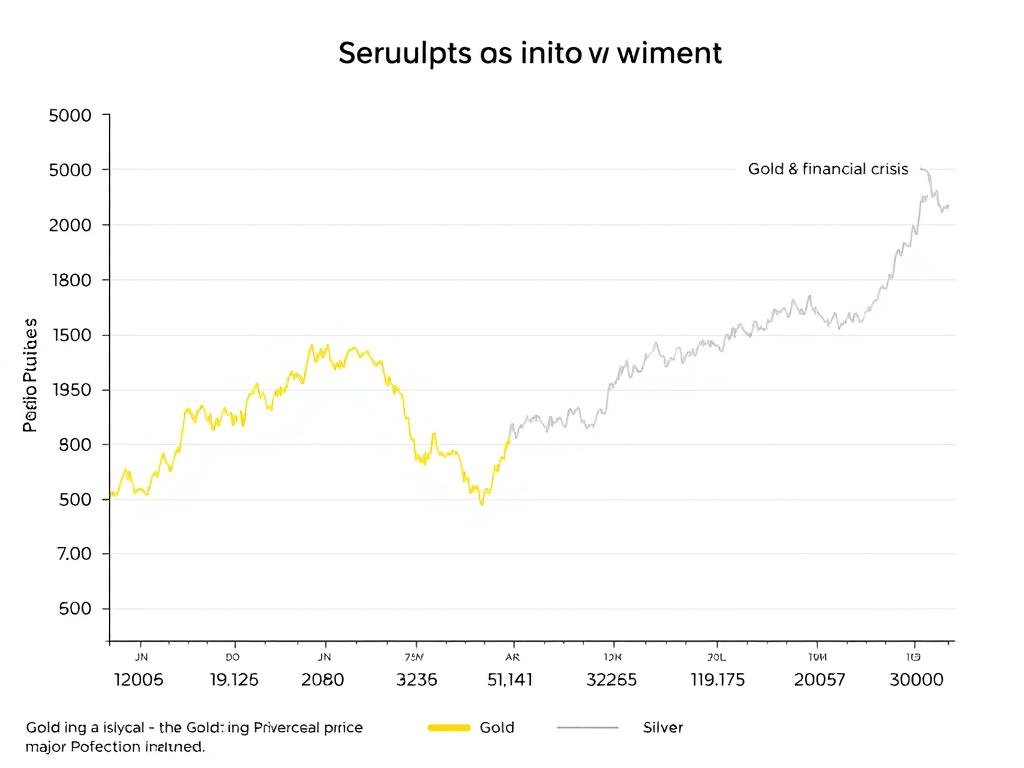
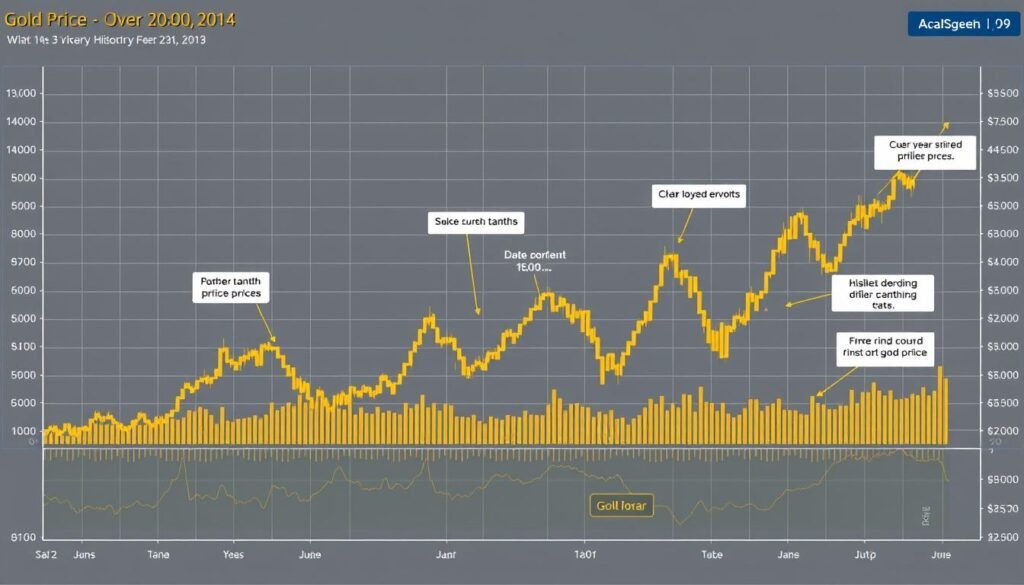
    Chart comparing gold vs silver IRA performance during economic downturns

    Historical Performance and Price Volatility

    Understanding how gold and silver have performed historically can provide insights into their potential future behavior in your retirement portfolio.

    Gold’s Track Record

    Gold has demonstrated remarkable stability during economic downturns. During the 2008 financial crisis, gold prices increased while the stock market plummeted. This counter-cyclical movement makes gold an effective portfolio diversifier. Gold typically experiences less day-to-day price volatility than silver, making it a more predictable store of value.

    Silver’s Performance Patterns

    Silver prices can be two to three times more volatile than gold on any given day. This volatility creates both opportunity and risk. During economic expansions, silver often outperforms gold due to increasing industrial demand. However, during sharp economic contractions, silver can initially fall alongside industrial commodities before recovering as investment demand increases.

    Person analyzing gold and silver IRA investment options on computer screen

    Storage Requirements and Associated Costs

    Both gold and silver IRAs require secure storage at IRS-approved depositories, but there are important differences in how this affects your investment.

    Gold Storage Considerations

    Gold’s high value-to-volume ratio means it requires less physical space for storage. A $50,000 investment in gold can be held in a relatively small space, which typically results in lower storage fees as a percentage of your investment. Most custodians charge between 0.5% and 1% annually for gold storage and insurance.

    Silver Storage Challenges

    Silver’s lower price per ounce means it takes significantly more physical space to store the same dollar value. This can result in higher relative storage costs. For example, $50,000 in silver requires roughly 80 times more space than the same value in gold. Some custodians charge higher percentage fees for silver storage due to these space requirements.

    Secure vault storage facility for gold and silver IRA holdings

    “When evaluating storage costs, consider the total expense ratio rather than just the nominal fee. Silver’s higher storage costs as a percentage of investment value can impact long-term returns.”

    – Precious Metals Investment Advisor

    Liquidity and Market Dynamics

    The ability to buy and sell your precious metals efficiently can significantly impact your retirement strategy, especially when you begin taking distributions.

    Gold’s Market Liquidity

    Gold enjoys exceptional liquidity in global markets. It can be bought and sold quickly with minimal price impact, even in large quantities. The bid-ask spread (the difference between buying and selling prices) is typically tighter for gold, meaning you lose less value in transactions. This liquidity becomes particularly important when taking required minimum distributions (RMDs) from your IRA.

    Silver’s Market Characteristics

    While silver is also highly liquid, its market is smaller than gold’s. This can occasionally result in wider bid-ask spreads, especially during market stress. However, silver’s lower price point makes it easier to sell precise dollar amounts when needed for distributions. The silver market is also more influenced by industrial demand, which can create both opportunities and challenges for timing sales.

    Gold and silver market trading floor showing price boards and traders

    Minimum Investment Thresholds

    The initial investment required for gold and silver IRAs can vary significantly, affecting accessibility for different investors.

    Gold IRA Minimums

    Gold IRAs typically have higher minimum investment requirements due to gold’s higher price per ounce. Many custodians require initial investments between $15,000 and $25,000 for gold IRAs. This higher threshold can be a barrier for some investors, particularly those just beginning to diversify into precious metals.

    Gold American Eagle coins commonly used in Gold IRAs

    Silver IRA Minimums

    Silver IRAs often feature lower minimum investment requirements, sometimes starting at $5,000 to $10,000. This lower entry point makes silver IRAs more accessible to investors with smaller budgets or those who wish to start with a modest allocation to precious metals while maintaining diversification in other assets.

    Silver American Eagle coins commonly used in Silver IRAs

    Compare Top Precious Metals IRA Companies

    Find the best custodian for your gold or silver IRA with our detailed comparison of fees, minimums, and customer service.

    See Top-Rated IRA Companies

    Diversification Benefits and Inflation Hedging

    Both gold and silver can help diversify a retirement portfolio, but they offer different advantages in terms of correlation to other assets and protection against inflation.

    Gold as a Portfolio Diversifier

    Gold has historically maintained a low or negative correlation with stocks and bonds. This makes it an effective diversification tool that can help reduce overall portfolio volatility. During market downturns, gold often moves independently or even counter to stock market performance, providing a stabilizing effect on retirement savings.

    Silver’s Diversification Profile

    Silver offers moderate diversification benefits but tends to have a higher correlation with economic activity than gold. This dual nature – part industrial metal, part precious metal – means silver can sometimes follow broader market trends during economic expansions while still providing some protection during downturns.

    Inflation Protection Comparison

    Both metals have served as hedges against inflation, but with different characteristics:

    Gold’s Inflation Protection

    • Consistent historical performance during inflationary periods
    • Tends to maintain purchasing power over very long time horizons
    • Less volatile response to inflation data
    • Strong performance during currency devaluation

    Silver’s Inflation Response

    • Potentially higher percentage gains during inflationary periods
    • More volatile price movements in response to inflation data
    • Industrial demand can amplify inflation-driven price increases
    • May lag gold initially but can outperform during sustained inflation
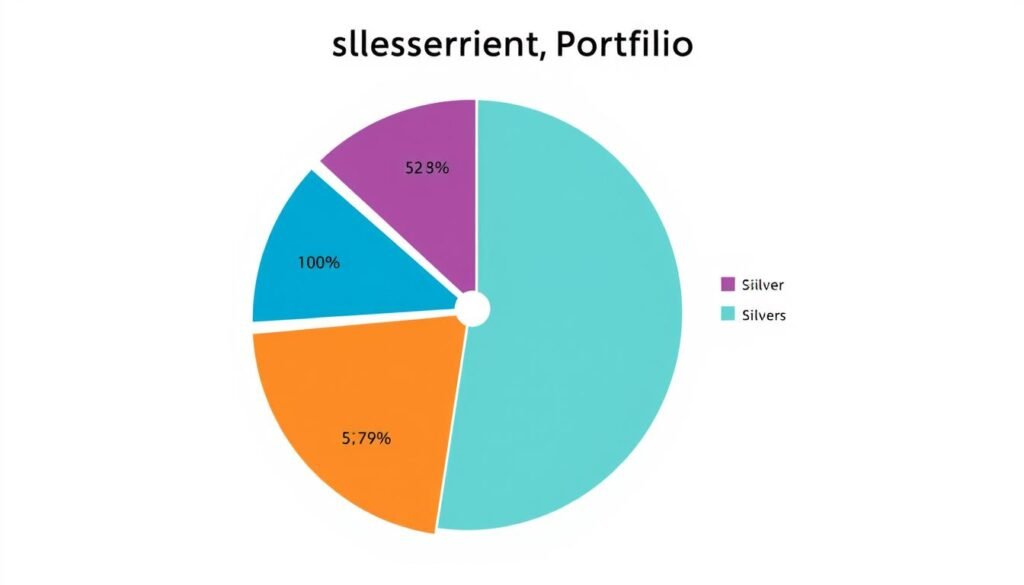
    Diversified retirement portfolio chart showing gold and silver allocations

    When a Gold IRA Makes More Sense

    Gold IRAs tend to be the preferred choice in specific scenarios and for investors with certain priorities.

    Ideal Scenarios for Gold IRA Investment

    • Wealth Preservation Focus: If your primary goal is protecting existing wealth rather than aggressive growth, gold’s stability makes it a better choice.
    • Lower Risk Tolerance: Investors uncomfortable with significant price volatility will appreciate gold’s more measured price movements.
    • Nearing Retirement: Those closer to retirement age typically benefit from gold’s stability as they have less time to recover from market volatility.
    • Significant Economic Concerns: During periods of serious economic uncertainty, banking concerns, or geopolitical tension, gold often outperforms.
    • Larger Investment Amounts: The higher value-to-volume ratio makes gold more efficient for larger investment sums ($50,000+).

    Retired couple reviewing their gold IRA investment portfolio

    “Gold has consistently served as a financial anchor during times of uncertainty. For retirement investors focused on preservation rather than speculation, gold IRAs provide the stability and security that paper assets often lack during economic turbulence.”

    When a Silver IRA Makes More Sense

    Silver IRAs can be the better option in certain circumstances and for investors with specific goals.

    Ideal Scenarios for Silver IRA Investment

    • Growth Potential Priority: Investors seeking higher potential percentage returns might prefer silver’s more dynamic price movements.
    • Smaller Investment Budget: With a lower price point, silver allows meaningful precious metals exposure with less initial capital.
    • Longer Time Horizon: Younger investors with decades until retirement can better weather silver’s volatility while positioning for potential outperformance.
    • Industrial Demand Play: Those bullish on technologies that use silver (solar, electronics, medical) may benefit from increasing industrial consumption.
    • Higher Risk Tolerance: Investors comfortable with more significant price swings can potentially capture greater gains with silver.

    Young investor researching silver IRA options on laptop

    Risk Factors and Considerations

    Before investing in either a gold or silver IRA, it’s important to understand the potential drawbacks and limitations of precious metals as retirement assets.

    Common Risks for Both Gold and Silver IRAs

    • No Income Generation: Unlike stocks or bonds, physical precious metals don’t produce dividends or interest.
    • Storage and Insurance Costs: Annual fees can erode returns over time.
    • Price Volatility: Both metals experience price fluctuations, though to different degrees.
    • Potential Tax Implications: Precious metals in IRAs may be taxed as collectibles (28% maximum rate) rather than capital gains when distributed.
    • Dealer Markups: Purchasing physical metals involves premiums above spot price.

    Gold-Specific Considerations

    • Higher entry cost limits accessibility
    • May underperform during strong economic growth
    • Central bank policies can impact prices
    • Higher opportunity cost during bull markets

    Silver-Specific Considerations

    • Greater price volatility can be stressful
    • Industrial demand fluctuations affect price
    • Higher relative storage costs
    • More vulnerable to economic downturns initially
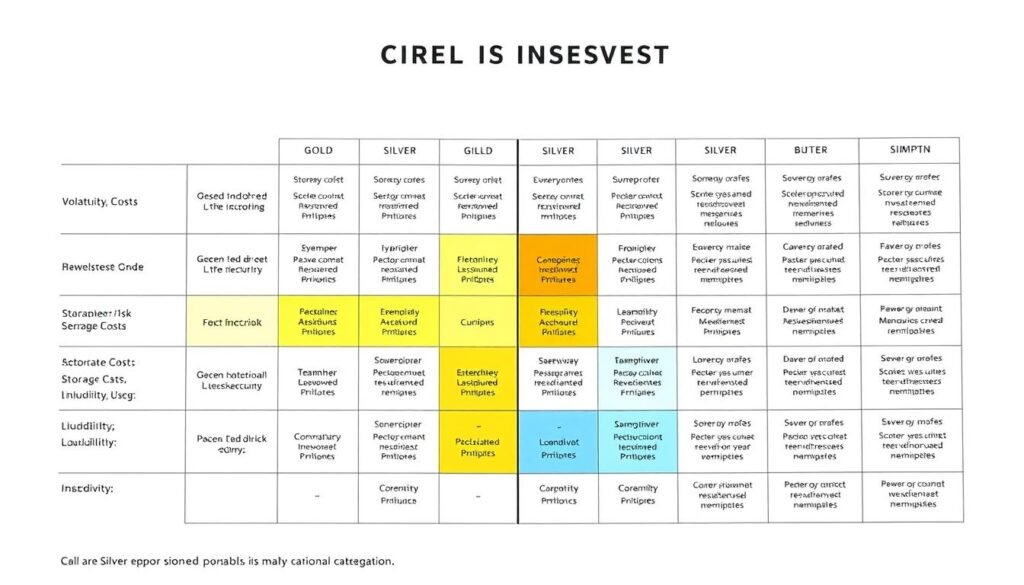
    Risk assessment chart for gold and silver IRA investments

    How to Get Started with a Precious Metals IRA

    If you’ve decided to invest in either a gold or silver IRA, the process follows similar steps regardless of which metal you choose.

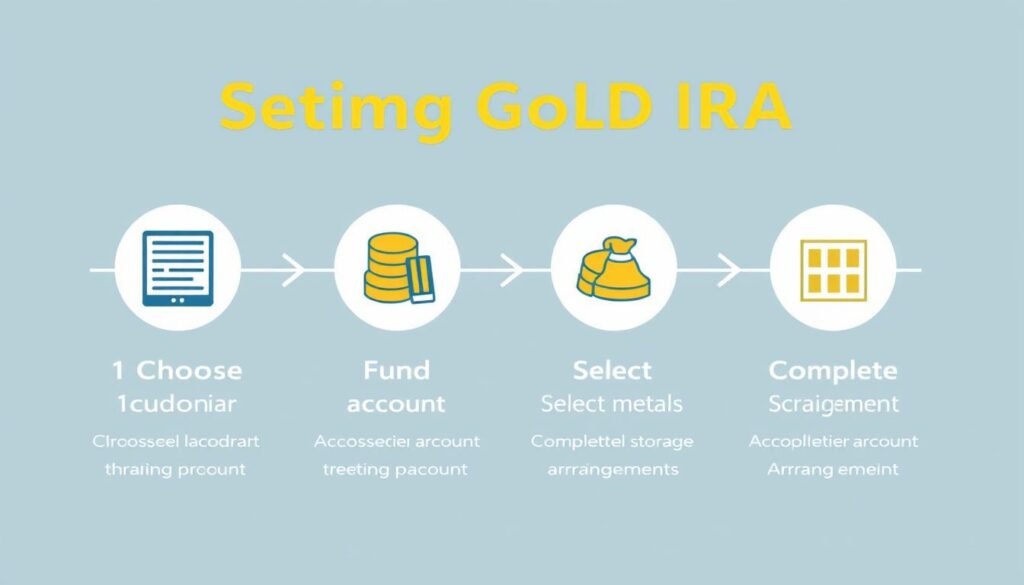
    1. Choose a Self-Directed IRA Custodian

      Select a reputable custodian that specializes in precious metals IRAs. Look for transparent fee structures, strong customer reviews, and experience in the industry.

    2. Fund Your Account

      Transfer funds from an existing retirement account (401(k), traditional IRA, etc.) or make a new contribution within annual IRA limits.

    3. Select Your Metals

      Choose IRS-approved gold or silver products. For gold, this means 99.5% purity; for silver, 99.9% purity is required. American Eagle coins, Canadian Maple Leafs, and certain bars from accredited refiners qualify.

    4. Arrange Secure Storage

      Your metals must be stored in an IRS-approved depository. Your custodian will coordinate this, but you can often select from multiple storage facilities.

    5. Monitor and Manage

      Review your precious metals holdings regularly as part of your overall retirement strategy. Rebalance as needed based on market conditions and your changing financial goals.
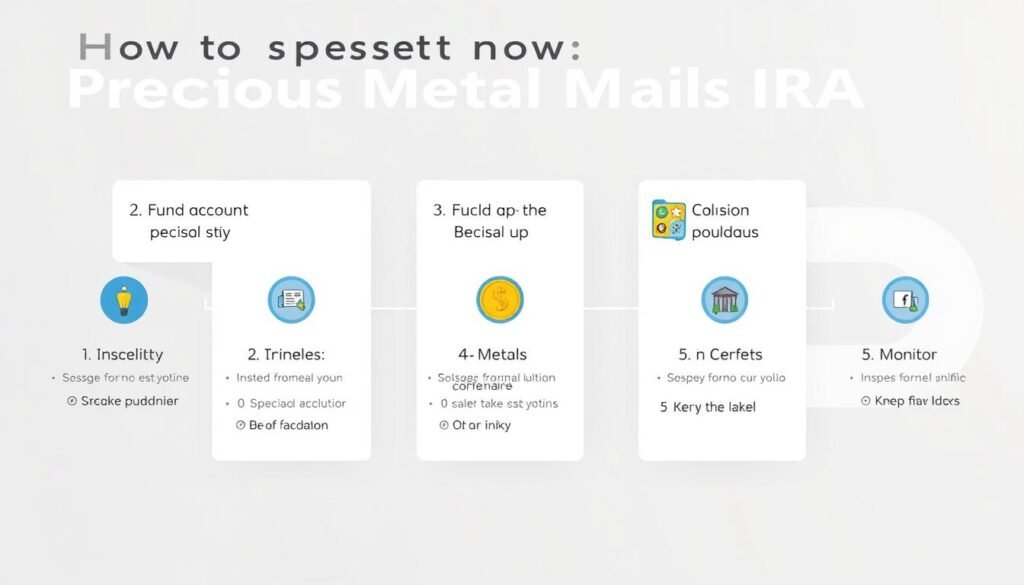
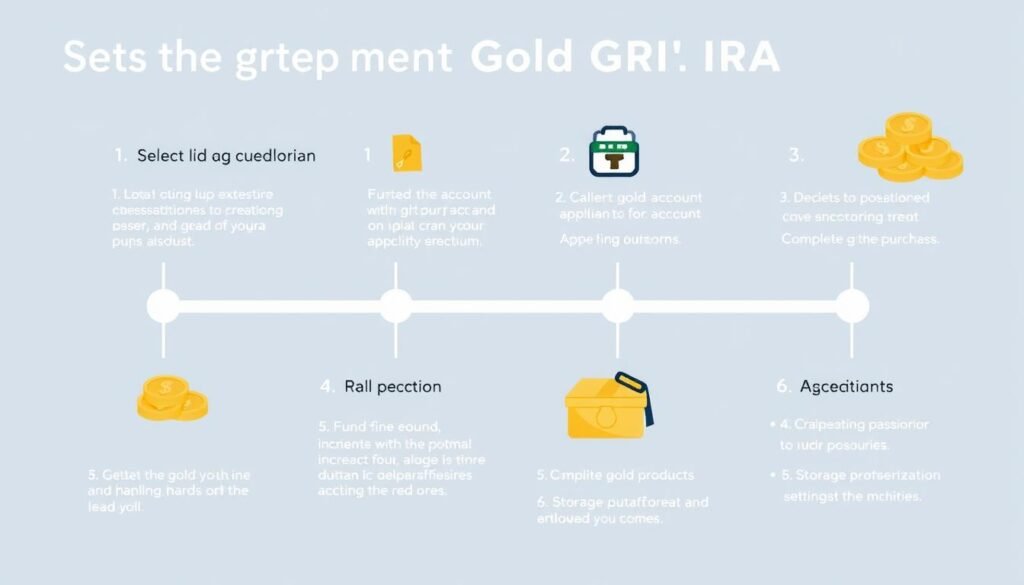
    Step-by-step process for setting up a gold or silver IRA

    Request Your Free Precious Metals IRA Guide

    Still unsure which precious metal is right for your retirement? Complete this form to receive our comprehensive guide that will help you make an informed decision.


    Your information is secure and will never be shared with third parties.

    Conclusion: Making the Right Choice for Your Retirement

    When deciding between a gold IRA vs silver IRA, there is no one-size-fits-all answer. The right choice depends on your specific financial situation, retirement timeline, and investment goals.

    Gold IRAs tend to be better suited for investors prioritizing stability, wealth preservation, and protection against severe economic downturns. With lower volatility and a stronger track record during crises, gold provides a reliable anchor for retirement portfolios, especially for those nearing retirement age.

    Silver IRAs may be more appropriate for investors with a longer time horizon, smaller initial investment budget, and higher risk tolerance. Silver’s industrial applications and potential for higher percentage gains make it attractive for those seeking growth alongside inflation protection.

    Many experienced investors choose to include both metals in their retirement strategy, leveraging gold’s stability alongside silver’s growth potential. This balanced approach can provide comprehensive precious metals exposure while mitigating the individual drawbacks of each metal.

    Regardless of which precious metal you choose, remember that diversification remains key. Most financial advisors recommend limiting precious metals to 5-15% of your overall retirement portfolio, using them as a complement to traditional assets rather than a replacement.

    Ready to Protect Your Retirement with Precious Metals?

    Speak with a precious metals specialist today to determine whether a gold IRA, silver IRA, or combination approach best suits your financial goals.
    Request Your Free Consultation

  • What Happens to Your Gold IRA When the Market Crashes?

    What Happens to Your Gold IRA When the Market Crashes?

    Market crashes can send shockwaves through traditional investment portfolios, leaving many retirement accounts devastated. During these turbulent economic periods, investors often wonder: what happens to gold IRA when market crashes? Understanding how gold performs during financial crises is crucial for those looking to protect their retirement savings. This comprehensive guide explores gold’s historical relationship with market downturns and explains why many investors turn to Gold IRAs as a safeguard against economic uncertainty.

    The Fundamental Relationship Between Gold and Market Crashes

    Gold has long been considered a safe-haven asset during times of economic uncertainty. When stock markets tumble, gold often moves in the opposite direction, providing a counterbalance to portfolio losses. This negative correlation between gold and equities is what makes gold particularly valuable during market crashes.

    Historically, gold has demonstrated resilience during significant market downturns. While it may experience short-term volatility alongside other assets, gold typically stabilizes and often appreciates as the crisis unfolds. This pattern was evident during the 2008 financial crisis when gold initially dipped due to liquidity needs but subsequently rose by over 25% while stocks continued to decline.

    The reason for this inverse relationship is straightforward: as confidence in paper assets and fiat currencies wanes during economic turmoil, investors seek tangible assets with intrinsic value. Gold, with its millennia-long history as a store of value, becomes increasingly attractive when other investments falter.

    How Gold IRAs Differ From Traditional IRAs During Market Crashes

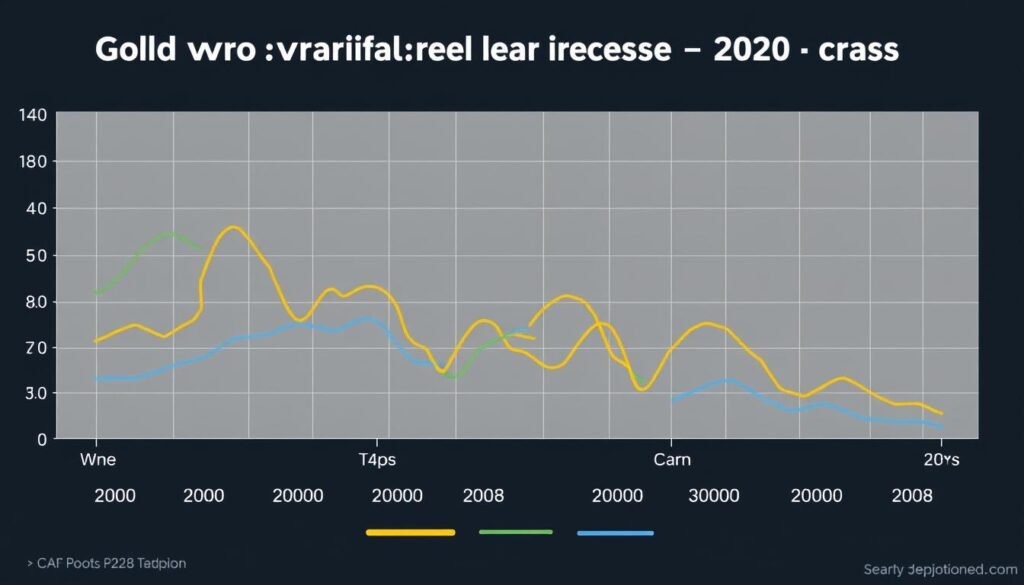
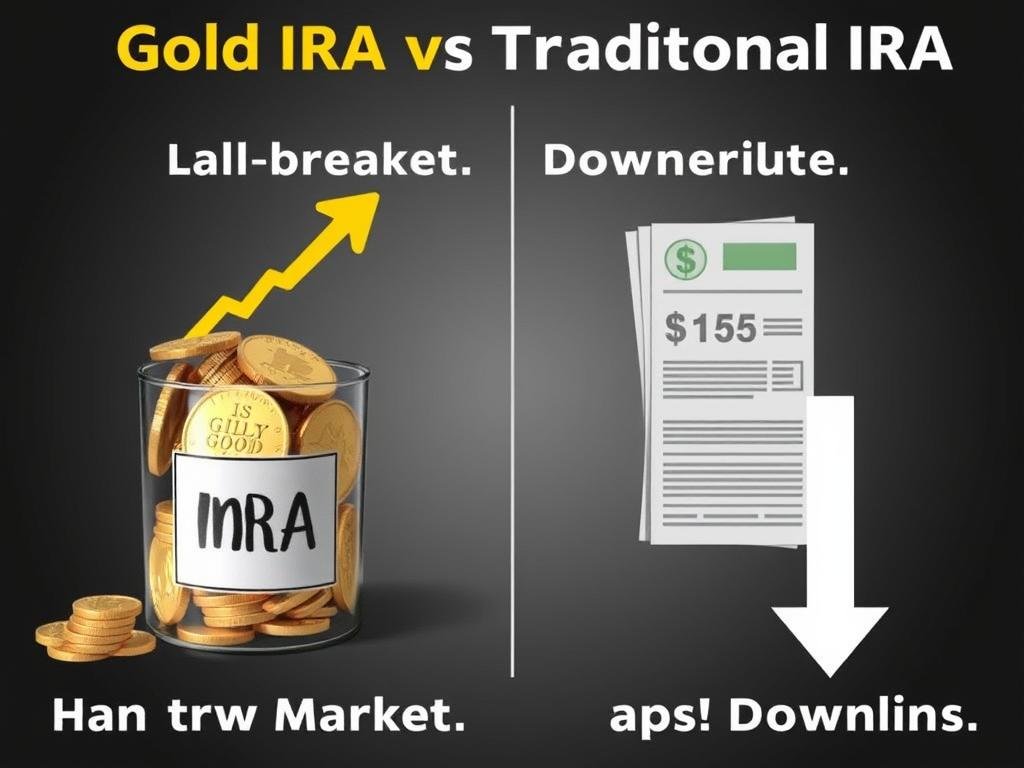
    Comparison of Gold IRA vs Traditional IRA performance during market downturn

    Traditional IRAs typically contain stocks, bonds, and mutual funds—assets that can experience significant devaluation during market crashes. In contrast, Gold IRAs hold physical precious metals, providing fundamentally different exposure during economic downturns.

    Traditional IRA During Crashes

    • Subject to market volatility and potential significant losses
    • Value tied directly to company performance and market sentiment
    • May face liquidity challenges during severe market stress
    • Recovery dependent on broader economic rebound
    • Vulnerable to currency devaluation and inflation

    Gold IRA During Crashes

    • Often moves counter to stock market direction
    • Value based on physical precious metal, not paper promises
    • Historically maintains purchasing power during currency devaluation
    • Not dependent on company performance or earnings
    • Provides portfolio diversification when it’s most needed

    The fundamental difference lies in what backs these retirement vehicles. Traditional IRAs represent claims on future corporate profits or debt obligations, while Gold IRAs contain physical precious metals with intrinsic value. This distinction becomes crucial during market crashes when paper assets face heightened scrutiny and potential devaluation.

    Protective Mechanisms of Gold IRAs During Market Volatility

    Gold IRA protective mechanisms during market volatility

    Gold IRAs offer several specific mechanisms that help protect retirement savings during market crashes and periods of economic uncertainty:

    1. Negative Correlation with Stocks

    Gold typically shows a negative correlation with stock markets, meaning it often moves in the opposite direction of equities. This inverse relationship helps offset losses in the stock portion of your retirement portfolio during market downturns.

    2. Inflation Protection

    Market crashes are frequently followed by monetary stimulus and currency devaluation, which can lead to inflation. Gold has historically maintained its purchasing power during inflationary periods, protecting the real value of your retirement savings when paper assets lose value.

    3. Currency Hedge

    During severe economic crises, central banks often implement policies that can weaken fiat currencies. Gold, priced in dollars but valued globally, serves as a hedge against currency devaluation, preserving wealth when paper money loses value.

    4. Physical Asset Security

    Unlike stocks or bonds that represent claims on future performance, Gold IRAs contain physical precious metals stored in secure, IRS-approved depositories. This tangible backing provides security during times when financial institutions face stress or uncertainty.

    Protect Your Retirement From Market Volatility

    Learn how a Gold IRA can help safeguard your retirement savings during economic uncertainty. Get our free guide to precious metals investing.

    Download Free Gold IRA Guide

    Gold vs. Other Retirement Assets During Market Crashes

    Performance comparison of gold versus stocks, bonds, and real estate during market crashes

    To truly understand the value of Gold IRAs during market turbulence, it’s essential to compare gold’s performance against other common retirement assets during historical crashes:

    Market Crash S&P 500 Bonds Real Estate Gold
    2000-2002 Dot-com Crash -49.1% +15.7% +16.2% +12.4%
    2008 Financial Crisis -56.8% +5.2% -30.5% +25.5%
    2020 COVID-19 Crash -33.9% +8.7% -10.3% +14.3%

    The data reveals a consistent pattern: while stocks typically suffer significant losses during market crashes, gold often maintains its value or appreciates. This performance difference is particularly important for retirement accounts, where preservation of capital becomes increasingly crucial as investors approach retirement age.

    Bonds also tend to perform relatively well during stock market crashes, but unlike gold, they face challenges during periods of rising inflation or interest rates—conditions that often follow economic crises as central banks implement stimulus measures.

    Real estate, another tangible asset, has shown mixed performance during market crashes. While it provides some diversification benefits, real estate can face liquidity challenges during severe downturns and is often affected by credit market freezes that typically accompany financial crises.

    Addressing Common Concerns About Gold IRAs During Crises

    Secure gold storage facility for Gold IRAs with security features

    Is my Gold IRA liquid during a market crash?

    Yes, Gold IRAs maintain liquidity even during market crashes. IRA custodians facilitate the buying and selling of precious metals within your account. While there might be slightly wider bid-ask spreads during extreme market volatility, gold remains one of the most liquid assets globally, with continuous markets operating worldwide. Unlike some real estate or private equity investments that can become illiquid during crises, gold can typically be converted to cash within 1-3 business days.

    How is my physical gold stored and is it secure during economic turmoil?

    Physical gold in a Gold IRA is stored in IRS-approved depositories with state-of-the-art security systems, including 24/7 monitoring, armed guards, and comprehensive insurance policies. These facilities operate independently from the banking system, providing an additional layer of security during financial crises. Your gold is held in segregated storage, meaning your specific metals are allocated to you and not commingled with others’ holdings, ensuring your ownership remains clear regardless of market conditions.

    Can I access my Gold IRA during a severe economic downturn?

    Your Gold IRA follows the same distribution rules as traditional IRAs, regardless of market conditions. While early withdrawals before age 59½ typically incur a 10% penalty plus taxes, exceptions exist for certain hardships. During economic downturns, you maintain the ability to take distributions, though it’s generally advisable to avoid liquidating assets during market lows. Some investors actually increase their gold holdings during crashes, viewing them as buying opportunities rather than times to sell.

    Important: While Gold IRAs provide significant protection during market crashes, they still follow standard IRA regulations regarding contributions, distributions, and required minimum distributions (RMDs). Consult with a financial advisor about how these rules apply to your specific situation.

    Practical Advice for Gold IRA Holders During Market Crashes

    Investor reviewing Gold IRA portfolio during market volatility

    What to Do During a Market Crash

    • Maintain perspective – Remember that gold typically performs its protective function over the medium to long term, even if there’s short-term volatility.
    • Consider rebalancing – Market crashes may present opportunities to rebalance your portfolio, potentially increasing your gold allocation while prices of other assets are depressed.
    • Stay informed – Monitor both gold markets and broader economic indicators to make informed decisions about your retirement savings.
    • Consult your advisor – Work with financial professionals who understand precious metals and can provide guidance specific to your situation.
    • Review your allocation – Ensure your gold holdings represent an appropriate percentage of your overall retirement portfolio based on your age and risk tolerance.

    What Not to Do During a Market Crash

    • Don’t panic sell – Emotional reactions to market volatility often lead to selling at the worst possible time.
    • Avoid excessive concentration – While increasing gold allocation may be prudent, maintain appropriate diversification across asset classes.
    • Don’t try to time the market – Even experts struggle to perfectly time market bottoms and tops; focus on long-term strategy instead.
    • Don’t ignore tax implications – Remember that transactions within your Gold IRA don’t trigger tax events, but distributions do.
    • Don’t forget your investment timeline – Your response to market crashes should align with your retirement horizon.

    Prepare Your Retirement for the Next Market Crash

    Speak with a Gold IRA specialist to learn how precious metals can help protect your retirement savings during economic uncertainty.

    Request Free Consultation

    Real-World Examples: Gold IRA Performance During Past Crashes

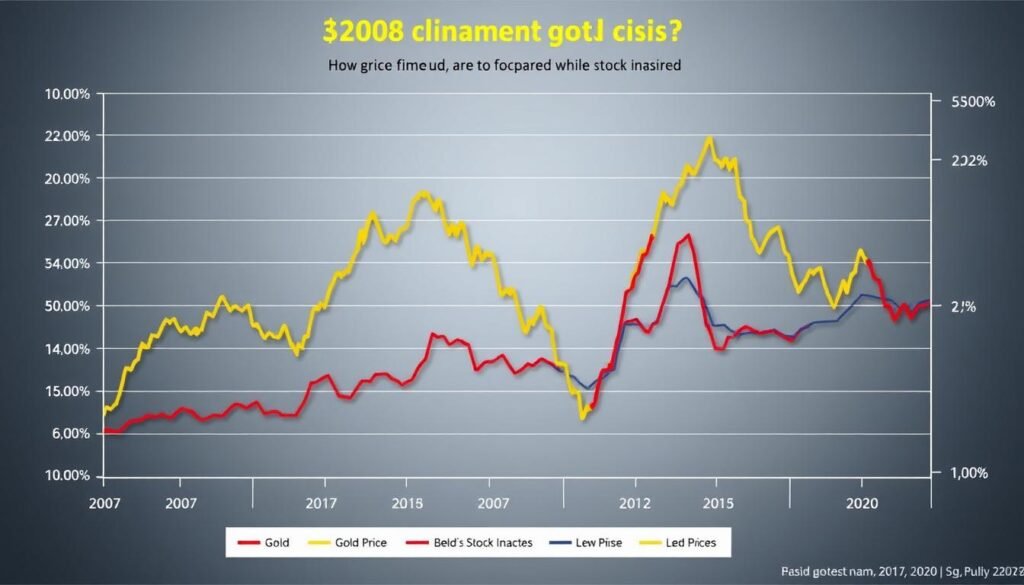
    Chart showing gold price performance during the 2008 financial crisis

    Case Study: 2008 Financial Crisis

    During the 2008 financial crisis, when the S&P 500 plummeted by nearly 57%, a hypothetical Gold IRA would have provided significant protection. While gold initially experienced a brief decline as investors sought liquidity, it quickly rebounded and ultimately gained over 25% from the start of the crisis to its conclusion.

    Consider this example: An investor with a $500,000 traditional IRA fully invested in an S&P 500 index fund would have seen their balance shrink to approximately $215,000 at the market bottom. In contrast, an investor with a $500,000 Gold IRA would have seen their balance grow to approximately $625,000 over the same period.

    Case Study: COVID-19 Market Crash

    The COVID-19 market crash of 2020 provides a more recent example. As global lockdowns triggered a swift 34% decline in the S&P 500, gold initially fell about 12% in the liquidity crunch but quickly recovered and ended the year up 25%. A $500,000 Gold IRA would have grown to approximately $625,000, while a traditional IRA invested in the broader market would have experienced significant volatility before eventually recovering.

    “During times of financial stress, gold has consistently demonstrated its value as a portfolio diversifier and wealth preserver. While past performance doesn’t guarantee future results, gold’s historical track record during crises makes a compelling case for its inclusion in retirement portfolios.”

    — Financial Analyst and Precious Metals Expert

    Potential Risks and Limitations of Gold IRAs During Extreme Conditions

    Investor analyzing gold market risks and limitations during extreme economic conditions

    While Gold IRAs offer significant protection during market crashes, they aren’t without potential limitations and risks that investors should understand:

    Gold IRA Strengths During Crashes

    • Historical tendency to preserve wealth during crises
    • Protection against currency devaluation
    • Portfolio diversification when most needed
    • Tangible asset backing
    • Global liquidity

    Gold IRA Limitations During Crashes

    • Potential short-term volatility
    • Possible premium increases on physical products
    • No dividend or interest income
    • Storage and insurance costs continue regardless of market conditions
    • Subject to potential government regulations

    Short-Term Liquidity Pressures

    During severe market dislocations, gold can experience short-term price volatility as institutional investors may need to sell profitable positions (including gold) to cover losses elsewhere or meet margin calls. This can temporarily pressure gold prices before the metal’s safe-haven characteristics reassert themselves.

    Premium Fluctuations

    Physical gold products like coins and bars carry premiums above the spot price of gold. During extreme market conditions, these premiums can increase due to higher demand and potential supply chain disruptions, affecting the net value of your Gold IRA holdings.

    Regulatory Considerations

    While extremely rare in modern Western economies, investors should be aware that governments have historically imposed regulations on gold ownership during severe economic crises. However, gold held within IRA structures has additional legal protections compared to direct ownership.

    Conclusion: Gold IRAs as a Protective Strategy During Market Crashes

    Diversified retirement portfolio with gold allocation providing stability during market volatility

    When examining what happens to gold IRA when market crashes, the historical evidence points to a clear conclusion: Gold IRAs typically provide significant protection during economic downturns, often preserving or even increasing in value while traditional paper assets decline.

    The unique properties of gold—its negative correlation with stocks, inflation-hedging capabilities, global recognition, and intrinsic value—make it a powerful diversification tool precisely when diversification benefits are most needed. While no investment is without risk, gold’s centuries-long track record as a store of value during turbulent times makes a compelling case for its inclusion in retirement portfolios.

    For investors concerned about market volatility and economic uncertainty, a Gold IRA offers a strategic approach to protecting retirement savings. By understanding both the strengths and limitations of gold during market crashes, investors can make informed decisions about incorporating precious metals into their long-term retirement strategy.

    Safeguard Your Retirement Against Market Uncertainty

    Learn how a Gold IRA can help protect your hard-earned savings from market crashes and economic volatility.

    Get Your Free Gold IRA Guide Today

    Additional Resources

    Gold IRA Rollover Guide

    Learn how to transfer existing retirement accounts into a Gold IRA without tax penalties.

    Gold Market Analysis

    Stay informed with our quarterly analysis of gold market trends and economic indicators.

    Retirement Calculator

    Calculate how adding gold to your portfolio might affect your retirement readiness.

  • Estate Planning with Gold IRA: What Your Heirs Should Know

    In today’s uncertain economic climate, more Americans are turning to Gold IRAs as a key component of their estate planning strategy. Unlike traditional retirement accounts that hold paper assets, Gold IRAs allow you to pass physical precious metals to your heirs—providing a tangible legacy that can help protect their financial future from inflation, market volatility, and economic instability.

    Understanding how Gold IRAs function within estate planning is crucial for ensuring your hard-earned wealth transfers smoothly to the next generation. This guide explores everything your heirs need to know about inheriting a Gold IRA, from tax implications to distribution options, helping you create a comprehensive estate plan that preserves your legacy.

    Gold IRAs in Estate Planning: The Fundamentals

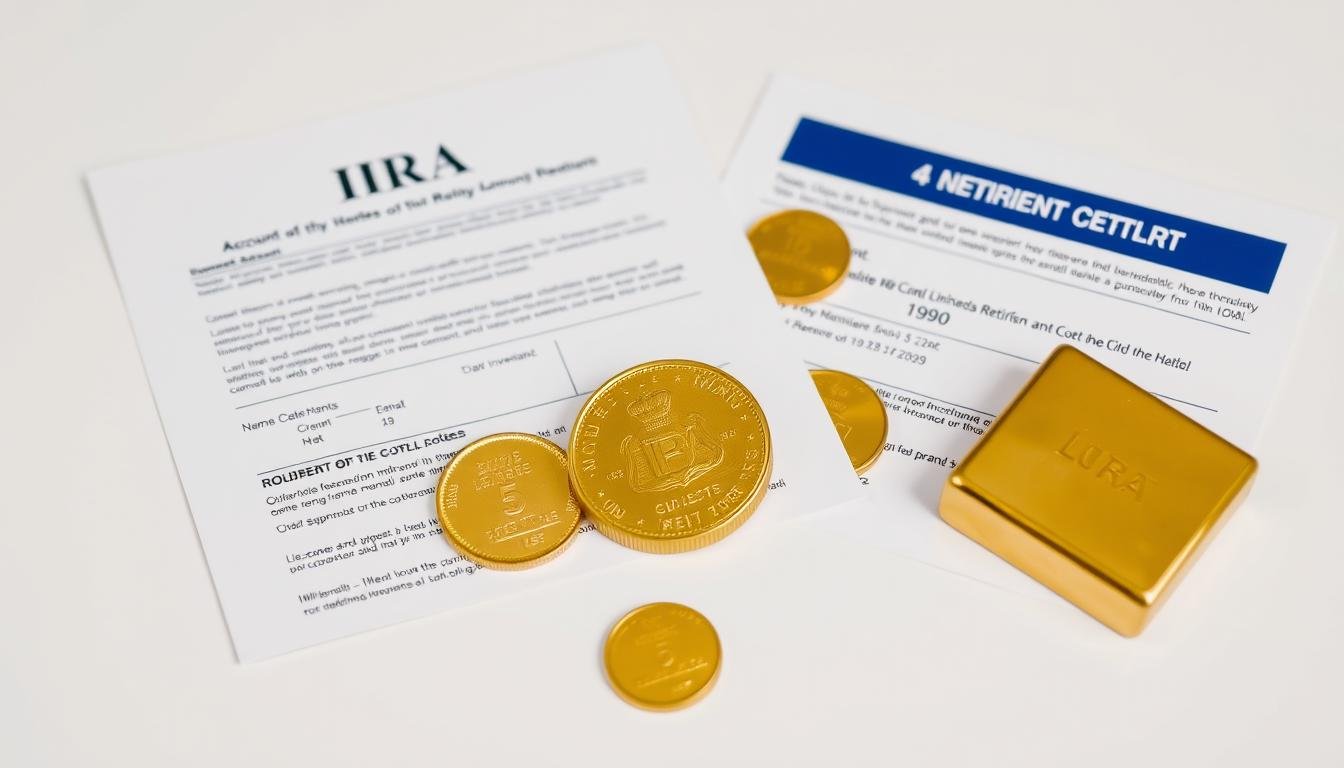
    Gold bars and coins arranged next to estate planning documents and an IRA folder

    A Gold IRA is a self-directed individual retirement account that allows you to hold physical precious metals like gold, silver, platinum, and palladium. Unlike conventional IRAs that typically contain stocks, bonds, and mutual funds, Gold IRAs provide a way to diversify retirement assets with tangible commodities that have historically preserved wealth during economic uncertainty.

    For estate planning purposes, Gold IRAs offer unique advantages that make them increasingly popular among forward-thinking investors. They combine the tax benefits of traditional retirement accounts with the stability and inflation protection of precious metals—creating a powerful legacy planning tool.

    How Gold IRAs Differ from Traditional Retirement Accounts

    Traditional IRAs and 401(k)s typically hold paper assets that can be vulnerable to market crashes, inflation, and currency devaluation. Gold IRAs, by contrast, contain physical precious metals stored in IRS-approved depositories, providing a tangible asset that your heirs can inherit.

    This physical backing makes Gold IRAs particularly valuable in estate planning, as they offer protection against the economic uncertainties that might affect your heirs in the future. While paper assets can lose value during market downturns, gold has maintained its purchasing power for thousands of years.

    Key Difference: When your heirs inherit a traditional IRA, they receive financial assets that exist primarily as numbers in an account. With a Gold IRA, they inherit actual physical precious metals with intrinsic value, regardless of market conditions.

    Types of Gold IRAs for Estate Planning

    IRA Type Tax Treatment Estate Planning Benefits Ideal For
    Traditional Gold IRA Tax-deferred growth; contributions may be tax-deductible Grows tax-deferred until heirs take distributions Those who expect heirs to be in a lower tax bracket
    Roth Gold IRA Tax-free growth; contributions made with after-tax dollars Heirs receive tax-free distributions Those wanting to pass maximum wealth to heirs
    SEP Gold IRA Tax-deferred growth; higher contribution limits Allows larger precious metals holdings to pass to heirs Self-employed individuals and small business owners

    Discover Which Gold IRA Is Right for Your Estate Plan

    Our Gold IRA specialists can help you determine which type of Gold IRA best aligns with your estate planning goals and your heirs’ future needs.

    Request Your Free Consultation

    Tax Implications of Gold IRAs for Your Heirs

    Senior couple reviewing Gold IRA tax documents with a financial advisor

    Understanding the tax implications of Gold IRAs is crucial for effective estate planning. How your heirs will be taxed depends primarily on the type of Gold IRA you’ve established and their relationship to you.

    Inheritance Tax Treatment by IRA Type

    Roth Gold IRA Advantages

    • Tax-free distributions for qualified heirs
    • No required minimum distributions during original owner’s lifetime
    • Heirs pay no income tax on distributions if account was open for at least 5 years
    • Allows wealth to grow tax-free across generations
    • Ideal for leaving maximum after-tax value to heirs

    Traditional Gold IRA Considerations

    • Distributions taxed as ordinary income for heirs
    • Required minimum distributions must begin at age 73 for original owner
    • 10-year distribution rule for most non-spouse beneficiaries
    • Potential for higher tax burden if heir is in peak earning years
    • Estate may face tax liability for large accounts

    Required Minimum Distribution (RMD) Rules

    Required Minimum Distributions (RMDs) play a significant role in how Gold IRAs transfer to heirs. For traditional Gold IRAs, RMDs must begin when the account holder reaches age 73. Failing to take these distributions results in a hefty 50% penalty on the amount that should have been withdrawn.

    When heirs inherit a Gold IRA, the RMD rules change based on their relationship to the deceased:

    “The SECURE Act of 2019 significantly changed the inheritance rules for IRAs, including Gold IRAs. Most non-spouse beneficiaries must now withdraw all assets within 10 years of inheritance, potentially accelerating tax consequences.”

    – Estate Planning Association

    Step-Up in Basis Rules for Precious Metals

    Unlike some other inherited assets, Gold IRAs do not receive a “step-up” in basis upon the owner’s death. This is because IRAs are considered “Income in Respect of a Decedent” (IRD), which means they retain their original tax character when inherited.

    For traditional Gold IRAs, this means heirs will pay ordinary income tax on distributions based on the full value of the metals at the time of withdrawal—not just on the appreciation since the original owner’s death. This makes Roth Gold IRAs particularly valuable for estate planning, as qualified distributions remain tax-free for heirs.

    Important Note: While the physical gold within an IRA doesn’t receive a step-up in basis, gold held outside an IRA and passed directly to heirs may qualify for a step-up in basis, potentially reducing capital gains tax if the heir later sells the metals.

    Essential Information Your Heirs Need to Know

    Family members discussing inherited Gold IRA with financial advisor

    Preparing your heirs for inheriting your Gold IRA is just as important as setting up the account properly. Without proper guidance, beneficiaries may make costly mistakes when handling their inheritance. Here’s what they need to know:

    How to Properly Take Distributions

    Spousal Beneficiaries

    Spouses have the most flexibility when inheriting a Gold IRA. They can:

    • Treat the IRA as their own
    • Roll it into their existing IRA
    • Remain a beneficiary and take distributions based on their life expectancy

    Non-Spousal Beneficiaries

    Most non-spouse beneficiaries must follow the 10-year rule:

    • Empty the account within 10 years of inheritance
    • No annual RMDs required within that period
    • Complete flexibility on timing and amount of withdrawals

    Eligible Designated Beneficiaries

    Some beneficiaries are exempt from the 10-year rule:

    • Minor children (until reaching majority)
    • Disabled or chronically ill individuals
    • Beneficiaries not more than 10 years younger than the deceased

    Physical Gold Considerations for Heirs

    When heirs inherit a Gold IRA, they face unique considerations related to the physical nature of the assets:

    Storage and Custody Options

    Heirs must understand that the physical gold in an inherited IRA must remain in an IRS-approved depository until distribution. They cannot take physical possession of the metals while they remain in the IRA without triggering taxes and penalties.

    Upon distribution, heirs have several options:

    • Take physical possession of the metals (triggering the appropriate tax)
    • Sell the metals within the IRA and take cash distribution
    • Transfer the metals to their own precious metals IRA

    Valuation and Liquidation

    Heirs should be aware that precious metals in an IRA are valued at their fair market value at the time of distribution. This valuation affects the tax consequences for traditional Gold IRA distributions.

    When liquidating inherited gold, heirs should:

    • Obtain multiple quotes from reputable dealers
    • Understand the spread between buy and sell prices
    • Consider timing distributions during favorable market conditions
    • Be aware of potential dealer fees and commissions

    Warning: Heirs should never take physical possession of Gold IRA assets before proper distribution. This constitutes a prohibited transaction that could result in the entire IRA being considered distributed, triggering immediate taxation and potential penalties.

    Prepare Your Heirs for Their Gold IRA Inheritance

    Download our comprehensive guide to help your beneficiaries understand their options and responsibilities when inheriting your Gold IRA.

    Download Free Inheritance Guide

    Setting Up a Gold IRA for Effective Estate Planning

    Person signing Gold IRA documents with estate planning attorney

    Creating a Gold IRA that seamlessly integrates with your estate plan requires careful consideration and proper documentation. Follow these steps to ensure your precious metals pass to your heirs according to your wishes:

    Choosing the Right Gold IRA Custodian

    Selecting a reputable custodian is perhaps the most critical decision in establishing a Gold IRA for estate planning. The custodian will be responsible for administering the account after your passing and working with your beneficiaries.

    Key Custodian Selection Factors

    4.5
    Overall Importance
    Experience with Beneficiary Transfers
    4.8
    Fee Structure Transparency
    4.5
    Customer Service Quality
    4.6
    Storage Options and Security
    4.7
    Regulatory Compliance History
    4.9

    Essential Documentation for Smooth Inheritance

    Proper documentation is crucial for ensuring your Gold IRA transfers to your heirs without complications. Here are the key documents you need to prepare:

    Document Purpose Update Frequency Special Considerations
    Beneficiary Designation Form Legally identifies who inherits your Gold IRA After major life events (marriage, divorce, births, deaths) Overrides will provisions for IRA assets
    Letter of Instruction Provides detailed guidance to heirs about the Gold IRA Annually or when making significant changes Not legally binding but extremely helpful
    IRA Transfer/Inheritance Form Facilitates transfer to beneficiaries Obtain current version when needed Custodian-specific; keep information current
    Inventory of Gold Holdings Details exact precious metals in the IRA After each purchase or sale Include authentication information and storage location

    Communication Strategies with Heirs

    Family meeting discussing Gold IRA inheritance plans

    Open communication with your heirs about your Gold IRA is essential for smooth wealth transfer. Many beneficiaries make costly mistakes simply because they weren’t properly informed about their inheritance.

    What to Discuss with Your Heirs

    • The existence and purpose of your Gold IRA in your overall estate plan
    • The type of Gold IRA (Traditional, Roth, SEP) and its tax implications
    • Who to contact upon your passing (custodian, financial advisor, attorney)
    • The timeline for required actions after inheritance
    • Your preferences regarding whether they should maintain the gold investments or liquidate them
    • The location of all relevant documentation
    • Any specific instructions regarding the distribution of physical metals

    “The biggest mistake I see is beneficiaries who don’t understand what they’ve inherited. They make hasty decisions about Gold IRAs because they weren’t prepared by the original owner. A simple conversation can save thousands in taxes and fees.”

    – James Rickards, Strategic Wealth Advisor

    Integrating Your Gold IRA with Your Overall Estate Plan

    A Gold IRA should be a coordinated component of your comprehensive estate plan, not a standalone asset. Consider these integration strategies:

    Trust Considerations

    While you cannot place a Gold IRA directly into a trust (as IRAs must be individually owned), you can name a trust as the beneficiary in certain situations. This approach requires careful planning with an estate attorney to avoid unintended tax consequences.

    Multiple Beneficiary Strategy

    Consider naming multiple beneficiaries with specific percentages if you want to divide your Gold IRA among several heirs. This approach allows for precise distribution without requiring beneficiaries to make arrangements among themselves.

    Contingent Beneficiary Planning

    Always name contingent beneficiaries in case your primary beneficiaries predecease you. Without contingent beneficiaries, your Gold IRA may end up distributed according to the custodian’s default policy or probate court.

    Common Pitfalls to Avoid in Gold IRA Estate Planning

    Person looking concerned while reviewing Gold IRA inheritance documents with warning symbols

    Even well-intentioned estate plans can go awry when it comes to Gold IRAs. Being aware of these common pitfalls can help you avoid costly mistakes that could diminish your legacy or create headaches for your heirs.

    Outdated Beneficiary Designations

    One of the most common and costly mistakes is failing to keep beneficiary designations current. Life events such as marriages, divorces, births, and deaths should trigger a review of your Gold IRA beneficiaries.

    Remember that your IRA beneficiary designation supersedes your will. If your will leaves everything to your current spouse but your IRA still names an ex-spouse as beneficiary, the ex-spouse will receive the IRA assets regardless of your will’s provisions.

    Warning Sign: If you haven’t reviewed your Gold IRA beneficiary designations within the past 3 years or after any major life event, they may be dangerously outdated.

    Improper Titling and Ownership Structures

    Gold IRAs must be individually owned—they cannot be jointly owned or placed directly in a trust during your lifetime. Attempting to create alternative ownership structures can invalidate the IRA’s tax-advantaged status.

    Some individuals mistakenly try to place their Gold IRA into a living trust or joint ownership to avoid probate, not realizing that IRAs already pass outside of probate through their beneficiary designations.

    Failing to Consider Tax Implications for Heirs

    Without proper planning, your heirs could face unexpected tax burdens when inheriting your Gold IRA. This is especially true for traditional Gold IRAs, where distributions are taxed as ordinary income.

    Consider whether your heirs would benefit more from inheriting a Roth Gold IRA (tax-free distributions) versus a Traditional Gold IRA (taxable distributions). Converting to a Roth during your lifetime might make sense if you expect your heirs to be in higher tax brackets when they inherit.

    Inadequate Documentation of Physical Assets

    Unlike paper assets, physical gold requires detailed documentation to ensure heirs understand exactly what they’re inheriting. Without proper records, heirs may struggle to verify the authenticity, purity, and value of the precious metals in the IRA.

    Maintain a detailed inventory of all precious metals in your Gold IRA, including:

    • Type of metal (gold, silver, platinum, palladium)
    • Form (coins, bars, rounds)
    • Weight and purity
    • Mint or manufacturer
    • Serial numbers (if applicable)
    • Purchase date and original cost
    • Storage location and depository information

    Prohibited Transactions and IRS Violations

    The IRS has strict rules governing Gold IRAs, and violations can result in the entire account being deemed distributed—triggering taxes and penalties. Common violations include:

    • Taking personal possession of the physical gold in the IRA
    • Purchasing non-approved precious metals (must meet specific purity standards)
    • Using a non-approved depository for storage
    • Engaging in self-dealing transactions with the IRA

    Ensure your heirs understand these rules to prevent costly mistakes after inheritance.

    Protect Your Gold IRA Legacy with Expert Guidance

    Our specialists can help you avoid these common pitfalls and create a bulletproof estate plan for your Gold IRA.

    Schedule Your Estate Planning Review

    Practical Steps for Gold IRA Estate Planning Success

    Person completing Gold IRA estate planning checklist with advisor

    Creating an effective estate plan for your Gold IRA doesn’t have to be overwhelming. Follow these practical steps to ensure your precious metals legacy is preserved and transferred according to your wishes:

    1. Select the Right Gold IRA Type

    Choose between Traditional, Roth, or SEP Gold IRAs based on your tax situation and estate planning goals:

    • Traditional Gold IRA: Best if you need tax deductions now and expect heirs to be in lower tax brackets
    • Roth Gold IRA: Ideal for tax-free growth and distributions to heirs
    • SEP Gold IRA: Good option for self-employed individuals with higher contribution limits

    2. Choose IRS-Approved Metals

    Ensure your Gold IRA contains only IRS-approved precious metals that meet purity requirements:

    • Gold: Minimum 99.5% purity (except for specific coins)
    • Silver: Minimum 99.9% purity
    • Platinum: Minimum 99.95% purity
    • Palladium: Minimum 99.95% purity

    3. Work with Specialized Professionals

    Assemble a team of experts who understand the unique aspects of Gold IRAs:

    • Gold IRA custodian with inheritance expertise
    • Estate planning attorney familiar with precious metals
    • Tax professional experienced in IRA distribution rules
    • Financial advisor who understands physical gold assets

    Creating a Gold IRA Estate Planning Checklist

    Completed Gold IRA estate planning checklist with pen and gold coins

    Use this comprehensive checklist to ensure you’ve covered all aspects of your Gold IRA estate plan:

    Documentation Checklist

    • Current beneficiary designation forms (primary and contingent)
    • Detailed inventory of all precious metals in the IRA
    • Contact information for custodian, depository, and advisors
    • Letter of instruction for beneficiaries
    • Copy of custodian’s inheritance procedures
    • Tax documentation and basis information
    • Storage agreements and depository information

    Communication Checklist

    • Inform beneficiaries about the existence of the Gold IRA
    • Explain the type of Gold IRA and its tax implications
    • Review distribution options and timelines with heirs
    • Provide location of all relevant documents
    • Introduce heirs to your financial advisor and custodian
    • Discuss your preferences for the metals (hold vs. liquidate)
    • Review potential tax strategies for minimizing heir tax burden

    Regular Review and Updates

    Estate planning for Gold IRAs isn’t a one-time event. Schedule regular reviews to ensure your plan remains current and effective:

    Review Trigger Actions to Take
    Annually
    • Verify beneficiary information is current
    • Update inventory of precious metals
    • Review storage arrangements and fees
    Major Life Events (marriage, divorce, birth, death)
    • Update primary and contingent beneficiaries
    • Reconsider distribution strategies
    • Review overall estate plan integration
    Tax Law Changes
    • Consult with tax professional about impact
    • Consider Roth conversion opportunities
    • Update tax planning strategies for heirs
    Significant Market Changes
    • Review precious metals allocation
    • Consider rebalancing if necessary
    • Update valuation estimates for estate planning

    Real-World Example: Gold IRA Estate Planning Success

    Happy family reviewing inherited Gold IRA documents together

    “When my father passed away in 2022, I was grateful he had taken the time to properly set up his Gold IRA for inheritance. He had converted to a Roth Gold IRA years earlier, paying the taxes himself so that my sister and I would receive the precious metals tax-free. He also left detailed instructions about the specific coins in his collection and his wishes for them. What could have been a confusing and stressful process during an already difficult time was instead straightforward and even meaningful—a final gift of financial security and peace of mind.”

    – Michael R., Gold IRA Inheritor

    Michael’s experience highlights the importance of thoughtful Gold IRA estate planning. His father had taken several key steps that made the inheritance process smooth:

    What Went Right

    • Strategic Roth conversion to eliminate tax burden for heirs
    • Detailed documentation of all precious metals in the IRA
    • Clear instructions about distribution preferences
    • Introduction to the custodian before passing
    • Updated beneficiary designations that matched his will
    • Regular communication with heirs about the Gold IRA

    The Result

    Michael and his sister were able to:

    • Take tax-free distributions of precious metals
    • Make informed decisions about whether to hold or sell
    • Avoid probate entirely for the Gold IRA assets
    • Complete the inheritance process within 30 days
    • Honor their father’s wishes regarding specific coins
    • Integrate the inherited assets into their own financial plans

    Conclusion: Securing Your Gold IRA Legacy

    Sunset view of gold coins arranged next to family photo and estate planning documents

    Estate planning with a Gold IRA offers a powerful way to protect your legacy and provide your heirs with tangible assets that have stood the test of time. By understanding the unique aspects of Gold IRA inheritance—from tax implications to physical metal considerations—you can create a comprehensive plan that ensures your precious metals pass smoothly to the next generation.

    Remember that effective Gold IRA estate planning requires attention to detail, regular updates, and clear communication with your heirs. The time you invest now in proper documentation, beneficiary designations, and education will pay dividends in the future, sparing your loved ones from confusion and potential tax pitfalls during an already difficult time.

    As economic uncertainty continues to challenge traditional paper assets, a well-structured Gold IRA can provide both you and your heirs with a source of stability and security for generations to come.

    Start Your Gold IRA Estate Plan Today

    Our Gold IRA specialists can help you create a comprehensive estate plan that protects your precious metals legacy and ensures your heirs receive maximum benefit from your foresight.

    Request Your Free Consultation

    Frequently Asked Questions

    Can I name a trust as the beneficiary of my Gold IRA?

    Yes, you can name a trust as the beneficiary of your Gold IRA, but this approach requires careful planning. When a trust is the beneficiary, distribution rules become more complex and may not qualify for the most favorable tax treatment. Work with an estate planning attorney who specializes in retirement accounts to ensure the trust is properly structured as a “see-through” or “look-through” trust that allows beneficiaries to use their own life expectancy for distributions.

    What happens if I don’t name a beneficiary for my Gold IRA?

    If you don’t name a beneficiary for your Gold IRA, the assets will be distributed according to the default provisions in your custodial agreement. Typically, this means the IRA will go to your estate, which has several disadvantages: the assets may have to go through probate, heirs lose the ability to stretch distributions over their lifetime, and the entire account may need to be distributed (and taxed) within 5 years of your death. Always name both primary and contingent beneficiaries to avoid these issues.

    Can my heirs take physical possession of the gold in my IRA?

    Yes, but only after properly distributing the assets from the IRA. While the gold remains in the IRA, it must stay in an IRS-approved depository. Once your heirs take a distribution, they can choose to take physical possession of the metals, but this will trigger any applicable taxes (for traditional IRAs). For Roth IRAs, qualified distributions are tax-free. Heirs should coordinate with the custodian to arrange for either delivery of the physical metals or liquidation to cash.

    Is a Gold IRA better than leaving physical gold directly to heirs?

    It depends on your specific situation. A Gold IRA offers tax advantages (especially Roth IRAs) and professional storage, but comes with rules and restrictions. Directly owned physical gold passed to heirs may receive a step-up in basis at your death, potentially reducing capital gains taxes if they sell. However, directly owned gold doesn’t have the tax-advantaged growth of an IRA. Many estate plans benefit from a combination of both approaches—some gold in IRAs and some directly owned.

    How do RMDs work for inherited Gold IRAs?

    Required Minimum Distributions (RMDs) for inherited Gold IRAs depend on the type of IRA and the beneficiary’s relationship to the deceased. For traditional IRAs, most non-spouse beneficiaries must empty the account within 10 years of inheritance (the SECURE Act rule). Spouses have more options, including treating the IRA as their own. For Roth IRAs, original owners never have to take RMDs, but non-spouse beneficiaries generally must empty the account within 10 years. The physical nature of gold doesn’t change these rules, but it may affect how distributions are taken (in-kind metal distributions vs. liquidating to cash).

  • 7 Gold IRA Misconceptions Debunked: The Truth About Precious Metals Retirement Accounts

    7 Gold IRA Misconceptions Debunked: The Truth About Precious Metals Retirement Accounts

    Many investors shy away from Gold IRAs because of persistent misconceptions about how they work. Some believe these accounts are only for the wealthy, while others worry about excessive fees or question their legitimacy. These gold IRA misconceptions can prevent you from exploring a potentially valuable addition to your retirement strategy.

    This guide cuts through the confusion to reveal the truth about Gold IRAs. We’ll examine seven common myths and provide factual information to help you make an informed decision about whether precious metals belong in your retirement portfolio.

    Understanding Gold IRAs: The Basics

    A Gold IRA (Individual Retirement Account) is a self-directed retirement account that allows you to hold physical precious metals instead of traditional paper assets like stocks and bonds. These accounts follow the same basic tax rules as conventional IRAs but with the added benefit of holding tangible assets.

    What Exactly Is a Gold IRA?

    A Gold IRA is a specialized type of self-directed IRA that holds physical precious metals rather than paper investments. It operates under the same IRS regulations as traditional or Roth IRAs, offering similar tax advantages while allowing you to diversify with physical gold, silver, platinum, and palladium.

    These accounts require a qualified custodian to manage the account and ensure compliance with IRS regulations. The precious metals must be stored in an approved depository—not in your home—to maintain their tax-advantaged status.

    IRS-Approved Precious Metals

    The IRS has strict requirements about which metals qualify for inclusion in a precious metals IRA:

    • Gold must be at least 99.5% pure
    • Silver must be at least 99.9% pure
    • Platinum and palladium must be at least 99.95% pure

    Eligible products include certain government-minted coins like American Gold Eagles and Canadian Maple Leafs, as well as approved bars and rounds from accredited refiners. Collectible coins and jewelry do not qualify for inclusion in a Gold IRA.

    Myth 1: Gold IRAs Are Only for the Wealthy

    Average investor reviewing Gold IRA documents, dispelling gold IRA misconceptions

    One of the most persistent gold IRA misconceptions is that these accounts are exclusively for high-net-worth individuals. This myth likely stems from the perception that investing in precious metals requires substantial capital.

    In reality, many reputable Gold IRA companies offer reasonable minimum investment requirements that make these accounts accessible to average investors. While some providers may have higher minimums, others allow you to start with as little as $5,000-$10,000, which is comparable to many traditional retirement account minimums.

    Additionally, you can fund a Gold IRA through a rollover from an existing retirement account, making it easier to get started without finding new investment capital. This approach allows investors with modest retirement savings to diversify into precious metals.

    Ready to learn if a Gold IRA is right for you?

    Download our free guide to discover how Gold IRAs work and whether they fit your retirement strategy.

    Get Your Free Gold IRA Guide

    Myth 2: Gold IRAs Offer No Tax Benefits

    Tax documents next to Gold IRA paperwork showing tax benefits

    Another common misconception is that Gold IRAs don’t provide the same tax advantages as traditional retirement accounts. This is simply not true. Gold IRAs follow the same tax rules as conventional IRAs, with options for both Traditional and Roth structures.

    Traditional Gold IRA

    • Contributions may be tax-deductible
    • Investments grow tax-deferred
    • Taxes paid upon withdrawal

    Roth Gold IRA

    • Contributions made with after-tax dollars
    • Investments grow tax-free
    • Qualified withdrawals are tax-free

    The IRS treats precious metals in these accounts just like any other approved asset. As long as the metals meet purity standards and are held by an approved custodian, you receive the same tax benefits you would with stocks or bonds in a retirement account.

    Myth 3: You Can Store IRA Metals at Home

    Secure depository storage facility for Gold IRA metals

    One dangerous gold IRA misconception is that you can keep your IRA-held precious metals at home. This is categorically false and could lead to serious tax consequences if attempted.

    IRS regulations explicitly require that precious metals in an IRA must be stored in an approved depository. Taking physical possession of the metals would be considered a distribution, potentially triggering taxes and penalties if you’re under 59½ years old.

    Warning: Beware of companies promoting “home storage” Gold IRAs. These schemes often mislead investors about IRS requirements and could result in disqualification of your entire IRA, immediate taxation, and penalties.

    Approved depositories offer several important benefits:

    • Professional security systems and protocols
    • Insurance coverage for your metals
    • Regular audits and verification
    • Proper documentation for IRS compliance

    While you can’t store the metals at home while they’re in your IRA, you can take physical possession when you take a distribution from your account, though this may have tax implications.

    Myth 4: Gold IRAs Are Risk-Free Investments

    Gold price chart showing historical volatility

    While gold has historically maintained value over the long term, the notion that Gold IRAs are completely risk-free is a misconception. Like all investments, precious metals come with their own set of risks and considerations.

    Understanding Gold’s Price Volatility

    Gold prices can fluctuate significantly based on various factors:

    • Economic conditions and interest rates
    • Currency strength, particularly the U.S. dollar
    • Global political events and crises
    • Market sentiment and investor behavior

    Unlike stocks or bonds, physical gold doesn’t generate income through dividends or interest. Your returns depend entirely on price appreciation, which isn’t guaranteed in any specific timeframe.

    “Gold should be viewed as an insurance policy against economic uncertainty, not as a growth investment. Its primary value is in portfolio diversification and wealth preservation.”

    — Financial Advisor with 20+ years experience

    Most financial experts recommend allocating only a portion of your retirement portfolio to precious metals—typically 5-15%—as part of a diversified investment strategy.

    Stay informed about precious metals markets

    Subscribe to our newsletter for regular updates on gold prices, market trends, and retirement strategies.

    Myth 5: Setting Up a Gold IRA Is Too Complicated

    Simple step-by-step Gold IRA setup process

    Many potential investors avoid Gold IRAs because they believe the setup process is overly complex. While a Gold IRA does involve a few more steps than a standard IRA, reputable companies have streamlined the process to make it straightforward.

    The Gold IRA Setup Process

    1. Choose a reputable custodian that specializes in self-directed IRAs and precious metals.
    2. Complete the account application with your custodian, similar to opening any financial account.
    3. Fund your account through a contribution, transfer, or rollover from an existing retirement account.
    4. Select your precious metals from IRS-approved options with guidance from your dealer.
    5. Finalize storage arrangements with an approved depository through your custodian.

    Most Gold IRA companies provide dedicated account representatives who guide you through each step, handle the paperwork, and coordinate between the custodian, metals dealer, and depository. This hands-on assistance makes the process much simpler than many expect.

    Rollovers from existing retirement accounts can typically be completed with minimal effort on your part, often requiring just a few signatures on pre-prepared forms.

    Myth 6: Gold IRA Fees Make Them Prohibitively Expensive

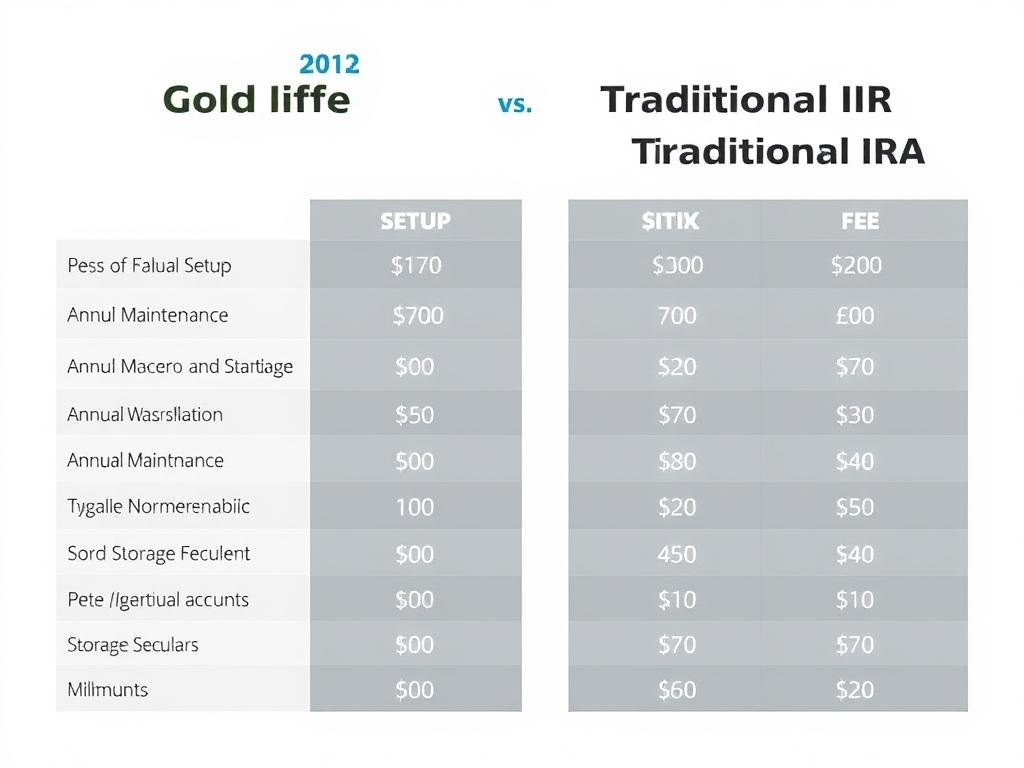
    Comparison of Gold IRA fees vs traditional IRA fees

    Concerns about high fees are common among those considering Gold IRAs. While it’s true that Gold IRAs typically have additional costs compared to standard IRAs, these fees are often reasonable and transparent when working with reputable providers.

    Understanding Gold IRA Fee Structure

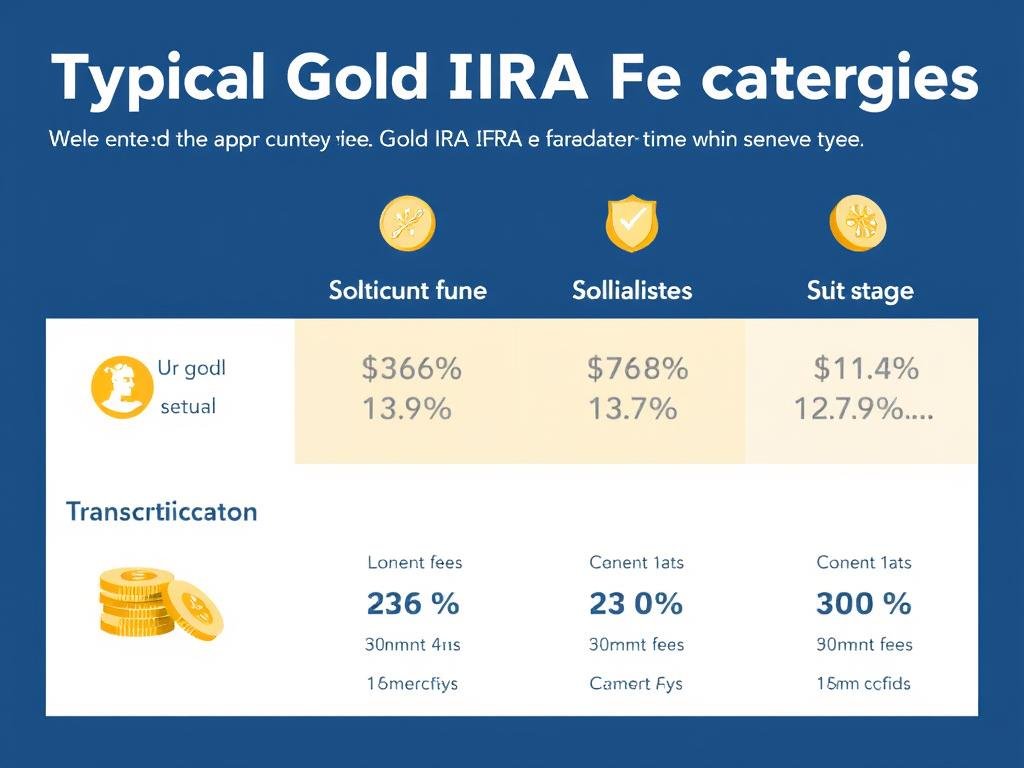
    Fee Type Typical Range Description
    Setup Fee $50-$150 One-time fee to establish the account
    Annual Maintenance $75-$300 Yearly fee for account administration
    Storage Fee $100-$300 Annual cost for secure depository storage
    Transaction Fees Varies Costs associated with buying/selling metals

    When evaluating Gold IRA providers, look for transparent fee structures with no hidden costs. Some companies offer scaled fees based on account value, while others provide flat-fee options that can be more economical for larger accounts.

    While fees are an important consideration, they should be viewed in the context of the potential benefits of portfolio diversification and inflation protection that precious metals can provide.

    Myth 7: All Gold IRA Companies Provide the Same Service

    Different Gold IRA companies offering varying services

    Perhaps one of the most dangerous gold IRA misconceptions is that all providers offer equivalent services and reliability. In reality, there are significant differences in expertise, pricing, customer service, and product selection among Gold IRA companies.

    Key Differentiators Among Gold IRA Companies

    What to Look For

    • Transparent fee structure with no hidden costs
    • Educational resources and market insights
    • Strong industry reputation and reviews
    • Reasonable buyback programs
    • Dedicated customer support
    • Industry credentials and partnerships

    Red Flags to Avoid

    • High-pressure sales tactics
    • Promises of guaranteed returns
    • “Home storage” IRA promotions
    • Excessive fees or unclear pricing
    • Limited or no buyback options
    • Poor reviews or regulatory issues

    Take time to research potential providers thoroughly. Check customer reviews, Better Business Bureau ratings, and any regulatory actions. Reputable companies will focus on education rather than aggressive sales tactics and will be transparent about all costs involved.

    The quality of your Gold IRA experience depends significantly on choosing the right company to work with, making this an essential step in the process.

    Benefits of Including Precious Metals in Your Retirement Portfolio

    Diversified retirement portfolio including precious metals

    While it’s important to understand the misconceptions surrounding Gold IRAs, it’s equally valuable to recognize the potential benefits they can offer as part of a diversified retirement strategy.

    Portfolio Diversification

    One of the primary advantages of precious metals is their historically low correlation with traditional assets like stocks and bonds. This means that when stock markets experience volatility, gold often moves independently or even in the opposite direction, potentially helping to stabilize your overall portfolio returns.

    Inflation Protection

    Precious metals, particularly gold, have historically maintained purchasing power over long periods. Unlike paper currency, which can be devalued through inflation and monetary policy, gold’s inherent scarcity helps it retain value even as the cost of living increases.

    Currency Devaluation Hedge

    During periods of currency devaluation or monetary instability, precious metals often serve as a store of value. This can be particularly important for retirees who need to preserve their purchasing power through economic uncertainties.

    Did You Know? During the 2008-2009 financial crisis, while the S&P 500 fell by over 50% from its peak, gold prices increased by approximately 25%. This illustrates how precious metals can sometimes move counter to traditional markets during periods of economic stress.

    Frequently Asked Questions About Gold IRAs

    Person researching answers to Gold IRA questions

    Can I add gold I already own to my Gold IRA?

    No, you cannot add gold you already personally own to your Gold IRA. IRS regulations require that precious metals for an IRA must be purchased through the IRA itself and stored directly in an approved depository. This ensures the metals meet purity standards and maintains the tax-advantaged status of the account.

    What happens when I want to take distributions from my Gold IRA?

    When taking distributions from a Gold IRA, you have two options: you can take physical possession of the metals (which counts as a distribution and may be taxable), or you can have the metals sold and receive cash. Required Minimum Distributions (RMDs) apply to Traditional Gold IRAs just like conventional IRAs once you reach age 72 (or 73 for those born after 1950).

    How much of my retirement portfolio should be in precious metals?

    Most financial advisors recommend allocating between 5% and 15% of your retirement portfolio to precious metals. The exact percentage depends on your age, risk tolerance, overall financial situation, and retirement goals. Precious metals should be viewed as one component of a diversified portfolio, not the primary investment vehicle.

    Are there contribution limits for Gold IRAs?

    Yes, Gold IRAs are subject to the same contribution limits as traditional and Roth IRAs. For 2023, the contribution limit is ,500 per year, with an additional

    Frequently Asked Questions About Gold IRAs

    Person researching answers to Gold IRA questions

    Can I add gold I already own to my Gold IRA?

    No, you cannot add gold you already personally own to your Gold IRA. IRS regulations require that precious metals for an IRA must be purchased through the IRA itself and stored directly in an approved depository. This ensures the metals meet purity standards and maintains the tax-advantaged status of the account.

    What happens when I want to take distributions from my Gold IRA?

    When taking distributions from a Gold IRA, you have two options: you can take physical possession of the metals (which counts as a distribution and may be taxable), or you can have the metals sold and receive cash. Required Minimum Distributions (RMDs) apply to Traditional Gold IRAs just like conventional IRAs once you reach age 72 (or 73 for those born after 1950).

    How much of my retirement portfolio should be in precious metals?

    Most financial advisors recommend allocating between 5% and 15% of your retirement portfolio to precious metals. The exact percentage depends on your age, risk tolerance, overall financial situation, and retirement goals. Precious metals should be viewed as one component of a diversified portfolio, not the primary investment vehicle.

    Are there contribution limits for Gold IRAs?

    Yes, Gold IRAs are subject to the same contribution limits as traditional and Roth IRAs. For 2023, the contribution limit is $6,500 per year, with an additional $1,000 catch-up contribution allowed for those 50 and older. However, there are no limits on how much you can roll over from another qualified retirement account.

    ,000 catch-up contribution allowed for those 50 and older. However, there are no limits on how much you can roll over from another qualified retirement account.

    Making an Informed Decision About Gold IRAs

    Person making informed decision about Gold IRA investment

    Understanding the truth behind common gold IRA misconceptions is essential for making an informed decision about whether precious metals belong in your retirement strategy. While Gold IRAs aren’t right for everyone, they can offer valuable portfolio diversification and potential protection against certain economic risks when properly implemented.

    Remember that precious metals should typically represent only a portion of your overall retirement portfolio, complementing traditional investments rather than replacing them entirely. The key is to work with reputable providers who offer transparency, education, and fair pricing.

    By separating fact from fiction regarding Gold IRAs, you can better evaluate whether this investment option aligns with your long-term financial goals and risk tolerance.

    Ready to explore if a Gold IRA is right for you?

    Download our comprehensive guide to learn everything you need to know about Gold IRAs, including setup process, costs, and strategies for maximizing your precious metals investment.

    We respect your privacy. Your information will never be shared or sold.

  • How Much of Your Retirement Should Be in a Gold IRA? (Case Studies)

    With economic uncertainty and inflation concerns on the rise, many retirement investors are turning to gold IRAs as a potential safe haven. But the critical question remains: exactly how much of your retirement portfolio should be allocated to gold? This comprehensive guide examines real-world case studies and expert recommendations to help you determine the optimal gold IRA allocation for your specific situation.

    Diversified retirement portfolio with gold coins alongside traditional investments showing how much retirement should be in gold ira case studies

    Diversification with gold can help protect retirement savings against market volatility

    The Strategic Role of Gold in Retirement Planning

    Diversification has long been the cornerstone of sound retirement planning. Traditional retirement portfolios typically consist of stocks, bonds, and cash. However, these assets often move in correlation with each other, especially during economic downturns. Gold, with its historically low correlation to paper assets, offers a unique diversification opportunity.

    According to the Investment Company Institute, approximately $13.6 trillion was invested in IRAs as of 2023, yet only about 0.5% of that amount is allocated to alternative assets like gold. This suggests that many investors may be missing an opportunity to properly diversify their retirement savings.

    “Gold has served as a store of value for thousands of years, and it continues to provide a hedge against inflation, currency devaluation, and economic uncertainty—all critical considerations for retirement planning.”

    The Taxpayer Relief Act of 1997 made it possible to include gold in an IRA, yet a survey by Gold IRA Guide revealed that 64% of investors were unaware of this option. This knowledge gap may explain why gold remains underutilized in retirement planning despite its potential benefits.

    Expert Recommendations on Gold IRA Allocation

    Financial advisors and investment experts offer varying recommendations on the ideal percentage of retirement savings to allocate to gold IRAs. These recommendations typically fall into three categories:

    Conservative Approach (5-10%)

    Most traditional financial advisors recommend limiting gold exposure to 5-10% of your retirement portfolio. This conservative approach provides some inflation protection while minimizing the impact of gold’s price volatility on overall returns.

    This allocation is often recommended for investors who are primarily concerned with stability and who have a well-diversified portfolio of traditional assets.

    Moderate Approach (10-15%)

    For investors seeking stronger protection against inflation and economic uncertainty, a moderate allocation of 10-15% to gold may be appropriate. This level provides meaningful diversification benefits while still maintaining a strong position in growth-oriented assets.

    This approach is often suggested for investors with a 5-15 year time horizon before retirement.

    Aggressive Approach (15-20%)

    Some experts, particularly those concerned about long-term inflation and currency devaluation, recommend allocating 15-20% of retirement savings to gold. This higher allocation provides substantial protection against economic instability.

    This strategy may be suitable for investors with significant concerns about the long-term stability of traditional financial markets.

    Financial advisor explaining gold IRA allocation charts to a retired couple

    Important: These recommendations serve as general guidelines. Your optimal allocation should be based on your specific financial situation, risk tolerance, retirement timeline, and overall investment strategy.

    Case Study 1: Conservative Approach (5-7% Allocation)

    Conservative gold IRA allocation pie chart showing 5-7% in gold

    Profile: Robert and Susan, Ages 68 and 65

    Robert and Susan are recently retired with a combined retirement portfolio of $1.2 million. They have a conservative risk tolerance and primarily seek to preserve their capital while generating steady income.

    Portfolio Allocation:

    • 55% in blue-chip stocks and dividend-paying equities
    • 35% in high-quality bonds and fixed income
    • 5% in cash and cash equivalents
    • 5% in a gold IRA

    Rationale for 5% Gold Allocation:

    Robert and Susan chose a 5% gold allocation to provide a modest hedge against inflation without significantly impacting their income-generating potential. Their financial advisor recommended this conservative approach given their age and income needs.

    Results:

    During a recent market correction where stocks declined by 15%, their gold holdings appreciated by 8%, helping to offset some of the losses in their equity portfolio. The 5% allocation provided stability without compromising their income requirements.

    Is a Conservative Gold Allocation Right for You?

    If you’re approaching or in retirement and prioritize income and stability, a conservative gold allocation might be appropriate for your situation.

    Assess Your Gold IRA Needs

    Case Study 2: Moderate Approach (10-15% Allocation)

    Moderate gold IRA allocation chart showing 10-15% in gold for balanced portfolios

    Profile: Michael, Age 52

    Michael is a mid-career professional with approximately $750,000 in retirement savings. He has a moderate risk tolerance and is concerned about potential inflation and economic instability over the next 10-15 years before his planned retirement.

    Portfolio Allocation:

    • 50% in diversified equity investments
    • 30% in corporate and government bonds
    • 5% in cash reserves
    • 15% in a gold IRA

    Rationale for 15% Gold Allocation:

    Michael chose a 15% allocation to gold based on his concerns about long-term inflation and his desire to have meaningful protection against economic uncertainty. With 10-15 years until retirement, he has time to weather short-term fluctuations in gold prices.

    Results:

    Over a five-year period that included significant market volatility, Michael’s portfolio experienced 22% less overall volatility compared to a similar portfolio without gold exposure. During an inflationary period where consumer prices rose 7%, his gold holdings appreciated by 12%, helping to preserve his purchasing power.

    4.2
    Moderate Allocation Effectiveness

    Inflation Protection

    4.5

    Portfolio Stability

    4.2

    Growth Potential

    3.8

    Explore a Moderate Gold IRA Strategy

    If you’re 10-15 years from retirement and concerned about economic uncertainty, a moderate gold allocation might provide the balance you need.

    Request a Portfolio Analysis

    Case Study 3: Aggressive Approach (15-20% Allocation)

    Aggressive gold IRA allocation strategy with 20% in physical gold

    Profile: Jennifer, Age 45

    Jennifer is a business owner with $500,000 in retirement savings. She has a higher risk tolerance and significant concerns about long-term inflation, currency devaluation, and economic instability. With 20+ years until retirement, she can withstand short-term volatility.

    Portfolio Allocation:

    • 45% in growth-oriented stocks and equity funds
    • 25% in diversified bonds
    • 10% in alternative investments (REITs, commodities)
    • 20% in a gold IRA

    Rationale for 20% Gold Allocation:

    Jennifer chose a 20% allocation to gold based on her belief that significant economic challenges lie ahead. With a longer time horizon until retirement, she can afford to take a more aggressive position in gold to protect against what she sees as inevitable inflation and potential currency devaluation.

    Results:

    During a period of unexpected inflation and currency volatility, Jennifer’s portfolio outperformed traditional 60/40 stock/bond portfolios by approximately 3.5% annually. When a major market correction occurred, her gold holdings appreciated by 25%, significantly offsetting losses in her equity positions.

    “I view my gold allocation as insurance against worst-case economic scenarios. Even if those scenarios don’t materialize, I sleep better knowing I have meaningful protection against inflation and economic instability.”

    — Jennifer, Business Owner

    Is an Aggressive Gold Strategy Right for You?

    If you have significant concerns about long-term economic stability and a longer time horizon until retirement, a higher gold allocation might align with your goals.

    Schedule a Gold IRA Consultation

    Key Factors Influencing Gold IRA Allocation Decisions

    Factors affecting gold IRA allocation decisions

    Several critical factors should influence your decision on how much of your retirement to allocate to a gold IRA:

    Age and Retirement Timeline

    Younger investors with longer time horizons can generally afford to allocate a higher percentage to gold, as they have more time to weather short-term volatility. Older investors nearing or in retirement may prefer a more conservative allocation to minimize volatility.

    Risk Tolerance

    Your personal comfort with investment risk should heavily influence your gold allocation. Risk-averse investors might prefer a smaller allocation (5-10%), while those comfortable with volatility might opt for a larger position (15-20%).

    Economic Outlook

    Your perspective on inflation, currency stability, and overall economic conditions should impact your gold allocation. Those with significant concerns about economic stability may justify higher allocations.

    Overall Portfolio Size

    Larger portfolios can often accommodate higher percentage allocations to gold without compromising other investment objectives. Investors with smaller portfolios may need to be more selective with their allocations.

    Income Requirements

    Since gold doesn’t generate income like dividends or interest, investors with high current income needs may need to limit their gold allocation to ensure sufficient cash flow from their portfolio.

    Existing Portfolio Composition

    Your current asset allocation should inform your gold IRA decision. If you already have significant exposure to inflation-protected assets, you might require a smaller gold allocation.

    Expert Tip: Consider reviewing your gold allocation annually or whenever significant economic changes occur. Rebalancing may be necessary to maintain your target allocation as different assets perform differently over time.

    Gold IRA: Pros and Cons vs. Traditional Retirement Assets

    Gold coins and bars compared to stock certificates and bond documents

    Advantages of Gold IRAs

    • Inflation Hedge: Gold has historically maintained purchasing power during inflationary periods
    • Portfolio Diversification: Low correlation with stocks and bonds reduces overall portfolio volatility
    • Currency Protection: Provides a hedge against currency devaluation
    • Crisis Protection: Often performs well during economic and geopolitical crises
    • Tangible Asset: Physical backing unlike paper assets
    • Tax Benefits: Same tax advantages as traditional IRAs

    Disadvantages of Gold IRAs

    • Storage Costs: Annual fees for secure storage and insurance
    • No Income Generation: Unlike stocks and bonds, gold doesn’t pay dividends or interest
    • Price Volatility: Can experience significant short-term price fluctuations
    • Higher Fees: Setup and maintenance fees are typically higher than traditional IRAs
    • Liquidity Concerns: May take longer to sell physical gold compared to stocks or bonds
    • Potential for Underperformance: May underperform stocks during strong bull markets

    Performance Metric Gold IRA Stock-Heavy Portfolio Bond-Heavy Portfolio
    Inflation Protection High Moderate Low
    Income Generation None Moderate to High Moderate
    Growth Potential Moderate High Low
    Volatility Moderate High Low
    Crisis Performance Strong Poor Moderate

    Practical Steps for Implementing a Gold IRA Strategy

    Step-by-step process for setting up a gold IRA

    If you’ve decided to include gold in your retirement strategy, follow these steps to properly implement a gold IRA:

    1. Select a Reputable Gold IRA Custodian

      Choose a custodian that specializes in precious metals IRAs. Look for companies with strong reputations, transparent fee structures, and excellent customer service. Research customer reviews and check for any regulatory issues.

    2. Open a Self-Directed IRA

      Complete the necessary paperwork to establish a self-directed IRA that allows alternative assets like precious metals. This can be a traditional IRA (tax-deductible contributions) or a Roth IRA (tax-free withdrawals), depending on your tax situation.

    3. Fund Your Gold IRA

      You can fund your gold IRA through a direct contribution (subject to annual limits), a transfer from an existing IRA, or a rollover from a qualified retirement plan like a 401(k). Each method has specific rules and potential tax implications.

    4. Select IRS-Approved Gold Products

      The IRS has specific requirements for gold products that can be held in an IRA. Generally, gold must be 99.5% pure and come in the form of coins or bars from approved mints and refiners. Common eligible products include:

      • American Gold Eagles
      • Canadian Gold Maple Leafs
      • Australian Gold Kangaroos
      • Credit Suisse and other approved gold bars
    5. Arrange for Secure Storage

      IRS regulations require that gold in an IRA be stored in an approved depository. You cannot take personal possession of the gold. Your custodian will arrange for storage at a secure facility, typically for an annual fee.

    6. Monitor and Rebalance

      Regularly review your gold allocation as part of your overall retirement strategy. As gold prices fluctuate, you may need to rebalance to maintain your target allocation percentage.

    Important: Be wary of high-pressure sales tactics or dealers charging excessive premiums above the spot price of gold. Always compare prices and fees across multiple providers before making a decision.

    Ready to Add Gold to Your Retirement Strategy?

    Our gold IRA specialists can help you determine the right allocation for your situation and guide you through the setup process.

    Get Your Free Gold IRA Guide

    Frequently Asked Questions About Gold IRA Allocation

    Common questions about gold IRA allocation percentages

    What is the minimum amount I should allocate to a gold IRA?

    While there’s no universal minimum, most financial advisors suggest at least 5% allocation to achieve meaningful diversification benefits. However, the appropriate minimum depends on your overall portfolio size, risk tolerance, and financial goals.

    Can I have too much gold in my retirement portfolio?

    Yes. Most experts advise against allocating more than 20-25% of your retirement savings to gold. Since gold doesn’t generate income and can experience periods of underperformance relative to stocks, an excessive allocation could potentially limit your portfolio’s long-term growth and income generation.

    How often should I rebalance my gold IRA allocation?

    Most financial advisors recommend reviewing your allocation at least annually or whenever gold prices experience significant movements (±15-20%). Rebalancing helps maintain your target allocation and can potentially enhance returns through disciplined buying and selling.

    Should I adjust my gold allocation as I approach retirement?

    Many financial advisors suggest maintaining or slightly increasing your gold allocation as you approach retirement to provide additional stability and inflation protection when you can least afford significant losses. However, this should be balanced against your income needs in retirement.

    How does a gold IRA affect required minimum distributions (RMDs)?

    Gold IRAs are subject to the same RMD rules as traditional IRAs once you reach age 73 (as of 2023). This means you’ll need to take distributions based on the value of your gold holdings. Since physical gold must be sold to take distributions, it’s important to consider liquidity when planning for RMDs.

    Conclusion: Finding Your Optimal Gold IRA Allocation

    Balanced retirement portfolio with optimal gold IRA allocation

    Determining how much of your retirement should be in a gold IRA is a highly personal decision that depends on multiple factors including your age, risk tolerance, economic outlook, and overall financial situation. The case studies presented in this article demonstrate that different allocation strategies can be appropriate for different investors.

    Based on historical data and expert recommendations, most retirement investors should consider allocating between 5% and 20% of their portfolio to gold, with the specific percentage depending on their individual circumstances:

    • Conservative investors (5-10%): Ideal for those nearing or in retirement with a focus on stability and income
    • Moderate investors (10-15%): Appropriate for mid-career professionals seeking balanced protection against economic uncertainty
    • Aggressive investors (15-20%): Suitable for younger investors with significant concerns about long-term inflation and economic stability

    Remember that gold should be viewed as one component of a well-diversified retirement strategy, not as a standalone investment. Regular portfolio reviews and potential rebalancing are essential to maintain your target allocation as market conditions change.

    Get Personalized Gold IRA Allocation Guidance

    Speak with a gold IRA specialist to determine the optimal allocation for your specific retirement goals and concerns.


    Your information is secure and will never be shared with third parties.

  • How to Choose IRA-Eligible Gold Coins and Bars Without Getting Ripped Off

    How to Choose IRA-Eligible Gold Coins and Bars Without Getting Ripped Off

    Adding precious metals to your retirement portfolio can be a smart diversification strategy, but the world of IRA-eligible gold investments is filled with potential pitfalls. With gold prices reaching record highs and economic uncertainty growing, more investors are turning to physical gold for their Individual Retirement Accounts. Unfortunately, this trend has also attracted unscrupulous dealers ready to take advantage of uninformed buyers.

    This comprehensive guide will equip you with the knowledge to confidently select IRA-eligible gold coins and bars while avoiding common scams, excessive premiums, and non-compliant products that could trigger IRS penalties. Whether you’re new to precious metals investing or looking to expand your existing portfolio, understanding these essential guidelines will help protect your retirement savings.

    IRS Requirements for IRA-Eligible Gold

    The Internal Revenue Service maintains strict requirements for precious metals that can be included in a self-directed IRA. Understanding these standards is your first defense against purchasing non-compliant products.

    Purity Standards

    Metal Type Minimum Purity Requirement Notable Exception
    Gold 99.5% (.995) fine American Gold Eagle (91.67% pure)
    Silver 99.9% (.999) fine None
    Platinum 99.95% (.9995) fine None
    Palladium 99.95% (.9995) fine None

    Approved Mints and Refiners

    Beyond meeting purity standards, IRA-eligible gold must be produced by a national government mint or an accredited/certified refiner, assayer, or manufacturer. Products must bear proper hallmarks and certification to verify their authenticity and purity.

    Warning: Not all gold products that meet purity standards are IRA-eligible. The IRS specifically prohibits certain collectible coins and rare/graded numismatic products from IRA inclusion, regardless of their gold content.

    Storage Requirements

    IRA-eligible gold cannot be stored at home or in a personal safe deposit box. The IRS requires all precious metals in an IRA to be held by an approved custodian in an IRS-approved depository. Violation of this rule could result in a distribution, triggering taxes and potential penalties.

    IRA-Eligible Gold Coins

    Collection of IRA-eligible gold coins including American Eagles, Canadian Maple Leafs, and Austrian Philharmonics

    The following gold coins are commonly accepted for IRA investment. Always verify current eligibility with your IRA custodian before purchasing.

    American Gold Eagle

    American Gold Eagle coin, an IRA-eligible gold coin
    • Minted by the U.S. Mint
    • 91.67% gold (22 karat)
    • Only exception to 99.5% purity rule
    • Available in 1 oz, 1/2 oz, 1/4 oz, 1/10 oz

    American Gold Buffalo

    American Gold Buffalo coin, an IRA-eligible gold coin
    • Minted by the U.S. Mint
    • 99.99% pure gold (24 karat)
    • First 24k gold coin from U.S. Mint
    • Available in 1 oz denomination

    Canadian Gold Maple Leaf

    Canadian Gold Maple Leaf coin, an IRA-eligible gold coin
    • Minted by Royal Canadian Mint
    • 99.99% pure gold (24 karat)
    • Features anti-counterfeiting technology
    • Available in 1 oz, 1/2 oz, 1/4 oz, 1/10 oz

    Austrian Gold Philharmonic

    Austrian Gold Philharmonic coin, an IRA-eligible gold coin
    • Minted by Austrian Mint
    • 99.99% pure gold (24 karat)
    • Europe’s most popular gold bullion
    • Available in 1 oz, 1/2 oz, 1/4 oz, 1/10 oz

    Australian Gold Kangaroo

    Australian Gold Kangaroo coin, an IRA-eligible gold coin
    • Minted by Perth Mint
    • 99.99% pure gold (24 karat)
    • Design changes annually
    • Available in 1 oz, 1/2 oz, 1/4 oz, 1/10 oz

    British Gold Britannia

    British Gold Britannia coin, an IRA-eligible gold coin
    • Minted by Royal Mint of England
    • 99.99% pure gold (since 2013)
    • Features security features
    • Available in 1 oz, 1/2 oz, 1/4 oz, 1/10 oz

    IRA-Eligible Gold Bars

    Various IRA-eligible gold bars from approved refiners with assay cards

    Gold bars must meet the 99.5% purity requirement and come from approved refiners to qualify for IRA inclusion. Here are the most commonly accepted options:

    PAMP Suisse Gold Bars

    PAMP Suisse gold bar with Lady Fortuna design, IRA-eligible
    • 99.99% pure gold
    • Available in various weights
    • Includes assay card
    • Features anti-counterfeiting Veriscan

    Valcambi Gold Bars

    Valcambi gold bar with assay packaging, IRA-eligible
    • 99.99% pure gold
    • Available in various weights
    • CombiBar options available
    • Includes assay certification

    Perth Mint Gold Bars

    Perth Mint gold bar with assay card, IRA-eligible
    • 99.99% pure gold
    • Available in various weights
    • Features kangaroo design
    • Includes certificate of authenticity

    Royal Canadian Mint Gold Bars

    Royal Canadian Mint gold bar, IRA-eligible
    • 99.99% pure gold
    • Features maple leaf design
    • Includes assay card
    • Available in various weights

    Credit Suisse Gold Bars

    Credit Suisse gold bar with assay packaging, IRA-eligible
    • 99.99% pure gold
    • Classic design
    • Includes assay card
    • Available in various weights

    Rand Refinery Gold Bars

    Rand Refinery gold bar, IRA-eligible
    • 99.99% pure gold
    • South African refiner
    • Includes assay certification
    • Available in various weights

    Important: Always verify that your chosen gold bars come with proper assay cards and certification. IRA custodians typically require this documentation to confirm eligibility.

    Warning Signs of Gold Investment Scams

    Warning signs of gold investment scams with red flags

    Red Flags When Dealing with Gold Dealers

    • High-pressure sales tactics – Legitimate dealers don’t rush your decision
    • “Special” or “limited” offers – Beware of artificial scarcity claims
    • Promises of no-risk investments – All investments carry some risk
    • Significantly below-market prices – If it seems too good to be true, it probably is
    • Reluctance to provide documentation – Reputable dealers provide assay cards and authenticity certificates
    • Encouraging home storage – This violates IRS regulations for IRA gold
    • Pushing numismatic or “rare” coins – Often overpriced and not IRA-eligible
    • Lack of transparent pricing – Premium over spot should be clearly disclosed

    “The biggest red flag is when a dealer pushes ‘rare’ or ‘collectible’ coins for IRA investment. These typically carry excessive markups and may not even qualify for IRA inclusion under IRS rules.”

    — Former Commodity Futures Trading Commission advisor

    Common Gold IRA Scams to Avoid

    Bait and Switch Tactics

    Some dealers advertise IRA-eligible bullion at competitive prices but then attempt to convince customers to purchase higher-margin numismatic coins or “exclusive” products with excessive markups.

    Grading Scams

    Beware of dealers selling “certified” or “graded” coins at premium prices. While grading is legitimate for collectibles, it’s generally irrelevant for IRA investing and often used to justify inflated prices.

    Home Storage Deception

    Some companies falsely claim you can store IRA gold at home through a “loophole.” This is misleading and can result in a taxable distribution and penalties from the IRS.

    Counterfeit Products

    The market has seen an increase in sophisticated counterfeits. Working only with established, reputable dealers and verifying authenticity is crucial for IRA investments.

    How to Verify Gold Dealer Credibility

    Process of verifying gold dealer credibility with certification logos and documentation

    Before purchasing IRA-eligible gold, thoroughly research potential dealers using this verification checklist:

      Dealer Verification Checklist

    • Check Better Business Bureau (BBB) rating and complaint history
    • Verify membership in industry organizations (e.g., American Numismatic Association)
    • Look for industry certifications and accreditations
    • Read customer reviews on multiple platforms (Google, Trustpilot, etc.)
    • Verify physical address and business registration
    • Check for regulatory actions or lawsuits
    • Call customer service to assess knowledge and transparency
    • Request and verify references

    Important Industry Certifications

    Certification Description Significance
    PCGS (Professional Coin Grading Service) Third-party coin authentication and grading Industry standard for coin authentication
    NGC (Numismatic Guaranty Corporation) Independent coin certification company Trusted authentication service
    ICTA Membership Industry Council for Tangible Assets Trade association for coin and precious metals dealers
    ANA Membership American Numismatic Association Adherence to code of ethics

    Verify Before You Buy

    Always check a dealer’s credentials through the Better Business Bureau and industry associations before making any purchase for your IRA.

    Check BBB Ratings

    How to Verify Gold Authenticity

    Methods for verifying gold authenticity including weighing, measuring, and testing

    Even when purchasing from reputable dealers, it’s wise to verify the authenticity of your IRA-eligible gold coins and bars:

    Physical Characteristics

    Measuring physical characteristics of gold coins with calipers
    • Verify exact weight with precision scale
    • Measure dimensions (diameter, thickness)
    • Check edge details and reeding
    • Examine design details under magnification

    Basic Tests

    Basic gold testing methods including magnet test
    • Magnet test (gold is not magnetic)
    • Ping test (gold has distinctive sound)
    • Specific gravity test
    • Visual inspection for proper color

    Professional Authentication

    Professional gold authentication equipment including XRF analyzer
    • XRF analysis for composition
    • Ultrasonic testing
    • Third-party verification services
    • Authentication by certified numismatist

    Pro Tip: For IRA investments, your custodian typically handles verification when the gold is delivered to the depository. However, understanding these verification methods helps you become a more informed investor.

    Price Comparison Strategies

    Price comparison for IRA-eligible gold coins and bars showing premium analysis

    Understanding how gold is priced helps you avoid overpaying for your IRA-eligible products:

    Understanding Premiums Over Spot

    All gold coins and bars sell at a premium above the spot price of gold. This premium covers manufacturing, distribution, dealer profit, and sometimes collectibility. However, premium percentages vary significantly between products and dealers.

    Product Type Typical Premium Range IRA Recommendation
    1 oz Gold Bars 3-5% over spot Excellent choice for cost-efficiency
    1 oz Gold American Eagle 5-9% over spot Good balance of recognition and premium
    1 oz Gold Buffalo 6-8% over spot Good for pure gold preference
    1 oz Gold Maple Leaf 4-7% over spot Excellent value for pure gold
    Fractional Gold Coins 8-15% over spot Higher premium, less cost-effective

    Effective Comparison Methods

    Compare Total Cost, Not Just Premium

    Some dealers advertise low premiums but add hidden fees. Calculate the total cost per ounce including shipping, insurance, and any handling fees.

    Use Price Comparison Websites

    Several websites aggregate prices from multiple dealers, allowing you to quickly compare current offers on specific IRA-eligible products.

    Compare Prices Before Investing

    Check current prices across multiple reputable dealers to ensure you’re getting a fair deal on your IRA gold investment.

    Compare Current Prices

    Recommended Reputable Dealers

    Logos and storefronts of reputable IRA gold dealers

    While we recommend conducting your own research, these established dealers have strong reputations for selling IRA-eligible gold products:

    What Makes a Reputable Gold Dealer?

    Reputable gold dealers typically share these characteristics:

    • Transparent pricing with clearly stated premiums
    • Educational resources without high-pressure sales
    • Established history (5+ years in business)
    • Strong online reviews across multiple platforms
    • Clear return policies and satisfaction guarantees
    • Proper licensing and industry affiliations
    • Secure, insured shipping options
    • Knowledgeable customer service

    Important: Always conduct your own due diligence before working with any dealer. Market conditions and business practices can change over time.

    IRA Gold Storage Requirements

    Secure depository vault for IRA gold storage

    The IRS has strict requirements for storing precious metals in an IRA:

    Approved Depositories

    IRA gold must be stored in an IRS-approved depository. These facilities provide the security, insurance, and regulatory compliance necessary for IRA assets. Popular options include:

    Delaware Depository

    Delaware Depository secure storage facility
    • Multiple secure locations
    • $1 billion+ insurance coverage
    • IRS-approved for IRAs
    • Segregated storage options

    Brink’s Global Services

    Brink's Global Services secure storage facility
    • Worldwide locations
    • Comprehensive insurance
    • Advanced security systems
    • Segregated and allocated storage

    International Depository Services

    International Depository Services secure facility
    • Locations in Delaware and Texas
    • Full insurance coverage
    • Segregated storage available
    • Regular auditing and reporting

    Storage Options

    Segregated Storage

    Your gold is stored separately from other investors’ holdings. This option typically costs more but ensures your exact coins or bars are returned to you if you take physical possession.

    Allocated Storage

    Your gold is specifically identified as yours but may be stored alongside other investors’ holdings. You own specific gold pieces, but not necessarily the exact ones you purchased.

    Unallocated Storage

    You own a share of a gold pool rather than specific pieces. This is generally not recommended for IRAs as it may not meet IRS requirements for direct ownership.

    Home Storage Myth

    Despite what some companies advertise, storing IRA gold at home violates IRS regulations and can result in a taxable distribution and potential penalties.

    Storage Fees: Expect to pay annual storage fees ranging from 0.5% to 1% of your gold’s value, with a minimum fee (typically $100-$200). These fees are in addition to any custodian fees for your self-directed IRA.

    Protecting Your Retirement with Informed Decisions

    Investing in IRA-eligible gold coins and bars can be a valuable strategy for diversifying your retirement portfolio, particularly during times of economic uncertainty. By understanding IRS requirements, recognizing approved products, verifying dealer credibility, and being aware of common scams, you can confidently add precious metals to your retirement savings without falling victim to predatory practices.

    Remember that the best protection against gold investment scams is thorough research and due diligence. Take your time, compare options from multiple reputable dealers, and never feel pressured into making immediate decisions. Your retirement security is too important to risk on hasty investments or questionable dealers.

    Start Your Gold IRA Journey Safely

    Ready to add IRA-eligible gold to your retirement portfolio? Connect with reputable custodians who can guide you through the process properly.

    Review IRS Guidelines

  • Gold IRA for Women: Why More Female Investors Are Choosing Gold

    Gold IRA for Women: Why More Female Investors Are Choosing Gold

    In recent years, a powerful trend has emerged in the financial world: women are increasingly taking control of their retirement planning and turning to Gold IRAs as a key strategy. This shift represents more than just diversification—it reflects a growing recognition among female investors that traditional retirement accounts alone may not provide the security and stability they seek for their financial future.

    As economic uncertainty, inflation concerns, and market volatility continue to challenge conventional retirement planning, women are discovering that physical gold offers unique advantages that align with their long-term financial goals. This comprehensive guide explores why Gold IRAs are resonating with female investors and how you can determine if this strategy is right for your retirement portfolio.

    The Growing Trend: Women Taking Control of Retirement

    Women face unique challenges when planning for retirement. On average, women live longer than men, often earn less over their lifetimes, and may experience career interruptions for family care. These factors make retirement security particularly important for female investors.

    Recent data shows that women are increasingly taking an active role in their financial futures. According to financial industry reports, women now control over $10 trillion in U.S. household financial assets, a figure expected to grow significantly in the coming years as wealth continues to transfer between generations.

    Group of diverse women discussing retirement investment strategies

    This financial empowerment has coincided with growing interest in alternative investments like precious metals. Gold IRA companies report that female clients have increased by approximately 45% over the past five years, with many citing long-term security and inflation protection as primary motivators.

    Why Gold IRAs Appeal to Women Investors

    Gold IRAs offer several benefits that align with the investment priorities many women express when planning for retirement. Understanding these advantages helps explain the growing popularity of this investment vehicle among female investors.

    Long-Term Security and Wealth Preservation

    Gold has maintained its value throughout human history, serving as a reliable store of wealth across civilizations and economic systems. This long-term stability is particularly appealing to women who often take a more patient, preservation-focused approach to investing.

    Woman examining gold coins for her IRA investment

    Unlike paper assets that can be devalued by government policies or corporate failures, physical gold maintains intrinsic value. This tangible quality provides peace of mind that resonates with investors focused on long-term financial security rather than short-term gains.

    Protection Against Inflation

    Women planning for potentially longer retirements must consider the erosive effect of inflation on purchasing power. Gold has historically served as an effective hedge against inflation, often increasing in value when the purchasing power of fiat currencies declines.

    Chart showing gold performance during inflation periods

    During periods of high inflation, such as the 1970s and early 2000s, gold prices typically rose significantly, helping investors preserve their purchasing power. This inflation-hedging capability makes gold particularly valuable for retirement planning where maintaining lifestyle is a priority.

    Portfolio Diversification

    Research consistently shows that women often take a more balanced approach to risk in their investment portfolios. Gold IRAs provide excellent diversification because gold typically moves independently of—and sometimes inversely to—stocks and bonds.

    Diversified portfolio chart showing gold allocation

    This non-correlation helps reduce overall portfolio volatility and can provide stability during market downturns. For women focused on consistent, reliable growth rather than aggressive speculation, this diversification benefit is particularly valuable.

    Free Guide: Gold IRA Essentials for Women

    Discover how a Gold IRA can strengthen your retirement strategy with our comprehensive guide specifically designed for women investors. Learn about tax advantages, setup process, and how to avoid common mistakes.

    Download Your Free Guide

    How Women Can Set Up a Gold IRA: Step-by-Step Guide

    Setting up a Gold IRA is a straightforward process, though it requires attention to specific IRS rules and regulations. Here’s how to get started:

    Woman meeting with financial advisor about Gold IRA setup
    1. Choose a Self-Directed IRA Custodian
      Select a reputable custodian that specializes in precious metals IRAs. Look for companies with strong track records, transparent fee structures, and excellent customer service—particularly those that demonstrate understanding of women investors’ specific concerns.
    2. Open and Fund Your Account
      Complete the necessary paperwork to establish your self-directed IRA. You can fund your new account through:

      • A direct contribution (subject to annual IRA limits)
      • A transfer from an existing IRA
      • A rollover from a 401(k) or other qualified retirement plan
    3. Select Your Precious Metals
      Work with your custodian to purchase IRS-approved precious metals. The IRS has specific requirements:

      • Gold must be 99.5% pure (except for American Gold Eagles)
      • Silver must be 99.9% pure
      • Platinum and palladium must be 99.95% pure

      Common choices include American Gold Eagles, Canadian Maple Leafs, and gold bars from approved refiners.

    4. Arrange Secure Storage
      IRS regulations require that your precious metals be stored in an approved depository—you cannot keep them at home. Your custodian will arrange this secure storage, which protects your investment and maintains its tax-advantaged status.
    5. Monitor and Manage Your Investment
      Regularly review your Gold IRA as part of your overall retirement strategy. Consider consulting with a financial advisor who understands both precious metals and women’s specific retirement planning needs.

    Ready to Explore Gold IRA Options?

    Compare top-rated Gold IRA companies that specialize in helping women secure their retirement with precious metals. Get personalized recommendations based on your specific goals.

    Compare Top Gold IRA Companies

    Gold IRAs vs. Traditional Retirement Accounts for Women

    Understanding how Gold IRAs compare to conventional retirement accounts can help you determine the right balance for your portfolio. Here’s how they stack up across key factors important to women investors:

    Feature Gold IRA Traditional IRA/401(k)
    Asset Type Physical gold and other precious metals Stocks, bonds, mutual funds, ETFs
    Inflation Protection Strong historical performance during inflation Variable; some assets may lose value during inflation
    Market Correlation Low correlation with stock market High correlation with market performance
    Tangibility Physical, tangible assets Paper assets
    Fees Higher (storage, insurance, custodian fees) Lower administrative fees
    Income Generation No dividends or interest Potential for dividends and interest
    Liquidity Moderate; requires selling physical assets High; easily traded electronically
    Tax Benefits Same as traditional or Roth IRAs Tax-deferred or tax-free growth (Roth)

    Many financial advisors recommend a balanced approach that includes both conventional retirement accounts and alternative investments like Gold IRAs. This strategy provides both growth potential and stability—particularly important for women planning for potentially longer retirements.

    Woman reviewing balanced retirement portfolio with gold allocation

    Addressing Common Concerns Women Have About Gold IRAs

    Advantages of Gold IRAs

    • Protection against inflation and currency devaluation
    • Portfolio diversification with low correlation to stocks
    • Tangible asset with intrinsic value
    • Same tax advantages as traditional IRAs
    • Potential safe haven during economic uncertainty
    • Long history as a store of value

    Challenges to Consider

    • Higher fees than conventional IRAs
    • No income generation (dividends/interest)
    • Storage requirements and restrictions
    • Potential for price volatility
    • Less liquidity than paper assets
    • Required minimum distributions may be complicated

    Addressing Fee Concerns

    Many women express concern about the higher fees associated with Gold IRAs. While it’s true that these accounts typically have additional costs for storage and administration, these fees should be evaluated in the context of the protection and diversification benefits gold provides.

    Woman reviewing Gold IRA fee structure document

    Typical annual fees include custodian fees ($200-$300), storage fees ($150-$250), and setup fees ($50-$150). While these costs are higher than those of conventional IRAs, they represent a small percentage of your investment when spread across a substantial account balance.

    Storage and Security Questions

    Another common concern involves the storage requirements for Gold IRAs. IRS regulations prohibit personally holding the gold in your IRA—it must be stored in an approved depository. This requirement actually provides important benefits:

    • Professional security systems and insurance coverage
    • Regular auditing and verification of holdings
    • Protection from theft or damage
    • Maintenance of the metal’s condition

    Reputable custodians work with established depositories that provide these protections, giving you peace of mind about the security of your investment.

    Have Questions About Gold IRAs?

    Speak with a precious metals specialist who can address your specific concerns and help determine if a Gold IRA is right for your retirement strategy.

    Schedule Your Free Consultation

    Success Stories: Women Securing Their Future with Gold IRAs

    Portrait of Sarah, a retired teacher who invested in Gold IRA

    Sarah, 67, Retired Educator

    “After 35 years in education, I was concerned about inflation eroding my pension. I allocated 20% of my retirement savings to a Gold IRA in 2008. When the market crashed, that portion of my portfolio remained stable, protecting my retirement when I needed it most.”

    “The peace of mind knowing I have a tangible asset that’s held value for thousands of years helps me sleep better at night.”

    Portrait of Jennifer, a business owner with Gold IRA

    Jennifer, 45, Small Business Owner

    “As an entrepreneur, my income fluctuates. I started a Gold IRA to create stability in my retirement planning. During economic uncertainties, knowing part of my retirement is in physical gold gives me confidence that I’m protecting my family’s future.”

    “I appreciate that gold moves differently than my business investments, creating true diversification in my portfolio.”

    Portrait of Maria, a healthcare professional with Gold IRA

    Maria, 58, Healthcare Professional

    “After watching my parents struggle with inflation during retirement, I was determined to protect my purchasing power. I’ve gradually built a Gold IRA alongside my hospital’s 403(b) plan, creating a balanced approach to retirement.”

    “The tangible nature of gold appeals to me—it’s something real that can’t be printed away like currency.”

    These stories reflect common themes among women who have successfully incorporated Gold IRAs into their retirement strategies: a desire for security, concern about inflation, and appreciation for tangible assets with intrinsic value.

    Expert Advice: Financial Advisors on Gold IRAs for Women

    “Women often take a more comprehensive view of retirement planning, considering factors beyond just returns. Gold IRAs can be particularly valuable for women who may have longer retirement horizons and greater concerns about maintaining purchasing power over time.”

    — Rebecca Martinez, CFP, Specialist in Women’s Retirement Planning

    Female financial advisor explaining Gold IRA benefits to client

    Financial advisors who specialize in women’s retirement planning often recommend considering these factors when evaluating Gold IRAs:

    • Allocation percentage: Most experts suggest limiting precious metals to 5-15% of your overall retirement portfolio, depending on your age, risk tolerance, and other investments.
    • Timing considerations: Gold often performs best during periods of economic uncertainty, inflation, or market volatility—making it valuable as a counter-cyclical asset.
    • Long-term perspective: Gold should generally be viewed as a long-term holding rather than a short-term trading vehicle.
    • Fee awareness: Understanding all costs associated with a Gold IRA is essential for evaluating its true value in your portfolio.

    “I find that my female clients often appreciate the historical perspective of gold. When I explain that gold has maintained purchasing power for thousands of years while countless currencies have failed, it resonates with their desire for genuine long-term security.”

    — James Wilson, Precious Metals IRA Specialist

    Start Your Gold IRA Journey Today

    Request your comprehensive Gold IRA Starter Kit designed specifically for women investors. Includes our guide, current market analysis, and personalized consultation offer.

    Get Your Free Starter Kit

    Conclusion: Is a Gold IRA Right for Your Retirement Strategy?

    As more women take control of their financial futures, Gold IRAs have emerged as a compelling option for those seeking security, stability, and protection against economic uncertainty. The unique benefits of physical gold—its tangibility, historical value preservation, and low correlation with traditional financial assets—align well with many women’s approach to retirement planning.

    Woman confidently planning her retirement with Gold IRA documents

    However, like any investment strategy, Gold IRAs aren’t one-size-fits-all. They work best as part of a diversified retirement approach that balances growth potential with security. Consider your specific circumstances, including:

    • Your time horizon until retirement
    • Your overall risk tolerance
    • Your existing retirement investments
    • Your concerns about inflation and economic stability
    • Your desire for tangible assets in your portfolio

    By thoughtfully incorporating gold into your retirement strategy, you can build a more resilient portfolio designed to weather various economic conditions and provide the long-term security that’s particularly important for women planning for retirement.

    The growing trend of women investing in Gold IRAs reflects a broader movement toward financial empowerment and proactive retirement planning. By understanding the unique benefits and considerations of this investment vehicle, you can make informed decisions about whether a Gold IRA should be part of your strategy for a secure financial future.

    Frequently Asked Questions About Gold IRAs for Women

    What minimum investment is typically required to start a Gold IRA?

    Minimum investments vary by custodian but typically range from ,000 to ,000. Some companies offer lower minimums for first-time investors or have special programs for women investors. It’s important to compare options, as higher minimums don’t necessarily indicate better service or lower fees.

    Can I convert my existing 401(k) or IRA to a Gold IRA?

    Yes, you can roll over funds from an existing 401(k), 403(b), or traditional IRA into a Gold IRA through a direct trustee-to-trustee transfer. This process, when done correctly, avoids taxes and penalties. Many Gold IRA companies provide assistance with this process to ensure it’s done properly.

    What happens when I need to take distributions from my Gold IRA?

    When you reach retirement age (59½ or older), you have two options for distributions: you can take physical possession of the gold (which becomes a taxable event), or you can have the custodian sell the gold and distribute the cash value. Required Minimum Distributions (RMDs) begin at age 73 for traditional Gold IRAs, though Roth Gold IRAs don’t have RMDs.

    How do I know if the Gold IRA company is reputable?

    Research is essential. Look for companies with:

    • A+ rating with the Better Business Bureau
    • Positive reviews on consumer protection sites
    • Transparent fee structures
    • Educational resources rather than high-pressure sales tactics
    • Established history (preferably 10+ years in business)
    • Clear communication about storage and custodian relationships

    Can I include other precious metals besides gold in my IRA?

    Yes, IRS-approved precious metals IRAs can include gold, silver, platinum, and palladium, provided they meet minimum purity requirements. Many women choose to diversify across multiple precious metals within their IRA to capture different market dynamics and price points.

    Get Your Free Gold IRA Guide for Women

    Complete the form below to receive our comprehensive guide specifically designed for women interested in Gold IRAs.


    Your information is secure and will never be shared with third parties.

  • Tax Advantages and Disadvantages of Holding a Gold IRA Overseas

    Tax Advantages and Disadvantages of Holding a Gold IRA Overseas

    As global economic uncertainty continues to rise, many retirement investors are exploring international options for their precious metals holdings. A Gold IRA held overseas presents unique tax implications that can significantly impact your retirement strategy. While the allure of international diversification is strong, navigating the complex web of tax regulations, reporting requirements, and compliance obligations requires careful consideration.

    This comprehensive guide examines both the potential tax benefits and drawbacks of holding your Gold IRA in foreign jurisdictions. We’ll explore how international tax treaties, foreign reporting requirements, and IRS regulations interact to create both opportunities and challenges for retirement investors looking beyond U.S. borders.

    Understanding Gold IRAs and International Investment Options

    Gold IRAs can be held domestically or internationally, each with distinct tax implications

    A Gold IRA is a self-directed individual retirement account that allows investors to hold physical precious metals like gold, silver, platinum, and palladium instead of traditional paper assets. Established by the Taxpayer Relief Act of 1997, these specialized retirement accounts offer the tax advantages of conventional IRAs while providing exposure to precious metals as a hedge against inflation and economic instability.

    While most Gold IRAs are held domestically with U.S.-based custodians and storage facilities, some investors explore international options for various reasons, including:

    • Geographical diversification of assets
    • Concerns about potential domestic confiscation
    • Access to international precious metals markets
    • Privacy considerations
    • Protection from U.S. economic instability

    International Gold IRA options typically involve working with a U.S.-based IRA custodian who partners with approved foreign depositories. Popular jurisdictions for offshore Gold IRA storage include Switzerland, Singapore, the Cayman Islands, and Canada. Each location offers different regulatory environments, security standards, and potential tax implications.

    Important: The IRS requires that all IRA assets, including precious metals held overseas, must be under the control of a qualified U.S. trustee or custodian. Direct personal possession of IRA gold, whether domestic or international, disqualifies the account and triggers immediate taxation.

    Tax Advantages of Holding a Gold IRA Overseas

    While the primary tax benefits of a Gold IRA come from its status as a retirement account rather than its location, there are several potential advantages to international storage that merit consideration.

    Tax Deferral Benefits Remain Intact

    The fundamental tax advantage of any IRA—whether held domestically or internationally—is the ability to defer taxes on growth (Traditional IRA) or potentially eliminate taxes on qualified withdrawals (Roth IRA). This core benefit remains intact with overseas Gold IRAs, provided all IRS regulations are followed.

    With a Traditional Gold IRA held overseas, you still enjoy:

    • Tax-deferred growth on your precious metals investments
    • Potential tax deductions for contributions (subject to income limits)
    • No capital gains taxes on metals sold within the account

    Similarly, with a Roth Gold IRA held internationally, you maintain:

    • Tax-free growth potential
    • Tax-free qualified withdrawals in retirement
    • No required minimum distributions (RMDs)

    Potential Benefits from International Tax Treaties

    International tax treaty documents with gold coins showing tax advantages disadvantages holding gold ira overseas

    The United States maintains tax treaties with numerous countries that can potentially benefit retirement investors. These treaties are designed to prevent double taxation and may offer specific provisions relevant to retirement accounts.

    Key potential benefits include:

    • Reduced or eliminated withholding taxes on certain transactions
    • Clearer rules for determining tax residency
    • Provisions for resolving tax disputes between countries
    • Potential exemptions from certain local taxes in the storage jurisdiction

    For example, the U.S.-Switzerland tax treaty contains specific provisions that may benefit retirement accounts. Switzerland, a popular jurisdiction for precious metals storage, generally does not impose taxes on precious metals held in segregated storage by non-residents.

    Estate Planning Considerations

    International Gold IRAs can offer certain estate planning advantages, particularly for investors with global assets or international heirs.

    • Potential simplification of estate administration for international beneficiaries
    • Possible reduction in probate complications for metals held outside the U.S.
    • Diversification of estate assets across multiple jurisdictions

    “While the tax-advantaged status of an IRA is primarily determined by U.S. tax law rather than storage location, the strategic placement of assets internationally can create additional layers of protection and planning opportunities for certain investors.”

    — International Tax Attorney specializing in retirement accounts

    Get Your Free International Gold IRA Tax Guide

    Understand the complete tax implications of holding your precious metals overseas with our comprehensive guide. Includes checklists, reporting calendars, and country-specific information.

    Download Free Guide

    Tax Disadvantages of Holding a Gold IRA Overseas

    Despite the potential benefits, holding a Gold IRA overseas comes with significant tax complexities and potential disadvantages that must be carefully considered.

    Person reviewing complex IRS forms related to tax advantages disadvantages holding gold ira overseas

    FBAR Reporting Requirements

    U.S. persons with financial interests in or signature authority over foreign financial accounts must file a Report of Foreign Bank and Financial Accounts (FBAR) if the aggregate value exceeds $10,000 at any time during the calendar year.

    For Gold IRA holders with overseas storage, this means:

    • Annual filing of FinCEN Form 114 (FBAR) electronically through the BSA E-Filing System
    • Disclosure of the account’s maximum value during the year
    • Potential penalties of up to $12,921 per violation for non-willful failures to file
    • Potential penalties of up to the greater of $129,210 or 50% of account balances for willful violations

    Warning: FBAR filing requirements apply even if the overseas Gold IRA generates no taxable income. Failure to file can result in severe penalties, even for unintentional oversights.

    FATCA Compliance Obligations

    The Foreign Account Tax Compliance Act (FATCA) imposes additional reporting requirements for U.S. taxpayers with specified foreign financial assets that exceed certain thresholds.

    Gold IRA holders with overseas assets may need to:

    • File Form 8938 (Statement of Specified Foreign Financial Assets) with their annual tax return
    • Report detailed information about foreign accounts and assets
    • Meet varying reporting thresholds based on filing status and residence
    • Navigate complex determinations of what constitutes a “financial account” under FATCA

    The reporting thresholds for Form 8938 vary based on filing status and whether you live in the U.S. or abroad:

    Filing Status Living in the U.S. Living Abroad
    Single or Married Filing Separately $50,000 on last day of year or $75,000 at any time during year $200,000 on last day of year or $300,000 at any time during year
    Married Filing Jointly $100,000 on last day of year or $150,000 at any time during year $400,000 on last day of year or $600,000 at any time during year

    PFIC Rules and Their Impact

    Depending on how the overseas Gold IRA is structured, investors may face Passive Foreign Investment Company (PFIC) rules, which can create significant tax complications.

    While physical gold itself is not a PFIC, certain foreign gold investment structures or pooled accounts could potentially be classified as PFICs, triggering:

    • Complex annual reporting on Form 8621
    • Potentially unfavorable tax treatment of gains
    • Limitations on favorable capital gains rates
    • Possible interest charges on tax deferral

    Potential Double Taxation Risks

    Double taxation concept with two tax forms and gold coins illustrating tax advantages disadvantages holding gold ira overseas

    Despite tax treaties, there remains a risk of double taxation for internationally held Gold IRAs in certain scenarios:

    • Potential local taxes in the storage jurisdiction that may not be fully offset by U.S. foreign tax credits
    • Transaction taxes or VAT in certain countries that may apply to precious metals transactions
    • Possible withholding taxes on distributions that cross international boundaries
    • Complications in claiming foreign tax credits for certain types of foreign taxes

    These risks vary significantly by jurisdiction, with some countries being much more tax-friendly for precious metals storage than others.

    Domestic vs. Overseas Gold IRA: Tax Comparison

    To help clarify the differences, here’s a direct comparison of the tax implications between domestic and overseas Gold IRAs:

    Tax Consideration Domestic Gold IRA Overseas Gold IRA
    Basic Tax Treatment Tax-deferred growth (Traditional) or tax-free qualified withdrawals (Roth) Same tax-advantaged status if IRS rules followed
    Annual Reporting Standard IRA reporting only Additional FBAR and potentially FATCA reporting required
    Compliance Complexity Relatively straightforward Significantly more complex
    Penalty Risk Standard IRA penalties only Additional foreign reporting penalties possible
    Tax Preparation Costs Lower Higher due to specialized reporting requirements
    Audit Risk Standard Potentially higher due to foreign assets

    Domestic Gold IRA Advantages

    • Simpler tax compliance
    • No additional foreign reporting
    • Lower administrative costs
    • Reduced risk of overlooking filing requirements
    • Easier access to tax professionals familiar with requirements

    Overseas Gold IRA Challenges

    • Complex additional reporting requirements
    • Higher risk of penalties for compliance failures
    • Increased tax preparation costs
    • Potential for double taxation in some scenarios
    • Fewer tax professionals with relevant expertise

    IRS Compliance Requirements for Foreign-Held Retirement Accounts

    IRS compliance forms for foreign accounts related to tax advantages disadvantages holding gold ira overseas

    Maintaining IRS compliance for an overseas Gold IRA requires meticulous attention to multiple reporting obligations. Here’s what you need to know:

    Required Forms and Filing Deadlines

    Form Purpose Filing Deadline Extension Available
    FinCEN Form 114 (FBAR) Report foreign financial accounts exceeding $10,000 April 15 Automatic extension to October 15
    Form 8938 Report specified foreign financial assets exceeding threshold With tax return With tax return extension
    Form 8621 Report investments in PFICs (if applicable) With tax return With tax return extension
    Form 5471 Report interests in foreign corporations (if applicable) With tax return With tax return extension
    Form 3520/3520-A Report transactions with foreign trusts (if applicable) With tax return/March 15 With tax return extension/6-month extension

    Record-Keeping Requirements

    Maintaining comprehensive records is essential for overseas Gold IRAs. The IRS requires:

    • Records of all account statements showing maximum balances
    • Documentation of all transactions within the account
    • Proof of the specific precious metals held (including serial numbers when applicable)
    • Verification of storage facility and segregated storage arrangements
    • Records of all fees paid related to the account
    • Documentation of the account’s fair market value for reporting purposes

    These records should be maintained for at least six years from the date of filing the relevant tax returns or information reports.

    Penalties for Non-Compliance

    Warning: The penalties for failing to comply with foreign account reporting requirements can be severe, even for unintentional violations.

    • FBAR Penalties: Non-willful violations can result in penalties of up to $12,921 per violation. Willful violations can be penalized up to the greater of $129,210 or 50% of the account balance per violation.
    • Form 8938 Penalties: $10,000 for failure to file, with additional penalties of up to $50,000 for continued failure after IRS notification.
    • Accuracy-Related Penalties: Additional 20% penalty on underpayments of tax related to undisclosed foreign financial assets.
    • Criminal Penalties: Willful failures to file required information returns can potentially result in criminal prosecution.

    Compliance Tip: The IRS offers voluntary disclosure programs that may provide penalty relief for taxpayers who have failed to report foreign accounts but come forward before being contacted by the IRS. Consult with a tax professional specializing in international tax matters to determine eligibility.

    Case Studies: Tax Scenarios for Overseas Gold IRAs

    To illustrate the practical tax implications of holding a Gold IRA overseas, let’s examine several hypothetical scenarios:

    Financial advisor discussing overseas gold IRA tax scenarios with client, illustrating tax advantages disadvantages holding gold ira overseas

    Case Study 1: Unreported Overseas Gold IRA

    Scenario: John, age 58, established a Gold IRA with $250,000 and chose to store his precious metals in a Swiss depository. Unaware of FBAR and FATCA requirements, he failed to report the account for three years.

    Tax Consequences:

    • Potential FBAR penalties of up to $38,763 ($12,921 × 3 years) for non-willful violations
    • Form 8938 penalties of $30,000 ($10,000 × 3 years)
    • Possible accuracy-related penalties on any underpayments
    • Statute of limitations remains open for assessment

    Resolution: John entered the Streamlined Filing Compliance Procedures, filed missing FBARs and amended returns, paid a 5% miscellaneous offshore penalty on the highest aggregate balance, but avoided the much larger standard penalties.

    Case Study 2: Properly Reported Overseas Gold IRA

    Scenario: Sarah, age 62, established a $300,000 Gold IRA with storage in Singapore. She properly reported the account on FBAR and Form 8938 annually.

    Tax Consequences:

    • No penalties for proper compliance
    • Additional annual tax preparation costs of approximately $1,500 for specialized international reporting
    • Account maintained its tax-advantaged status
    • Required minimum distributions began at age 72, reported as ordinary income

    Outcome: Despite higher compliance costs, Sarah maintained full IRS compliance while achieving her goal of geographical diversification for her retirement assets.

    Case Study 3: Overseas Gold IRA with PFIC Complications

    Scenario: Michael, age 50, established a Gold IRA but chose a foreign pooled storage arrangement that was classified as a PFIC.

    Tax Consequences:

    • Required annual filing of Form 8621 for PFIC reporting
    • Excess distribution rules applied to certain distributions
    • Loss of preferential capital gains rates on growth
    • Interest charges on tax deemed deferred

    Resolution: Michael restructured his Gold IRA to hold segregated, allocated physical gold directly rather than through the pooled arrangement, eliminating the PFIC classification for future years.

    Need Expert Guidance on International Gold IRAs?

    Our team of international tax specialists can help you navigate the complex regulations and reporting requirements for overseas precious metals investments.

    Schedule a Consultation

    Expert Recommendations for Investors Considering Overseas Gold IRAs

    Financial experts discussing overseas gold IRA strategies, highlighting tax advantages disadvantages holding gold ira overseas

    Based on interviews with tax attorneys, CPAs, and financial advisors specializing in international retirement planning, here are key recommendations for investors considering overseas Gold IRAs:

    Conduct a Cost-Benefit Analysis

    Before establishing an overseas Gold IRA, carefully weigh the potential benefits against the increased compliance burden:

    • Quantify the additional annual compliance costs (typically $1,000-$3,000 for specialized tax preparation)
    • Assess the value of geographical diversification for your specific situation
    • Consider your comfort level with complex reporting requirements
    • Evaluate whether your goals could be achieved through domestic alternatives

    Choose Jurisdictions Strategically

    Not all international locations are created equal when it comes to Gold IRA storage:

    Jurisdiction Tax Treaty Status Precious Metals VAT Political Stability Recommendation
    Switzerland Comprehensive treaty Exempt for allocated storage Very High Highly Recommended
    Singapore Comprehensive treaty Investment-grade gold is exempt Very High Highly Recommended
    Canada Comprehensive treaty Varies by province Very High Recommended
    Cayman Islands Limited TIEA only No VAT High Exercise Caution

    Work with Specialized Professionals

    Tax professional reviewing overseas gold IRA documentation with client, showing tax advantages disadvantages holding gold ira overseas

    The complexity of international tax compliance demands specialized expertise:

    • Engage a CPA or tax attorney with specific experience in international reporting requirements
    • Consult with a financial advisor familiar with international precious metals storage
    • Work with Gold IRA custodians experienced in overseas arrangements
    • Consider an annual compliance review to ensure all requirements are met

    “The biggest mistake investors make with overseas Gold IRAs isn’t the decision to diversify internationally—it’s underestimating the compliance requirements. Working with the right professionals from the beginning can prevent costly penalties and ensure your retirement strategy remains tax-advantaged.”

    — CPA specializing in international tax compliance

    Consider Alternative Approaches

    For some investors, alternatives to a full overseas Gold IRA may provide similar benefits with less complexity:

    • Partial allocation: Keep most of your Gold IRA domestically while allocating only a portion overseas
    • Non-IRA international precious metals: Hold some precious metals internationally outside of retirement accounts
    • Domestic Gold IRA with international mining stocks: Gain international exposure through mining companies operating in stable jurisdictions
    • Domestic Gold IRA with segregated storage: Achieve security through allocated, segregated storage within the U.S.

    Future Outlook on International Retirement Account Taxation

    Futuristic visualization of global tax regulations affecting overseas gold IRAs, illustrating tax advantages disadvantages holding gold ira overseas

    The regulatory landscape for international retirement accounts continues to evolve. Here are key trends that may impact overseas Gold IRAs in the coming years:

    Increasing Global Tax Transparency

    The trend toward greater international tax transparency is likely to continue:

    • Expansion of automatic information exchange agreements between countries
    • Enhanced reporting requirements for financial institutions worldwide
    • Greater coordination between tax authorities across jurisdictions
    • Potential for standardized international reporting formats

    Potential Regulatory Changes

    Several potential regulatory developments could impact overseas Gold IRAs:

    • Possible modifications to FATCA reporting thresholds and requirements
    • Potential changes to tax treaty provisions affecting retirement accounts
    • Increased scrutiny of international precious metals storage arrangements
    • Possible simplification of compliance requirements for retirement accounts

    Digital Currency Integration

    The rise of central bank digital currencies (CBDCs) and the digitization of assets may impact how precious metals are held and reported:

    • Potential for tokenized gold ownership within retirement accounts
    • New reporting requirements for digital representations of physical assets
    • Blockchain-based verification of precious metals holdings
    • Integration of digital reporting systems for cross-border assets

    Planning Consideration: Given the evolving regulatory landscape, investors should build flexibility into their international Gold IRA strategy and maintain regular communication with their tax professionals to adapt to changing requirements.

    Conclusion: Balancing Tax Benefits and Compliance Burdens

    Balance scale with tax forms and gold bars representing tax advantages disadvantages holding gold ira overseas

    Holding a Gold IRA overseas presents a complex balance of potential benefits and significant compliance obligations. While international diversification offers strategic advantages for some investors, the additional reporting requirements and potential tax complexities create a substantial administrative burden.

    For most retirement investors, the compliance costs and potential penalty risks of an overseas Gold IRA may outweigh the benefits. The core tax advantages of a Gold IRA—tax-deferred or tax-free growth—are available with domestic accounts that don’t trigger additional international reporting requirements.

    However, for investors with substantial assets, specific concerns about domestic political or economic risks, or existing international holdings, an overseas Gold IRA may be worth considering as part of a comprehensive wealth protection strategy. In these cases, working with specialized tax professionals and maintaining meticulous compliance is essential.

    Ultimately, the decision should be based on your specific financial situation, risk tolerance, and long-term objectives. By understanding both the potential tax advantages and disadvantages of holding a Gold IRA overseas, you can make an informed decision that aligns with your retirement goals while minimizing unnecessary tax complications.

    Get Expert Guidance on International Gold IRAs

    Navigate the complex world of overseas precious metals investments with confidence. Download our comprehensive guide and schedule a consultation with our international tax specialists.

    Practical Tips for Overseas Gold IRA Compliance

    Organized compliance calendar and checklist for overseas gold IRA reporting, illustrating tax advantages disadvantages holding gold ira overseas

    If you decide to proceed with an overseas Gold IRA, these practical tips can help ensure compliance and minimize potential issues:

    Create a Compliance Calendar

    • Mark all filing deadlines on your calendar with reminders 30, 14, and 7 days in advance
    • Schedule quarterly reviews of your account to monitor balances for reporting thresholds
    • Set an annual appointment with your tax professional well before filing deadlines
    • Create a system to track changes in reporting requirements and deadlines

    Maintain Comprehensive Documentation

    • Keep digital and physical copies of all account statements, showing maximum balances
    • Document all communications with your custodian and storage facility
    • Maintain records of all precious metals purchases, including authentication certificates
    • Save copies of all filed forms and confirmation receipts
    • Create a secure, organized system for storing all relevant documents

    Streamline Reporting with Technology

    • Use specialized tax software designed for international reporting
    • Consider account aggregation tools that track foreign account balances
    • Set up automatic alerts for significant balance changes that might trigger reporting thresholds
    • Utilize secure document storage systems for maintaining records

    Do I need to report my overseas Gold IRA if I’m not taking distributions?

    Yes. FBAR and FATCA reporting requirements apply regardless of whether you’re taking distributions or whether the account generates taxable income. These reports are information returns required for any qualifying foreign financial accounts, even if they’re tax-advantaged retirement accounts.

    Can I hold physical gold in multiple countries within one Gold IRA?

    Yes, it’s possible to diversify storage locations within a single Gold IRA, provided your custodian offers this option. However, each storage location may trigger separate reporting requirements, and you’ll need to ensure proper documentation for each facility.

    How are required minimum distributions (RMDs) handled for overseas Gold IRAs?

    Traditional Gold IRAs, whether domestic or overseas, are subject to RMDs beginning at age 72 (or 73 for those born after 1950). The distribution process typically involves liquidating a portion of the metals or transferring them in-kind. Your custodian will calculate the RMD based on the account’s fair market value and IRS life expectancy tables. The distribution will be reported as ordinary income on your tax return.

    References and Additional Resources

    Stack of reference materials about international taxation and gold IRAs showing tax advantages disadvantages holding gold ira overseas

    IRS Resources

    • IRS Publication 590-A: Contributions to Individual Retirement Arrangements (IRAs)
    • IRS Publication 590-B: Distributions from Individual Retirement Arrangements (IRAs)
    • IRS Publication 54: Tax Guide for U.S. Citizens and Resident Aliens Abroad
    • IRS Form 8938 Instructions: Statement of Specified Foreign Financial Assets
    • FinCEN Form 114 (FBAR) Electronic Filing Instructions

    Relevant Tax Code Sections

    • IRC Section 408: Individual Retirement Accounts
    • IRC Section 987: Branch Transactions
    • IRC Section 1471-1474: FATCA Provisions
    • IRC Section 6038D: Information With Respect to Foreign Financial Assets
    • 31 USC 5314: Records and Reports on Foreign Financial Agency Transactions

    Professional Organizations

    • American Institute of Certified Public Accountants (AICPA) – International Tax Resources
    • National Association of Tax Professionals (NATP)
    • American Bar Association – Section of Taxation, Committee on Foreign Activities of U.S. Taxpayers

    Ready to Make an Informed Decision?

    Our comprehensive guide covers everything you need to know about the tax implications of holding a Gold IRA overseas, including detailed compliance checklists and country-specific information.

    Download Your Free Guide Now

  • Gold IRA & Legacy Planning: Passing it Down Without Tax Shocks

    Gold IRA & Legacy Planning: Passing it Down Without Tax Shocks

    Planning for retirement is just the beginning. What happens to your hard-earned wealth when you’re no longer here? For many investors, a Gold IRA offers not just retirement security but also a powerful legacy planning tool. This guide explores how to effectively incorporate precious metals into your estate planning strategy, ensuring your loved ones receive your wealth without devastating tax consequences.

    Gold IRAs: A Foundation for Wealth Preservation

    A Gold IRA is a self-directed individual retirement account that allows you to hold physical precious metals like gold, silver, platinum, and palladium instead of traditional paper assets. Unlike conventional retirement accounts that typically contain stocks, bonds, and mutual funds, a Gold IRA provides tangible assets that have historically preserved wealth during economic uncertainty.

    Why Consider Gold for Legacy Planning?

    Gold has maintained value for thousands of years, making it an ideal asset for passing wealth between generations. While market-based investments fluctuate with economic cycles, gold offers several advantages for those thinking beyond their own retirement:

    • Protection against inflation and currency devaluation
    • Portfolio diversification that reduces overall risk
    • Tangible assets that exist outside the digital financial system
    • Historical stability during economic downturns
    • Potential tax advantages when properly structured
    Senior couple reviewing Gold IRA legacy planning documents with an advisor

    Start Securing Your Legacy Today

    Speak with a Gold IRA specialist to learn how precious metals can protect your family’s financial future.

    Request Free Consultation

    Common Tax Pitfalls When Inheriting Retirement Accounts

    Before exploring the benefits of Gold IRAs for legacy planning, it’s crucial to understand the tax challenges that heirs often face when inheriting traditional retirement accounts. These pitfalls can significantly reduce the value of your legacy if not properly addressed.

    Diagram showing tax implications of inherited Gold IRA accounts versus traditional IRAs

    Required Minimum Distributions (RMDs)

    When non-spouse beneficiaries inherit traditional IRAs, they typically must withdraw the entire account balance within 10 years following the SECURE Act of 2019. These forced withdrawals can push heirs into higher tax brackets, creating substantial tax burdens during the distribution period.

    Income Tax Implications

    Inherited traditional IRAs are subject to ordinary income tax when distributions are taken. For large accounts, this can result in significant tax liabilities, especially if your beneficiaries are in their peak earning years when they inherit.

    Potential Penalties

    Failure to take required distributions from inherited accounts can result in severe penalties—typically 50% of the amount that should have been withdrawn. Many heirs are unaware of these requirements and inadvertently trigger penalties.

    Important: The SECURE Act eliminated the “stretch IRA” strategy for most non-spouse beneficiaries, requiring full distribution within 10 years instead of over the beneficiary’s lifetime. This change has made tax-efficient legacy planning even more critical.

    Optimizing Your Gold IRA for Legacy Transfer

    With proper planning, a Gold IRA can be structured to minimize tax burdens for your heirs while preserving wealth across generations. Here are key strategies to consider:

    Naming Beneficiaries Correctly

    The way you designate beneficiaries can significantly impact how your Gold IRA is taxed after your passing. Consider these important factors:

    • Keep beneficiary designations updated after major life events
    • Consider naming both primary and contingent beneficiaries
    • Be specific with percentages if naming multiple beneficiaries
    • Understand that beneficiary designations override will provisions
    Person filling out Gold IRA beneficiary designation form

    Spouse vs. Non-Spouse Inheritance Options

    The rules differ significantly depending on whether your beneficiary is a spouse or non-spouse:

    Beneficiary Type Available Options Tax Implications
    Spouse Can treat as their own IRA or remain a beneficiary RMDs based on spouse’s age if treated as own
    Non-Spouse Must withdraw within 10 years (with exceptions) All withdrawals taxed as ordinary income
    Eligible Designated Beneficiaries May use life expectancy method Smaller annual distributions, potentially lower tax impact

    Utilizing Stretch IRA Strategies Where Applicable

    While the SECURE Act limited stretch IRA options, certain beneficiaries still qualify for this tax-advantageous approach:

    Eligible Designated Beneficiaries

    • Surviving spouses
    • Disabled or chronically ill individuals
    • Individuals not more than 10 years younger than the account owner
    • Minor children of the account owner (until reaching majority)

    Stretch IRA Benefits

    • Distributions based on beneficiary’s life expectancy
    • Continued tax-deferred growth for remaining balance
    • Potentially lower tax brackets for distributions
    • Preservation of wealth over a longer timeframe

    Family discussing Gold IRA legacy planning with financial advisor

    Trust Options for Asset Protection

    For more complex estate planning needs, consider using trusts in conjunction with your Gold IRA:

    Revocable Living Trust

    Provides flexibility during your lifetime and can help avoid probate, though it doesn’t offer tax advantages for IRAs.

    See-Through Trust

    Can be structured as either conduit or accumulation trusts, allowing for distribution control while maintaining some IRA tax benefits.

    Standalone Retirement Trust

    Specifically designed for retirement accounts, offering both asset protection and distribution control for beneficiaries.

    “The key to successful Gold IRA legacy planning is balancing tax efficiency with your family’s specific needs. Each family situation requires a customized approach.”

    — Estate Planning Attorney specializing in retirement assets

    Protect Your Legacy from Excessive Taxation

    Download our comprehensive guide to Gold IRA legacy planning and tax minimization strategies.

    Get Your Free Guide

    Tax Advantages of Precious Metals in Inheritance Planning

    Gold and other precious metals offer unique tax benefits when incorporated into your legacy planning strategy. Understanding these advantages can help you maximize the value passed to your heirs.

    Gold IRA legacy planning tax advantages illustrated with charts and gold coins

    Step-Up in Basis

    Unlike many other assets, physical gold in certain forms may qualify for a step-up in basis upon inheritance. This means your heirs’ cost basis becomes the market value at the time of your passing, potentially eliminating capital gains tax on appreciation that occurred during your lifetime.

    Roth Gold IRA Benefits

    A Roth Gold IRA offers significant advantages for legacy planning:

    • Tax-free distributions for heirs (provided the account meets the five-year rule)
    • No required minimum distributions during the original owner’s lifetime
    • Potential for tax-free growth over multiple generations

    Asset Protection Advantages

    Gold IRAs may offer protection from:

    • Creditor claims (varies by state law)
    • Market volatility affecting other inherited assets
    • Inflation eroding inheritance value over time

    Diversification Benefits

    Including gold in an inheritance portfolio provides:

    • Reduced correlation with traditional financial assets
    • Potential hedge against currency devaluation
    • Historical stability during economic crises

    Advantages of Gold IRA for Heirs

    • Potential protection against market volatility
    • Tangible asset with intrinsic value
    • Possible tax advantages with proper planning
    • Diversification from paper assets
    • Hedge against inflation and currency devaluation

    Challenges to Consider

    • Storage and insurance costs
    • Complexity of IRS regulations
    • Potential liquidity issues
    • Required custodian involvement
    • Specific purity requirements for eligible metals

    Setting Up a Gold IRA for Legacy Purposes: Step-by-Step Guide

    Creating a Gold IRA specifically optimized for legacy planning requires careful attention to detail. Follow these steps to ensure your precious metals IRA is structured for efficient wealth transfer.

    Step-by-step process of setting up a Gold IRA for legacy planning
    1. Choose a Reputable Gold IRA Custodian

      Select a custodian with experience in both precious metals and estate planning. Look for transparent fee structures, secure storage options, and excellent customer service. The custodian will handle the administrative aspects of your account and ensure IRS compliance.

    2. Determine Traditional vs. Roth Structure

      For legacy planning, consider whether a Traditional or Roth Gold IRA better serves your goals. While Traditional IRAs offer immediate tax deductions, Roth IRAs provide tax-free distributions to heirs, making them often preferable for legacy purposes.

    3. Fund Your Gold IRA

      You can fund your Gold IRA through a rollover from an existing retirement account, a transfer from another IRA, or annual contributions (subject to IRS limits). For legacy planning, consolidating existing retirement assets often provides the most substantial foundation.

    4. Select IRS-Approved Precious Metals

      Choose gold, silver, platinum, or palladium products that meet IRS purity requirements:

      • Gold: 99.5% pure (except for American Gold Eagles)
      • Silver: 99.9% pure
      • Platinum and Palladium: 99.95% pure
    5. Arrange Secure Storage

      IRS regulations require that precious metals in an IRA be stored with an approved depository. Your custodian will coordinate this storage, ensuring your metals remain secure and IRS-compliant.

    6. Designate Beneficiaries Strategically

      Carefully complete beneficiary designation forms, considering the tax implications for each potential heir. Consider both primary and contingent beneficiaries, and review these designations regularly.

    7. Create Supporting Estate Documents

      Work with an estate planning attorney to ensure your will, trusts, and other documents align with your Gold IRA legacy plan. Consider creating a letter of instruction explaining your intentions for the Gold IRA.

    Person reviewing Gold IRA legacy planning documents with financial advisor

    The Importance of Professional Guidance

    Successfully implementing a Gold IRA legacy plan requires expertise across multiple disciplines. Working with qualified professionals ensures your strategy is both effective and compliant with current regulations.

    Financial Advisors

    A financial advisor specializing in retirement planning can help you determine the optimal allocation of precious metals within your overall portfolio and develop a comprehensive legacy strategy.

    • Portfolio diversification guidance
    • Risk assessment and management
    • Long-term financial planning

    Estate Planning Attorneys

    An estate planning attorney ensures your Gold IRA integrates seamlessly with your broader estate plan, addressing legal considerations specific to precious metals.

    • Trust creation and management
    • Beneficiary designation review
    • Estate tax minimization strategies

    Tax Professionals

    A tax professional with experience in precious metals and retirement accounts can help navigate the complex tax implications of Gold IRA legacy planning.

    • Distribution planning
    • Tax-efficient inheritance strategies
    • Compliance with IRS regulations

    Team of professionals helping with Gold IRA legacy planning

    “The most successful Gold IRA legacy plans I’ve seen involve collaboration between financial advisors, estate attorneys, and tax professionals. This multidisciplinary approach ensures all aspects of wealth transfer are addressed.”

    — Certified Financial Planner with 25 years of experience

    Don’t Navigate Legacy Planning Alone

    Connect with a Gold IRA specialist who can coordinate with your existing advisors or recommend qualified professionals.

    Schedule Your Consultation

    Real-World Examples: Tax Savings Through Gold IRA Legacy Planning

    Understanding how these strategies work in practice can help illustrate the potential benefits. Here are two scenarios demonstrating effective Gold IRA legacy planning:

    Case Study 1: The Traditional vs. Roth Conversion Strategy

    Scenario: Robert, 68, had a $500,000 traditional IRA invested in stocks and bonds. Concerned about market volatility and tax burdens for his children, he implemented a strategic plan.

    Strategy: Robert converted portions of his traditional IRA to a Roth Gold IRA over several years, carefully managing the tax impact of each conversion. He selected a mix of gold coins and bars that met IRS requirements.

    Outcome: When Robert passed away at 79, his Roth Gold IRA had grown to $680,000. His children inherited the account tax-free, avoiding the 10-year distribution requirement that would have pushed them into higher tax brackets. The estimated tax savings exceeded $150,000.

    Case Study 2: The Trust Beneficiary Approach

    Scenario: Margaret, a widow with three grandchildren, had a $400,000 Gold IRA and wanted to ensure responsible inheritance while minimizing taxes.

    Strategy: Working with an estate attorney, Margaret established a see-through accumulation trust as the beneficiary of her Gold IRA. The trust included specific provisions for distributing the inherited gold over time.

    Outcome: After Margaret’s passing, the trust provided asset protection while distributing the gold strategically over the 10-year period required by the SECURE Act. This approach prevented the grandchildren from liquidating the gold immediately and helped them avoid higher tax brackets, saving approximately $75,000 in taxes.

    Chart comparing tax outcomes of different Gold IRA legacy planning strategies

    Navigating the SECURE Act: Recent Legislative Changes

    The Setting Every Community Up for Retirement Enhancement (SECURE) Act of 2019 significantly changed the landscape for retirement account inheritance. Understanding these changes is crucial for effective Gold IRA legacy planning.

    Timeline showing changes to retirement account inheritance rules under the SECURE Act

    Key SECURE Act Provisions Affecting Gold IRA Inheritance

    Provision Pre-SECURE Act Post-SECURE Act Impact on Gold IRA Planning
    Distribution Timeline Stretch IRA available to all beneficiaries 10-year distribution rule for most non-spouse beneficiaries Accelerated liquidation may require strategic metal selection for easier partial distributions
    Eligible Designated Beneficiaries All designated beneficiaries could stretch distributions Only spouses, disabled/chronically ill individuals, minors, and those within 10 years of age More complex beneficiary planning needed; trusts may be more valuable
    Trust Planning See-through trusts could stretch distributions Most trust beneficiaries subject to 10-year rule Trust documents may need revision to optimize under new rules
    RMD Age 70½ 72 (now 73 under SECURE 2.0) Extended accumulation period before required distributions

    Adapting Your Gold IRA Legacy Plan to the SECURE Act

    With these legislative changes, consider these adaptation strategies:

    • Roth conversions become more valuable for legacy planning due to tax-free distributions
    • Life insurance may complement Gold IRAs by providing tax-free benefits to heirs
    • Charitable remainder trusts can extend distributions beyond the 10-year limit
    • Strategic beneficiary designations may split assets among multiple heirs to reduce tax brackets
    • Regular review of estate plans is essential as further legislative changes are possible
    Person reviewing SECURE Act provisions with financial advisor

    Frequently Asked Questions About Gold IRA Inheritance

    Can my heirs keep the physical gold after inheriting my Gold IRA?

    Yes, but with important considerations. When heirs inherit a Gold IRA, they have several options:

    1. Keep the gold within an inherited IRA (subject to distribution rules)
    2. Take physical possession (triggers a taxable distribution)
    3. Sell the gold and take cash distributions

    If they choose physical possession, the full value becomes taxable income in the year of distribution. Some heirs prefer this option despite the tax impact because they value having physical control of the precious metals.

    How does the 10-year rule under the SECURE Act affect Gold IRA inheritance?

    The 10-year rule requires most non-spouse beneficiaries to withdraw the entire inherited IRA balance within 10 years of the original owner’s death. For Gold IRAs, this presents unique challenges:

    • Physical gold may need to be liquidated in portions over the 10-year period
    • Beneficiaries must coordinate with the custodian for partial distributions
    • Strategic timing of distributions can help minimize tax impact

    Unlike traditional IRAs with easily divisible mutual funds, distributing physical gold requires planning for potentially indivisible assets like coins or bars.

    What are the tax differences between inheriting a Traditional Gold IRA versus a Roth Gold IRA?

    Traditional Gold IRA inheritance:

    • Distributions are taxed as ordinary income to the beneficiary
    • Subject to the 10-year rule for most non-spouse beneficiaries
    • Required minimum distributions may apply for eligible designated beneficiaries

    Roth Gold IRA inheritance:

    • Qualified distributions are completely tax-free to beneficiaries
    • Still subject to the 10-year rule, but without tax consequences
    • No required minimum distributions during the original owner’s lifetime

    For legacy planning, Roth Gold IRAs typically offer superior tax advantages despite requiring after-tax contributions initially.

    Can I name a trust as beneficiary of my Gold IRA?

    Yes, you can name a trust as the beneficiary of your Gold IRA, which offers several advantages:

    • Control over how and when beneficiaries receive distributions
    • Asset protection from creditors or divorce proceedings
    • Provisions for minors or beneficiaries with special needs

    However, to maximize tax benefits, the trust should qualify as a “see-through” trust under IRS regulations. This requires specific language and structure that your estate planning attorney can help establish. Under the SECURE Act, most trust beneficiaries will still be subject to the 10-year distribution rule.

    What happens if I don’t name a beneficiary for my Gold IRA?

    Failing to name a beneficiary for your Gold IRA can have significant negative consequences:

    • The account may default to your estate, forcing it through probate
    • Distribution options become limited, often requiring faster liquidation
    • Tax advantages may be lost, increasing the tax burden
    • Your estate plan intentions may not be followed

    To avoid these issues, always name both primary and contingent beneficiaries for your Gold IRA and review these designations regularly, especially after major life events like marriage, divorce, births, or deaths in the family.

    Financial advisor answering questions about Gold IRA inheritance

    Securing Your Legacy Through Gold IRA Planning

    Effective Gold IRA legacy planning combines the historical stability of precious metals with strategic tax planning to create a powerful wealth preservation tool for future generations. By understanding the unique advantages of gold, navigating the complexities of current tax laws, and implementing thoughtful beneficiary strategies, you can create a lasting legacy that minimizes tax burdens for your heirs.

    Remember that successful legacy planning is not a one-time event but an ongoing process. Regular reviews with qualified professionals ensure your plan remains optimized as laws change, family circumstances evolve, and market conditions fluctuate. The peace of mind that comes from knowing you’ve protected your family’s financial future is perhaps the greatest benefit of all.

    Multi-generational family with gold coins symbolizing wealth transfer through Gold IRA legacy planning

    Begin Your Gold IRA Legacy Journey Today

    Speak with a specialist who can help you create a customized Gold IRA legacy plan that protects your wealth and minimizes tax burdens for your loved ones.

    Request Your Free Consultation

  • What Happens If Your Gold IRA Custodian Goes Bankrupt?

    What Happens If Your Gold IRA Custodian Goes Bankrupt?

    For investors with precious metals in retirement accounts, the question of what happens if a gold IRA custodian goes bankrupt represents a legitimate concern. Your gold IRA holds valuable retirement assets that you’ve carefully selected for long-term security and inflation protection. Understanding the protections in place and the steps to take if your custodian faces financial trouble provides essential peace of mind for your investment strategy.

    What Happens to Your Gold During Custodian Bankruptcy

    Understanding the specific process that unfolds during a custodian bankruptcy helps clarify how your assets remain protected throughout the proceedings. While temporary inconveniences may occur, your ownership rights remain fully intact.

    The Bankruptcy Timeline

    When a gold IRA custodian files for bankruptcy, a structured legal process begins that includes several key stages. Each stage includes specific protections for client assets:

    Timeline showing the bankruptcy process for a gold IRA custodian with client asset protection highlighted
    1. Initial Filing – The custodian submits bankruptcy documents to the court, triggering automatic protections for client assets.
    2. Asset Freeze – The court temporarily freezes all company operations while determining which assets belong to clients versus the business.
    3. Client Notification – You receive official notice of the bankruptcy and information about the protection of your assets.
    4. Asset Inventory – A court-appointed trustee creates a complete inventory of all client holdings to ensure nothing is missing.
    5. Transfer Process – The court facilitates the transfer of client accounts to a new, financially stable custodian.
    6. Account Restoration – Your gold IRA becomes fully operational again under the new custodian’s management.

    Role of Depositories in Asset Protection

    A critical aspect of gold IRA security is that your physical precious metals are not typically stored by the custodian itself. Instead, they’re held in specialized, secure depositories with their own insurance and security systems. This separation provides an additional layer of protection during custodian bankruptcy.

    Secure gold depository vault showing physical separation from custodian operations

    These depositories maintain detailed records of exactly which metals belong to which investors, creating a clear chain of ownership that remains intact regardless of custodian financial problems. Your gold and silver remain physically untouched throughout the bankruptcy process.

    Protect Your Retirement With Expert Guidance

    Speak with a gold IRA specialist to ensure your precious metals investments have maximum protection against custodian bankruptcy and other risks.

    Consult a Gold IRA Specialist Today

    Steps to Take When Your Custodian Faces Financial Trouble

    If you receive notice that your gold IRA custodian is experiencing financial difficulties or has filed for bankruptcy, taking prompt action helps ensure a smooth transition and continued protection of your assets.

    Investor reviewing gold IRA documents and taking action steps during custodian financial trouble

    Immediate Actions to Take

    • Gather documentation – Collect all account statements, purchase receipts, and communications from your custodian.
    • Contact the custodian – Request official information about the situation and the status of your assets.
    • Research alternative custodians – Identify financially stable companies that can potentially take over your account.
    • Monitor official communications – Pay close attention to notices from the bankruptcy court and regulatory agencies.
    • Consult a financial advisor – Seek professional guidance specific to your situation and options.

    Documentation You Should Have Ready

    Being prepared with the right documentation helps ensure a smooth transition to a new custodian and provides evidence of your ownership if any questions arise during the bankruptcy process.

    Essential Documents

    • Recent account statements (last 12 months)
    • Original IRA establishment paperwork
    • Precious metals purchase receipts
    • Storage agreements and depository information
    • Tax forms related to your gold IRA

    Contact Information to Maintain

    • Depository contact details
    • Bankruptcy trustee information
    • Regulatory agency contacts
    • Your financial advisor’s information
    • Alternative custodian options

    How to Verify Your Custodian’s Financial Stability

    Prevention is always better than dealing with a bankruptcy situation. Taking steps to evaluate your custodian’s financial health before problems arise can help you avoid the inconvenience of a bankruptcy transition altogether.

    Financial analyst reviewing gold IRA custodian stability metrics and reports

    Key Financial Indicators to Check

    • Years in business – Longevity often indicates stability and successful business management.
    • Assets under management – Larger asset bases typically indicate stronger financial positions.
    • Regulatory compliance history – Check for any violations or penalties from regulatory agencies.
    • Insurance coverage – Verify the types and amounts of insurance the custodian maintains.
    • Company ownership structure – Privately-held companies may provide less financial transparency than public firms.

    Red Flags That May Indicate Financial Trouble

    Being alert to warning signs can help you identify potential problems before they escalate to bankruptcy. Watch for these indicators of possible financial instability:

    Warning signs of gold IRA custodian financial trouble with red flag indicators

    Warning Signs to Watch For

    • Delayed or inconsistent account statements
    • Unexpected fee increases or new charges
    • Declining customer service quality
    • High staff turnover, especially in management
    • Negative reviews mentioning administrative problems
    • Difficulty processing transactions or withdrawals
    • Regulatory investigations or legal actions

    Comparing Different Types of Custodial Structures

    Not all gold IRA custodians operate with the same business model or financial structure. Understanding these differences helps you select a custodian with the most stable profile for your needs.

    Comparison of different gold IRA custodian business structures and their bankruptcy risk profiles
    Custodian Type Typical Structure Bankruptcy Risk Client Asset Protection Regulatory Oversight
    Banks Publicly traded financial institutions Lower due to diversified services FDIC insurance plus segregated accounts Federal Reserve, FDIC, OCC
    Trust Companies State-chartered financial entities Moderate, varies by size and age Segregated accounts, state-required reserves State banking departments
    Specialized IRA Firms Often privately held companies Varies widely by company Segregated accounts, private insurance IRS, sometimes SEC
    Broker-Dealers Financial service companies Moderate, depends on size SIPC insurance plus segregated accounts SEC, FINRA

    Insurance Coverage Considerations

    Different custodian types offer varying levels of insurance protection. Understanding these differences helps you evaluate the overall security of your gold IRA assets beyond the basic legal protections.

    Insurance protection layers for gold IRA assets showing coverage types and limits

    Frequently Asked Questions

    Will I lose my gold if my custodian goes bankrupt?

    No, you will not lose your gold if your custodian goes bankrupt. Federal regulations require custodians to keep client assets segregated from business assets. Your gold is stored in secure depositories and remains your property regardless of the custodian’s financial situation. The bankruptcy court will facilitate the transfer of your account to a new custodian while maintaining your ownership rights.

    How long will I be unable to access my gold during a custodian bankruptcy?

    Access limitations typically last 3-6 months during a custodian bankruptcy process. During this time, you may be unable to buy, sell, or withdraw your precious metals while the court oversees the transfer to a new custodian. However, your ownership remains intact, and your metals remain securely stored. The court prioritizes protecting client assets and restoring normal operations as quickly as possible.

    Are there any costs to me if my custodian goes bankrupt?

    You generally won’t face direct costs related to the bankruptcy itself, as these are typically covered by the custodian’s estate. However, you may encounter new fee structures when your account transfers to a new custodian. It’s important to review these fees carefully and compare them to your previous arrangement. Some investors choose to use the transition as an opportunity to shop for more favorable fee structures.

    Can I choose my new custodian if my current one goes bankrupt?

    In most cases, yes. While the bankruptcy court may initially assign a receiver custodian, you typically have the right to transfer your gold IRA to a custodian of your choice after the initial transition period. This gives you the opportunity to select a financially stronger company with services that better match your needs. Be prepared to complete new account paperwork and follow IRS guidelines for proper transfers.

    What happens if the depository storing my gold goes bankrupt?

    Depositories operate under similar segregation requirements as custodians. Your gold remains your property and cannot be claimed by the depository’s creditors. Additionally, most depositories carry substantial insurance policies specifically covering client assets. If a depository faces bankruptcy, your custodian will arrange transfer of your metals to another approved storage facility while maintaining your ownership rights.

    Get Personalized Gold IRA Protection Advice

    Speak with a specialist about your specific gold IRA situation and receive customized guidance on protecting your precious metals investments.


    Your information is secure and will never be shared with third parties.

    Final Thoughts on Gold IRA Custodian Security

    While the prospect of a gold IRA custodian bankruptcy may seem alarming, the robust legal protections in place ensure your precious metals investments remain secure. The segregated account structure, regulatory oversight, and direct ownership model work together to shield your retirement assets from custodian financial problems.

    Secure gold IRA investment with multiple layers of protection against custodian bankruptcy

    By understanding the protections in place, monitoring your custodian’s financial health, and maintaining proper documentation, you can approach your gold IRA investment with confidence. Even in the unlikely event of a custodian bankruptcy, your precious metals remain your property, safely stored and ready to transfer to a new custodian with minimal disruption to your long-term retirement strategy.

    “The bankruptcy of a gold IRA custodian creates inconvenience, not loss. Your precious metals remain your property throughout the process, protected by multiple layers of legal and regulatory safeguards.”

    Take proactive steps to select financially stable custodians, maintain complete records, and stay informed about your account status. These simple practices provide additional peace of mind beyond the substantial protections already built into the gold IRA system.

  • Gold IRA and Medicare Premiums: What You Need to Know

    Planning for retirement involves balancing investment strategies with healthcare costs. For many retirees, Gold IRAs represent an attractive option for diversifying retirement portfolios. However, understanding how these investments might affect your Medicare premiums is crucial for comprehensive financial planning. This relationship hinges on how retirement income—including distributions from specialized accounts like Gold IRAs—can trigger higher Medicare costs through something called IRMAA.

    Free Gold IRA & Medicare Planning Guide

    Download our comprehensive guide to understand how different retirement accounts affect your Medicare premiums and strategies to minimize healthcare costs.

    Download Free Guide

    Senior couple reviewing gold IRA investment documents and Medicare premium statements

    How Gold IRAs Work as Retirement Investment Vehicles

    A Gold IRA is a self-directed Individual Retirement Account that allows you to invest in physical precious metals like gold, silver, platinum, and palladium. Unlike traditional IRAs that typically hold paper assets such as stocks and bonds, Gold IRAs provide a tangible asset class that many investors value for its potential to hedge against inflation and economic uncertainty.

    Types of Gold IRAs

    Gold IRAs come in three primary types, each with different tax implications:

    • Traditional Gold IRA: Contributions are made with pre-tax dollars, reducing your taxable income for the year. Taxes are paid upon withdrawal during retirement.
    • Roth Gold IRA: Funded with after-tax dollars, offering tax-free growth and tax-free qualified withdrawals in retirement.
    • SEP Gold IRA: Designed for self-employed individuals or small business owners, with higher contribution limits than standard IRAs.

    IRS Requirements for Gold IRAs

    The IRS has specific requirements for precious metals held in Gold IRAs:

    • Gold must be 99.5% pure (24 karat)
    • Silver must be 99.9% pure
    • Platinum and palladium must be 99.95% pure
    • Metals must be stored in an IRS-approved depository
    • Collectible coins generally don’t qualify

    Gold bars and coins representing Gold IRA investments with IRS-approved precious metals

    Like other retirement accounts, Gold IRAs are subject to contribution limits and required minimum distributions (RMDs) starting at age 73 (or 75 for those born after 1960). These RMDs are a critical factor in understanding how Gold IRAs can impact your Medicare premiums, as we’ll explore further.

    How Medicare Premiums Are Calculated

    Medicare premiums aren’t fixed—they vary based on your income through a system called the Income-Related Monthly Adjustment Amount (IRMAA). Understanding this calculation is essential for retirees with various income sources, including Gold IRAs.

    Medicare Parts and Their Premium Structure

    Medicare Part Coverage Standard Premium (2025) Subject to IRMAA?
    Part A Hospital Insurance $0 for most beneficiaries No
    Part B Medical Insurance $185.00/month Yes
    Part D Prescription Drug Coverage Varies by plan Yes

    Understanding IRMAA and Income Thresholds

    IRMAA is determined by your modified adjusted gross income (MAGI) from two years prior. For 2025 Medicare premiums, the Social Security Administration looks at your 2023 tax return. Your MAGI is calculated by adding your adjusted gross income plus tax-exempt interest income.

    2023 MAGI (Single) 2023 MAGI (Married Filing Jointly) 2025 Part B Monthly Premium 2025 Part D Monthly Adjustment
    $106,000 or less $212,000 or less $185.00 Plan premium only
    $106,001 to $133,000 $212,001 to $266,000 $259.00 Plan premium + $13.70
    $133,001 to $167,000 $266,001 to $334,000 $370.00 Plan premium + $35.30
    $167,001 to $200,000 $334,001 to $400,000 $480.90 Plan premium + $57.00
    $200,001 to $499,999 $400,001 to $749,999 $591.90 Plan premium + $78.60

    Senior reviewing Medicare premium adjustment notice showing IRMAA calculation

    Even a small increase in your income that pushes you into the next IRMAA bracket can significantly increase your Medicare costs. For example, if your MAGI exceeds the lowest threshold by just $1, you could pay over $70 more per month for Part B—that’s an additional $840 annually.

    How Gold IRA Investments Impact Medicare Premium Calculations

    Gold IRAs themselves don’t directly impact your Medicare premiums—it’s the distributions from these accounts that matter. Understanding how these distributions are treated for tax purposes is crucial for managing your MAGI and potentially avoiding higher Medicare costs.

    Traditional Gold IRA Distributions

    Distributions from Traditional Gold IRAs are taxed as ordinary income in the year you take them. This means:

    • Required minimum distributions (RMDs) starting at age 73 will increase your MAGI
    • Larger-than-necessary withdrawals can push you into higher IRMAA brackets
    • The full value of the distribution (not just the gains) counts toward your MAGI

    Roth Gold IRA Advantages

    Qualified distributions from Roth Gold IRAs offer significant advantages:

    • Tax-free withdrawals don’t count toward your MAGI
    • No required minimum distributions during your lifetime
    • Greater control over your taxable income in retirement
    • Potential to keep your MAGI below IRMAA thresholds

    Example: John has a Traditional Gold IRA worth $500,000. At age 73, his first RMD is approximately $18,800 (based on the IRS Uniform Lifetime Table). This distribution alone could push his MAGI from $100,000 to $118,800, potentially triggering the first IRMAA threshold and increasing his Medicare premiums.

    Financial advisor explaining how Gold IRA distributions affect Medicare premium calculations

    Need Help Managing Your Gold IRA and Medicare Costs?

    Our financial advisors specialize in retirement planning that balances investment growth with healthcare cost management. Schedule a free consultation to create a personalized strategy.

    Schedule Free Consultation

    How Different Types of Retirement Income Affect Medicare Costs

    Not all retirement income is treated equally when it comes to Medicare premium calculations. Understanding how different income sources impact your MAGI can help you develop a more effective distribution strategy.

    Income Source Included in MAGI? Impact on Medicare Premiums
    Traditional IRA/401(k) distributions Yes Can increase premiums if thresholds are exceeded
    Roth IRA/401(k) qualified distributions No No impact
    Social Security benefits Partially (50-85%) Partial impact based on total income
    Pension income Yes Can increase premiums if thresholds are exceeded
    Capital gains (including from selling gold) Yes Can increase premiums if thresholds are exceeded
    Tax-exempt interest (municipal bonds) Yes Can increase premiums despite being tax-exempt

    Retirement income sources and their impact on Medicare premium calculations

    Special Considerations for Gold Investments

    When it comes specifically to gold investments, there are some unique considerations:

    • Physical gold outside an IRA: Selling physical gold held outside a retirement account generates capital gains, which are included in your MAGI.
    • Gold ETFs and mining stocks: Dividends and capital gains from these investments count toward your MAGI.
    • Gold IRA liquidation: Converting physical gold to cash within a Traditional Gold IRA and then taking a distribution creates taxable income that affects your MAGI.

    “The key difference between gold in a Traditional IRA versus a Roth IRA isn’t the gold itself—it’s when and how the tax impact affects your Medicare premiums. Traditional IRAs create tax events during retirement, while Roth IRAs front-load the tax impact before retirement.”

    — Financial Planning Association

    Strategies for Managing Gold IRA Investments to Optimize Medicare Premium Costs

    With careful planning, you can manage your Gold IRA and other retirement accounts to minimize the impact on your Medicare premiums. Here are several effective strategies to consider:

    Strategic Withdrawal Planning

    • Time larger distributions in years when your other income is lower
    • Consider taking distributions before Medicare enrollment at age 65
    • Spread large distributions across multiple tax years
    • Coordinate withdrawals with your spouse to stay below joint filing thresholds

    Roth Conversion Strategies

    • Convert portions of Traditional Gold IRAs to Roth Gold IRAs during lower-income years
    • Plan conversions several years before Medicare enrollment
    • Consider partial conversions to manage the tax impact
    • Pay conversion taxes from non-retirement funds to maximize future growth

    Charitable Giving Options

    • Use Qualified Charitable Distributions (QCDs) from IRAs after age 70½
    • Donate up to $108,000 annually (2025 limit) directly to charity
    • QCDs count toward your RMD but don’t increase your MAGI
    • Consider donor-advised funds for more flexible charitable giving

    Financial planner showing retirement distribution strategies to minimize Medicare premium increases

    Timing Considerations for Gold IRA Management

    The two-year lookback period for IRMAA creates important timing considerations:

    • Plan major Gold IRA distributions at least two years before you need to keep premiums lower. For example, if you want lower premiums in 2027, manage your income in 2025.
    • Consider market timing when liquidating gold assets. Selling when gold prices are lower could result in smaller distributions and less taxable income.
    • Coordinate Gold IRA distributions with Social Security claiming strategies. Delaying Social Security can sometimes allow for larger IRA withdrawals in early retirement years.
    • Evaluate the benefits of taking distributions before age 63 (two years before Medicare eligibility) to avoid IRMAA impacts when you first enroll.

    Important Considerations for Retirees with Gold IRAs

    Tax Implications Beyond Medicare

    When managing Gold IRAs, consider these additional tax factors:

    • State tax treatment of retirement distributions varies by location
    • Net Investment Income Tax (3.8%) may apply to investment income for high earners
    • Tax brackets may change as you take Social Security benefits
    • Required minimum distributions increase as you age, potentially pushing you into higher tax brackets and IRMAA tiers

    Tax documents and gold coins representing tax implications of Gold IRA investments

    Life Events and IRMAA Appeals

    Certain life events may qualify you for an IRMAA reduction:

    • Marriage, divorce, or death of a spouse
    • Work stoppage or reduction
    • Loss of income-producing property
    • One-time income increase (like a Gold IRA rollover)
    • Settlement payment from an employer

    IRMAA Appeal Process: If you experience a qualifying life event, file Form SSA-44 with the Social Security Administration to request a reduction in your IRMAA surcharge. Include documentation of your changed circumstances and expected lower income.

    Balancing Diversification with Tax Efficiency

    While Gold IRAs offer portfolio diversification, consider these balance factors:

    Advantages of Gold IRAs

    • Hedge against inflation and market volatility
    • Portfolio diversification beyond paper assets
    • Potential tax-deferred or tax-free growth
    • Protection against currency devaluation

    Challenges of Gold IRAs

    • Higher fees than standard IRAs
    • RMDs can force liquidation at inopportune times
    • Distributions can trigger IRMAA surcharges
    • Physical gold doesn’t generate income while held

    Retiree consulting with financial advisor about Gold IRA and Medicare premium planning

    Expert Recommendations for Balancing Gold IRAs with Healthcare Cost Planning

    Financial experts suggest these approaches for optimizing your Gold IRA strategy while managing Medicare costs:

    Before Retirement

    • Diversify retirement accounts between Traditional and Roth options
    • Consider Roth conversions during your working years
    • Establish a distribution strategy before reaching age 63
    • Consult with a financial advisor who specializes in retirement healthcare planning

    During Early Retirement

    • Time larger Gold IRA distributions before Medicare enrollment
    • Consider strategic Roth conversions in lower-income years
    • Coordinate Gold IRA distributions with Social Security claiming
    • Monitor gold market conditions for optimal liquidation timing

    Throughout Retirement

    • Regularly review and adjust your distribution strategy
    • Consider QCDs to satisfy RMDs without increasing MAGI
    • Monitor legislative changes to retirement accounts and Medicare
    • Maintain an emergency fund outside retirement accounts to avoid unexpected distributions

    Retirement planning timeline showing Gold IRA management and Medicare premium considerations

    “The most successful retirement strategies don’t just focus on accumulation—they carefully plan for distribution in a tax-efficient manner that considers healthcare costs. With Gold IRAs, this means understanding not just when to buy, but how and when to sell or convert these assets.”

    — Journal of Financial Planning

    Get Personalized Gold IRA and Medicare Premium Guidance

    Our retirement specialists can help you create a customized strategy that balances your investment goals with healthcare cost management. Schedule your complimentary consultation today.

    Schedule Your Free Consultation

    Conclusion: Creating a Balanced Approach to Gold IRAs and Medicare Planning

    The relationship between Gold IRA investments and Medicare premiums centers on how distributions from these accounts affect your modified adjusted gross income. While Gold IRAs offer valuable portfolio diversification and potential protection against economic uncertainty, their distributions can trigger higher Medicare costs through IRMAA surcharges if not managed strategically.

    By understanding the timing of IRMAA calculations, diversifying between pre-tax and after-tax retirement accounts, and implementing thoughtful distribution strategies, you can enjoy the benefits of Gold IRA investments while minimizing their impact on your healthcare costs. The key is proactive planning—ideally beginning several years before Medicare enrollment—and regular adjustments as your financial situation and tax laws change.

    Remember that while this article provides general guidance, your optimal strategy depends on your unique financial situation, retirement timeline, and healthcare needs. Working with financial professionals who understand both retirement investments and healthcare planning can help you create a personalized approach that balances growth, protection, and cost management throughout your retirement years.

    Retired couple enjoying financial security with gold investments and managed healthcare costs

    Ready to Optimize Your Retirement Strategy?

    Download our comprehensive guide and schedule a consultation with our retirement specialists to create a personalized plan for your Gold IRA investments and Medicare premium management.

  • How to Spot High Fee Hidden Costs in Gold IRA Products

    How to Spot High Fee Hidden Costs in Gold IRA Products

    Investing in a Gold IRA can provide valuable portfolio diversification and inflation protection, but hidden fees can significantly erode your returns over time. Many investors lose thousands of dollars to excessive charges simply because they don’t know what to look for. This comprehensive guide will equip you with the knowledge to identify and avoid spot high fee hidden costs gold ira products, ensuring your precious metals investment works effectively for your retirement goals.

    Why Fee Transparency Is Crucial for Gold IRA Investors

    The long-term impact of fees on a $100,000 Gold IRA investment over 20 years

    Fee transparency isn’t just about knowing what you’re paying—it’s about protecting your retirement future. With traditional IRAs, annual fees typically range from 0.25% to 1%. However, Gold IRAs often carry additional costs that can push total fees to 2-5% annually or higher when hidden charges are included.

    Consider this: A seemingly small 3% annual fee difference on a $100,000 Gold IRA can reduce your retirement savings by over $120,000 over 20 years. This dramatic impact occurs because fees not only extract money directly from your account but also prevent that capital from growing over time.

    Unfortunately, the Gold IRA industry has developed a reputation for obscuring fee structures. A 2023 consumer protection study found that 68% of Gold IRA providers failed to disclose at least one significant fee category in their marketing materials. This lack of transparency makes it challenging for investors to make informed decisions.

    Did You Know? The Commodity Futures Trading Commission (CFTC) has reported cases where gold dealers charged markups of 20% to 400% above the spot price—making it nearly impossible for investors to ever profit from their precious metals investments.

    Understanding Common Gold IRA Fee Structures

    Before you can identify excessive charges, you need to understand the legitimate fee categories that all Gold IRA investors should expect to pay. Here’s a breakdown of standard fee structures:

    Visual breakdown of typical Gold IRA fee categories showing setup fees, annual maintenance, storage costs, and transaction fees

    One-Time Setup Fees

    These are charges to establish your Gold IRA account. Reasonable setup fees typically range from $50 to $100, though some companies waive this fee for larger investments. Be wary of setup fees exceeding $200, as these are often inflated.

    Annual Administration Fees

    These cover account management, statements, and IRS reporting. Expect to pay between $75 and $300 annually, depending on your account size. Some companies charge a flat fee, while others use a sliding scale based on account value. Transparent companies clearly state whether these fees are fixed or percentage-based.

    Storage and Insurance Fees

    Since IRS regulations require Gold IRA assets to be held in an approved depository, you’ll pay annual storage fees. These typically range from $100 to $300, depending on whether you choose segregated storage (your metals stored separately) or non-segregated storage (commingled with others’ metals).

    Transaction Fees

    These include charges for buying and selling precious metals within your IRA. Expect transaction fees of $25-$50 per trade, plus the dealer’s spread (the difference between buying and selling prices). A reasonable spread for bullion products is 3-5% above the spot price when buying and 1-2% below spot when selling.

    Fee Type Reasonable Range Excessive Range Red Flags
    Account Setup $0-$100 $200+ Fees not disclosed until paperwork stage
    Annual Administration $75-$300 $500+ or >1% of assets Percentage-based fees without caps
    Storage (Non-segregated) $100-$150 $250+ Markups on third-party storage costs
    Storage (Segregated) $150-$300 $400+ Forced segregated storage for small accounts
    Transaction Fee $25-$50 per trade $100+ per trade Percentage-based transaction fees
    Buying Premium (over spot) 3-5% 10%+ Inability to verify current spot price
    Selling Discount (under spot) 1-2% 5%+ No published buyback policy

    7 Hidden Costs That Gold IRA Companies Don’t Want You to See

    Magnifying glass revealing hidden fees in a Gold IRA contract document

    Beyond the standard fee categories, many Gold IRA companies embed additional charges that aren’t readily apparent. Here are the most common hidden costs to watch for:

    1. Inflated Storage Fee Markups

    Some Gold IRA companies add a 50-100% markup to the fees charged by depositories. For example, if a depository charges $100 for storage, the company might bill you $150-$200 and pocket the difference. Always ask if the company marks up storage fees from the depository’s actual charges.

    2. Excessive Spread on Precious Metals

    The spread between the spot price of gold and what you pay is often where the biggest hidden costs lurk. While a 3-5% premium is standard for bullion products, some dealers charge 15-20% or more without clearly disclosing this markup. Always verify the current spot price independently before making a purchase.

    3. “Free” Storage Offers

    When companies advertise “free” storage or waived fees, they typically compensate by charging higher premiums on the metals themselves. There’s no such thing as truly free storage—you’re paying for it somewhere else in the fee structure.

    4. Account Closure or Transfer Fees

    Many investors don’t discover these fees until they try to move their assets. Some companies charge $200-500 to close an account or transfer assets to another custodian. Always ask about these potential future costs before opening an account.

    5. Minimum Balance Requirements

    Some Gold IRA providers require minimum account balances and charge penalties if your balance falls below that threshold. This can become problematic if you need to take partial distributions during retirement.

    6. Bait-and-Switch Coin Tactics

    A common tactic is to advertise competitive prices on popular bullion products, then claim they’re “sold out” and steer you toward higher-margin numismatic or “premium” coins with much larger markups. These collectible coins often carry 20-30% premiums or higher.

    7. Annual Fee Escalators

    Some companies include clauses that automatically increase your annual fees by a certain percentage each year. These increases can compound significantly over time and may not be clearly disclosed upfront.

    Get Your Free Gold IRA Fee Comparison Checklist

    Don’t miss hidden fees that could cost you thousands. Our comprehensive checklist helps you track and compare all potential charges across multiple Gold IRA providers.

    Download Free Checklist

    Red Flags That Signal Excessive Fees and Potential Scams

    Warning signs and red flags in Gold IRA marketing materials highlighting high-pressure tactics and misleading claims

    Beyond specific hidden fees, certain business practices and marketing tactics should immediately raise your suspicion. Watch for these warning signs:

    High-Pressure Sales Tactics

    Legitimate Gold IRA investments don’t require immediate decisions. Be wary of phrases like “limited time offer,” “prices increasing tomorrow,” or “exclusive opportunity.” These are designed to rush you into decisions before you can properly evaluate fees and alternatives.

    Reluctance to Provide Written Fee Schedules

    Reputable companies willingly provide complete fee schedules in writing before you commit. If a representative avoids direct questions about fees or refuses to provide documentation, consider it a major red flag.

    Excessive Focus on “Rare” or “Collectible” Coins

    While some numismatic coins may have legitimate investment value, they typically carry much higher premiums and are often pushed by dealers because of their higher profit margins. For most retirement investors, standard bullion products offer better value.

    Unrealistic Return Projections

    Be skeptical of any company that guarantees specific returns or makes predictions about gold prices doubling or tripling. Precious metals are long-term wealth preservation assets, not get-rich-quick investments.

    Vague or Non-existent Buyback Policies

    A transparent company will clearly explain their process and terms for buying back metals when you want to sell. Vague policies often indicate unfavorable selling terms that will cost you significantly when liquidating.

    Misleading “Free” Promotions

    Offers like “free silver coins” with your gold purchase typically mean you’re paying inflated prices elsewhere. There’s no such thing as free precious metals—the cost is built into the overall transaction.

    “The biggest scam in the precious metals industry isn’t outright fraud—it’s the perfectly legal practice of charging excessive fees and premiums that make it mathematically impossible for investors to profit unless gold prices skyrocket.”

    — Former Gold Industry Executive

    Essential Questions to Ask Before Opening a Gold IRA

    Financial advisor discussing Gold IRA fee structure with client, pointing to transparent fee disclosure document

    Asking the right questions before committing to a Gold IRA provider can save you thousands in hidden fees. Here’s what to ask:

    About Setup and Annual Fees

    • What is the complete fee schedule for setting up and maintaining my account?
    • Are annual fees fixed or percentage-based? If percentage-based, is there a cap?
    • How often do you increase annual fees, and by what percentage?
    • Are there any promotional fee waivers that will expire after a certain period?
    • What is the fee for closing my account or transferring to another custodian?

    About Storage and Insurance

    • What is the actual fee charged by the depository, and do you add any markup?
    • What insurance coverage is provided, and is there a separate charge for it?
    • Can I choose between segregated and non-segregated storage, and what are the cost differences?
    • Can I visit my metals at the depository, and what is the process?

    About Buying and Selling Metals

    • What is your current premium over spot price for standard bullion products?
    • Do you have a published buyback policy, and what is the typical discount to spot when selling?
    • Are there additional transaction fees when buying or selling metals?
    • Can you provide a written quote that guarantees the price for a specific period?
    • What is your process for handling required minimum distributions (RMDs) when I reach that age?

    Important: Always request answers to these questions in writing. Verbal assurances about fees and policies are difficult to verify later if disputes arise. A reputable company will have no problem providing written documentation of all fees and policies.

    Comparing Typical vs. Excessive Fee Structures

    To help you identify excessive fees, here’s a comparison of what you might pay with transparent versus high-fee Gold IRA providers on a $100,000 investment:

    Fee Category Transparent Provider High-Fee Provider Potential Savings
    Setup Fee $50 (often waived) $250 $200
    Annual Administration $100 $300 $200/year
    Storage (Non-segregated) $100 $250 $150/year
    Transaction Fee (initial purchase) $40 $150 $110
    Premium on Gold (on $100,000) 4% ($4,000) 15% ($15,000) $11,000
    First Year Total Cost $4,240 (4.24%) $15,950 (15.95%) $11,710
    Annual Ongoing Costs $200/year $550/year $350/year
    10-Year Total Cost Impact $6,040 $21,450 $15,410
    Graph comparing the growth of $100,000 in a Gold IRA with transparent fees versus hidden high fees over 20 years

    Impact of fee differences on a $100,000 Gold IRA over 20 years (assuming 7% annual gold appreciation)

    As this comparison demonstrates, the difference between transparent and high-fee providers can be substantial—over $15,000 in just 10 years on a $100,000 investment. The largest discrepancy typically comes from the premium charged on the precious metals themselves, which is why it’s crucial to verify the spot price independently and compare premiums across providers.

    How to Negotiate Better Fee Terms with Gold IRA Companies

    Business negotiation between client and Gold IRA representative discussing fee structure

    Many investors don’t realize that Gold IRA fees are often negotiable, especially for larger accounts. Here are effective strategies to secure better terms:

    1. Compare Multiple Providers

    Obtain written quotes from at least three different Gold IRA companies. Having competitive offers gives you leverage when negotiating with your preferred provider. Be specific about the fee categories you’re comparing to ensure accurate comparisons.

    2. Focus on the Biggest Cost Factors

    Concentrate your negotiation efforts on the areas with the biggest financial impact: the premium over spot price and annual storage/administration fees. A 1% reduction in the premium on a $100,000 purchase saves you $1,000 immediately.

    3. Request Fee Waivers for Larger Investments

    Many companies will waive setup fees or first-year administration fees for accounts over certain thresholds (typically $25,000-$50,000). If these aren’t offered automatically, ask specifically about available waivers for your investment size.

    4. Negotiate Buyback Terms Upfront

    While you may not plan to sell soon, negotiating favorable buyback terms before investing can save you significantly in the future. Request a guaranteed maximum spread for buybacks in writing as part of your agreement.

    5. Ask About Price Matching

    Some Gold IRA companies will match or beat competitors’ fee structures to earn your business. Have specific competitor quotes ready and ask directly if they can match or improve upon those terms.

    “The most successful negotiators are those who come prepared with specific competitor quotes and focus on the total cost of ownership rather than individual fee categories.”

    — Gold IRA Industry Consultant

    Pro Tip: Timing your negotiation can make a difference. Many precious metals dealers have monthly or quarterly sales quotas. Negotiating near the end of these periods (end of month or quarter) may give you additional leverage as representatives are more motivated to close deals.

    Real-World Examples: How Hidden Fees Impact Long-Term Returns

    Retirement couple reviewing their Gold IRA statement with concerned expressions about fee impacts

    To illustrate the real impact of hidden fees, consider these actual scenarios based on investor experiences:

    Case Study 1: The Premium Markup Impact

    Robert invested $250,000 in a Gold IRA in 2018, paying a 12% premium over spot price based on the dealer’s recommendation of “premium” coins. A competitor would have charged only a 4% premium for standard bullion. The 8% difference cost Robert $20,000 in immediate purchasing power—meaning he owned $20,000 less gold from day one. Five years later, when gold had appreciated 40%, that initial $20,000 difference had grown to a $28,000 opportunity cost.

    Case Study 2: The Annual Fee Compounding Effect

    Margaret paid $800 annually in combined administration and storage fees for her $150,000 Gold IRA. A more competitive provider would have charged $300 annually for the same services. Over 15 years, the $500 annual difference grew to $12,500 in direct fee payments. But the true opportunity cost was much higher—approximately $22,000—when accounting for the lost growth potential of those fees.

    Case Study 3: The Liquidation Surprise

    James needed to take a distribution from his Gold IRA during retirement. His provider’s buyback program offered only 85% of the spot price (a 15% discount), while market standard was 98% of spot (a 2% discount). On his $75,000 liquidation, this hidden cost amounted to $9,750 in lost value that he discovered only at the point of sale.

    Transparent Fee Structure Benefits

    • Clear understanding of all costs upfront
    • Ability to accurately project long-term returns
    • Lower total cost of ownership
    • Easier comparison between providers
    • No surprises during liquidation

    Hidden Fee Structure Consequences

    • Significantly reduced investment returns
    • Unexpected costs during account maintenance
    • Difficulty accurately valuing your holdings
    • Potential for substantial losses during liquidation
    • Inability to make informed investment decisions

    Resources for Verifying Fee Information and Comparing Providers

    Multiple resources for verifying Gold IRA fees including websites, documents, and comparison tools

    To effectively verify fee information and compare Gold IRA providers, utilize these valuable resources:

    Independent Price Verification Tools

    Always verify current precious metals spot prices independently before making purchase decisions. Reliable sources include:

    Kitco.com

    Industry standard for real-time precious metals pricing with historical charts and market analysis.

    APMEX.com Price Charts

    Comprehensive pricing data for various precious metals products with premium comparisons.

    Reuters Metals

    Financial news service providing objective market data and spot prices for all precious metals.

    Regulatory and Consumer Protection Resources

    These organizations provide valuable information about company reputations and potential red flags:

    • Better Business Bureau (BBB) – Check company ratings, complaint history, and resolution patterns
    • Consumer Financial Protection Bureau (CFPB) – Review complaints about financial products and services
    • Commodity Futures Trading Commission (CFTC) – Access alerts about precious metals fraud and scams
    • American Numismatic Association – Verify dealer memberships and access educational resources
    • TrustPilot and Trustlink – Review verified customer experiences with Gold IRA providers

    Industry Comparison Tools

    Several independent resources provide side-by-side comparisons of Gold IRA providers:

    • Retirement Living Information Center – Maintains updated fee comparisons for major Gold IRA companies
    • Investopedia’s Gold IRA Provider Reviews – Detailed analysis of fee structures and company practices
    • Consumer Affairs Gold Buyer Guides – Consumer-focused reviews with fee transparency ratings

    Need Expert Guidance on Gold IRA Fees?

    Our fee transparency specialists can review your current or prospective Gold IRA and identify potential hidden costs. Schedule a free 30-minute consultation today.

    Schedule Free Consultation

    The Ultimate Gold IRA Fee Transparency Checklist

    Person using a Gold IRA fee checklist to evaluate different provider offers

    Use this comprehensive checklist when evaluating Gold IRA providers to ensure you capture all potential fees and avoid costly surprises:

    Account Setup and Maintenance

    • Account setup fee: $________
    • Annual administration fee: $________
    • IRA statement fee: $________
    • Online account access fee: $________
    • Account minimum balance requirement: $________
    • Fee for falling below minimum: $________

    Storage and Insurance

    • Annual storage fee (non-segregated): $________
    • Annual storage fee (segregated): $________
    • Insurance costs (if separate from storage): $________
    • Fee for depository visits: $________

    Transaction Costs

    • Wire transfer fee: $________
    • Transaction fee per purchase: $________
    • Premium over spot price: ________%
    • Transaction fee per sale: $________
    • Discount to spot price when selling: ________%

    Exit and Special Situation Fees

    • Account closure fee: $________
    • Partial distribution fee: $________
    • Full liquidation fee: $________
    • Account transfer fee: $________
    • Early withdrawal penalty (if applicable): $________
    • Required Minimum Distribution (RMD) processing fee: $________

    Tip: Request this information in writing from each provider you’re considering, then create a side-by-side comparison spreadsheet. Pay special attention to the total first-year costs and ongoing annual expenses to accurately assess the long-term impact on your investment.

    Frequently Asked Questions About Gold IRA Fees

    What is a reasonable total annual fee for a Gold IRA?

    For a properly structured Gold IRA, total annual fees (administration and storage combined) should typically range from 0-0. Anything substantially higher deserves scrutiny. However, the largest cost factor is usually the initial premium paid over spot price when purchasing metals, which should ideally be in the 3-5% range for standard bullion products.

    Are percentage-based fees better than flat fees for Gold IRAs?

    For most investors, flat fees are preferable to percentage-based fees, especially as your account grows. A flat annual fee of 0 on a 0,000 account represents just 0.25%, while a seemingly low 1% fee would cost

    Frequently Asked Questions About Gold IRA Fees

    What is a reasonable total annual fee for a Gold IRA?

    For a properly structured Gold IRA, total annual fees (administration and storage combined) should typically range from $200-$300. Anything substantially higher deserves scrutiny. However, the largest cost factor is usually the initial premium paid over spot price when purchasing metals, which should ideally be in the 3-5% range for standard bullion products.

    Are percentage-based fees better than flat fees for Gold IRAs?

    For most investors, flat fees are preferable to percentage-based fees, especially as your account grows. A flat annual fee of $250 on a $100,000 account represents just 0.25%, while a seemingly low 1% fee would cost $1,000 annually. The advantage of percentage-based fees only applies to very small accounts, typically under $25,000.

    How can I verify if I’m being charged a fair premium over spot price?

    Always check the current spot price on independent websites like Kitco.com or APMEX.com before making a purchase. Then calculate the percentage difference between the quoted price and the spot price. For standard bullion products like American Gold Eagles or Canadian Maple Leafs, premiums should typically be in the 3-5% range. Premiums of 10% or higher should be questioned unless you’re purchasing rare or collectible coins.

    Is segregated storage worth the extra cost?

    Segregated storage (where your metals are stored separately from others) typically costs $50-150 more annually than non-segregated storage. For most investors with accounts under $250,000, non-segregated storage at a reputable depository provides adequate security and insurance at a lower cost. Segregated storage becomes more valuable for larger accounts or for investors holding rare or collectible items that require special handling.

    How do I avoid getting pressured into buying high-premium numismatic coins?

    Before contacting any dealer, decide which specific bullion products you want to purchase (such as American Gold Eagles or Canadian Maple Leafs). Be firm about your choices and directly question any attempts to redirect you toward “premium,” “rare,” or “collectible” alternatives. Request written quotes for exactly the products you specified, and be willing to walk away if the dealer is persistent about pushing alternatives with higher premiums.

    ,000 annually. The advantage of percentage-based fees only applies to very small accounts, typically under ,000.

    How can I verify if I’m being charged a fair premium over spot price?

    Always check the current spot price on independent websites like Kitco.com or APMEX.com before making a purchase. Then calculate the percentage difference between the quoted price and the spot price. For standard bullion products like American Gold Eagles or Canadian Maple Leafs, premiums should typically be in the 3-5% range. Premiums of 10% or higher should be questioned unless you’re purchasing rare or collectible coins.

    Is segregated storage worth the extra cost?

    Segregated storage (where your metals are stored separately from others) typically costs -150 more annually than non-segregated storage. For most investors with accounts under 0,000, non-segregated storage at a reputable depository provides adequate security and insurance at a lower cost. Segregated storage becomes more valuable for larger accounts or for investors holding rare or collectible items that require special handling.

    How do I avoid getting pressured into buying high-premium numismatic coins?

    Before contacting any dealer, decide which specific bullion products you want to purchase (such as American Gold Eagles or Canadian Maple Leafs). Be firm about your choices and directly question any attempts to redirect you toward “premium,” “rare,” or “collectible” alternatives. Request written quotes for exactly the products you specified, and be willing to walk away if the dealer is persistent about pushing alternatives with higher premiums.

    Protecting Your Retirement: The Importance of Fee Vigilance

    Secure retirement concept with gold coins and retirement planning documents

    The difference between a transparent, fair-fee Gold IRA and one laden with hidden costs can amount to tens or even hundreds of thousands of dollars over your investment lifetime. This isn’t merely about saving money—it’s about preserving the very purpose of your retirement strategy.

    Remember that fee transparency isn’t just beneficial for investors; it’s a hallmark of reputable companies that value long-term relationships over short-term profits. The most trustworthy Gold IRA providers welcome fee discussions and provide clear, comprehensive information without hesitation.

    As you navigate the Gold IRA landscape, maintain a healthy skepticism toward “too good to be true” offers, free promotions, and high-pressure sales tactics. Take your time, conduct thorough research, and leverage the resources and strategies outlined in this guide to ensure your precious metals investment truly serves its purpose: protecting and growing your retirement savings.

    By remaining vigilant about fees and hidden costs, you can enjoy the portfolio diversification and potential inflation protection that physical precious metals offer—without surrendering your returns to excessive charges that undermine your financial security.

    Take Control of Your Gold IRA Investment Today

    Download our comprehensive Gold IRA Fee Comparison Checklist and schedule a free consultation with our fee transparency specialists to ensure you’re not overpaying.

  • Gold IRA vs Crypto Diversification: Pros and Cons

    Gold IRA vs Crypto Diversification: Pros and Cons

    In today’s volatile economic landscape, diversification has become more than just financial advice—it’s a necessity for protecting your wealth. As traditional markets face uncertainty, alternative assets like precious metals and cryptocurrencies have emerged as popular diversification strategies, particularly within retirement accounts.

    This comprehensive guide compares gold IRA vs crypto diversification pros cons to help you determine which option aligns with your investment goals. Whether you’re seeking stability or growth potential, understanding these alternative assets is crucial for making informed decisions about your financial future.

    The Importance of Portfolio Diversification

    Diversification serves as a fundamental risk management strategy in investment portfolios. By spreading investments across various asset classes, you can potentially reduce volatility and protect against significant losses when one sector underperforms.

    Traditional diversification typically involves a mix of stocks, bonds, and cash. However, modern portfolio theory increasingly recognizes the value of alternative assets that don’t necessarily move in tandem with traditional markets.

    Both gold IRAs and cryptocurrency represent alternative investment vehicles that can provide this decorrelation effect. Their performance often follows different patterns than conventional investments, making them valuable tools for comprehensive diversification strategies.

    Understanding your diversification options is the first step toward building a resilient portfolio. As you explore these alternatives, consider how they align with your overall investment strategy.

    Jump to Comparison Table

    What is a Gold IRA?

    Gold IRA investment concept showing gold coins and retirement planning documents

    A Gold IRA (Individual Retirement Account) is a self-directed IRA that allows investors to hold physical precious metals as retirement investments. Unlike conventional IRAs that typically contain stocks, bonds, or mutual funds, a gold IRA holds IRS-approved gold, silver, platinum, or palladium in physical form.

    How Gold IRAs Work

    Setting up a gold IRA requires working with specialized custodians who handle the account administration and ensure compliance with IRS regulations. The process typically involves:

    • Selecting an IRS-approved custodian specializing in precious metals
    • Opening a self-directed IRA account
    • Funding the account (through a transfer, rollover, or contribution)
    • Selecting IRS-approved precious metals (minimum 99.5% purity for gold)
    • Arranging secure storage in an IRS-approved depository

    Historical Performance and Stability

    Gold has maintained its value throughout thousands of years of economic changes. While not immune to price fluctuations, gold has historically served as a store of value during economic downturns and periods of high inflation.

    Over the past two decades, gold has seen significant appreciation, with prices rising from around $300 per ounce in 2002 to over $2,000 per ounce in recent years. This performance demonstrates gold’s potential as both a wealth preservation tool and growth asset.

    Tax Advantages of Gold IRAs

    Gold IRAs offer the same tax advantages as traditional or Roth IRAs, depending on which type you choose:

    Traditional Gold IRA

    • Tax-deductible contributions (subject to income limits)
    • Tax-deferred growth until withdrawal
    • Taxed as ordinary income upon withdrawal

    Roth Gold IRA

    • Contributions made with after-tax dollars
    • Tax-free growth
    • Tax-free qualified withdrawals in retirement

    Storage Requirements and Fees

    IRS regulations require that physical precious metals in a gold IRA be stored in an approved depository. Home storage is not permitted for IRA-held metals. This requirement comes with annual storage and insurance fees, typically ranging from 0.5% to 1% of the asset value.

    Additional fees may include setup charges, administration fees, and transaction costs when buying or selling metals. These fees can impact your overall returns and should be carefully considered when evaluating a gold IRA.

    Liquidity Considerations

    While gold is generally considered a liquid asset, selling physical gold from an IRA isn’t as immediate as trading stocks or mutual funds. The process involves coordinating with your custodian and finding a buyer, which can take several days to complete.

    Additionally, like other retirement accounts, withdrawals before age 59½ may incur a 10% early withdrawal penalty in addition to applicable taxes.

    Gold IRAs offer a tangible asset for your retirement portfolio. To learn more about setting up a gold IRA with reputable custodians:

    Explore Gold IRA Options

    Cryptocurrency as a Diversification Strategy

    Cryptocurrency diversification concept showing bitcoin, ethereum and blockchain technology

    Cryptocurrency represents a digital alternative to traditional assets, offering a fundamentally different approach to diversification. A crypto IRA (also called a bitcoin IRA) is a self-directed IRA that allows investors to include digital currencies like Bitcoin, Ethereum, and other approved cryptocurrencies in their retirement portfolios.

    Volatility Patterns and Risk Profile

    Cryptocurrencies are known for their significant price volatility. Bitcoin, for example, has experienced multiple cycles of dramatic growth followed by substantial corrections. In 2021 alone, Bitcoin’s price ranged from around $29,000 to nearly $69,000 before settling lower.

    This volatility presents both opportunity and risk. While it creates potential for substantial returns, it also introduces considerable uncertainty, especially for retirement planning where stability is often prioritized.

    Growth Potential and Historical Performance

    Despite its volatility, cryptocurrency has demonstrated remarkable growth potential. Bitcoin, the first and largest cryptocurrency, has appreciated from less than $1 in its early days to tens of thousands of dollars today, representing one of the best-performing assets of the past decade.

    Other cryptocurrencies have shown similar growth trajectories, though with varying degrees of success and stability. This growth potential attracts investors looking to maximize returns in their diversification strategy.

    Technological Aspects and Innovation

    Cryptocurrencies represent more than just financial assets; they embody technological innovation through blockchain technology. This underlying technology offers potential applications beyond currency, including smart contracts, decentralized finance, and digital ownership verification.

    Investing in cryptocurrency can therefore represent both financial diversification and exposure to technological innovation that may shape future economic systems.

    Regulatory Environment

    The regulatory landscape for cryptocurrencies continues to evolve globally. In the United States, cryptocurrencies are treated as property for tax purposes, similar to precious metals. However, regulatory changes could significantly impact cryptocurrency values and availability.

    This regulatory uncertainty adds another layer of risk to cryptocurrency investments, particularly for long-term retirement planning where regulatory stability is beneficial.

    Security Concerns and Storage Solutions

    Securing cryptocurrency investments requires understanding digital security practices. Crypto IRAs typically use specialized custodians who provide secure storage solutions, often through “cold storage” methods that keep digital assets offline and protected from hacking attempts.

    While these security measures are robust, they differ fundamentally from the physical security of gold storage, presenting different risk considerations for investors.

    Cryptocurrency offers high-growth potential for diversification. To explore reputable crypto IRA providers:

    Discover Crypto IRA Solutions

    Gold IRA vs Crypto Diversification: Comparative Analysis

    Side-by-side comparison of gold ira vs crypto diversification pros cons showing investment performance charts

    When evaluating gold IRA vs crypto diversification pros cons, it’s essential to compare key factors that impact their suitability for your investment strategy. The following table highlights the critical differences between these alternative assets:

    Factor Gold IRA Cryptocurrency IRA
    Risk Level Moderate – Less volatile with established history High – Significant price volatility and market uncertainty
    Potential Returns Moderate – Historical annual returns of 7-9% over long periods High – Potential for substantial gains but with significant downside risk
    Liquidity Moderate – Requires physical handling and buyer coordination High – Digital assets can be traded 24/7 on global exchanges
    Regulatory Protection High – Well-established regulatory framework Low to Moderate – Evolving regulations with uncertainty
    Inflation Hedge Strong – Historical correlation with inflation protection Potential – Limited history but designed with scarcity principles
    Accessibility Moderate – Requires specialized custodians and depositories Moderate – Requires specialized custodians with digital security expertise
    Storage Costs 0.5-1% annually for secure storage and insurance Typically 1-2% annually for secure digital custody
    Historical Track Record Thousands of years as a store of value Approximately 14 years since Bitcoin’s creation

    This comparison highlights the fundamental differences in risk profile, potential returns, and stability between gold and cryptocurrency as diversification options. Your personal risk tolerance and investment timeline should guide which option better aligns with your financial goals.

    Pros and Cons Analysis

    Decision-making process for gold ira vs crypto diversification pros cons with investment advisor

    Gold IRA: Advantages and Disadvantages

    Advantages of Gold IRAs

    • Stability and wealth preservation during economic uncertainty
    • Effective hedge against inflation and currency devaluation
    • Tangible asset with intrinsic value independent of financial systems
    • Low correlation with traditional stock and bond markets
    • Well-established regulatory framework with clear guidelines
    • Historical track record spanning thousands of years

    Disadvantages of Gold IRAs

    • Storage and insurance fees can impact overall returns
    • Lower growth potential compared to more aggressive investments
    • No passive income generation (dividends or interest)
    • Less liquidity than traditional securities or digital assets
    • Potential dealer markups when purchasing physical metals
    • Subject to special collectibles tax rate (28%) for certain distributions

    Cryptocurrency: Advantages and Disadvantages

    Advantages of Crypto IRAs

    • Significant growth potential exceeding traditional investments
    • 24/7 market access with high liquidity
    • Exposure to blockchain technology and digital innovation
    • Potential hedge against monetary inflation due to limited supply (Bitcoin)
    • Decentralized nature resistant to government seizure or control
    • Increasing institutional adoption and mainstream acceptance

    Disadvantages of Crypto IRAs

    • Extreme price volatility can threaten retirement security
    • Regulatory uncertainty with potential for adverse policy changes
    • Cybersecurity risks including hacking and exchange failures
    • Relatively short track record compared to traditional assets
    • Technical complexity requiring digital literacy
    • Potential for total loss if the technology fails or is superseded

    Understanding the pros and cons of each investment option is crucial for making informed decisions. For personalized guidance on which option might better suit your situation:

    Speak with a Financial Advisor

    Practical Investment Advice

    Practical investment planning for gold ira vs crypto diversification showing portfolio allocation

    Minimum Investment Requirements

    Both gold IRAs and cryptocurrency IRAs have varying minimum investment requirements depending on the custodian:

    Gold IRA Minimums

    • Typical minimum: $10,000-$25,000
    • Some providers offer lower entry points around $5,000
    • Premium services may require $50,000+

    Crypto IRA Minimums

    • Typical minimum: $3,000-$10,000
    • Some platforms allow starting with as little as $1,000
    • Premium services with enhanced security may require higher minimums

    Recommended Allocation Percentages

    Financial experts typically suggest limiting alternative assets to a portion of your overall portfolio:

    Investor Profile Gold IRA Allocation Crypto IRA Allocation Combined Alternative Assets
    Conservative 5-10% 0-2% 5-10%
    Moderate 10-15% 2-5% 10-20%
    Aggressive 5-10% 5-10% 15-25%
    Young Investor (30+ years to retirement) 5-10% 5-15% 15-25%
    Near Retirement (5-10 years) 10-20% 0-5% 10-20%

    These allocations are general guidelines and should be adjusted based on your personal financial situation, goals, and risk tolerance. Working with a financial advisor can help determine the optimal allocation for your specific circumstances.

    Risk Management Strategies

    When incorporating alternative assets like gold and cryptocurrency into your portfolio, consider these risk management approaches:

    • Dollar-cost averaging: Invest fixed amounts at regular intervals rather than all at once, particularly for volatile assets like cryptocurrency
    • Rebalancing: Periodically adjust your portfolio to maintain your target allocation percentages
    • Diversification within alternatives: Consider multiple precious metals or cryptocurrencies rather than concentrating in just one
    • Time horizon alignment: Match riskier assets with longer time horizons and more stable assets with shorter ones
    • Regular review: Assess performance and adjust strategy as market conditions and personal circumstances change

    Important: Both gold IRAs and cryptocurrency IRAs involve special considerations regarding required minimum distributions (RMDs) starting at age 73 (for traditional IRAs). Plan accordingly for potential liquidation needs in retirement.

    Which Option is Right for You?

    Different investor profiles considering gold ira vs crypto diversification options

    The suitability of gold IRAs versus cryptocurrency IRAs largely depends on your investor profile, risk tolerance, and retirement timeline. Here’s a breakdown of which option might better align with different investor types:

    Conservative Investors

    Best Option: Gold IRA

    • Prioritizes wealth preservation over growth
    • Values stability and tangible assets
    • Typically closer to retirement age
    • Lower risk tolerance
    • Seeks protection against economic uncertainty

    Balanced Investors

    Best Option: Combination Approach

    • Seeks both growth and stability
    • Moderate risk tolerance
    • Mid-career stage with 10-20 years until retirement
    • Values diversification across different alternative assets
    • Willing to accept some volatility for potential returns

    Growth-Oriented Investors

    Best Option: Cryptocurrency IRA

    • Prioritizes growth potential over stability
    • Higher risk tolerance
    • Younger investors with 20+ years until retirement
    • Comfortable with technology and digital assets
    • Willing to accept significant volatility for higher returns

    Remember that these profiles represent general guidelines. Many investors may find themselves somewhere in between these categories or may have unique circumstances that influence their optimal strategy.

    “The best portfolio is not necessarily the one with the highest potential return, but rather the one that strikes the right balance between risk and return for your specific situation.”

    — Financial planning principle

    Conclusion: Making an Informed Decision

    Investor making informed decision about gold ira vs crypto diversification with financial advisor

    When evaluating gold IRA vs crypto diversification pros cons, there’s no one-size-fits-all answer. Both options offer unique advantages and challenges as diversification strategies for your retirement portfolio.

    Gold IRAs provide stability, inflation protection, and a tangible asset with thousands of years of history as a store of value. They’re particularly well-suited for conservative investors or those approaching retirement who prioritize wealth preservation over aggressive growth.

    Cryptocurrency IRAs offer significant growth potential, technological innovation exposure, and high liquidity. They appeal to younger or more risk-tolerant investors who can weather volatility and have a longer time horizon before retirement.

    For many investors, a balanced approach that incorporates both assets in appropriate proportions may provide the optimal diversification strategy. This allows you to benefit from gold’s stability while also capturing some of cryptocurrency’s growth potential.

    Regardless of which path you choose, remember that alternative assets should typically represent only a portion of your overall retirement strategy, complementing traditional investments rather than replacing them entirely.

    Ready to Diversify Your Retirement Portfolio?

    Before making any decisions about gold IRAs or cryptocurrency investments, consult with a qualified financial advisor who can provide personalized guidance based on your specific financial situation, goals, and risk tolerance.

    Schedule a Consultation Today

    Disclaimer: This article is for informational purposes only and does not constitute investment advice. Alternative investments involve substantial risk and are not suitable for all investors. Past performance is not indicative of future results.

    Frequently Asked Questions

    Can I hold both gold and cryptocurrency in the same IRA?

    Yes, it’s possible to hold both gold and cryptocurrency in the same self-directed IRA, provided your custodian supports both asset types. Some specialized custodians offer “diversified” alternative asset IRAs that allow you to hold multiple alternative investments within a single account structure.

    What are the minimum investment requirements for gold and crypto IRAs?

    Minimum investment requirements vary by custodian. Gold IRAs typically require ,000-,000 to start, while crypto IRAs may have lower minimums, often starting around ,000-,000. Some providers offer lower entry points, but may charge higher percentage fees for smaller accounts.

    How are gold and cryptocurrency IRAs taxed?

    Both gold and cryptocurrency IRAs follow the same tax rules as traditional or Roth IRAs, depending on which type you choose. With traditional IRAs, contributions may be tax-deductible, and growth is tax-deferred until withdrawal. With Roth IRAs, contributions are made with after-tax dollars, but qualified withdrawals are tax-free.

    What happens when I need to take required minimum distributions (RMDs) from my gold or crypto IRA?

    For traditional IRAs (including gold and crypto), you must begin taking RMDs at age 73. This can be more complex with alternative assets than with cash or securities. You have several options: take in-kind distributions (receiving the physical gold or crypto), liquidate a portion of your holdings to take cash distributions, or maintain sufficient cash in the account to cover RMDs without liquidating assets.

    Which option better protects against inflation: gold or cryptocurrency?

    Gold has a well-established history as an inflation hedge, typically maintaining or increasing its purchasing power during inflationary periods. Cryptocurrency, particularly Bitcoin with its fixed supply cap, is theoretically designed to resist inflation, but has a much shorter track record. Some investors include both assets as complementary inflation hedges with different risk profiles.

  • How to Transfer an Existing Gold IRA to a New Provider

    How to Transfer an Existing Gold IRA to a New Provider

    Transferring your existing gold IRA to a new provider can be a strategic financial move that potentially saves you money, improves customer service, and provides better storage options for your precious metals. Whether you’re dissatisfied with your current custodian’s fees, looking for more diverse investment options, or simply seeking better customer support, this comprehensive guide will walk you through the entire transfer process step by step.

    Why Transfer Your Gold IRA to a New Provider?

    Before diving into the transfer process, it’s important to understand the common reasons investors choose to switch their gold IRA custodians:

    Cost Considerations

    • Lower annual maintenance fees
    • Reduced storage costs
    • Better transaction fee structure
    • Elimination of hidden charges

    Service Improvements

    • More responsive customer support
    • Better online account management
    • Transparent communication
    • Dedicated account representatives

    Investment Options

    • Wider selection of IRS-approved metals
    • More diverse precious metals products
    • Better pricing on purchases
    • Improved buyback programs

    Security & Storage

    • Enhanced security protocols
    • More storage location options
    • Better insurance coverage
    • Segregated storage availability

    Ready to explore better gold IRA options?

    Get your free Gold IRA Transfer Guide to compare top providers and find the best fit for your needs.

    Get Your Free Gold IRA Transfer Guide

    Understanding the Difference: Transfer vs. Rollover

    Before initiating the process, it’s crucial to understand the difference between a transfer and a rollover, as they have different IRS rules and potential tax implications:

    Visual comparison chart showing the difference between gold IRA transfer and rollover methods with transfer existing gold IRA to new provider steps
    Feature Gold IRA Transfer Gold IRA Rollover
    Fund Movement Direct custodian-to-custodian Funds distributed to you first
    Time Constraints No 60-day rule Must deposit within 60 days
    Tax Withholding No withholding taxes Possible withholding
    Frequency Limits No annual limits Limited to one per 365 days
    Early Withdrawal Penalties None Possible 10% penalty if rules violated
    Complexity Simpler process More complex with more rules

    Recommendation: For most investors, a direct transfer is the preferred method when moving an existing gold IRA to a new provider. It’s simpler, has fewer restrictions, and eliminates the risk of missing deadlines or incurring penalties.

    Step-by-Step Guide to Transferring Your Gold IRA

    Follow these detailed steps to ensure a smooth transition of your precious metals IRA to a new provider:

    Step 1: Research and Select a New Gold IRA Provider

    Person researching gold IRA providers on computer with comparison charts showing transfer existing gold IRA to new provider steps

    The first and most crucial step is selecting the right new custodian for your gold IRA. Consider these key factors:

    • Reputation and Experience: Look for established companies with strong track records in the precious metals industry.
    • Fee Structure: Compare annual maintenance fees, storage costs, and transaction fees.
    • Customer Service: Read reviews about responsiveness and quality of support.
    • Storage Options: Verify they offer secure, IRS-approved storage facilities.
    • Available Products: Ensure they offer the types of precious metals you want to hold.
    • Buyback Program: Check if they have a fair buyback policy for when you want to sell.

    Top-Rated Gold IRA Providers

    Based on customer reviews, fees, and service quality

    Augusta Precious Metals

    4.8/5

    Goldco

    4.6/5

    American Hartford Gold

    4.5/5

    Compare Top Gold IRA Companies

    Receive detailed information about the most reputable gold IRA providers to make an informed decision.

    Request Free Comparison Guide

    Step 2: Contact Your New Provider to Open an Account

    Person on phone with new gold IRA provider completing application forms for transfer existing gold IRA to new provider steps

    Once you’ve selected a new provider, you’ll need to establish your account:

    1. Contact the new provider via phone or their website.
    2. Complete their new account application forms.
    3. Provide identification documentation (typically a driver’s license or passport).
    4. Sign the custodial agreement outlining terms and conditions.
    5. Designate beneficiaries for your account.
    1-800-555-1234

    Speak with a Gold IRA Specialist Today

    Step 3: Initiate the Transfer Request

    Transfer request form being completed with gold coins showing transfer existing gold IRA to new provider steps

    Your new gold IRA provider will help you initiate the transfer process:

    • Your new custodian will provide a transfer request form.
    • You’ll need to provide details about your current gold IRA (account number, custodian name, approximate value).
    • Specify whether you want a complete or partial transfer.
    • Indicate whether you want an “in-kind” transfer (keeping the same metals) or liquidation and repurchase.
    • Sign and submit the transfer request form to your new custodian.

    Pro Tip: Most reputable gold IRA companies will handle most of the paperwork for you, making the process much simpler. They’ll often provide a dedicated transfer specialist to guide you through each step.

    Step 4: Wait for the Transfer to Process

    Timeline showing gold IRA transfer process from start to completion with transfer existing gold IRA to new provider steps

    Once you’ve submitted your transfer request, the process will unfold as follows:

    1. Your new custodian forwards the transfer request to your current custodian.
    2. Your current custodian reviews and processes the request (typically 1-3 business days).
    3. For in-kind transfers, your metals are physically moved to the new custodian’s storage facility.
    4. For liquidation transfers, your metals are sold, and cash is transferred to the new custodian for repurchase.
    5. The entire process typically takes 2-4 weeks to complete.

    Important: During the transfer process, you won’t have access to your gold IRA assets. Plan accordingly and avoid initiating transfers during periods of high market volatility if possible.

    Step 5: Verify Completion and Review Your New Account

    Person reviewing gold IRA account statement after successful transfer with transfer existing gold IRA to new provider steps

    After the transfer is complete, take these important steps:

    • Confirm receipt of all assets with your new custodian.
    • Verify that the metals transferred match your records (type, quantity, purity).
    • Review the storage arrangements and confirm insurance coverage.
    • Set up online account access if available.
    • Update your records with the new account information.
    • Consider requesting a physical audit or inventory report of your holdings.

    Tax Implications and IRS Compliance

    IRS documents and tax forms related to gold IRA transfers showing transfer existing gold IRA to new provider steps

    One of the most critical aspects of transferring your gold IRA is ensuring you remain compliant with IRS regulations to avoid unexpected taxes and penalties:

    Key IRS Rules to Follow

    • Qualified Custodian Requirement: The IRS requires that all IRA assets be held by a qualified custodian. Self-storage of gold IRA assets is prohibited.
    • Same Asset Class Rule: For tax-free treatment, you must transfer “like for like” – IRA to IRA.
    • No Physical Possession: You cannot take physical possession of the metals during the transfer process.
    • 60-Day Rule for Rollovers: If you choose a rollover instead of a transfer, you must complete it within 60 days to avoid taxes and penalties.
    • One-Year Waiting Period: You can only perform one IRA-to-IRA rollover in any 12-month period (this doesn’t apply to transfers).

    Ensure IRS Compliance

    Download our free IRS Compliance Checklist for Gold IRA Transfers to avoid costly mistakes.

    Download IRS Compliance Checklist

    Potential Tax Pitfalls to Avoid

    Tax-Free Transfers (Do These)

    • Direct custodian-to-custodian transfers
    • Properly documented rollovers completed within 60 days
    • Maintaining the same account type (Traditional to Traditional, Roth to Roth)
    • Working with experienced gold IRA specialists

    Taxable Events (Avoid These)

    • Taking physical possession of your gold during transfer
    • Missing the 60-day rollover window
    • Attempting multiple rollovers within 12 months
    • Mixing Traditional and Roth accounts improperly

    Understanding Fees and Costs

    Comparison of gold IRA provider fee structures and cost analysis for transfer existing gold IRA to new provider steps

    When transferring your gold IRA, it’s important to understand all potential costs involved:

    Common Fees Associated with Gold IRA Transfers

    Fee Type Typical Range Paid To Notes
    Exit/Termination Fee $50-$250 Current Custodian One-time fee to close your existing account
    Transfer Fee $0-$75 Current Custodian Some custodians waive this for larger accounts
    Setup Fee $50-$150 New Custodian One-time fee to establish new account
    Annual Maintenance $75-$300 New Custodian Ongoing fee for account administration
    Storage Fee $100-$300 Storage Facility Annual fee based on account value or flat rate
    Insurance Typically included Storage Facility Should be included in storage fee
    Wire Transfer Fee $25-$50 Banks If liquidating and transferring funds

    Cost-Saving Tips

    • Negotiate Fee Waivers: Many new custodians will offer to cover your exit fees or transfer costs.
    • Look for Promotions: Some companies offer first-year fee waivers or reduced rates for transfers.
    • Consider Flat-Fee vs. Scaled: For larger accounts, flat-fee structures often save money compared to percentage-based fees.
    • Bundle Services: Some providers offer discounts when you use them for both custodial and storage services.
    • Ask About Price Matching: Some companies will match or beat competitors’ fee structures.

    Important: Always get a complete fee schedule in writing before initiating a transfer. Ask specifically about any “hidden” or conditional fees that might apply to your situation.

    Storage Options and Security Considerations

    Secure vault facility for gold IRA storage showing security measures for transfer existing gold IRA to new provider steps

    When transferring your gold IRA, you’ll need to make decisions about how your precious metals will be stored:

    Types of Storage Options

    Segregated Storage

    Your metals are stored separately from other investors’ holdings, with specific serial numbers assigned to you.

    • Complete ownership verification
    • Easier auditing and confirmation
    • Higher fees (typically 10-30% more)
    • Recommended for larger accounts

    Allocated Storage

    Your metals are specifically allocated to you but may be stored alongside other investors’ holdings.

    • Balance of security and cost
    • Still maintains individual ownership
    • Moderate fees
    • Most common option

    Unallocated Storage

    You own a share of a larger pool of metals rather than specific pieces.

    • Lowest storage fees
    • No specific serial numbers assigned
    • Potential counterparty risk
    • Not recommended for most investors

    International Storage

    Some providers offer storage options outside the United States.

    • Geographic diversification
    • Additional jurisdictional protection
    • Potentially higher fees
    • More complex reporting requirements

    Security Features to Look For

    • IRS Approval: All storage facilities must be IRS-approved for precious metals IRAs.
    • Insurance Coverage: Verify the facility has adequate insurance for your holdings.
    • Physical Security: Look for features like 24/7 monitoring, armed guards, and advanced access controls.
    • Audit Procedures: Regular third-party audits ensure accountability.
    • Disaster Protection: Facilities should be protected against fire, flood, and other natural disasters.
    • Reputation: Research the depository’s history and standing in the industry.

    Learn About Premium Storage Options

    Discover the most secure storage facilities for your precious metals IRA.

    Request Storage Facility Information

    Best Practices for a Smooth Transfer

    Checklist and organized documents for successful gold IRA transfer showing transfer existing gold IRA to new provider steps

    Follow these best practices to ensure your gold IRA transfer goes as smoothly as possible:

    Before Initiating the Transfer

    • Document Your Current Holdings: Create a detailed inventory of your current precious metals (types, quantities, serial numbers if available).
    • Research Thoroughly: Compare at least 3-5 potential new custodians before making a decision.
    • Read the Fine Print: Review all fee schedules and agreements carefully.
    • Check Credentials: Verify your new custodian is IRS-approved and has proper licensing.
    • Consider Timing: Market volatility or year-end processing may slow transfers.

    During the Transfer Process

    • Stay Organized: Keep copies of all paperwork and communication.
    • Follow Up Regularly: Check on the status of your transfer weekly.
    • Get Everything in Writing: Request email confirmation of important details and agreements.
    • Be Patient: The physical transfer of metals can take time.
    • Keep Contact Information Updated: Ensure both custodians can reach you easily.

    After the Transfer is Complete

    • Verify All Assets: Confirm that all your metals arrived at the new custodian.
    • Update Your Records: Maintain detailed documentation of the transfer.
    • Close Old Accounts: Formally close your old account to avoid ongoing fees.
    • Review Storage Arrangements: Confirm your storage preferences were implemented.
    • Schedule Regular Reviews: Plan to review your account at least annually.

    Frequently Asked Questions About Gold IRA Transfers

    How long does a gold IRA transfer typically take?

    Most gold IRA transfers take between 2-4 weeks to complete. The timeline depends on several factors, including the responsiveness of your current custodian, the physical movement of assets, and the efficiency of your new provider. Direct transfers are usually faster than rollovers.

    Can I transfer only part of my gold IRA to a new provider?

    Yes, partial transfers are possible. You can specify which assets you want to transfer and which you want to keep with your current custodian. This might be useful if you want to diversify across multiple custodians or test a new provider before moving all your assets.

    Will I have to pay taxes on my gold IRA transfer?

    If done correctly as a direct transfer, you should not incur any taxes or penalties. The key is ensuring the assets move directly from one qualified custodian to another without you taking possession. If you choose a rollover instead, you must complete it within 60 days to avoid tax consequences.

    Can I change the types of precious metals during a transfer?

    Yes, you have two options. You can either transfer your existing metals “in-kind” (keeping the same physical assets) or liquidate your current holdings and use the funds to purchase different metals through your new custodian. The latter may involve additional transaction fees but gives you flexibility to adjust your portfolio.

    Top Gold IRA Providers for Transfers

    Based on customer reviews, fee structures, and transfer process efficiency, these companies consistently rank among the best for gold IRA transfers:

    Augusta Precious Metals logo and gold products for transfer existing gold IRA to new provider steps

    Augusta Precious Metals

    • Outstanding customer education
    • Transparent fee structure
    • Lifetime customer support
    • Streamlined transfer process

    Goldco logo and precious metals products for transfer existing gold IRA to new provider steps

    Goldco

    • Excellent buyback program
    • Low fee structure
    • Specialized transfer team
    • Strong customer reviews

    American Hartford Gold logo and products for transfer existing gold IRA to new provider steps

    American Hartford Gold

    • Lower minimum investment
    • Free transfers and rollovers
    • Family-owned business
    • Price match guarantee

    Ready to start your gold IRA transfer?

    Speak with a gold IRA specialist who can guide you through the entire process.

    Conclusion: Making Your Gold IRA Transfer a Success

    Successful completion of gold IRA transfer with documents and precious metals showing transfer existing gold IRA to new provider steps

    Transferring your existing gold IRA to a new provider can be a strategic move to improve your retirement portfolio’s performance, reduce fees, and enhance your customer experience. By following the step-by-step process outlined in this guide, you can navigate the transfer with confidence and avoid potential pitfalls.

    Remember these key takeaways:

    • Choose a direct transfer whenever possible to avoid tax complications.
    • Research potential providers thoroughly before making a decision.
    • Understand all fees involved with both your current and new custodian.
    • Keep detailed records throughout the entire process.
    • Verify receipt of all assets once the transfer is complete.
    • Work with reputable, experienced gold IRA companies that specialize in transfers.

    With proper planning and the right partner, transferring your gold IRA can be a smooth process that positions your retirement savings for better long-term performance and security.

    Take the Next Step in Securing Your Retirement

    Get your comprehensive Gold IRA Transfer Guide and start the process today.

    Download Your Free Gold IRA Transfer Guide

  • Gold IRA Minimums for Small Investors: Is It Worth Starting?

    Gold IRA Minimums for Small Investors: Is It Worth Starting?

    Many potential investors believe that precious metals IRAs require substantial capital to get started. This common misconception prevents countless individuals from exploring gold IRAs as a viable option for portfolio diversification. The truth is that entry points for gold IRAs vary significantly across providers, with minimums ranging from as low as $2,000 to $50,000 or more. For small investors with limited capital, understanding these minimums and whether starting small is worthwhile becomes crucial to making informed retirement decisions.

    What Is a Gold IRA and How Does It Differ from Traditional IRAs?

    A Gold IRA (also called a precious metals IRA) is a self-directed individual retirement account that allows you to hold physical gold, silver, platinum, and palladium instead of traditional paper assets like stocks and bonds. Unlike conventional IRAs managed by financial institutions that limit you to stocks, bonds, and mutual funds, Gold IRAs are self-directed IRAs (SDIRAs) that give you direct control over alternative assets.

    The key differences between Gold IRAs and traditional IRAs include:

    Storage Requirements

    Physical precious metals must be stored in IRS-approved depositories, not at home or in a personal safe deposit box. This requirement ensures security and compliance with IRS regulations.

    Custodian Requirements

    You must work with a specialized custodian who handles the administrative aspects of your account, including purchasing metals, arranging storage, and managing paperwork.

    Approved Metals

    Only certain precious metals meeting specific purity standards qualify for inclusion in a Gold IRA. For gold, the minimum fineness is .995 (99.5% pure), with similar requirements for other metals.

    Fee Structure

    Gold IRAs typically have higher fees than traditional IRAs due to storage costs, insurance, and custodian fees. These fees can significantly impact smaller accounts.

    Despite these differences, Gold IRAs maintain the same contribution limits as traditional IRAs—$7,000 annually for 2025 ($8,000 if you’re 50 or older)—and follow similar rules regarding distributions and taxes.

    Current Gold IRA Minimum Investment Requirements

    Gold IRA providers vary widely in their minimum investment requirements. Understanding these minimums helps small investors identify accessible entry points into precious metals investing.

    Provider Minimum Investment Annual Fees Best For
    Noble Gold $2,000 – $10,000 ~$180 Entry-level investors
    Birch Gold Group $10,000 $180 Educational resources
    Goldco $25,000 $175-$225 Customer service
    American Hartford Gold $10,000 $175-$225 Experienced investors
    Augusta Precious Metals $50,000 $180-$280 High-value investors
    Monetary Gold $5,000-$10,000 $100+ Customer assistance
    Chart comparing gold ira minimums for small investors across different providers

    As the table shows, several reputable companies offer entry points accessible to small investors. Noble Gold and Monetary Gold provide some of the lowest minimums, while companies like Augusta Precious Metals cater to investors with more substantial capital.

    Is Starting Small Practical and Worthwhile?

    The practicality of starting a Gold IRA with a smaller amount depends on several factors, including fee structures, growth potential, and your overall retirement strategy.

    The Mathematics of Small Gold IRAs

    When evaluating whether a small Gold IRA makes financial sense, consider how fees impact your investment. Most Gold IRA providers charge flat annual fees regardless of account size.

    Example: If you invest $10,000 in a Gold IRA with annual fees of $180, those fees represent 1.8% of your account value annually. As your account grows to $25,000, the same fees drop to just 0.72% of your holdings.

    This fee structure creates a mathematical advantage for growing accounts. While the initial percentage may seem high, systematic contributions and potential precious metals appreciation can improve this ratio over time.

    Graph showing how fees impact small gold ira minimums for small investors over time

    Growth Strategies for Small Accounts

    Small investors can employ several strategies to grow their Gold IRAs effectively:

    • Annual Contributions – Adding the maximum allowed contribution each year ($7,000 for 2025, or $8,000 if you’re over 50)
    • Partial Rollovers – Moving a portion of an existing 401(k) or traditional IRA into precious metals
    • Strategic Metal Selection – Including silver alongside gold to acquire more ounces per dollar invested
    • Long-Term Perspective – Viewing the account as a 10-15 year strategy rather than seeking short-term gains

    With consistent contributions, a $10,000 initial investment could potentially grow to $25,000-$30,000 within 3-5 years, significantly improving the fee-to-value ratio.

    Pros and Cons of Gold IRAs for Small Investors

    Advantages

    • Portfolio Diversification – Adds non-correlated assets to your retirement strategy
    • Inflation Protection – Physical gold has historically preserved purchasing power during inflationary periods
    • Tax Benefits – Enjoys the same tax advantages as traditional or Roth IRAs
    • Flat Fee Advantage – Same annual costs whether your account holds $10K or $100K
    • Scalability – Easy to grow through annual contributions and rollovers

    Disadvantages

    • Higher Fee Impact – Fixed costs represent a larger percentage of smaller accounts
    • No Income Generation – Precious metals don’t pay dividends or interest
    • Limited Liquidity – Converting metals to cash takes several business days
    • Price Volatility – Gold can experience significant short-term price swings
    • RMD Complications – Required Minimum Distributions after age 73 may force partial liquidations
    Small investor reviewing gold ira minimums for small investors documentation

    For small investors, these pros and cons must be carefully weighed against your specific financial situation and retirement goals. The diversification benefits may outweigh the fee impact for many investors, especially those concerned about inflation or economic instability.

    Alternative Gold Investment Options for Those Below Minimums

    If you can’t meet the minimum requirements for a physical Gold IRA, several alternatives allow you to gain exposure to precious metals:

    Gold ETFs in Traditional IRAs

    Exchange-traded funds like GLD or IAU track gold prices and can be held in conventional IRAs with no minimum requirements beyond the cost of a single share (often under $200).

    Advantage: Lower fees, higher liquidity, no storage concerns

    Disadvantage: No physical metal ownership

    Precious Metals Mining Stocks

    Invest in companies that mine gold and other precious metals through any standard brokerage account or traditional IRA.

    Advantage: Potential dividends, leverage to metal prices

    Disadvantage: Company-specific risks beyond metal prices

    Physical Metals Outside an IRA

    Purchase gold or silver coins and bars directly for personal possession, starting with as little as the cost of a single ounce or even fractional coins.

    Advantage: Direct ownership, no account fees

    Disadvantage: No tax benefits, security concerns

    Alternative gold investments for those below gold ira minimums for small investors

    These alternatives allow you to gain exposure to precious metals with smaller amounts while building toward the minimums required for a physical Gold IRA. Many investors combine these approaches, using ETFs for immediate exposure while saving for a physical Gold IRA.

    Request Your Free Gold Investment Guide

    Learn more about all your gold investment options, including low-minimum alternatives to Gold IRAs.

    Get Your Free Guide

    Practical Tips for Small Investors Considering a Gold IRA

    Financial advisor explaining gold ira minimums for small investors to client

    Starting with the Right Provider

    Choose companies that specifically cater to smaller investors with reasonable minimums and transparent fee structures. Noble Gold and Birch Gold Group have established reputations for working with modest account sizes.

    Understanding the Fee Impact

    Calculate the percentage impact of fees on your initial investment and projected growth. For accounts under $10,000, annual fees of $180-$250 represent a significant percentage that must be offset by metals appreciation and account growth.

    Strategic Metal Selection

    Consider diversifying across different precious metals to maximize your physical holdings:

    • Gold – Primary stability component (60-70% of holdings)
    • Silver – Higher growth potential and more ounces per dollar (30-40% of holdings)
    • Platinum/Palladium – Consider small allocations (5-10%) as accounts grow beyond $25,000

    Growth Planning

    Create a systematic contribution plan to grow your account and improve the fee-to-value ratio. Set up automatic monthly or quarterly contributions if possible.

    “The key to successful small Gold IRAs is consistent growth through regular contributions. Even modest monthly additions can transform a small account into a substantial holding over 5-10 years.”

    – Retirement Planning Specialist

    Storage Considerations

    For smaller accounts, commingled storage is typically more cost-effective than segregated storage. As your account grows beyond $25,000-$30,000, you can consider upgrading to segregated storage for additional security and clarity.

    Addressing Common Concerns: Fees, Storage, and Liquidity

    Secure storage facility for gold ira minimums for small investors

    Understanding the Complete Fee Structure

    Gold IRAs typically involve several types of fees that small investors should understand:

    Fee Type Typical Cost Frequency Notes for Small Investors
    Setup Fee $50-$150 One-time Many providers waive this for accounts over $10,000-$25,000
    Annual Administration $75-$125 Annual Flat fee regardless of account size
    Storage & Insurance $100-$150 Annual Higher for segregated storage
    Transaction Fees $25-$40 Per transaction Minimize by making fewer, larger purchases
    Seller’s Premium 5-10% above spot Per purchase Higher for smaller purchases

    Storage Security and Options

    All IRS-approved depositories provide comprehensive security and insurance for your precious metals. Small investors typically have two main storage options:

    Commingled Storage

    Your metals are stored alongside others, with detailed accounting records tracking your specific ownership. This option is more affordable and suitable for accounts under $25,000.

    Segregated Storage

    Your exact coins and bars are stored separately under your name. This costs more but provides additional clarity and simplifies estate planning. Consider this option as your account grows.

    Liquidity Considerations

    Converting Gold IRA assets to cash typically takes 3-7 business days and involves several steps:

    1. Contact your custodian to initiate the sale
    2. Metals are transported from the depository to a dealer
    3. Sale is completed at current market prices
    4. Funds are deposited into your IRA account
    5. You can then take a distribution or reinvest

    For small investors, maintaining emergency funds outside your Gold IRA is essential, as you shouldn’t rely on these assets for immediate liquidity needs.

    Case Study: Growing a Small Gold IRA

    Growth chart of small gold ira minimums for small investors over time

    To illustrate how a small Gold IRA can grow over time, consider this hypothetical example:

    Starting Amount: $10,000 initial investment with Birch Gold Group

    Annual Fees: $180 ($80 administration, $100 storage)

    Contribution Strategy: $500 monthly contributions ($6,000 annually)

    Metal Allocation: 70% gold, 30% silver

    Five-Year Growth Projection

    Year Beginning Balance Annual Contribution Annual Fees Estimated Growth (3%) Ending Balance Fee Impact
    Year 1 $10,000 $6,000 $180 $480 $16,300 1.1%
    Year 2 $16,300 $6,000 $180 $669 $22,789 0.8%
    Year 3 $22,789 $6,000 $180 $864 $29,473 0.6%
    Year 4 $29,473 $6,000 $180 $1,064 $36,357 0.5%
    Year 5 $36,357 $6,000 $180 $1,271 $43,448 0.4%

    As this projection demonstrates, a small Gold IRA can grow substantially over time through consistent contributions. The fee impact decreases significantly as the account grows, dropping from 1.8% initially to just 0.4% by year five.

    “The power of systematic investing transforms even modest initial amounts into meaningful retirement assets. The key is consistency and patience.”

    This case study assumes conservative 3% annual growth in metal values. Actual performance may vary based on precious metals market conditions.

    Top Gold IRA Providers for Small Investors

    Comparison of top providers for gold ira minimums for small investors

    Based on minimum requirements, fee transparency, and services for smaller accounts, these providers stand out for small investors:

    Noble Gold

    Minimum: $2,000-$10,000

    Annual Fees: ~$180

    Highlights:

    • Lowest entry point for small investors
    • Free silver on qualifying purchases
    • Strong educational resources
    • Excellent customer service ratings

    Birch Gold Group

    Minimum: $10,000

    Annual Fees: $180

    Highlights:

    • Transparent fee structure
    • First-year fee waiver on $50,000+ accounts
    • Extensive educational materials
    • A+ BBB rating

    Monetary Gold

    Minimum: $5,000-$10,000

    Annual Fees: $100+

    Highlights:

    • Low minimum requirements
    • 24/7 client assistance
    • Free shipping on purchases
    • A+ BBB rating

    These providers specifically cater to investors starting with modest amounts, offering appropriate education, support, and fee structures for growing accounts.

    Frequently Asked Questions About Small Gold IRAs

    Person researching gold ira minimums for small investors on computer

    What is the absolute minimum to start a Gold IRA?

    The lowest minimum requirement currently available is approximately ,000-,000 through providers like Noble Gold. However, most reputable companies set minimums between ,000-,000 to ensure the account is economically viable given the fixed costs involved.

    How quickly can I grow a small Gold IRA?

    With consistent monthly or quarterly contributions, you can significantly grow a small account within 3-5 years. Adding the maximum annual contribution (,000 for 2025, or ,000 if over 50) can transform a ,000 initial investment into a ,000+ account in just a few years.

    Are the fees worth it for small accounts?

    For accounts under ,000, annual fees of 0-0 represent a significant percentage (1.8-2.5%). However, if you plan to grow the account through regular contributions and hold for the long term (10+ years), the diversification benefits and potential appreciation can outweigh the fee impact as your account grows.

    Can I roll over part of my 401(k) to meet the minimum?

    Yes, you can perform a partial rollover from an existing 401(k), 403(b), or traditional IRA to fund your Gold IRA. This is often the most efficient way to meet minimum requirements without needing to save additional capital.

    What happens if gold prices drop after I invest?

    Gold prices can be volatile in the short term. However, physical gold IRAs are typically long-term investments (10-20+ years), and historically, gold has maintained purchasing power over extended periods. Dollar-cost averaging through regular contributions can help mitigate the impact of price fluctuations.

    Can I add more money to my Gold IRA later?

    Yes, you can make additional contributions up to the annual IRA limits (,000 for 2025, or ,000 if over 50). You can also perform additional rollovers from other qualified retirement accounts at any time.

    Is Starting Small With a Gold IRA Worth It?

    Small stack of gold coins representing gold ira minimums for small investors

    For small investors considering a Gold IRA, the value proposition depends on your specific financial situation, investment timeline, and retirement goals. Starting small can be worthwhile if:

    • You’re committed to growing the account through regular contributions
    • You have a long-term investment horizon (10+ years)
    • You value portfolio diversification and inflation protection
    • You understand and accept the fee impact on smaller balances
    • You’re working with a reputable provider that specializes in smaller accounts

    While the fee-to-value ratio initially presents a challenge for accounts under $10,000, systematic growth through contributions and potential precious metals appreciation can transform a modest beginning into a substantial alternative asset position over time.

    The key is approaching Gold IRAs as a long-term strategy rather than a short-term investment. With patience, consistency, and proper planning, even small investors can successfully incorporate precious metals into their retirement portfolios.

    Ready to Explore Your Gold IRA Options?

    Compare providers that specialize in small investor accounts and receive personalized recommendations based on your investment capacity.

    Request Your Free Consultation

  • Gold IRA Exit Strategy: When and How to Sell Without Regret

    Gold IRA Exit Strategy: When and How to Sell Without Regret

    Planning your Gold IRA exit strategy is just as crucial as your initial investment decision. Whether you’re approaching retirement age, need to take required minimum distributions, or simply want to capitalize on favorable market conditions, knowing when and how to liquidate your precious metals can significantly impact your financial outcomes. This comprehensive guide will walk you through the essential considerations, optimal timing, and practical steps to sell your Gold IRA without regrets or unexpected penalties.

    Key Considerations Before Selling Your Gold IRA

    Before executing your Gold IRA exit strategy, several important factors deserve careful consideration. These elements will help determine not just when to sell, but how much of your precious metals holdings to liquidate and through which methods.

    Market Timing and Gold Price Trends

    Gold prices fluctuate based on economic conditions, geopolitical events, and market sentiment. While timing the market perfectly is challenging, understanding current trends can help you make more informed decisions. Consider consulting with a precious metals specialist who can provide insights into market conditions and potential price movements before finalizing your exit strategy.

    Chart showing gold price trends relevant to Gold IRA Exit Strategy planning

    Retirement Age and Required Minimum Distributions

    Your age plays a significant role in your Gold IRA exit strategy. If you’re under 59½, early withdrawals typically incur a 10% penalty in addition to income taxes. Once you reach 72 (or 73 for those born after 1950), you must take required minimum distributions (RMDs) from traditional IRAs, including Gold IRAs. Understanding these age-related milestones helps you plan a tax-efficient exit strategy.

    Current and Future Financial Needs

    Assess your immediate and long-term financial requirements. Do you need a lump sum for a major expense, or are you looking for supplemental retirement income? Your financial needs will influence whether a full liquidation or partial withdrawals make more sense for your situation.

    Portfolio Diversification and Rebalancing

    Your Gold IRA likely represents just one component of your overall retirement portfolio. Consider how selling your precious metals will affect your asset allocation and diversification strategy. You might choose to maintain some gold exposure while reducing your position to align with your current investment goals.

    Retirement portfolio diversification chart showing gold allocation in a Gold IRA Exit Strategy

    When to Sell Your Gold IRA: Optimal Timing Scenarios

    Timing can significantly impact the returns you receive when liquidating your Gold IRA. While there’s no one-size-fits-all answer, certain scenarios typically present favorable conditions for implementing your exit strategy.

    Favorable Selling Conditions

    • Gold prices are historically high
    • You’ve reached retirement age (59½+)
    • Economic indicators suggest potential price decline
    • Your portfolio needs rebalancing
    • Required minimum distributions are due

    Unfavorable Selling Conditions

    • Gold prices are in a temporary dip
    • You’re under 59½ (unless exceptions apply)
    • Economic uncertainty is increasing
    • Inflation concerns are growing
    • You have no immediate need for funds

    During High Gold Price Periods

    One of the most opportune times to execute your Gold IRA exit strategy is when precious metals prices are elevated. Gold historically moves in cycles, and selling during price peaks can maximize your returns. Monitor gold price trends and consider consulting with a precious metals specialist who can provide insights on whether current prices represent a favorable selling opportunity.

    When Approaching or In Retirement

    As you near or enter retirement, your investment strategy typically shifts from growth to income generation and preservation. This transition period often presents a logical time to reevaluate your Gold IRA holdings. After age 59½, you can withdraw from your IRA without early withdrawal penalties, making this an ideal time to implement your exit strategy if you need retirement income.

    Retired couple reviewing their Gold IRA Exit Strategy documents with a financial advisor

    Required Minimum Distribution (RMD) Considerations

    Once you reach age 72 (or 73 for those born after 1950), you must begin taking required minimum distributions from traditional IRAs, including Gold IRAs. These mandatory withdrawals provide a natural opportunity to implement your exit strategy. Since you’re required to withdraw anyway, strategically planning which assets to liquidate can optimize your tax situation and preserve wealth.

    During Periods of Economic Stability

    Gold often serves as a hedge against economic uncertainty and inflation. During periods of economic stability and low inflation, gold may underperform compared to other investments. These periods can present strategic opportunities to reduce your gold holdings and reallocate to investments better suited for stable economic conditions.

    How to Execute Your Gold IRA Exit Strategy

    Once you’ve determined the right time to sell, understanding the proper procedures ensures a smooth liquidation process. Following these steps will help you navigate the complexities of selling precious metals from your retirement account.

    Working With Your IRA Custodian

    Your IRA custodian plays a central role in the liquidation process. Contact them to initiate the sale and understand their specific procedures. Most custodians have established relationships with precious metals dealers and can facilitate the transaction on your behalf. Be prepared to complete distribution request forms and provide clear instructions about which metals to sell and how you want to receive the proceeds.

    Person filling out Gold IRA Exit Strategy paperwork with a custodian representative

    Understanding In-Kind Distributions vs. Liquidation

    You have two primary options when implementing your Gold IRA exit strategy: liquidating your metals for cash or taking an in-kind distribution of the physical metals. With liquidation, your custodian sells the metals and distributes the cash proceeds. With an in-kind distribution, you take physical possession of the metals, which are then valued at fair market value for tax purposes. Each approach has different implications for taxes, storage, and future flexibility.

    Exit Option Process Advantages Disadvantages
    Cash Liquidation Custodian sells metals and distributes cash Immediate liquidity, no storage concerns Potential dealer fees, market timing risk
    In-Kind Distribution Physical metals transferred to your possession Continued ownership, future selling flexibility Storage responsibility, immediate tax liability
    Partial Liquidation Sell only a portion of holdings Maintain some precious metals exposure, spread tax liability Multiple transaction fees, ongoing management

    Choosing a Reputable Dealer for Liquidation

    If you’re liquidating your Gold IRA, working with a reputable dealer is essential for receiving fair market value. Your custodian may have preferred dealers, but you can also research and suggest alternatives. Look for dealers with strong reputations, transparent pricing, and experience handling IRA transactions. Compare buyback rates from multiple sources to ensure you’re receiving competitive pricing for your precious metals.

    Documentation and Verification Requirements

    Proper documentation is crucial when executing your Gold IRA exit strategy. You’ll need to complete distribution forms specifying whether you want a full or partial liquidation. Your custodian will require verification of your identity and may need additional documentation to process the transaction. Keep detailed records of all communications, transactions, and receipts for tax purposes and future reference.

    Important documentation needed for a Gold IRA Exit Strategy transaction

    Tax Implications and Potential Penalties

    Understanding the tax consequences of your Gold IRA exit strategy is essential for avoiding costly surprises. The tax treatment varies based on several factors, including your age, account type, and distribution method.

    Ordinary Income Tax on Distributions

    Distributions from a traditional Gold IRA are generally taxed as ordinary income in the year you receive them. The entire distribution amount is added to your taxable income for that year, potentially pushing you into a higher tax bracket. This differs from non-IRA gold investments, which might qualify for preferential capital gains tax rates. Planning your distributions across multiple tax years can help minimize this impact.

    Early Withdrawal Penalties

    If you’re under age 59½ when implementing your Gold IRA exit strategy, you’ll typically face a 10% early withdrawal penalty in addition to ordinary income tax. However, several exceptions exist, including distributions for first-time home purchases (up to $10,000), qualified higher education expenses, certain medical expenses, and disability. Understanding these exceptions may help you avoid unnecessary penalties.

    Chart showing tax implications of different Gold IRA Exit Strategy scenarios

    Strategies to Minimize Tax Burden

    Several strategies can help reduce the tax impact of your Gold IRA exit strategy. Consider spreading distributions over multiple tax years to avoid jumping into higher tax brackets. If you have both traditional and Roth IRAs, strategically withdrawing from each can optimize your tax situation. For required minimum distributions, you might consider a qualified charitable distribution, which allows you to transfer up to $100,000 annually to eligible charities without counting as taxable income.

    Tax Planning Tip

    Consider implementing your Gold IRA exit strategy during years when you have higher deductions or lower income from other sources. This approach can help offset the tax impact of your distributions and potentially keep you in a lower tax bracket.

    Alternatives to Full Liquidation

    A complete exit from your Gold IRA isn’t always necessary or advantageous. Several alternatives can provide flexibility while maintaining some of the benefits of precious metals ownership.

    Partial Withdrawals and Systematic Distributions

    Instead of liquidating your entire Gold IRA at once, consider taking partial withdrawals over time. This approach can help spread out your tax liability and allow remaining assets to potentially continue appreciating. Systematic distributions can provide regular income while maintaining some precious metals exposure as a hedge against inflation and economic uncertainty.

    Diagram showing partial withdrawal strategy for a Gold IRA Exit Strategy

    Rollovers to Other IRA Types

    If you want to exit your Gold IRA but remain in a tax-advantaged retirement account, consider rolling over to another IRA type. You can transfer to a traditional IRA invested in different assets or convert to a Roth IRA (though this would trigger immediate tax consequences). This approach maintains tax-advantaged status while shifting your investment strategy away from precious metals.

    Taking Physical Possession (In-Kind Distribution)

    An in-kind distribution allows you to take physical possession of your gold and other precious metals. While this triggers a taxable event based on the fair market value of the metals at distribution, it provides continued ownership of the physical assets. This approach might appeal to those who want to maintain gold ownership outside of a retirement account, perhaps for legacy planning or continued hedge against economic uncertainty.

    Case Study: Phased Exit Strategy

    Robert, age 65, had accumulated $250,000 in his Gold IRA over 20 years. Rather than liquidating everything at once, he implemented a phased exit strategy:

    • Year 1: Took in-kind distribution of 25% of holdings for personal possession
    • Years 2-5: Systematic annual withdrawals of 15% converted to cash
    • Remaining 25%: Maintained in Gold IRA until RMD age

    This approach spread his tax liability across multiple years, maintained some inflation protection, and gave him flexibility to respond to changing market conditions.

    Common Mistakes to Avoid in Your Gold IRA Exit Strategy

    Even experienced investors can make costly errors when liquidating their Gold IRAs. Being aware of these common pitfalls can help you navigate the process more successfully and preserve more of your hard-earned wealth.

    Emotional Decision-Making and Market Timing

    One of the biggest mistakes investors make is letting emotions drive their Gold IRA exit strategy. Panic selling during temporary market dips or holding too long out of greed can significantly impact returns. Similarly, trying to perfectly time the market rarely works consistently. Instead, focus on your overall financial plan, current needs, and long-term goals rather than attempting to predict short-term market movements.

    Investor reviewing gold price charts for Gold IRA Exit Strategy timing

    Ignoring Fees, Spreads, and Hidden Costs

    When implementing your Gold IRA exit strategy, be aware of all associated costs. These may include custodian fees, dealer buyback spreads (the difference between buying and selling prices), shipping and insurance for physical distributions, and transaction fees. These expenses can significantly reduce your net proceeds if not carefully considered and compared across providers.

    Failing to Consult with Financial and Tax Professionals

    The complexities of retirement account distributions, precious metals valuation, and tax implications make professional guidance invaluable when executing your Gold IRA exit strategy. Failing to consult with financial advisors, tax professionals, and precious metals specialists can lead to costly mistakes and missed opportunities for tax optimization.

    Expert Tip

    Before finalizing your Gold IRA exit strategy, schedule consultations with both a tax professional and a financial advisor who understands precious metals investments. Their combined expertise can help you create a comprehensive plan that addresses both tax efficiency and overall retirement planning goals.

    Not Understanding IRS Rules and Reporting Requirements

    IRS regulations regarding IRA distributions are complex and strictly enforced. Misunderstanding these rules can result in unexpected taxes, penalties, and reporting issues. Ensure you’re familiar with required minimum distribution calculations, exception qualifications for early withdrawals, and proper reporting of distributions on your tax returns.

    Conclusion: Creating Your Personalized Gold IRA Exit Strategy

    Your Gold IRA exit strategy should be as individualized as your initial investment decision. By carefully considering market conditions, your age and retirement needs, tax implications, and available alternatives, you can develop a plan that maximizes the benefits of your precious metals investments while minimizing potential downsides.

    Remember that timing, method, and execution all play crucial roles in the success of your exit strategy. Whether you choose full liquidation, partial withdrawals, or an in-kind distribution, thorough planning and professional guidance can help ensure you exit your Gold IRA without regrets.

    As with all significant financial decisions, consider consulting with qualified professionals who can provide personalized advice based on your specific situation and goals. With proper planning, your Gold IRA can fulfill its purpose as an important component of your overall retirement strategy.

    Retired couple enjoying financial security after successful Gold IRA Exit Strategy implementation

    Get Expert Guidance for Your Gold IRA Exit Strategy

    Don’t navigate the complexities of Gold IRA liquidation alone. Our team of retirement specialists can help you develop a personalized exit strategy that maximizes returns, minimizes taxes, and aligns with your long-term financial goals.

    Schedule Your Free Consultation

    Frequently Asked Questions About Gold IRA Exit Strategies

    When is the best time to sell my Gold IRA?

    The optimal time depends on several factors, including gold market conditions, your age, retirement needs, and overall financial situation. Generally, favorable selling times include periods of historically high gold prices, after reaching age 59½ to avoid early withdrawal penalties, or when you need to take required minimum distributions. A financial advisor can help you evaluate your specific circumstances to determine the best timing for your situation.

    How are Gold IRA distributions taxed?

    Distributions from a traditional Gold IRA are taxed as ordinary income in the year you receive them. If you’re under age 59½, you’ll typically face an additional 10% early withdrawal penalty unless you qualify for an exception. Roth Gold IRA distributions are generally tax-free if you’ve had the account for at least five years and are over age 59½. Both distribution types require proper reporting on your tax returns.

    Can I take physical possession of my Gold IRA metals?

    Yes, you can take physical possession of your Gold IRA metals through an in-kind distribution. However, this is considered a distribution and triggers the same tax consequences as a cash distribution. The fair market value of the metals at the time of distribution is reported as income. After taking possession, you’ll be responsible for storage and security of the physical metals.

    What are the required minimum distribution rules for Gold IRAs?

    Traditional Gold IRAs are subject to the same required minimum distribution (RMD) rules as other traditional IRAs. You must begin taking RMDs by April 1 of the year following the year you turn 72 (or 73 for those born after 1950). The amount is calculated based on your account value and life expectancy using IRS tables. Failing to take RMDs results in a 25% penalty on the amount not withdrawn. Roth Gold IRAs are not subject to RMDs during the original owner’s lifetime.

    How do I find a reputable dealer to buy my Gold IRA metals?

    Start by consulting with your IRA custodian, who likely has established relationships with reputable dealers. You can also research dealers independently, looking for those with strong industry reputations, transparent pricing, and experience handling IRA transactions. Check for membership in industry organizations like the American Numismatic Association or Professional Numismatists Guild. Always compare buyback rates from multiple dealers to ensure you’re receiving fair market value.

  • Gold IRA Storage Offshore vs Domestic: Which Option Is Safer?

    Gold IRA Storage Offshore vs Domestic: Which Option Is Safer?

    When investing in a Gold IRA, the security of your precious metals becomes a paramount concern. Unlike traditional paper assets, physical gold requires specialized storage solutions that protect your investment from theft, damage, and potential government intervention. The decision between domestic and offshore storage isn’t merely a logistical choice—it’s a strategic one that can significantly impact the safety and accessibility of your retirement assets.

    With increasing economic uncertainty and growing concerns about financial privacy, more investors are questioning whether their gold is truly secure within U.S. borders. This comprehensive analysis examines both domestic and offshore storage options for Gold IRAs, providing you with the critical information needed to determine which approach offers superior protection for your precious metals investment.

    Domestic Gold IRA Storage: U.S. Depository Options

    Storing your Gold IRA assets within the United States offers several advantages, particularly regarding accessibility and regulatory clarity. Let’s examine the key aspects of domestic storage options to understand their security profile.

    Security Features and Protocols

    U.S.-based depositories implement multi-layered security systems designed to protect precious metals against virtually any threat. These facilities typically feature:

    Advanced security systems at a domestic gold IRA storage facility showing surveillance and vault access controls
    • UL-rated Class 3 vaults with reinforced concrete walls and ceilings
    • 24/7 armed security personnel and continuous surveillance
    • Advanced biometric access controls and motion detection systems
    • Dual-control protocols requiring multiple authorized personnel for vault access
    • Regular third-party audits and inventory verification

    Major domestic depositories like Delaware Depository, Brink’s, and International Depository Services (IDS) maintain security standards that exceed most banking institutions, with facilities specifically designed for precious metals storage.

    Insurance Coverage and Protections

    One significant advantage of domestic storage is comprehensive insurance coverage:

    • All-risk insurance policies through Lloyd’s of London or similar providers
    • Coverage against theft, damage, natural disasters, and mysterious disappearance
    • Typical coverage limits of $1 billion or more per facility
    • Individual account segregation ensuring your specific assets are insured

    Unlike bank deposits, FDIC and SIPC protections don’t apply to physical precious metals. However, the private insurance carried by reputable depositories often provides more comprehensive coverage specifically designed for precious metals.

    Regulatory Compliance and IRS Requirements

    Domestic storage facilities are fully aligned with IRS regulations governing Gold IRAs:

    IRS-approved gold coins and bars for gold IRA storage showing proper documentation
    • All IRS-approved depositories meet the strict requirements of IRC Section 408(m)
    • Proper segregation of IRA assets from non-IRA holdings
    • Detailed record-keeping and reporting systems for IRS compliance
    • Simplified annual reporting and valuation for tax purposes

    This regulatory alignment ensures your Gold IRA remains tax-compliant, avoiding potential penalties or disqualification of your retirement account.

    Accessibility and Convenience Factors

    Domestic storage offers practical advantages for U.S.-based investors:

    • Physical inspection visits can be arranged with advance notice
    • Faster processing for deposits and withdrawals (typically 1-3 business days)
    • Simplified logistics for eventual distribution when taking required minimum distributions
    • No international shipping complications or customs concerns

    These convenience factors can be significant, especially for investors who may need to access their metals during retirement or in emergency situations.

    Free Domestic Gold Storage Comparison Guide

    Discover which U.S. depositories offer the best security features, lowest fees, and most comprehensive insurance for your Gold IRA. Our detailed comparison includes exclusive insights from security experts.

    Download Free Guide

    Offshore Gold IRA Storage: International Options

    Storing your Gold IRA assets internationally presents a different security profile with unique advantages for investors concerned about jurisdiction-specific risks. Let’s examine the key aspects of offshore storage options.

    Security Measures in Different Jurisdictions

    Top international depositories implement world-class security systems, often exceeding U.S. standards:

    Swiss vault facility showing advanced security measures for offshore gold IRA storage
    • Swiss facilities feature mountain bunkers with military-grade protection
    • Singapore’s vaults implement cutting-edge biometric security and robotic retrieval systems
    • Dubai’s gold storage facilities maintain 24/7 armed security and advanced surveillance
    • Most facilities operate in free-trade zones with additional security perimeters
    • Many offshore vaults are located away from major population centers, reducing civil unrest risks

    Jurisdictions like Switzerland, Singapore, and the Cayman Islands have long histories of protecting valuable assets and maintaining political neutrality during global conflicts.

    International Insurance Considerations

    Insurance for offshore storage presents both advantages and potential complications:

    • Most premium facilities maintain all-risk insurance through Lloyd’s of London syndicates
    • Coverage typically includes theft, damage, and mysterious disappearance
    • Some jurisdictions offer additional government-backed guarantees
    • Insurance documentation may be in local languages, requiring translation
    • Claims processes may involve international legal considerations

    Reputable offshore facilities like Strategic Wealth Preservation (SWP) in the Cayman Islands maintain insurance coverage comparable to top U.S. depositories, though policy details and claim procedures may differ.

    Jurisdictional Risks and Political Stability

    The political environment of your chosen offshore jurisdiction significantly impacts storage safety:

    Map showing political stability ratings of popular offshore gold storage jurisdictions
    • Switzerland: Long history of neutrality and strong property rights protection
    • Singapore: Exceptional political stability and strong rule of law
    • Cayman Islands: British Overseas Territory with stable governance
    • New Zealand: Consistently ranked among the world’s most stable democracies
    • Hong Kong: Previously stable but facing increasing uncertainty regarding Chinese influence

    Political stability metrics, sovereign debt levels, and historical respect for private property rights should all factor into your jurisdiction selection.

    Privacy and Confidentiality Aspects

    Offshore storage can offer enhanced privacy protections, though with important limitations for IRA assets:

    • Many jurisdictions maintain stronger financial privacy laws than the U.S.
    • Some facilities offer anonymous numbered accounts (though not applicable for IRA holdings)
    • Reduced exposure to domestic litigation risks
    • Protection from potential future domestic reporting requirements

    It’s crucial to note that while offshore storage offers privacy advantages, IRA assets still require reporting to the IRS regardless of storage location. The privacy benefits primarily apply to non-IRA precious metals holdings.

    Offshore Gold Storage Jurisdiction Guide

    Understand the unique advantages and potential risks of different offshore jurisdictions. Our comprehensive guide includes political stability ratings, privacy laws, and insurance considerations for each major gold storage location.

    Get Your Free Guide

    Direct Safety Comparison: Offshore vs. Domestic

    When directly comparing the safety profiles of offshore and domestic gold IRA storage options, several key factors emerge that can help guide your decision.

    Physical Security Measures Comparison

    Security Feature Domestic Storage Offshore Storage
    Vault Construction UL-rated Class 3 vaults with reinforced concrete Varies by jurisdiction; Swiss facilities often exceed U.S. standards
    Armed Security 24/7 armed guards at all major facilities 24/7 armed security, often with military or police backgrounds
    Surveillance Comprehensive CCTV coverage with 90+ day retention Similar or superior systems; some with longer retention periods
    Access Controls Biometric systems with multi-factor authentication Comparable systems; some with additional diplomatic-level protocols
    Geographic Isolation Typically in industrial areas near transportation hubs Often in remote locations or purpose-built secure zones

    From a purely physical security standpoint, both options can provide exceptional protection, with specific facilities in each category potentially offering advantages based on their unique security implementations.

    Insurance Protection Levels

    Insurance documentation for gold IRA storage showing coverage details for both domestic and offshore options

    Insurance coverage represents a critical safety component for stored precious metals:

    • Both domestic and premium offshore facilities typically secure coverage through Lloyd’s of London
    • Coverage limits generally range from $150 million to over $1 billion per facility
    • Domestic facilities may offer more standardized claim processes under U.S. law
    • Some offshore jurisdictions provide additional government guarantees or protections
    • Segregated storage options in both locations provide clearer insurance documentation

    The insurance differential between top-tier domestic and offshore facilities is minimal, with both offering comprehensive coverage. The primary difference lies in the legal jurisdiction governing claims processes.

    Regulatory Oversight Differences

    Regulatory frameworks vary significantly between domestic and offshore options:

    • Domestic facilities operate under comprehensive U.S. regulatory oversight
    • IRS-approved domestic depositories must maintain specific compliance standards
    • Offshore facilities follow local regulatory requirements, which vary by jurisdiction
    • Some offshore jurisdictions may have less stringent regulatory frameworks
    • IRA assets require IRS reporting regardless of storage location

    While domestic facilities offer the advantage of operating within a familiar regulatory environment, certain offshore jurisdictions like Singapore and Switzerland maintain equally rigorous oversight systems specifically designed for precious metals storage.

    Geopolitical Risk Assessment

    Geopolitical risk comparison chart for gold IRA storage offshore vs domestic safer options

    Geopolitical considerations represent perhaps the most significant differentiator between storage options:

    Domestic Storage Risks:

    • Potential for future government intervention or policy changes
    • Historical precedent of gold confiscation (Executive Order 6102 in 1933)
    • Exposure to U.S. economic instability and sovereign debt concerns
    • Vulnerability to domestic litigation and asset seizure

    Offshore Storage Risks:

    • Varying political stability across jurisdictions
    • Potential for changing international relations affecting access
    • Currency exchange considerations when accessing assets
    • Jurisdictional risks specific to each country or territory

    Diversification across multiple storage locations—both domestic and offshore—represents the most robust approach to mitigating geopolitical risks.

    Recovery and Accessibility in Emergency Scenarios

    How quickly and easily you can access your gold during various emergency scenarios differs significantly:

    • Domestic storage offers faster physical access for U.S. residents
    • Offshore facilities may require international travel or shipping arrangements
    • Domestic assets may be more vulnerable to government freezes during national emergencies
    • Offshore assets could be protected from domestic financial crises
    • Both options typically offer liquidation services, though domestic facilities may provide faster settlement

    Your personal emergency scenarios and contingency plans should heavily influence this aspect of your decision-making process.

    Expert Opinions on Gold IRA Storage Safety

    Financial security expert discussing gold IRA storage offshore vs domestic safer options

    Industry experts offer valuable perspectives on the safety considerations of different storage options:

    “The ideal approach for most investors is geographic diversification. Keeping all assets in one jurisdiction—whether domestic or offshore—creates unnecessary concentration risk. Consider splitting holdings between a reputable U.S. depository and a stable offshore jurisdiction like Singapore or Switzerland.”

    — Richard Cayne, CEO of Meyer International, precious metals security consultant

    “While physical security is comparable between top-tier facilities worldwide, the real differentiator is jurisdictional risk. The U.S. has a historical precedent of gold confiscation, while countries like Singapore have consistently maintained strong property rights protections without such interventions.”

    — Mark Yaxley, General Manager at Strategic Wealth Preservation

    “For IRA investors specifically, the regulatory clarity of domestic storage offers significant advantages. The IRS requirements are unambiguous, and the reporting process is streamlined. Offshore storage introduces additional compliance considerations that must be carefully navigated.”

    — Edmund C. Moy, 38th Director of the United States Mint

    These expert insights highlight that safety is multidimensional, encompassing physical security, jurisdictional considerations, and regulatory compliance. The “safer” option depends on which risks you prioritize mitigating.

    Practical Considerations for Investors

    Beyond the safety comparison, several practical factors should influence your storage decision:

    Cost Comparison

    Cost comparison chart for domestic vs offshore gold IRA storage options

    Storage costs can significantly impact long-term investment returns:

    • Domestic storage typically costs 0.5-1% of asset value annually
    • Offshore storage generally ranges from 0.7-1.5% annually
    • Both options may offer flat-fee structures for larger holdings
    • Additional costs may include setup fees, withdrawal charges, and shipping expenses
    • Segregated storage commands premium pricing in both locations

    While offshore storage tends to be marginally more expensive, the cost differential has narrowed in recent years as competition has increased.

    IRS Compliance Requirements

    Maintaining IRS compliance is essential regardless of storage location:

    • All Gold IRA assets must be stored in IRS-approved depositories
    • Annual reporting requirements apply regardless of storage location
    • Offshore storage requires additional FBAR (FinCEN Form 114) filing if account value exceeds $10,000
    • FATCA reporting may apply to certain offshore arrangements
    • Working with experienced custodians familiar with international storage is crucial

    The additional reporting requirements for offshore storage create extra administrative steps but don’t necessarily increase tax liability when properly managed.

    Custodian Considerations

    Gold IRA custodian evaluation checklist for domestic and offshore storage options

    Not all Gold IRA custodians support offshore storage options:

    • Major custodians like Equity Trust and GoldStar Trust work with select offshore facilities
    • Specialized international custodians may offer more offshore options
    • Custodian fees often differ between domestic and offshore arrangements
    • Response times for transactions may vary based on storage location
    • Customer service quality becomes especially important with offshore storage

    Thoroughly vetting potential custodians’ experience with your preferred storage location is essential before establishing your Gold IRA.

    Distribution Planning

    Consider how storage location affects eventual distributions:

    • Required Minimum Distributions (RMDs) may be more complex with offshore storage
    • Physical possession distributions require shipping arrangements
    • Liquidation options and metal-to-cash conversion costs may differ
    • Tax withholding considerations apply regardless of storage location

    Your anticipated distribution timeline and preferences should factor into your storage decision, especially if you plan to take physical possession of metals during retirement.

    Free Gold IRA Storage Consultation

    Speak with a storage security specialist to determine which option best aligns with your specific risk concerns and investment goals. Our experts can help you navigate the complex considerations of domestic vs. offshore storage.

    Schedule Your Free Consultation

    Conclusion: Which Option Is Truly Safer?

    Secure gold storage facility showing both domestic and offshore security features for gold IRA storage

    The question of whether domestic or offshore gold IRA storage is safer doesn’t have a one-size-fits-all answer. The “safer” option depends on which risks you prioritize mitigating:

    Domestic Storage Advantages

    • Simplified IRS compliance and reporting
    • Faster physical access for U.S. residents
    • Potentially lower costs and administrative burden
    • Clearer legal protections under U.S. law
    • Easier integration with existing retirement planning

    Offshore Storage Advantages

    • Diversification beyond U.S. jurisdiction
    • Protection from potential domestic financial crises
    • Enhanced privacy in certain jurisdictions
    • Reduced exposure to U.S.-specific political risks
    • Access to specialized storage facilities

    For many investors, the optimal approach is diversification—storing precious metals across multiple locations to mitigate concentration risk. This strategy acknowledges that different storage options excel at protecting against different risk categories.

    When evaluating safety, consider your personal risk profile, investment timeline, and specific concerns. An investor primarily worried about domestic economic instability might find offshore storage more secure, while someone concerned about administrative simplicity and physical access might prefer domestic options.

    Regardless of which option you choose, working with reputable custodians and storage providers with proven track records is essential. The security of your gold ultimately depends more on the specific facility and provider than on whether it’s located domestically or offshore.

    Download Your Comprehensive Gold IRA Storage Safety Guide

    Get our complete analysis of domestic and offshore storage options, including facility comparisons, jurisdiction risk assessments, and a customizable decision matrix to determine which option best aligns with your specific concerns.

    Get Your Free Guide Now

    Frequently Asked Questions About Gold IRA Storage

    Can I store my Gold IRA at home?

    No, IRS regulations explicitly prohibit home storage of Gold IRA assets. Despite marketing claims from some companies about “home storage Gold IRAs” using LLC structures, these arrangements violate IRS requirements and can result in disqualification of your entire IRA and significant tax penalties. All Gold IRA precious metals must be stored in an IRS-approved depository.

    Which countries are considered the safest for offshore gold storage?

    Switzerland, Singapore, and the Cayman Islands consistently rank among the safest jurisdictions for offshore gold storage. These locations combine political stability, strong property rights protections, robust financial privacy laws, and world-class security infrastructure. New Zealand and Canada are also considered highly secure options with stable governance and strong rule of law.

    How do I verify that my gold is actually stored where my custodian claims?

    Reputable storage facilities provide several verification methods: regular third-party audit reports, detailed inventory statements with unique bar numbers and weights, photographic verification services, and scheduled in-person visits (with advance notice). Always choose facilities that maintain transparent verification processes and regular independent audits.

    What happens to my offshore-stored gold if international relations deteriorate?

    This risk varies by jurisdiction. Countries with long histories of neutrality like Switzerland have maintained asset protection even during world wars. Most reputable offshore facilities maintain contingency plans for geopolitical disruptions, including alternative shipping arrangements and liquidation options. Working with storage providers that maintain facilities in multiple jurisdictions provides additional protection against country-specific disruptions.

    Still Have Questions About Gold IRA Storage?

    Our gold storage specialists can help address your specific concerns and provide personalized guidance on the safest options for your precious metals investment.

    Or request our comprehensive guide to gold storage security:

    Download Free Storage Guide

  • How to Rebalance a Gold IRA: Timing and Strategy

    How to Rebalance a Gold IRA: Timing and Strategy

    Rebalancing your Gold IRA is one of the most crucial yet overlooked aspects of retirement planning. As market conditions shift and precious metals prices fluctuate, your carefully designed portfolio allocation can drift significantly from your original plan. Without proper rebalancing, you might find yourself overexposed to certain assets or missing opportunities to optimize your retirement savings. This comprehensive guide will walk you through the why, when, and how of Gold IRA rebalancing to help secure your financial future.

    Understanding Gold IRA Rebalancing: The Fundamentals

    Gold IRA rebalancing is the process of readjusting the weight of precious metals and other assets in your retirement portfolio to maintain your desired level of risk and return potential. Unlike traditional stock and bond portfolios, Gold IRAs contain physical precious metals, which creates unique considerations when rebalancing.

    When gold prices rise significantly compared to other assets, your portfolio may become overweighted in precious metals. Conversely, when stocks or bonds outperform, your gold allocation might shrink below your target percentage. Either scenario leaves your retirement savings potentially vulnerable to market shifts.

    Chart showing gold price fluctuations and how they affect Gold IRA rebalancing needs

    The primary goals of rebalancing your Gold IRA include:

    • Maintaining your desired risk level as you approach retirement
    • Capitalizing on the “buy low, sell high” principle
    • Ensuring proper diversification across different asset classes
    • Protecting your portfolio from overexposure to any single market
    • Adapting your allocation to changing life circumstances and goals

    Optimal Timing for Gold IRA Rebalancing

    Determining when to rebalance your Gold IRA is a critical decision that can significantly impact your retirement savings. There are several approaches to timing your rebalancing efforts, each with its own advantages and considerations.

    Calendar showing optimal Gold IRA rebalancing schedule with market indicators

    Calendar-Based Rebalancing

    Many financial advisors recommend rebalancing your Gold IRA on a regular schedule, regardless of market conditions. This approach removes emotion from the equation and establishes a disciplined investment practice.

    Frequency Best For Considerations
    Quarterly Active investors in volatile markets Higher transaction costs; may trigger more taxable events
    Semi-annually Balanced approach for most investors Good compromise between responsiveness and cost
    Annually Conservative investors; stable markets Lower costs; may miss short-term opportunities

    Threshold-Based Rebalancing

    Rather than rebalancing on a fixed schedule, some investors prefer to rebalance when their asset allocation drifts beyond a predetermined threshold. This approach can be particularly effective for Gold IRAs, as precious metals often move independently from traditional securities.

    “The 5/25 rule is a common threshold approach. Rebalance when an asset class deviates by either 5 percentage points in absolute terms or 25% in relative terms from its target allocation.”

    – Retirement Planning Association

    For example, if your target gold allocation is 20% of your portfolio, you would rebalance when it reaches either 25% (absolute deviation of 5%) or 15% (relative deviation of 25% from target).

    Market-Triggered Rebalancing

    Some investors choose to rebalance after significant market events, such as:

    • Gold price surges or drops of 10% or more
    • Major stock market corrections (10%+ declines)
    • Federal Reserve interest rate decisions
    • Significant geopolitical events affecting precious metals

    While this approach can capitalize on market movements, it requires close monitoring and can lead to emotional decision-making if not implemented carefully.

    Free Gold IRA Rebalancing Calendar

    Get our 2024 Gold IRA Rebalancing Calendar with recommended dates, market indicators to watch, and a tracking worksheet to optimize your precious metals portfolio.

    Download Free Calendar

    Step-by-Step Guide to Rebalancing Your Gold IRA

    Rebalancing a Gold IRA requires careful planning and execution. Follow these steps to ensure you maintain your desired asset allocation while minimizing costs and potential tax implications.

    Person reviewing Gold IRA portfolio documents and rebalancing worksheet
    1. Review Your Current Allocation – Determine the exact percentage of your portfolio currently allocated to each asset class, including different types of precious metals (gold, silver, platinum, palladium).
    2. Compare to Target Allocation – Identify how far your current allocation has drifted from your target percentages.
    3. Calculate Necessary Adjustments – Determine the dollar amount of each asset that needs to be bought or sold to return to your target allocation.
    4. Consider Tax Implications – Assess potential tax consequences before executing trades (more on this in the next section).
    5. Contact Your Gold IRA Custodian – Initiate the rebalancing process through your custodian, who will handle the actual buying and selling of precious metals.
    6. Verify Storage Arrangements – Ensure any new precious metals purchases are properly stored in IRS-approved facilities.
    7. Document the Rebalancing – Keep detailed records of all transactions for tax purposes and future reference.
    8. Schedule Your Next Review – Mark your calendar for your next rebalancing check based on your preferred timing strategy.
    Sample Gold IRA rebalancing worksheet showing calculations

    Tax Implications When Rebalancing a Gold IRA

    One of the primary advantages of a Gold IRA is its tax-deferred or tax-free status, depending on whether you have a Traditional or Roth Gold IRA. However, rebalancing still carries important tax considerations that every investor should understand.

    Tax documents and Gold IRA statements showing rebalancing implications

    Traditional vs. Roth Gold IRA Tax Considerations

    Traditional Gold IRA

    • Contributions are typically tax-deductible
    • Growth is tax-deferred until withdrawal
    • Rebalancing within the account triggers no immediate tax
    • Required Minimum Distributions (RMDs) begin at age 73
    • Withdrawals are taxed as ordinary income

    Roth Gold IRA

    • Contributions are made with after-tax dollars
    • Growth is tax-free
    • Rebalancing within the account triggers no tax
    • No Required Minimum Distributions
    • Qualified withdrawals are completely tax-free

    Important Tax Considerations When Rebalancing

    • Custodian Fees – Fees for buying, selling, or storing precious metals within your Gold IRA are typically paid from the IRA itself, making them tax-advantaged.
    • Prohibited Transactions – Ensure all precious metals meet IRS purity requirements (99.5% for gold) to avoid disqualification of your IRA.
    • Early Withdrawal Penalties – Taking physical possession of metals before age 59½ can trigger taxes plus a 10% penalty.
    • In-Kind Distributions – When taking distributions, you can choose between liquidating metals or taking them as in-kind distributions (both are taxable events in a Traditional IRA).

    Never attempt to rebalance a Gold IRA by purchasing precious metals personally and contributing them to your IRA. The IRS considers this a prohibited transaction that could disqualify your entire IRA.

    How Gold IRA Rebalancing Differs from Traditional Portfolios

    Rebalancing a Gold IRA presents unique challenges and opportunities compared to conventional stock and bond portfolios. Understanding these differences is essential for effective precious metals portfolio management.

    Comparison of Gold IRA vs traditional portfolio rebalancing approaches
    Factor Traditional Portfolio Gold IRA
    Liquidity Highly liquid; trades execute almost instantly Less liquid; physical metals must be bought/sold through custodian
    Transaction Costs Minimal with discount brokers Higher due to premiums, shipping, assaying, and storage
    Valuation Real-time pricing readily available Spot prices plus premiums; dealer spreads vary
    Fractional Ownership Easy to buy exact percentages Limited by physical metal sizes (e.g., 1 oz coins)
    Correlation Benefits Assets often move together in crises Gold often moves counter to stocks during market stress

    Special Considerations for Gold IRA Rebalancing

    • Physical vs. Paper Gold – Some Gold IRAs include both physical metals and “paper gold” (ETFs, mining stocks). These have different liquidity profiles and should be considered separately in your rebalancing strategy.
    • Premium Fluctuations – The premium over spot price for physical gold products can vary significantly, affecting your true allocation and rebalancing decisions.
    • Storage Considerations – Unlike digital assets, physical gold requires secure storage, which adds complexity and cost to the rebalancing process.
    • Dealer Selection – Working with reputable dealers is crucial when buying or selling precious metals for your IRA to ensure fair pricing and authentic products.
    Gold IRA storage facility showing secure vaults for precious metals

    Tools and Resources for Gold IRA Rebalancing

    Effective Gold IRA rebalancing requires specialized tools and resources. Here are some essential aids to help you maintain your optimal precious metals allocation.

    Digital and physical tools for monitoring and rebalancing a Gold IRA

    Portfolio Tracking Software

    Several software platforms can help track your Gold IRA allocation and alert you when rebalancing is needed:

    • Specialized Gold IRA Platforms – Services like GoldStar Trust and New Direction IRA offer dedicated precious metals tracking.
    • General Portfolio Trackers – Personal Capital and Morningstar Portfolio Manager can track precious metals alongside traditional assets.
    • Spreadsheet Templates – Custom Excel or Google Sheets templates can be created to monitor your specific Gold IRA allocation.

    Market Monitoring Resources

    Stay informed about precious metals markets with these resources:

    Price Tracking

    • Kitco.com
    • APMEX Precious Metals Spot Prices
    • GoldPrice.org
    • Bloomberg Precious Metals

    Market Analysis

    • World Gold Council
    • CPM Group
    • Seeking Alpha (Precious Metals section)
    • Gold Newsletter

    Economic Indicators

    • Federal Reserve Economic Data (FRED)
    • Bureau of Labor Statistics (inflation data)
    • U.S. Debt Clock
    • Treasury Direct (bond yields)

    Custodian Services

    A good Gold IRA custodian is essential for efficient rebalancing. Look for these features:

    • Transparent fee structure for buying, selling, and storing metals
    • Efficient processing of rebalancing requests
    • Regular statements showing current holdings and values
    • Access to competitive precious metals pricing
    • Secure, IRS-approved storage facilities
    • Knowledgeable customer service for rebalancing questions
    Screenshot of Gold IRA portfolio tracking software showing allocation percentages

    Case Studies: Successful Gold IRA Rebalancing Strategies

    Examining real-world examples can provide valuable insights into effective Gold IRA rebalancing approaches. Here are three case studies demonstrating different strategies and their outcomes.

    Before and after charts showing successful Gold IRA rebalancing results

    Case Study 1: Conservative Quarterly Rebalancing

    Investor Profile: Robert, 58, retirement planned at 65

    Initial Allocation: 25% physical gold, 10% silver, 40% stocks, 25% bonds

    Rebalancing Strategy: Strict quarterly rebalancing regardless of market conditions

    Outcome: During the 2020 market volatility, Robert’s disciplined approach allowed him to sell gold at its peak in August (when it had grown to 32% of his portfolio) and buy stocks at reduced prices. This systematic approach yielded a 2.3% higher return over 24 months compared to a non-rebalanced portfolio.

    Case Study 2: Threshold-Based Approach

    Investor Profile: Maria, 62, semi-retired

    Initial Allocation: 30% gold, 5% silver, 5% platinum, 35% stocks, 25% bonds

    Rebalancing Strategy: 5/20 threshold rule (rebalance when any asset class deviates by 5% absolute or 20% relative)

    Outcome: This approach triggered only two rebalancing events over 18 months, reducing transaction costs while still maintaining risk control. When gold surged in 2020, reaching 38% of her portfolio, the threshold triggered a rebalancing that protected her from the subsequent correction while maintaining appropriate precious metals exposure for inflation protection.

    Case Study 3: Strategic Rebalancing with RMDs

    Investor Profile: James, 74, fully retired

    Initial Allocation: 20% gold, 10% silver, 30% stocks, 40% bonds/cash

    Rebalancing Strategy: Annual rebalancing coordinated with Required Minimum Distributions

    Outcome: By strategically taking his RMDs from overweighted asset classes, James effectively rebalanced while satisfying IRS requirements. During 2021-2022, he directed his RMDs primarily from his stock allocation (which had grown to 37%) while preserving his precious metals positions as an inflation hedge. This approach saved on transaction costs and maintained his desired allocation through a period of high inflation.

    “The key to successful Gold IRA rebalancing isn’t just about following a rigid formula—it’s about adapting proven strategies to your specific retirement timeline and market conditions.”

    – James, Case Study 3 Participant

    Frequently Asked Questions About Gold IRA Rebalancing

    Person consulting with financial advisor about Gold IRA rebalancing questions

    How often should I rebalance my Gold IRA?

    Most financial advisors recommend rebalancing your Gold IRA at least annually. However, the optimal frequency depends on your investment timeline, market conditions, and personal preferences. Conservative investors often choose annual rebalancing, while more active investors might opt for quarterly reviews. Alternatively, using a threshold approach (rebalancing when allocations drift by 5% or more) can be effective for Gold IRAs due to precious metals’ price volatility.

    What percentage of my retirement portfolio should be in gold?

    Financial experts typically recommend allocating between 5-15% of your retirement portfolio to precious metals, with gold being the primary component. However, during periods of high inflation or economic uncertainty, some investors increase this allocation to 20-25%. Your specific allocation should depend on your age, risk tolerance, and overall financial situation. As you approach retirement, you might consider increasing your gold allocation slightly for added stability.

    Can I rebalance between different types of precious metals in my Gold IRA?

    Yes, you can rebalance between different precious metals (gold, silver, platinum, and palladium) within your IRA as long as they all meet IRS purity requirements. Some investors maintain specific ratios between metals, such as 70% gold, 20% silver, and 10% platinum. This internal precious metals rebalancing can be done independently of your broader portfolio rebalancing and may help optimize returns as different metals perform differently in various economic conditions.

    Are there minimum transaction amounts when rebalancing a Gold IRA?

    Yes, most Gold IRA custodians have minimum transaction amounts for buying and selling precious metals, typically ranging from

    Frequently Asked Questions About Gold IRA Rebalancing

    Person consulting with financial advisor about Gold IRA rebalancing questions

    How often should I rebalance my Gold IRA?

    Most financial advisors recommend rebalancing your Gold IRA at least annually. However, the optimal frequency depends on your investment timeline, market conditions, and personal preferences. Conservative investors often choose annual rebalancing, while more active investors might opt for quarterly reviews. Alternatively, using a threshold approach (rebalancing when allocations drift by 5% or more) can be effective for Gold IRAs due to precious metals’ price volatility.

    What percentage of my retirement portfolio should be in gold?

    Financial experts typically recommend allocating between 5-15% of your retirement portfolio to precious metals, with gold being the primary component. However, during periods of high inflation or economic uncertainty, some investors increase this allocation to 20-25%. Your specific allocation should depend on your age, risk tolerance, and overall financial situation. As you approach retirement, you might consider increasing your gold allocation slightly for added stability.

    Can I rebalance between different types of precious metals in my Gold IRA?

    Yes, you can rebalance between different precious metals (gold, silver, platinum, and palladium) within your IRA as long as they all meet IRS purity requirements. Some investors maintain specific ratios between metals, such as 70% gold, 20% silver, and 10% platinum. This internal precious metals rebalancing can be done independently of your broader portfolio rebalancing and may help optimize returns as different metals perform differently in various economic conditions.

    Are there minimum transaction amounts when rebalancing a Gold IRA?

    Yes, most Gold IRA custodians have minimum transaction amounts for buying and selling precious metals, typically ranging from $1,000 to $5,000 depending on the custodian. Additionally, physical gold products come in standard sizes (1 oz, 1/2 oz, etc.), which can make precise rebalancing challenging for smaller accounts. For this reason, some investors with smaller balances rebalance less frequently to ensure transaction sizes meet minimums and to reduce relative fee impact.

    Should I rebalance differently during periods of high inflation?

    During periods of high inflation, many investors adjust their rebalancing strategy to maintain or even increase their precious metals allocation, as gold has historically served as an inflation hedge. Rather than automatically selling gold that has appreciated beyond your target allocation, you might consider temporarily adjusting your target allocation upward during inflationary periods. Just remember to reassess this strategy regularly as economic conditions change.

    ,000 to ,000 depending on the custodian. Additionally, physical gold products come in standard sizes (1 oz, 1/2 oz, etc.), which can make precise rebalancing challenging for smaller accounts. For this reason, some investors with smaller balances rebalance less frequently to ensure transaction sizes meet minimums and to reduce relative fee impact.

    Should I rebalance differently during periods of high inflation?

    During periods of high inflation, many investors adjust their rebalancing strategy to maintain or even increase their precious metals allocation, as gold has historically served as an inflation hedge. Rather than automatically selling gold that has appreciated beyond your target allocation, you might consider temporarily adjusting your target allocation upward during inflationary periods. Just remember to reassess this strategy regularly as economic conditions change.

    Conclusion: Balancing Your Golden Years

    Rebalancing your Gold IRA is not merely a technical exercise—it’s a crucial strategy for preserving and growing your retirement wealth through changing economic conditions. By maintaining your desired allocation between precious metals and other assets, you create a resilient portfolio that can weather market volatility while capitalizing on gold’s unique properties as a store of value.

    Remember that successful rebalancing requires both discipline and flexibility. Establish a regular rebalancing schedule or threshold that works for your situation, but be willing to adapt your approach as market conditions and your retirement timeline evolve. Whether you choose a conservative annual approach or a more active strategy, the key is consistency and alignment with your long-term goals.
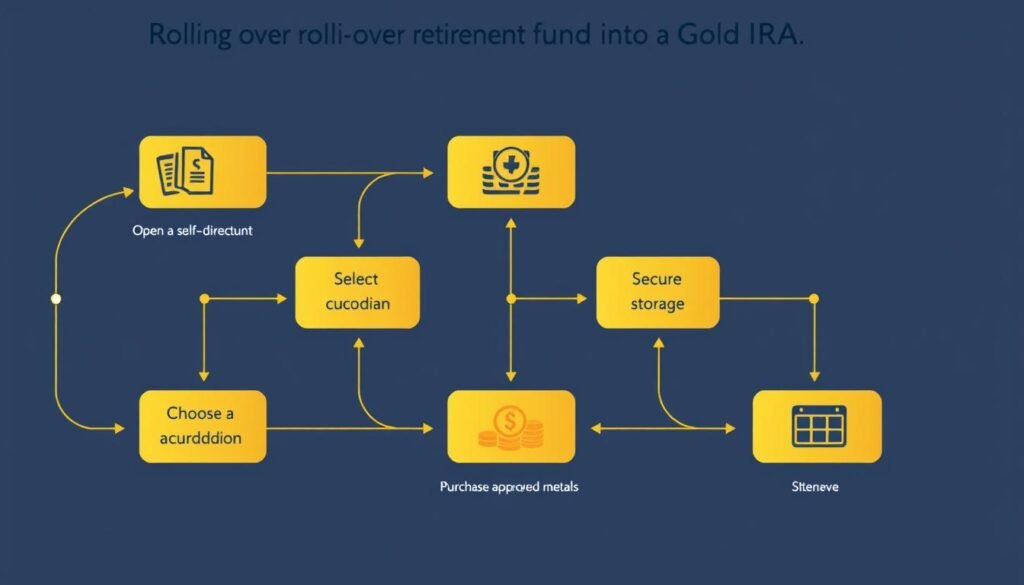
    As you implement your Gold IRA rebalancing strategy, leverage the tools and resources available to you, stay informed about precious metals markets, and don’t hesitate to consult with financial professionals who specialize in retirement planning with precious metals. Your diligence in maintaining a properly balanced Gold IRA today will help ensure financial security and peace of mind throughout your retirement years.

    Get Expert Help With Your Gold IRA Strategy

    Still have questions about rebalancing your Gold IRA? Our precious metals specialists can help you develop a customized rebalancing strategy tailored to your retirement goals and market conditions.
    Schedule a Free Consultation

    Or download our comprehensive guide:

    Get the Complete Gold IRA Rebalancing Guide