
Category: Blog

  • Safeguard Your Wealth with Gold: Long-Term Purchasing Power Strategies

    Safeguard Your Wealth with Gold: Long-Term Purchasing Power Strategies

    I felt a chill when rising grocery bills first hit my budget. It made me rethink how I keep my savings safe and real. I turned to a tangible store of value that has helped many investors through hard times: gold.

    History matters. In the 1970s and again in the 2000s, inflation coincided with sharp gains in gold prices, and more recently gold rose strongly through 2024-2025. These moves show how this precious metal can help preserve wealth when the dollar weakens.

    In this guide I explain a practical, evidence-based path to maintain purchasing power with measured investment choices. I will cover how investors behaved in past periods, ways to allocate physical and paper exposure, and what recent market action implies for realistic expectations.

    Key Takeaways

    • Gold can act as a store of value during inflationary periods.
    • Historical runs in gold proved useful for many investors’ wealth preservation.
    • I outline practical steps to combine physical and paper exposure for steady results.
    • Recent strong moves in gold prices inform—but don’t guarantee—future returns.
    • For broader context on inflation options, see this inflation protection resource.

    Why I’m Looking to Gold Right Now for Wealth Preservation

    When headlines turn uncertain, I look for assets that steady my savings. I prioritize gold because my main goal is to preserve wealth as inflation and policy shifts change market prospects.

    My buyer’s guide approach translates complex economic factors into clear steps I can act on. I track a short set of indicators—CPI trends, yields, and the U.S. dollar—so decisions reflect real conditions rather than noise.

    I want exposure that can respond to economic uncertainty without forcing me to time every twist. That means weighing risk and goals up front, and setting allocation ranges that match my comfort with downside and my need for stability.

    • What you’ll learn: how inflation erodes returns, why this asset behaves differently than cash, and how to balance physical and paper exposure.
    • My promise: a practical checklist and a calm approach—patience over aggressive moves when conditions demand it.

    For a clear buying framework and practical steps, see my guide on buy-and-hold methods.

    Inflation, Currency Erosion, and Gold’s Safe-Haven Role

    Rising store prices quietly shrink what my cash can buy each month. I watch the CPI because it shows how savings lose value. When prices climb, cash and fixed-income returns can be hit hard.

    How inflation diminishes purchasing power in the real world

    I notice inflation in everyday bills: groceries, fuel, and services. Each price rise means my dollar buys less. That erosion can quietly drain an unprotected nest egg.

    Why tangible precious metal assets behave differently than paper currency

    I favor a scarce, tangible asset that can’t be printed. Physical metal is finite, while currency supply can expand and boost depreciation risk.

    • Mechanics: rising CPI reduces real returns on cash and bonds.
    • Role: the metal often holds value when currency weakens, though correlation is imperfect.
    • Reality check: prices respond to rates, dollar strength, and demand — so this is a complement, not a cure-all.

    For a deeper look at cash in inflationary periods, see is cash king during inflation?

    What History Shows: Gold Prices in High-Inflation and Uncertain Periods

    Looking back at key market episodes helps me separate noise from meaningful trends. I review past moves to see which factors pushed prices and when investors treated the metal as a refuge.

    The 1970s surge and the early-2000s bull market

    In the 1970s, U.S. inflation averaged about 7.4% and hit nearly 14% in 1980. That pressure sent the metal from roughly $35/oz to over $800/oz.

    From 2001 to 2011, gold climbed from about $250/oz to above $1,900/oz while inflation stayed near 2.5%. That decade shows demand and safe-haven flows can lift prices even when inflation is mild.

    Safe-haven dynamics in the 2008 crisis

    During the 2008 financial shock, the metal passed $1,000/oz as liquidity stress and fear drove demand. Inflation was subdued, but systemic stress made the metal a refuge for many investors.

    Present-day momentum: context for 2024-2025 market conditions

    In 2024–2025, the metal rose from around $2,000/oz to near $2,950/oz, outpacing the S&P 500. Rate expectations, liquidity and currency shifts helped fuel that move.

    “History offers scenarios, not guarantees.”

    • I use historical price ranges to set size and stay through drawdowns.
    • I watch a small dashboard of CPI, rates, and currency trends rather than chase headlines.

    How Gold Helps Protect Purchasing Power Over the Long Term

    A majestic golden eagle soars gracefully against a sky of warm hues, casting a powerful shadow over a landscape of rolling hills and lush greenery. In the foreground, a hand holds a gleaming gold coin, symbolizing the enduring purchasing power and stability of this precious metal. The lighting is soft and natural, creating a serene and timeless atmosphere. The overall composition conveys the idea of gold as a reliable long-term investment, able to weather economic storms and preserve wealth over time.

    I keep a steady allocation to help my portfolio stay closer to rising living costs. A measured share of metal tends to attract demand in periods of inflation and uncertainty, which can help preserve real value across cycles.

    I accept that the inflation hedge is imperfect. The link between price moves and holdings isn’t one-to-one every year. Still, over stretches that include high-inflation waves, exposure has often helped keep purchasing power intact.

    My approach is practical: I buy incrementally on weakness and rebalance to avoid emotional swings. That discipline smooths volatility and keeps my allocation as core ballast rather than a market bet.

    • Math mindset: I size positions so gains in bad inflation regimes can offset losses in disinflation phases.
    • Price context: I judge moves against rates, currency trends, and real yields.
    • Expectation: value preservation first; modest growth second.

    I sleep better knowing part of my capital helps buffer shocks. This calm, rules-based plan keeps my focus on long term results, not headlines.

    Choosing the Right Form: Physical Gold vs. Paper Gold

    How I take exposure—by vault or by ticker—shapes the risks I face and the fees I pay.

    Direct ownership: bars, coins, and storage considerations

    I keep some bars and coins because they are a straightforward claim on the metal itself. Physical possession removes certain fund-level counterparty concerns.

    That clarity comes with trade-offs: premiums on small coins, secure storage costs, and slower transactions when I need cash.

    Paper exposure: ETFs, futures, and mining stocks

    Paper instruments like SPDR Gold Shares (GLD), futures, and miners give fast execution and easy sizing for an investment thesis.

    They can also add volatility and tracking error, and derivatives may introduce leverage that magnifies moves in prices.

    Counterparty risk, volatility, and tracking differences

    I balance forms to match purpose. Core holdings favor physical assets; tactical moves often suit paper for flexibility.

    • I cap sizes in high-volatility vehicles and avoid reliance on one product.
    • I evaluate spot, ETF, and futures curves so I know what I pay to hold exposure.
    • Physical holdings reduce fund-level risks, while paper offers liquidity and lower immediate custody chores.

    “Choose the vehicle that fits your custody comfort, timing needs, and tolerance for tracking gaps.”

    Aligning Strategy with Goals and Risk Tolerance

    A serene and thoughtful office scene, where a senior executive sits at a mahogany desk, contemplating financial strategies and risk management. The warm, golden lighting creates a sense of gravitas, while the large windows offer a vista of a lush, green park, symbolizing the long-term, sustainable approach. On the desk, a tablet displays charts and graphs, guiding the decision-making process. The executive's expression is one of focused concentration, carefully aligning the organization's goals with an appropriate risk tolerance, ensuring the preservation of wealth over the long haul.

    I start every plan by mapping what I need my money to do over the next few years. Writing down my goals makes choices clearer and easier to follow.

    Define horizon and liquidity

    Defining your time horizon, liquidity needs, and volatility comfort

    I set a time frame for each sleeve of my portfolio. Core holdings are held for many cycles, while tactical positions have shorter timelines and tight controls.

    I assess liquidity needs so I decide how much stays in tradable funds versus physical metal I plan to hold. That helps me avoid selling at the worst moment.

    Be honest about risk and risk tolerance

    I state how much drawdown I can handle. That keeps me from abandoning the plan when prices swing.

    • I document my goals and acceptable risks before I buy.
    • I size positions so routine drawdowns won’t derail my plan.
    • I rebalance on a schedule to remove emotion.
    Consideration Core Sleeve Tactical Sleeve
    Horizon Multi-year Months to a few years
    Liquidity Lower (secure storage) High (ETFs, futures)
    Risk Moderate Higher

    Building a Balanced Portfolio Hedge with Precious Metals

    My plan layers metals alongside stocks and bonds so each part has a clear job.

    Allocations that complement stocks, bonds, and cash

    I map allocations so gold hedges inflation and systemic stress, while my stock and bond sleeves target growth and income in steadier conditions.

    I keep precious metal exposure in a band—often single-digit to low-teens percent of the portfolio—set to my risk tolerance. That lets the metal act as ballast without crowding out growth assets.

    Diversifying across gold and silver for different market conditions

    Silver can react differently than gold across cycles. It is more volatile and may amplify gains or drawdowns.

    • I include silver alongside gold to broaden the hedge and accept higher volatility.
    • I decide core versus tactical holdings: core sits in secure storage or ETFs; tactical uses liquid positions I can trim on strong moves.
    • I rebalance after big price moves or on a schedule so my hedge stays within its target band.
    Role Core Sleeve Tactical Sleeve
    Primary aim Preserve value in stress Capture opportunistic moves
    Typical vehicles Physical bullion, allocated vaults ETFs, futures, miners
    Volatility Lower Higher

    “I track correlations so metals complement, not duplicate, other assets.”

    Precious Metal IRAs: Long-Term vs. Short-Term Approaches

    Holding physical metal inside an IRA changes how I think about fees, storage, and timelines. A precious metal IRA is a self-directed account that holds physical bullion like coins and bars within an IRA wrapper.

    Eligibility, purity standards, and approved depositories

    The IRS requires specific purity levels (for example, gold at 99.5% for many coins) and mandates storage at an approved depository. I pick custodians and vaults with clear records and insurance to reduce operational risks.

    Wealth preservation over years vs. capturing shorter price moves

    For long horizons I favor steady holdings for wealth preservation and a hedge against inflation. If I chase shorter moves, transaction costs and dealer spreads can eat returns.

    Storage fees, transaction costs, and tax considerations inside IRAs

    Fees include storage, custodian charges, and dealer spreads. Those costs compound over years and affect net returns. IRA tax rules govern distributions, so I plan withdrawals to avoid surprises.

    Approach Purpose Trade-offs
    Core IRA Wealth preservation Lower liquidity, steady custody fees
    Tactical sleeve Capture market moves Higher costs, harder to trade inside IRA
    Allocation fit Match risk tolerance Core in IRA, tactics in taxable accounts

    “I treat the IRA as my core bullion home and keep nimble plays where I can move fast.”

    Reading the Market: Economic Factors, Trends, and Timing

    My process starts with a few clear data points rather than a flood of headlines. I focus on readings that explain most moves in precious metals and overall market behavior.

    Inflation prints, interest rates, and dollar strength

    I watch inflation releases and real interest rates closely because they set gold’s opportunity cost versus cash and bonds. A surprise CPI print or a shift in Fed guidance can change expectations fast.

    Dollar moves matter too: a stronger currency often weighs on gold prices, while a softer currency usually helps them. I track these inputs to set realistic expectations.

    Volatility spikes and periods of economic uncertainty

    During volatility spikes and uncertainty, safe-haven demand can lift metal even when inflation is moderate. I treat those episodes as signals to review sizing and rebalance, not to chase price.

    Timing is imperfect. My goal is to be roughly right with a repeatable process rather than precisely right with every trade.

    • I anchor decisions to CPI, real rates, and dollar trends.
    • I add gradually based on price levels and trend structure.
    • I map hot-inflation and disinflation scenarios so I can act within allocation bands.
    Signal Typical effect on prices My action
    Higher inflation Tailwind for gold prices Hold or add gradually
    Rising real rates Headwind for bullion Trim tactical exposure
    Softening dollar Support for metal Review sizing, consider rebalancing

    “Focus on the few economic factors that move markets most, and let a clear process guide your actions.”

    Long term purchasing power protection strategies using gold

    A practical blend of vault-held coins and ETFs gives me stability and flexibility as conditions change.

    Core holding of physical metal plus liquid paper instruments

    I define my core as bullion I plan to keep through cycles. Physical coins and bars sit in allocated storage to preserve value and act as a hedge against inflation.

    I complement that core with liquid paper exposure like GLD. ETFs let me scale positions fast and adjust to market moves without touching vault logistics.

    Rebalancing rules and disciplined buying in varying market conditions

    Discipline beats timing. I set both time-based reviews and threshold triggers. That means quarterly checks and rebalances when weights shift by a set percentage.

    • I buy in increments across prices to smooth entries and improve average cost.
    • I keep allocations inside a target band so a rally or drop won’t derail my portfolio.
    • My dashboard—CPI trend, real yields, and dollar moves—guides pacing but does not override rules.
    Component Role Typical Vehicles
    Core Preserve value through cycles Allocated bars, coins, vaulted storage
    Liquid Scale and respond to market ETFs (GLD), futures, miners
    Rules Manage risk and harvesting gains Time-based rebalance, threshold trims/adds

    Conclusion

    My final point is simple: prepare a repeatable process and follow it through uncertain times. Historically, gold helped protect real value in the 1970s, the 2008 crisis, and the 2024–2025 run, but performance shifts with rates, currency moves, and demand.

    I build a balanced plan: a core of physical metal, selective paper exposure, and rules for rebalancing and incremental buys. This mix aims to preserve value across difficult periods while limiting portfolio whiplash.

    Be honest about risk, fees, and volatility. Tailor allocations to your goals, savings, and time horizon. Measured decisions usually beat reactive ones, and steady discipline supports wealth preservation over years.

    FAQ

    Why am I considering gold now for wealth preservation?

    I’m looking at precious metals because inflation, currency erosion, and geopolitical uncertainty have raised the odds that paper assets may lose real value. Gold and silver tend to behave differently than fiat currency and can act as a hedge when interest rates, the dollar, or markets move unpredictably.

    How does inflation reduce purchasing power in everyday life?

    Inflation raises the price of goods and services, so the same dollar buys less over time. I watch consumer price indexes, wage trends, and energy costs to see how quickly savings erode and whether hard assets like bullion might preserve value better than cash.

    What evidence shows precious metals protect wealth during crises?

    Historical episodes—like the 1970s commodity surge, the early-2000s bull market, and the 2008 financial crisis—show precious metals often gain when stocks fall or currencies weaken. I study price moves, volatility, and safe-haven flows to gauge how metals respond in stress.

    Should I own physical bullion or paper exposure such as ETFs?

    It depends on my goals. Physical bars and coins offer direct ownership and no counterparty risk but require secure storage and insurance. ETFs and futures offer liquidity and low transaction costs but carry tracking error and counterparty considerations. I often combine both to balance access and security.

    How much of my portfolio should be in gold and silver?

    Allocation depends on my time horizon, risk tolerance, and liquidity needs. Many investors hold a modest core allocation—often 5–15%—to hedge against inflation and market crashes. I adjust allocations when volatility spikes or my goals change.

    How can I rebalance when metal prices swing sharply?

    I set rules in advance: rebalance at defined thresholds (for example, every 6–12 months or when allocation drifts by 20%). I also use dollar-cost averaging to buy during dips and reduce timing risk during volatile periods.

    What role does silver play compared to gold in a diversified hedge?

    Silver often has greater industrial demand and higher volatility than gold. That means it can amplify gains in rallies but drop harder in downturns. I use silver to complement gold—adding potential upside while recognizing extra price swings.

    Are Precious Metal IRAs a good way to hold bullion for retirement?

    Precious metal IRAs can be useful if I want tax-advantaged exposure, but they require approved depositories, meet purity standards, and entail storage fees and transaction costs. I weigh long-term preservation benefits against those ongoing expenses and liquidity limits.

    What economic indicators should I follow to time purchases?

    I track inflation prints (CPI, PCE), real interest rates, Federal Reserve policy, and dollar strength. Sharp volatility spikes, rising geopolitical risk, or loose monetary policy often increase the appeal of metals as a hedge.

    How do I manage counterparty risk with paper gold products?

    I prefer ETFs with strong market makers and transparent holdings, and I verify custody arrangements. For futures and structured products, I check issuer creditworthiness and understand settlement mechanics to reduce exposure to counterparties.

    Can precious metals match inflation over many years?

    Over decades, bullion has preserved purchasing capability better than cash in many cases, though returns can vary. I consider a mix of physical holdings and liquid instruments to capture long-run value while managing short-run volatility.

    What tax and cost factors should I consider when buying bullion?

    Taxes vary by jurisdiction; in the U.S., collectibles rules can affect capital gains on physical coins and bars. I also account for dealer spreads, storage fees, and insurance. Consulting a tax advisor helps me optimize net outcomes.

    How do I choose reputable dealers, vaults, or ETFs?

    I look for established firms with clear pricing, strong reviews, and transparent custody practices. For ETFs, I check liquidity, expense ratios, and physical backing. For storage, I prefer insured, allocated vaults with audit trails.

    What risks should I accept when adding metals to my portfolio?

    I accept price volatility, potential storage costs, and opportunity cost versus other investments. I avoid overconcentration and maintain liquidity for emergencies so metals serve as preservation tools rather than speculative bets.

    How often should I review and adjust my precious metals plan?

    I review allocations at least annually and after major market or life events. I also monitor macro indicators regularly and rebalance when allocations drift beyond my set thresholds.

    Can I use metals to hedge currency depreciation if I live outside the U.S.?

    Yes. Precious metals are quoted in many currencies and often act as a global store of value. I compare local inflation, currency trends, and access to physical metal when deciding how much exposure to hold.

    How do geopolitical events affect metal prices and strategy?

    Geopolitical shocks can spark safe-haven flows, sending prices higher quickly. I keep a portion of my holdings in liquid instruments to act on sudden opportunities while the bulk remains in secure, long-term storage.

    What are practical first steps to start building a metals hedge?

    I start by defining goals and horizon, choose a target allocation, pick reputable dealers or ETFs, and decide on storage. I use dollar-cost averaging to build the position and set rebalancing rules to maintain discipline.

  • How to Inflation-Proof Your Retirement Savings with a Gold IRA

    How to Inflation-Proof Your Retirement Savings with a Gold IRA

    As inflation continues to erode the purchasing power of traditional retirement accounts, savvy investors are turning to alternative strategies to protect their hard-earned savings. A Gold IRA offers a powerful hedge against inflation, providing stability when markets fluctuate and currencies weaken. This comprehensive guide explores how physical gold and other precious metals can safeguard your retirement nest egg from the silent wealth destroyer that is inflation.

    Physical gold in a retirement portfolio can provide protection against inflation and economic uncertainty

    The Growing Inflation Threat to Traditional Retirement Accounts

    Inflation represents one of the greatest long-term threats to retirement security. Even modest inflation rates can dramatically reduce your purchasing power over time, turning what seemed like adequate savings into insufficient funds for your golden years.

    Chart showing the declining purchasing power of the dollar due to inflation over decades

    The declining purchasing power of the dollar over time due to inflation

    How Inflation Erodes Traditional Retirement Accounts

    Traditional retirement vehicles like 401(k)s and standard IRAs are primarily invested in stocks, bonds, and cash equivalents. While these assets may provide growth during stable economic periods, they often struggle during inflationary cycles. When inflation rises, the Federal Reserve typically responds by increasing interest rates, which can negatively impact both stock and bond values simultaneously.

    Inflation Impact Example: A modest 3% annual inflation rate will cut your purchasing power in half over approximately 24 years. This means $500,000 in retirement savings would effectively be worth only $250,000 in real buying power.

    Even Treasury Inflation-Protected Securities (TIPS), which are designed to adjust with inflation, often fail to keep pace with the real cost of living increases experienced by retirees, particularly in healthcare and housing expenses.

    Concerned About Inflation Eating Away Your Retirement?

    Download our free guide to learn how inflation impacts retirement accounts and what you can do to protect your savings.

    Get Your Free Inflation Protection Guide

    Introducing the Inflation-Proof Gold IRA Solution

    A Gold IRA (Individual Retirement Account) is a specialized self-directed IRA that allows you to hold physical precious metals as part of your retirement portfolio. Unlike traditional IRAs that limit you to paper assets, a Gold IRA enables you to own tangible, physical gold and other precious metals while maintaining the tax advantages of a retirement account.

    Comparison of traditional IRA vs Gold IRA performance during inflationary periods

    Performance comparison: Traditional IRAs vs. Gold IRAs during inflationary periods

    What Qualifies for a Gold IRA?

    The IRS has specific requirements for precious metals that can be included in a Gold IRA:

    IRS-Approved Gold Products:

    • American Gold Eagle coins
    • Canadian Gold Maple Leaf coins
    • Australian Gold Kangaroo/Nugget coins
    • Gold bars and rounds from approved refiners (99.5% purity minimum)

    Other Eligible Precious Metals:

    • American Silver Eagle coins
    • American Platinum Eagle coins
    • Canadian Palladium Maple Leaf coins
    • Silver, platinum, and palladium bars (99.9% purity minimum)

    Historical Performance During Inflationary Periods

    Gold has a proven track record as an inflation hedge. During the high inflation period of the 1970s, gold prices rose from $35 per ounce to over $850 by 1980, delivering returns that far outpaced inflation. More recently, during the 2008 financial crisis and subsequent quantitative easing, gold prices more than doubled while many traditional investments faltered.

    Historical chart showing gold price performance during major inflationary periods

    Gold price performance during major inflationary periods (1970s-Present)

    “Gold has maintained its value throughout thousands of years of human history, serving as a reliable store of wealth when paper currencies have failed.”

    – Financial historian and precious metals expert

    Step-by-Step Guide to Setting Up Your Inflation-Proof Gold IRA

    Establishing a Gold IRA is a straightforward process when you understand the key steps involved. Here’s how to get started with your inflation-protected retirement account:

    Step-by-step process diagram for setting up a Gold IRA

    The Gold IRA setup process from start to finish

    Step 1: Choose a Reputable Gold IRA Custodian

    Selecting the right custodian is perhaps the most critical decision in establishing your Gold IRA. The custodian is the financial institution responsible for maintaining and protecting your retirement assets in compliance with IRS regulations.

    What to Look for in a Gold IRA Custodian:

    • Experience and Reputation – Look for established companies with strong customer reviews and industry ratings
    • Fee Structure – Compare setup fees, annual maintenance fees, storage fees, and transaction costs
    • IRS Compliance – Ensure they’re fully compliant with all IRS regulations for precious metals IRAs
    • Storage Options – Verify they offer secure, IRS-approved storage facilities with proper insurance
    • Customer Service – Assess their responsiveness, knowledge, and willingness to answer questions

    Step 2: Fund Your Gold IRA

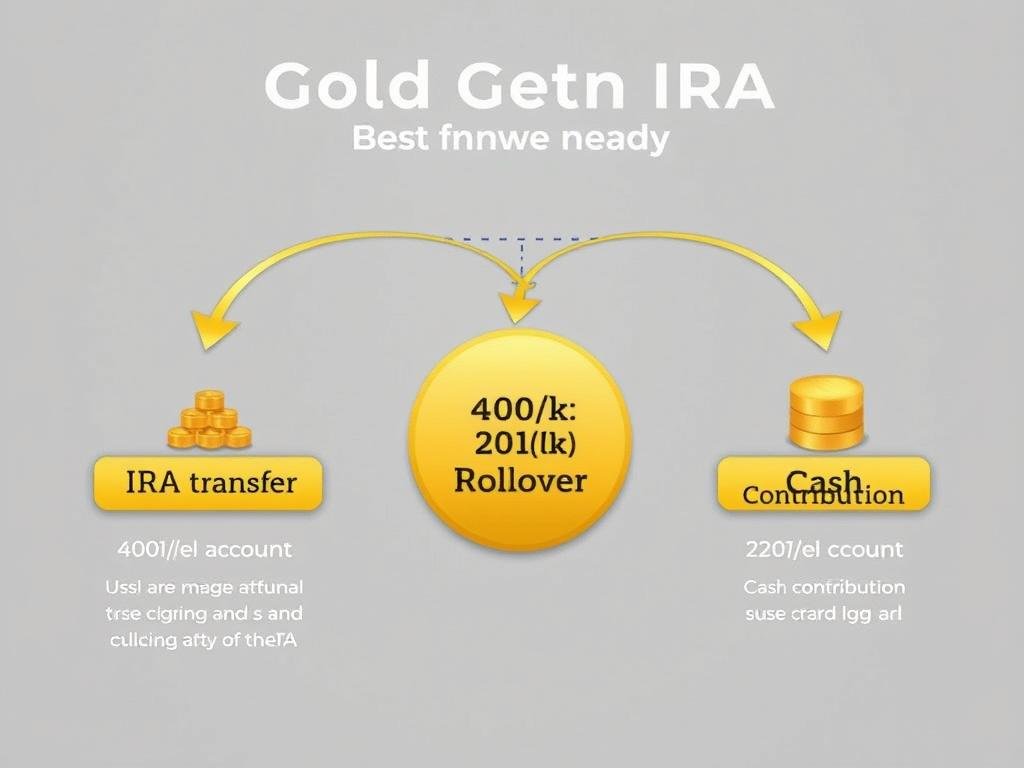
    Once you’ve selected a custodian, the next step is funding your account. There are three primary methods to fund your Gold IRA:

    IRA Transfer

    Move funds directly from an existing IRA to your new Gold IRA without tax penalties. This is a custodian-to-custodian transfer that doesn’t trigger IRS reporting.

    401(k) Rollover

    Roll over funds from an employer-sponsored retirement plan like a 401(k), especially if you’re changing jobs or retiring. Must follow IRS timing rules to avoid penalties.

    Cash Contribution

    Make a direct cash contribution to your Gold IRA, subject to annual IRA contribution limits ($7,000 for 2024; $8,000 if age 50+).

    Diagram showing the three funding methods for a Gold IRA

    The three primary methods to fund your Inflation-Proof Gold IRA

    Step 3: Select Your IRS-Approved Precious Metals

    After funding your account, you’ll work with your custodian to purchase IRS-approved precious metals. Your custodian will execute the purchases on your behalf, ensuring all metals meet IRS requirements for purity and authenticity.

    Various IRS-approved gold coins and bars for Gold IRAs

    IRS-approved gold coins and bars eligible for Gold IRA investment

    Important: The IRS requires precious metals in an IRA to meet minimum purity standards: 99.5% for gold, 99.9% for silver, and 99.95% for platinum and palladium.

    Step 4: Arrange Secure Storage

    IRS regulations prohibit personally holding the physical precious metals in your Gold IRA. Instead, they must be stored in an IRS-approved depository. Your custodian will arrange this storage on your behalf.

    Secure vault storage facility for Gold IRA precious metals

    IRS-approved secure storage facility for Gold IRA assets

    Reputable depositories offer segregated storage (your metals are stored separately from others) or allocated storage (your specific metals are identified and allocated to you but may be stored with others). Segregated storage typically costs more but provides additional security and peace of mind.

    Step 5: Manage Your Gold IRA Investment

    Once established, your Gold IRA requires periodic review and management. You can make additional contributions (within annual limits), adjust your precious metals holdings, or begin taking distributions when eligible.

    Distribution Note: When taking distributions from your Gold IRA, you can either take physical possession of the metals (triggering taxes and potential penalties if under age 59½) or have the custodian sell the metals and distribute the cash value.

    Gold IRAs vs. Other Inflation-Resistant Investment Options

    While a Gold IRA offers excellent inflation protection, it’s important to understand how it compares to other inflation-resistant investment options. This comparison can help you determine the optimal allocation for your retirement portfolio.

    Comparison chart of various inflation-resistant investment options

    Performance comparison of various inflation-resistant investment options

    Investment Option Inflation Protection Growth Potential Liquidity Volatility Tax Advantages
    Gold IRA Excellent Moderate Moderate Moderate High (IRA benefits)
    TIPS (Treasury Inflation-Protected Securities) Good Low High Low Moderate
    Real Estate Good High Low Moderate Moderate
    Dividend Stocks Moderate High High High Varies
    Commodities (ex. Gold) Good Moderate Moderate High Low

    TIPS (Treasury Inflation-Protected Securities)

    TIPS are government bonds designed to protect against inflation by adjusting their principal value based on changes in the Consumer Price Index (CPI). While they offer direct inflation protection, their returns are typically lower than those of physical gold during high inflation periods.

    TIPS Advantages

    • Direct adjustment to official inflation rates
    • Government-backed security
    • High liquidity
    • Low volatility

    TIPS Limitations

    • Based on CPI, which may understate real inflation
    • Lower returns during high inflation
    • Subject to interest rate risk
    • Taxable even on inflation adjustments

    Real Estate

    Real estate has traditionally been a strong inflation hedge, as property values and rental income tend to increase with inflation. However, real estate lacks the portability, divisibility, and liquidity of precious metals.

    Real Estate Advantages

    • Potential for rental income
    • Property value appreciation
    • Tax benefits through depreciation
    • Leverage through mortgages

    Real Estate Limitations

    • High entry costs
    • Property management responsibilities
    • Low liquidity
    • Location-dependent performance

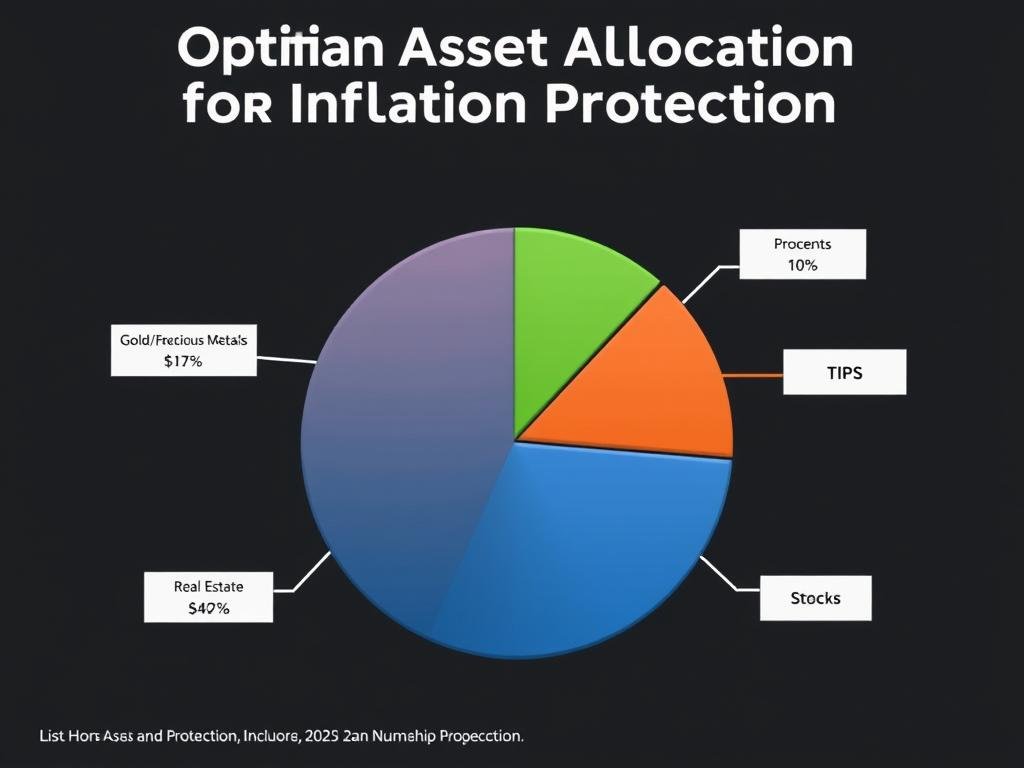
    Asset allocation pie chart showing optimal inflation protection portfolio

    Suggested asset allocation for optimal inflation protection

    Understanding the Risks and Limitations of Gold IRAs

    While Gold IRAs offer significant benefits for inflation protection, it’s important to understand their potential drawbacks and limitations to make an informed investment decision.

    Risk assessment diagram for Gold IRA investments

    Risk assessment factors for Gold IRA investments

    Storage and Insurance Costs

    Unlike paper assets, physical gold requires secure storage and insurance, which incur ongoing fees. These costs typically range from 0.5% to 1% of your holdings annually, which can impact your overall returns, especially during periods of price stability.

    Market Volatility

    While gold tends to maintain its value over the long term, it can experience significant short-term price fluctuations. These price swings can be influenced by factors such as interest rates, currency values, and global economic conditions.

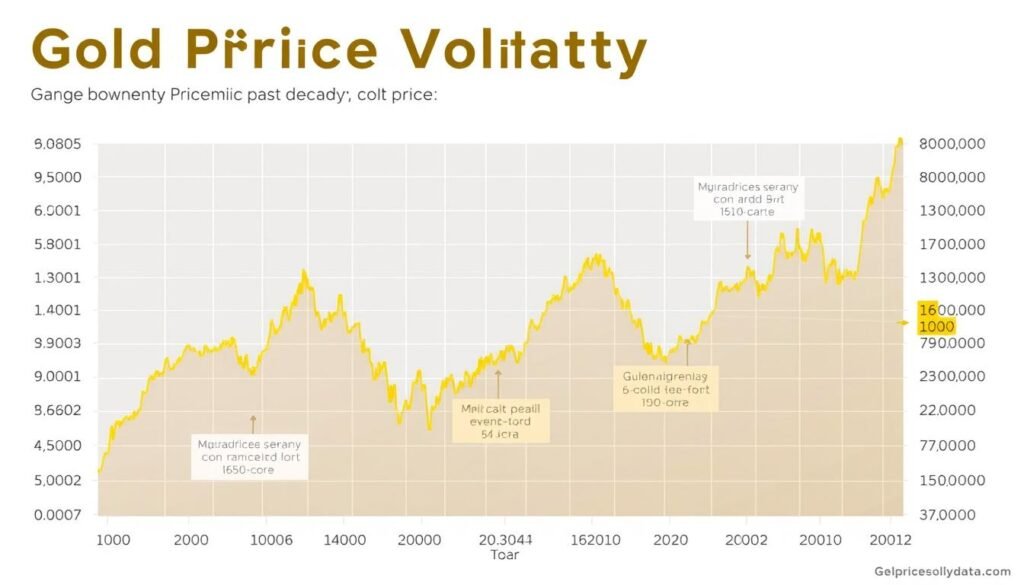
    Chart showing gold price volatility over the past decade

    Gold price volatility over the past decade with key market events

    Liquidity Considerations

    While gold is generally considered a liquid asset, converting physical gold in an IRA to cash involves a multi-step process. Your custodian must arrange for the sale of the metals and then distribute the proceeds, which can take several days to complete.

    No Income Generation

    Unlike dividend stocks or interest-bearing bonds, physical gold does not generate income. Its value is based solely on price appreciation, which means it doesn’t provide cash flow during your retirement years.

    4.2
    Overall Rating

    Inflation Protection

    4.5/5

    Long-term Growth

    4.0/5

    Liquidity

    3.5/5

    Cost Efficiency

    3.5/5

    Ease of Setup

    4.5/5

    Optimal Diversification Strategies with Gold IRAs

    A well-balanced approach to retirement planning doesn’t rely solely on any single asset class. Instead, strategic diversification that includes gold and other precious metals can provide optimal inflation protection while managing overall portfolio risk.

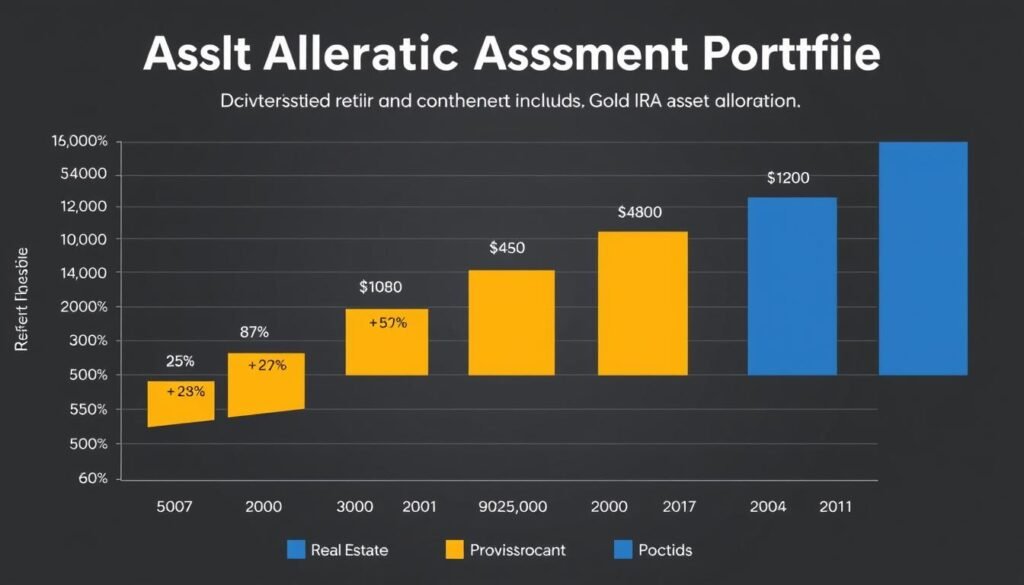
    Diversified retirement portfolio allocation chart including Gold IRA

    Balanced retirement portfolio allocation including Gold IRA component

    The 5-15% Gold Allocation Rule

    Financial experts typically recommend allocating between 5% and 15% of your retirement portfolio to precious metals. This range provides meaningful inflation protection without overexposing your portfolio to a single asset class.

    “Don’t put all your eggs in one basket, but make sure one of your baskets is lined with gold.”

    – Common investment wisdom

    Balancing Different Precious Metals

    Within your precious metals allocation, consider diversifying across different metals to optimize your inflation protection:

    Gold (60-70%)

    The foundation of your precious metals portfolio, gold offers the most reliable inflation protection and global recognition as a store of value.

    Silver (20-30%)

    Often more volatile than gold but with greater industrial demand, silver can provide both inflation protection and growth potential.

    Platinum/Palladium (5-10%)

    These rarer metals have significant industrial applications and can provide additional diversification within your precious metals allocation.

    Dollar-Cost Averaging into Gold

    Rather than making a single large purchase, consider building your Gold IRA position gradually through dollar-cost averaging. This approach helps mitigate the impact of gold’s price volatility and potentially improves your average purchase price over time.

    Dollar-cost averaging chart showing gold purchases over time

    Dollar-cost averaging strategy for building a Gold IRA position

    Ready to Diversify Your Retirement Portfolio?

    Speak with a qualified financial advisor who specializes in precious metals IRAs to create a personalized inflation protection strategy.

    Schedule Your Free Consultation

    Conclusion: Securing Your Retirement Against Inflation

    In an era of unprecedented monetary expansion and growing inflation concerns, protecting your retirement savings has never been more critical. An Inflation-Proof Gold IRA offers a time-tested solution that has preserved wealth through centuries of economic uncertainty.

    Retired couple reviewing their Gold IRA portfolio statements

    Securing retirement peace of mind through strategic inflation protection

    By allocating a portion of your retirement portfolio to physical gold and other precious metals, you create a powerful hedge against inflation while maintaining the tax advantages of an IRA structure. While no investment strategy is without risk, the historical performance of gold during inflationary periods makes it a compelling component of a well-diversified retirement plan.

    Remember that the optimal approach combines traditional retirement assets with alternative investments like a Gold IRA. Consult with a qualified financial advisor to determine the right allocation for your specific retirement goals, time horizon, and risk tolerance.

    Key Takeaways:

    • Inflation poses a significant threat to traditional retirement accounts
    • Gold IRAs offer tax-advantaged precious metals ownership
    • A 5-15% allocation to precious metals provides meaningful inflation protection
    • Diversification across different metals optimizes your protection strategy
    • Professional guidance ensures proper implementation and compliance

    Request Your Free Gold IRA Information Kit

    Learn everything you need to know about protecting your retirement with precious metals.


    Your information is secure and will never be shared with third parties.

  • How a Gold IRA Provides Peace of Mind for Worried Retirees

    How a Gold IRA Provides Peace of Mind for Worried Retirees

    For retirees concerned about economic uncertainty, a Gold IRA offers a tangible way to protect retirement savings from market volatility, inflation, and currency devaluation. Unlike traditional retirement accounts that rely solely on paper assets, a Gold IRA allows you to hold physical precious metals within a tax-advantaged structure, providing a sense of security during turbulent times. This comprehensive guide explores how Gold IRAs work, the specific fears they address, and the steps to establish your own precious metals retirement account.

    What Is a Gold IRA and How Does It Differ from Traditional Retirement Accounts?

    Physical gold in a Gold IRA provides tangible asset security unlike traditional paper-based retirement accounts

    A Gold IRA (Individual Retirement Account) is a self-directed retirement account that allows investors to hold physical precious metals like gold, silver, platinum, and palladium instead of traditional paper assets like stocks and bonds. This specialized IRA follows the same tax rules as conventional retirement accounts but provides the unique benefit of holding tangible assets.

    Key Differences Between Gold IRAs and Traditional Retirement Accounts

    Feature Gold IRA Traditional IRA
    Asset Types Physical precious metals (gold, silver, platinum, palladium) Stocks, bonds, mutual funds, ETFs
    Storage Requirements IRS-approved depository required Digital holdings managed by custodian
    Inflation Protection Strong historical hedge against inflation Variable depending on investment selection
    Market Correlation Often moves inversely to stock market Typically follows market trends
    Tangibility Physical assets you can see and touch Paper assets represented by statements

    Like traditional IRAs, Gold IRAs come in several varieties: Traditional Gold IRAs (tax-deductible contributions with taxable withdrawals in retirement), Roth Gold IRAs (after-tax contributions with tax-free qualified withdrawals), and SEP Gold IRAs (for self-employed individuals and small business owners).

    The primary appeal of a Gold IRA is that it combines the tax advantages of a retirement account with the security of physical precious metals, creating a powerful tool for portfolio diversification and wealth preservation.

    Common Fears Threatening Retirement Security

    Worried senior couple reviewing financial statements with concerned expressions

    Many retirees worry about economic factors that could erode their retirement savings

    Today’s retirees face unprecedented economic challenges that threaten the security of their retirement savings. Understanding these concerns is the first step toward addressing them with appropriate investment strategies.

    Inflation: The Silent Retirement Killer

    Inflation represents one of the most significant threats to retirement security. Even modest inflation rates of 2-3% annually can dramatically reduce purchasing power over a 20-30 year retirement period. The U.S. inflation rate reached 9.1% in June 2022, the highest level in over 40 years, highlighting how quickly this threat can intensify.

    “Many retirees underestimate inflation’s impact. At just 3% inflation, your purchasing power is cut in half after 24 years—well within the timeframe of most retirements.”

    — Robert Johnson, Professor of Finance, Creighton University

    Market Volatility and Sequence of Returns Risk

    Market crashes and corrections pose a serious threat to retirement portfolios, especially for those who have recently retired or are about to retire. The sequence of returns risk—experiencing poor market performance in the early years of retirement—can devastate a portfolio even if long-term averages appear adequate.

    Recent history has demonstrated this volatility: the 2008 financial crisis saw the S&P 500 drop by 38.5%, and the COVID-19 pandemic triggered a 34% market decline in just 33 days during 2020. For retirees withdrawing funds during these downturns, the impact can be devastating and permanent.

    Currency Devaluation and Banking System Concerns

    Government monetary policies, including unprecedented levels of quantitative easing and growing national debt (exceeding $34 trillion in 2023), have raised concerns about the long-term stability of the U.S. dollar. Many retirees worry that their dollar-denominated savings could lose significant value if confidence in the currency erodes.

    Additionally, banking system failures, like those seen in 2023 with Silicon Valley Bank and Signature Bank, have renewed concerns about the safety of financial institutions where retirement funds are often held.

    Protect Your Retirement from These Threats

    Discover how a Gold IRA can help shield your retirement savings from inflation, market volatility, and currency devaluation. Our free guide explains everything you need to know.

    Download Free Gold IRA Guide

    How Physical Gold in an IRA Addresses Retirement Concerns

    Gold price chart showing performance during economic downturns compared to stock market

    Gold has earned its reputation as a “safe haven” asset through centuries of maintaining value during economic turmoil. When incorporated into a retirement strategy through a Gold IRA, it offers specific protections against the concerns that keep many retirees awake at night.

    Gold as an Inflation Hedge

    Historical data supports gold’s role as an inflation hedge. During the high inflation period of 1973-1979, when inflation averaged 8.8% annually, gold delivered average annual returns of 35%. More recently, as inflation surged in 2021-2022, gold prices increased by over 15% while many traditional investments struggled.

    Unlike paper currency, which can be printed in unlimited quantities, gold’s supply grows at only about 1.5% annually. This scarcity helps gold maintain purchasing power over time, making it an effective counterbalance to inflationary pressures.

    Gold’s Performance During Market Downturns

    Economic Crisis S&P 500 Performance Gold Performance
    2008 Financial Crisis (Oct 2007-Mar 2009) -56.8% +25.5%
    Dot-com Bubble (2000-2002) -49.1% +12.4%
    Black Monday (1987) -33.5% +5.8%
    COVID-19 Crash (Feb-Mar 2020) -34.0% +3.6%

    Gold’s tendency to move independently—and often inversely—to stock markets makes it valuable for portfolio diversification. During the 2008 financial crisis, while the S&P 500 lost over 56% of its value, gold gained more than 25%. This pattern has repeated throughout history, demonstrating gold’s ability to provide stability when traditional investments falter.

    Protection Against Currency Devaluation

    As a global asset valued in all currencies, gold provides insulation against the devaluation of any single currency, including the U.S. dollar. When the dollar weakens, gold typically strengthens, helping preserve purchasing power for retirees.

    From 2000 to 2020, as the U.S. dollar lost approximately 40% of its purchasing power, gold increased in value by over 500%, demonstrating its effectiveness as a hedge against currency devaluation.

    “Gold has maintained its value throughout 5,000 years of recorded history. It has outlasted countless currencies, governments, and economic systems. That’s why it continues to play an important role in a well-diversified retirement portfolio.”

    — Michael Maloney, Precious Metals Investment Strategist

    Speak with a Gold IRA Specialist

    Learn how to properly allocate precious metals in your retirement portfolio based on your specific situation and concerns.

    Schedule a Free Consultation

    Gold IRAs vs. Other “Safe Haven” Retirement Options

    Comparison of different retirement safe haven assets including gold, bonds, and real estate

    While gold offers unique benefits for retirement security, it’s important to understand how it compares to other assets commonly considered “safe havens” for retirement savings.

      Gold IRA

    • Strong historical inflation hedge
    • Physical asset not dependent on any issuer’s promise
    • Typically moves inversely to stock market
    • Cannot be printed or created like currency
    • 5,000+ year history as a store of value
    • No counterparty risk
    • Tax-advantaged in IRA structure

      Treasury Bonds

    • Backed by “full faith and credit” of U.S. government
    • Provide regular interest income
    • Generally less volatile than stocks
    • TIPS offer some inflation protection
    • Highly liquid market
    • Subject to interest rate risk
    • Returns may not keep pace with inflation

      Real Estate

    • Tangible asset with utility value
    • Can generate rental income
    • Potential tax advantages
    • Historical appreciation over time
    • Less liquid than financial assets
    • Requires active management
    • Subject to local market conditions

    The Optimal Approach: Strategic Diversification

    Financial experts generally recommend diversification across multiple asset classes rather than concentrating retirement savings in any single vehicle. A balanced approach might include traditional retirement accounts, a Gold IRA, real estate investments, and fixed-income securities.

    “The ideal retirement portfolio includes a strategic allocation to gold and precious metals—typically 5-15% depending on your risk tolerance and time horizon. This provides insurance against systemic risks while allowing participation in traditional growth assets.”

    — Jackie Cummings Koski, Certified Financial Education Instructor

    By incorporating a Gold IRA alongside other retirement vehicles, you create a more resilient portfolio capable of weathering various economic scenarios, from inflation and market crashes to currency devaluation and geopolitical instability.

    Step-by-Step Guide to Setting Up Your Gold IRA

    Person signing Gold IRA paperwork with gold coins visible on the desk

    Establishing a Gold IRA involves several specific steps to ensure compliance with IRS regulations while maximizing the benefits of precious metals ownership in a tax-advantaged structure.

    1. Choose a Reputable Gold IRA Company

      Select a company with strong credentials (A+ BBB rating, positive customer reviews), transparent fee structures, and educational resources. Top-rated companies include Augusta Precious Metals, Goldco, and Birch Gold Group.

    2. Select a Self-Directed IRA Custodian

      Your Gold IRA must be administered by an IRS-approved custodian specializing in precious metals. Leading custodians include Equity Trust Company, STRATA Trust Company, and Kingdom Trust.

    3. Fund Your Gold IRA

      You can fund your account through a direct transfer from an existing IRA, a rollover from a 401(k) or other qualified retirement plan, or a cash contribution (subject to annual IRA contribution limits).

    4. Select IRS-Approved Precious Metals

      The IRS has specific requirements for precious metals held in IRAs. Gold must be 99.5% pure (except for American Gold Eagles), silver must be 99.9% pure, and platinum and palladium must be 99.95% pure.

    5. Arrange Secure Storage

      IRS regulations require that precious metals in an IRA be stored in an approved depository. Home storage is not permitted. Reputable depositories include Delaware Depository, Brink’s Global Services, and IDS of Texas.

    IRS-Approved Precious Metals for Gold IRAs

    Metal Approved Products Purity Requirement
    Gold American Gold Eagle, Canadian Gold Maple Leaf, Australian Gold Kangaroo, Austrian Gold Philharmonic, Gold bars and rounds from approved refiners 99.5% (except American Gold Eagles)
    Silver American Silver Eagle, Canadian Silver Maple Leaf, Australian Silver Kookaburra, Mexican Silver Libertad, Silver bars and rounds from approved refiners 99.9%
    Platinum American Platinum Eagle, Canadian Platinum Maple Leaf, Australian Platinum Koala, Platinum bars and rounds from approved refiners 99.95%
    Palladium Canadian Palladium Maple Leaf, Palladium bars and rounds from approved refiners 99.95%

    Understanding Gold IRA Fees

    Gold IRAs typically involve several types of fees that should be considered when evaluating providers:

    • Setup fee: One-time charge for establishing your account ($50-$150)
    • Annual administration fee: For account maintenance and IRS reporting ($75-$300 annually)
    • Storage fee: For secure depository storage ($100-$300 annually)
    • Transaction fees: For buying or selling precious metals (varies by provider)
    • Seller’s premium: Markup over the spot price of metals (typically 3-5% for gold)

    Many Gold IRA companies offer promotions that waive certain fees for qualifying accounts, such as fee waivers for the first year or reduced storage fees for larger accounts.

    Important: The IRS prohibits “home storage” Gold IRAs. Despite some misleading advertisements, all precious metals in a Gold IRA must be stored in an IRS-approved depository to maintain tax-advantaged status.

    Expert Insights on Portfolio Diversification with Gold

    Financial advisor discussing portfolio diversification with senior clients

    Financial experts widely recognize the importance of diversification in retirement planning, with precious metals playing a strategic role in creating resilient portfolios.

    “The traditional 60/40 portfolio of stocks and bonds is increasingly vulnerable in today’s economic environment. Adding a Gold IRA component of 5-15% provides a counterbalance to paper assets and helps protect against systemic risks that could affect both stocks and bonds simultaneously.”

    — Dr. David Eifrig, Retirement Specialist and Former Goldman Sachs Banker

    “Gold serves as portfolio insurance. You hope you never need it, but you’ll be grateful to have it during times of severe market stress or currency devaluation. For retirees who can’t afford to rebuild their nest egg after a major downturn, this insurance aspect is particularly valuable.”

    — Jim Rickards, Financial Threat Analyst and Author

    “I recommend clients consider their age when determining gold allocation. Those closer to or in retirement might benefit from a larger allocation—perhaps 10-20%—while younger investors with longer time horizons might start with 5-10%. The key is having some exposure to this non-correlated asset class.”

    — Pamela Yellen, Financial Security Expert and Best-Selling Author

    The Psychology of Retirement Security

    Beyond the financial benefits, many retirees report significant psychological advantages from owning physical gold in a retirement account. The tangible nature of precious metals provides peace of mind that purely digital assets cannot match, especially for those who have witnessed financial system failures or currency devaluations during their lifetime.

    A 2022 Gallup survey found that 26% of Americans consider gold the best long-term investment—higher than real estate among those aged 65 and older. This perception often translates into greater confidence and reduced anxiety about retirement security.

    Get Expert Guidance on Gold IRA Investing

    Speak with a specialist who can help you determine the right precious metals allocation for your unique retirement situation.

    Request Your Free Consultation

    Frequently Asked Questions About Gold IRAs

    Is a Gold IRA safe?

    Yes, Gold IRAs are considered safe investments when established with reputable companies and custodians. The physical precious metals are stored in IRS-approved depositories with full insurance coverage against theft or damage. These facilities maintain the highest security standards, including 24/7 monitoring, armed guards, and regular audits.

    From a financial perspective, gold has maintained value for thousands of years and typically performs well during economic uncertainty. However, like all investments, gold prices can fluctuate in the short term. Gold IRAs are best viewed as a long-term wealth preservation strategy rather than a short-term investment vehicle.

    Can I transfer my existing 401(k) to a Gold IRA?

    Yes, you can transfer funds from an existing 401(k) to a Gold IRA through a process called a rollover. This is possible if you’re no longer employed by the company sponsoring the 401(k) or if your plan allows for in-service distributions. The process typically involves these steps:

    1. Open a self-directed Gold IRA account with a qualified custodian
    2. Request a direct rollover from your 401(k) administrator to your new Gold IRA custodian
    3. Once funds are received, direct your Gold IRA custodian to purchase approved precious metals

    A direct rollover (custodian-to-custodian) avoids tax withholding and potential penalties. Most reputable Gold IRA companies will guide you through this process to ensure compliance with IRS regulations.

    Check if Your Retirement Account Qualifies

    Find out if your existing retirement account is eligible for a tax-free rollover to a Gold IRA.

    Check Eligibility Now

    How much of my retirement portfolio should be in gold?

    Financial advisors typically recommend allocating between 5% and 15% of a retirement portfolio to precious metals, including gold. However, the ideal percentage depends on several factors:

    • Your age and time horizon until retirement
    • Your overall risk tolerance
    • Your concerns about specific economic risks (inflation, market crashes, etc.)
    • Your existing portfolio composition

    Those closer to or in retirement often benefit from a slightly higher allocation (10-15%) for greater stability, while younger investors might start with a smaller position (5-10%). It’s advisable to consult with a financial advisor to determine the appropriate allocation for your specific situation.

    What are the tax implications of a Gold IRA?

    Gold IRAs follow the same tax rules as traditional or Roth IRAs, depending on which type you choose:

    • Traditional Gold IRA: Contributions may be tax-deductible, and growth is tax-deferred. Withdrawals in retirement are taxed as ordinary income.
    • Roth Gold IRA: Contributions are made with after-tax dollars, but qualified withdrawals in retirement are completely tax-free, including any appreciation in the value of your precious metals.

    Required Minimum Distributions (RMDs) apply to Traditional Gold IRAs beginning at age 72, but not to Roth Gold IRAs. Early withdrawals before age 59½ typically incur a 10% penalty plus applicable taxes, with certain exceptions.

    Can I take physical possession of the gold in my Gold IRA?

    While your Gold IRA holds physical precious metals, IRS regulations require that these assets be stored in an approved depository until you take a distribution. Taking physical possession of gold within your IRA would be considered a distribution, subject to taxes and potential penalties if you’re under age 59½.

    However, when you reach retirement age and decide to take distributions, you can choose to:

    • Take physical possession of the metals (taxable event for Traditional IRAs)
    • Sell the metals and take the cash value
    • Continue holding the metals in the depository

    Many retirees appreciate the option to eventually take physical possession of their gold, providing additional flexibility compared to traditional paper-based retirement accounts.

    Securing Your Retirement with a Gold IRA

    A Gold IRA offers worried retirees a powerful tool for preserving wealth and achieving peace of mind in uncertain economic times. By combining the tax advantages of a retirement account with the historical stability of physical precious metals, you create a more resilient financial foundation for your golden years.

    The unique properties of gold—its ability to hedge against inflation, its tendency to perform well during market downturns, and its 5,000-year history as a store of value—make it a strategic complement to traditional retirement assets. For retirees concerned about economic instability, currency devaluation, or market volatility, a properly structured Gold IRA can provide both financial protection and psychological reassurance.

    As with any investment decision, proper education and guidance are essential. Consider consulting with a financial advisor experienced in precious metals to determine the right allocation for your specific situation and goals.

    Take the First Step Toward Retirement Security

    Download our comprehensive guide to learn everything you need to know about protecting your retirement with a Gold IRA.

    Get Your Free Gold IRA Guide

  • Gold IRA Recession Performance: Case Studies

    Gold IRA Recession Performance: Case Studies

    I still remember the night I watched markets tumble and felt that hollow worry every investor knows. I wanted answers about how a retirement holding might behave when fear grips the market and the economy shakes.

    So I reviewed historical moves, focusing on sharp liquidity shocks like 2008 and the pandemic panic in 2020. Those episodes show that prices can plunge fast, then rebound, while physical coin and bar premiums spike.

    My goal is to map how a Gold IRA could have moved around key inflection points and what that means for investors today. I explain why futures sometimes diverge from physicals and how policy actions changed outcomes in certain years.

    For a deeper analysis and timeline, see this review of past cycles and price behavior that I used as background: analyzing past recessions and their influence on gold.

    Key Takeaways

    • Short-term volatility can be severe, but longer recession windows often show resilience.
    • Paper futures and physical metal can diverge during stress; premiums matter for buyers.
    • 2008 and 2020 highlight liquidity-driven sell-offs that later reversed.
    • Policy and central bank moves sometimes suppress price strength briefly.
    • A Gold IRA can act as portfolio insurance, but timing and product choice affect outcomes.

    Why I Analyzed Gold IRAs Through Past Recessions

    I wanted clear, data-driven answers about how a precious allocation behaved through major market shocks. My review looks beyond headlines to measure value and volatility across several downturns.

    I found that metal gained in five of the last seven U.S. recessions, with 1981 and 1990 as notable exceptions due to aggressive rate policy and central bank selling. That pattern matters because official recession calls often arrive late, so proactive planning helps retirement investors protect a portfolio.

    What I aimed to learn:

    • I moved past anecdotes and grounded decisions in historical data so investors can evaluate a metal allocation for long-term retirement planning.
    • Because recession declarations lag, I tracked months and years around each downturn to spot early signals and stress points.
    • Risk management came first: I tested whether a metal holding cushioned stocks and, at times, bonds during market turmoil.

    I also checked execution factors like premiums and availability, since those details can change realized results during a tough year.

    How I Built These Case Studies and What Data I Used

    I started with raw market feeds and clear timing markers to keep the review practical for retirement investors. I pulled spot and futures series around major stress windows and matched them to official recession signals and LBMA phase notes.

    Primary sources and definitions

    Primary sources and definitions

    I used NBER dates for recessions and LBMA’s four-phase framework to align run-up, official, and recovery quarters. I defined a bear market as a 20%+ decline in major equity benchmarks and tracked VIX readings as a stress proxy.

    Key metrics I tracked

    • gold price paths and intraday volatility around $1,000 and the $692.50 low.
    • futures vs. physical premiums to capture execution realities for IRA-eligible assets.
    • stock market moves and correlations with metal during “everything sells” phases.
    Metric Why it matters Sample anchor
    Price path Shows crisis drawdowns and recoveries $1,000 / $692.50
    Premiums Impacts realized cost for investors March 2020 surge
    Volatility & VIX Indicates liquidity stress VIX >45 in 2008

    I cross-checked findings with LBMA commentary and reputable economic sources, then summarized results into a reader-friendly table and notes to aid investment decision-making.

    2008 Liquidity Shock: What Really Happened to Gold and Why It Matters for Gold IRAs

    I remember watching the spring 2008 rally fade as panic moved through credit markets and liquidity vanished. That swing from optimism to fear defined the year for many investors.

    From highs to the Lehman low: gold climbed above $1,000/oz in March 2008, then plunged to $692.50/oz after Lehman’s September 15 collapse. The VIX stayed above 45 for the final four months, signaling extreme stress as forced selling hit multiple asset types.

    Why safe-haven status still came with short-term pain

    During funding panics, sellers dump what is most liquid. That created steep, temporary losses even while the metal ultimately finished the year marginally higher.

    The stock market collapse and credit freezes amplified volatility. Prices swung with liquidity rather than fundamentals for several intense weeks.

    Practical moves I’d recommend for a retirement allocation

    • Set rebalancing bands so you add to holdings during severe drawdowns instead of selling into panic.
    • Keep a cash buffer outside retirement accounts to avoid forced withdrawals.
    • Maintain a steady contribution schedule to take advantage of tight premiums and availability when stress arrives.
    Metric 2008 Signal Investor takeaway
    Peak price $1,000+ (Mar) Momentum can reverse fast
    Trough $692.50 (post-Lehman) Liquidity can force deep, short losses
    Volatility VIX >45 (late 2008) Expect whipsaws; stick to plan

    2020-2024 Echoes of 2008: Paper vs. Physical, Volatility, and Recovery

    I watched futures tumble in mid-March 2020 and saw a clear split between exchange quotes and retail supply. In two sessions that month, futures posted their largest single-day losses, briefly dipping below $1,500/oz and then bouncing to roughly $1,650/oz by month-end.

    Back-to-back record losses and a quick rebound

    March 2020 mirrored prior funding stress: traders sold the most liquid instruments first. The result was sharp, headline-making price moves followed by a rapid recovery as liquidity returned.

    Premiums and scarcity: the paper–physical disconnect

    While futures swung, retail coin and bar supply tightened. Premiums surged and many investors faced limited availability for physical gold.

    That gap meant some buyers paid well above the quoted price, a crucial detail when selecting products for a retirement account.

    Patience rewarded: highs after the crisis window

    Like 2008, the peak gains arrived after the official stress period. Patient investors who maintained or added to allocations captured later upside.

    • I stagger purchases to avoid paying peak premiums when availability is thin.
    • I stick to allocation bands and maintain cash buffers to resist forced sales.
    • I use a rules-based plan so behavioral fear doesn’t derail long-term gains.

    LBMA’s Four Phases of a Recession and How Gold Typically Responds

    I map LBMA’s phase model to market moves so readers see why shifts often start before official signals.

    Phase one — run-up:

    Phase one run-up: why dips can precede the official downturn

    During the run-up, prices can wobble as traders trim risk. These dips often happen months before a recession is declared.

    Official recession phases: the tendency for strength during the formal downturn

    Once the official period arrives, I often see resilience. In four of seven downturns between 1970 and 2009, the metal rose through the formal phase and recovery.

    Exceptions that prove the rule: 1981 and 1990

    There are clear exceptions. In 1981 aggressive interest rates weighed on value. In 1990 official sector selling also pushed price lower.

    • I map the four LBMA phases so you know when to lean into a retirement allocation.
    • I treat metal as a hedge inside a diversified plan, not a full portfolio bet.
    • Watching multi-year context helps time contributions and rebalancing calmly.

    Phase Typical price tendency Investor takeaway
    Run-up (Phase 1) Often dips Opportunity to add cautiously
    Unofficial stress (Phase 2) Mixed moves Hold allocation bands
    Official recession (Phase 3) Often strengthens Hedge role becomes clearer
    Last quarter (Phase 4) Recovery or volatility Rebalance for longer horizon

    Cross-Recession Performance Review: Seven U.S. Downturns Over 50 Years

    A detailed landscape depicting the cross-recession performance of gold over seven U.S. economic downturns spanning the past 50 years. In the foreground, a gleaming gold bullion bar rests on a dark, reflective surface, casting a warm glow. In the middle ground, a series of financial charts and graphs illustrate the historical price movements of gold during recessionary periods, highlighting its stability and growth. In the distant background, a panoramic view of the Manhattan skyline, partially obscured by clouds, symbolizes the broader economic landscape. The scene is illuminated by a soft, diffused light, creating a contemplative and authoritative atmosphere, suitable for an analytical review of gold's resilience across recessions.

    I compared seven downturns across five decades to see which assets actually protected retirement balances.

    Across the 1973–75, 1980, 1981–82, 1990–91, 2001, 2007–09, and 2020 windows, gold often outpaced stocks during tight markets. The standout was 1973–75, when metal returned roughly 87% amid stagflation while equities struggled.

    Bonds did not always cushion portfolios. In cycles driven by rising rates, fixed income posted losses and offered limited relief. That breakdown made a dedicated diversifier valuable for retirement allocation decisions.

    Silver sometimes outperformed on single-year rallies, but its swings were larger. For steady risk control inside a retirement account, I favor the steadier metal.

    When gold outperformed stocks—and why bonds didn’t help in some cycles

    • I compare cumulative returns and found gold led overall across these seven recessions.
    • Rate-driven bond losses reduced traditional hedging benefits during some years.
    • Consistency across multiple windows helped portfolios that included a metal allocation recover better after drawdowns.
    Recession years Gold vs. stocks (cumulative) Notable takeaway
    1973–75 Gold +87% / Stocks large losses Stagflation made metal a clear winner
    1980, 1981–82 Mixed; metal often outpaced High rates pressured bonds and stocks
    1990–2020 (selected) Gold generally led or held value Helps hedge during market stress

    What I take from this: adding a modest metal allocation can improve long-term portfolio outcomes when stocks and bonds both face stress. I’ll translate these findings into practical allocation guidance in the next section.

    Gold IRA Mechanics: Tax Treatment, Account Rules, and Physical Metal Choices

    Account mechanics matter as much as market moves. I walk through how tax rules, custody, and product choice shape a retirement allocation so you can act with confidence.

    Traditional vs. Roth basics. With a Traditional account, contributions may be tax-deductible and withdrawals are taxed as income. With a Roth, contributions are after-tax and qualified distributions are tax-free. Early withdrawals before age 59½ can trigger taxes and penalties, so I treat these accounts as long-term retirement tools.

    Which products and who holds them. The IRS requires specific bullion coins and bars that meet fineness standards. Custodians and approved depositories handle purchases and storage. Your choice affects convenience and fees.

    Practical rules I follow

    • I plan purchases ahead because physical product availability tightens and premiums can spike during stress, which raises the effective price paid.
    • I use direct rollovers or trustee-to-trustee transfers to fund an account without triggering tax events.
    • I weigh segregated storage for peace of mind versus pooled holding for lower cost and often faster liquidity.

    Where this fits in a portfolio. I treat this asset as a long-term diversifier, not a short-term trade. Product choice, storage, and timing influence the allocation’s value to your retirement plan.

    Case Study Synthesis: Optimal Allocation, Risk Control, and Returns

    I compared portfolios across seven downturns to find which mixes kept retirees safest. The analysis contrasts an Optimal Portfolio (highest return per unit risk) with a Minimum Variance Portfolio (lowest volatility).

    What the data showed:

    • The optimal mix sometimes leaned heavily toward gold; the minimum-variance mix ranged from about 5% to 65% metal depending on the year.
    • A practical midpoint near 35% inside the equity sleeve reduced drawdowns in several cycles while preserving upside.

    I translate those ranges into position sizing that fits inside retirement accounts. You can rebalance within an IRA to hit targets without selling outside assets or tapping emergency cash.

    Simple rebalancing framework

    Set bands: add to metal when allocation falls 5% below target and trim when it rises 5% above. This keeps asset exposure steady across years and regimes.

    Approach Typical Mix Investor takeaway
    Optimal Varies (often high metal) Higher return for risk-tolerant investors
    Minimum variance 5%–65% metal Lower volatility, tailored by cycle
    Practical midpoint ~35% metal in stocks sleeve Balances value and drawdown control

    I also monitor value at risk in plain terms: how much a portfolio might lose in a stressed month. Metal reduced realized drawdowns while letting long-term investments keep working. Past results guide me, but they don’t guarantee future outcomes, so I pair targets with strict risk controls.

    Timing and Tactics: When I’d Add Gold and How I’d Do It

    An elegant study of the moment to add gold to one's portfolio. In the foreground, a refined hand holds a gold bullion bar, the warm light of sunset reflecting off its surface. The middle ground features a modern workspace, with a laptop displaying stock charts and financial data. In the background, a panoramic view of a bustling cityscape, hinting at the broader economic climate. The scene conveys a sense of thoughtful deliberation, as the investor carefully considers the optimal timing to secure a golden hedge against uncertainty. Crisp, high-resolution details and a muted color palette lend an air of sophisticated professionalism to the image.

    I prefer a rules-driven entry that leans on signals like rate moves, the dollar, and volatility rather than guessing exact bottoms.

    Market signals I watch

    I track interest rates, dollar strength, and spikes in volatility. These three give context for when buying makes the most sense.

    I also keep an eye on the stock market and flows out of risk assets. When those crosswinds rise, I tighten execution plans.

    Dollar-cost averaging and allocation bands

    I rely on a steady plan over trying to nail a single time buy. I set target bands and rebalance into weakness.

    • I add when the allocation drops 5% below target and trim when it climbs 5% above.
    • I split entries over weeks to avoid headline-driven lump sums and to average my basis.
    • I keep dry powder in cash outside retirement accounts so I don’t force a sale during stress.

    Managing premiums and execution

    When premiums spike, I pace purchases and compare eligible product types. Planning ahead helps avoid peak price hits.

    “Patience—not perfect timing—has historically been the better tactic for precious metal buying.”

    Signal Action Why it matters
    Rising rates / interest rates Hold or stagger buys Can pressure short-term price moves
    Dollar weakens Increase contributions Often supports higher prices
    Volatility spike Spread entries Reduces execution risk and high premiums

    My bottom line: I use today’s signals to act, but I prefer process over perfect timing. A disciplined plan and measured purchases beat frantic attempts to pick the exact time buy.

    Portfolio Integration: Balancing Gold with Stocks, Cash, and Other Assets

    I arrange holdings so each asset has a clear job inside the portfolio and no single position dominates returns.

    Diversification guardrails

    I set clear allocation bands so precious metal exposure stays within a tolerance relative to stocks and other assets. This avoids concentration risk and keeps the plan steady.

    Rebalancing through the cycle

    I plan rebalancing dates and thresholds to harvest gains after spikes and add on dips. Bonds have not always cushioned equity drawdowns, so using metal alongside stocks and other assets improves diversification.

    • I keep cash reserves outside my IRA so I never liquidate long-term holdings at poor prices.
    • I coordinate holdings across taxable and retirement accounts for tax efficiency.
    • I consider market liquidity, bid-ask spreads, and custodian processes to limit slippage.

    “Discipline beats impulse; measured moves protect capital when markets turn violent.”

    Guardrail Target Why
    Allocation band ±5% from target Limits concentration
    Cash reserve 3–6 months expenses Avoid forced sales
    Rebalance cadence quarterly or trigger-based Harvest gains, add on dips

    What Could Go Wrong: Risks, Liquidity Shocks, and Behavioral Pitfalls

    Liquidity can vanish fast, and when it does, even safe havens can trade like any other liquid asset.

    I saw this in 2008 and again in March 2020 when funding stress forced broad selling. Elevated volatility (VIX above 45 in late 2008) meant short-term losses hit holdings that many investors thought were stable.

    Behavior is the second big risk. Anchoring to recent highs, panic selling at lows, and chasing winners worsen outcomes. I warn fellow investors: emotion often costs more than price moves.

    • Liquidity shocks: even gold can drop sharply when markets seize up.
    • Premiums & scarcity: buying during a downturn can mean paying far above quoted price.
    • Operational risk: settlement delays, custodian bottlenecks, and delivery windows matter.
    • Cash reserve: keep emergency cash outside retirement accounts to avoid forced sales and tax hits.
    Risk What happened Investor action
    Liquidity shock Forced selling in 2008 & Mar 2020 Pre-fund and stagger buys
    Behavioral errors Panic selling at lows Set rules, rebalance bands
    Execution Premiums and custody delays Plan product and custodian choice
    Policy surprise Narrative and price shift Position for ranges, not points

    Bottom line: acknowledge these risks, commit rules ahead of a downturn, and keep cash outside your retirement account so operational shocks don’t force poor decisions.

    Conclusion

    When markets panic, liquidity rules price action—but the following months often favor patient holders.

    My analysis shows that across many downturns the metal strengthened through full recession windows, though sharp drawdowns happen during panic days. Today I favor a steady plan: dollar-cost averaging within allocation bands and careful product choice to limit execution risk and high premiums.

    I advise investors to fit this asset alongside stocks and other holdings, keep emergency cash outside a retirement account, and match allocation to goals and risk tolerance. Know your allocation, your products, and your process — then let time and discipline do the heavy lifting.

    FAQ

    What did I look at when reviewing recession-era precious metals within retirement accounts?

    I focused on gold price moves, volatility, bid-ask premiums, correlations with the S&P 500, and real returns inside retirement wrappers. I also checked custody and storage rules, tax treatment for Traditional vs Roth, and how physical delivery or paper exposure behaved during stress.

    Which sources and definitions guided my analysis of downturns and bear markets?

    I used NBER recession dates for official windows, S&P 500 drawdowns for bear markets, LBMA price data for London fixing, COMEX spot records, Federal Reserve rate history, and Treasury yields to measure macro context and shocks.

    How did gold react during the 2008 liquidity shock and what happened to bullion prices?

    Initially bullion saw a steep dislocation as forced selling hit all liquid assets. Spot moved from near-record levels down to lows around the 2/oz area in late 2008, before recovering as central bank liquidity returned and perceived safe-haven demand resumed.

    Why did physical coins and bars trade at higher premiums in 2020 compared with paper contracts?

    When markets seized in March 2020, logistical strain and dealer inventory depletion created a paper-physical disconnect. Coins and bars required more time to source and ship, so retail premiums widened sharply over spot for days and weeks.

    Can a Gold IRA protect retirement savings during a recession like past cycles showed?

    A precious metals allocation can reduce portfolio drawdowns in many downturns, but protection varies by recession type. In stagflation-era shocks bullion outperformed; in sudden liquidity crises short-term losses occurred. Choice of physical vs paper exposure and allocation size matter.

    What allocation range did I find effective across multiple recessions?

    My review showed that allocations roughly between 5% and 65% produced differing trade-offs. Lower allocations helped dampen volatility while mid-range positions often improved worst-case drawdowns without dominating returns. The optimal slice depends on goals and time horizon.

    How should I decide between Traditional and Roth precious metals IRAs?

    Choose Traditional if you prefer current tax deferral and expect lower retirement rates, and Roth if you want tax-free withdrawals later and can accept after-tax contributions now. Both follow IRS rules on approved metals, custodians, and non-self storage.

    When is the best time to add metal to a retirement account based on my signals?

    I watch interest-rate shifts, dollar strength, and volatility spikes. I typically add during dislocations or when my allocation drifts below target, using dollar-cost averaging to avoid mistiming during premium surges.

    What are the main risks and liquidity issues I should plan for?

    Risks include dealer spreads and premium spikes, temporary illiquidity in severe stress, tax and custody missteps, and behavioral errors like panic selling. Keeping emergency cash separate and sizing positions by tolerance mitigates these.

    How did bonds and stocks correlate with bullion across the seven downturns I reviewed?

    Correlation varied. In many recessions bullion and stocks moved independently or inversely, making metal a diversifier. Bonds helped in some cycles, but during stagflation years Treasuries underperformed while bullion outperformed.

    What practical steps do I recommend when premiums jump and supply tightens?

    Pace purchases, favor high-liquidity product types (widely recognized coins and bars), consider staggered buying, and use custodians with proven logistics. Avoid overpaying for speculative items during spikes.

    How did paper contracts behave versus physical holdings during stress events like 2008 and 2020?

    Paper instruments sometimes signaled quicker price moves and higher intraday volatility, while physical holdings faced fulfillment delays and premium distortions. Each form has trade-offs in settlement speed and custody risk.

    What portfolio rules did I apply for rebalancing through cycles?

    I set tolerance bands around a target allocation, rebalanced when allocations drifted beyond those bands, and used contributions or partial sales to restore balance rather than full liquidation in stressed markets.

    Are there historical exceptions where precious metals failed to hedge during a recession?

    Yes. Some downturns—like parts of the 1981 and 1990 episodes—showed limited downside protection. These exceptions often involved unique monetary or fiscal contexts that favored cash or equities temporarily.

  • Why Governments Encourage Gold IRAs for Retirement Security

    Why Governments Encourage Gold IRAs for Retirement Security

    In an era of economic uncertainty, governments worldwide have increasingly recognized the value of diversified retirement portfolios. Gold Individual Retirement Accounts (Gold IRAs) have emerged as a government-supported strategy for long-term wealth preservation. This growing endorsement isn’t coincidental—it reflects deliberate policy decisions designed to strengthen retirement security for citizens while simultaneously supporting broader economic stability.

    While traditional retirement accounts remain the foundation of retirement planning, the addition of precious metals through Gold IRAs represents an important complementary approach that receives tacit and sometimes explicit governmental support. This article examines the rationale behind this support and explores why governments view Gold IRAs as an important component of retirement security.

    Understanding Gold IRAs: A Government-Backed Retirement Option

    A Gold IRA is a self-directed individual retirement account that allows investors to hold physical precious metals like gold, silver, platinum, and palladium. Unlike traditional IRAs that typically contain stocks, bonds, and mutual funds, Gold IRAs provide direct ownership of physical assets that have maintained value throughout human history.

    What many investors don’t realize is that Gold IRAs exist within a framework of government regulations that legitimize and support their operation. The IRS specifically permits certain precious metals in retirement accounts, provided they meet minimum purity standards (99.5% for gold) and are held by approved custodians in IRS-compliant depositories.

    This regulatory framework isn’t merely permissive—it actively creates the conditions for Gold IRAs to function as legitimate retirement vehicles with significant tax advantages. The government’s willingness to extend tax benefits to precious metals investments signals its recognition of gold’s role in retirement security.

    1. Economic Stability Through Diversification

    Diversified investment portfolio chart showing gold allocation providing stability during market volatility

    Governments have a vested interest in maintaining economic stability, and diversified retirement portfolios contribute significantly to this goal. When retirement accounts are overly concentrated in traditional assets like stocks and bonds, market downturns can trigger panic selling and exacerbate economic crises.

    By encouraging Gold IRAs, governments promote portfolio diversification that can help dampen market volatility. Gold often moves inversely to stock markets, providing a counterbalance during economic turbulence. This diversification effect was clearly demonstrated during the 2008 financial crisis when gold prices rose significantly while stock markets plummeted.

    The Federal Reserve’s former Chairman Alan Greenspan explicitly acknowledged this stabilizing effect when he stated: “Gold still represents the ultimate form of payment in the world. Fiat money, in extremis, is accepted by nobody. Gold is always accepted.”

    By supporting Gold IRAs, governments effectively distribute retirement risk across different asset classes, reducing systemic vulnerabilities in the financial system and promoting long-term economic stability.

    Protect Your Retirement with Government-Approved Diversification

    Learn how government policies support Gold IRAs as a key diversification strategy for retirement security. Our free guide explains everything you need to know.

    Download Free Gold IRA Guide

    2. Inflation Hedging and Currency Protection

    Graph showing gold price rising against declining currency value during inflation periods

    Governments recognize that protecting citizens’ retirement savings from inflation is essential for maintaining social stability. Gold has historically served as an effective hedge against inflation and currency devaluation—a fact that hasn’t escaped policymakers’ attention.

    During the 1970s stagflation period, when inflation reached double digits, gold prices increased from $35 per ounce to over $800. More recently, following the 2008 financial crisis and subsequent quantitative easing programs, gold again appreciated significantly as inflation concerns mounted.

    The U.S. Government Accountability Office (GAO) has acknowledged this protective quality, noting in a report that “precious metals like gold have been used throughout history as a hedge against inflation and economic uncertainty.”

    By allowing and regulating Gold IRAs, governments provide citizens with a mechanism to protect retirement savings from the erosion of purchasing power that occurs during inflationary periods. This inflation protection serves both individual retirees and broader governmental interests in maintaining retirement security.

    3. Tax Advantages and Fiscal Policy Alignment

    Tax documents and gold coins showing IRS-approved Gold IRA tax benefits

    The tax benefits extended to Gold IRAs represent one of the clearest examples of government support for precious metals in retirement planning. The IRS allows Gold IRAs to enjoy the same tax advantages as traditional IRAs, including:

    • Tax-deferred growth (Traditional Gold IRA)
    • Tax-free growth and qualified withdrawals (Roth Gold IRA)
    • Potential tax deductions for contributions (Traditional Gold IRA)
    • Tax-free rollovers from existing retirement accounts

    These tax incentives aren’t accidental—they reflect deliberate fiscal policy decisions. By extending preferential tax treatment to Gold IRAs, governments effectively subsidize this form of retirement saving, signaling their support for precious metals as a legitimate retirement asset.

    The IRS has published specific guidelines (IRS Publication 590-A and 590-B) detailing how Gold IRAs operate within the tax code, further legitimizing these investment vehicles. These guidelines establish clear parameters for Gold IRA operations, including contribution limits, required minimum distributions, and approved precious metals.

    4.8
    Government Support Rating

    Tax Advantages

    4.8

    Regulatory Framework

    4.7

    Inflation Protection

    4.9

    4. Historical Precedents and Government Gold Policies

    Historical timeline showing government gold policies and their impact on retirement security

    Government support for gold as a financial asset has deep historical roots that continue to influence modern retirement policy. Throughout history, governments have maintained gold reserves as a foundation of monetary stability—a practice that continues today with central banks holding over 35,000 metric tons of gold worldwide.

    The United States government maintains the world’s largest official gold reserves, approximately 8,133 metric tons stored primarily at Fort Knox. This substantial holding reflects the government’s enduring recognition of gold’s importance to financial stability.

    This institutional confidence in gold extends to retirement policy. The Employee Retirement Income Security Act (ERISA) of 1974 established the framework for IRAs, and subsequent legislation in 1997 explicitly permitted certain precious metals in these accounts. These legislative actions demonstrate the government’s willingness to incorporate gold into official retirement security frameworks.

    Former Congressman Ron Paul, a long-time advocate for gold in monetary policy, has noted: “Gold has worked in a free market as money for 6,000 years. The government should acknowledge this and allow gold to compete with the dollar as a medium of exchange and store of value.”

    Secure Your Retirement with Historical Wisdom

    Governments have trusted gold for centuries. Shouldn’t your retirement plan include this time-tested asset? Speak with a specialist about adding a Gold IRA to your retirement strategy.

    Request Free Consultation

    5. Promoting Self-Reliance in Retirement Planning

    Senior couple reviewing their Gold IRA portfolio with financial advisor

    Governments increasingly recognize that traditional pension systems and Social Security alone may be insufficient to meet future retirement needs. By supporting alternative retirement vehicles like Gold IRAs, governments encourage citizens to take greater personal responsibility for retirement security.

    This emphasis on self-reliance aligns with broader governmental objectives to reduce long-term entitlement obligations while still ensuring citizens have access to effective retirement planning tools. Gold IRAs represent one such tool that empowers individuals to diversify beyond traditional government-sponsored retirement programs.

    The U.S. Department of Labor has emphasized this approach, stating in retirement planning guidance that “diversification is a key to reducing risk,” and that “different types of investments may face different types of risk.” This guidance implicitly supports the inclusion of alternative assets like precious metals in retirement planning.

    By creating a regulatory environment that accommodates Gold IRAs, governments effectively partner with citizens in building retirement security, sharing responsibility rather than bearing it entirely through public pension systems.

    Criticisms and Responses: Addressing Concerns About Gold IRAs

    Government Support Factors

    • Provides economic stability through diversification
    • Offers effective inflation hedging
    • Extends significant tax advantages
    • Builds on historical monetary precedents
    • Promotes self-reliance in retirement planning

    Common Criticisms

    • Storage and custodial fees can be high
    • Limited liquidity compared to traditional assets
    • No income generation (dividends or interest)
    • Price volatility in short-term periods
    • Potential for misleading marketing by some providers

    Addressing Storage and Fee Concerns

    Critics often point to storage fees and custodial costs as drawbacks of Gold IRAs. While these fees do exist, they should be viewed as the cost of insurance against economic uncertainty. The IRS requirement for secure storage in approved depositories ensures the safety and authenticity of precious metals holdings—a protection that justifies the associated costs.

    Furthermore, many Gold IRA providers offer competitive fee structures, and some waive certain fees for larger accounts. When evaluated against the potential protective benefits during economic downturns, these costs represent a reasonable premium for financial security.

    Liquidity and Income Considerations

    Another common criticism involves liquidity limitations and the lack of income generation from gold holdings. However, retirement accounts are inherently long-term investments where immediate liquidity is less critical. Additionally, while gold doesn’t produce dividends or interest, its historical appreciation has often outpaced inflation over extended periods.

    Government policies recognize that retirement portfolios benefit from containing both income-producing assets and growth/protection assets like gold. This balanced approach aligns with official retirement planning guidance that emphasizes diversification across different asset types.

    Check Your Gold IRA Eligibility

    Find out if your existing retirement account qualifies for a tax-free rollover to a government-approved Gold IRA.


    Your information is secure and will never be shared with third parties.

    Real-World Examples of Government Support for Gold IRAs

    Government officials discussing gold investment policies for retirement security
    Government Action Year Impact on Gold IRAs Significance
    Taxpayer Relief Act 1997 Explicitly permitted certain precious metals in IRAs Foundational legislation that created the modern Gold IRA
    IRS Notice 2014-21 2014 Clarified tax treatment of precious metals in retirement accounts Provided regulatory certainty for Gold IRA investors
    CARES Act 2020 Extended retirement account protections including Gold IRAs Demonstrated continued government support during crisis
    Federal Reserve Statements 2021 Acknowledged gold’s role in portfolio diversification Official recognition of gold’s value in financial planning
    SECURE 2.0 Act 2022 Maintained precious metals eligibility in expanded retirement frameworks Continued support in latest retirement legislation

    Beyond these specific actions, numerous government officials have made statements supporting gold’s role in financial security. Former Federal Reserve Chairman Ben Bernanke acknowledged that “gold is a protection against what we call tail risks: really, really bad outcomes.”

    The U.S. Mint, a government agency, actively produces gold coins that qualify for inclusion in Gold IRAs, including American Eagle gold coins. This production represents tacit government endorsement of gold as a legitimate investment asset.

    Additionally, the IRS publishes detailed guidelines on Gold IRAs in its official publications, providing clear parameters for their operation within the tax code. This regulatory clarity demonstrates the government’s acceptance and support of Gold IRAs as legitimate retirement vehicles.

    Implementing Government-Backed Retirement Security with Gold IRAs

    Step-by-step process of setting up a Gold IRA with government compliance highlighted

    For individuals seeking to align their retirement strategy with government-supported approaches to financial security, implementing a Gold IRA involves several key steps:

    1. Select a reputable Gold IRA provider with strong credentials, including Better Business Bureau accreditation and transparent fee structures.
    2. Choose an IRS-approved custodian who specializes in self-directed IRAs and has experience with precious metals.
    3. Fund your Gold IRA through a tax-free rollover from an existing retirement account or a direct contribution.
    4. Select IRS-approved precious metals that meet purity requirements (99.5% for gold, 99.9% for silver).
    5. Arrange secure storage at an IRS-approved depository that provides insurance and regular auditing.

    When implementing a Gold IRA, it’s important to maintain compliance with all government regulations. This includes adhering to contribution limits ($7,000 for 2025, or $8,000 for those 50 and older), required minimum distributions beginning at age 72 for traditional Gold IRAs, and proper documentation for all transactions.

    By following these guidelines, investors can confidently incorporate precious metals into their retirement strategy in a manner that aligns with government policies and maximizes available tax advantages.

    Start Your Government-Compliant Gold IRA Today

    Our specialists will guide you through the entire process of establishing a Gold IRA that meets all IRS requirements and maximizes your retirement security.

    Get Your Free Gold IRA Kit

    Conclusion: Gold IRAs as a Component of Government-Supported Retirement Security

    Secure retirement concept with gold coins and government documents symbolizing long-term wealth preservation

    The government’s support for Gold IRAs reflects a pragmatic approach to retirement security that acknowledges both historical precedent and modern economic realities. By creating and maintaining a regulatory framework that accommodates precious metals in retirement accounts, governments effectively endorse gold’s role in long-term wealth preservation.

    This support manifests through tax advantages, clear regulatory guidelines, and the inclusion of Gold IRAs in broader retirement policy frameworks. While not explicitly promoting Gold IRAs above other retirement vehicles, governments have consistently created conditions that legitimize and facilitate precious metals ownership within retirement planning.

    For individuals concerned about economic uncertainty, inflation, and market volatility, Gold IRAs offer a government-recognized approach to enhancing retirement security. By diversifying retirement holdings to include physical precious metals, investors align their personal financial strategy with centuries of governmental wisdom regarding gold’s enduring value.

    As you consider your own retirement security, remember that Gold IRAs represent not just an alternative investment strategy but a government-supported approach to long-term financial stability in an uncertain world.

    “Gold bears the confidence of governments and citizens alike because, unlike paper currency, its value is intrinsic rather than merely promised. This fundamental quality makes it an enduring component of sound retirement planning.”

    — Former U.S. Treasury Secretary

    Secure Your Retirement with Government-Backed Strategies

    Learn how to implement a Gold IRA as part of your comprehensive retirement security plan. Our free guide explains everything you need to know about government policies, tax advantages, and implementation steps.

    Download Your Free Gold IRA Guide

    Or call our specialists directly: 1-800-123-4567

  • Maximize Your Retirement with a Self-Directed Silver IRA

    Maximize Your Retirement with a Self-Directed Silver IRA

    I started adding physical metals to my retirement because headlines kept me awake at night. I wanted real assets that sit outside corporate balance sheets and help cushion my portfolio during spikes in inflation and volatile markets.

    My approach is practical: I use a silver ira within a broader mix of equities and bonds to balance growth and downside protection.

    Owning tangible precious metals helps me sleep better—not by timing the market, but by holding assets with long-term purchasing power and unique industrial demand that can support price over cycles.

    I follow IRS rules: a qualified custodian, approved depository, and bullion that meets purity standards. To learn more about eligible holdings and custody, see this guide on how such accounts work for IRAs holding precious metals.

    Key Takeaways

    • Adding physical metals can diversify your retirement portfolio and hedge inflation.
    • A compliant account requires a qualified custodian and approved storage.
    • I balance metals with stocks and bonds—it’s an addition, not a replacement.
    • Industrial demand and market forces can support price over the long term.
    • Be mindful of fees, liquidity, and the logistics of buying and storing bullion.

    What a Self-Directed Silver IRA Is and How It Works

    Moving part of my savings into physical metal taught me the operational steps you won’t see in a brokerage statement.

    I define a silver ira as an account that lets me hold 99.9% pure bullion and IRS-approved coins inside a tax-advantaged ira rather than only owning stocks and bonds in a brokerage-format account.

    The big difference is choice and process. Traditional accounts offer instant trading of stocks bonds and funds. A metals setup requires me to coordinate with a custodian, a dealer, and an approved depository for storage.

    IRS oversight, eligible assets, and logistics

    The IRS limits eligible precious metals to specific purity levels and coins—American Silver Eagles qualify, but collectible coins do not. I never store holdings at home because the IRS requires approved depositories.

    Operationally, I submit buy directions to my custodian. The dealer ships the metal to a depository, which credits the holdings to my account records. This flow protects compliance and avoids tax-triggered distributions.

    “I value clear roles: the custodian handles paperwork, the dealer sources metal, and the depository secures storage.”

    • Custodians like Equity Trust, Strata Trust, and New Direction Trust simplify reporting.
    • Depositories such as Delaware Depository meet IRS storage rules.
    • Metals are less liquid than mutual funds, so planning matters.

    Why Silver Belongs in My Retirement Portfolio Right Now

    I add tangible metals to my savings because they change how I think about risk.

    Diversification beyond stocks, bonds, and mutual funds

    I put a portion of my portfolio into a silver ira to reduce correlation with stocks and bonds. That way one slump won’t define my retirement outcome.

    Hedge against inflation and a weakening dollar

    I use metal as a partial hedge when inflation climbs and the dollar falls. Historically, precious metals have helped preserve purchasing power during uncertain periods.

    Industrial demand tailwinds from solar, electronics, and emerging tech

    Real-world uses—solar panels, electronics, and new tech—support long-term demand. That industrial pull helps explain why the price topped $36 per ounce in June 2025.

    Accessibility versus gold: price per ounce and growth potential

    Silver is more volatile than gold, but it costs far less per ounce. For investors who want to build positions in smaller increments, that accessibility is a clear benefit.

    “I balance silver with gold and my core index exposure so my precious metals sleeve is a complement, not a replacement.”

    • I accept higher volatility and manage size and time horizon.
    • I choose IRS-approved coins and bars to keep the account compliant.
    • I weigh diversification and inflation hedging against liquidity and storage trade-offs.

    self directed ira silver: Rules, Eligibility, and IRS Compliance

    To protect tax benefits, I stick to precise rules for eligible metals and storage.

    Purity matters. The IRS requires 99.9% purity for IRA-eligible silver bullion and coins. I verify fineness on each product and confirm the mint or manufacturer is approved.

    I avoid collectible and numismatic coins because regulations disallow them even when purity looks acceptable. I also insist on clear invoices and product specs so my custodian can document the purchase.

    Custodian and depository roles

    A qualified custodian must hold title and handle reporting. I work with custodians like Equity Trust or Strata Trust to keep records clean.

    All metals must go to an approved depository. I never store holdings at home or in a bank safe-deposit box. Delaware Depository is a common choice for secure storage.

    • I confirm bars and bullion meet fineness standards before funding orders.
    • I send invoices, mint certificates, and custodian authorization with every purchase.
    • I pick storage (segregated or pooled) to match my need for specificity and cost control.

    “Documentation, an approved depository, and a qualified custodian are non-negotiable for compliance.”

    Step-by-Step: How I Open, Fund, and Buy Silver in a Precious Metals IRA

    A well-lit, high-resolution image of a step-by-step process for buying silver for a self-directed precious metals IRA. The foreground depicts a financial advisor's hands guiding the viewer through the key steps - opening an account, funding it, and selecting approved silver products. The middle ground showcases various silver bullion coins and bars on a clean, neutral desk surface. The background features a soft, blurred panorama of a modern financial office, conveying a sense of expertise and professionalism. The lighting is natural and bright, creating a crisp, detailed composition that effectively illustrates the "Step-by-Step" process described in the section title.

    Clarity matters: I follow a repeatable process to open, fund, and buy bullion inside my tax account so nothing trips compliance.

    Choosing the right account type

    I pick among Traditional, Roth, or SEP based on current versus expected tax brackets. In 2025 the contribution limit is $7,000 under 50 and $8,000 if I’m 50 or older. I also check Roth income limits ($161,000 single; $240,000 joint) before deciding.

    Selecting a custodian and storage

    I shortlist custodians experienced with precious metals ira work, like Equity Trust or Strata, and compare fees and portals. Then I choose an IRS-approved depository, for example Delaware Depository, and pick segregated or pooled storage based on cost and tracking needs.

    Funding and placing orders

    I fund the account via contributions, an IRA-to-IRA transfer, or a rollover from a 401(k). I confirm funds are posted before I lock pricing with a dealer.

    • I buy eligible silver coins and bars only from reputable dealers and confirm purity and mint.
    • The dealer ships bullion directly to the approved depository; shipments to my home are not allowed.
    • I attach dealer invoices to my Direction of Investment so the custodian records the holdings.

    “Account funded, DOI approved, depository confirmed, shipment tracked, and holdings reconciled.”

    Smart Rollovers and Transfers from Existing Retirement Accounts

    When I move retirement assets, I treat transfers as a carefully timed project. That mindset keeps my tax exposure low and the paperwork tidy.

    IRA-to-IRA transfers are my default. I request custodian-to-custodian moves so funds never touch my hands. That avoids withholding and keeps the transfer tax-free.

    Rolling over a 401(k) or 403(b)

    I always contact the plan administrator first. They tell me eligible rollover options, required forms, and timing. A direct rollover to my new ira or a metals ira preserves tax status and avoids mandatory withholding.

    Avoiding common pitfalls

    I avoid indirect rollovers when possible because the one-rollover-per-12-months rule and potential 20% withholding create risk for investors. I also confirm beneficiary and titling details during every move.

    • I open the destination account, initiate the transfer, then confirm receipt of funds before buying metal.
    • I avoid liquidating my stocks bonds prematurely; I time sales to limit market exposure.
    • I keep copies of distributions, receipts, and trade confirmations for tax and compliance records.

    “Direct custodian transfers and a tax pro’s review make the process smooth and protective of benefits.”

    Finally, I check fees and processing times with both custodians and consult a tax professional to verify regulations and avoid surprises.

    What I Actually Buy: IRA-Eligible Silver Coins, Bars, and Storage Choices

    A close-up view of several shiny, high-quality silver coins, meticulously arranged on a dark, velvet-like surface. The coins are reflecting light from multiple angles, creating a mesmerizing interplay of highlights and shadows that showcase their intricate designs and luster. The background is softly blurred, allowing the coins to be the clear focal point. The overall composition conveys a sense of elegance, value, and the tangible nature of physical precious metal investments.

    I choose pieces that meet IRS purity rules and sell easily when I need liquidity. I favor recognized coins like American Silver Eagles and bars from accredited mints because they clear custodian checks fast.

    My mix balances premiums and resale value. Bars often carry lower premiums per ounce, while certain coins make transactions smoother with dealers and secondary buyers. I confirm each bullion item shows 99.9% fineness and the mint name so the custodian can approve the purchase without delays.

    Storage and insurance choices

    I always use an approved depository such as Delaware Depository. Custodians and dealers coordinate shipping so the depository verifies and records receipt.

    For storage I weigh segregated versus non-segregated options. Segregation costs more, but it guarantees the exact items are mine. Pooled storage saves money but does not identify individual bars or coins.

    • I check depository insurance and reporting cadence before finalizing storage.
    • I sometimes add a small allocation to gold coins or bars for diversification within my metals sleeve.
    • I verify dealer buyback terms and keep an alternate product choice in each order to avoid stock delays.

    “I prioritize recognized mints, clear fineness, and secure, IRS-approved storage so my account stays compliant and liquid.”

    For further reading on downsides to precious metals allocations, see this detailed piece on the negatives of a gold IRA.

    The Real Costs, Risks, and Ongoing Management of a Silver IRA

    I track every fee and timing detail so costs don’t quietly erode my retirement plan.

    Setup and recurring fees matter. I budget for account setup, annual administration, purchase and sale fees, and depository storage so surprises don’t eat returns.

    I verify depositories’ insurance and statements each quarter. That confirms my assets match custodian records and that storage terms remain competitive.

    Volatility, liquidity, and market timing

    Metals are more volatile and can take days to sell. I size my position and keep cash for short-term needs instead of relying on these holdings as emergency funds.

    Monitoring, rebalancing, and price awareness

    I review performance quarterly, rebalance when allocations drift, and watch market drivers like industrial demand and dollar strength. I avoid overtrading and stick to a multi-year horizon.

    RMDs, in-kind distributions, and taxes

    RMDs begin at age 73. I may use in-kind distributions of coins or bars to meet withdrawals while keeping some exposure. I coordinate distributions and rebalances with my CPA to manage tax impact.

    “Document costs, keep liquidity in mind, and make a simple IPS to guide ongoing decisions.”

    Conclusion

    , Finally, I underline the core decisions—account type, custodian, and storage—that shape a successful metals allocation.

    I use a silver IRA to diversify my retirement savings and hedge inflation. The process is straightforward: choose the right account, pick experienced custodians, fund the account, buy eligible coins and bullion, and confirm storage at an approved depository.

    Compliance matters. I check purity, keep documentation, and follow regulations so the tax benefits remain intact. I size allocations to complement my stocks and bonds, not replace them.

    Work with a custodian and a tax pro when needed. If you value hands-on ownership of tangible assets, a precious metals allocation can fit your savings plan—when chosen and managed with discipline.

    FAQ

    What is a self-directed silver IRA and how does it differ from a traditional account holding stocks and bonds?

    I call it a retirement account that lets me hold physical precious metals instead of mutual funds, stocks, or bonds. Unlike typical plans where a brokerage limits my choices, this structure gives me more asset flexibility. I still work with a qualified custodian who follows IRS rules, and the metals must meet purity and storage standards to remain tax-advantaged.

    What IRS rules should I know about eligible assets, account management, and storage?

    I must use an IRS-approved custodian, buy bullion or coins that meet minimum purity (generally 99.9%+), and store holdings at an approved depository. Personal possession is not allowed. Records, receipts, and documentation are required to prove compliance for tax purposes.

    Why add physical silver to my retirement portfolio right now?

    I view metal holdings as a diversification tool that can reduce reliance on stocks, bonds, and mutual funds. Silver can hedge against inflation and a weak dollar, and growing industrial demand from electronics and solar industries supports long-term prospects. Its lower price per ounce versus gold can make it more accessible for many investors.

    How does silver help hedge inflation and currency risk?

    Historically, precious metals hold intrinsic value when fiat currency declines. I use silver to protect purchasing power because it often moves differently than paper assets. That said, it’s volatile, so I balance allocation with other investments to manage risk.

    What purity standards and coins or bars qualify for retirement accounts?

    I only buy bullion and coins that meet IRA-eligible purity—usually 99.9% or higher for silver bars and rounds. Government-minted coins like American Silver Eagles typically qualify. I avoid collectibles and items that don’t meet IRS specifications.

    Which mints and products are approved, and which items are prohibited?

    Recognized mints such as the U.S. Mint produce acceptable coins like American Silver Eagles. I avoid rare or numismatic coins and any collectibles that the IRS considers noncompliant. My custodian or dealer can confirm approved products before purchase.

    Why must I use an IRS-approved depository and a qualified custodian?

    The IRS requires a qualified custodian to administrate the account and an approved depository to hold physical metal. This prevents personal possession, ensures proper insurance and security, and maintains the tax-advantaged status of the account.

    How do I choose the right IRA type for tax strategy—Traditional, Roth, or SEP?

    I assess my current tax bracket and retirement outlook. A Traditional account offers pre-tax contributions and tax-deferred growth. A Roth uses after-tax dollars for tax-free withdrawals later. A SEP fits small-business owners. I often consult a tax advisor to match the account type with my goals.

    What should I look for when selecting a precious metals custodian?

    I prioritize transparent fee schedules, clear account administration practices, third-party audits, and responsive customer service. Low fees matter, but reliability and compliance with IRS rules are essential. I check reviews and confirm they work with approved depositories.

    How do I pick an approved depository and a storage method?

    I compare depositories on security, insurance coverage, segregation options, and proximity. Segregated storage keeps my bars or coins separate and identifiable, while non-segregated storage pools assets. Segregation often costs more but offers clearer ownership tracking.

    What funding options are available: contributions, transfers, and rollovers?

    I can fund the account with new contributions (within IRS limits), transfer IRA-to-IRA, or roll over workplace plans like a 401(k). Direct trustee-to-trustee transfers avoid tax withholding and penalties. I follow IRS rules carefully to prevent disqualifying events.

    How do I place compliant orders for coins and bars through reputable dealers?

    I work with established dealers who supply IRA-eligible products and provide required documentation. Orders are placed through my custodian to ensure the metals go directly to the approved depository, maintaining compliance and proper chain of custody.

    Can I transfer or rollover assets from an existing retirement account without tax penalties?

    Yes, I can perform IRA-to-IRA transfers or direct rollovers from plans like 401(k)s if I follow IRS timing and procedural rules. Trustee-to-trustee transfers eliminate withholding. I avoid indirect rollovers unless I fully understand the one-rollover-per-year limitation.

    What pitfalls should I avoid when rolling over a workplace plan?

    I avoid cashing out, failing to complete rollovers within allowed timeframes, and allowing plan administrators to withhold taxes. I coordinate closely with plan managers and custodians to ensure funds move correctly and stay tax-deferred.

    What actual products can I buy: American Silver Eagles, bars, or other options?

    I typically choose American Silver Eagles, recognized bars from accredited refiners, and IRA-eligible rounds that meet purity standards. My custodian or dealer confirms eligibility before purchase to avoid noncompliant items.

    What are the pros and cons of segregated versus non-segregated storage?

    Segregated storage assigns specific bars or coins to my account, offering clearer ownership and lower counterparty risk. Non-segregated storage pools holdings and is usually cheaper. I weigh cost versus control when making a choice.

    What setup, annual administration, and storage fees should I expect?

    I budget for an account setup fee, annual custodian administration fees, and depository storage charges. Fees vary by provider and storage type. I compare fee schedules to ensure expenses don’t erode long-term returns.

    How does volatility and liquidity compare to stocks and bonds?

    Precious metals can be more volatile short term and may take longer to sell than some stocks and bonds. However, they can provide a defensive hedge. I maintain a balanced portfolio so liquidity needs are met through other assets.

    How do I monitor performance, rebalance, and stay aware of price trends?

    I track market prices, review portfolio allocation regularly, and rebalance to maintain my target mix. I use price alerts, periodic reviews, and professional advice to adapt to changing market conditions without making emotional trades.

    What are required minimum distributions (RMDs), in-kind distributions, and tax considerations in retirement?

    For Traditional accounts, RMDs apply starting at the IRS-mandated age; I must plan how to meet these requirements with cash or in-kind distributions. In-kind distributions of physical metals have tax implications and logistical considerations, so I coordinate with my custodian and tax advisor before taking withdrawals.

  • Avoid UBIT in Self-Directed Gold IRA Investments

    Avoid UBIT in Self-Directed Gold IRA Investments

    I started this journey because I wanted hard-asset exposure without letting tax drag my retirement down. I felt frustrated when I learned some account income stays tax-favored, while other streams can trigger a costly trust-level levy.

    My goal is simple: keep income compounding inside my account by choosing the right assets and handling financing carefully. Interest, capital gains, and dividends from C‑Corps usually stay sheltered. But debt can change that and create unrelated debt-financed income taxed at high rates.

    I follow clear rules: avoid leverage when possible, pay loans quickly, clear financing 12+ months before a sale, or use tools like a Solo 401(k) or a C‑Corp blocker. I also rely on my custodian to handle paperwork and Form 990‑T so I stay compliant and avoid penalties.

    This approach balances risk, return, and the real tax stakes that affect my retirement account and future financial freedom.

    Key Takeaways

    • Choose income types that remain tax-favored inside an IRA to protect compounding.
    • Debt can trigger UDFI and high trust-level tax rates; avoid or clear leverage early.
    • Consider a Solo 401(k) or a C‑Corp blocker as structural options.
    • Use a custodian and file Form 990‑T when needed to stay compliant.
    • Plan rules you can administer reliably to reduce surprises and penalties.

    What I Mean by UBIT in a Self-Directed Gold IRA Today

    Understanding when my account steps over the line into business activity is crucial to protecting tax-deferred growth.

    I define unrelated business income as revenue that comes from an active, regularly carried-on trade or business that does not match the retirement account’s purpose.

    Understanding my informational goal: tax-efficient hard asset exposure

    My aim is to structure exposure so most receipts stay passive—interest, unleveraged rents, capital gains, royalties, and C‑Corp dividends—because those typically avoid immediate income tax inside IRAs and IRAs until distribution.

    “If my account looks like an ongoing business, trust-level tax rates can apply and climb as high as 37%.”

    • I map each potential purchase to its UBIT risk and stop before activities that resemble routine business operations.
    • I treat the account as a retirement vehicle, not an operator, and prefer passive cash flows that compound tax-favored.
    • If I ever cross into business-like activity, I plan for filings and payments and consult materials on understanding unrelated business income.

    UBIT vs. UDFI: The rules, tax rates, and why gold investors should care

    Knowing when my holdings behave like a business helps me predict tax outcomes.

    Unrelated business income shows up when an IRA earns revenue from active trade or regularly run operations. That income can trigger trust-level tax treatment.

    Unrelated business income and unrelated debt-financed income explained

    I watch two triggers: active business receipts and debt-financed income. If I use nonrecourse debt, the portion of income tied to that debt becomes unrelated debt-financed income (UDFI).

    For example, if my account buys an asset with $60,000 cash and $40,000 nonrecourse debt, 40% of the income may be subject to tax as UDFI. Custodians must be the obligor on nonrecourse loans; a personal guarantee would be a prohibited transaction.

    Trust-level UBIT tax rate versus corporate tax rate

    Trust rates can climb as high as 37% on unrelated business income. Using a C‑Corp blocker shifts the liability to the corporation, typically taxed at a 21% corporate rate.

    “When leverage or active operations appear, taxable income can move from tax-favored growth to trust-level tax rates quickly.”

    Scenario Tax vehicle Typical tax rate Effect on income
    Passive, no debt IRA 0% (until distribution) Income compounds tax-deferred
    Active business receipts IRA (trust) Up to 37% Business income taxed at trust rates
    Leveraged asset (UDFI) IRA with blocker 21% (C‑Corp) Portion tied to debt taxed at corporate rate
    • I check K‑1s and deal docs so I know how businesses report income to my account.
    • I model after-tax returns to see whether a blocker or paydown makes sense for my investment.

    Keeping my IRA’s gold strategy in UBIT-exempt lanes

    I focus on income types that normally escape trust taxation when held inside retirement accounts. That focus guides which assets I buy and how I fund them.

    Typical receipts I target are interest, royalties, capital gains, and dividends from C‑Corporations. These income streams are usually not subject ubit when the holdings remain passive and free of financing.

    I prefer unleveraged assets because rental income and sale gains from property held without debt generally defer tax until distribution for traditional accounts. This keeps my after-tax growth cleaner and simpler to forecast.

    When I evaluate an asset, I check for passive characteristics: no regular operating activity, clear accounting, and reporting that does not look like unrelated business. I also confirm how K‑1s or statements characterize receipts before I commit capital.

    • I compare net tax outcomes across asset types to see which preserves retirement compounding best.
    • I weigh the small chance of unrelated business treatment against expected gains and ongoing work required.
    • If an edge case appears, I document and consult my custodian or tax advisor before proceeding.

    Financing rules that trigger taxes: nonrecourse loans, UDFI, and paydown strategies

    Detailed illustration of a debt-financed income stream. A middle-aged professional stands in a home office, surrounded by financial documents and a computer displaying a spreadsheet. The room is bathed in warm, golden light, conveying a sense of prosperity and financial security. In the foreground, a stack of dollar bills and a calculator symbolize the financial calculations involved. The background features a wall of bookshelves, suggesting the individual's expertise and financial knowledge. The overall scene captures the essence of leveraging debt to generate income, as outlined in the "Financing rules that trigger taxes: nonrecourse loans, UDFI, and paydown strategies" section.

    A nonrecourse loan can flip a portion of my income from sheltered growth to taxable account income. The IRS requires nonrecourse financing for retirement accounts—no personal guarantees. If anyone guarantees the loan, the arrangement can become a prohibited transaction and cause serious penalties.

    How nonrecourse debt converts receipts to unrelated debt-financed income: the financed share of receipts becomes UDFI and may be subject to UBIT. For example, if I buy property with 60% cash and 40% mortgage, roughly 40% of the income is treated as debt-financed income and can be taxed at trust rates.

    That example helps me model taxable income before I borrow. I compare after-tax returns and decide whether the extra leverage is worth the tax drag.

    My mitigation playbook: avoid debt when possible, use partner equity instead of borrowing, and accelerate principal payments to shrink the financed percentage. I also plan sales by clearing financing at least 12 months before disposition to reduce taxes on gains tied to recent debt.

    Finally, I confirm the custodian signs loans and that all property expenses flow from the account. For certain leveraged real estate, I may use a Solo 401(k) to pursue opportunities without the same UDFI exposure.

    Structuring to reduce exposure: C‑Corp blocker and Solo 401(k) options

    My first step is to test whether a corporate wrapper or retirement plan can change the tax math for a particular asset. That helps me choose the least-taxed path before I commit funds.

    Using a C‑Corp blocker: trading 37% UBIT for a 21% corporate tax

    I often prefer a C‑Corp blocker when active business income would face trust-level tax rates. Shifting business income into a corporation can move a potential 37% trust burden to a 21% corporate tax rate.

    Enhancing the blocker with an IRA loan to create interest deductions

    I may pair equity with a loan from my account to the blocker so the company can deduct interest. This reduces business income tax at the corporate level and improves after-tax cash flow.

    “A blocker plus a prudent loan can materially change the post-tax return, but it adds bookkeeping and compliance.

    Why I might choose a Solo 401(k) for leveraged real estate exposure

    I sometimes choose a Solo 401(k) when I want leverage without the same UDFI treatment that hits IRAs. It avoids certain debt-financed rules and can simplify tax outcomes for real estate deals.

    • I model cash flows after tax, fees, and admin costs before picking a structure.
    • I check prohibited transaction rules and confirm the custodian or trustee process when my account provides funds or a loan.
    • Operational tasks—separate books, state filings, and corporate formalities—must justify the added complexity.

    Choosing my self-directed IRA custodian and staying compliant

    A professional, mature, and trustworthy-looking person sitting at a desk in a well-lit, modern office. They are reviewing documents and using a laptop, conveying the sense of a diligent, responsible self-directed IRA custodian. The lighting is soft and even, creating a calm, authoritative atmosphere. The camera angle is slightly elevated, looking down on the scene to suggest the custodian's expertise and the importance of their role. The background is clean and uncluttered, with subtle hints of financial documents or charts to reinforce the financial context.

    Choosing the right custodian is the single best step I take to protect my retirement account and keep taxes predictable.

    I confirm that my custodian is an IRS-approved nonbank trustee. I review total fees, experience, and whether they understand the assets I plan to hold.

    Custodians don’t give investment advice. That means I do the due diligence on property, real estate partners, and income characterization. I also confirm they will handle required filings if unrelated business income arises.

    Operational guardrails I follow

    • I avoid prohibited transactions with disqualified persons and keep estate and family matters clearly separated.
    • All expenses for property and real estate flows come from the account and all income returns to the account; I never mix personal funds.
    • The custodian must sign nonrecourse loans; I never provide a personal guarantee.
    • I ask about cybersecurity, secure portals, and encryption before moving funds or sensitive documents.

    “A strong custodian and simple processes reduce tax surprises and keep my IRAs focused on retirement growth.”

    avoiding ubit in self directed gold ira investments: my step-by-step game plan

    I lay out a practical checklist I use before I lock capital into any purchase. This keeps my approach disciplined and lowers the chance that income becomes taxable at trust rates.

    Define the investment: physical, funds, or operating business

    I first classify whether I’m buying physical metal, pooled funds, real estate, or an operating business.

    This matters because each path produces different income and tax signals that affect my account and reporting.

    Select structures that keep income out of business treatment

    I favor passive structures that generate interest, dividends, or capital gains rather than active operating receipts.

    When an operating entity is required, I weigh a C‑Corp blocker or a Solo 401(k) wrapper to shift or reduce tax exposure.

    Plan funding: prioritize cash and partnerships over debt

    I try to use cash or partner equity first and avoid financing unless the math is clear.

    If I must borrow, I model UDFI, insist on nonrecourse terms with the custodian as obligor, and plan quick paydown so less income becomes subject ubit.

    Document administration: custodian processes, valuations, and records

    I keep a written protocol for how expenses and income flow through my account, who signs loans, and when valuations occur.

    • I set reminders to file and to pay ubit if required so I avoid monthly penalties.
    • I track allowable deductions that can reduce any tax liability.
    • I align each investment with my broader allocation and risk tolerance.

    “Clear steps, good paperwork, and conservative funding choices keep my retirement capital focused on growth rather than surprise tax bills.”

    Reporting, forms, penalties, and deductions I track every year

    I document filing deadlines and set reminders so tax obligations never mix with my personal accounts.

    When a filing is needed: I check transactions for unrelated business taxable receipts each quarter. If my account has business taxable income, I prepare Form 990‑T and estimate payments from my ira funds so the plan pays its own taxes.

    When I file Form 990‑T and make estimated tax payments from IRA funds

    I file the form if the account shows unrelated business taxable income or UDFI. I make estimated payments directly from the plan, never from personal accounts.

    Late payment penalties and audit risks to avoid

    The IRS can be strict with self‑managed accounts. A missed payment can trigger a 5% monthly penalty up to 25% of the unpaid tax.

    “Timely filing and payment keep audits and compounding penalties at bay.”

    Allowable deductions that can offset UBIT and UDFI

    I track deductions that reduce taxable income: net operating losses carried forward, qualified business deductions, and allowable expenses tied to the unrelated business.

    Item Action Effect on taxable income
    Form 990‑T File when unrelated business taxable income exists Reports business taxable income to IRS
    Estimated payments Pay ubit from ira funds on schedule Prevents late penalties (5% monthly)
    Allowable deductions Document NOLs and qualified business deductions Reduces taxable income and taxes due
    • I reconcile prior-year forms and records so my next return matches IRS filings.
    • I keep K‑1s, loan docs, and an example worksheet that shows how I computed UDFI.
    • I run rate and tax rate scenarios each year and set calendar reminders to avoid late payments.

    Conclusion

    , I close by prioritizing structures and procedures that protect compound growth and limit tax exposure.

    I choose paths that keep income passive: interest, unleveraged rental receipts, capital gains, royalties, and C‑Corp dividends. That keeps most returns sheltered until distribution.

    I treat debt cautiously. Nonrecourse loans can create unrelated debt‑financed income and trigger trust‑level tax rates, so I use nonrecourse financing only when needed and plan rapid paydown with a 12‑month buffer before any sale.

    I rely on an IRS‑approved custodian to sign loan docs, handle funds, and file forms. I keep clear records, avoid prohibited transactions with disqualified persons, and run an annual checklist to verify custodian status, review loans and financing, assess tax rate exposure, and confirm deductions. This keeps my real estate, property, and other assets aligned with long‑term retirement goals for investors like me.

    FAQ

    What do I mean by UBIT in a self-directed gold IRA today?

    I mean the tax rules that can apply when retirement accounts earn business-like income or use debt. My goal is to explain how to get tax-efficient exposure to hard assets like physical gold or precious-metal funds while minimizing taxable business income inside an IRA.

    How do unrelated business income and unrelated debt-financed income differ?

    Unrelated business income arises when a retirement account operates a trade or business. Unrelated debt-financed income happens when the account uses nonrecourse borrowing and part of the income is treated as debt-related. Both can trigger taxes, but they stem from different activities—one from active operations, the other from leverage.

    What tax rates apply at the trust level versus corporate level?

    Trust-level tax on unrelated business taxable income can reach higher brackets than corporate rates. Using a corporate blocker sometimes replaces trust tax rates with the flat corporate tax, which may be lower depending on circumstances.

    When does “business income” exist inside my IRA and how is it taxed?

    Business income exists when the account engages in regular commercial activity, such as operating a company or providing services. The account must file tax forms for that income and pay tax on the net unrelated business taxable income after allowable deductions.

    Which income types are generally not subject to tax inside my retirement account?

    Interest, most capital gains, royalties, and qualified C‑corporation dividends typically avoid unrelated business taxation. Those passive income streams are usually safe so long as they aren’t tied to active business operations or debt financing.

    Why do unleveraged assets and passive income streams matter for IRAs?

    They matter because they reduce the chance of triggering taxable business or debt-financed income. Holding cash-funded bullion or exchange-traded funds that generate passive returns keeps the account in tax-exempt territory more reliably.

    How does nonrecourse debt turn income into unrelated debt-financed income?

    When an IRA uses a nonrecourse loan to buy an asset, a portion of the income or gain is treated as debt-financed. That portion becomes taxable unrelated debt-financed income and requires filing and payment of tax from account funds.

    Can you give a simple proportionate UDFI example and its effect?

    If 40% of an asset’s purchase was financed with nonrecourse debt, roughly 40% of the income tied to that asset may be treated as debt-financed and taxed. The IRA must compute the taxable share, report it, and pay tax from the account.

    What mitigation moves do I use to reduce tax exposure?

    I avoid leverage when possible, prefer partner equity over loans, and pay down financing quickly. Those steps shrink the debt portion and lower unrelated debt-financed income that would otherwise be taxable.

    How should I plan a sale to reduce taxes related to prior financing?

    Clearing nonrecourse debt at least 12 months before disposition can reduce UDFI consequences. Selling after the loan is paid down or removed helps keep more of the proceeds free from unrelated debt-financed tax.

    What is a C‑Corp blocker and when do I use it?

    A C‑Corp blocker is a company placed between the retirement account and an operating business. It converts trust-level unrelated business tax exposure into corporate tax liability, which can be advantageous when the corporate rate is lower.

    How can an IRA loan to the blocker enhance tax outcomes?

    An IRA loan to the blocker may create deductible interest at the corporate level, lowering taxable profits inside the C‑Corp and indirectly reducing the tax burden on the retirement account’s investment returns.

    Why might I choose a Solo 401(k) for leveraged real estate exposure?

    A Solo 401(k) can often hold leveraged real estate without triggering the same unrelated tax rules that affect IRAs. I might pick that structure when I need borrowing flexibility and want to avoid separate trust-level tax filings.

    How do I vet custodians and trustees for precious-metal and real asset custody?

    I look for approved nonbank trustees with transparent fee schedules, strong asset-class experience, and clear operational processes. References, regulatory standing, and experience with bullion custody matter most to me.

    What prohibited transactions and disqualified person rules should I avoid?

    I avoid any deal that benefits me personally, family members, or other disqualified parties—such as selling property to or buying from a disqualified person. Those actions can cause penalties and disqualification of the account’s tax-advantaged status.

    Who pays expenses, signs loan documents, and handles cybersecurity for these accounts?

    Custodial agreements spell out who pays which expenses and who executes documents. I ensure the custodian or trustee clearly separates account authority and follows strong cybersecurity and fraud-prevention practices.

    How should I define the investment when choosing between physical gold, funds, or operating businesses?

    I define the objective first: preservation, income, or business exposure. Physical bullion and regulated funds are typically passive. Operating businesses introduce active income and tax complexity, so I choose structures based on that distinction.

    What structures keep income out of “business” treatment?

    Simple custodial ownership, passive fund investments, and properly formed blocker corporations or partnerships can help. The objective is to maintain passive characteristics and avoid activities that resemble running a business.

    How should I plan funding to prioritize cash and partnership equity over debt?

    I fund purchases with available cash in the account or use partnership arrangements that contribute equity. That reduces reliance on nonrecourse loans and lowers the chance of unrelated debt-financed tax.

    What administration and documentation must I maintain with a custodian?

    I keep purchase receipts, valuations, custodian statements, loan documents, and communication records. Accurate, timely records help support tax filings and demonstrate compliance during audits.

    When must I file Form 990‑T and make estimated tax payments from the account?

    If the account generates unrelated business taxable income or debt-financed income, I file Form 990‑T for the tax year and make estimated payments on the schedule required by the IRS, using account funds to pay taxes.

    What are common late payment penalties and audit risks I should avoid?

    Missing estimated payments or failing to file forms can trigger penalties and interest. I avoid those risks by monitoring taxable events, filing on time, and working with tax counsel when complex transactions occur.

    What deductions can offset unrelated business taxable income or debt-financed income?

    Allowable deductions include expenses directly connected to producing the unrelated income—operational costs, fees, and interest allocable to the taxable portion. Proper allocation and documentation are essential to claim them.

    What step-by-step game plan do I follow to keep tax exposure low?

    I define the asset type, select structures that preserve passive treatment, fund with cash or equity, avoid or minimize leverage, use blockers when appropriate, and maintain strict documentation and custodian processes.

    How do I choose keywords and report language for advisors and custodians?

    I use clear, specific terms like nonrecourse loan, unrelated debt-financed income, Form 990‑T, blocker corporation, and custodian agreement. That precision helps advisors and custodians assess risk and compliance accurately.

  • Potential Flat Tax Impacts on Gold IRAs

    Potential Flat Tax Impacts on Gold IRAs

    I still remember the first time I looked at my retirement mix and felt unsettled. Changes in rules and a shifting market made me ask hard questions about how my assets will behave if the tax landscape changes.

    I wrote this guide because many taxpayers I talk to share that same worry. I walk readers through how collectible treatment of certain bullion and ETFs can change income outcomes and what that might mean for retirement planning.

    My goal is practical: show where the current 28% collectibles rate fits into overall taxation, how ordering and netting rules can affect gains, and where marginal exposures may push a taxpayer’s burden higher.

    Key Takeaways

    • Collectible classification affects long-term income and retirement decisions.
    • Special netting and ordering rules change realized tax outcomes.
    • Marginal exposure can exceed nominal rates during phaseouts.
    • ETFs tied to precious metals are often taxed like collectibles.
    • Documentation and timing matter for choosing Traditional vs Roth accounts.

    Why I’m Writing This Ultimate Guide for U.S. Taxpayers Right Now

    Policy debate about a single-rate plan keeps popping up, and I want to make the effects real for everyday people.

    My goal: decode renewed single-rate talk and show how it could change retirement accounts and small business planning. I focus on practical changes, not political spin.

    My goal: decode single-rate talk and its effect on retirement assets

    I’ll simplify key income and tax concepts so you can act, not panic. I show where current rules for collectibles remain relevant for your accounts and which decision points to watch this year.

    Who should care: owners of precious-metal accounts, pre-retirees, business owners

    If you hold retirement assets, run a passthrough business, or plan to retire soon, this guide is for you.

    • I translate policy debate into clear steps for accounts.
    • I flag how state income systems can raise or lower your overall liability.
    • I show why small business costs change little from personal rate shifts.
    Stakeholder Likely Effect Actionable Step
    Retirees Possible change in how distributions are valued for income Review withdrawal timing with an advisor
    Business owners Small change to bottom line from state personal levies Check entity choices and passthrough allocation
    Pre-retirees Bracket shifts affect conversion math Model Roth vs. traditional moves over multiple years

    I wrote this guide so every taxpayer can see where they fit and which questions to bring to an advisor.

    How Gold IRAs Work Today Under Federal Tax Rules

    I want to show exactly how retirement metal holdings move through federal rules so you can plan with clarity.

    Traditional vs. Roth mechanics

    I compare contribution, growth, and distribution effects so you see how income is recognized. With a Traditional account, pretax contributions grow tax-deferred and distributions usually become ordinary income. That distribution increases your income and may raise your income tax for the year.

    Custody, eligible metals, and prohibited transactions

    Sec. 408(m) limits collectibles in retirement accounts and forces the use of a qualified custodian for storage and recordkeeping. Using a nonqualified custodian or self-dealing can disqualify the account. Follow these rules to keep the account valid for its stated purposes.

    RMDs, taxable income, and timing considerations

    Required minimum distributions from Traditional accounts create taxable income at withdrawal time. Roth accounts, if qualified, allow tax-free withdrawals and change later taxation outcomes for a taxpayer.

    • Use a custodian and documented storage process.
    • Coordinate RMD timing with other income to avoid stacking into higher brackets.
    • Remember that precious metal ETFs in taxable accounts follow different rules than retirement-held assets.

    Collectibles, Coins, Bullion, and ETFs: What the Code Says

    Let me walk through what the statute actually says about collectibles and how that shapes reporting.

    Sec. 408(m) lists art, rugs, antiques, metals, gems, stamps, coins, and similar tangible property and gives Treasury power to add other items.

    How the law treats coins, bullion, and funds

    The regulations expand the list to include musical instruments and historical objects. For income tax purposes, coins and bullion qualify as collectibles. Physically backed precious-metal funds such as GLD, IAU, and SGOL are also treated this way.

    Netting, rates, and documentation

    Gains sort into three main capital groups (0/15/20%), a 25% bucket for unrecaptured Sec. 1250, and a 28% maximum rate for collectibles. The ordering rules make losses and carryforwards offset collectibles gains first, which can change your effective tax rate.

    Fair market value records and proof of investment intent matter when you claim a loss. I give one simple example: a collectible loss carried forward will reduce 28% gains before other categories.

    • Know the code and regs that broaden the property list.
    • Document FMV and intent to support reporting.
    • Plan trades with the netting rules in mind so you avoid surprises.

    gold ira implications under potential flat tax systems

    When every dollar faces one percentage, the math for taking distributions and conversions shifts in clear ways.

    What a single-rate plan is: It applies one percentage to taxable income instead of taxing slices at rising rates. In contrast, graduated systems tax portions of income at higher steps as earnings grow.

    Why the marginal tax rate matters: The marginal tax rate is the rate on the next dollar you earn. It drives choices like taking a distribution now, deferring income, or doing a Roth conversion. A single rate changes that incentive.

    How gains, distributions, and expenses might change depends on design details. Some proposals keep special categories for collectibles and capital gains. Others collapse those differences.

    • Bracket compression can reduce the benefit of multi-year planning.
    • Roth conversions may show different after-tax percentage outcomes for low and high earners.
    • Limits or simplifications to deductions can raise your net tax even if the headline rate falls.

    Bottom line: The policy details matter. I focus on levers you control—timing, conversion sizing, and expense documentation—because those still shape outcomes no matter the system.

    Federal Income Tax Mechanics That Touch Gold IRAs

    I will map the tax categories and netting steps that shape the final amount you report on your return.

    Capital gain buckets and where metal holdings sit

    The federal code splits long-term gains into three basic buckets: 0/15/20% general rates, 25% unrecaptured Sec. 1250, and 28% for collectibles. Many owners miss the 28% collectible bucket and its separate ordering rules.

    How netting and ordering work

    Losses offset gains by category. The process forces certain losses against collectibles first, which can reduce the amount subject to the higher percentage.

    That ordering affects the marginal tax rate you face on a sale and the total reported income for the year.

    NIIT, state local taxes, and valuation

    The 3.8% NIIT can stack on top of federal liability when net investment income exceeds thresholds. Add state local levies and your combined rate changes.

    Fair market value records and clear documentation are critical to prove the reported amount and to support loss harvesting in the correct category.

    • Practical step: model gains by bucket using custodian FMV statements.
    • Watch: NIIT thresholds and ordering rules when you plan conversions or sales.

    State and Local Context: Flat Income Taxes vs. Graduated Systems

    State choices can change your after‑tax retirement math more than federal headlines suggest.

    I look at how most states still use graduated rate designs and why that matters for taxpayers. Two‑thirds of states with broad personal levies keep multiple brackets. One‑third use a single headline rate.

    Why states keep brackets: graduated rules help with revenue adequacy and fairness. Brackets let states target higher earners while protecting lower incomes. That choice affects budget stability more than the simple count of rates.

    Budget and household outcomes

    Evidence shows single rates often shift the burden toward low‑ and middle‑income households.

    That means a similar paycheck can produce different outcomes across states. The combined federal and local percentage on a distribution can change planning decisions.

    Feature Graduated Single rate
    Revenue targeting Higher brackets for top earners Less progressive; benefits top earners
    Budget volatility Depends on base design Often still volatile despite simplicity
    Effect on businesses Personal burden small share of costs (~2.3%) Owners see limited direct change
    • Model your state local profile before moving residency.
    • Remember federal interaction can raise your effective rate.
    • Plan distributions with state differences in mind to avoid surprises.

    Traditional vs. Roth Gold IRAs Under a Hypothetical Flat Tax

    A single percentage changes the usual rules of thumb for choosing pretax versus after‑tax retirement accounts.

    I compare an upfront deduction at one income tax rate with the value of later tax‑free withdrawals. If the rate at contribution equals the rate at withdrawal, the two paths can be close in dollar terms.

    Growth and time matter. More years of growth favor paying tax now for tax‑free distributions. Higher expected growth shifts the process toward the Roth side even when the headline income tax rate stays the same.

    Roth conversions and timing

    Conversions turn a future taxable event into a known cost today. I treat them as a staging strategy: convert partial amounts over several years to avoid spiking taxable income in one year.

    • I recommend modeling scenarios: convert some now, some later, and compare net worth at retirement age.
    • Watch marginal tax effects on other benefits and added surcharges when planning a large conversion in a single year.
    • Use partial conversions to blend certainty (paying a fixed percentage now) with optionality (keeping some pretax balance).

    Practical process: run a three‑year and a ten‑year projection. Compare after‑tax balances, estimate taxable income in retirement, and stress‑test for higher or lower growth. That simple routine often reveals which path fits your comfort with paying tax now versus later.

    Distributions, RMDs, and Taxable Amounts: What Could Change

    When you take money from a retirement account, how that amount is labeled on your return matters more than most people expect.

    Character at distribution time: Generally, taxable distributions are treated as ordinary income, not collectible gains. That means a withdrawal increases your taxable income the same way wages or pension payments do. RMDs still apply to Traditional accounts and create predictable taxable amounts each year.

    Example scenarios

    Early withdrawal: a mid‑year cash-out plus a sale in a taxable account can stack income and realized collectibles gains. That stacking can raise your marginal tax rate and trigger NIIT exposure.

    RMD year with other income: an RMD combined with business profit or large capital gains late in the year can push you past phaseouts for deductions and QBI, altering effective income taxes.

    End‑of‑year distribution: taking a distribution in December versus July can change which year’s ordering rules and thresholds apply. Withholding and estimated payments must match the timing to avoid penalties.

    What to watch and a simple planning framework

    • Split large distributions across years to avoid stacking income into a peak year.
    • Coordinate sales in taxable accounts so collectible gains don’t coincide with large withdrawals.
    • Adjust withholding or make estimated payments if you expect lumpy amounts late in the year.

    Keep clear records of dates and amounts to show ordering and to support deduction or NIIT calculations. I recommend modeling a three‑year plan before you act so you can smooth taxable spikes and limit surprise increases in your marginal tax rate.

    Business Owners, Passthroughs, and Look-Through Rules That Affect Collectibles

    A grand marble atrium, adorned with ornate columns and a vaulted ceiling that lets in soft, natural light. In the foreground, a display case showcases an array of gleaming gold coins, precious gemstones, and antique timepieces, their value reflected in the polished glass. The middle ground features a well-appointed office space, with a mahogany desk, leather chairs, and bookshelves filled with tomes on finance and economics. In the background, a panoramic window overlooks a bustling city skyline, hinting at the broader economic landscape. The overall atmosphere exudes a sense of exclusivity, refinement, and the high-stakes world of collectible valuations.

    When a business holds collectible items, selling an ownership stake can reclassify part of the proceeds in surprising ways.

    The look-through rule treats collectible appreciation held by a partnership or S corporation as if it were sold immediately before a partner’s interest is sold. That means a seller must recognize collectible gain equal to their share of the entity’s unrealized appreciation in those assets.

    Equity interests and unrealized appreciation attributable to collectibles

    For example, when a partner sells a 30% stake and the entity owns appreciated collectibles, the seller recognizes a collectibles portion tied to that 30% of unrealized gain.

    “Collectible gain is recognized on the share of unrealized appreciation as if the asset sold at fair market value immediately before the interest sale.”

    Why entity structure and your share matter

    Entity asset mix and your ownership share determine how much of a sale is recharacterized. Schedules, K‑1 detail, and fair market value evidence drive the calculation.

    Feature Effect Action
    Ownership share Proportional recharacterization of appreciation Confirm percentage and check K‑1 schedules
    Asset mix Higher collectibles holdings raise collectible portion Review entity inventory and FMV before sale
    Gains vs. losses Rule applies to gains; losses aren’t recharacterized Consider selling assets first or staging sales

    What I advise: model a sale ahead of time and gather FMV support. Coordinate the transaction with your personal income plan to avoid stacking large income, NIIT exposure, or state charges in a single year.

    • Obtain detailed K‑1s and asset schedules early.
    • Get independent appraisals for fair market value where needed.
    • Consider liquidating collectible holdings at the entity level before selling an interest.

    Pre-transaction modeling often uncovers ways to reduce surprise income reclassification and limits exposure to higher rates that can follow from the look-through provisions.

    Market Scenarios: Price Growth, Volatility, and After-Tax Profit

    I test realistic price paths to show how after‑tax proceeds shift with changing rules.

    I run high‑growth scenarios to compare after‑tax profit when collectible gains keep a distinct rate versus when a single headline rate applies. In big gain years, a compressed percentage can raise take‑home amounts, but special collectible treatment can still matter.

    Volatility and the sequence of returns affect results. Losing years let you harvest losses and offset collectible gains first thanks to ordering rules.

    Low‑growth and loss years

    Losses are deductible only if held for investment and then subject to capital loss limits. That restriction changes the process of harvesting and limits how quickly you recover from downturns.

    Time horizon, costs, and nominal vs. after‑tax returns

    Small expense ratios and storage costs compound over time and lower your real outcome. I show simple templates so you can project multi‑year after‑tax returns and see the spread between nominal and net profit.

    Scenario Nominal growth After‑tax outcome Key driver
    High growth, collectible rate kept 30% over 5 years Lower take‑home vs. single rate 28% collectible rate + ordering
    High growth, single headline rate 30% over 5 years Higher take‑home if rate lower Compressed percentage on gains
    Loss years, active harvesting -15% then rebound Reduces future collectible exposure Netting rules offset collectible gains first
    Low growth, high costs 5% over 5 years Small or negative after‑tax profit Expenses and fees erode returns

    Practical takeaways: plan for the market you can’t control and the taxation rules you can. Rebalance to manage exposure, harvest losses when prudent, and model several time horizons to judge real performance.

    Planning Strategies I’d Consider if a Flat Tax Gains Traction

    If a single headline percentage moves closer to law, I focus on practical steps that keep more of your savings intact.

    My first move is asset location: place the most inefficient holdings where the burden on returns is lowest. That often means keeping collectibles exposure in retirement accounts while holding tax‑efficient stocks in taxable accounts.

    Asset location and account mix

    Move the high‑cost items to sheltered accounts so the net portion you keep rises. Document costs and storage so you can prove expense allocation later.

    Roth conversions and bracket management

    I favor staged conversions. Convert portions across years to smooth your reported income and avoid spiking your marginal tax in any single year.

    Timing, multi‑year recognition, and expenses

    Spread sales over calendar years. Allocate deductible expenses where they reduce the highest percentage applied to your gains. That process lowers the combined charge you pay.

    State residency and state local exposure

    State local levies can erase federal simplification gains. I model where I live, then compare combined charges before any move.

    • Stage recognition to avoid cliffs created by other rules.
    • Build an annual review process for accounts, expected income, and expenses.
    • Coordinate with your custodian and CPA so implementation matches reporting rules.

    Compliance, Valuation, and Process: Getting the Details Right

    A detailed, high-resolution photograph showcasing a gold bar resting on a polished wooden surface, surrounded by a stack of official-looking documents, a calculator, and a magnifying glass. The scene is bathed in warm, natural lighting, casting subtle shadows and highlights that accentuate the textures and reflections of the various elements. The overall composition conveys a sense of careful evaluation, meticulous analysis, and the importance of accurately determining the fair market value of the gold asset.

    I start each review by confirming the valuation chain and the record trail for every physical holding.

    Accurate pricing and dated records are the backbone of correct tax reporting. I rely on reputable price vendors, bid/ask spreads, and custodian stamped receipts to set a clear fair market value for each sale or transfer.

    Valuation standards and documentation

    My standards: timestamped price snapshots, market source citation, and a note on bid/ask adjustments. These items help show the correct amount and support netting calculations when gains or losses are reported.

    Custodians, prohibited transactions, and code provisions to watch

    Sec. 408(m) and proposed regs set the boundaries for collectible property and empower the IRS to add other tangible items. Follow custodian rules closely; certain deals or self-dealing can disqualify the account and trigger taxable events.

    • Reconcile custodian statements with personal logs each year.
    • Keep transaction emails, appraisals, and pricing snapshots for audit-ready files.
    • Review custodian storage policies to ensure holdings meet account purposes.
    Item What I record Why it matters
    Price snapshot Source, bid/ask, timestamp Supports FMV and netting category
    Receipt Custodian stamp/date Shows custody and avoids prohibited transaction claims
    Appraisal Independent valuation when exotic Defends higher scrutiny on unusual property

    Quick checklist: transaction log, pricing snapshots, year‑end statement, correspondence, and calendar reminders to review code and custodian updates annually. I find that a simple, repeatable process cuts mistakes and reduces surprises on audit.

    Comparing Gold to Other “Hard Assets” and Crypto: Lessons for Taxation

    The simple test I use: ask whether activity produces inventory or performs a service. That distinction often decides when you recognize income and which rules apply.

    Production model vs. services model

    In traditional mining, firms treat output as inventory. Income shows up on disposition when the metal is sold, and cost flows follow manufacturing accounting.

    By contrast, crypto “mining” generally creates rewards that are taxable when received. The IRS treats many block rewards as income on the date of receipt per existing guidance.

    Why classification and timing differ

    Sec. 83 helps explain immediate taxation when property transfers arise from services. If the activity resembles providing a service to a network, income can be recognized on receipt.

    Financial accounting debates call block rewards either revenue or internally created intangibles, but for most taxpayers the taxable event is the time and date of receipt, not a later sale.

    • I note that pools and joint ventures both split rewards, yet the moment you record income can diverge.
    • This contrast matters for expense allocation, depreciation of equipment, and planning the year you report income.
    • Practical rule: if the case looks like services, expect immediate income; if it reads like production, expect taxation on sale.

    “If an activity delivers a service-like output to third parties, the tax code tends to fix income at receipt; production accounting pushes recognition to disposition.”

    Conclusion

    Conclusion

    I want you to finish with a clear, testable plan. Current collectible rules keep a 28% maximum rate and special netting, while NIIT and state or local levies can add to your total tax. Model how those features change your income and your effective tax rate before you act.

    Think multi‑year: run scenarios over several years, align account type, distribution timing, and asset location to today’s rules, and document FMV, dates, and amounts. Business owners should check look‑through effects before selling interests. Note how crypto versus mining shows the services‑vs‑production split in income recognition.

    Start with a simple checklist for this year and an early‑next‑year review. My goal is to help you turn complexity into confident decisions that improve your after‑tax outcome at the end of the plan.

    FAQ

    What is a flat income tax and how would it differ from the current graduated system?

    A flat income tax applies one single rate to most taxable income instead of tiered rates that rise with income. I explain it simply: under a flat system your marginal tax rate would be the same whether you earn a modest salary or large business income, which changes incentives and the relative burden across incomes.

    How do Traditional and Roth retirement accounts differ today in federal treatment?

    I summarize the basics: Traditional accounts give an upfront deduction for eligible contributions and tax distributions as ordinary income later. Roth accounts use after-tax contributions and allow tax-free qualified distributions. That core difference drives planning choices if the statutory rate structure changes.

    If a single rate replaces brackets, how might that change my decision to convert to a Roth?

    Converting makes sense when current tax costs are low relative to future rates. With one rate, the calculus simplifies: you compare paying that single rate now versus expecting it on withdrawals later. Timing, expected rate permanence, and state taxes still matter to my decision.

    How are collectibles treated now for retirement accounts and taxable gains?

    The tax code treats collectible gains differently. Collectibles, including many precious metal coins and some bullion, fall into a 28% maximum tax category for net gains. That separate character can change outcomes compared with standard long-term capital gains.

    Would a flat rate eliminate the 28% collectibles category or the special netting rules?

    Not necessarily. A flat income tax could simplify marginal rates but Congress can preserve special categories like the collectibles rate and netting rules. I’d expect policy choices to determine whether those carve-outs survive a rate reform.

    How do required minimum distributions (RMDs) interact with changes in tax structure?

    RMDs force taxable withdrawals from Traditional accounts based on life tables and account values. A single federal rate would change the after-tax impact of RMDs but not the requirement itself. Timing of RMDs relative to rate changes matters a lot for planning.

    What role do state and local taxes play if the federal system becomes flat?

    State and local taxes could undo or amplify federal changes. Many states keep graduated rates; others already use flat rates. I always consider combined top federal plus state/local tax burden when evaluating retirement moves or conversions.

    How would net investment income tax (NIIT) and surtaxes behave under a flat-rate plan?

    NIIT is a separate 3.8% tax on certain net investment income above thresholds. A flat federal rate could coexist with NIIT and other surtaxes unless lawmakers repeal them. That means effective marginal tax on investment income could remain layered.

    Could a flat rate affect the timing of distributions, conversions, or sales?

    Yes. If I expect a lower or stable single rate in future years, I might accelerate conversions or realizations today. Conversely, if I expect rates to drop later, delaying taxable events could be better. Multi-year recognition and year-end timing become tactical tools.

    How might business owners and passthrough entities be affected?

    Passthrough income flows to owners’ returns, so a single rate would change the tax on that share. Entity structure, look-through rules, and whether income comes from services versus assets can alter effective taxes. I’d review entity choices and compensation timing.

    Do special rules apply when IRA-held metals appreciate inside the account?

    Appreciation inside a tax-advantaged account isn’t currently taxable while assets remain sheltered. Tax character typically triggers on distribution or conversion. If lawmakers change rates or preserve collectible rules, the after-tax value of that growth will shift accordingly.

    What planning moves should I consider if a flat tax proposal gains momentum?

    I’d prioritize reviewing Roth conversion odds, asset location (which assets in tax-deferred vs. taxable accounts), state residency choices, and timing of large transactions. I also recommend revisiting custodian rules and valuation practices to ensure compliance.

    How do valuation and custody rules affect retirement holdings of tangible property?

    Custodians must follow IRA rules on eligible property and prohibited transactions, and they must document fair market value for required reporting. I check pricing sources and records carefully because valuation drives taxable amounts on distributions and RMD calculations.

    Would a flat-rate system change how ETFs and pooled products are taxed compared with physical assets?

    The tax classification of an ETF or pooled product depends on its legal structure and holdings. Collectible exposure can carry different tax treatment than shares of a fund holding standard securities. A single rate may not eliminate these classification differences.

    How do capital gain brackets (0/15/20) and the 28% collectibles cap interact with a single rate?

    Those brackets and caps are separate provisions. A flat federal rate could replace graduated ordinary rates but Congress would need to decide whether to keep special capital gain tiers and the collectibles cap. The interaction determines post-tax returns on appreciation.

    What are practical next steps for someone owning precious metal investments in retirement accounts?

    I suggest auditing current account types, checking eligible holdings with your custodian, modeling Roth conversion outcomes under different rate scenarios, and discussing state tax exposure with a CPA. Preparedness helps if legislative shifts accelerate.

  • Gold IRA: A Powerful Legacy Planning Tool for Grandchildren

    Gold IRA: A Powerful Legacy Planning Tool for Grandchildren

    I still remember the afternoon I realized I needed a clearer path for my family’s future. I wanted an option that added a tangible, inflation-resistant piece to our plan and that my heirs could access without court delays.

    So I began to study how a Gold IRA can fit into estate planning. I looked at the account setup, IRS-approved metals, custodian and depository requirements, and how beneficiary designations can help keep assets out of probate.

    My goal is simple: preserve value, reduce friction at transfer, and keep rules clear for my family. I treat this investment as a complement to other vehicles like 529s, Roth accounts, and trusts.

    In this guide I will walk through the setup process, transfer options, RMD rules, and steps I took to document my wishes so beneficiaries can follow them easily.

    Key Takeaways

    • I explain how a precious-metals IRA can support estate planning goals.
    • Setting up needs an IRS-approved custodian, approved metals, and secure storage.
    • Beneficiary designations can help keep ira assets out of probate.
    • Traditional accounts have RMDs; Roth versions may avoid them.
    • This option complements other family-focused investments and trust choices.

    Why I’m Considering a Gold IRA for My Grandchildren’s Financial Security

    I wanted a clear, durable way to pass value to my family that resists inflation and market swings. A precious metals allocation can help diversify my portfolio and protect purchasing power over decades.

    I like that this account type offers structure and straightforward beneficiary forms. That means assets can move to heirs more quickly and often bypass probate, which reduces delays and stress during a difficult time in life.

    I value the flexibility to choose Traditional or Roth versions to shape tax timing for me and my heirs. This helps align retirement goals with an estate plan and the expected tax brackets of the next generation.

    “A measured portion of funds in metals can balance market risk while complementing paper holdings.”

    • Measured growth and diversification rather than market timing.
    • Simpler documentation compared with holding metals outright.
    • Clear transfer paths so assets are easier to administer.

    How a Gold IRA Compares to Other Legacy Options I Use for Family

    I weighed several accounts to decide which would best fit different family goals. This helped me sort education needs, long-term growth, and control.

    529 plans vs. a metals-based retirement account

    529 plans let earnings grow tax-free when used for tuition and qualified costs. The account owner keeps control and can change the beneficiary. Contributions are completed gifts and may be front-loaded under gift tax rules, but funds are tied to education and may affect financial aid.

    Custodial Roth IRA vs. metals for diversification

    A custodial Roth IRA requires earned income and gives tax-free withdrawals after age 59½. It’s powerful for a working grandchild due to compound growth, but limits contributions each year.

    Trusts and strategic investment accounts

    Custom trusts add distribution control and creditor protection but carry setup and trustee costs. Strategic investment accounts offer tax-efficient funds and teach investing, yet they lack beneficiary-driven probate advantages of an IRA-type account.

    Option Primary Benefit Drawback
    529 plan Tax-free qualified withdrawals, beneficiary control Education-only use, plan-controlled investments
    Custodial Roth IRA Long-term tax-free growth for earned-income youth Must have earned income; annual limits
    Trusts / Strategic accounts Custom distributions and tax flexibility Setup/admin costs; possible higher fees
    Metals-based IRA account Inflation hedge, beneficiary transfer simplicity Custodian and storage fees; limited metal list

    “I blend these options so each meets a clear purpose and keeps information organized for my family.”

    gold ira as legacy planning tool for grandchildren: what I need to know first

    My goals: inflation hedge, diversification, and a plan that matches my wishes

    I want an inflation hedge and steady diversification beyond stocks and bonds. I also want a simple plan that aligns with my wishes and a long horizon for my grandchild.

    Eligibility, IRA types, and how beneficiaries fit in

    I compare a traditional ira (tax-deferred now, required minimum distributions at 73) with a Roth (after-tax now, no RMDs). I decide based on my tax outlook and my heirs’ likely brackets.

    • I name a primary and contingent beneficiary to help assets bypass probate.
    • I open the account with an IRS-approved custodian and confirm approved metals and required documentation.
    • I balance how much control I need; a trust may be better if I want timed distributions.

    I track fees, collect clear information for my heirs, and keep a simple file with contacts so transfers go smoothly within my estate and estate planning.

    Designating Beneficiaries to Ensure Assets Pass According to My Wishes

    A warm and inviting family portrait in a cozy, soft-lit living room. In the foreground, a close-up of a grandmother and grandfather, smiling tenderly as they hold hands. Behind them, three generations of their family - adult children, grandchildren, and great-grandchildren - gathered around, radiating love and togetherness. The scene is bathed in a golden, nostalgic glow, captured with a wide-angle lens to convey a sense of intimacy and inclusion. The overall mood is one of legacy, security, and the cherished bonds of a multigenerational household.

    Naming the right people and backups helps ensure assets pass where I intend. I fill out beneficiary forms early so beneficiaries can claim accounts without probate. That step helps ensure assets move fast and tax advantages remain intact.

    Naming primary and contingent beneficiaries to avoid probate

    I name both a primary and a contingent beneficiary so my ira assets transfer cleanly if someone is unable to inherit. I check spellings, percentages, and per stirpes options to match my wishes.

    When I might consider a trust as beneficiary for control and creditor protection

    I sometimes name a trust when I want more control over distributions and extra creditor protection. A trust can set schedules and guard assets for a minor or a spendthrift grandchild.

    “Proper beneficiary designations help heirs keep tax benefits and avoid court delays.”

    • I coordinate beneficiary forms with my will and any trust documents to avoid conflicts.
    • I keep a copy with my records and confirm the custodian has the latest beneficiary form.
    • I update designations after major life events so my estate plan reflects my current wishes.

    My Options to Transfer Gold IRA Assets to the Next Generation

    I map out transfer choices that balance tax rules, control, and my family’s needs. Each route has trade-offs, so I match the approach to the heir’s situation and my estate goals.

    Inherited IRA: continued tax-advantaged growth

    An inherited IRA lets heirs keep tax-advantaged growth while following specific distribution rules. My beneficiary can choose withdrawals under inherited IRA rules or transfer into an inherited account.

    I confirm which of my ira assets meet IRS purity and custodian rules so transfers go smoothly.

    Trusts as beneficiaries: control and protection

    I sometimes name trusts to set payouts, protect against creditors, and control timing. A trust can specify distributions to loved ones and limit access until a chosen age or milestone.

    Roth conversion and lifetime gifting: tax and flexibility

    Partial Roth conversions can reduce future RMDs and offer tax-free withdrawals to heirs. I weigh current taxes versus long-term benefits before converting.

    Lifetime gifting gives flexibility but may trigger gift tax rules, so I document transfers and consult my custodian and tax advisor.

    “Clear instructions and updated custodian contacts help heirs act quickly and preserve tax benefits.”

    Strategy Main Benefit Consideration
    Inherited IRA Continues tax-advantaged growth Heirs follow required distributions
    Trust beneficiary Control timing and protection Trust drafting and trustee duties
    Roth conversion No RMDs; potential tax-free distributions Pay taxes now; impact on current income
    Lifetime gifting Immediate transfer and use Gift tax rules and documentation
    • I confirm metal types and quantities so the custodian can transfer assets without delay.
    • I coordinate each strategy with my estate and retirement goals to keep instructions simple for the next generation.

    Taxes, RMDs, and Distributions: How I Plan for the Long Term

    A stately government building nestled in a bustling cityscape, its neoclassical architecture bathed in warm, golden sunlight. In the foreground, a stack of neatly organized tax documents, their pages fluttering gently in a soft breeze. In the middle ground, a thoughtful individual, brow furrowed, contemplating the financial implications of their long-term planning. The background showcases a vibrant, prosperous city, a symbol of the legacy they aim to build for their grandchildren, despite the complexities of taxes, RMDs, and distributions.

    I track tax rules closely so my heirs face fewer surprises after I’m gone. This view shapes how I treat withdrawals, conversions, and beneficiary directions.

    Traditional vs. Roth: timing and tax outcomes

    Traditional accounts defer tax now and create taxable distributions later. I watch the rule that RMDs start by April 1 after the year I turn 73 to avoid a 50% penalty.

    Roth accounts use after-tax funds and carry no owner RMDs. Choosing a Roth can reduce the tax burden heirs face and may deliver tax-free withdrawals to beneficiaries when rules are followed.

    How required withdrawals affect estate planning

    I model growth and distribution scenarios so I can time partial Roth conversions in lower-tax years. This strategy can shift tax liability to me at known rates and lower future RMDs on other accounts.

    I record locations of ira assets and cost basis, and I keep instructions on selling metals or distributing in-kind. Clear notes help beneficiaries meet reporting rules and preserve tax advantages.

    “Proper beneficiary designations help heirs keep tax benefits and avoid costly delays.”

    Type Tax Treatment RMDs Beneficiaries
    Traditional Tax-deferred; taxed on withdrawal Yes — begin at 73; penalties for miss Taxable distributions to heirs unless converted
    Roth After-tax; withdrawals often tax-free No owner RMDs; heirs follow rules Potential tax-free inherited distributions
    Partial Roth Conversion Tax paid now to reduce future tax Reduces later RMD-driven taxes Can ease heirs’ tax burden

    Setting Up My Gold IRA: Process, Approved Metals, and Secure Storage

    I documented each step before I moved money so the setup stayed compliant and simple. A clear process saved time and reduced the chance of tax-triggering errors.

    Choosing a custodian and funding the account

    I start by selecting an IRS-approved custodian with transparent fees, quick support, and reputable storage partners. Then I open the account and decide whether to fund it via a direct transfer or a 60-day rollover from an IRA or 401(k).

    I track paperwork closely during a rollover and confirm transfer instructions with both the sending and receiving custodians so my funds land correctly.

    Approved metals, storage, and recordkeeping

    I choose IRS-approved bullion that meets purity rules (for example, 99.5% or 99.9% standards) so the account and ira assets remain compliant.

    I arrange storage at an IRS-approved depository and compare segregated versus commingled options and insurance coverage. I collect fee schedules (setup, annual, storage, transaction) and keep that information with my estate documents.

    • I keep resources and custodian contacts in a simple “what to do first” checklist for heirs.
    • I verify beneficiary forms when I fund the account so transfers proceed smoothly.
    • I note any small business or business-grade service needs when choosing a custodian with strong SLAs.

    “A documented setup and clear records make it easier for my family to follow the right steps.”

    Finally, I outline ongoing strategies for rebalancing or adding funds and store that plan with other estate materials so future reviews are straightforward.

    Safeguards, Control, and Estate Planning Strategies I Rely On

    I keep a concise, dated file so my family can find instructions and act without delay.

    Documenting my wishes matters. I write clear instructions so my executor and beneficiaries know what I want and can follow steps according to my wishes. I check titles and update beneficiary forms to avoid conflicts that could slow the transfer of assets.

    Document checks and alignment

    I align account titles and designating beneficiaries across retirement, brokerage, and bank accounts. This reduces the chance that assets passed to the wrong person or stall in probate. I keep custodian contacts, depository details, and policy numbers current so heirs have the right information immediately.

    Integrating trusts and business interests

    I use trusts when I want extra control and creditor protection. A properly drafted trust can set distribution terms and avoid mismatches with beneficiary forms.

    Area Main Action Why it helps Frequency
    Beneficiary forms Confirm names and percentages Helps avoid probate delays Review yearly
    Trusts Document interactions with accounts Sets distribution rules and protection Review with attorney
    Small business Include succession notes and agreements Makes transition smooth for partners Annual review
    Resources Store forms, contacts, and statements Saves time for heirs and executor Keep updated

    “I’ve got a yearly reminder to review this plan so instructions stay practical and flexible.”

    • I use simple strategies: periodic reviews, beneficiary confirmations, and account reconciliations.
    • I store key resources in a secure, accessible place and tell beneficiaries where they are.
    • I map assets so I can ensure assets go to intended recipients and document contingencies.

    Conclusion

    I want my plan to leave clear instructions and calm the process for those who inherit. A thoughtful approach can protect purchasing power and simplify passing assets to the next generation while honoring my wishes.

    I’ve got beneficiary forms updated and a strong, clear checklist so my beneficiaries face fewer delays. I note that transfers may follow direct inheritance, a trust, or a Roth conversion depending on tax and family needs.

    I keep estate documents and easy-to-find resources so loved ones can act without stress. I will review this plan yearly and align it with retirement, business, and life changes.

    Please confirm custodian details, verify beneficiary designations, and schedule the next review. I appreciate my family and the long-term mindset that makes this legacy meaningful.

    FAQ

    What is the primary benefit of using a gold-backed retirement account to pass assets to my grandchildren?

    I value the potential for diversification and inflation protection that precious metals can bring. Holding approved metals in a retirement account offers an alternative to stocks and bonds, and I can designate beneficiaries so assets transfer outside probate when I’m gone.

    How does a precious-metals retirement account compare with a 529 plan for funding a grandchild’s education?

    A 529 focuses on education expenses and offers state tax benefits in many cases. I see precious metals as a longer-term store of value and diversification play rather than an education-specific vehicle. I can use both: a 529 for tuition and a metals-backed account as a legacy cushion.

    Can I fund a custodial Roth for a working grandchild instead of putting metal in my retirement account?

    Yes. A custodial Roth works well for a working grandchild because contributions grow tax-free and distributions can be penalty-free for qualified withdrawals. I consider metals in my retirement account to diversify and protect wealth, while a custodial Roth directly benefits a working heir.

    Should I use a trust instead of naming my grandchild directly as beneficiary?

    Sometimes. I consider a trust when I want distribution control, creditor protection, or specific terms for minors. Naming a trust can add complexity and costs, so I consult my estate attorney to match the trust type to my goals.

    What must I know about eligibility and account types before adding precious metals to a retirement account?

    I review IRA rules carefully. Both Traditional and Roth accounts can hold IRS-approved metals, but tax treatment differs: Traditional contributions may be tax-deferred, while Roth distributions can be tax-free. I confirm eligibility, contribution limits, and custodian requirements before proceeding.

    How do I designate beneficiaries so assets pass according to my wishes?

    I name primary and contingent beneficiaries on the custodian’s beneficiary form and keep copies with my estate documents. I also update designations after major life events and coordinate beneficiary choices with my will and any trusts to avoid conflicts.

    What happens when an heir inherits a retirement account that holds precious metals?

    Inherited accounts follow specific distribution rules. Heirs may have to take distributions or transfer to an inherited account depending on the account type and recent legislation. I work with my custodian and tax advisor to understand post-death options and timing.

    Can I convert a traditional precious-metals retirement account to a Roth to benefit my heirs?

    I can convert, but I must pay taxes on the converted amount. The benefit is potentially tax-free growth for heirs if the Roth rules are satisfied. I weigh the immediate tax hit against long-term tax savings and discuss timing with my CPA.

    Are there gift-tax concerns if I transfer metals or funds to my grandchildren during my lifetime?

    Yes. Lifetime gifts may trigger gift-tax reporting if they exceed the annual exclusion. I keep gift amounts within exclusions or use part of my lifetime exemption. I consult a tax professional to ensure compliance and optimal strategy.

    How do required minimum distributions (RMDs) affect my legacy strategy with a precious-metals account?

    If my account is a Traditional IRA, RMDs apply once I reach the required age and can reduce the account balance over time. I plan RMDs into my legacy goals, consider Roth conversions to avoid future RMDs, and coordinate distributions with my heirs’ needs.

    What steps are involved in setting up a retirement account that holds approved precious metals?

    I choose a qualified custodian, open the account, and fund it via contribution, rollover, or transfer. Then I select IRS-approved metals and arrange secure storage with an approved depository. I verify fees, insurance, and shipping procedures before finalizing purchases.

    How do I choose a custodian and secure storage for physical metals held in a retirement account?

    I compare custodians on experience, fees, storage options, and insurance coverage. I prefer established depositories that are segregated, insured, and compliant with federal rules. I also read custodial agreements closely to understand access and transfer procedures.

    How do I keep control and ensure my wishes are followed over time?

    I document my wishes in estate documents, align account beneficiary forms with those documents, and review everything periodically. I inform my executor and trusted family members where records are kept and update designations after life changes.

    How should I integrate a precious-metals retirement holding with business interests or other parts of my estate?

    I coordinate with my estate attorney and financial advisor to align titles, beneficiary designations, and business succession plans. Proper integration helps avoid unintended tax consequences and ensures assets pass according to my overall strategy.

    Where can I find reliable resources and professional help to implement these strategies?

    I consult fee-only financial advisors, estate attorneys, and certified public accountants with experience in retirement accounts and precious metals. I also rely on trusted custodian materials and IRS guidance to stay informed about rules and options.

  • Fidelity 401k

    Fidelity 401k

    Have you ever wondered how a Fidelity 401k plan can impact your future retirement? Navigating the world of retirement plans can indeed be daunting, especially when each option seems to present new terms and rules. A well-managed 401k can be your bridge to a financially comfortable retirement, and understanding how Fidelity’s 401k works can enhance your journey.

    Fidelity 401k

    This image is property of pixabay.com.

    Understanding 401k Plans

    When considering your retirement options, a 401k plan often emerges as a key player. Introduced by the U.S. Congress in 1978, the 401k allows employees to save for retirement directly from their paycheck before taxes are deducted. This tax-deferral benefit enables you to potentially grow a more substantial nest egg over time. The idea is simple: by deferring a portion of your salary, you also defer the taxes on that portion until you withdraw it in retirement, presumably when you could be in a lower tax bracket.

    Benefits of a 401k Plan

    There are several reasons why a 401k plan is an attractive option for retirement savings. To start with, the most significant advantage is the potential for financial growth over time due to compounding interest. Moreover, many employers offer a ‘match,’ which is essentially free money. They might match your contributions up to a certain percentage, significantly boosting your savings.

    Another benefit is the automatic nature of contributions. Because the money is taken directly from your paycheck, savings become a seamless part of your financial routine. Additionally, 401k contributions reduce your taxable income for the year, providing more immediate tax relief.

    Risks and Considerations

    While 401k plans offer numerous advantages, they are not without their risks. Market volatility can affect the value of your investments and, consequently, the amount you’ll have available for retirement. There are also penalties for early withdrawal, which can severely impact your financial health. Understanding these risks will enable you to make informed choices regarding your 401k contributions, investments, and eventual withdrawals.

    Fidelity Investments: A Quick Overview

    Fidelity Investments is a multinational financial services corporation recognized for its comprehensive range of investment options and robust retirement planning services. Founded in 1946, Fidelity has built a reputation on providing reliable financial advice and investment management. Today, Fidelity is one of the top providers of 401k plans, servicing millions of participants with the tools and resources they need to manage their retirement savings effectively.

    Services and Solutions

    Fidelity offers a range of account types, from individual brokerage accounts to retirement savings accounts like IRAs and 401ks. Their services include trade execution, investment management, retirement planning, and a wealth of educational resources to help individuals make informed financial decisions. The company’s mission is to help you manage your retirement savings with ease and confidence.

    Customer Support and Resources

    A cornerstone of Fidelity’s service offering is its exceptional customer support. You can access help through various channels, including phone, chat, and in-person assistance at branch locations. Fidelity also provides an extensive library of educational resources, such as webinars, tutorials, and articles, designed to boost your financial literacy and confidence in managing your 401k.

    Fidelity 401k

    This image is property of images.unsplash.com.

    An In-Depth Look at Fidelity 401k

    A Fidelity 401k is a retirement savings plan offered by employers and managed by Fidelity. This plan allows you to contribute a portion of your paycheck to a retirement fund, which Fidelity then invests according to your preferences and risk tolerance. These plans are typically made up of a selection of stocks, bonds, and mutual funds.

    How Does it Work?

    Once you are enrolled in a Fidelity 401k, your employer will deduct a predetermined amount from each paycheck and deposit it into your 401k account. You then have the flexibility to choose how these funds are invested—options typically include various mutual funds, company stock, bonds, and more. Over time, your investments have the potential to grow, and you will pay taxes only when you withdraw funds in retirement.

    Employer Matching and Vesting

    Employer matching is one of the prime advantages of a Fidelity 401k. Your employer may match your contributions up to a certain percentage. For example, an employer might match 50% of your contributions up to 6% of your salary. This is essentially free money added to your retirement fund.

    Vesting refers to the percentage of employer contributions that you own. While your contributions are always 100% vested, employer contributions might follow a vesting schedule. This means you need to remain with the company for a certain period to fully own the matched contributions. Understanding the vesting schedule is crucial, as it influences your overall retirement fund value.

    Contribution Limits

    The IRS sets annual limits on how much you can contribute to a 401k. As of 2023, the limit is $22,500 per year, with an additional catch-up contribution of $7,500 available if you’re 50 or older. It’s essential to align your savings goals with these limits to maximize your retirement savings potential.

    Investment Options with Fidelity

    Fidelity offers a wide array of investment options within its 401k plans to cater to different risk appetites and investment strategies. This flexibility allows you to tailor your retirement savings to your specific financial goals and risk tolerance.

    Diverse Investment Choices

    With a Fidelity 401k, you can choose from a variety of funds, including:

    1. Target-Date Funds: These are designed to provide a diversified portfolio that gradually shifts toward more conservative investments as you approach retirement age.
    2. Index Funds: These funds aim to replicate the performance of a specific market index and typically have lower fees.
    3. Actively Managed Funds: These are managed by fund managers who make decisions based on research and market trends.

    Customizing Your Portfolio

    One of the advantages of a Fidelity 401k is the option to customize your portfolio. You’re not restricted to a one-size-fits-all solution; instead, you can mix and match different types of funds to align with your risk tolerance and expected retirement timeline.

    Rebalancing and Monitoring

    Fidelity provides tools to help you regularly monitor and rebalance your portfolio to ensure it remains in line with your long-term goals. Periodically revisiting your investment strategy is crucial, especially considering changes in the market and your own financial situation over time.

    Fidelity 401k

    This image is property of images.unsplash.com.

    Taxes, Withdrawals, and Rollovers

    Navigating the intricacies of taxes, withdrawals, and rollovers can be challenging, but it’s an integral part of managing a 401k plan.

    Tax Implications

    Contributions to a traditional Fidelity 401k are made with pre-tax dollars, reducing your taxable income for the year. However, withdrawals made during retirement are taxed as ordinary income. Roth 401k options, on the other hand, use post-tax dollars. While there are no immediate tax benefits, withdrawals during retirement are tax-free, given certain conditions are met.

    Withdrawal Rules

    Withdrawals from a traditional 401k before age 59½ generally incur a 10% penalty in addition to the usual taxes. There are exceptions, such as hardship withdrawals and specific life events, but these need careful consideration and approval. Planning for necessary expenses and unforeseen emergencies will help you avoid costly penalties.

    Rolling Over a 401k

    If you change jobs or retire, you may want to roll over your Fidelity 401k to another retirement account to maintain the tax-deferred status of your investments. You can roll it over into an IRA or a new employer’s 401k plan. A direct rollover is typically the best approach, as it avoids penalties and taxes associated with early distributions.

    Planning for Retirement with Fidelity

    Effective retirement planning involves setting goals, evaluating your progress, and making necessary adjustments over time. Fidelity offers numerous tools and resources to assist you in this journey.

    Setting Retirement Goals

    Setting specific, measurable, achievable, relevant, and time-bound (SMART) goals is foundational to a successful retirement planning strategy. Consider what kind of lifestyle you want in retirement and how much money you’ll need to fund it. Fidelity’s retirement planning tools can help you visualize these goals and set a savings target.

    Evaluating Your Progress

    Periodically reviewing your 401k performance is crucial. Fidelity offers online tools and statements that assist you in tracking your contributions and measuring your progress toward your retirement goals. Regular assessments allow you to make informed decisions and adjustments as needed.

    Adjusting Your Strategy

    Life is unpredictable, and financial situations can change. Whether you’re experiencing significant life events or responding to market changes, being flexible with your retirement strategy is vital. Fidelity’s resources can guide you through these adjustments, ensuring you remain on track to meet your goals.

    Fidelity 401k

    This image is property of pixabay.com.

    Common Questions About Fidelity 401k

    Understanding all aspects of a retirement plan is crucial for making informed decisions, and you might have lingering questions about how a Fidelity 401k works.

    What Happens to My 401k If I Leave My Job?

    If you leave your job, you have several options for your Fidelity 401k: you can leave it with your former employer, roll it over to your new employer’s plan, roll it over into an IRA, or cash it out (though the latter should be avoided due to taxes and penalties).

    Can I Borrow From My Fidelity 401k?

    Fidelity allows you to borrow against your 401k through a loan, under specific conditions. This option can provide liquidity during emergencies without the consequences of a withdrawal, as long as the loan is repaid under the agreed terms. However, borrowing from your 401k can reduce the potential growth of your retirement savings.

    How Do I Maximize My Fidelity 401k?

    Maximize your Fidelity 401k by contributing enough to get the full employer match, optimizing your investment portfolio based on your risk tolerance and retirement timeline, and regularly reviewing and adjusting your retirement strategy to ensure alignment with your financial objectives.

    Final Thoughts

    A Fidelity 401k is an advantageous tool for building a secure financial future. With the right approach, you can leverage considerable tax benefits and employer contributions while tailoring your investments to suit your unique retirement goals. It’s all about being proactive—seeking out the resources and guidance needed to make the most of your 401k is key to retiring with confidence. Embrace the opportunity to prepare diligently now, so you can enjoy a comfortable and fulfilling retirement later on, secure in the knowledge that your financial future is well-cared for.

    Fidelity 401k

    This image is property of pixabay.com.

  • Fidelity Company 401k

    Fidelity Company 401k

    Have you ever thought about the best way to secure your financial future? When it comes to retirement planning, choosing the right investment strategy is crucial. A popular choice for many is the 401(k) plan, particularly those provided by employers like Fidelity. In this article, we’ll explore everything you need to know about Fidelity’s 401(k) plans, aiming to provide you with a comprehensive understanding of how these retirement vehicles work and how they can benefit you.

    Fidelity Company 401k

    This image is property of images.unsplash.com.

    What is a 401(k)?

    A 401(k) is a retirement savings plan sponsored by an employer. It allows employees to save and invest a portion of their paycheck before taxes are taken out. Taxes aren’t paid until the money is withdrawn from the account, typically after retirement. This tax advantage is one of the key benefits that make 401(k) plans so attractive. Not only does it encourage saving, but it also provides a structured way to build a comfortable nest egg for the future.

    Why Choose a 401(k)?

    There are several reasons why a 401(k) is often the first choice for retirement savings. One of the main advantages is the tax deferral, which means you’re investing more upfront. This can significantly boost your retirement savings over time. Additionally, many employers offer matching contributions. This means for every dollar you contribute, your employer might add a certain amount, essentially giving you free money.

    Understanding Fidelity’s Role in 401(k) Plans

    Fidelity is a major player in the retirement planning market, known for managing various investment accounts, including 401(k) plans. As one of the largest asset management companies, Fidelity provides access to a wide range of investment options and tools designed to help you plan for retirement.

    The Fidelity Advantage

    Fidelity offers several advantages when it comes to managing a 401(k). Thanks to its vast resources, Fidelity provides numerous investment options, educational resources, and tools to help you make informed decisions. Their online platform is user-friendly, making it easier for you to manage your investments, track your portfolio’s performance, and adjust your contributions to maximize your savings.

    Diverse Investment Options

    With Fidelity, you’ll find a robust selection of investment options including mutual funds, target-date funds, index funds, exchange-traded funds (ETFs), and more. This variety allows you to tailor your 401(k) investment strategy according to your risk tolerance and financial goals.

    Fidelity Company 401k

    This image is property of images.unsplash.com.

    How to Enroll in a Fidelity 401(k) Plan

    Getting started with a Fidelity 401(k) plan is relatively straightforward. If your employer offers a 401(k) plan through Fidelity, you can typically enroll online. Here’s a step-by-step guide to help you through the process:

    Step-by-Step Enrollment Process

    1. Log into Your Employer’s Benefits Portal: Most companies have a dedicated site for employee benefits where you can find the option to enroll in a 401(k).

    2. Set Your Contribution Rate: Decide what percentage of your salary you’d like to contribute. Remember to check if there’s a minimum contribution required to get your employer’s match.

    3. Choose Your Investments: Based on your risk tolerance and retirement goals, select from the array of investment options offered by Fidelity.

    4. Complete Any Additional Information: You may be required to provide some personal information for tax purposes.

    5. Review and Submit: After ensuring all details are correct, submit your enrollment.

    It’s that simple! Once enrolled, you can manage your account online or via Fidelity’s mobile app, making it easy to keep track of your investments and make changes as needed.

    Maximizing Your Fidelity 401(k) Contributions

    Maximizing your contributions is key to making the most of your 401(k) plan. Here are some strategies to consider:

    Take Full Advantage of Employer Match

    If your employer offers a matching contribution, be sure to contribute enough to get the full match. This is essentially free money that can substantially boost your retirement savings.

    Regularly Increase Your Contributions

    As you receive raises or bonuses, consider increasing your contribution rate. Even a 1% increase can make a big difference over the years.

    Understand Contribution Limits

    Be aware of the annual contribution limits set by the IRS. For 2023, the limit is $22,500, with an additional catch-up contribution of $7,500 for those aged 50 and over. Always plan your contributions with these limits in mind.

    Fidelity Company 401k

    This image is property of images.unsplash.com.

    Managing Your Investments with Fidelity

    Fidelity’s online platform offers a streamlined way to manage your investments, making it easy to adjust your portfolio according to market changes or personal goals.

    Use of Fidelity’s Tools and Resources

    Fidelity provides a variety of tools, such as retirement calculators and educational videos, to help you assess your retirement readiness and plan accordingly. These resources can guide you through investment decisions, providing insights into how different factors impact your retirement plans.

    Rebalancing Your Portfolio

    It’s important to regularly review and rebalance your portfolio to maintain your desired asset allocation. Fidelity’s platform allows you to easily make these adjustments, ensuring your investment strategy remains aligned with your financial goals and risk tolerance.

    Benefits of Using Fidelity for Your 401(k)

    Fidelity is renowned for its customer service and comprehensive financial advice, making it a trusted name in retirement planning. Here are several benefits:

    Quality Customer Support

    Fidelity offers exceptional customer service, including online chat support, comprehensive online resources, and access to investment professionals who can provide personalized advice.

    Cutting-edge Technology

    Fidelity’s robust technology ensures you have all the information you need at your fingertips, whether it’s detailed account summaries, performance metrics, or educational materials.

    Low Fees and Competitive Costs

    One of the key considerations in choosing a 401(k) provider is the cost, and Fidelity is known for its competitive pricing, ensuring that you receive value for your investments without excessive fees.

    Fidelity Company 401k

    This image is property of images.unsplash.com.

    Key Considerations for Choosing Investments

    When selecting investments for your Fidelity 401(k), consider factors such as risk tolerance, time horizon, and financial goals. Each investment option carries its own level of risk and potential return.

    Risk Tolerance

    Your comfort level with risk is essential when selecting investments. Fidelity offers a range of options from conservative, like bonds, to aggressive, like stocks. Understanding your risk tolerance will help you select a suitable mix.

    Time Horizon

    Your age and anticipated retirement date are crucial factors. Younger investors might consider more aggressive growth options, while those closer to retirement may prefer to shift towards stable, income-producing investments.

    Financial Goals

    Align your investments with your long-term objectives. Whether you’re aiming for wealth accumulation or stability, Fidelity’s diverse options can support your financial plan.

    Monitoring and Adjusting Your Fidelity 401(k)

    Regularly monitoring your 401(k) performance is crucial. Keeping an eye on your portfolio ensures you’re on track to meet your retirement goals.

    Periodic Reviews

    Plan to review your 401(k) at least annually. During these evaluations, consider any significant life changes, market conditions, or adjustments to your financial goals that might necessitate changes in your investment strategy.

    Adjusting to Life Changes

    Significant life events such as marriage, the birth of a child, or changes in employment can impact your financial situation. Adjusting your 401(k) contributions or investment mix accordingly can help maintain alignment with your new circumstances.

    Fidelity Company 401k

    This image is property of images.unsplash.com.

    Understanding Withdrawals and Payouts

    Understanding how withdrawals work from a 401(k), especially the rules around penalties and taxes, is crucial to avoid unnecessary costs.

    Withdrawal Rules

    While you can begin taking distributions from your 401(k) at age 59½ without penalty, early withdrawals may incur penalties and taxes. Understanding these rules will help you plan withdrawals to minimize costs.

    Required Minimum Distributions (RMDs)

    Starting at age 73, you must begin required minimum distributions (RMDs) from your 401(k). Failure to take an RMD can result in substantial tax penalties.

    Conclusion

    Securing a comfortable financial future is a goal for many, and a Fidelity 401(k) can be a valuable tool in that journey. By understanding how to effectively manage and maximize your 401(k) plan with Fidelity, you’re setting yourself up for a financially stable retirement. Remember, regular contributions, taking full advantage of employer matching, and adjusting your investments in response to market changes and life events are all integral components of successful retirement planning. Keep informed, stay engaged, and your 401(k) can be the cornerstone of a financially secure future.

  • 401k Principal

    401k Principal

    Have you ever contemplated the intricacies of your retirement plan and what a 401k principal entails? Understanding your retirement options can sometimes feel overwhelming, but gaining clarity is easier than you might think. Let’s embark on this journey to demystify the essential aspects of your 401k principal, ensuring you’re well-prepared for your future financial security.

    401k Principal

    This image is property of pixabay.com.

    What is a 401k?

    A 401k plan is a retirement savings account offered by many employers as part of their benefits package. It allows you to contribute a portion of your pre-tax salary to a retirement fund, growing it over time through investments in various financial instruments like stocks, bonds, and mutual funds. The power of a 401k lies in its tax advantages and employer contributions, where applicable, making it a crucial component of a long-term financial plan.

    How Does a 401k Work?

    When you enroll in a 401k plan, you decide how much money to contribute from each paycheck. This contribution is deducted before taxes, reducing your taxable income. Employers often match a percentage of your contribution, which can significantly boost your retirement savings. The funds in your 401k grow tax-free until you withdraw them, typically during retirement.

    Types of 401k Plans

    There are several types of 401k plans, each serving different needs and offering various benefits:

    • Traditional 401k: Contributions are made pre-tax, reducing your taxable income in the year they’re made. Withdrawals, however, are taxed as ordinary income.

    • Roth 401k: Contributions are made after-tax. Although you don’t get an immediate tax break, withdrawals during retirement are tax-free, including the earnings, provided certain conditions are met.

    • Safe Harbor 401k: These plans automatically comply with non-discrimination tests, providing benefits to all employees, including business owners and highly compensated employees.

    • SIMPLE 401k: It is designed for small businesses with 100 or fewer employees, offering simpler and more cost-effective savings options.

    What is a 401k Principal?

    The 401k principal refers to the original amount of money you’ve contributed to your 401k plan without factoring in investment gains or losses. Essentially, it’s the initial sum from your earnings that you have saved for retirement. This principal can include both your contributions and any employer-matched contributions.

    The Importance of Understanding Your Principal

    Knowing your principal is crucial because it forms the foundation on which your investment grows. It’s vital for tracking your savings progress—how much of your total 401k balance is due to your contributions, and how much is attributed to investment growth. This understanding can influence your investment strategies and financial planning decisions.

    401k Principal

    This image is property of images.unsplash.com.

    Contributions to Your 401k Principal

    Various factors can impact how much you can and should contribute to your 401k principal, ensuring you maximize your retirement savings potential.

    Employee Contributions

    As a plan participant, you control how much of your salary you allocate to your 401k. The Internal Revenue Service (IRS) sets annual contribution limits, which adjust based on inflation and economic changes. Understanding these limits is essential for optimizing your retirement savings.

    Employer Contributions

    Many employers enhance your retirement savings through matching contributions. The match can offer significant financial benefits and varies from employer to employer. Some may match contributions dollar for dollar, while others might offer partial matches, such as 50 cents on the dollar up to a certain percentage of your salary.

    Catch-Up Contributions

    For those aged 50 and above, catch-up contributions allow for higher contribution limits. This opportunity helps you bolster your principal if you’re nearing retirement age and want to ensure a more substantial nest egg.

    Investment Growth and Its Impact on Principal

    While your principal is the amount you directly contribute, your 401k account balance will fluctuate over time due to investment returns. Understanding how investments impact your principal is crucial for long-term planning.

    Types of Investments

    Within a 401k, you can typically choose from a range of investment options, including:

    • Stocks: Offering potentially high returns but with greater risk.
    • Bonds: Providing more stable returns with lower risk.
    • Mutual Funds: Allowing for diversification by pooling investments.
    • Index Funds: Tracking specific market indexes for passive investing.

    Risk and Return

    Every investment carries a certain degree of risk and potential return. Younger investors might prioritize growth through riskier investments like stocks, while those nearing retirement may focus on preserving their principal with lower-risk options.

    401k Principal

    This image is property of images.unsplash.com.

    Understanding Withdrawals from Your 401k Principal

    Knowing when and how to make withdrawals from your 401k is essential for tax-efficient financial planning and ensuring your retirement funds last.

    Withdrawals and Penalties

    Generally, withdrawals from a 401k made before age 59½ incur a 10% penalty, along with ordinary income taxes. Certain exceptions, such as disability, medical expenses, or financial hardship, might qualify you for penalty-free withdrawals.

    Required Minimum Distributions (RMDs)

    Once you turn 73 (as of 2023), the IRS mandates you to start taking required minimum distributions, ensuring taxes are eventually paid on pre-tax savings. Calculating RMDs accurately is vital to avoid penalties and ensure a stable income during retirement.

    Strategies to Maximize Your 401k Principal

    Making smart decisions throughout your working life can significantly enhance your 401k principal and ensure a comfortable retirement.

    Start Early

    Time is a powerful ally in wealth building, thanks to compound interest. Starting your contributions early allows your money to grow exponentially over the years, providing substantial returns by the time you retire.

    Maximize Contributions

    Contributing the maximum allowable amount, particularly when you receive employer matches, helps secure a more robust retirement fund. Understanding contribution limits and taking advantage of catch-up contributions is key for maximizing savings.

    Diversify Your Investments

    Spreading your investments across various asset classes can balance risk and return, helping protect and grow your principal. Regularly reviewing and adjusting your portfolio according to market conditions and personal goals is essential.

    Monitor and Adjust

    Financial markets and personal circumstances can change over time. Regularly monitoring your 401k and making necessary adjustments ensures your investments align with your retirement goals and risk tolerance.

    401k Principal

    This image is property of pixabay.com.

    Common Misconceptions About 401k Principal

    Clarifying common misconceptions about your 401k can help you make better-informed financial decisions.

    Principal vs. 401k Balance

    Many people confuse their principal with their total 401k balance. Remember, your balance includes both your principal and investment earnings or losses.

    Employer Contributions

    Employer contributions are not guaranteed, even if initially promised. Keeping track of your plan’s details and understanding your employer’s policies are essential for accurate financial planning.

    Tax Implications

    Some believe that 401k withdrawals during retirement are tax-free. However, traditional 401k withdrawals are subject to income tax. Being aware of these tax implications is vital for planning your retirement budget.

    Conclusion

    Navigating your 401k and understanding its principal is fundamental for ensuring your financial security in retirement. By knowing how contributions, investments, and withdrawals affect your principal, you’re better equipped to make informed decisions that will maximize your savings potential. With careful planning and consistent effort, you can build a robust retirement fund that supports your future dreams and aspirations. Whether you’re just starting your career or nearing retirement, taking proactive steps today will help secure a financially stable tomorrow.

    401k Principal

    This image is property of images.unsplash.com.

  • 401k Contribution Limits 2025

    401k Contribution Limits 2025

    Have you ever wondered how much you can contribute to your 401(k) plan for the year 2025? It’s a question many are asking, especially as retirement planning becomes increasingly essential. Knowing the contribution limits not only helps in strategizing your savings but also ensures you’re making the most of available tax benefits. Let’s embark on a friendly guide through the intricacies of 401(k) contribution limits for 2025.

    401k Contribution Limits 2025

    This image is property of images.unsplash.com.

    Understanding the Basics of 401(k) Plans

    Before diving into the specific limits set for 2025, it’s crucial to understand what a 401(k) plan is and why it plays a significant role in retirement planning. Essentially, a 401(k) is a retirement savings plan offered by many American employers that offers tax advantages. Employees can contribute a portion of their wages to individual accounts.

    Why Contribute to a 401(k)?

    The main advantage of a 401(k) plan is its tax deferral benefits. Money contributed is not taxed until it is withdrawn, usually during retirement. This tax deferral effectively lowers your taxable income for the year the contributions are made, potentially reducing the amount of tax you need to pay. For many, this creates an opportunity to grow their retirement savings more significantly than if they were to save using taxed income.

    What Determines 401(k) Contribution Limits?

    Federal laws set the contribution limits for 401(k) plans, and these limits can vary from year to year. The purpose of these limits is to balance the tax benefits of the 401(k) plan while ensuring a fair playing field across various income levels. Various factors, including inflation and changes in wage levels, can influence these limits.

    Inflation and Its Impact

    Inflation is one of the most significant factors affecting the adjustments of contribution limits. As the cost of living increases, so do the limits, allowing savers to keep pace with the economic environment. Adjustments are, therefore, an essential mechanism to ensure your savings maintain their value in real terms.

    401k Contribution Limits 2025

    This image is property of images.unsplash.com.

    Contribution Limits for 2025

    For the year 2025, specific rules and limits apply to your 401(k) contributions. Understanding these can help you maximize your saving potential.

    Employee Contribution Limits

    For most employees, the limit on annual elective deferrals — meaning the amount you, as a participant, can elect to defer from your paycheck into your 401(k) — will be a pivotal figure. While the specific numbers for 2025 may yet be finalized, understanding how they are calculated based on previous years can give a helpful perspective.

    Catch-Up Contributions for Those Over 50

    For those aged 50 and over, the catch-up contribution provision allows you to contribute an additional amount above the standard limit. This feature is incredibly beneficial for individuals who might have started saving later in life or want to boost their retirement savings as they approach retirement age.

    Total Contribution Limit

    Furthermore, there’s a limit on the total contributions to a 401(k) account, which includes both employee and employer contributions. This total, also subject to annual adjustments, helps ensure that the combined contributions do not exceed what’s considered a reasonable level of tax-advantaged saving.

    Year Standard Contribution Limit Catch-Up Contribution Limit Total Contribution Limit
    2025 TBD TBD TBD

    Note: TBD refers to ‘To Be Declared,’ indicating the figures will be announced closer to 2025.

    Strategies to Maximize Your Contributions

    To make the most of your 401(k) for 2025, adopting a strategic approach can be beneficial. Here are a few friendly tips to consider:

    Start Early

    Beginning your contributions early in the year can help you spread your savings over time, reducing the financial burden each month. This strategy also allows the savings to accrue interest for a longer period, potentially increasing your total retirement savings.

    Adjust for Pay Raises

    If you receive a salary increase, consider increasing your contribution rate. Even modest increases can significantly boost your savings over time. Additionally, try to ensure any bonuses or extra income feed into your 401(k) contributions to avoid unnecessary spending.

    Make Use of Catch-Up Contributions

    If you qualify for catch-up contributions, take full advantage of this to ramp up your savings as you get closer to retirement. This option can significantly affect your total savings and help make up for any earlier years where contributions were lower.

    401k Contribution Limits 2025

    This image is property of images.unsplash.com.

    Potential Changes and What To Watch For

    Given the ever-evolving financial landscape, it’s wise to stay informed about any changes to 401(k) contribution limits or related legislation that might emerge. Keeping abreast of these changes can ensure you’re always making the best possible decisions regarding your retirement planning.

    Legislative Adjustments

    Changes in government policies or tax laws could influence 401(k) contribution limits. While it’s impossible to predict the future, staying informed through reliable sources can help you adapt your strategy as necessary.

    Employer Offerings

    Your employer’s offerings may also change, affecting your maximum contributions. Not all 401(k) plans are the same, and each may have unique rules and benefits. Regularly checking in with your human resources or benefits advisor is a sound practice.

    How to Stay Informed About 401(K) Limits

    Being proactive about learning current and upcoming 401(k) limits can give you an edge in retirement planning. Here are some friendly ways to remain in the loop:

    Regularly Check Official Sources

    The IRS website is a definitive source for accurate and updated information regarding 401(k) limits and retirement accounts. Regularly checking their updates can ensure you have the latest information.

    Financial News Outlets

    Keeping an eye on financial news can also be a great way to stay aware of any significant changes or trends in retirement planning, 401(k) contribution limits, and more. Articles from business sections of reputable newspapers often cover these topics in detail.

    Consult a Financial Advisor

    A financial advisor can provide personalized guidance based on your unique circumstances. They can help ensure your retirement strategy aligns with current limits and takes full advantage of any available opportunities.

    401k Contribution Limits 2025

    This image is property of images.unsplash.com.

    Conclusion

    Navigating 401(k) contribution limits for 2025 involves understanding the basic principles of the plan, recognizing current and potential future limits, and leveraging strategies to maximize your contributions effectively. By staying informed and adopting a proactive saving approach, you can advance toward a financially secure retirement. The right knowledge and strategies can transform the often-daunting task of retirement planning into an achievable and manageable goal.

  • Principal Group 401k

    Principal Group 401k

    Have you ever wondered if your retirement strategy is on the right track or if you are leveraging your 401(k) plan to its full potential? Let’s untangle the complexities of the Principal Group 401(k) plan—a cornerstone in securing a robust retirement. This article aims to furnish you with a comprehensive understanding of how the Principal Group 401(k) functions, the benefits it presents, and how you can make the most out of it for your retirement dreams.

    Principal Group 401k

    This image is property of pixabay.com.

    Understanding the Basics of a 401(k)

    What is a 401(k)?

    A 401(k) plan is a retirement savings scheme sponsored by your employer. It allows you to divert a part of your paycheck into a retirement account before taxes are deducted. This tax advantage makes it a popular choice among employees looking to secure their financial future.

    Why Choose a 401(k) Plan?

    The primary lure of a 401(k) plan is its tax-deferred growth. By contributing to such a plan, you don’t pay taxes until you withdraw funds, usually during retirement. This deferment can potentially mean a lower tax burden over time. Moreover, many employers offer matching contributions, which can significantly boost your savings.

    Introduction to Principal Group 401(k)

    Who is Principal Financial Group?

    Principal Financial Group is a global financial investment management and insurance company committed to fostering financial security and prosperity for its clients. When it comes to retirement plans, Principal offers services that aim to make managing your future financially convenient and effective.

    Principal Group’s Role in 401(k) Plans

    Principal provides a wide array of retirement solutions, including group 401(k) plans that are tailored to meet the varying needs of different organizations and their employees. Their plans are distinguished by flexible investment options and robust administrative support, ensuring a seamless experience for employers and employees alike.

    Principal Group 401k

    This image is property of pixabay.com.

    Features of Principal Group 401(k)

    Customizable Investment Options

    Principal Group’s 401(k) plans allow you to choose from a variety of investment options. This flexibility enables you to tailor your retirement portfolio according to your financial objectives and risk tolerance.

    Employer Matching

    One of the compelling features of Principal Group’s 401(k) plans is the potential for employer matching. Employers typically match a percentage of the employee’s contributions, maximizing your savings potential over time.

    Tax Advantages

    Contributions to your 401(k) are deducted from your pre-tax income, offering significant tax benefits. Additionally, the growth of your investments within the plan is tax-deferred, allowing your savings to grow unhindered until retirement.

    Administrative Support

    Principal provides comprehensive administrative support, simplifying the management of your 401(k) plan. This support includes easy-to-use online platforms that enable plan participants to track their retirement savings conveniently.

    How to Get Started with Principal Group 401(k)

    Enrollment Process

    Enrolling in a Principal Group 401(k) is typically straightforward. Your employer will provide instructions on how to sign up. Usually, it will involve filling out a form and selecting your contribution percentage.

    Contribution Limits

    For 2023, the contribution limit for a 401(k) is $22,500, with an additional catch-up contribution of $7,500 if you’re aged 50 or older. It’s crucial to keep these limits in mind to maximize your savings potential within the regulatory framework.

    Choosing Your Investments

    Principal offers a range of investment options, allowing you to diversify your portfolio across various asset classes. It’s wise to consult with a financial advisor to ensure your selections align with your long-term financial goals.

    Principal Group 401k

    This image is property of pixabay.com.

    Maximizing Your 401(k) Savings

    Strategies for Increasing Contributions

    Consider gradually increasing your contribution rate, such as earmarking bonuses or yearly pay raises toward your 401(k). Small increases can compound significantly over time, enhancing your retirement fund.

    Understanding Vesting Schedules

    Vesting schedules determine when you gain full ownership of your employer’s contributions. Understanding these schedules is pivotal in making strategic decisions about your employment and retirement planning.

    Avoiding Early Withdrawals

    While emergencies may arise, withdrawing from your 401(k) before retirement can incur penalties and taxes, effectively reducing your retirement savings. Focus on maintaining other liquid savings to handle unforeseen expenses.

    Common Missteps and How to Avoid Them

    Underestimating Retirement Needs

    Many underestimate the amount required to maintain their standard of living post-retirement, resulting in a savings shortfall. Consulting financial experts and using retirement calculators can aid in setting realistic savings goals.

    Ignoring Inflation Impact

    Failing to account for inflation can erode the purchasing power of your savings. It’s vital to select investments that grow your funds faster than inflation to preserve your future wealth.

    Neglecting Regular Portfolio Reviews

    Frequent assessments and adjustments of your 401(k) investments ensure alignment with your evolving financial situation and goals. Regular reviews allow you to recalibrate investment strategies based on market conditions.

    Principal Group 401k

    This image is property of pixabay.com.

    Understanding the Advantages of Principal Group 401(k)

    Employee Education and Support

    Principal Group is committed to enhancing financial literacy among its participants, offering resources and tools to help you make informed the decisions regarding your 401(k) investments.

    Planning for Retirement

    Principal Group provides robust retirement planning tools to participants, facilitating secure financial futures. These tools take into account personal circumstances and needs, ensuring your retirement plan is both comprehensive and tailored.

    Comprehensive Customer Service

    Having access to dependable customer service can make a notable difference in managing your 401(k) plan. Principal prides itself in offering consistent and well-rounded customer support to answer your questions and help resolve any issues.

    Conclusion

    Is Principal Group 401(k the Right Choice for You?

    By now, you should have a nuanced understanding of the Principal Group 401(k) and its components. It is essential to gauge whether the features align with your financial goals and to explore their offerings further. Engaging with a financial advisor can provide clarity on whether this plan is the best match for your retirement strategy. The path to a secure financial future is often paved with informed decision-making and consistent actions. With dedication and smart planning, your retirement dreams can transform into reality.

    Principal Group 401k

    This image is property of pixabay.com.

  • Roth Ira Versus 401k

    Roth Ira Versus 401k

    Have you ever found yourself wondering about the differences between a Roth IRA and a 401(k), and which one might be more beneficial for your financial future? Understanding these retirement savings vehicles can help you make informed decisions about your financial planning. Each has its own unique features, benefits, and limitations, which may suit different financial goals and situations.

    Roth Ira Versus 401k

    This image is property of pixabay.com.

    Understanding Roth IRA and 401(k)

    Before diving into a comparison, it’s crucial to understand what each of these savings plans entails.

    What is a Roth IRA?

    A Roth IRA is an individual retirement account that allows your money to grow tax-free. Unlike a traditional IRA or a 401(k), contributions to a Roth IRA are made with after-tax dollars. This means that even though you pay taxes on the money before it’s deposited, your earnings grow tax-free, and qualified withdrawals are also tax-free. It offers great flexibility since you can withdraw your contributions at any time without penalty, making it an attractive option for those who may need access to funds before retirement.

    What is a 401(k)?

    A 401(k) is an employer-sponsored retirement savings plan allowing employees to contribute a portion of their paycheck before taxes are taken out. This pre-tax contribution reduces your taxable income for the year, potentially lowering your current tax obligation. Often, employers match a portion of your contributions, which is like getting ‘free’ money towards your retirement savings. However, distributions upon retirement are taxed at your ordinary income tax rate.

    Contribution Limits

    How much can you contribute to each of these plans? Understanding the contribution limits is vital in setting your savings goals.

    Roth IRA Contribution Limits

    For Roth IRAs, the contribution limits as of 2023 are $6,500 annually for individuals under the age of 50. If you are 50 or older, you can contribute up to $7,500 thanks to the catch-up contribution allowance. It’s important to note that your ability to contribute may be reduced or eliminated altogether depending on your modified adjusted gross income (MAGI).

    401(k) Contribution Limits

    For 401(k)s, the 2023 contribution limit is significantly higher at $22,500. If you’re 50 or older, you can also make an additional catch-up contribution of $7,500, bringing your total potential contribution to $30,000 for the year. These higher limits make a 401(k) an attractive option for those looking to save as much as possible toward retirement.

    Year Roth IRA Contribution Limit 401(k) Contribution Limit 401(k) Catch-Up Contribution Limit (50+)
    2023 $6,500 ($7,500 for 50+) $22,500 $7,500

    Roth Ira Versus 401k

    This image is property of pixabay.com.

    Tax Considerations

    Taxes are a crucial factor in any financial plan. Comparing how each account handles taxes can help you decide which might be best for your situation.

    Tax Advantages of Roth IRA

    The primary tax advantage of a Roth IRA is that qualified withdrawals, including earnings, are tax-free. This can be particularly beneficial if you expect your tax rate to be higher in retirement than it is now. Additionally, because you pay taxes upfront, your account earnings grow without the burden of future tax liabilities.

    Tax Advantages of 401(k)

    With a 401(k), your contributions are tax-deferred. This means you’ll pay taxes when you withdraw the money during retirement. The upfront tax break can make a significant difference in your take-home pay, as it effectively lowers your taxable income in the year of contribution. This can be advantageous if you expect to be in a lower tax bracket in retirement.

    Withdrawal Rules and Penalties

    Knowing when and how you can withdraw funds without penalties is a crucial aspect of financial planning.

    Roth IRA Withdrawal Rules

    While you can withdraw your contributions to a Roth IRA at any time without penalty, earnings must remain in the account until you reach age 59½ and have held the account for at least five years to avoid taxes and penalties. Non-qualified withdrawals of earnings may incur a 10% penalty plus taxes.

    401(k) Withdrawal Rules

    401(k)s are a bit more stringent with their rules. Generally, you cannot withdraw funds without penalty until you are 59½. Withdrawals before this age typically incur a 10% penalty plus taxes. However, some plans allow for loans, and hardship withdrawals may be an option, though these usually come with strings attached and should be considered carefully.

    Roth Ira Versus 401k

    This image is property of images.unsplash.com.

    Required Minimum Distributions (RMDs)

    After reaching a certain age, you are required to start taking minimum distributions from certain retirement accounts.

    Roth IRA and RMDs

    One of the appealing aspects of a Roth IRA is that it does not require RMDs during the account holder’s lifetime. This feature allows your money to continue growing tax-free for as long as you live, and you can leave the funds to your heirs tax-free.

    401(k) and RMDs

    In contrast, 401(k)s require RMDs starting at age 73 as of the latest updates. This requirement means you must start taking money out of your account, even if you don’t need it, and these distributions will be subject to taxation.

    Flexibility and Control

    The level of control and flexibility each account type offers can influence your decision.

    Flexibility in a Roth IRA

    Roth IRAs are known for their flexibility. You have a wide range of investment options, including stocks, bonds, mutual funds, ETFs, and even real estate in some cases. The absence of RMDs also adds flexibility in deciding when and how much to withdraw.

    Control in a 401(k)

    401(k)s often have limited investment choices, as they are typically confined to a selection of funds chosen by your employer. However, the automatic payroll deductions and potential for employer matching make them a convenient way to save for retirement.

    Roth Ira Versus 401k

    This image is property of pixabay.com.

    Employer Match Considerations

    An employer match can significantly enhance your retirement savings.

    Employer Match in a 401(k)

    One of the greatest advantages of a 401(k) is the possibility of an employer match. Employers may match a certain percentage of your contributions, which is essentially free money added to your retirement savings. Always take full advantage of this match if available, as it provides a guaranteed return on investment.

    Roth IRA and Employer Contributions

    Roth IRAs, on the other hand, are not employer-sponsored, so there is no opportunity for employer matching. Contributions are purely from your individual savings.

    Income Limitations and Eligibility

    Knowing whether you qualify to contribute and how much you can contribute based on your income is crucial.

    Roth IRA Income Limitations

    Roth IRA contributions are subject to income limitations, which can phase out or eliminate your ability to contribute if you earn above a certain threshold. For single filers in 2023, the contribution limit begins to phase out at a MAGI of $138,000 and becomes unavailable at $153,000. For married couples filing jointly, the phase-out begins at $218,000 and ends at $228,000.

    Eligibility for a 401(k)

    There are no income limits for contributing to a 401(k), which makes it accessible to all employees of a company offering such a plan. This feature can be significantly beneficial for high-income earners.

    Roth Ira Versus 401k

    This image is property of images.unsplash.com.

    Roth IRA Conversion

    Consider the role of Roth IRA conversions as part of your retirement planning strategy.

    What is a Roth IRA Conversion?

    A Roth IRA conversion involves transferring funds from a traditional IRA or 401(k) into a Roth IRA. This move requires you to pay taxes on any pre-tax funds converted; however, it can be advantageous if you anticipate a higher tax rate in retirement.

    Pros and Cons of Converting to a Roth IRA

    The primary benefit of converting is the potential for tax-free growth and withdrawals in retirement. However, you must be prepared to handle the tax implications of conversion, especially if large balances are involved, as this could push you into a higher tax bracket for the year.

    Deciding What’s Right for You

    Given the different advantages and limitations of Roth IRAs and 401(k)s, how do you decide which is best for you?

    Combined Strategy

    Many financial advisors recommend a balanced strategy, using both a Roth IRA and a 401(k) to diversify your tax exposure and maximize retirement savings. Contributing to a 401(k) can provide immediate tax benefits while taking advantage of employer matches, while the Roth IRA offers future tax-free withdrawals.

    Assess Your Current and Future Financial Situation

    Consider your current financial position and future expectations. Are you in a high tax bracket now but expect lower taxes in retirement? Or do you anticipate higher taxes later? Evaluate your savings goals, timeline, and potential need for liquidity when choosing between these accounts.

    Common Frequently Asked Questions

    Before concluding, let’s address some common questions surrounding Roth IRAs and 401(k)s.

    Can I have both a Roth IRA and a 401(k)?

    Yes, you can contribute to both a Roth IRA and a 401(k) if you meet the eligibility requirements for each account. This dual approach can optimize your retirement savings strategy.

    What happens to my 401(k) if I change jobs?

    If you change jobs, you have several options for your 401(k). You can leave it with your old employer if permitted, roll it over to your new employer’s 401(k) plan, convert it to a Roth IRA, or roll it into a traditional IRA.

    Are there penalties for not meeting withdrawal requirements for a 401(k)?

    Yes, if you do not meet the RMD for your 401(k), the IRS imposes a penalty of 50% on the amount that should have been withdrawn but wasn’t. It’s key to keep track of these requirements to avoid unnecessary penalties.

    Conclusion

    Determining whether a Roth IRA or a 401(k) is right for you requires careful consideration of your financial circumstances, tax outlook, and retirement plans. Each plan offers distinct advantages that can align with different stages of life and financial goals. By arming yourself with the knowledge of how these accounts work, you’ll be better equipped to build a robust retirement strategy.

    Remember, while understanding these accounts is crucial, consulting with a financial advisor can provide personalized guidance to navigate these decisions effectively. With careful planning today, you’re setting a solid foundation for a financially secure retirement tomorrow.

  • Roth Vs 401k Vs Ira

    Roth Vs 401k Vs Ira

    Have you ever found yourself wondering about the differences between a Roth IRA, a 401(k), and a traditional IRA? As you plan your financial future and consider your retirement savings options, understanding these accounts can significantly impact how you save and how much you’ll have access to in retirement.

    Choosing the right retirement savings account depends on several factors: your current financial situation, your expected future income, your tax-laden present versus your retirement tax brackets, and more. Let’s unpack each option so that you can make an informed decision that suits your unique financial scenario.

    Roth Vs 401k Vs Ira

    This image is property of pixabay.com.

    Understanding the Basics

    Before diving into the specifics of Roth IRA, 401(k), and traditional IRA, let’s start with understanding what each of these accounts generally represents. They all serve as methods to help you save for retirement, but they differ significantly in terms of tax implications, contribution limits, and withdrawal rules.

    What Is a 401(k)?

    A 401(k) is a retirement savings plan offered by many employers. It allows employees to contribute a portion of their wages into individual accounts. Taxes on these contributions are deferred until withdrawal, typically in retirement. Often, employers match contributions up to a certain percentage, enhancing an employee’s savings.

    What Is a Roth IRA?

    A Roth IRA is an individual retirement account that offers certain tax benefits. Funded with after-tax dollars, contributions to a Roth IRA grow tax-free. Withdrawals are also tax-free under certain conditions, such as reaching the age of 59½ and having the account open for at least five years.

    What Is a Traditional IRA?

    A traditional IRA also earns tax-deferred growth, the same as a 401(k). Contributions may be tax-deductible depending on your income and employment plan. Withdrawals are taxed as ordinary income in retirement. Traditional IRAs can also be opened independently, unlike a 401(k), which requires employer involvement.

    Comparing Contribution Limits

    Each of these retirement accounts has distinct rules about how much you can contribute annually. Knowing these limits will help you maximize your retirement savings.

    401(k) Contribution Limits

    As of 2023, the IRS allows you to contribute up to $22,500 annually to your 401(k). For those aged 50 and older, a catch-up contribution limit lets you add an additional $7,500, for a total potential contribution of $30,000.

    Roth IRA Contribution Limits

    Roth IRA contributions are more limited. For 2023, the maximum you can contribute is $6,500, or $7,500 if you’re 50 or older. However, eligibility for contributing to a Roth is phased out at higher income levels.

    Traditional IRA Contribution Limits

    The contribution limits for traditional IRAs mirror those of Roth IRAs—$6,500 annually or $7,500 if you’re 50 or older. However, similar to Roth, income limits can affect the deductibility of your contributions.

    Roth Vs 401k Vs Ira

    This image is property of pixabay.com.

    Tax Considerations

    One of the principal differences between these accounts is how they are taxed. This factor alone can influence which account might be best for your situation.

    Tax Benefits of a 401(k)

    Contributions to your 401(k) are made pre-tax, reducing your taxable income for the year you contribute. You won’t pay taxes on these contributions until you withdraw them during retirement, ideally when you may be in a lower tax bracket.

    Tax Benefits of a Roth IRA

    Contributions to a Roth IRA are made with after-tax dollars, meaning you pay taxes before you save. While this does not lower your current taxable income, the investments grow tax-free, and you won’t pay taxes on qualified withdrawals.

    Tax Benefits of a Traditional IRA

    Traditional IRA contributions are tax-deductible, which can lower your taxable income. However, like a 401(k), you’ll pay taxes on withdrawn funds in retirement at your ordinary income tax rate.

    Withdrawal Rules and Age Considerations

    Each account type has different rules about when and how you can withdraw your money. Understanding these rules can help you avoid penalties and maximize your savings.

    401(k) Withdrawal Rules

    You can begin withdrawing funds from your 401(k) penalty-free at age 59½. If you withdraw prior to this age, you’ll be subject to a 10% early withdrawal penalty, along with income taxes on the amount withdrawn.

    Roth IRA Withdrawal Rules

    You can withdraw contributions from your Roth IRA at any time without taxes or penalties. However, to withdraw earnings tax- and penalty-free, you must meet the 5-year rule and be at least 59½ or fall under other qualifying circumstances (such as first-time home purchase or disability).

    Traditional IRA Withdrawal Rules

    You can start taking distributions from a traditional IRA without penalty at age 59½, similar to a 401(k). Withdrawals before this age typically incur a 10% penalty and are taxed as ordinary income.

    Roth Vs 401k Vs Ira

    This image is property of images.unsplash.com.

    Required Minimum Distributions (RMDs)

    Required Minimum Distributions dictate when you must begin withdrawing money from your retirement accounts, impacting both IRAs and 401(k)s.

    401(k) and Traditional IRA RMDs

    Both 401(k)s and traditional IRAs require account holders to begin taking RMDs starting at age 73 as of 2023. Missing an RMD can result in a hefty penalty, so it’s crucial to plan accordingly.

    Roth IRA RMDs

    A notable advantage of a Roth IRA is that RMDs are not required for the original account holder. This feature makes a Roth IRA an excellent estate planning tool, allowing you to pass on assets with minimal tax consequences.

    Employer Match and Its Impact

    Employer contributions can significantly enhance the value of your 401(k), depending on the terms of your employer’s plan.

    How Does the Employer Match Work?

    Typically, an employer might match 50% of your contributions up to 6% of your salary. This matching does not count towards your IRS contribution limit, effectively giving you “free money” to add to your retirement savings.

    Why Consider an Employer Match?

    If your employer offers a match, it’s generally advisable to contribute enough to get the full match, as this is essentially a 100% return on your investment and a significant enhancement to your retirement savings.

    Roth Vs 401k Vs Ira

    This image is property of images.unsplash.com.

    Strategic Considerations for Each Account

    Your personal financial situation can help dictate which account may be most advantageous for you. Here’s a strategic look at each:

    When to Choose a Roth IRA?

    If you expect your tax rate to be higher in retirement than it is now, a Roth IRA may be beneficial. Additionally, those who wish to minimize their tax burden in retirement or wish to manage future RMDs may also find a Roth IRA advantageous.

    Benefits of a 401(k)

    Contributing to a 401(k) could be preferred if you have access to an employer match, which provides immediate returns on your investment. It might also be beneficial if you want to lower your current taxable income significantly.

    Why You Might Opt for a Traditional IRA

    Traditional IRAs can be beneficial if you are not eligible for a Roth IRA due to high income or if you prefer the potential current tax deduction offered by traditional IRAs.

    Blending Strategies

    You might not have to choose just one. Diversifying your retirement savings by contributing to multiple account types can leverage the unique benefits each offers.

    Combining Roth and 401(k)

    Consider maximizing employer-matched 401(k) contributions, then contributing to a Roth IRA to diversify your tax situation, potentially giving you both tax-free withdrawals and taxable retirement income streams.

    Utilizing Both Traditional and Roth IRAs

    If saving over the Roth income limit, consider contributing to a traditional IRA, then converting to a Roth IRA in a process known as the “Backdoor Roth IRA” strategy.

    Roth Vs 401k Vs Ira

    This image is property of images.unsplash.com.

    Real-World Scenarios

    To provide a clearer picture, let’s consider a few scenarios featuring the different account types to illustrate their application.

    Scenario 1: Young Professional in Low Tax Bracket

    A young professional just starting out may benefit from a Roth IRA, allowing their contributions to grow tax-free, with the expectation of higher earnings later in their career.

    Scenario 2: Mid-Career Individual with Employer Match

    Someone in mid-career with access to an employer match will likely want to prioritize maxing out that match to leverage their employer’s contributions.

    Scenario 3: Approaching Retirement with Traditional IRA

    An individual nearing retirement with a high current income may prioritize contributing to a traditional IRA for the tax deduction, reducing taxable income at their peak earnings window.

    Conclusion

    Choosing between a Roth IRA, 401(k), and traditional IRA is a nuanced decision that depends on your financial circumstances, retirement goals, and tax considerations. By understanding the differences, benefits, and strategic options available, you can tailor a retirement savings strategy that maximizes your financial potential for the future. Balancing current financial needs with long-term goals requires careful planning, but with the right strategy, you can secure a robust financial foundation for your retirement years.


  • Loan From 401k

    Loan From 401k

    Have you ever found yourself in a financial pinch wondering where you could possibly source some extra funds? It’s likely that you’ve considered different avenues such as personal loans, credit cards, or dipping into your savings. However, one option that might have crossed your mind—but comes with its own set of rules and implications—is taking a loan from your 401k.

    Loan From 401k

    This image is property of pixabay.com.

    Understanding a 401k Loan

    A 401k loan involves borrowing money from your retirement savings account. It might sound appealing at first glance, but there are several intricacies to consider. A 401k plan is essentially intended to help you accumulate savings for your retirement. Yet, borrowing from it can sometimes serve as a financial lifesaver in the present moment.

    How Does a 401k Loan Work?

    When you take out a loan from your 401k, you are essentially borrowing from yourself. Here’s a simplified breakdown: you request a certain amount of money from your 401k plan, and, if approved, the amount is withdrawn from your retirement savings. You’ll then pay back this amount, usually through automatic deductions from your paycheck, with interest over a predefined period. Typically, the amount you can borrow is capped at 50% of your vested balance or $50,000, whichever is less.

    Benefits of Borrowing from Your 401k

    Even though dipping into your future savings is not always ideal, there are some benefits to borrowing from your 401k. Firstly, the interest paid through your repayment plan goes back into your own 401k account, unlike a traditional bank loan where the interest benefits the bank. Additionally, because you’re borrowing your own money, there’s no credit check, which can be a boon if your credit score isn’t stellar.

    Potential Drawbacks

    On the flip side, there are significant drawbacks. One major concern is the loss of compound growth potential. Every dollar you take out is one less dollar working for your future retirement. Furthermore, if you can’t repay the loan in the specified time frame, the unpaid balance may be treated as a distribution, leading to income taxes and potential penalties if you’re under age 59½.

    Assessing Your Financial Situation

    Before deciding to borrow from your 401k, consider the broader picture of your financial health. You need a detailed understanding of whether this step is a necessity or if other viable options exist.

    Evaluate Your Cash Flow

    Take a closer look at your current income and expenses. Are there any areas where you could tighten your belt to free up some funds? Creating a budget and sticking to it might resolve your financial needs without having to dip into retirement savings.

    Compare Alternatives

    Sometimes, a 401k loan should be your last resort. Consider other types of loans or even side hustles that could provide the needed cash flow without tapping into your nest egg. Personal loans, although they may come with interest, will not compromise your retirement fund and allow it to grow uninterrupted.

    Weighing the Pros and Cons

    It’s vital to weigh the advantages against the disadvantages realistically. A simple table can help visualize this.

    Pros of 401k Loan Cons of 401k Loan
    No credit check required Potential tax implications
    Lower interest rates Loss of investment growth
    Paying interest to yourself Repayment difficulty if job loss occurs
    Flexible repayment terms Depleting retirement savings

    Loan From 401k

    This image is property of pixabay.com.

    Steps to Initiate a 401k Loan

    If, after careful consideration, you opt to take a loan from your 401k, you need to follow a series of steps to do so properly and ensure you remain compliant with rules.

    Contact Your 401k Plan Administrator

    The first action is to reach out to the administrator of your 401k plan. They will provide detailed guidance on how to access and fill out the necessary forms for your loan application. Every plan’s process can differ slightly, so it’s essential to understand the specifics of your situation.

    Determine the Loan Amount

    Based on your needs, decide how much to borrow. Keep your borrowing to the minimum necessary to mitigate potentially impacting your retirement savings severely. Remember, the cap is either $50,000 or 50% of your vested account balance, whichever is lesser.

    Review Repayment Options

    Increase your awareness of the repayment options available to you. Most employers automatically deduct loan repayments from your paycheck. However, understanding the duration and interest rate specifics offers a clearer financial outlook.

    Finalize and Wait for Approval

    Finally, submit your application and patiently wait for approval. If approved, you’ll receive the borrowed funds directly into your account or via check. Ensure that you promptly start repaying the loan as agreed to avoid needless penalties.

    401k Loan Repayment

    Repayment is a critical component of borrowing from your 401k. Understanding the terms of repayment thoroughly can prevent future financial headaches.

    Timeframe for Repayment

    Typically, the repayment period for a 401k loan is no longer than five years. This term, however, can be extended if the loan is used for purchasing a principal residence. Although making early repayments is possible and often beneficial, systematically making regular payments is a must.

    Interest on the Loan

    The interest rate on your loan from a 401k is generally set at one or two percentage points above the prime rate. As you’re essentially paying interest back to yourself, some see this as a win, but it also means less exposure to potential market gains if the funds had remained invested.

    Consequences of Non-Repayment

    Failing to repay the loan on time results in the remaining balance being treated as a withdrawal. This outcome triggers income tax, and if you’re under 59½, an additional 10% early withdrawal penalty.

    Loan From 401k

    This image is property of images.unsplash.com.

    Potential Impact of Job Change

    A job change can dramatically impact the terms of your 401k loan, often in unexpected ways.

    Leaving Your Job

    If you leave your job, be aware that the entire outstanding loan amount might become due. Previously, borrowers had a short timeframe to repay the loan or face it being treated as a taxable distribution. Recent legislation has extended this requirement to the tax return due date for the year you left the job, plus any filing extensions.

    Rollover Options

    Another choice you might have when changing jobs is rolling the loan into a new retirement plan. Not all plans accept rollovers of outstanding loans, so ensure this is an option before proceeding.

    The Tax Implications of a 401k Loan

    The tax implications of borrowing from your 401k can be significant and are worth evaluating closely.

    Tax on Early Withdrawal

    If a 401k loan is not repaid, it’s treated for tax purposes as if you took a distribution. This means the amount is included in your taxable income. If you are under age 59½, the IRS additionally imposes a 10% penalty for early withdrawal.

    Double Taxation

    One criticism of 401k loans is the potential for double taxation. This occurs because you repay the loan with after-tax funds, yet you’ll also incur taxes on distributions or withdrawals once you retire. Essentially, you might end up paying taxes on the same amount twice.

    Loan From 401k

    This image is property of pixabay.com.

    When a 401k Loan Might Make Sense

    While leveraging your 401k for a loan should be considered carefully, there are certain instances where it might make sense.

    Avoiding High-Interest Debt

    Taking out a loan from your 401k might make sense if it helps you avoid or pay off high-interest debt, such as credit card debt. By doing so, you could save a significant amount in interest payments in the long run. However, this strategy only works if you can commit to repaying your 401k loan promptly.

    Emergency Medical Expenses

    An unavoidable medical emergency can quickly strain finances. Utilizing your 401k in such scenarios could help prevent overly excessive debts or impacting your household’s financial ability to function smoothly.

    Home Purchase

    Purchasing your first home can also justify a 401k loan, offering you a headstart on accumulating equity and potentially even benefitting from extended repayment options specific to home acquisitions.

    Alternatives to a 401k Loan

    Before committing to borrowing from your 401k, explore viable alternatives. These might offer a better approach without risking retirement savings.

    Personal Loans or Home Equity Lines of Credit

    Exploring options such as personal loans or home equity lines of credit can sometimes prove more financially beneficial. While these might come with higher interest rates, they ensure you won’t disrupt the compounding magic of your retirement account.

    Budget and Cut Expenses

    Sometimes, a detailed look at your finances can reveal ways to tighten the budget belt. Small lifestyle adjustments could alleviate financial pressures you experience without having to access retirement funds.

    Loan From 401k

    This image is property of images.unsplash.com.

    Conclusion

    Borrowing from your 401k can offer immediate relief during financial strife but is an option laden with potential pitfalls and serious long-term implications. Understanding the mechanics, ramifications, and possible alternatives helps provide clarity on the best course of action for you and your financial health. Thorough assessment, strategic planning, and exploring less risky options might ultimately pave your path towards a more secure financial future, preserving your retirement savings as they are intended—to secure your golden years with minimal financial worry.

  • Teachers Retirement Ohio

    Teachers Retirement Ohio

    Have you ever wondered what retirement looks like for teachers in Ohio? It’s an important consideration for educators planning their financial futures, and understanding the specifics of the retirement plan can be immensely beneficial. In Ohio, the retirement system for teachers is structured to support educators in their golden years, but it can be complex. By the end of reading this, you’ll have a clearer understanding of the Teachers Retirement System in Ohio and how it works to secure your future.

    Teachers Retirement Ohio

    This image is property of images.unsplash.com.

    Understanding the Ohio Teachers Retirement System

    The Ohio State Teachers Retirement System (STRS) is a pension fund specifically designed to support the retirement needs of teachers and educators across the state. This system provides several benefits, including pension payments, health care coverage, and survivor benefits.

    What Is the STRS?

    The State Teachers Retirement System of Ohio (STRS Ohio) is one of the oldest and largest public pension funds in the United States. Established to serve Ohio’s public educators, STRS provides retirement benefits, disability benefits, and access to health care programs. As a defined benefit pension plan, it promises a set payout upon retirement, which is a crucial source of financial security for educators.

    Why Is a Pension Important for Educators?

    A pension plays a critical role in retirement planning, offering financial stability and predictable income. For teachers in Ohio, the STRS provides peace of mind, knowing you’ll have a steady income in retirement. Given the challenges faced by educators, including changes in pay scales and workload demands, a robust pension plan is an essential component of financial wellness.

    Key Features of Ohio STRS

    Understanding the different elements of STRS can help you make informed decisions about your retirement. Let’s look at some key features that are integral to this retirement system.

    Membership and Eligibility

    To be eligible for STRS Ohio, you must be a public school employee working in Ohio. This includes teachers, administrators, and other educational professionals. Membership is automatic when you begin qualifying employment, ensuring you’re integrated into the system without needing to take extra steps.

    Contribution Rates

    Both you and your employer contribute to STRS Ohio. The contribution rates are set by law and can be adjusted by the Ohio legislature. For 2023, the mandatory contribution for members is 14% of their salary.

    Contribution Table

    Contributor Contribution Rate
    Employee (Teachers) 14%
    Employer 14%

    Service Credit and Retirement Eligibility

    Service credit is the amount of time you have worked and contributed to STRS. It directly influences your benefits. Typically, you need a minimum number of service years to qualify for full retirement benefits.

    • Full Retirement Benefits: Generally available for those who have reached age 60 with 35 years of service, or age 65 with 5 years of service.

    • Early Retirement: Possible with reduced benefits, depending on age and years of service.

    Benefit Calculation

    Your retirement benefits are determined by a formula based on your years of service and final average salary. STRS Ohio uses a specific formula:

    [ \text = \text \times \text \times \text ]

    The multiplier can vary, but it’s typically around 2.2% to 2.5%.

    Health Care Benefits

    STRS offers access to several health care plans for retirees, which is an invaluable perk when considering the rising costs of health care. While this is not guaranteed, the system strives to provide comprehensive health care coverage options to its members.

    Teachers Retirement Ohio

    This image is property of pixabay.com.

    Planning for Retirement with STRS Ohio

    Steps to Prepare for Retirement

    As tempting as it is to focus on the here and now, planning for retirement can never start too early. Here are a few steps to consider:

    1. Understand Your Benefits: Regularly review your current earned service credits and projected benefits. STRS Ohio provides detailed statements annually.

    2. Set a Retirement Goal: Based on your current lifestyle and future plans, determine how much you’ll need annually to live comfortably in retirement.

    3. Monitor Contribution Rates: Keep an eye on any legislative changes that might affect your contributions or benefits.

    4. Engage with Financial Planning Tools: Take advantage of online calculators and STRS resources to simulate different retirement scenarios.

    Retirement Counseling and Resources

    STRS Ohio offers various counseling services to help you plan effectively for retirement. These resources include:

    • Personal one-on-one counseling sessions
    • Group seminars and workshops
    • Online educational tools and webinars

    These services are tailored to help you make informed decisions about your retirement timeline, understand benefits, and navigate the application process.

    Challenges Facing STRS Ohio

    Financial Sustainability of STRS

    Like many public pension funds, STRS Ohio faces sustainability challenges, largely driven by economic fluctuations and demographic changes. Ensuring the long-term viability of the fund is an ongoing concern for policymakers and system administrators.

    Legislative Changes

    Laws governing STRS Ohio can change, affecting contribution rates, benefit calculations, and retirement age. It’s essential to stay informed about potential legislative changes that could impact your retirement plans.

    Teachers Retirement Ohio

    This image is property of pixabay.com.

    How Legislative Changes Can Affect Teachers

    Impact of Policy Revisions

    Policy changes can have multiple effects on your retirement benefits. For instance, adjustments in contribution rates directly affect your take-home pay and may alter the structure of your benefits package.

    Staying Informed and Engaged

    Participation in advocacy and understanding the legislative environment is crucial. Joining associations or unions that provide updates and represent your interests can be beneficial in staying informed about changes.

    Comparing STRS Ohio to Other States

    Ohio vs. Other States’ Retirement Benefits

    Ohio’s STRS is often compared to systems in other states to evaluate competitiveness and effectiveness. Here’s a brief comparison of STRS Ohio with other states’ retirement systems:

    State Employee Contribution Employer Contribution Retirement Age Years of Service for Full Benefits
    Ohio 14% 14% 65 or 60 with 35 years 5 or 35
    Florida 3% 3.3% (2012) 65 or 33 years of service 8
    California 10.25% 8.25% 62 or 30 years of service 5

    Pros and Cons of STRS Ohio

    One strong advantage of STRS Ohio is its comprehensive approach, covering both pension payments and health care. However, it also navigates challenges such as legislative shifts and the need for sustainable funding.

    Teachers Retirement Ohio

    This image is property of images.unsplash.com.

    Strategies to Maximize Your Retirement Benefits

    Increasing Service Credits

    One way to boost your retirement income is to increase your service credits. Consider the following strategies:

    • Buy back service credits: If you’ve taken unpaid leaves or worked in positions not covered by STRS Ohio, you might be eligible to purchase additional service credits.

    • Work longer: Extending your service can often result in higher retirement benefits due to increased years of service and potentially higher final average salary.

    Managing Health Care Costs

    As health care costs continue to rise, it’s wise to plan for these expenses as part of your retirement strategy. Consider supplemental coverage or health savings accounts to manage future costs better.

    Retirement Savings Beyond STRS

    Diversifying your retirement portfolio can offer additional financial security. Consider contributing to:

    • 403(b) Plans: Often available through your employer
    • IRAs: Traditional or Roth, depending on your eligibility
    • Other Investments: Stocks, bonds, or real estate, depending on your risk tolerance and financial goals

    Common Misconceptions About STRS Ohio

    Misconception 1: Full Retirement Age Means You Can’t Retire Early

    While STRS sets certain ages for full retirement benefits, you can retire earlier, albeit with reduced benefits. It’s important to explore how early retirement could affect your overall benefit package.

    Misconception 2: STRS Benefits Alone Are Sufficient

    Although STRS benefits offer a significant part of your retirement income, they may not be sufficient alone. Integrating other retirement savings and investments can help maintain your lifestyle post-retirement.

    Teachers Retirement Ohio

    This image is property of images.unsplash.com.

    Conclusion

    For educators in Ohio, understanding the intricacies of the State Teachers Retirement System is essential for effective retirement planning. With its defined benefits structure, comprehensive health care options, and numerous planning resources, STRS Ohio stands as a critical pillar of financial stability for teachers. By actively engaging with available information and planning strategically, you can navigate the complexities of STRS and secure a comfortable retirement. So, what steps will you take today to ensure your retirement is everything you’ve envisioned?

  • The Magic Number for Retiring Comfortably

    The Magic Number for Retiring Comfortably

    The Magic Number for Retiring Comfortably

    Have you ever wondered how much you need to retire comfortably? It’s a common question that weighs heavily on many. Knowing your “magic number” for retirement is crucial for planning a future where you don’t have to compromise on your lifestyle. Let’s explore the factors that determine this number and how you can calculate yours.


    The Magic Number for Retiring Comfortably

    This image is property of images.unsplash.com.

    Understanding the “Magic Number”

    What exactly does the term “magic number” mean when it comes to retirement? Essentially, it represents the amount of savings you need to ensure a comfortable and financially secure retirement. This number will serve as a target, guiding your financial planning throughout your working years until you retire. Getting it right can help you enjoy your golden years without financial worry and stress.

    Why Is It Important?

    Many people underestimate how much they’ll need in retirement because they don’t account for inflation, increasing healthcare costs, and the longer lifespan. Without an accurate estimate, you might find yourself living more frugally than you’d prefer or working longer than expected. By understanding your magic number, you can make informed decisions about saving, spending, and investing in the years leading up to retirement.

    Determining Factors for Your Magic Number

    Several factors impact your retirement savings target. Understanding these will help you calculate your personal magic number more accurately. Here’s a breakdown of the keys to consider:

    Lifestyle Expectations

    One of the biggest influences on your magic number is the lifestyle you want to maintain during retirement. Consider the cost of living, travel plans, hobbies, and other personal goals. Do you plan to downsize your home or live in a high-cost area? The answers will influence how much you’ll need.

    Life Expectancy and Health

    How long do you expect to live and what will your health be like? It’s crucial to factor in longevity and possible healthcare needs. An increasing number of people are living into their 80s and 90s, and healthcare costs are continually rising. Planning for a long and healthy life will help you estimate more accurately.

    Inflation Rates

    Inflation can erode your purchasing power over time, so it’s vital to factor this into your calculations. While it’s impossible to predict exact inflation rates years in advance, using historical averages can provide a ballpark figure to work from.

    Current Savings and Income Sources

    Your existing savings and future income sources such as Social Security, pensions, or part-time work can significantly affect your magic number. You’ll need to assess these to understand the gap you need to bridge with additional savings.

    Expected Investment Returns

    Another crucial factor is how you expect your investments to perform over time. While you might be conservative in estimating returns, optimistic projections can make your magic number seem deceptively low. It’s best to err on the side of caution and plan for more modest returns.

    The Magic Number for Retiring Comfortably

    This image is property of images.unsplash.com.

    Tools to Help Calculate Your Magic Number

    Navigating through calculations can seem daunting, but several tools can ease the process. Let’s examine how these tools can help you:

    Retirement Calculators

    Online calculators are a great way to get a rough estimate of your magic number. These tools allow you to input various factors such as your current savings, expected retirement age, and lifestyle expenses to produce an estimate.

    Financial Advisors

    Consulting a financial advisor can be invaluable. They bring experience and personalized insights to your situation, helping you fine-tune your estimates and develop a realistic saving and spending plan.

    Budgeting Tools

    Using budgeting apps or spreadsheets to track your current expenses can give you a clearer picture of your future needs. They can help you see current spending patterns and help you project what your future expenses might look like.

    Steps to Calculate Your Magic Number

    Calculating your personalized retirement magic number might seem complex, but breaking it into smaller steps makes it manageable. Here’s how you can systematically approach it:

    Step 1: Estimate Annual Expenses

    Start by estimating how much you’ll spend annually during retirement. This includes housing, food, healthcare, travel, hobbies, and other day-to-day expenditures. Plan to account for inflation to ensure accuracy over the long term.

    Step 2: Subtract Estimated Income

    Identify and total all potential income sources during retirement like Social Security benefits, pensions, or rental income. Subtract this figure from your estimated annual expenses to determine what your savings need to cover annually.

    Step 3: Calculate Total Savings Needed

    With the net annual expenses determined, you can calculate the total retirement savings required. Multiply the annual shortfall by the number of retirement years you expect. Many retirees use the 4% rule as a quick rule of thumb, which suggests withdrawing 4% of your savings annually.

    Example Table:

    Factor Calculation
    Estimated Annual Expenses $50,000
    Estimated Income $20,000 (Social Security, pension)
    Annual Shortfall $30,000 (Expenses – Income)
    Expected Retirement Years 30
    Total Savings Needed $900,000 (Annual Shortfall * Retirement Years)

    Step 4: Adjust for Inflation and Risk Tolerance

    Lastly, adjust your calculations for inflation and apply your risk tolerance to decide how aggressively you should invest. Conservative investors may need to save more to compensate for lower expected returns, whereas those with higher risk tolerance might rely on higher yields.

    The Magic Number for Retiring Comfortably

    This image is property of images.unsplash.com.

    Strategies for Reaching Your Magic Number

    Once you’ve determined your target savings, it’s time to strategize on how to reach it. Here’s how you can plan effectively:

    Maximize Retirement Accounts

    Make full use of retirement accounts like 401(k)s and IRAs. They offer tax advantages that can accelerate your savings. Aim to contribute at least enough to take advantage of any employer matching contributions if available.

    Diversify Investments

    A diversified investment portfolio can provide a balanced opportunity for growth while managing risk. Include a mix of stocks, bonds, and other asset classes in line with your risk tolerance and time horizon.

    Cut Unnecessary Expenses

    Review your current spending and identify areas where you can cut back. Direct those savings toward your retirement fund. It’s amazing how much you can accumulate with even small monthly contributions over time.

    Delay Retirement

    If you’re close but not quite at your target, consider postponing retirement to allow more time for your investments to grow. This strategy also reduces the number of years you’ll need to fund your lifestyle.

    Consider Part-Time Work

    Generating additional income through part-time or freelance work during retirement can reduce the amount you need to withdraw from your savings, extending their longevity.

    Re-evaluating Your Magic Number Over Time

    Financial situations and goals often change, making it crucial to review your retirement plan regularly. Here’s how to stay on track:

    Conduct Regular Reviews

    Schedule yearly reviews of your retirement plan. Changes in the economy, inflation, and personal circumstances can all impact your magic number. Regular reviews help you make required adjustments before they become significant.

    Adapt to Life Changes

    Life is unpredictable, and your priorities may shift. Whether it’s a healthcare need or an unexpected windfall, be ready to alter your retirement savings strategy as life unfolds.

    Stay Informed

    Changes in tax laws, retirement benefits, and economic conditions can impact your financial planning. Staying informed will help you adapt your strategies proactively rather than reactively.

    The Magic Number for Retiring Comfortably

    This image is property of images.unsplash.com.

    Key Takeaways

    Retiring comfortably requires understanding and calculating your retirement magic number accurately. While it’s never too early or too late to plan, the key is to start somewhere and remain committed to your goal. Remember, every dollar saved brings you closer to achieving financial freedom in your retirement years. Take the time to calculate, strategize, and revisit your plan to make sure you’re on the right path to a comfortable future.

  • Retirement Gift

    Retirement Gift

    Have you ever found yourself pondering over the perfect way to celebrate someone’s retirement? It’s a significant milestone that marks a transition from the hectic pace of work life to a more leisurely and self-directed chapter. Whether it’s a colleague, friend, or family member, selecting a thoughtful retirement gift can be a delightful challenge. In this guide, we’ll explore the various aspects of retirement gifts, offering inspiration and practical advice to ensure your choice is both meaningful and appreciated.

    Retirement Gift

    This image is property of images.unsplash.com.

    Understanding the Importance of Retirement Gifts

    Retirement gifts are more than mere tokens of appreciation. They symbolize recognition of years of dedication and hard work. Investing time in choosing a thoughtful gift can express gratitude and ensure the retiree feels valued and cherished.

    Why Retirement Gifts Matter

    Retirement is a unique celebration in one’s career. Unlike promotions or new job milestones, retirement marks a finale to years or even decades of service. A well-chosen gift not only honors the retiree’s achievements but also commemorates the relationships and memories formed over the years.

    The Emotional Impact

    Gifting is an emotional process. A retirement gift should reflect the personal connection and shared experiences you’ve had with the retiree. By putting thought into the gift, you create an emotional bond that remains even after formal work relationships end.

    Personalizing Retirement Gifts

    Personalization is key in creating a memorable retirement gift. A personalized gift stands out because it embodies your consideration and understanding of the retiree’s personality, hobbies, and interests.

    Knowing Their Interests

    Think about the retiree’s passions and hobbies. Do they love gardening, traveling, golfing, or perhaps cooking? Tailoring your gift to their interests not only ensures it will be used and appreciated but also shows you truly understand and care for them.

    Engraved or Customized Gifts

    Consider items that can be engraved or customized with the retiree’s name, years of service, or a personal message. This could be a watch, a piece of jewelry, or even a desk accessory. Such customization transforms an ordinary gift into a cherished keepsake.

    Retirement Gift

    This image is property of images.unsplash.com.

    Practical Retirement Gifts

    Practicality is highly appreciated in gifts. When choosing a retirement gift, consider items that add value to the retiree’s new lifestyle. Practical gifts often become indispensable and are remembered fondly for their utility.

    Gift Cards

    Gift cards to favorite restaurants, shops, or online stores offer retirees the freedom to choose what they like. While they may not seem personal on the surface, pairing a gift card with a heartfelt note can elevate its impact.

    Travel Accessories

    Many retirees plan to travel more. If this is the case, consider gifting travel accessories such as luggage, travel organizers, or a neck pillow. These practical gifts can enhance their travel experiences and are immensely appreciated.

    Creative Retirement Gifts

    Sometimes, stepping away from the traditional gift can be refreshing. Creative gifts often surprise and delight, showcasing a more innovative approach to gift-giving.

    Experience-Based Gifts

    Gifts that offer experiences rather than physical items can create lasting memories. Consider gifting a cooking class, a wine-tasting tour, or tickets to a concert or theater performance. These experiences can offer joy and create new stories to cherish.

    DIY and Handmade Gifts

    A gift made by your own hands or sourced from a craftsperson displays thoughtfulness and effort. Consider knitting a blanket, painting a portrait, or creating a scrapbook filled with memories. A handmade gift is unique and personal, capturing the essence of your relationship with the retiree.

    Retirement Gift

    This image is property of images.unsplash.com.

    Group Retirement Gifts

    Pooling resources for a group gift can result in larger and more impressive options. Group gifts can also represent the collective appreciation from a team or community.

    Planning a Group Gift

    Start by organizing a small committee to gather contributions. This ensures that everyone involved is on the same page and maintains transparency. Decide on a budget and brainstorm ideas that would make a significant impact on the retiree.

    Popular Group Gift Ideas

    • Travel Voucher: A collective travel voucher can allow the retiree to plan a dream vacation.
    • Memberships: Consider a membership to a retirement club or a golf course, paired with their specific interests.

    Sentimental Retirement Gifts

    Sentimental gifts tap into emotions and shared memories, often holding a special place in the retiree’s heart for years to come.

    Memory Albums or Scrapbooks

    Compile photos, letters, and notes from friends and colleagues into a beautifully crafted album or scrapbook. This personal history allows the retiree to reminisce and cherish the connections made over the years.

    Personalized Video Messages

    Create a compilation video of farewell messages from colleagues, friends, and family. A video offers a platform for heartfelt expressions that can be watched and treasured indefinitely.

    Retirement Gift

    This image is property of images.unsplash.com.

    Culinary and Beverage Gifts

    For retirees who delight in food and beverages, culinary gifts can be a perfect option. These gifts can celebrate their love for gourmet experiences.

    Gourmet Food Baskets

    Curate a basket filled with gourmet treats, such as fine cheeses, exotic chocolates, or specialty teas and coffees. This gift allows the retiree to indulge in luxurious flavors at their leisure.

    Personalized Wine or Spirits

    Consider gifting a bottle of their favorite wine or spirit, customized with a personal label. This offers a touch of elegance and personal flair, suitable for celebratory toasts and quiet reflections alike.

    Health and Wellness Gifts

    After years of hard work, many retirees focus on health and wellness. Gifts that promote a healthy lifestyle can encourage new routines and well-being.

    Fitness or Yoga Classes

    Gifting private fitness lessons or a membership for yoga classes can support their active lifestyle. This thoughtful gift promotes health and offers them a platform to explore new exercises.

    Spa and Relaxation Kits

    Curate a relaxation kit with items like essential oils, bath salts, and soft robes. These gifts offer a path to tranquility and stress relief, which is invaluable after a long career.

    Retirement Gift

    This image is property of images.unsplash.com.

    Retirement Gifts by Relationship

    Consider your relationship with the retiree when selecting a gift. A gift from a close family member will differ from one given by a colleague, and understanding this distinction can guide you to the perfect choice.

    Gifts for Colleagues

    When choosing a gift for a colleague, think of items that balance professionalism and personal warmth. Corporate plaques or personalized office décor can be complemented by a more personal item like a photo frame or pen set.

    Gifts for Family Members

    For a family member, focus on intimate and personal gifts that reflect your deep connection. Personalized jewelry, family portraits, or customized memory books are excellent choices.

    Avoiding Common Mistakes

    Choosing the right gift involves careful consideration. Avoid these common pitfalls to ensure your gift is well-received:

    Overly Generic Gifts

    Avoid generic gifts that lack personal or sentimental value. They may come across as impersonal, diminishing the celebratory nature of retirement.

    Inappropriate Humor

    While humor can add a light and joyful element to gifting, steer clear of gifts that could potentially offend or insult. The focus should always be on respect and celebration.

    Conclusion

    Selecting a retirement gift is an opportunity to express genuine appreciation and honor a retiree’s journey and achievements. By considering their interests, needs, and your unique relationship, you can offer a gift that conveys your heartfelt wishes for their next chapter. As you embark on this thoughtful task, remember that the best gifts often come from the heart—personal, meaningful, and a testament to cherished relationships.