

Planning your Gold IRA exit strategy is just as crucial as your initial investment decision. Whether you’re approaching retirement age, need to take required minimum distributions, or simply want to capitalize on favorable market conditions, knowing when and how to liquidate your precious metals can significantly impact your financial outcomes. This comprehensive guide will walk you through the essential considerations, optimal timing, and practical steps to sell your Gold IRA without regrets or unexpected penalties.
Key Considerations Before Selling Your Gold IRA
Before executing your Gold IRA exit strategy, several important factors deserve careful consideration. These elements will help determine not just when to sell, but how much of your precious metals holdings to liquidate and through which methods.
Market Timing and Gold Price Trends
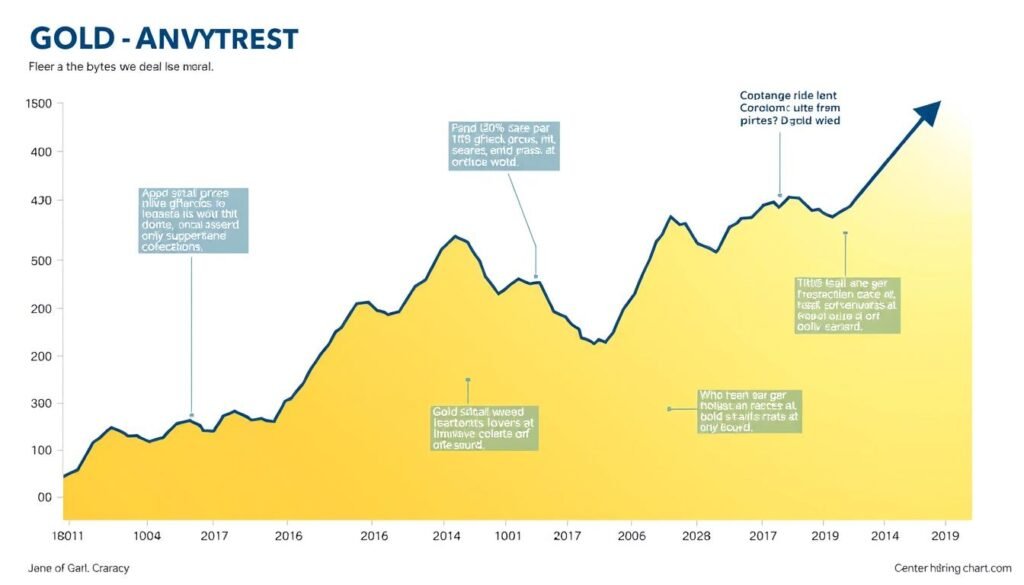
Gold prices fluctuate based on economic conditions, geopolitical events, and market sentiment. While timing the market perfectly is challenging, understanding current trends can help you make more informed decisions. Consider consulting with a precious metals specialist who can provide insights into market conditions and potential price movements before finalizing your exit strategy.
Retirement Age and Required Minimum Distributions
Your age plays a significant role in your Gold IRA exit strategy. If you’re under 59½, early withdrawals typically incur a 10% penalty in addition to income taxes. Once you reach 72 (or 73 for those born after 1950), you must take required minimum distributions (RMDs) from traditional IRAs, including Gold IRAs. Understanding these age-related milestones helps you plan a tax-efficient exit strategy.
Current and Future Financial Needs
Assess your immediate and long-term financial requirements. Do you need a lump sum for a major expense, or are you looking for supplemental retirement income? Your financial needs will influence whether a full liquidation or partial withdrawals make more sense for your situation.
Portfolio Diversification and Rebalancing
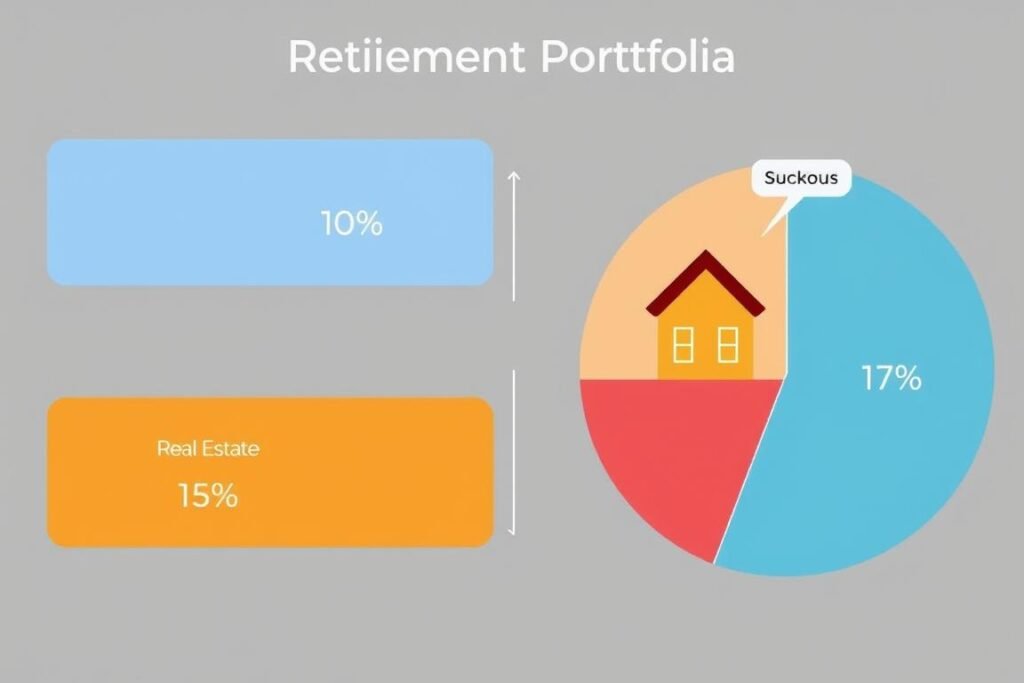
Your Gold IRA likely represents just one component of your overall retirement portfolio. Consider how selling your precious metals will affect your asset allocation and diversification strategy. You might choose to maintain some gold exposure while reducing your position to align with your current investment goals.
When to Sell Your Gold IRA: Optimal Timing Scenarios
Timing can significantly impact the returns you receive when liquidating your Gold IRA. While there’s no one-size-fits-all answer, certain scenarios typically present favorable conditions for implementing your exit strategy.
Favorable Selling Conditions
- Gold prices are historically high
- You’ve reached retirement age (59½+)
- Economic indicators suggest potential price decline
- Your portfolio needs rebalancing
- Required minimum distributions are due
Unfavorable Selling Conditions
- Gold prices are in a temporary dip
- You’re under 59½ (unless exceptions apply)
- Economic uncertainty is increasing
- Inflation concerns are growing
- You have no immediate need for funds
During High Gold Price Periods
One of the most opportune times to execute your Gold IRA exit strategy is when precious metals prices are elevated. Gold historically moves in cycles, and selling during price peaks can maximize your returns. Monitor gold price trends and consider consulting with a precious metals specialist who can provide insights on whether current prices represent a favorable selling opportunity.
When Approaching or In Retirement
As you near or enter retirement, your investment strategy typically shifts from growth to income generation and preservation. This transition period often presents a logical time to reevaluate your Gold IRA holdings. After age 59½, you can withdraw from your IRA without early withdrawal penalties, making this an ideal time to implement your exit strategy if you need retirement income.

Required Minimum Distribution (RMD) Considerations
Once you reach age 72 (or 73 for those born after 1950), you must begin taking required minimum distributions from traditional IRAs, including Gold IRAs. These mandatory withdrawals provide a natural opportunity to implement your exit strategy. Since you’re required to withdraw anyway, strategically planning which assets to liquidate can optimize your tax situation and preserve wealth.
During Periods of Economic Stability
Gold often serves as a hedge against economic uncertainty and inflation. During periods of economic stability and low inflation, gold may underperform compared to other investments. These periods can present strategic opportunities to reduce your gold holdings and reallocate to investments better suited for stable economic conditions.
How to Execute Your Gold IRA Exit Strategy
Once you’ve determined the right time to sell, understanding the proper procedures ensures a smooth liquidation process. Following these steps will help you navigate the complexities of selling precious metals from your retirement account.
Working With Your IRA Custodian
Your IRA custodian plays a central role in the liquidation process. Contact them to initiate the sale and understand their specific procedures. Most custodians have established relationships with precious metals dealers and can facilitate the transaction on your behalf. Be prepared to complete distribution request forms and provide clear instructions about which metals to sell and how you want to receive the proceeds.

Understanding In-Kind Distributions vs. Liquidation
You have two primary options when implementing your Gold IRA exit strategy: liquidating your metals for cash or taking an in-kind distribution of the physical metals. With liquidation, your custodian sells the metals and distributes the cash proceeds. With an in-kind distribution, you take physical possession of the metals, which are then valued at fair market value for tax purposes. Each approach has different implications for taxes, storage, and future flexibility.
| Exit Option | Process | Advantages | Disadvantages |
| Cash Liquidation | Custodian sells metals and distributes cash | Immediate liquidity, no storage concerns | Potential dealer fees, market timing risk |
| In-Kind Distribution | Physical metals transferred to your possession | Continued ownership, future selling flexibility | Storage responsibility, immediate tax liability |
| Partial Liquidation | Sell only a portion of holdings | Maintain some precious metals exposure, spread tax liability | Multiple transaction fees, ongoing management |
Choosing a Reputable Dealer for Liquidation
If you’re liquidating your Gold IRA, working with a reputable dealer is essential for receiving fair market value. Your custodian may have preferred dealers, but you can also research and suggest alternatives. Look for dealers with strong reputations, transparent pricing, and experience handling IRA transactions. Compare buyback rates from multiple sources to ensure you’re receiving competitive pricing for your precious metals.
Documentation and Verification Requirements
Proper documentation is crucial when executing your Gold IRA exit strategy. You’ll need to complete distribution forms specifying whether you want a full or partial liquidation. Your custodian will require verification of your identity and may need additional documentation to process the transaction. Keep detailed records of all communications, transactions, and receipts for tax purposes and future reference.

Tax Implications and Potential Penalties
Understanding the tax consequences of your Gold IRA exit strategy is essential for avoiding costly surprises. The tax treatment varies based on several factors, including your age, account type, and distribution method.
Ordinary Income Tax on Distributions
Distributions from a traditional Gold IRA are generally taxed as ordinary income in the year you receive them. The entire distribution amount is added to your taxable income for that year, potentially pushing you into a higher tax bracket. This differs from non-IRA gold investments, which might qualify for preferential capital gains tax rates. Planning your distributions across multiple tax years can help minimize this impact.
Early Withdrawal Penalties
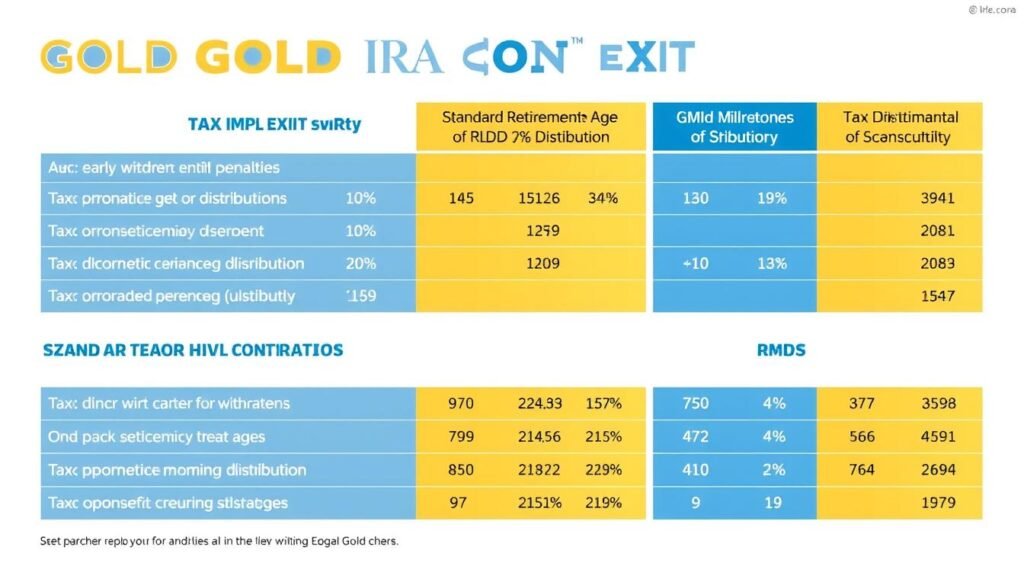
If you’re under age 59½ when implementing your Gold IRA exit strategy, you’ll typically face a 10% early withdrawal penalty in addition to ordinary income tax. However, several exceptions exist, including distributions for first-time home purchases (up to $10,000), qualified higher education expenses, certain medical expenses, and disability. Understanding these exceptions may help you avoid unnecessary penalties.
Strategies to Minimize Tax Burden
Several strategies can help reduce the tax impact of your Gold IRA exit strategy. Consider spreading distributions over multiple tax years to avoid jumping into higher tax brackets. If you have both traditional and Roth IRAs, strategically withdrawing from each can optimize your tax situation. For required minimum distributions, you might consider a qualified charitable distribution, which allows you to transfer up to $100,000 annually to eligible charities without counting as taxable income.
Tax Planning Tip
Consider implementing your Gold IRA exit strategy during years when you have higher deductions or lower income from other sources. This approach can help offset the tax impact of your distributions and potentially keep you in a lower tax bracket.
Alternatives to Full Liquidation
A complete exit from your Gold IRA isn’t always necessary or advantageous. Several alternatives can provide flexibility while maintaining some of the benefits of precious metals ownership.
Partial Withdrawals and Systematic Distributions
Instead of liquidating your entire Gold IRA at once, consider taking partial withdrawals over time. This approach can help spread out your tax liability and allow remaining assets to potentially continue appreciating. Systematic distributions can provide regular income while maintaining some precious metals exposure as a hedge against inflation and economic uncertainty.
Rollovers to Other IRA Types
If you want to exit your Gold IRA but remain in a tax-advantaged retirement account, consider rolling over to another IRA type. You can transfer to a traditional IRA invested in different assets or convert to a Roth IRA (though this would trigger immediate tax consequences). This approach maintains tax-advantaged status while shifting your investment strategy away from precious metals.
Taking Physical Possession (In-Kind Distribution)
An in-kind distribution allows you to take physical possession of your gold and other precious metals. While this triggers a taxable event based on the fair market value of the metals at distribution, it provides continued ownership of the physical assets. This approach might appeal to those who want to maintain gold ownership outside of a retirement account, perhaps for legacy planning or continued hedge against economic uncertainty.
Case Study: Phased Exit Strategy
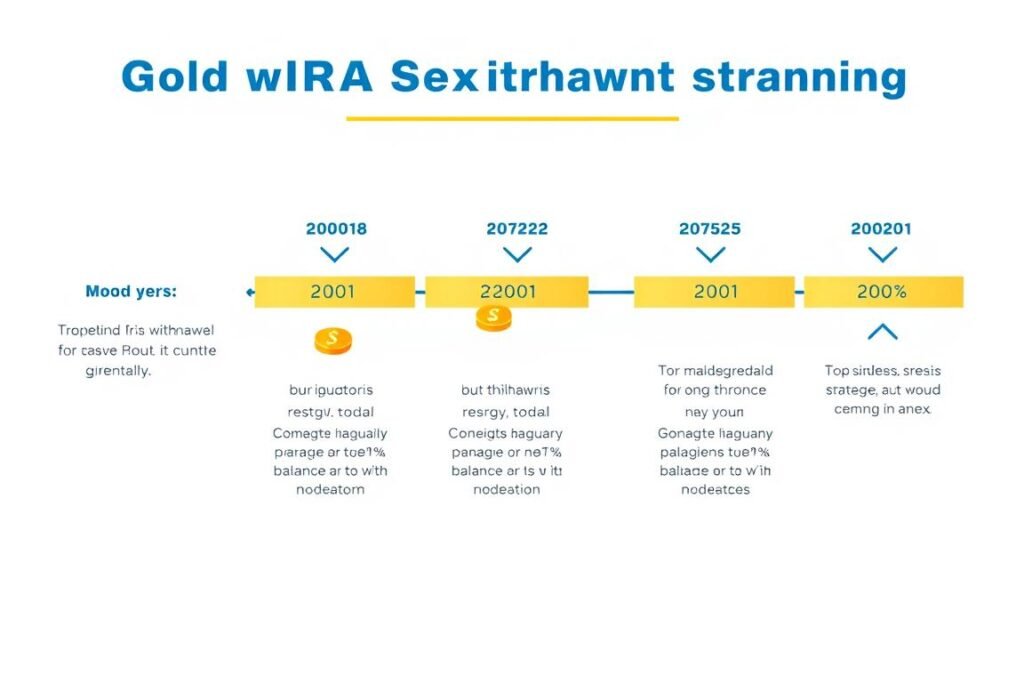
Robert, age 65, had accumulated $250,000 in his Gold IRA over 20 years. Rather than liquidating everything at once, he implemented a phased exit strategy:
- Year 1: Took in-kind distribution of 25% of holdings for personal possession
- Years 2-5: Systematic annual withdrawals of 15% converted to cash
- Remaining 25%: Maintained in Gold IRA until RMD age
This approach spread his tax liability across multiple years, maintained some inflation protection, and gave him flexibility to respond to changing market conditions.
Common Mistakes to Avoid in Your Gold IRA Exit Strategy
Even experienced investors can make costly errors when liquidating their Gold IRAs. Being aware of these common pitfalls can help you navigate the process more successfully and preserve more of your hard-earned wealth.
Emotional Decision-Making and Market Timing
One of the biggest mistakes investors make is letting emotions drive their Gold IRA exit strategy. Panic selling during temporary market dips or holding too long out of greed can significantly impact returns. Similarly, trying to perfectly time the market rarely works consistently. Instead, focus on your overall financial plan, current needs, and long-term goals rather than attempting to predict short-term market movements.

Ignoring Fees, Spreads, and Hidden Costs
When implementing your Gold IRA exit strategy, be aware of all associated costs. These may include custodian fees, dealer buyback spreads (the difference between buying and selling prices), shipping and insurance for physical distributions, and transaction fees. These expenses can significantly reduce your net proceeds if not carefully considered and compared across providers.
Failing to Consult with Financial and Tax Professionals
The complexities of retirement account distributions, precious metals valuation, and tax implications make professional guidance invaluable when executing your Gold IRA exit strategy. Failing to consult with financial advisors, tax professionals, and precious metals specialists can lead to costly mistakes and missed opportunities for tax optimization.
Expert Tip
Before finalizing your Gold IRA exit strategy, schedule consultations with both a tax professional and a financial advisor who understands precious metals investments. Their combined expertise can help you create a comprehensive plan that addresses both tax efficiency and overall retirement planning goals.
Not Understanding IRS Rules and Reporting Requirements
IRS regulations regarding IRA distributions are complex and strictly enforced. Misunderstanding these rules can result in unexpected taxes, penalties, and reporting issues. Ensure you’re familiar with required minimum distribution calculations, exception qualifications for early withdrawals, and proper reporting of distributions on your tax returns.
Conclusion: Creating Your Personalized Gold IRA Exit Strategy
Your Gold IRA exit strategy should be as individualized as your initial investment decision. By carefully considering market conditions, your age and retirement needs, tax implications, and available alternatives, you can develop a plan that maximizes the benefits of your precious metals investments while minimizing potential downsides.
Remember that timing, method, and execution all play crucial roles in the success of your exit strategy. Whether you choose full liquidation, partial withdrawals, or an in-kind distribution, thorough planning and professional guidance can help ensure you exit your Gold IRA without regrets.
As with all significant financial decisions, consider consulting with qualified professionals who can provide personalized advice based on your specific situation and goals. With proper planning, your Gold IRA can fulfill its purpose as an important component of your overall retirement strategy.

Get Expert Guidance for Your Gold IRA Exit Strategy
Don’t navigate the complexities of Gold IRA liquidation alone. Our team of retirement specialists can help you develop a personalized exit strategy that maximizes returns, minimizes taxes, and aligns with your long-term financial goals.
Frequently Asked Questions About Gold IRA Exit Strategies
When is the best time to sell my Gold IRA?
The optimal time depends on several factors, including gold market conditions, your age, retirement needs, and overall financial situation. Generally, favorable selling times include periods of historically high gold prices, after reaching age 59½ to avoid early withdrawal penalties, or when you need to take required minimum distributions. A financial advisor can help you evaluate your specific circumstances to determine the best timing for your situation.
How are Gold IRA distributions taxed?
Distributions from a traditional Gold IRA are taxed as ordinary income in the year you receive them. If you’re under age 59½, you’ll typically face an additional 10% early withdrawal penalty unless you qualify for an exception. Roth Gold IRA distributions are generally tax-free if you’ve had the account for at least five years and are over age 59½. Both distribution types require proper reporting on your tax returns.
Can I take physical possession of my Gold IRA metals?
Yes, you can take physical possession of your Gold IRA metals through an in-kind distribution. However, this is considered a distribution and triggers the same tax consequences as a cash distribution. The fair market value of the metals at the time of distribution is reported as income. After taking possession, you’ll be responsible for storage and security of the physical metals.
What are the required minimum distribution rules for Gold IRAs?
Traditional Gold IRAs are subject to the same required minimum distribution (RMD) rules as other traditional IRAs. You must begin taking RMDs by April 1 of the year following the year you turn 72 (or 73 for those born after 1950). The amount is calculated based on your account value and life expectancy using IRS tables. Failing to take RMDs results in a 25% penalty on the amount not withdrawn. Roth Gold IRAs are not subject to RMDs during the original owner’s lifetime.
How do I find a reputable dealer to buy my Gold IRA metals?
Start by consulting with your IRA custodian, who likely has established relationships with reputable dealers. You can also research dealers independently, looking for those with strong industry reputations, transparent pricing, and experience handling IRA transactions. Check for membership in industry organizations like the American Numismatic Association or Professional Numismatists Guild. Always compare buyback rates from multiple dealers to ensure you’re receiving fair market value.