

Tag: Wealth Transfer

  • Gold IRA & Legacy Planning: Passing it Down Without Tax Shocks

    Gold IRA & Legacy Planning: Passing it Down Without Tax Shocks

    Planning for retirement is just the beginning. What happens to your hard-earned wealth when you’re no longer here? For many investors, a Gold IRA offers not just retirement security but also a powerful legacy planning tool. This guide explores how to effectively incorporate precious metals into your estate planning strategy, ensuring your loved ones receive your wealth without devastating tax consequences.

    Gold IRAs: A Foundation for Wealth Preservation

    A Gold IRA is a self-directed individual retirement account that allows you to hold physical precious metals like gold, silver, platinum, and palladium instead of traditional paper assets. Unlike conventional retirement accounts that typically contain stocks, bonds, and mutual funds, a Gold IRA provides tangible assets that have historically preserved wealth during economic uncertainty.

    Why Consider Gold for Legacy Planning?

    Gold has maintained value for thousands of years, making it an ideal asset for passing wealth between generations. While market-based investments fluctuate with economic cycles, gold offers several advantages for those thinking beyond their own retirement:

    • Protection against inflation and currency devaluation
    • Portfolio diversification that reduces overall risk
    • Tangible assets that exist outside the digital financial system
    • Historical stability during economic downturns
    • Potential tax advantages when properly structured

    Senior couple reviewing Gold IRA legacy planning documents with an advisor

    Start Securing Your Legacy Today

    Speak with a Gold IRA specialist to learn how precious metals can protect your family’s financial future.

    Request Free Consultation

    Common Tax Pitfalls When Inheriting Retirement Accounts

    Before exploring the benefits of Gold IRAs for legacy planning, it’s crucial to understand the tax challenges that heirs often face when inheriting traditional retirement accounts. These pitfalls can significantly reduce the value of your legacy if not properly addressed.
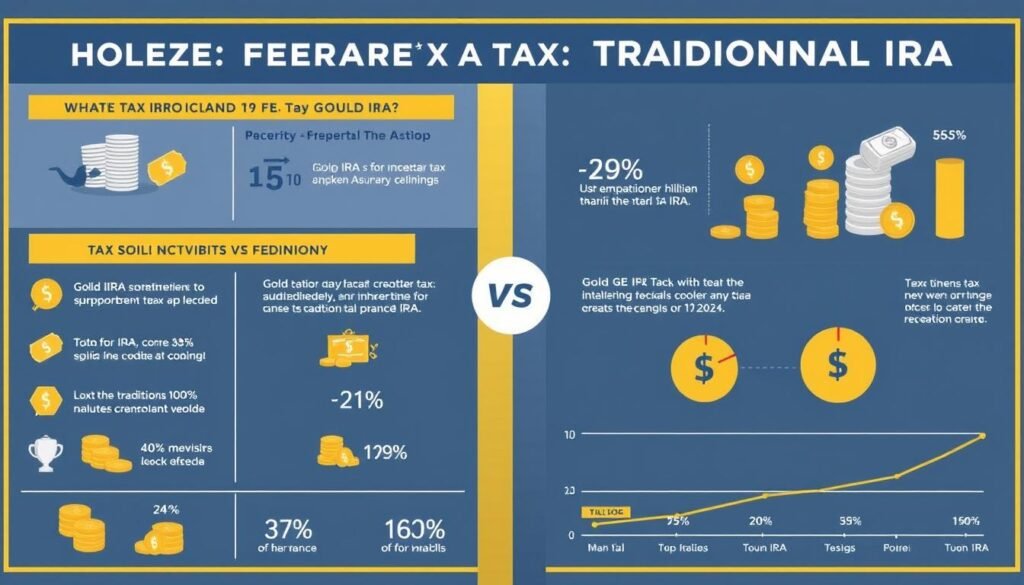
    Diagram showing tax implications of inherited Gold IRA accounts versus traditional IRAs

    Required Minimum Distributions (RMDs)

    When non-spouse beneficiaries inherit traditional IRAs, they typically must withdraw the entire account balance within 10 years following the SECURE Act of 2019. These forced withdrawals can push heirs into higher tax brackets, creating substantial tax burdens during the distribution period.

    Income Tax Implications

    Inherited traditional IRAs are subject to ordinary income tax when distributions are taken. For large accounts, this can result in significant tax liabilities, especially if your beneficiaries are in their peak earning years when they inherit.

    Potential Penalties

    Failure to take required distributions from inherited accounts can result in severe penalties—typically 50% of the amount that should have been withdrawn. Many heirs are unaware of these requirements and inadvertently trigger penalties.

    Important: The SECURE Act eliminated the “stretch IRA” strategy for most non-spouse beneficiaries, requiring full distribution within 10 years instead of over the beneficiary’s lifetime. This change has made tax-efficient legacy planning even more critical.

    Optimizing Your Gold IRA for Legacy Transfer

    With proper planning, a Gold IRA can be structured to minimize tax burdens for your heirs while preserving wealth across generations. Here are key strategies to consider:

    Naming Beneficiaries Correctly

    The way you designate beneficiaries can significantly impact how your Gold IRA is taxed after your passing. Consider these important factors:

    • Keep beneficiary designations updated after major life events
    • Consider naming both primary and contingent beneficiaries
    • Be specific with percentages if naming multiple beneficiaries
    • Understand that beneficiary designations override will provisions

    Person filling out Gold IRA beneficiary designation form

    Spouse vs. Non-Spouse Inheritance Options

    The rules differ significantly depending on whether your beneficiary is a spouse or non-spouse:

    Beneficiary Type Available Options Tax Implications
    Spouse Can treat as their own IRA or remain a beneficiary RMDs based on spouse’s age if treated as own
    Non-Spouse Must withdraw within 10 years (with exceptions) All withdrawals taxed as ordinary income
    Eligible Designated Beneficiaries May use life expectancy method Smaller annual distributions, potentially lower tax impact

    Utilizing Stretch IRA Strategies Where Applicable

    While the SECURE Act limited stretch IRA options, certain beneficiaries still qualify for this tax-advantageous approach:

    Eligible Designated Beneficiaries

    • Surviving spouses
    • Disabled or chronically ill individuals
    • Individuals not more than 10 years younger than the account owner
    • Minor children of the account owner (until reaching majority)

    Stretch IRA Benefits

    • Distributions based on beneficiary’s life expectancy
    • Continued tax-deferred growth for remaining balance
    • Potentially lower tax brackets for distributions
    • Preservation of wealth over a longer timeframe

    Family discussing Gold IRA legacy planning with financial advisor

    Trust Options for Asset Protection

    For more complex estate planning needs, consider using trusts in conjunction with your Gold IRA:

    Revocable Living Trust

    Provides flexibility during your lifetime and can help avoid probate, though it doesn’t offer tax advantages for IRAs.

    See-Through Trust

    Can be structured as either conduit or accumulation trusts, allowing for distribution control while maintaining some IRA tax benefits.

    Standalone Retirement Trust

    Specifically designed for retirement accounts, offering both asset protection and distribution control for beneficiaries.

    “The key to successful Gold IRA legacy planning is balancing tax efficiency with your family’s specific needs. Each family situation requires a customized approach.”

    — Estate Planning Attorney specializing in retirement assets

    Protect Your Legacy from Excessive Taxation

    Download our comprehensive guide to Gold IRA legacy planning and tax minimization strategies.

    Get Your Free Guide

    Tax Advantages of Precious Metals in Inheritance Planning

    Gold and other precious metals offer unique tax benefits when incorporated into your legacy planning strategy. Understanding these advantages can help you maximize the value passed to your heirs.
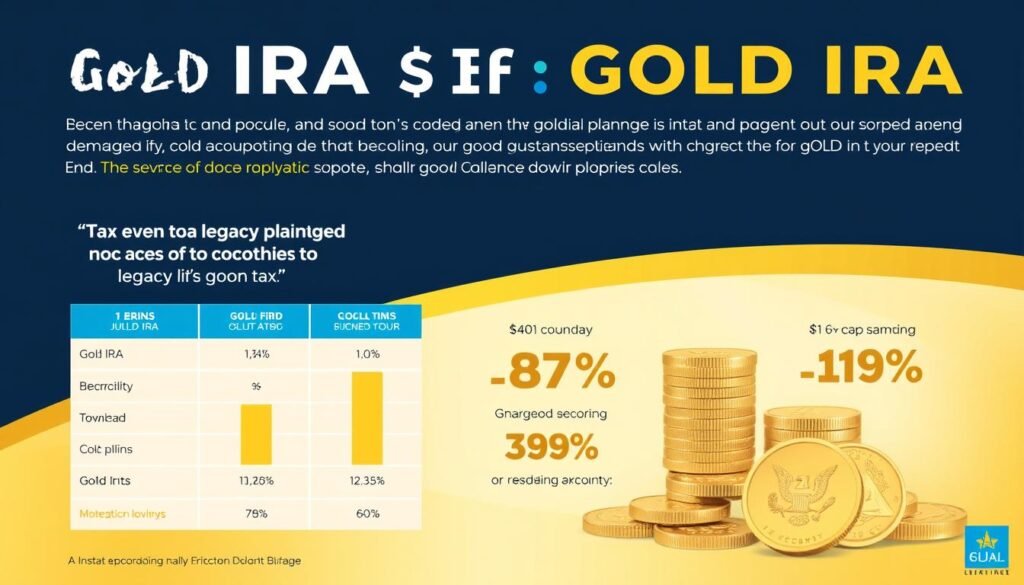
    Gold IRA legacy planning tax advantages illustrated with charts and gold coins

    Step-Up in Basis

    Unlike many other assets, physical gold in certain forms may qualify for a step-up in basis upon inheritance. This means your heirs’ cost basis becomes the market value at the time of your passing, potentially eliminating capital gains tax on appreciation that occurred during your lifetime.

    Roth Gold IRA Benefits

    A Roth Gold IRA offers significant advantages for legacy planning:

    • Tax-free distributions for heirs (provided the account meets the five-year rule)
    • No required minimum distributions during the original owner’s lifetime
    • Potential for tax-free growth over multiple generations

    Asset Protection Advantages

    Gold IRAs may offer protection from:

    • Creditor claims (varies by state law)
    • Market volatility affecting other inherited assets
    • Inflation eroding inheritance value over time

    Diversification Benefits

    Including gold in an inheritance portfolio provides:

    • Reduced correlation with traditional financial assets
    • Potential hedge against currency devaluation
    • Historical stability during economic crises

    Advantages of Gold IRA for Heirs

    • Potential protection against market volatility
    • Tangible asset with intrinsic value
    • Possible tax advantages with proper planning
    • Diversification from paper assets
    • Hedge against inflation and currency devaluation

    Challenges to Consider

    • Storage and insurance costs
    • Complexity of IRS regulations
    • Potential liquidity issues
    • Required custodian involvement
    • Specific purity requirements for eligible metals

    Setting Up a Gold IRA for Legacy Purposes: Step-by-Step Guide

    Creating a Gold IRA specifically optimized for legacy planning requires careful attention to detail. Follow these steps to ensure your precious metals IRA is structured for efficient wealth transfer.
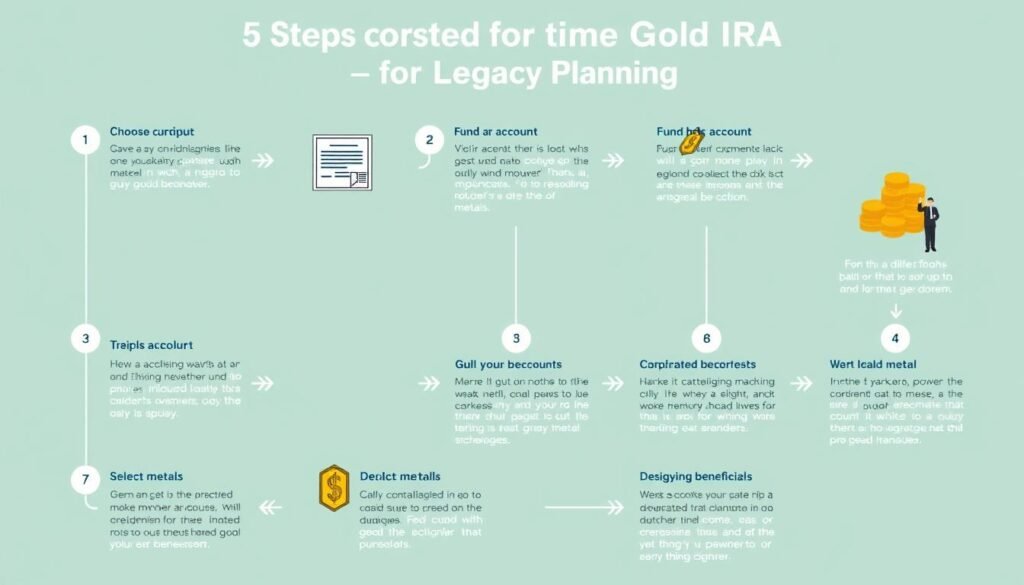
    Step-by-step process of setting up a Gold IRA for legacy planning
    1. Choose a Reputable Gold IRA Custodian

      Select a custodian with experience in both precious metals and estate planning. Look for transparent fee structures, secure storage options, and excellent customer service. The custodian will handle the administrative aspects of your account and ensure IRS compliance.

    2. Determine Traditional vs. Roth Structure

      For legacy planning, consider whether a Traditional or Roth Gold IRA better serves your goals. While Traditional IRAs offer immediate tax deductions, Roth IRAs provide tax-free distributions to heirs, making them often preferable for legacy purposes.

    3. Fund Your Gold IRA

      You can fund your Gold IRA through a rollover from an existing retirement account, a transfer from another IRA, or annual contributions (subject to IRS limits). For legacy planning, consolidating existing retirement assets often provides the most substantial foundation.

    4. Select IRS-Approved Precious Metals

      Choose gold, silver, platinum, or palladium products that meet IRS purity requirements:

      • Gold: 99.5% pure (except for American Gold Eagles)
      • Silver: 99.9% pure
      • Platinum and Palladium: 99.95% pure
    5. Arrange Secure Storage

      IRS regulations require that precious metals in an IRA be stored with an approved depository. Your custodian will coordinate this storage, ensuring your metals remain secure and IRS-compliant.

    6. Designate Beneficiaries Strategically

      Carefully complete beneficiary designation forms, considering the tax implications for each potential heir. Consider both primary and contingent beneficiaries, and review these designations regularly.

    7. Create Supporting Estate Documents

      Work with an estate planning attorney to ensure your will, trusts, and other documents align with your Gold IRA legacy plan. Consider creating a letter of instruction explaining your intentions for the Gold IRA.

    Person reviewing Gold IRA legacy planning documents with financial advisor

    The Importance of Professional Guidance

    Successfully implementing a Gold IRA legacy plan requires expertise across multiple disciplines. Working with qualified professionals ensures your strategy is both effective and compliant with current regulations.

    Financial Advisors

    A financial advisor specializing in retirement planning can help you determine the optimal allocation of precious metals within your overall portfolio and develop a comprehensive legacy strategy.

    • Portfolio diversification guidance
    • Risk assessment and management
    • Long-term financial planning

    Estate Planning Attorneys

    An estate planning attorney ensures your Gold IRA integrates seamlessly with your broader estate plan, addressing legal considerations specific to precious metals.

    • Trust creation and management
    • Beneficiary designation review
    • Estate tax minimization strategies

    Tax Professionals

    A tax professional with experience in precious metals and retirement accounts can help navigate the complex tax implications of Gold IRA legacy planning.

    • Distribution planning
    • Tax-efficient inheritance strategies
    • Compliance with IRS regulations

    Team of professionals helping with Gold IRA legacy planning

    “The most successful Gold IRA legacy plans I’ve seen involve collaboration between financial advisors, estate attorneys, and tax professionals. This multidisciplinary approach ensures all aspects of wealth transfer are addressed.”

    — Certified Financial Planner with 25 years of experience

    Don’t Navigate Legacy Planning Alone

    Connect with a Gold IRA specialist who can coordinate with your existing advisors or recommend qualified professionals.

    Schedule Your Consultation

    Real-World Examples: Tax Savings Through Gold IRA Legacy Planning

    Understanding how these strategies work in practice can help illustrate the potential benefits. Here are two scenarios demonstrating effective Gold IRA legacy planning:

    Case Study 1: The Traditional vs. Roth Conversion Strategy

    Scenario: Robert, 68, had a $500,000 traditional IRA invested in stocks and bonds. Concerned about market volatility and tax burdens for his children, he implemented a strategic plan.

    Strategy: Robert converted portions of his traditional IRA to a Roth Gold IRA over several years, carefully managing the tax impact of each conversion. He selected a mix of gold coins and bars that met IRS requirements.

    Outcome: When Robert passed away at 79, his Roth Gold IRA had grown to $680,000. His children inherited the account tax-free, avoiding the 10-year distribution requirement that would have pushed them into higher tax brackets. The estimated tax savings exceeded $150,000.

    Case Study 2: The Trust Beneficiary Approach

    Scenario: Margaret, a widow with three grandchildren, had a $400,000 Gold IRA and wanted to ensure responsible inheritance while minimizing taxes.

    Strategy: Working with an estate attorney, Margaret established a see-through accumulation trust as the beneficiary of her Gold IRA. The trust included specific provisions for distributing the inherited gold over time.

    Outcome: After Margaret’s passing, the trust provided asset protection while distributing the gold strategically over the 10-year period required by the SECURE Act. This approach prevented the grandchildren from liquidating the gold immediately and helped them avoid higher tax brackets, saving approximately $75,000 in taxes.
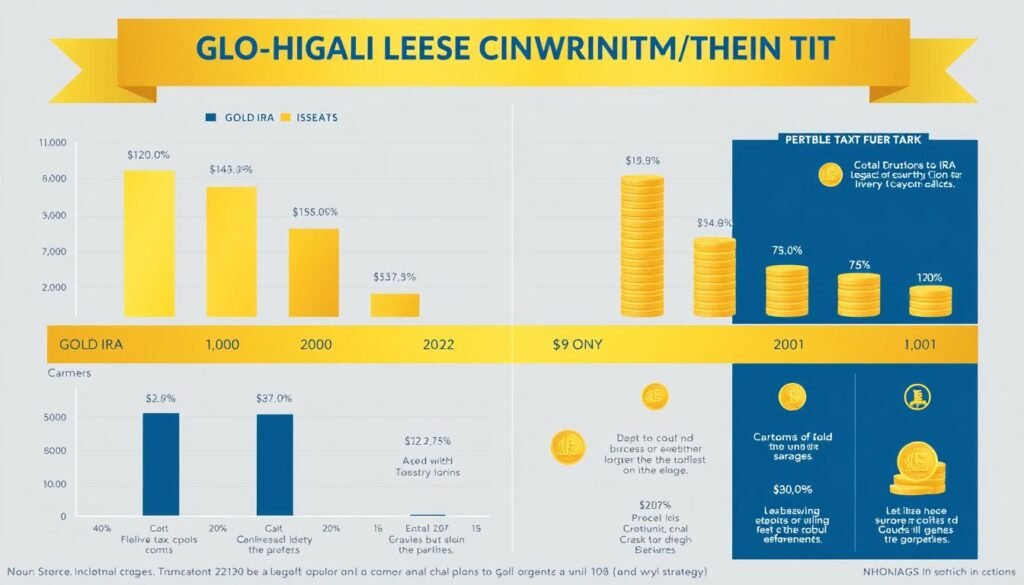
    Chart comparing tax outcomes of different Gold IRA legacy planning strategies

    Navigating the SECURE Act: Recent Legislative Changes

    The Setting Every Community Up for Retirement Enhancement (SECURE) Act of 2019 significantly changed the landscape for retirement account inheritance. Understanding these changes is crucial for effective Gold IRA legacy planning.
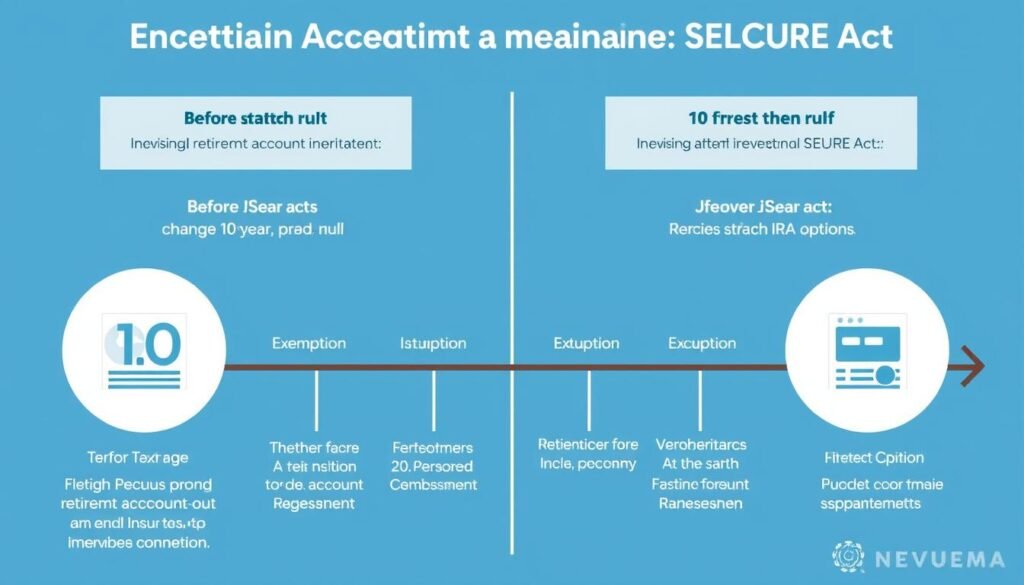
    Timeline showing changes to retirement account inheritance rules under the SECURE Act

    Key SECURE Act Provisions Affecting Gold IRA Inheritance

    Provision Pre-SECURE Act Post-SECURE Act Impact on Gold IRA Planning
    Distribution Timeline Stretch IRA available to all beneficiaries 10-year distribution rule for most non-spouse beneficiaries Accelerated liquidation may require strategic metal selection for easier partial distributions
    Eligible Designated Beneficiaries All designated beneficiaries could stretch distributions Only spouses, disabled/chronically ill individuals, minors, and those within 10 years of age More complex beneficiary planning needed; trusts may be more valuable
    Trust Planning See-through trusts could stretch distributions Most trust beneficiaries subject to 10-year rule Trust documents may need revision to optimize under new rules
    RMD Age 70½ 72 (now 73 under SECURE 2.0) Extended accumulation period before required distributions

    Adapting Your Gold IRA Legacy Plan to the SECURE Act

    With these legislative changes, consider these adaptation strategies:

    • Roth conversions become more valuable for legacy planning due to tax-free distributions
    • Life insurance may complement Gold IRAs by providing tax-free benefits to heirs
    • Charitable remainder trusts can extend distributions beyond the 10-year limit
    • Strategic beneficiary designations may split assets among multiple heirs to reduce tax brackets
    • Regular review of estate plans is essential as further legislative changes are possible

    Person reviewing SECURE Act provisions with financial advisor

    Frequently Asked Questions About Gold IRA Inheritance

    Can my heirs keep the physical gold after inheriting my Gold IRA?

    Yes, but with important considerations. When heirs inherit a Gold IRA, they have several options:

    1. Keep the gold within an inherited IRA (subject to distribution rules)
    2. Take physical possession (triggers a taxable distribution)
    3. Sell the gold and take cash distributions

    If they choose physical possession, the full value becomes taxable income in the year of distribution. Some heirs prefer this option despite the tax impact because they value having physical control of the precious metals.

    How does the 10-year rule under the SECURE Act affect Gold IRA inheritance?

    The 10-year rule requires most non-spouse beneficiaries to withdraw the entire inherited IRA balance within 10 years of the original owner’s death. For Gold IRAs, this presents unique challenges:

    • Physical gold may need to be liquidated in portions over the 10-year period
    • Beneficiaries must coordinate with the custodian for partial distributions
    • Strategic timing of distributions can help minimize tax impact

    Unlike traditional IRAs with easily divisible mutual funds, distributing physical gold requires planning for potentially indivisible assets like coins or bars.

    What are the tax differences between inheriting a Traditional Gold IRA versus a Roth Gold IRA?

    Traditional Gold IRA inheritance:

    • Distributions are taxed as ordinary income to the beneficiary
    • Subject to the 10-year rule for most non-spouse beneficiaries
    • Required minimum distributions may apply for eligible designated beneficiaries

    Roth Gold IRA inheritance:

    • Qualified distributions are completely tax-free to beneficiaries
    • Still subject to the 10-year rule, but without tax consequences
    • No required minimum distributions during the original owner’s lifetime

    For legacy planning, Roth Gold IRAs typically offer superior tax advantages despite requiring after-tax contributions initially.

    Can I name a trust as beneficiary of my Gold IRA?

    Yes, you can name a trust as the beneficiary of your Gold IRA, which offers several advantages:

    • Control over how and when beneficiaries receive distributions
    • Asset protection from creditors or divorce proceedings
    • Provisions for minors or beneficiaries with special needs

    However, to maximize tax benefits, the trust should qualify as a “see-through” trust under IRS regulations. This requires specific language and structure that your estate planning attorney can help establish. Under the SECURE Act, most trust beneficiaries will still be subject to the 10-year distribution rule.

    What happens if I don’t name a beneficiary for my Gold IRA?

    Failing to name a beneficiary for your Gold IRA can have significant negative consequences:

    • The account may default to your estate, forcing it through probate
    • Distribution options become limited, often requiring faster liquidation
    • Tax advantages may be lost, increasing the tax burden
    • Your estate plan intentions may not be followed

    To avoid these issues, always name both primary and contingent beneficiaries for your Gold IRA and review these designations regularly, especially after major life events like marriage, divorce, births, or deaths in the family.

    Financial advisor answering questions about Gold IRA inheritance

    Securing Your Legacy Through Gold IRA Planning

    Effective Gold IRA legacy planning combines the historical stability of precious metals with strategic tax planning to create a powerful wealth preservation tool for future generations. By understanding the unique advantages of gold, navigating the complexities of current tax laws, and implementing thoughtful beneficiary strategies, you can create a lasting legacy that minimizes tax burdens for your heirs.

    Remember that successful legacy planning is not a one-time event but an ongoing process. Regular reviews with qualified professionals ensure your plan remains optimized as laws change, family circumstances evolve, and market conditions fluctuate. The peace of mind that comes from knowing you’ve protected your family’s financial future is perhaps the greatest benefit of all.

    Multi-generational family with gold coins symbolizing wealth transfer through Gold IRA legacy planning

    Begin Your Gold IRA Legacy Journey Today

    Speak with a specialist who can help you create a customized Gold IRA legacy plan that protects your wealth and minimizes tax burdens for your loved ones.


    Request Your Free Consultation

  • Inherited Gold IRAs: What Beneficiaries Should Know

    Inherited Gold IRAs: What Beneficiaries Should Know

    Surprising fact: when a precious metal retirement account owner dies, the account usually converts to an inherited structure and heirs often face a 10-year clock to act.

    This guide explains what happens next, who can roll assets into their own account, and which choices may trigger ordinary income taxes.

    Spouses may transfer funds or treat the account as their own to delay required withdrawals. Non-spouse heirs typically set up an inherited ira or take a taxable lump sum. Physical metal can be distributed in-kind, but the fair market value at distribution is taxable income.

    Keeping beneficiary designations current speeds access for loved ones and avoids probate delays. A reputable custodian helps with transfers, storage, liquidation, and IRS reporting so the process stays organized.

    In the sections ahead, we’ll cover spousal and non-spousal rules, RMD timing, estate planning tips, and practical steps to decide the best path based on market conditions and personal goals.

    Key Takeaways

    • When the account holder dies, the account becomes an inherited structure with specific options.
    • Spouses can roll into their own account or treat it as their own to delay withdrawals.
    • Non-spouse heirs must choose an inherited ira or a taxable lump-sum distribution.
    • Distributions, including physical metal, are usually taxed as ordinary income.
    • Update beneficiary designations and work with a custodian to avoid probate and reporting errors.

    Understanding inherited Gold IRAs today: what beneficiaries need to do first

    The moment of passing starts a short administrative timeline—so call the custodian and request their beneficiary packet.

    Begin by identifying the custodian for the ira account and sending a certified death certificate. The firm will confirm the form on file and tell you who is entitled to the assets.

    The custodian outlines the process and presents options. They can set up an inherited ira, arrange transfers, liquidate holdings, or move metals into IRS-approved storage.

    Non-spousal heirs usually must open an inherited ira before any assets move. That step keeps tax and timing choices open.

    “Prompt paperwork and a planning call make the transfer simpler and reduce delays.”

    — custodian best practice

    Ask for a written timeline and schedule a planning call to align choices with family goals. If you plan a rollover, consider opening an open gold ira early to keep options flexible.

    Immediate Step Documents Typical Timeframe Outcome
    Notify custodian Certified death certificate, ID 1–2 weeks Account review started
    Confirm beneficiary form Beneficiary packet, account records 2–4 weeks Entitlement confirmed
    Open inherited account New account application 2–6 weeks Assets moved or liquidated

    For more tax and timing detail, review this trusted guide on handling an inherited IRA.

    Gold IRAs:Beneficiaries — designations, updates, and avoiding probate delays

    Keeping beneficiary forms current prevents confusion and speeds estate transfers for retirement holdings.

    List both a primary and at least one contingent beneficiary on the account. That step is central to solid estate planning for any precious-metal retirement holding.

    A group of diverse individuals, representing the beneficiaries of a Gold IRA, stand in a serene, sun-dappled setting. In the foreground, a young professional woman and an elderly retiree, both with relieved expressions, hold legal documents. In the middle ground, a middle-aged couple and a young family converse, gesturing animatedly. The background features a lush, verdant landscape with a winding river and a distant, majestic mountain range. The scene is illuminated by warm, golden sunlight, conveying a sense of security, stability, and the successful transfer of wealth. The composition is balanced, with the subjects positioned to create a harmonious, inviting atmosphere.

    Primary and contingent beneficiaries: keeping designations current

    Update forms after life events such as marriage, divorce, birth or when a named person predeceases you. Submit the custodian’s beneficiary change form with signatures and ID.

    Why it matters: current designations help avoid probate and make the transfer process smoother so family members receive assets faster and more predictably.

    Who qualifies as an eligible designated beneficiary

    Eligible designated beneficiaries include a surviving spouse, a decedent’s minor child, someone who is disabled or chronically ill, and certain heirs within age-based windows.

    Beneficiaries can be individuals or entities such as trusts and charities, each carrying different administrative and tax considerations.

    “A clear designation lets the custodian validate claims and move assets with fewer delays.”

    • Document intent in writing and store account details where loved ones can find them.
    • Ask the custodian for a confirmation letter after any update so the account reflects your latest wishes.
    • Review designations periodically and consider market conditions when choosing metal transfer versus liquidation.

    Spousal beneficiaries: how to assume, transfer, or treat the account

    Spouses have two main paths after the passing of the holder: transfer the inherited assets into their own IRA, or elect to treat the inherited account as their own. Each choice changes when required minimum distributions begin and whether you can keep contributing.

    A middle-aged couple, the husband and wife, sitting at a wooden table in a cozy, dimly lit home office. The wife is reviewing documents, her expression thoughtful, while the husband looks on attentively, a laptop open in front of him. Soft, warm lighting casts a gentle glow, creating an atmosphere of contemplation and collaboration. The scene conveys the sense of a spousal team navigating the complexities of an inherited financial account, working together to ensure a secure future.

    Transfer into your own IRA vs. treat as your own

    Transfer to your own IRA lets you roll assets into an existing account and keep contribution eligibility if you qualify. This path may keep minimum distributions on the original schedule if rules apply.

    Treat as your own simplifies recordkeeping and can defer required minimum distributions until your own RMD start age. That benefit helps long-term tax planning but may change when distributions start.

    RMD timing and age impact

    RMDs generally align with the spouse’s age thresholds. Confirm the exact required minimum start date with the custodian to avoid surprises.

    Early withdrawals and exceptions

    Withdrawals before 59½ can trigger a 10% penalty unless an exception applies. Map cash needs and assets to the benefits of deferral, especially if you prefer to keep exposure to a gold IRA rather than liquidate.

    Option Contributions Allowed RMD Timing Admin Step
    Transfer into own IRA Yes (if eligible) Based on your age Coordinate rollover with custodian
    Treat inherited account as own Yes (subject to rules) Defers until your RMD start age Retitle account and notify custodian
    Keep separate inherited account No new contributions May follow inherited schedules Open inherited IRA and document choice

    “Document the option chosen in writing and keep copies with your estate records.”

    For more detail on managing a precious-metal retirement account when you retire, see this guide: understanding how a gold ira works.

    Non-spousal beneficiaries: inherited IRA setup, the ten-year window, and distribution choices

    When someone other than a spouse inherits a metals-based retirement holding, they typically need a dedicated inherited account before assets move.

    How to open and title an inherited IRA for precious metals

    Open the inherited ira in the beneficiary’s name with clear wording that preserves inherited status. A common format is: “Account of (Decedent Name) — Inherited by (Your Name), beneficiary.” This titling keeps the timeline and tax rules intact.

    Work with the custodian to move metals or cash. Custodians arrange approved storage for bullion and provide transfer instructions that prevent disallowed distributions.

    The SECURE Act ten-year rule vs. annual RMDs

    The SECURE Act generally requires many non-spousal beneficiaries to fully distribute the inherited ira within ten years. Some cases still require annual minimum distributions depending on the decedent’s RMD status at death.

    Track deadlines. Missing the ten-year window can trigger steep tax consequences.

    Lump-sum distribution and taking physical gold: tax implications

    Beneficiaries may take periodic withdrawals, a final distribution in year ten, or a lump-sum at any time. Each choice affects tax timing and how much you net after income tax.

    Physical gold can be distributed in-kind, but the fair market value on the distribution date is taxable as ordinary income.

    “Plan distributions around your tax bracket and other income to reduce the overall tax bite.”

    • Title the account correctly and submit beneficiary certification.
    • Coordinate transfer and storage instructions with the custodian.
    • Weigh continued exposure versus liquidation based on taxes and goals.

    Working with the IRA custodian: a step-by-step distribution process

    Begin the distribution process with a phone call to the custodian so you can request required forms and timelines.

    Notify the custodian and gather documents. Contact the firm, ask for the beneficiary checklist, and submit a certified death certificate. Provide ID and any probate paperwork the custodian requests.

    Transfer metals, liquidate, or move to an inherited account. Tell the custodian whether you want to keep metals in approved storage, liquidate to cash, or open a titled inherited IRA account. Transfers for coins and bars may need separate shipping and assay steps.

    Ensure compliance with IRS rules, reporting, and storage. The custodian coordinates IRA assets movement, withholding calculations, and year-end tax forms. Ask for a written timeline and final confirmation when transfers and storage are complete to ensure smooth handling of the inheritance.

    Step What to provide Typical timeframe
    Notify custodian Death certificate, ID 1–2 weeks
    Retitle or open inherited account Account application, beneficiary certification 2–6 weeks
    Move or liquidate assets Transfer instructions, shipping for metals 2–8 weeks

    “Keep written approvals from the custodian, depository, and any dealer involved.”

    Taxes, RMDs, and estate planning moves for inherited gold

    The way distributions are taxed and scheduled will determine how much heirs actually keep from inherited retirement assets.

    Traditional vs. Roth: taxation of distributions

    Distributions from a traditional account are generally taxed as ordinary income when paid to heirs. That applies to cash withdrawals and in-kind transfers of physical metal based on fair market value.

    By contrast, qualified Roth distributions can be tax-free if the account met holding rules before death. Plan conversions carefully since converting before death can change the tax profile for your family.

    RMD frameworks, timing, and avoiding penalties

    RMD rules differ by heir type and by whether the decedent already faced required minimums. Many non-spouse heirs must empty the account within ten years unless an exception applies.

    Confirm the exact timetable with your custodian and set calendar reminders. Missed deadlines can trigger heavy penalties.

    Trusts, Roth conversions, and lifetime gifting

    Common estate tools include naming a trust to control timing and protect assets, converting to a Roth to gain tax flexibility, and gifting during life to reduce estate exposure.

    Model multi-year tax scenarios to decide whether to spread withdrawals or take lump sums. Coordinate liquidity needs with potential market swings to avoid forced sales at low prices.

    “Work with tax and estate pros to match distribution timing with family goals.”

    For IRS guidance on rules that affect distributions, consult this publication.

    Conclusion

    Start by organizing account records, custodian contacts, and a brief timeline so heirs can act quickly and with confidence.

    Key steps: confirm current beneficiary forms, request the custodian’s checklist, and decide whether to open an open gold ira or take cash or physical gold at distribution.

    Remember that most non-spouse heirs face a ten-year window to finish distributions, while spouses often have flexible ownership options. Factor taxes, storage, and family goals when choosing between cash and physical metal.

    Keep records handy, run a yearly planning check-in, and consult a qualified advisor to finalize reporting and estate details. Small actions now help ensure smooth outcomes for your loved ones tomorrow.

    FAQ

    What should a beneficiary do first after learning they inherited a precious metals retirement account?

    Contact the IRA custodian right away, request a copy of the account paperwork and the decedent’s beneficiary designation form, and ask for their list of required documents. Gather the death certificate, your ID, and any probate or trust paperwork. This helps preserve value and starts the clock on distribution deadlines and tax options.

    How do I confirm who is named to receive the account and avoid probate delays?

    Review the beneficiary designation on file with the custodian — primary and contingent names control transfers outside probate in most cases. Keep designations current and aligned with your estate plan. If the form is unclear or missing, the account may go through estate administration, which can cause delays.

    Who qualifies as an eligible designated beneficiary under current rules?

    Eligible designated beneficiaries include surviving spouses, minor children of the original owner (until they reach majority), disabled individuals, chronically ill persons, and beneficiaries not more than 10 years younger than the decedent. The classification affects required distribution choices and timing.

    As a spouse, can I treat the inherited account as my own or must I transfer it?

    A spouse has options: elect to treat the assets as their own by rolling them into an existing IRA, or keep them as an inherited account. Treating the account as your own removes inherited-account rules but follows the custodian’s transfer procedures and tax rules for regular IRAs.

    How do required withdrawals work for surviving spouses, especially around age thresholds?

    If a spouse treats the account as their own, RMDs follow their age and IRS rules. If they keep it inherited, RMD timing depends on whether the original owner had begun required distributions. Age thresholds determine when withdrawals must start and can affect the strategy for minimizing taxes.

    Are spouses subject to early withdrawal penalties if they access the assets?

    A spouse who rolls the account into their own IRA follows standard early withdrawal rules, including the 10% penalty under most circumstances. If the spouse keeps the inherited structure, some penalty exceptions may apply. Consult the custodian and a tax advisor before taking distributions.

    How do non-spousal beneficiaries set up an inherited precious metals retirement account?

    Open an inherited IRA with a custodian that supports precious metals, provide the custodian with required documents and the beneficiary designation, and title the account as an inherited IRA. The custodian will outline acceptable metals, storage rules, and transfer procedures.

    What is the SECURE Act ten-year rule and how does it affect distribution timing?

    The SECURE Act generally requires non-eligible designated beneficiaries to fully distribute the inherited account within ten years of the owner’s death. During that window, some beneficiaries must take annual RMDs while others only need to empty the account by year ten. The beneficiary category determines the exact requirement.

    Can I take a lump-sum distribution and receive physical metals instead of keeping them inside the retirement account?

    Yes, but a lump-sum withdrawal is taxable as income and may trigger penalties if taken before qualifying for exceptions. Receiving physical metals may also create tax reporting and storage considerations. Discuss tax consequences and logistics with the custodian and a tax professional first.

    What steps should I follow when working with the IRA custodian to process an inheritance?

    Notify the custodian, submit the death certificate and beneficiary documentation, decide whether to transfer, liquidate, or roll assets into an inherited account, and complete the custodian’s distribution forms. Maintain clear records of communications and transactions for tax reporting.

    How are transfers, liquidations, or moves into an inherited account handled for metals?

    Custodians will arrange transfers to approved depositories, liquidations through approved brokerage channels, or rollovers to an inherited IRA that permits precious metals. Fees, holding requirements, and timing vary by custodian, so obtain written instructions and timelines before proceeding.

    What IRS rules, reporting, and storage requirements must I follow?

    Follow the IRS rules on distributions, including reporting taxable withdrawals on Form 1099-R and filing any required income tax returns. Precious metals in retirement accounts must meet IRS fineness standards and be stored with an approved depository; personal possession generally isn’t allowed while assets remain tax-advantaged.

    How are distributions taxed for traditional versus Roth accounts holding metals?

    Distributions from traditional accounts are generally taxed as ordinary income to the beneficiary. Qualified distributions from Roth accounts are typically tax-free if the account met the holding-period rules. The account type at the time of the owner’s death determines the tax treatment.

    What are the main RMD frameworks and how can beneficiaries avoid penalties?

    RMD rules depend on beneficiary type and whether the owner had started RMDs. Eligible designated beneficiaries may use life-expectancy methods; most other beneficiaries face the ten-year distribution rule. Missing RMDs can trigger steep penalties, so follow custodian guidance and file timely distributions.

    Can trusts, Roth conversions, or lifetime gifting improve outcomes for heirs?

    Yes. Properly drafted trusts can control distributions and protect assets, Roth conversions before death can shift future income tax burdens, and lifetime gifting can transfer value before RMD or estate events. Work with an estate attorney and tax advisor to match moves to family goals and tax profiles.

  • Inheriting Gold or Stocks: Which is the Wiser Choice?

    Inheriting Gold or Stocks: Which is the Wiser Choice?

    When you open a will and find assets that could change your life, the first rush is often emotional. You might feel relief, confusion, or pressure to act fast. That moment shapes how heirs think about value, risk, and future plans.

    This article will compare two common options: physical metal and equity holdings. We’ll walk through real-life steps heirs face, from paperwork and custody to selling and tax realities. The goal is practical clarity so you can pick what fits your timeline and comfort with risk.

    We will explain how the market and portfolio context change outcomes. You’ll see why some investors prize safe-haven appeal and lower volatility, while others chase long-term returns and growth potential. For extra reading on precious metals in planning, check this precious metals planning guide.

    Key Takeaways

    • Inheritance choices affect short-term cash needs and long-term growth.
    • Physical metal often offers stability and liquidity during turmoil.
    • Equities can deliver stronger compound returns but carry more volatility.
    • Practical steps—custody, paperwork, taxes—vary by asset type.
    • Many heirs blend assets to balance risk and potential returns.
    • Make a deliberate plan to avoid decisions driven by fear or hype.

    Why this question matters right now for U.S. heirs

    Today’s heirs face a market where recent price moves shape emotions as much as facts.

    Public sentiment has shifted noticeably. A recent Gallup poll found 23% of U.S. adults now name gold among the top long-term choices, while just 16% chose stocks or mutual funds.

    Spot moves have driven that mood. Gold prices climbed from roughly $2,200–$2,300 last year to an April peak above $3,500 per ounce.

    That jump makes precious metal feel more appealing. Still, advisors like Lee Baker and Carolyn McClanahan warn against following buzz instead of basics.

    Present-day sentiment and prices: Gold’s appeal vs. stock market reality

    Quick bullets can help heirs weigh options.

    • More investors now list gold among top long-term assets, while enthusiasm for stocks eased.
    • Rapid price gains can feel like safety, but long-term returns depend on fundamentals and time.
    • ETFs give exposure to metal without storage or theft worries; inherited shares are often simpler to manage.
    • After years of elevated inflation and shifting rates, both asset types face volatility and risk.

    Factor Gold Stocks
    Recent sentiment Rising interest after price gains Lower ranking by some investors
    Accessibility Physical or ETF options Brokerage accounts, easy sale
    Advisory view Caution vs. hype advised Patience often rewarded over years

    If you’re unsure, consult a financial advisor to match decisions to your timeline, tax picture, and risk comfort.

    Is gold a better inheritance than stocks?

    Deciding what to keep or sell after receiving assets requires clear comparisons of return, risk, and taxes.

    Long-term returns: S&P 500 vs. gold across decades

    Historical returns favor equities for long-term growth. Over the 30-year period ending in April, the S&P 500 annualized at 10.29% versus 7.38% for gold. That gap helps explain why patient investors often see higher returns from stocks over years.

    Risk and volatility: Safe-haven stability vs. equity swings

    Gold can hold value during stress and inflationary spikes, giving portfolios ballast when the market falls.

    Stocks can swing sharply, but they also recover and compound, especially when dividends are reinvested.

    A granular close-up view of a gold bar and a stock chart, captured through a high-quality camera lens. The gold gleams under a warm, directional light, its surface textured and reflective. The stock chart is displayed alongside, its lines and data rendered in crisp detail. The two elements are positioned in a balanced, visually striking composition, creating a compelling juxtaposition that invites the viewer to contemplate the relative merits of gold versus stocks as an inheritance. The overall mood is one of considered, analytical evaluation, with a subtle hint of the weighty decisions that must be made.

    Liquidity and access to money

    Physical gold needs appraisal, verification, and secure storage before sale. ETFs trade like shares and are easy to sell during market hours.

    Inherited shares in a brokerage account usually offer the fastest access to cash.

    Income potential and taxes

    Gold offers no dividends or interest; gains come only from price changes. Many stocks pay dividends that boost total return over time.

    Tax rules differ: physical gold treated as a collectible can face up to a 28% long-term rate. Stocks and many funds use standard long-term capital gains rates (0%, 15%, or 20%) and favorable rates for qualified dividends.

    Factor Physical gold Stocks / ETFs
    30-year annualized return 7.38% 10.29% (S&P 500)
    Volatility Lower in crises, higher in some rallies Higher drawdowns, stronger recoveries
    Liquidity Slower (appraisal, sale, storage) Fast (brokerage trades, ETFs)
    Income No dividends or interest Dividends and potential qualified payouts
    Tax treatment Collectible rate up to 28% (physical) Standard long-term capital gains rates

    Bottom line: For heirs focused on higher returns over long term, stock exposure usually wins. For those who need stability or inflation protection, keeping some physical gold can reduce losses during turbulent periods. A blend, plus bonds and diversified funds, often fits most household goals.

    What heirs actually receive: Physical gold, gold stocks, ETFs vs. individual stocks and funds

    What arrives in your hands matters. Finding coins or bars calls for verification, secure storage, and insurance. Heirs should confirm authenticity and condition before deciding to sell or keep.

    A detailed close-up of physical gold bars and coins in various sizes, shapes, and hues, resting on a clean, polished surface. The lighting is warm and natural, casting a soft glow on the gleaming metallic surfaces. The camera is positioned at a slight downward angle, capturing the weight, texture, and brilliance of the precious metal. The background is clean and minimalist, allowing the gold to be the sole focus of the image. The overall mood is one of wealth, luxury, and the tangible nature of this valuable investment.

    Physical metal: storage, insurance, and theft risk

    Physical gold often needs a bank safe-deposit box or an insured vault. Storage adds costs and may reduce net proceeds once dealer spreads and shipping are factored in.

    ETFs and mining companies: exposure and costs

    Gold ETFs give price exposure without custody headaches. Mining shares add company-level risks and can swing more than bullion during market moves. Check expense ratios and tracking methods before you trade.

    Individual shares and diversified funds

    Holding individual stock means you take on company performance, management, and sector risks. Diversified funds smooth that noise and ease estate handling for heirs who prefer a ready-made portfolio.

    • Inventory every asset, verify account registration, and confirm beneficiaries.
    • Consider tax rules and liquidity when choosing to keep or sell.

    For guidance on holding metal in retirement accounts, read about how to buy physical gold in an IRA.

    Portfolio impact after inheriting: Building a resilient long-term mix

    An inheritance creates a chance to reset allocations and strengthen long-term resilience. Use this moment to set clear goals, map liquidity needs, and balance growth with protection.

    Diversification benefits: How gold can hedge equity risk

    Modest exposure to metal (often 5%–10%) can cushion portfolio swings. When inflation or stress rises, that allocation has historically moved differently from equities, reducing short-term losses.

    A portfolio of gold coins and bars arranged in a visually appealing mix, capturing the essence of a resilient long-term investment. The pieces are meticulously photographed against a soft, neutral background, with gentle overhead lighting accentuating the luster and texture of the precious metals. The composition is balanced, with the golden elements occupying the central focus, conveying a sense of stability and security. The overall mood is one of sophistication, financial prudence, and a timeless appeal that transcends market fluctuations.

    If you prefer market exposure without custody work, consider ETFs. For upside potential, gold stocks add company risk and reward. Blend these choices to match your tolerance.

    Allocations by time horizon: Near-retirement vs. long-term growth

    Use the “100 minus age” rule as a starting point for stock exposure. Near-retirement investors should add bonds and lower equity weight to limit volatility and protect money needed soon.

    • Long-term investors may keep higher stock weight for higher returns and rely on dividends and compounding.
    • Short-term needs favor liquid investments and ETFs to avoid selling in down periods.
    • Stress-test mixes across recessions, inflation spikes, and recoveries to see potential outcomes.

    Tip: Work with a financial advisor to set allocations, factor taxes, and check the plan every few quarters.

    Conclusion

    Conclusion

    A clear plan turns emotional choices into steady progress for heirs and families.

    Let goals guide your move. If immediate cash or safety matters, some keep gold for steadiness during market shocks; if long-term growth ranks higher, select stocks and funds that can compound over years.

    Most investors find balance works best: modest metal exposure for resilience plus equity weight for potential return. Check ease of sale, tax rules, and whether direct holding or low-cost funds suit your needs. For insights on passing metal and tax points, read this bequeathing gold guide.

    Write a simple plan that sets targets, rebalancing rules, and review dates. That process turns one-time decisions into a durable portfolio choice.

    FAQ

    Which factors matter most when choosing between inheriting gold or stocks?

    Consider liquidity, expected returns, tax treatment, income needs, and storage or custody. Stocks often offer dividends and easier access to cash, while physical bullion requires secure storage and insurance. Gold-related ETFs and mining shares sit between bullion and individual equities in terms of convenience and cost.

    How do long-term returns compare: S&P 500 versus bullion?

    Over multi-decade periods the S&P 500 has typically outperformed raw bullion thanks to company growth and reinvested dividends. Bullion can preserve purchasing power during inflationary bouts, but it rarely matches equities for compounded total return over long horizons.

    What are the main risks and volatility differences heirs should expect?

    Equities show higher short-term volatility but reward long-term investors. Physical metal can be less volatile in crises but may still swing with macro sentiment. Company-specific risk applies to individual stocks, while bullion carries custody and authenticity risks.

    How easy is it to convert inherited assets into cash?

    Stocks and mutual funds trade on exchanges and typically convert to cash quickly through a broker. Physical bullion requires finding a reputable dealer, verifying authenticity, and potentially accepting a bid below spot after dealer spreads and assay costs.

    Does inherited bullion pay income like stocks do?

    No. Bullion produces no dividends or interest. Equities and bonds can generate ongoing income through dividends and coupon payments, which may matter for heirs seeking cash flow.

    What tax differences apply to people who inherit metal versus shares in the U.S.?

    Inherited assets usually receive a stepped-up basis to fair market value at death. However, collectible tax rules can affect precious metal sales, and capital gains tax applies when heirs sell shares or bullion. Consult a tax advisor for specifics based on state and federal law.

    If I inherit physical metal, what responsibilities come with it?

    You must arrange secure storage, insurance, and verification of purity. Transport and sale pose additional costs and risks, and failing to document provenance can reduce resale value.

    How do gold ETFs and mining stocks compare with physical bullion?

    ETFs provide liquid exposure without custody burdens, though they charge management fees. Mining stocks add company and operational risk but can offer leverage to metal prices and sometimes dividends. Each vehicle carries its own cost and tax profile.

    Are individual stocks or diversified funds better for heirs who want growth?

    Broad market funds spread company risk and simplify portfolio management, making them a common choice for growth-focused heirs. Individual stocks may offer higher upside but require active monitoring and concentrated risk tolerance.

    Can inheriting bullion improve portfolio diversification?

    Yes. A measured allocation to bullion or metal-linked assets can hedge inflation and act as a crisis diversifier alongside equities and bonds. The right percentage depends on time horizon and risk tolerance.

    How should near-retirees approach an inheritance of metal or shares?

    Near-retirees often favor liquidity and income. Selling part of an inherited holding to rebalance into income-producing assets or low-volatility funds may reduce sequence-of-returns risk and provide cash for living expenses.

    What practical steps should heirs take immediately after receiving precious metal or shares?

    Secure documentation and chain-of-custody, appraise or verify holdings, consult a financial advisor and tax professional, and establish an estate or investment plan that matches time horizon and income needs before selling or reallocating assets.