
Tag: Wealth preservation strategies

  • SEP Gold IRA: How Business Owners are Protecting Profits with Precious Metals

    SEP Gold IRA: How Business Owners are Protecting Profits with Precious Metals

    When a small shop owner in Ohio watched a market crash erase a year of retained earnings, she vowed to find a steadier way. She moved part of her nest egg into a retirement structure that holds physical metals, under strict custodian and storage rules. That move changed how she thought about profits and long-term planning.

    This article frames a SEP approach aimed at U.S. owners who want to shield retirement outcomes while staying tax-aware and practical. You’ll learn that these accounts require an approved custodian, IRS-approved metals, and a secure depository instead of storing items at home.

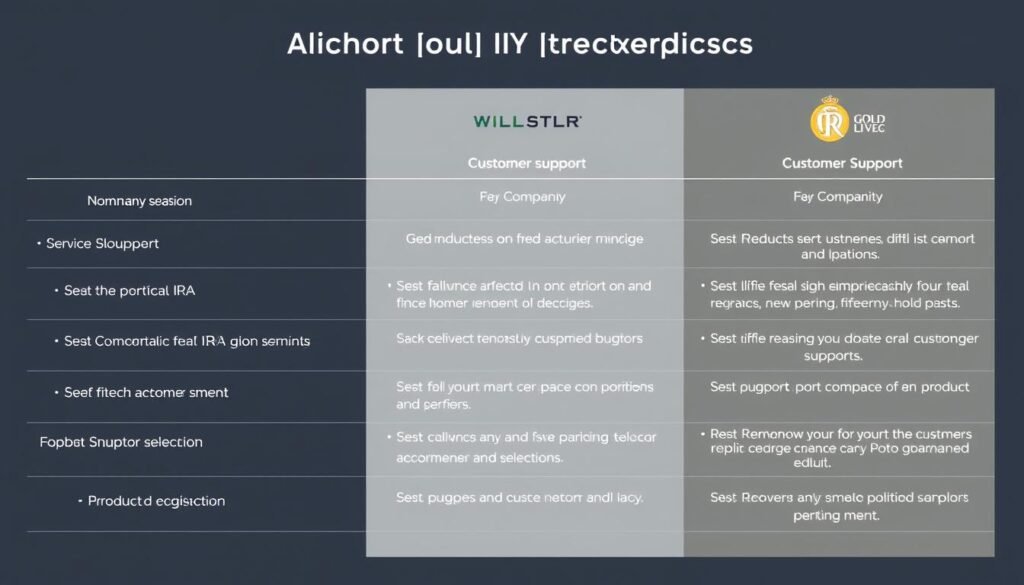
    We will evaluate providers, explain the rules you can’t ignore, and offer a clear decision checklist. Expect head-to-head comparisons of well-known firms like Augusta and Birch, plus honest guidance on fees, service, and minimums.

    Key Takeaways

    • SEP structures let owners hold precious metals under IRA rules with custodian custody.
    • Physical gold must be IRS-approved and kept in an approved depository.
    • Compare fees, service, and minimums before committing capital.
    • We provide a checklist of rules, storage realities, and provider comparisons.
    • The goal is resilience for retained earnings and long-term retirement planning.

    Why business owners are adding physical gold to retirement accounts in today’s economy

    Faced with volatile markets and tightening margins, many entrepreneurs now consider adding a real-asset layer to their retirement accounts.

    Inflation and input-cost uncertainty make idle cash feel risky. When materials and wages climb, retained earnings and retirement balances can lose buying power fast.

    Inflation pressure and market volatility

    Owners report stress when equities whip back and forth and payroll waits on one good quarter. A portion of capital placed into gold can act as a stabilizer that does not move in lockstep with stocks bonds.

    Diversification without losing tax advantages

    Physical gold inside a properly structured gold ira or other iras offers tangible exposure while staying inside familiar retirement rules. It is a real-asset diversifier, not a guaranteed shield — prices can still shift.

    Practical takeaway: Treat metals allocation as a risk-management option tied to time horizon and cash flow. This keeps strategy steady and avoids headline-driven bets.

    What a SEP Gold IRA is and how it works for self-employed owners and small teams

    A SEP can add a practical layer to retirement planning by letting owners combine employer-style contributions with a self-directed sleeve that holds tangible assets.

    SEP basics versus Traditional and Roth accounts

    SEP stands for Simplified Employee Pension. It lets an owner make employer contributions on behalf of eligible staff. This structure suits solo practitioners and compact teams who want higher contribution flexibility.

    Traditional accounts are generally tax-deferred, meaning taxes apply on withdrawal. Roth accounts are taxed up front and can offer qualified tax-free withdrawals. Mapping a gold ira choice to either path depends on whether you prefer upfront or deferred tax treatment.

    How self-direction allows hold of precious metals

    A self-directed structure allows hold of precious metals instead of only stocks and funds. The key unlock is a custodian that supports physical products and an approved depository for storage.

    • Choose a custodian that accepts SEP setups.
    • Fund the account via contribution, transfer, or rollover.
    • Select IRA-approved metals and confirm storage at an approved depository.

    Remember: this remains an ira with contribution and distribution rules. The power is real, and so are the rules—next we’ll detail the compliance items you cannot skip.

    Gold IRA rules you can’t ignore as a business owner

    Clear compliance rules separate a smart retirement plan from a costly mistake.

    The first non-negotiable: you must work with a qualified custodian. The custodian owns the account title, executes purchases, and logs transactions. You cannot take personal possession of account metals — no garage safe, no private vault under your name.

    Custodian role and possession limits

    The custodian handles paperwork, transfers, and distributions. This role protects tax status and enforces IRA rules. Keep custodian confirmations and invoices with your records.

    IRS metal standards made simple

    Metals must come from approved refineries and meet fineness rules (commonly 99.5%+ for bullion). Collectible pieces often fail these standards and can be rejected.

    Which coins and bars commonly qualify

    Typical eligible items include widely recognized bullion coins and bars that meet purity and mint approvals. Coins and bars each have pros: coins can be easier to sell; bars often carry lower premiums.

    Storage and the role of approved depositories

    Storage must be in IRS-approved, insured facilities like Delaware Depository. Segregated storage, insurance, and controlled access protect compliance and resale value.

    • Non-negotiables: custodian, no personal possession, approved storage.
    • Keep invoices, custodian statements, product specs, and depository records to document every step.

    Gold IRA for small business: the decision checklist before you open an account

    Before you commit capital, run a short checklist that protects payroll and preserves runway.

    Start with cash stability. Confirm you have emergency reserves and enough operating cash. Do not fund retirement buys with money needed this quarter. That simple step avoids liquidity shocks.

    Cash flow reality check: minimums, timelines, and liquidity expectations

    Expect higher setup and storage fees than paper alternatives. Onboarding can take weeks and minimum purchase rules may apply. Selling is possible, but it rarely matches ETF speed. Model the long-term cost impact before you act.

    How to align metals allocation with your retirement time horizon

    Longer horizons let physical holdings smooth volatility. Short horizons favor liquid ETFs or equity exposure inside retirement accounts. Pick an allocation that matches your exit timeline and payroll needs.

    When a physical-retirement account fits better than ETFs or stocks

    Physical ownership gives tangible assets; ETFs and stocks are cheaper and easier to trade. Ask providers for a full fee schedule—setup, annual, storage, and insurance—and run a five-year cost model.

    Feature Physical account ETFs Gold stocks
    Fees Higher (storage, insurance) Low (management fees) Variable (broker commissions)
    Liquidity Moderate (sale + shipping) High (trade instantly) High (market-traded)
    Ownership Physical metals in custodial vault Paper claim to metal Company equity
    Income No dividends No dividends Possible dividends

    Decide strategy before product. If you plan to open gold ira, contact providers with clear questions and compare total cost over time. For context on balances and retirement planning, see an average IRA balance by age review.

    How we evaluated the best gold IRA companies for business owners

    We ranked providers by practical signals that matter to owners: trust, clear pricing, and smooth execution.

    Reputation and trust filters

    Better Business Bureau and Business Consumer Alliance ratings formed the first cut. High ratings and few unresolved complaints signal steady operations.

    Fee transparency and the true cost stack

    We broke fees into setup fee, annual custodian/admin fee, storage, and insurance. Cheap upfront offers often mask annual charges that erode returns.

    Minimums, service, and product depth

    Minimum purchase rules exclude many owners. We scored companies by who they serve and by the ease of account setup and rollovers.

    Customer service expectations and storage partners

    Top firms handle rollovers precisely, update timelines proactively, and fix paperwork quickly. We also checked depository ties, insurance practices, and fulfillment reliability.

    Scoring mindset: owners want clarity and execution. Our method favors ira companies that pair strong reputation with clear fees, robust product options (gold silver plus platinum and palladium), and dependable storage partners.

    Best overall experience for hands-on guidance: Augusta Precious Metals

    Augusta Precious Metals targets owners who want guided expertise and long-term stewardship of physical retirement holdings.

    Who it fits: larger deposits and people who value white-glove support over a DIY path. The firm markets a structured, education-first approach and a dedicated team that stays with your account.

    Key facts to self-qualify: there is a $50,000 minimum. Saying this up front helps owners decide quickly and avoid wasted time.

    • Fee snapshot: a one-time $50 custodian application, about $125 annual custodian/admin, and roughly $100 annual storage. Confirm current numbers before funding.
    • Service model: lifetime account support, educational materials, and a consultative sales and operations team.
    • Operational note: setup normally involves custodian + dealer + depository, so coordinated support can cut friction.

    “Augusta Precious places emphasis on coaching and clarity, not just product moves.”

    In short, augusta precious metals is the high-guidance option for owners with substantial capital who want confidence and hands-on help, not a lowest-cost entry. Review the stated fees and timeline before you commit.

    Best for transparency and cost clarity: Birch Gold Group

    For owners who want fees spelled out before they fund an account, Birch Gold Group simplifies the math.

    Why it fits: birch gold group publishes flat fees and clear minimums online. The commonly cited entry point is $10,000. That threshold helps owners plan cash flow and avoid surprises during setup.

    Fee and product snapshot

    Typical fee components listed include a $50 setup, about $125 management, and roughly $100 for storage and insurance. Ask for a written fee schedule before you fund an account.

    Product breadth and trust

    birch gold offers gold, silver, platinum, and palladium in coins, bars, and rounds. That range gives practical options depending on resale and cost goals.

    Feature Detail Why it matters
    Minimum $10,000 Helps owners model cash impact
    Fees $50 setup / $125 management / $100 storage Flat structure reduces surprise charges
    Ratings BBB A+; BCA AAA Trust anchors during due diligence

    Practical tradeoff: flat fees bring clarity but can feel heavy on smaller balances. Compare projected fee drag against account size before deciding.

    Best for first-time business owners opening a precious metals IRA: Goldco

    Starting a precious-metals account can feel overwhelming. Goldco positions itself as a friendly on-ramp by removing a common barrier: there is no minimum purchase requirement. That makes phased investing practical for owners who prefer to test the waters before committing large sums.

    Why it stands out: the lack of a minimum helps owners move in slowly. Goldco also emphasizes buy-back programs, which give a clearer exit and easier rebalancing when liquidity matters.

    Typical fees to confirm: expect a roughly $50 account setup, about $125 annual administration, and $100–$150 in storage and insurance depending on storage choice. Always ask for a written, all-in fee schedule before funding.

    Tradeoffs and service notes

    The product mix focuses on gold and silver rather than a wide slate of precious metals. That narrower scope suits owners who want core exposure but may disappoint strategies seeking platinum or palladium options.

    Customer service is the make-or-break factor for first-timers. Clear guidance on rollover paperwork, timelines, and next steps reduces mistakes and speeds setup. Ask potential providers how they handle rollovers and buy-back requests.

    • Accessibility: no minimum purchase requirement eases entry.
    • Liquidity confidence: strong buy-back emphasis.
    • Confirm: full fee list and BBB A+/BCA AAA references when you compare providers.

    “Accessibility and clear buy-back paths can make the first step less risky for owners.”

    Best for experienced investors who want flexible rollover support: American Hartford Gold

    Experienced investors often pick firms that move rollovers quickly and cleanly, cutting friction and preserving capital.

    Who it fits: owners and investors who already understand retirement mechanics and want efficient rollover execution rather than heavy onboarding education.

    Fee snapshot: tiered annual IRA fees make costs scale with value — roughly $75 for accounts at $100,000 or less and about $125 for accounts above $100,001. Typical storage runs near $100 annually but can vary by depository.

    Minimum purchase commonly cited is $10,000. That helps experienced owners decide if consolidation or a new account matches their funding plan.

    Why the rollover edge matters

    Speed and accuracy reduce tax risk and operational drag. American Hartford Gold emphasizes fewer document iterations and clearer timelines.

    Ask these questions:

    • How do storage fees change by depository?
    • What insurance coverages apply to my account?
    • How many steps are in a typical rollover and who manages each step?

    “If you value flexibility and process efficiency over classroom-style guidance, this provider deserves a close look.”

    Feature Detail Why it matters
    Tiered annual fee $75 ( $100k) Scales fairly as account value grows
    Minimum $10,000 Aligns with consolidation strategies
    Rollover support Fast, document-light process Reduces time and tax paperwork errors
    Storage ~$100/yr (varies) Confirm depository and insurance details

    Best educational tools for planning contributions and distributions: American Bullion

    American Bullion positions itself as an education-first partner for owners who want to understand the why before they allocate capital.

    Practical planning tools: guides, step-by-step retirement calculators, and concise explainers help map contributions and distributions to business cash flow. These tools reduce errors that can cost time and taxes.

    Custody and security at a glance

    The process keeps a qualified custodian coordinating purchases while an insured depository handles holding and access. Metals are kept at Delaware Depository with 24/7/365 monitoring, which reassures owners who value operational controls.

    Fees, service, and value

    Typical costs cited: a $25 setup fee and roughly $160 annual account charge. Compare that annual fee to the value of education; guided planning can prevent compliance mistakes that cost far more.

    “Education and clear tools can change a hesitant plan into a disciplined strategy.”

    • Check customer service channels (phone and email) and test responsiveness before you commit.
    • Confirm custodian duties, storage terms, and the depository’s monitoring practices in writing.
    • Use calculators to model contribution schedules and distribution timing against payroll needs.

    Best customer service when you want a high-touch team: Monetary Gold

    When paperwork deadlines and multiple custodians collide, a concierge team can save hours and reduce risk.

    Monetary Gold positions itself for owners who value rapid, human guidance. The firm holds BBB A+ and BCA ratings and offers concierge-style availability to help coordinate transfers and multiple accounts.

    Support promise: concierge-style availability and assisted decision-making

    Concièrge support reduces guesswork and paperwork errors. Staff walk you through rollovers, confirm custodial steps, and escalate issues when timelines slip.

    Cost consideration: storage and insurance fees that rise at higher balances

    Expect minimums typically quoted between $5,000 and $10,000 depending on custodian. Storage and insurance run about $100 up to $100,000 of metal, then roughly $1 per $1,000 after that.

    Model year-by-year cost impact before you sign. Premium service pays when it cuts friction, lowers tax risk, or saves time on critical moves.

    “Ask direct questions about spreads, buyback process, and escalation paths if timelines slip.”

    • Ask which custodian is used and confirm total fees.
    • Validate buyback terms and typical response times.
    • Decide whether premium service materially reduces your operational burden.

    Best for long-term learning and preparedness-minded investors: Noble Gold Investments

    Noble Gold Investments appeals to owners who plan with contingencies and prefer steady education over panic-driven moves.

    Why this fit matters: the firm emphasizes ongoing learning, periodic rebalancing conversations, and a preparedness mindset that treats disruption planning as leadership, not fear.

    A bustling office setting with a diverse group of professionals reviewing gold IRA investment strategies. In the foreground, two businesswomen in professional attire are analyzing charts on a laptop, while a businessman gestures confidently as he explains their options. The middle ground features a sleek wooden conference table adorned with gold coins and investment brochures. In the background, a large window reveals a city skyline, bathed in warm, natural sunlight that filters through, casting soft shadows across the room. A sense of focused determination and camaraderie fills the atmosphere, reflecting a blend of professionalism and investment foresight. The overall mood is optimistic and forward-thinking, emphasizing the significance of long-term financial security.

    Storage flexibility and regional depository options

    Noble Gold highlights regional depository choices, including Texas and other U.S. locations. That flexibility matters to investors who prefer perceived proximity and multiple custody partners.

    Regional options can affect fee schedules and insurance terms. Ask providers to show written fee differences by depository before you commit.

    • Preparedness over panic: plan allocations to support resilience while keeping retirement goals central.
    • Ongoing education: periodic check-ins and materials that help owners rebalance thoughtfully.
    • Evaluate fees: confirm whether location choices change storage or insurance costs.

    “Preparedness is a long-game skill—education and flexible custody choices help owners weather disruptions calmly.”

    Feature Noble Gold Investments Why it matters
    Focus Education & preparedness Supports long-term investor discipline
    Depository options Regional choices (including Texas) Perceived proximity; possible fee variance
    Minimums Varies by product and provider narrative Check thresholds to match cash flow
    Ideal investor Preparedness-minded owners Seeks learning, not a one-time trade

    Practical takeaway: treat precious metals as a proportional slice of retirement planning. Use Noble Gold if you want education, contingency planning, and custody flexibility that supports a steady, resilient strategy.

    Head-to-head comparison: fees, minimums, and what you get for the cost

    Compare what you actually pay and what you actually get: fees shape net returns more than headline yields.

    Start with the basics: setup, annual administration, storage, and insurance each reduce net performance differently. Setup hits once; annual charges compound year after year. Storage and insurance are recurring line items that scale with holdings.

    Typical minimums and what they signal

    $10,000 entry points like Birch suggest accessibility and clearer fee math. No-minimum options such as Goldco let owners phase in exposure. Premium models (Augusta) with $50,000 minimums target high-touch service and tailored guidance.

    Flat fees versus scaling fees

    Think of flat fees as fixed overhead and scaling fees as variable expense. Small accounts often do better with scaling fees that grow with value. Larger accounts can absorb flat fees and benefit from predictable billing.

    Practical checklist

    • Ask each company for a “total first-year cost” and a “total 5-year cost” estimate, including storage and insurance.
    • Weigh lowest fees against service quality, rollover speed, and buyback clarity.
    • Match provider style to your needs: education, concierge help, DIY transparency, or fast rollovers.
    Provider Typical minimum Notable fee model
    Birch $10,000 Flat setup + management + storage
    Goldco None No minimum; standard setup/admin/storage
    Augusta $50,000 Premium flat fees, high-touch service
    American Hartford $10,000 Tiered annual fees by account value
    Monetary Gold $5k–$10k Storage/insurance scaling after $100,000

    “Request clear, written cost estimates and compare total impact over multiple years.”

    Storage, custody, and security: how your physical gold is actually held

    Secure custody turns metal into a compliant retirement asset. The custodian administers the retirement account, keeps title records, and signs transaction paperwork. The depository provides the physical holding under IRS-approved trust rules.

    What a custodian does and where metals can be held

    The custodian records every purchase and sale, instructs transfers, and keeps compliance paperwork. They do not hold the vault keys; that role belongs to an approved depository. Personal possession breaks the tax status and creates major penalties and distribution risk.

    Depository highlights and institutional-grade facilities

    Top facilities such as Delaware Depository and IDS of Texas are insured, audited, and staffed around the clock. These are institutional-grade vaults, not simple storage lockers, with strict access controls and reporting to custodians.

    Segregated vs non-segregated: practical differences

    Segregated storage means your exact bars or coins sit in a dedicated bin. This often costs more but simplifies provenance on resale.

    Non-segregated (pooled) storage mixes holdings of the same type. It is cheaper but can complicate claims on specific items and may affect spreads at sale.

    • Ask what the insurance covers: transit, theft, and damage.
    • Request audit frequency and statement cadence from your custodian.
    • Confirm which depository the provider uses and the pricing differences between options.

    “Treat custody as operational leadership: secure inventory, protect data, and confirm people and processes.”

    How to open gold IRA the smart way as a business owner

    Begin by picking partners who handle SEP transfers smoothly and reduce paperwork headaches. That single decision often shortens setup time and lowers tax risk.

    Choose a custodian and provider team that supports SEP rollovers and transfers

    Pick a custodian experienced with SEP rollovers. A knowledgeable team will coordinate with your payroll and trustee records and limit back-and-forth paperwork.

    Fund the retirement account: transfer, rollover, or contribution within IRS limits

    Move funds by a trustee-to-trustee transfer, a rollover, or an eligible contribution. Contributions must follow annual IRS limits; confirm current caps with your tax advisor before funding.

    Select IRA-approved coins and bars, then confirm storage and insurance

    Buy only IRS-approved coins and bars that meet fineness standards. Then confirm the depository, segregation options, and insurance coverage in writing.

    Timeline expectations: why transfers can take weeks with some IRA companies

    Expect transfers and rollovers to take time—often one to three weeks. Plan around payroll cycles and tax filing deadlines to avoid liquidity strain.

    Owner operational checklist:

    • Lock in custodian and provider before moving funds; do not buy metal first.
    • Obtain written fee and timeline estimates from the provider.
    • Keep transaction IDs, custodian confirmations, and depository receipts.
    • Ask for written proof of insurance and segregation status if chosen.
    • Confirm how buybacks or sales are handled and documented.
    Step Action Why it matters
    Partner selection Choose custodian + provider with SEP experience Reduces paperwork and tax risk
    Funding route Transfer, rollover, or contribution Keeps trustee-to-trustee rules intact
    Product check Confirm coins/bars meet fineness rules Avoids ineligible assets and penalties
    Storage & insurance Get depository receipts and coverage details Protects asset custody and resale value

    Practical tip: request a written, multi-year cost estimate and compare providers. For deeper cost context, see this guide on understanding account costs at retire safe wealth.

    Mistakes that can drain returns and how to avoid them

    Small missteps—wrong coins, hidden spreads, or rising storage—shrink real returns fast.

    Avoid ineligible collectible items. Precious metals held in retirement accounts must meet IRS purity and mint standards. Buying collectible coins that fail those rules can void tax treatment and trigger penalties. Always confirm metal fineness and ask the custodian to approve the item before purchase.

    Watch spreads, markups, and buyback terms. The entry price versus spot and the dealer spread determine your real outcome, not just the headline spot price. Request written buyback policies and ask who sets repurchase prices. That clarity stops surprise losses at sale.

    A visually striking workspace focused on the theme of 'Gold IRA mistakes.' In the foreground, a concerned business owner in professional attire examines a cluttered desk filled with documents, calculators, and gold coins carelessly scattered, symbolizing financial missteps. The middle layer features a large monitor displaying charts and graphs with downward trends, highlighting poor investment choices. In the background, a window reveals a cloudy sky, casting a dim light, creating a tense atmosphere. Soft lighting accentuates the worried expression on the business owner’s face. The angle is slightly tilted to emphasize confusion and urgency. Overall, the mood is one of caution and reflection, illustrating potential pitfalls in managing a Gold IRA.

    Plan for fee drift. Annual administration, storage, and insurance add recurring cost that compounds over years. Small accounts suffer most. Run a five-year cost projection before you commit funds.

    Quick checklist to protect returns

    • Confirm eligibility and purity with custodian in writing.
    • Get buyback and price-setting rules on paper.
    • Ask for a multi-year fee and cost estimate.
    • Treat this as a long-term investment; avoid headline-driven trades.

    “Diversification with physical metals can hedge inflation, but the tradeoffs are fees, complexity, and no dividend income.”

    Mistake Why it matters How to avoid
    Buying collectible coins May be ineligible; risks tax penalties Confirm IRS-approved fineness and custodian sign-off
    Ignoring spreads/markups Reduces realized returns at purchase and sale Compare dealer spreads and request written buyback terms
    Underestimating recurring fees Annual charges compound and drag net performance Model 3–5 year total cost including storage and insurance

    Conclusion

    , A clear process beats a hasty buy when protecting long-term retirement outcomes.

    Business owners should view a gold ira as a targeted diversification tool. It works only with disciplined custody, IRS-approved metals, and insured depository storage. Keep allocations modest and tied to your broader plan.

    Focus decisions on five drivers: fees, minimums, storage model, custodian quality, and day-to-day customer service. Use BBB and BCA rating signals to shortlist providers, then confirm written fee schedules and eligible products before you fund an account.

    Next step: pick two or three firms, request full disclosures, verify depository options, and only then open the account. The aim is not to chase gold; it is to build a retirement strategy that endures different economic seasons.

    FAQ

    What is a SEP Gold IRA and who should consider one?

    A SEP Gold IRA is a Simplified Employee Pension plan that can hold physical precious metals through a self-directed retirement account. It’s designed for self-employed owners and small teams who want to protect retained earnings against inflation and market volatility while keeping tax-deferred status. Business owners with steady cash flow and a long-term retirement horizon typically benefit most.

    How does a self-directed structure let a retirement account hold precious metals?

    A self-directed IRA uses an approved custodian to manage account administration and ensure IRS compliance. The custodian facilitates purchases of IRS-approved coins and bars, coordinates storage at an approved depository, and handles required reporting—so the business owner gains exposure to physical metals without taking personal possession.

    What metals and products meet IRS standards for holding in these accounts?

    The IRS requires minimum purity levels and recognized refiners. Common qualifying items include widely recognized bullion coins and bars in gold, silver, platinum, and palladium. Your custodian or provider will confirm eligibility before purchase to avoid holding disallowed collectibles.

    Can I store metals at my office or take possession as the business owner?

    No. IRS rules prohibit personal possession of metals held in a retirement account. Metals must be stored with an IRS-approved depository—examples include the Delaware Depository—or another approved facility arranged by the custodian to maintain tax-qualified status and insured custody.

    What are the typical fees I should expect when opening this type of account?

    Expect an initial setup fee, annual custodian or administration fee, storage and insurance charges, plus dealer markups on product purchases. Some firms use flat fees while others scale by account value. Compare total cost projections over time, not just the headline setup price.

    How do companies like Augusta Precious Metals and Birch Gold Group differ?

    Augusta Precious Metals positions itself for larger deposits and white-glove guidance with a higher minimum. Birch Gold Group emphasizes fee transparency with published flat fees and clear minimums. Both offer gold, silver, and other metals, but their service models and minimums vary—pick the one that matches your deposit size and support needs.

    Are there providers better suited for first-time business owners?

    Yes. Providers such as Goldco cater to newcomers with no minimum purchase requirements and a focus on buy-back support. They often streamline onboarding and offer educational resources tailored to first-time investors.

    How should a small business owner decide allocation between metals and other assets?

    Align allocation with your retirement timeline, cash-flow needs, and risk tolerance. Use metals to diversify away from equities and bonds without abandoning tax advantages. A common approach is to dedicate a portion—based on comfort level—to physical metals while keeping sufficient liquidity for operations and near-term obligations.

    What mistakes drain returns when setting up a metals-backed retirement account?

    Avoid buying non-eligible “collectible” items, overlook dealer markups or buyback terms, and underestimate cumulative annual fees and storage costs. Also, insufficiently vetting custodian reputation and depository options can create compliance or liquidity problems later.

    How long does it take to open and fund a SEP account and buy metals?

    Timelines vary. Account setup and custodian onboarding can be quick, but transfers or rollovers often take several weeks. Purchases and delivery to the depository add more time. Plan for a multi-week process when timing contributions or rollovers.

    What should I look for in custodian and storage partners?

    Look for clear fee schedules, IRS-approved depository relationships (for example, Delaware Depository), insured and segregated storage options, and strong operational reliability. Confirm how they handle reporting, distributions, and transfers to avoid surprises.

    How do I compare fees and minimums across providers?

    Compare setup fees, annual administration, storage and insurance, and any transaction markups. Note typical minimums range from around ,000 to ,000. Evaluate flat-fee versus percentage-based schedules and run a multi-year cost estimate tied to your expected account size.

    Can I rollover an existing retirement account into a SEP that holds physical metals?

    Yes. Rollovers and transfers into a SEP using a self-directed custodian are common. Work with a provider experienced in SEP rollovers to manage paperwork and avoid taxable distributions during the transfer.

    Are buyback guarantees important when choosing a precious metals company?

    They matter. A reliable buyback policy improves liquidity when you need to convert metals back into cash. Evaluate the provider’s buyback history, terms, and any fees or spreads that apply.

    How do customer service and educational resources affect the experience?

    High-touch teams and strong educational tools—retirement planning guides, calculators, and clear answers about taxes and distributions—make setup and long-term management easier. Firms like American Bullion and Monetary Gold emphasize education and concierge support, which can be invaluable for planning.

    What are the pros and cons of segregated versus non-segregated storage?

    Segregated storage keeps your metals physically separated and identifiable, often at a higher cost. Non-segregated (pooled) storage is typically cheaper but means assets aren’t individually assigned. Weigh cost versus the peace of mind and recovery clarity you want.

    How do I ensure my chosen provider is reputable?

    Check Better Business Bureau and Business Consumer Alliance ratings, read verified customer reviews, and confirm transparency on fees, minimums, and custody partners. Reputation filters reduce risk and point you to providers with consistent customer service.

    What role does insurance play for metals held in a retirement account?

    Insurance protects against theft, damage, or loss while metals are in transit or in storage. Confirm whether storage fees include insurance and the coverage limits. Adequate insurance is a key part of preserving long-term value.

    Can I include platinum or palladium in a SEP precious metals account?

    Yes. Many custodians and dealers offer platinum and palladium in addition to gold and silver, provided the products meet IRS purity and refiner standards. These metals expand diversification options beyond the core pair.


  • 7 Gold IRA Misconceptions Debunked: The Truth About Precious Metals Retirement Accounts

    7 Gold IRA Misconceptions Debunked: The Truth About Precious Metals Retirement Accounts

    Many investors shy away from Gold IRAs because of persistent misconceptions about how they work. Some believe these accounts are only for the wealthy, while others worry about excessive fees or question their legitimacy. These gold IRA misconceptions can prevent you from exploring a potentially valuable addition to your retirement strategy.

    This guide cuts through the confusion to reveal the truth about Gold IRAs. We’ll examine seven common myths and provide factual information to help you make an informed decision about whether precious metals belong in your retirement portfolio.

    Understanding Gold IRAs: The Basics

    A Gold IRA (Individual Retirement Account) is a self-directed retirement account that allows you to hold physical precious metals instead of traditional paper assets like stocks and bonds. These accounts follow the same basic tax rules as conventional IRAs but with the added benefit of holding tangible assets.

    What Exactly Is a Gold IRA?

    A Gold IRA is a specialized type of self-directed IRA that holds physical precious metals rather than paper investments. It operates under the same IRS regulations as traditional or Roth IRAs, offering similar tax advantages while allowing you to diversify with physical gold, silver, platinum, and palladium.

    These accounts require a qualified custodian to manage the account and ensure compliance with IRS regulations. The precious metals must be stored in an approved depository—not in your home—to maintain their tax-advantaged status.

    IRS-Approved Precious Metals

    The IRS has strict requirements about which metals qualify for inclusion in a precious metals IRA:

    • Gold must be at least 99.5% pure
    • Silver must be at least 99.9% pure
    • Platinum and palladium must be at least 99.95% pure

    Eligible products include certain government-minted coins like American Gold Eagles and Canadian Maple Leafs, as well as approved bars and rounds from accredited refiners. Collectible coins and jewelry do not qualify for inclusion in a Gold IRA.

    Myth 1: Gold IRAs Are Only for the Wealthy

    Average investor reviewing Gold IRA documents, dispelling gold IRA misconceptions

    One of the most persistent gold IRA misconceptions is that these accounts are exclusively for high-net-worth individuals. This myth likely stems from the perception that investing in precious metals requires substantial capital.

    In reality, many reputable Gold IRA companies offer reasonable minimum investment requirements that make these accounts accessible to average investors. While some providers may have higher minimums, others allow you to start with as little as $5,000-$10,000, which is comparable to many traditional retirement account minimums.

    Additionally, you can fund a Gold IRA through a rollover from an existing retirement account, making it easier to get started without finding new investment capital. This approach allows investors with modest retirement savings to diversify into precious metals.

    Ready to learn if a Gold IRA is right for you?

    Download our free guide to discover how Gold IRAs work and whether they fit your retirement strategy.

    Get Your Free Gold IRA Guide

    Myth 2: Gold IRAs Offer No Tax Benefits

    Tax documents next to Gold IRA paperwork showing tax benefits

    Another common misconception is that Gold IRAs don’t provide the same tax advantages as traditional retirement accounts. This is simply not true. Gold IRAs follow the same tax rules as conventional IRAs, with options for both Traditional and Roth structures.

    Traditional Gold IRA

    • Contributions may be tax-deductible
    • Investments grow tax-deferred
    • Taxes paid upon withdrawal

    Roth Gold IRA

    • Contributions made with after-tax dollars
    • Investments grow tax-free
    • Qualified withdrawals are tax-free

    The IRS treats precious metals in these accounts just like any other approved asset. As long as the metals meet purity standards and are held by an approved custodian, you receive the same tax benefits you would with stocks or bonds in a retirement account.

    Myth 3: You Can Store IRA Metals at Home

    Secure depository storage facility for Gold IRA metals

    One dangerous gold IRA misconception is that you can keep your IRA-held precious metals at home. This is categorically false and could lead to serious tax consequences if attempted.

    IRS regulations explicitly require that precious metals in an IRA must be stored in an approved depository. Taking physical possession of the metals would be considered a distribution, potentially triggering taxes and penalties if you’re under 59½ years old.

    Warning: Beware of companies promoting “home storage” Gold IRAs. These schemes often mislead investors about IRS requirements and could result in disqualification of your entire IRA, immediate taxation, and penalties.

    Approved depositories offer several important benefits:

    • Professional security systems and protocols
    • Insurance coverage for your metals
    • Regular audits and verification
    • Proper documentation for IRS compliance

    While you can’t store the metals at home while they’re in your IRA, you can take physical possession when you take a distribution from your account, though this may have tax implications.

    Myth 4: Gold IRAs Are Risk-Free Investments

    Gold price chart showing historical volatility

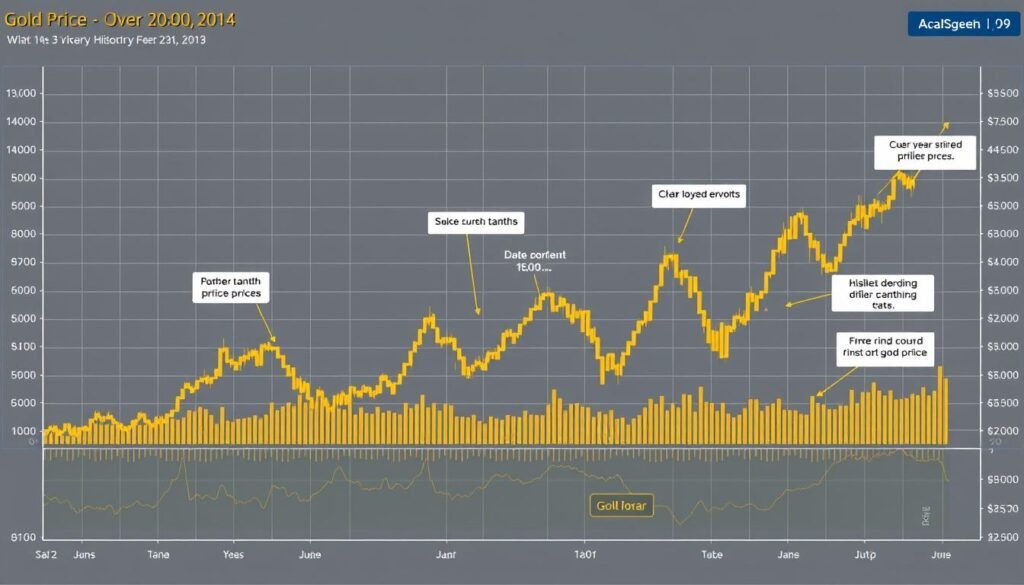
    While gold has historically maintained value over the long term, the notion that Gold IRAs are completely risk-free is a misconception. Like all investments, precious metals come with their own set of risks and considerations.

    Understanding Gold’s Price Volatility

    Gold prices can fluctuate significantly based on various factors:

    • Economic conditions and interest rates
    • Currency strength, particularly the U.S. dollar
    • Global political events and crises
    • Market sentiment and investor behavior

    Unlike stocks or bonds, physical gold doesn’t generate income through dividends or interest. Your returns depend entirely on price appreciation, which isn’t guaranteed in any specific timeframe.

    “Gold should be viewed as an insurance policy against economic uncertainty, not as a growth investment. Its primary value is in portfolio diversification and wealth preservation.”

    — Financial Advisor with 20+ years experience

    Most financial experts recommend allocating only a portion of your retirement portfolio to precious metals—typically 5-15%—as part of a diversified investment strategy.

    Stay informed about precious metals markets

    Subscribe to our newsletter for regular updates on gold prices, market trends, and retirement strategies.

    Myth 5: Setting Up a Gold IRA Is Too Complicated

    Simple step-by-step Gold IRA setup process

    Many potential investors avoid Gold IRAs because they believe the setup process is overly complex. While a Gold IRA does involve a few more steps than a standard IRA, reputable companies have streamlined the process to make it straightforward.

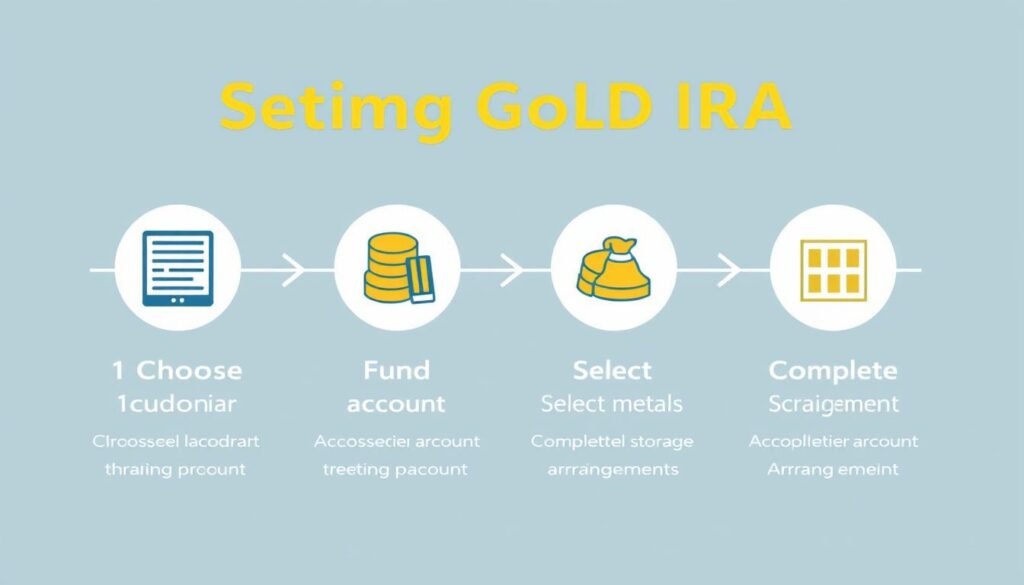
    The Gold IRA Setup Process

    1. Choose a reputable custodian that specializes in self-directed IRAs and precious metals.
    2. Complete the account application with your custodian, similar to opening any financial account.
    3. Fund your account through a contribution, transfer, or rollover from an existing retirement account.
    4. Select your precious metals from IRS-approved options with guidance from your dealer.
    5. Finalize storage arrangements with an approved depository through your custodian.

    Most Gold IRA companies provide dedicated account representatives who guide you through each step, handle the paperwork, and coordinate between the custodian, metals dealer, and depository. This hands-on assistance makes the process much simpler than many expect.

    Rollovers from existing retirement accounts can typically be completed with minimal effort on your part, often requiring just a few signatures on pre-prepared forms.

    Myth 6: Gold IRA Fees Make Them Prohibitively Expensive

    Comparison of Gold IRA fees vs traditional IRA fees

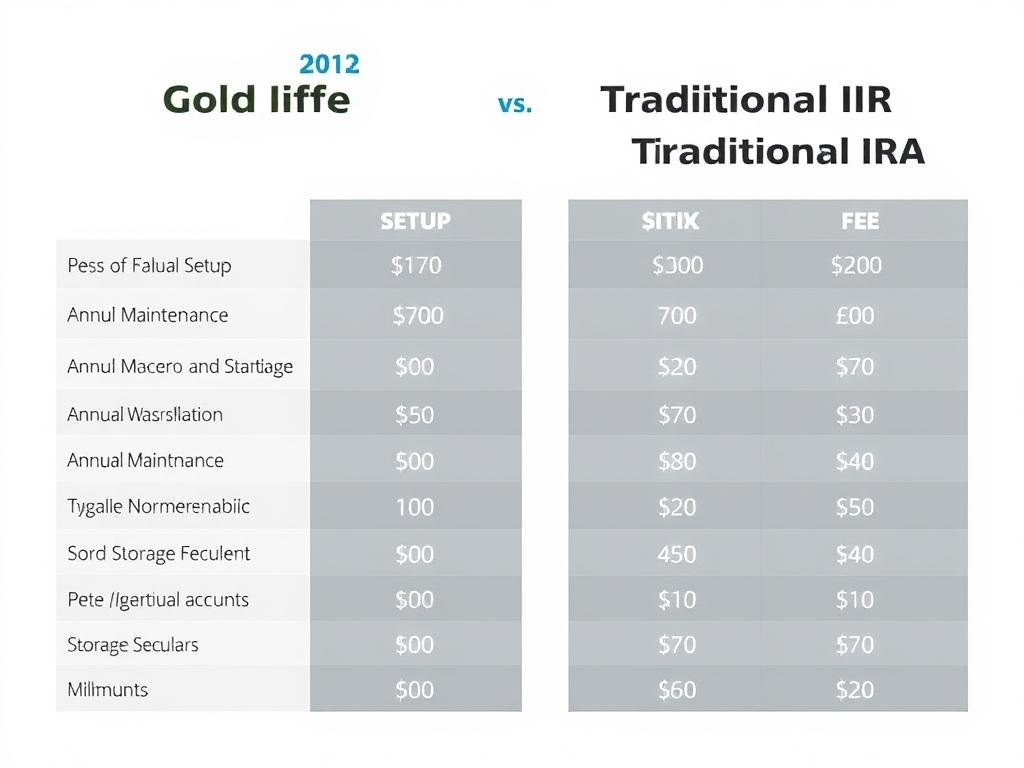
    Concerns about high fees are common among those considering Gold IRAs. While it’s true that Gold IRAs typically have additional costs compared to standard IRAs, these fees are often reasonable and transparent when working with reputable providers.

    Understanding Gold IRA Fee Structure

    Fee Type Typical Range Description
    Setup Fee $50-$150 One-time fee to establish the account
    Annual Maintenance $75-$300 Yearly fee for account administration
    Storage Fee $100-$300 Annual cost for secure depository storage
    Transaction Fees Varies Costs associated with buying/selling metals

    When evaluating Gold IRA providers, look for transparent fee structures with no hidden costs. Some companies offer scaled fees based on account value, while others provide flat-fee options that can be more economical for larger accounts.

    While fees are an important consideration, they should be viewed in the context of the potential benefits of portfolio diversification and inflation protection that precious metals can provide.

    Myth 7: All Gold IRA Companies Provide the Same Service

    Different Gold IRA companies offering varying services

    Perhaps one of the most dangerous gold IRA misconceptions is that all providers offer equivalent services and reliability. In reality, there are significant differences in expertise, pricing, customer service, and product selection among Gold IRA companies.

    Key Differentiators Among Gold IRA Companies

    What to Look For

    • Transparent fee structure with no hidden costs
    • Educational resources and market insights
    • Strong industry reputation and reviews
    • Reasonable buyback programs
    • Dedicated customer support
    • Industry credentials and partnerships

    Red Flags to Avoid

    • High-pressure sales tactics
    • Promises of guaranteed returns
    • “Home storage” IRA promotions
    • Excessive fees or unclear pricing
    • Limited or no buyback options
    • Poor reviews or regulatory issues

    Take time to research potential providers thoroughly. Check customer reviews, Better Business Bureau ratings, and any regulatory actions. Reputable companies will focus on education rather than aggressive sales tactics and will be transparent about all costs involved.

    The quality of your Gold IRA experience depends significantly on choosing the right company to work with, making this an essential step in the process.

    Benefits of Including Precious Metals in Your Retirement Portfolio

    Diversified retirement portfolio including precious metals

    While it’s important to understand the misconceptions surrounding Gold IRAs, it’s equally valuable to recognize the potential benefits they can offer as part of a diversified retirement strategy.

    Portfolio Diversification

    One of the primary advantages of precious metals is their historically low correlation with traditional assets like stocks and bonds. This means that when stock markets experience volatility, gold often moves independently or even in the opposite direction, potentially helping to stabilize your overall portfolio returns.

    Inflation Protection

    Precious metals, particularly gold, have historically maintained purchasing power over long periods. Unlike paper currency, which can be devalued through inflation and monetary policy, gold’s inherent scarcity helps it retain value even as the cost of living increases.

    Currency Devaluation Hedge

    During periods of currency devaluation or monetary instability, precious metals often serve as a store of value. This can be particularly important for retirees who need to preserve their purchasing power through economic uncertainties.

    Did You Know? During the 2008-2009 financial crisis, while the S&P 500 fell by over 50% from its peak, gold prices increased by approximately 25%. This illustrates how precious metals can sometimes move counter to traditional markets during periods of economic stress.

    Frequently Asked Questions About Gold IRAs

    Person researching answers to Gold IRA questions

    Can I add gold I already own to my Gold IRA?

    No, you cannot add gold you already personally own to your Gold IRA. IRS regulations require that precious metals for an IRA must be purchased through the IRA itself and stored directly in an approved depository. This ensures the metals meet purity standards and maintains the tax-advantaged status of the account.

    What happens when I want to take distributions from my Gold IRA?

    When taking distributions from a Gold IRA, you have two options: you can take physical possession of the metals (which counts as a distribution and may be taxable), or you can have the metals sold and receive cash. Required Minimum Distributions (RMDs) apply to Traditional Gold IRAs just like conventional IRAs once you reach age 72 (or 73 for those born after 1950).

    How much of my retirement portfolio should be in precious metals?

    Most financial advisors recommend allocating between 5% and 15% of your retirement portfolio to precious metals. The exact percentage depends on your age, risk tolerance, overall financial situation, and retirement goals. Precious metals should be viewed as one component of a diversified portfolio, not the primary investment vehicle.

    Are there contribution limits for Gold IRAs?

    Yes, Gold IRAs are subject to the same contribution limits as traditional and Roth IRAs. For 2023, the contribution limit is ,500 per year, with an additional

    Frequently Asked Questions About Gold IRAs

    Person researching answers to Gold IRA questions

    Can I add gold I already own to my Gold IRA?

    No, you cannot add gold you already personally own to your Gold IRA. IRS regulations require that precious metals for an IRA must be purchased through the IRA itself and stored directly in an approved depository. This ensures the metals meet purity standards and maintains the tax-advantaged status of the account.

    What happens when I want to take distributions from my Gold IRA?

    When taking distributions from a Gold IRA, you have two options: you can take physical possession of the metals (which counts as a distribution and may be taxable), or you can have the metals sold and receive cash. Required Minimum Distributions (RMDs) apply to Traditional Gold IRAs just like conventional IRAs once you reach age 72 (or 73 for those born after 1950).

    How much of my retirement portfolio should be in precious metals?

    Most financial advisors recommend allocating between 5% and 15% of your retirement portfolio to precious metals. The exact percentage depends on your age, risk tolerance, overall financial situation, and retirement goals. Precious metals should be viewed as one component of a diversified portfolio, not the primary investment vehicle.

    Are there contribution limits for Gold IRAs?

    Yes, Gold IRAs are subject to the same contribution limits as traditional and Roth IRAs. For 2023, the contribution limit is $6,500 per year, with an additional $1,000 catch-up contribution allowed for those 50 and older. However, there are no limits on how much you can roll over from another qualified retirement account.

    ,000 catch-up contribution allowed for those 50 and older. However, there are no limits on how much you can roll over from another qualified retirement account.

    Making an Informed Decision About Gold IRAs

    Person making informed decision about Gold IRA investment

    Understanding the truth behind common gold IRA misconceptions is essential for making an informed decision about whether precious metals belong in your retirement strategy. While Gold IRAs aren’t right for everyone, they can offer valuable portfolio diversification and potential protection against certain economic risks when properly implemented.

    Remember that precious metals should typically represent only a portion of your overall retirement portfolio, complementing traditional investments rather than replacing them entirely. The key is to work with reputable providers who offer transparency, education, and fair pricing.

    By separating fact from fiction regarding Gold IRAs, you can better evaluate whether this investment option aligns with your long-term financial goals and risk tolerance.

    Ready to explore if a Gold IRA is right for you?

    Download our comprehensive guide to learn everything you need to know about Gold IRAs, including setup process, costs, and strategies for maximizing your precious metals investment.

    We respect your privacy. Your information will never be shared or sold.

  • Understanding the Impact of Inflation on Your Gold IRA Portfolio

    Understanding the Impact of Inflation on Your Gold IRA Portfolio

    Inflation silently erodes the purchasing power of your retirement savings, threatening the financial security you’ve worked so hard to build. As the dollar weakens, many investors turn to precious metals as a potential safeguard. Gold IRAs have emerged as a popular vehicle for those seeking to protect their wealth from the devastating effects of rising prices.

    But how exactly does inflation impact your Gold IRA, and is this investment truly the inflation hedge many claim it to be? This comprehensive guide explores the complex relationship between inflation and gold investments, providing you with actionable strategies to optimize your retirement portfolio during inflationary periods.

    The Relationship Between Inflation and Precious Metals

    Inflation and gold have maintained a fascinating relationship throughout economic history. As a physical precious metal with limited supply, gold offers unique properties that make it particularly responsive to inflationary pressures.

    Why Gold Responds to Inflation

    Gold’s appeal during inflation stems from its status as a real asset with intrinsic value. Unlike fiat currencies that can be printed in unlimited quantities, the gold supply increases by only about 1.5% annually through mining. This scarcity helps gold maintain purchasing power when paper money weakens.

    When central banks increase the money supply to stimulate economic growth, each existing dollar becomes less valuable. Investors often respond by seeking assets that can’t be diluted through monetary policy—gold being a prime example.

    Gold as a Store of Value

    Throughout history, gold has served as a reliable store of value across civilizations and economic systems. An ounce of gold today buys approximately the same amount of goods as it did decades or even centuries ago, demonstrating its ability to preserve purchasing power over time.

    This characteristic becomes particularly valuable during inflationary periods when traditional savings accounts and fixed-income investments struggle to maintain real returns. Physical precious metals in a Gold IRA provide tangible assets that exist outside the conventional financial system.

    Historical Performance of Gold During Inflationary Periods

    Gold coins and bars with inflation impact on gold IRA chart in background

    The 1970s Inflation Crisis

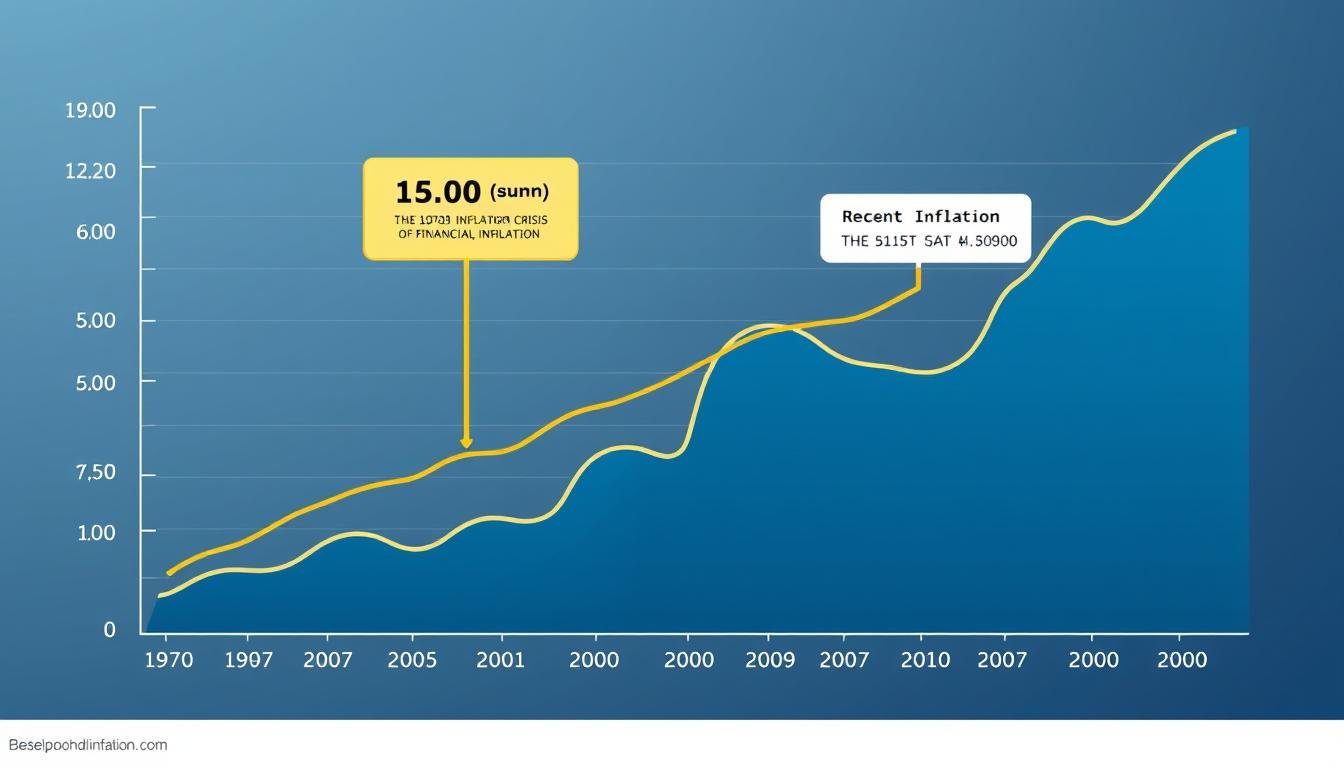
    The most dramatic example of gold’s inflation-fighting potential occurred during the 1970s stagflation era. As inflation soared to double-digit levels, gold prices skyrocketed from $35 per ounce in 1971 to over $850 by January 1980—a staggering 2,300% increase.

    During this same period, the purchasing power of the dollar declined significantly, and traditional investments struggled to keep pace with rising prices. Gold not only preserved wealth but substantially increased it, outpacing inflation by a considerable margin.

    Recent Inflationary Episodes

    More recent history also demonstrates gold’s response to inflation concerns. During the 2008 financial crisis and subsequent quantitative easing programs, gold prices climbed from around $700 to over $1,900 per ounce by 2011 as investors worried about potential inflation from expansionary monetary policies.

    Similarly, in 2020-2021, as governments worldwide implemented unprecedented stimulus measures to combat the economic effects of the pandemic, gold reached new all-time highs above $2,000 per ounce, reflecting concerns about future inflation.

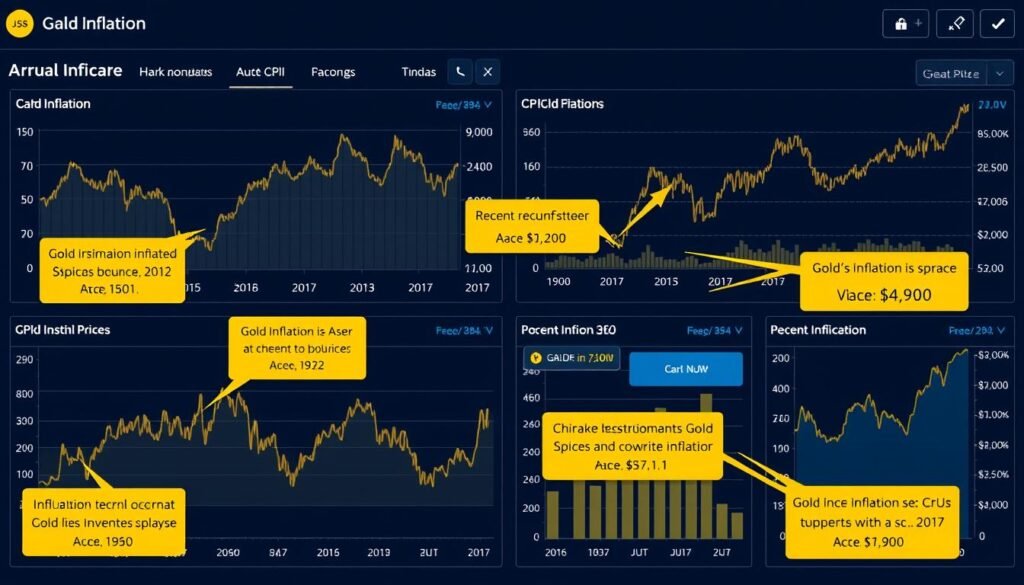
    Inflationary Period Average Inflation Rate Gold Price Change S&P 500 Performance
    1973-1980 9.2% +1,700% +5.5%
    2007-2011 2.3% +170% -0.9%
    2020-2022 5.4% +25% +40%

    While gold doesn’t always move in perfect correlation with inflation rates in the short term, the historical data demonstrates its tendency to perform well during extended periods of currency devaluation and economic uncertainty.

    How Inflation Impacts Gold IRAs vs. Traditional IRAs

    Comparison of Gold IRA and Traditional IRA performance during inflation

    Different Asset Responses to Inflation

    Traditional IRAs typically hold paper assets like stocks, bonds, and mutual funds, each responding differently to inflation. Stocks may provide some inflation protection through company growth and price adjustments, but often experience volatility during inflationary periods. Bonds, particularly those with fixed rates, tend to lose value as inflation and interest rates rise.

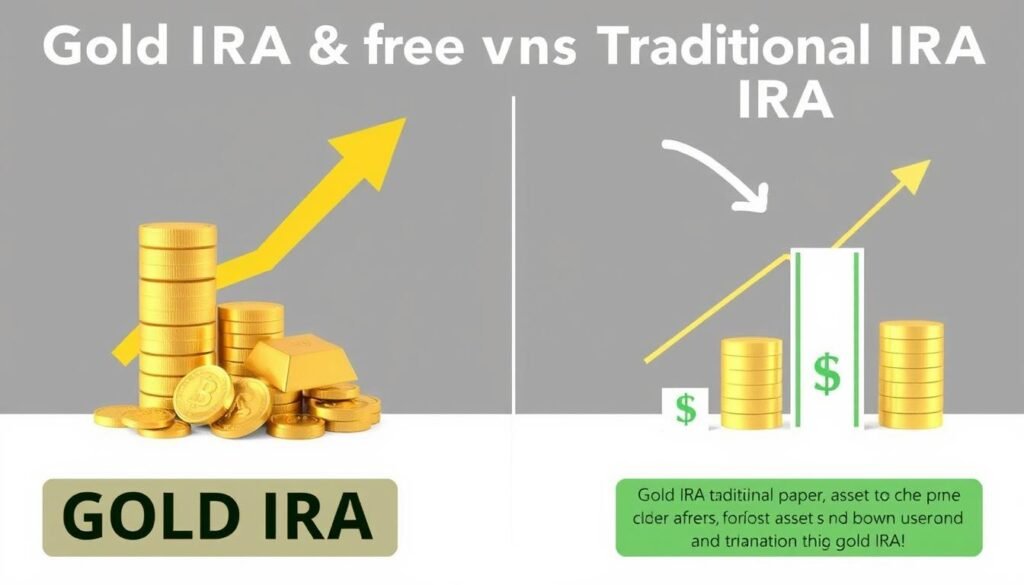
    Gold IRAs, by contrast, hold physical precious metals that have historically maintained or increased in value during inflationary periods. The tangible nature of gold provides a direct hedge against currency devaluation, unlike paper assets that represent claims on future cash flows.

    Traditional IRA Inflation Challenges

    • Fixed-income investments lose purchasing power
    • Bond values decline as interest rates rise to combat inflation
    • Cash holdings rapidly erode in value
    • Stock market volatility increases during inflation uncertainty
    • Dividend yields may not keep pace with rising prices

    Gold IRA Inflation Advantages

    • Physical gold tends to appreciate during currency devaluation
    • Precious metals maintain intrinsic value regardless of monetary policy
    • Portfolio diversification reduces overall inflation risk
    • Protection from systemic financial risks during high inflation
    • Historical track record of preserving purchasing power

    Tax Considerations During Inflation

    Inflation creates “phantom gains” in traditional investments, where nominal returns may appear positive while real returns (adjusted for inflation) are negative. These phantom gains are still taxable in regular accounts, effectively increasing your tax burden while your purchasing power decreases.

    Both traditional and Gold IRAs offer tax-advantaged growth that helps combat this issue. However, Gold IRAs provide the additional benefit of holding assets that historically appreciate during inflation, potentially generating stronger real returns in inflationary environments.

    Concerned About Inflation’s Impact on Your Retirement?

    Speak with a precious metals specialist to receive a personalized analysis of how your current retirement portfolio might perform during sustained inflation. Our experts can help you determine if a Gold IRA is right for your financial situation.

    Request Your Free Portfolio Analysis

    Strategies for Optimizing Gold IRA Allocation During High Inflation

    Financial advisor helping client optimize Gold IRA portfolio for inflation protection

    Determining the Optimal Allocation

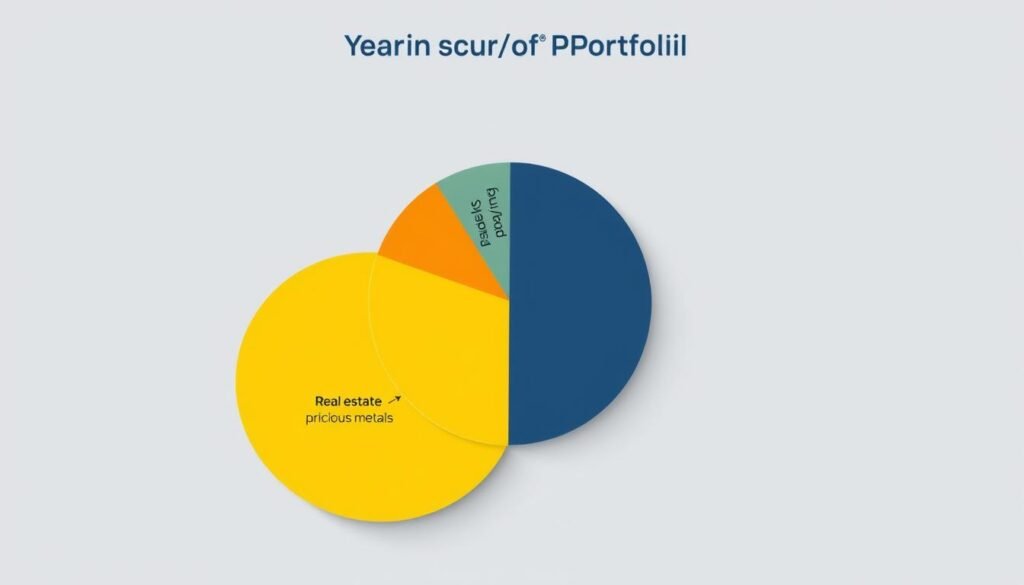
    Financial experts typically recommend allocating between 5-15% of your retirement portfolio to precious metals, with the specific percentage depending on your age, risk tolerance, and inflation outlook. During periods of high inflation or economic uncertainty, increasing this allocation toward the upper end of the range may provide additional protection.

    However, it’s crucial to maintain a balanced approach. While gold offers inflation protection, it doesn’t generate income like dividend stocks or interest-bearing investments. Your overall retirement strategy should include a mix of growth, income, and preservation assets.

    Diversifying Within Your Gold IRA

    A well-structured Gold IRA doesn’t have to contain only gold. IRS regulations allow for several types of precious metals, including silver, platinum, and palladium, each with unique properties and price movements.

    Precious Metal Inflation Response Volatility Recommended Allocation
    Gold Strong positive Moderate 60-70% of metals portfolio
    Silver Positive High 20-30% of metals portfolio
    Platinum Moderate positive High 5-10% of metals portfolio
    Palladium Variable Very high 0-5% of metals portfolio

    Timing Strategies During Inflationary Periods

    While trying to time any market perfectly is challenging, certain strategies can help optimize your Gold IRA during inflation:

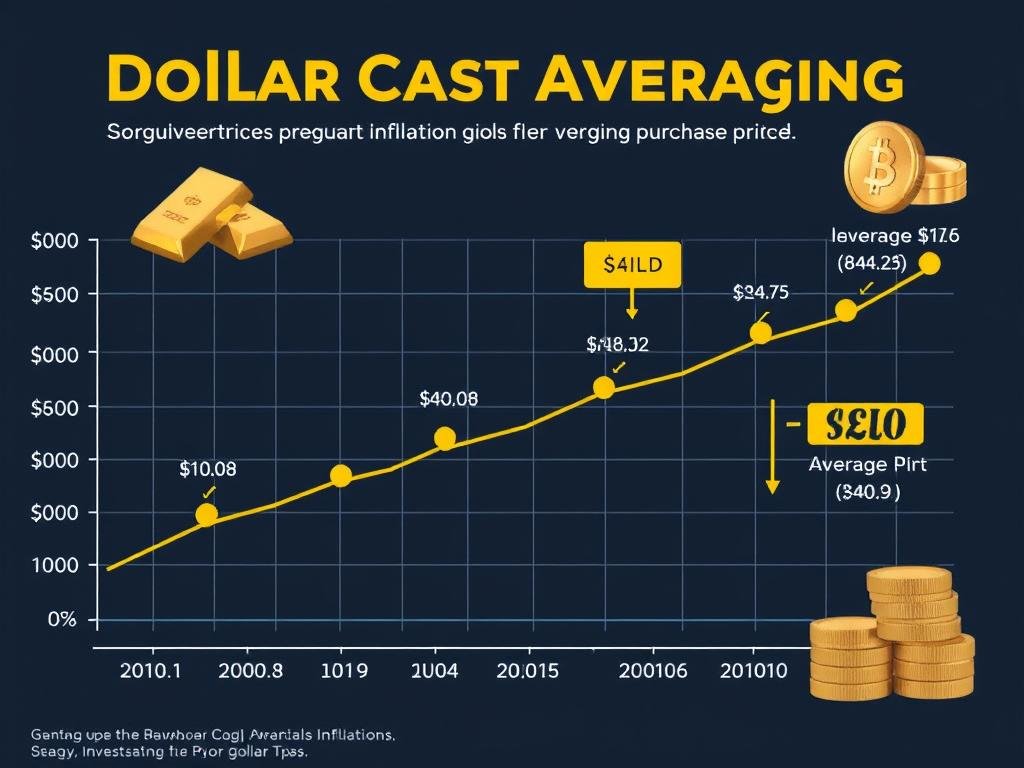
    • Dollar-cost averaging: Rather than making a single large purchase, consider regularly adding to your Gold IRA over time to smooth out price volatility.
    • Inflation indicator monitoring: Watch key inflation metrics like the Consumer Price Index (CPI), Producer Price Index (PPI), and money supply growth to inform your allocation decisions.
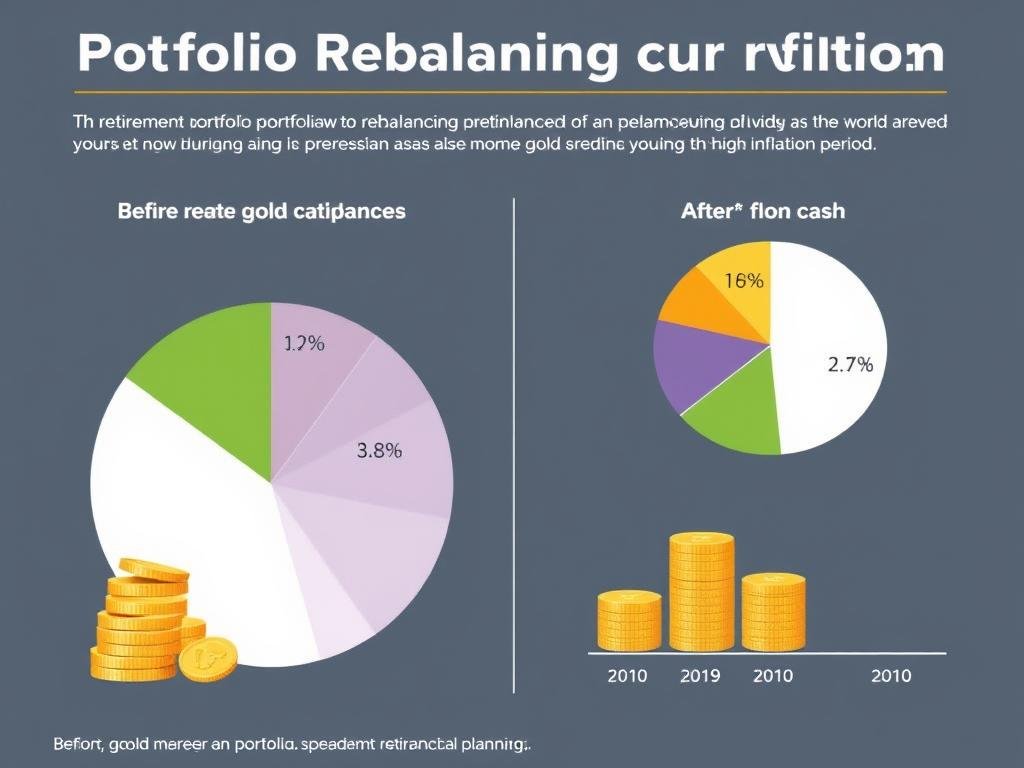
    • Rebalancing: As gold prices rise during inflation, your allocation may become overweighted. Periodic rebalancing helps maintain your desired risk profile.
    • Product selection: During high inflation, focus on investment-grade bullion like American Eagles or Canadian Maple Leafs rather than numismatic or collector coins, which may not track inflation as effectively.
    Chart showing dollar-cost averaging strategy for Gold IRA investments during inflation

    Risks and Considerations When Using Gold as an Inflation Hedge

    Advantages of Gold During Inflation

    • Historical track record of preserving purchasing power
    • Physical asset not dependent on issuer promises
    • Limited supply that can’t be artificially expanded
    • Global demand independent of any single economy
    • Portfolio diversification benefits

    Challenges of Gold During Inflation

    • Price volatility in short-term periods
    • Storage and insurance costs reduce net returns
    • No income generation (dividends or interest)
    • Potential liquidity constraints
    • Higher fees compared to traditional investments

    Short-Term Volatility vs. Long-Term Preservation

    While gold has proven effective against inflation over long periods, its price can be volatile in the short term. Factors like interest rate changes, currency fluctuations, and market sentiment can cause significant price swings that don’t necessarily correlate with inflation data.

    Investors should view their Gold IRA as a long-term strategic holding rather than a tactical inflation response. The historical data shows that gold’s inflation-hedging properties become more reliable over extended timeframes of 5+ years.

    The Impact of Interest Rates

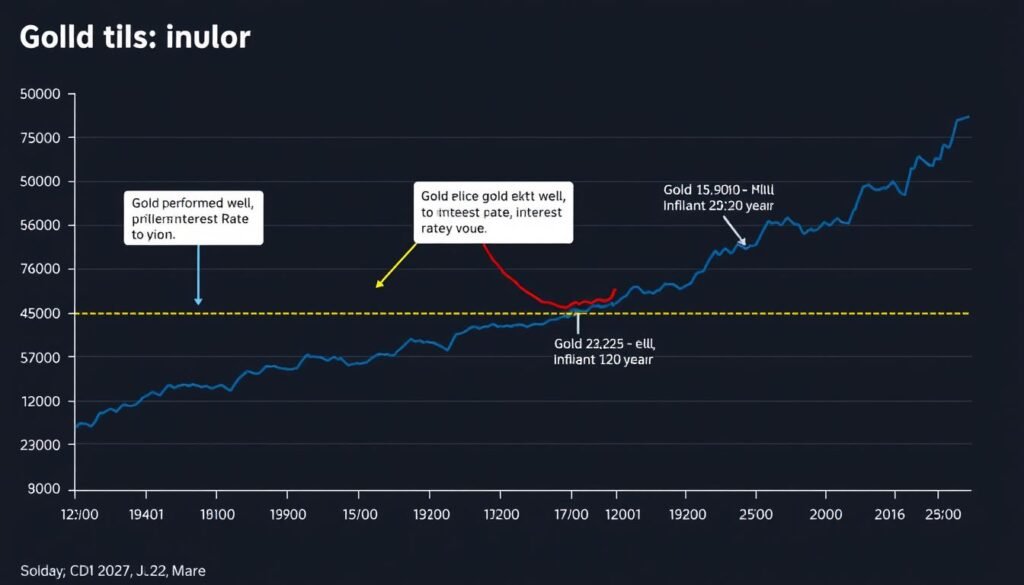
    The relationship between gold, inflation, and interest rates is complex. While inflation typically supports gold prices, rising interest rates to combat inflation can create headwinds for gold performance.

    Higher interest rates increase the opportunity cost of holding non-yielding assets like gold. When real interest rates (nominal rates minus inflation) turn positive, gold may underperform despite ongoing inflation. This dynamic creates situations where gold might lag during the early stages of inflation as central banks raise rates aggressively.

    Chart showing relationship between gold prices, inflation rates, and interest rates

    Custodial and Storage Considerations

    Gold IRAs require specialized custodians and secure storage solutions, which introduce additional costs and considerations not present with traditional IRAs. Annual fees typically include:

    • Custodian administration fees ($75-300 annually)
    • Storage fees ($100-300 annually, depending on holdings)
    • Insurance costs (often bundled with storage)
    • Transaction fees when buying or selling metals

    These ongoing expenses can reduce your effective returns, especially for smaller accounts. When evaluating a Gold IRA as an inflation hedge, factor these costs into your expected performance calculations.

    Practical Steps to Protect Your Retirement Savings

    Investor reviewing Gold IRA portfolio documents with financial advisor

    Evaluating Your Current Inflation Exposure

    Before making changes to your retirement strategy, assess your current portfolio’s inflation vulnerability:

    1. Review your asset allocation across all retirement accounts
    2. Identify fixed-income investments with set interest rates
    3. Calculate your exposure to inflation-sensitive sectors
    4. Determine your current precious metals allocation, if any
    5. Estimate your retirement timeframe and income needs

    This evaluation provides a baseline for understanding how inflation might affect your specific situation and helps determine the appropriate level of inflation protection needed.

    Setting Up or Converting to a Gold IRA

    If you decide a Gold IRA makes sense for your inflation protection strategy, you have several options:

    • New account setup: Establish a self-directed IRA with a custodian that specializes in precious metals
    • Partial rollover: Transfer a portion of an existing IRA or 401(k) to a Gold IRA
    • Full rollover: Convert an entire retirement account to a Gold IRA
    • Annual contributions: Make new contributions to an existing Gold IRA up to annual limits

    The rollover process typically involves selecting a custodian, completing transfer paperwork, choosing your precious metals, and arranging for secure storage. Most reputable Gold IRA companies will guide you through this process step by step.

    Selecting the Right Precious Metals Products

    Not all gold and silver products qualify for IRA inclusion. The IRS maintains specific requirements for purity and authenticity:

    Metal Purity Requirement Common Eligible Products
    Gold 99.5% pure (except American Eagles) American Eagles, Canadian Maple Leafs, Australian Kangaroos, Credit Suisse bars
    Silver 99.9% pure American Silver Eagles, Canadian Maple Leafs, Australian Kookaburras
    Platinum 99.95% pure American Platinum Eagles, Canadian Maple Leafs, Australian Platypus
    Palladium 99.95% pure Canadian Maple Leafs, PAMP Suisse bars

    Focus on widely recognized bullion products from reputable mints and refiners. These offer the best liquidity and most reliable tracking of precious metals prices, maximizing your inflation protection.

    Ongoing Management and Rebalancing

    Once established, your Gold IRA requires periodic review and management:

    • Monitor the percentage allocation of precious metals in your overall portfolio
    • Rebalance when allocations drift significantly from targets
    • Review storage and custodian fees annually to ensure competitive rates
    • Adjust your strategy as you approach retirement
    • Stay informed about inflation trends and monetary policy changes

    Remember that a Gold IRA works best as part of a comprehensive retirement strategy. Regular consultation with a financial advisor who understands both precious metals and retirement planning can help ensure your inflation protection strategy remains aligned with your overall financial goals.

    Retirement portfolio rebalancing chart showing optimal Gold IRA allocation during inflation

    Conclusion: Balancing Inflation Protection with Overall Retirement Goals

    Inflation presents a genuine threat to retirement security, eroding purchasing power and undermining fixed-income investments. Gold IRAs offer a time-tested approach to combating this threat, providing both historical precedent and practical advantages for today’s retirement investors.

    However, effective inflation protection requires balance. While gold has proven its worth during inflationary periods, it performs best as part of a diversified strategy rather than a standalone solution. The optimal approach combines precious metals with other inflation-resistant assets like certain equities, TIPS, and real estate investments.

    As you consider how inflation might impact your retirement portfolio, remember that gold’s greatest strength lies in its long-term preservation of purchasing power. Short-term price movements may not always correlate with inflation data, but the historical record demonstrates gold’s ability to maintain real value across decades and economic cycles.

    By understanding both the potential and limitations of Gold IRAs as inflation hedges, you can make informed decisions that protect your retirement savings while still pursuing your broader financial goals.

    Protect Your Retirement From Inflation

    Download our comprehensive “2025 Inflation Protection Guide for Gold IRA Investors” to learn advanced strategies for safeguarding your retirement savings. This free resource includes portfolio allocation models, tax optimization techniques, and expert insights on timing your precious metals investments.


    We respect your privacy. Your information will never be shared or sold.

    Frequently Asked Questions About Inflation and Gold IRAs

    How effective is gold at protecting against inflation?

    Gold has demonstrated strong inflation-hedging properties over long time periods, particularly during sustained high inflation. During the 1970s inflation crisis, gold prices increased by over 1,700% while inflation averaged 9.2%. However, gold’s effectiveness can vary in shorter timeframes and is influenced by factors like interest rates, currency movements, and market sentiment.

    For retirement planning purposes, gold’s long-term track record of preserving purchasing power makes it a valuable component of an inflation protection strategy, though it works best as part of a diversified approach rather than a sole solution.

    What percentage of my retirement portfolio should be in a Gold IRA?

    Financial advisors typically recommend allocating between 5-15% of your retirement portfolio to precious metals, including gold. The specific percentage depends on factors like your age, risk tolerance, investment timeline, and inflation outlook.

    Investors closer to retirement or those particularly concerned about inflation might consider allocations toward the higher end of this range. However, because gold doesn’t generate income like dividends or interest, maintaining a balanced portfolio remains important for meeting retirement income needs.

    Can I hold both a traditional IRA and a Gold IRA simultaneously?

    Yes, you can maintain both traditional IRAs and Gold IRAs simultaneously. In fact, this approach often provides better diversification than converting all retirement assets to precious metals. You can also establish a single self-directed IRA that holds both conventional investments and precious metals if your custodian offers this option.

    Annual contribution limits apply across all your IRA accounts combined, not to each account individually. For 2023, the total contribution limit is ,500 (,500 if you’re 50 or older).

    How does the inflation impact on Gold IRAs compare to other inflation hedges?

    Gold IRAs offer several advantages compared to other inflation hedges. Unlike TIPS (Treasury Inflation-Protected Securities), gold isn’t directly tied to government inflation calculations, which some investors believe understate actual inflation. Gold also provides protection against currency devaluation that real estate and certain stocks may not offer during severe economic disruptions.

    However, gold lacks the income generation of dividend stocks or rental real estate. A comprehensive inflation protection strategy might include a mix of these assets, with gold serving as the “insurance policy” component that tends to perform best during serious economic dislocations.

    What are the tax implications of a Gold IRA during inflationary periods?

    Gold IRAs offer the same tax advantages as traditional or Roth IRAs, depending on which type you choose. With a Traditional Gold IRA, contributions may be tax-deductible, and growth is tax-deferred until withdrawal. With a Roth Gold IRA, contributions are made with after-tax dollars, but qualified withdrawals are tax-free.

    During inflation, these tax benefits become particularly valuable. Traditional investments in taxable accounts face “phantom gains” taxation, where nominal gains are taxed even if real returns (adjusted for inflation) are negative. The tax-advantaged structure of IRAs helps mitigate this issue, allowing your precious metals to serve as more effective inflation hedges.

    Additional Resources

    Understanding Gold IRA Rules

    Learn about IRS regulations, contribution limits, and required minimum distributions for Gold IRAs.

    Gold vs. Silver in Your IRA

    Compare the inflation-hedging properties of different precious metals for your retirement portfolio.

    Tax Strategies for Precious Metals

    Discover tax-efficient approaches to managing your precious metals investments during inflation.