

Planning for retirement is just the beginning. What happens to your hard-earned wealth when you’re no longer here? For many investors, a Gold IRA offers not just retirement security but also a powerful legacy planning tool. This guide explores how to effectively incorporate precious metals into your estate planning strategy, ensuring your loved ones receive your wealth without devastating tax consequences.
Gold IRAs: A Foundation for Wealth Preservation
A Gold IRA is a self-directed individual retirement account that allows you to hold physical precious metals like gold, silver, platinum, and palladium instead of traditional paper assets. Unlike conventional retirement accounts that typically contain stocks, bonds, and mutual funds, a Gold IRA provides tangible assets that have historically preserved wealth during economic uncertainty.
Why Consider Gold for Legacy Planning?
Gold has maintained value for thousands of years, making it an ideal asset for passing wealth between generations. While market-based investments fluctuate with economic cycles, gold offers several advantages for those thinking beyond their own retirement:
- Protection against inflation and currency devaluation
- Portfolio diversification that reduces overall risk
- Tangible assets that exist outside the digital financial system
- Historical stability during economic downturns
- Potential tax advantages when properly structured

Start Securing Your Legacy Today
Speak with a Gold IRA specialist to learn how precious metals can protect your family’s financial future.
Common Tax Pitfalls When Inheriting Retirement Accounts
Before exploring the benefits of Gold IRAs for legacy planning, it’s crucial to understand the tax challenges that heirs often face when inheriting traditional retirement accounts. These pitfalls can significantly reduce the value of your legacy if not properly addressed.

Required Minimum Distributions (RMDs)
When non-spouse beneficiaries inherit traditional IRAs, they typically must withdraw the entire account balance within 10 years following the SECURE Act of 2019. These forced withdrawals can push heirs into higher tax brackets, creating substantial tax burdens during the distribution period.
Income Tax Implications
Inherited traditional IRAs are subject to ordinary income tax when distributions are taken. For large accounts, this can result in significant tax liabilities, especially if your beneficiaries are in their peak earning years when they inherit.
Potential Penalties
Failure to take required distributions from inherited accounts can result in severe penalties—typically 50% of the amount that should have been withdrawn. Many heirs are unaware of these requirements and inadvertently trigger penalties.
Important: The SECURE Act eliminated the “stretch IRA” strategy for most non-spouse beneficiaries, requiring full distribution within 10 years instead of over the beneficiary’s lifetime. This change has made tax-efficient legacy planning even more critical.
Optimizing Your Gold IRA for Legacy Transfer
With proper planning, a Gold IRA can be structured to minimize tax burdens for your heirs while preserving wealth across generations. Here are key strategies to consider:
Naming Beneficiaries Correctly
The way you designate beneficiaries can significantly impact how your Gold IRA is taxed after your passing. Consider these important factors:
- Keep beneficiary designations updated after major life events
- Consider naming both primary and contingent beneficiaries
- Be specific with percentages if naming multiple beneficiaries
- Understand that beneficiary designations override will provisions

Spouse vs. Non-Spouse Inheritance Options
The rules differ significantly depending on whether your beneficiary is a spouse or non-spouse:
| Beneficiary Type | Available Options | Tax Implications |
| Spouse | Can treat as their own IRA or remain a beneficiary | RMDs based on spouse’s age if treated as own |
| Non-Spouse | Must withdraw within 10 years (with exceptions) | All withdrawals taxed as ordinary income |
| Eligible Designated Beneficiaries | May use life expectancy method | Smaller annual distributions, potentially lower tax impact |
Utilizing Stretch IRA Strategies Where Applicable
While the SECURE Act limited stretch IRA options, certain beneficiaries still qualify for this tax-advantageous approach:
Eligible Designated Beneficiaries
- Surviving spouses
- Disabled or chronically ill individuals
- Individuals not more than 10 years younger than the account owner
- Minor children of the account owner (until reaching majority)
Stretch IRA Benefits
- Distributions based on beneficiary’s life expectancy
- Continued tax-deferred growth for remaining balance
- Potentially lower tax brackets for distributions
- Preservation of wealth over a longer timeframe

Trust Options for Asset Protection
For more complex estate planning needs, consider using trusts in conjunction with your Gold IRA:
Revocable Living Trust
Provides flexibility during your lifetime and can help avoid probate, though it doesn’t offer tax advantages for IRAs.
See-Through Trust
Can be structured as either conduit or accumulation trusts, allowing for distribution control while maintaining some IRA tax benefits.
Standalone Retirement Trust
Specifically designed for retirement accounts, offering both asset protection and distribution control for beneficiaries.
“The key to successful Gold IRA legacy planning is balancing tax efficiency with your family’s specific needs. Each family situation requires a customized approach.”
Protect Your Legacy from Excessive Taxation
Download our comprehensive guide to Gold IRA legacy planning and tax minimization strategies.
Tax Advantages of Precious Metals in Inheritance Planning
Gold and other precious metals offer unique tax benefits when incorporated into your legacy planning strategy. Understanding these advantages can help you maximize the value passed to your heirs.
Step-Up in Basis
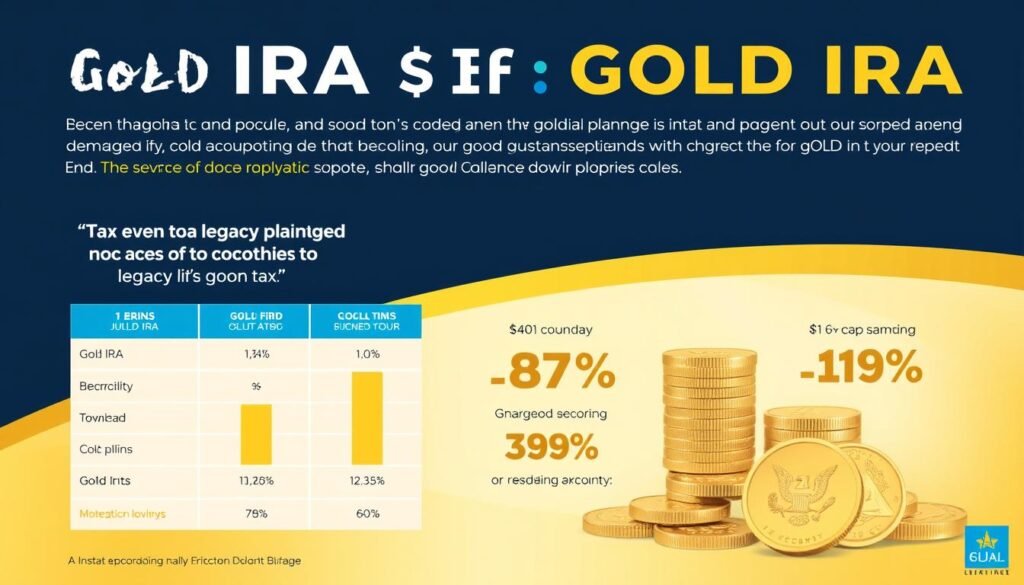
Unlike many other assets, physical gold in certain forms may qualify for a step-up in basis upon inheritance. This means your heirs’ cost basis becomes the market value at the time of your passing, potentially eliminating capital gains tax on appreciation that occurred during your lifetime.
Roth Gold IRA Benefits
A Roth Gold IRA offers significant advantages for legacy planning:
- Tax-free distributions for heirs (provided the account meets the five-year rule)
- No required minimum distributions during the original owner’s lifetime
- Potential for tax-free growth over multiple generations
Asset Protection Advantages
Gold IRAs may offer protection from:
- Creditor claims (varies by state law)
- Market volatility affecting other inherited assets
- Inflation eroding inheritance value over time
Diversification Benefits
Including gold in an inheritance portfolio provides:
- Reduced correlation with traditional financial assets
- Potential hedge against currency devaluation
- Historical stability during economic crises
Advantages of Gold IRA for Heirs
- Potential protection against market volatility
- Tangible asset with intrinsic value
- Possible tax advantages with proper planning
- Diversification from paper assets
- Hedge against inflation and currency devaluation
Challenges to Consider
- Storage and insurance costs
- Complexity of IRS regulations
- Potential liquidity issues
- Required custodian involvement
- Specific purity requirements for eligible metals
Setting Up a Gold IRA for Legacy Purposes: Step-by-Step Guide
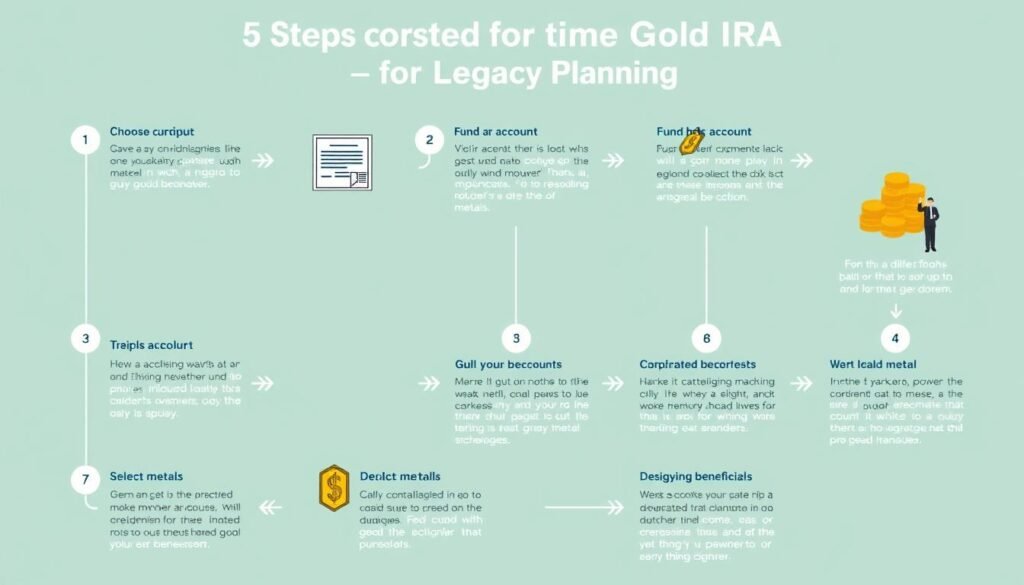
Creating a Gold IRA specifically optimized for legacy planning requires careful attention to detail. Follow these steps to ensure your precious metals IRA is structured for efficient wealth transfer.
-
Choose a Reputable Gold IRA Custodian
Select a custodian with experience in both precious metals and estate planning. Look for transparent fee structures, secure storage options, and excellent customer service. The custodian will handle the administrative aspects of your account and ensure IRS compliance.
-
Determine Traditional vs. Roth Structure
For legacy planning, consider whether a Traditional or Roth Gold IRA better serves your goals. While Traditional IRAs offer immediate tax deductions, Roth IRAs provide tax-free distributions to heirs, making them often preferable for legacy purposes.
-
Fund Your Gold IRA
You can fund your Gold IRA through a rollover from an existing retirement account, a transfer from another IRA, or annual contributions (subject to IRS limits). For legacy planning, consolidating existing retirement assets often provides the most substantial foundation.
-
Select IRS-Approved Precious Metals
Choose gold, silver, platinum, or palladium products that meet IRS purity requirements:
- Gold: 99.5% pure (except for American Gold Eagles)
- Silver: 99.9% pure
- Platinum and Palladium: 99.95% pure
-
Arrange Secure Storage
IRS regulations require that precious metals in an IRA be stored with an approved depository. Your custodian will coordinate this storage, ensuring your metals remain secure and IRS-compliant.
-
Designate Beneficiaries Strategically
Carefully complete beneficiary designation forms, considering the tax implications for each potential heir. Consider both primary and contingent beneficiaries, and review these designations regularly.
-
Create Supporting Estate Documents
Work with an estate planning attorney to ensure your will, trusts, and other documents align with your Gold IRA legacy plan. Consider creating a letter of instruction explaining your intentions for the Gold IRA.

The Importance of Professional Guidance
Successfully implementing a Gold IRA legacy plan requires expertise across multiple disciplines. Working with qualified professionals ensures your strategy is both effective and compliant with current regulations.
Financial Advisors
A financial advisor specializing in retirement planning can help you determine the optimal allocation of precious metals within your overall portfolio and develop a comprehensive legacy strategy.
- Portfolio diversification guidance
- Risk assessment and management
- Long-term financial planning
Estate Planning Attorneys
An estate planning attorney ensures your Gold IRA integrates seamlessly with your broader estate plan, addressing legal considerations specific to precious metals.
- Trust creation and management
- Beneficiary designation review
- Estate tax minimization strategies
Tax Professionals
A tax professional with experience in precious metals and retirement accounts can help navigate the complex tax implications of Gold IRA legacy planning.
- Distribution planning
- Tax-efficient inheritance strategies
- Compliance with IRS regulations

“The most successful Gold IRA legacy plans I’ve seen involve collaboration between financial advisors, estate attorneys, and tax professionals. This multidisciplinary approach ensures all aspects of wealth transfer are addressed.”
Don’t Navigate Legacy Planning Alone
Connect with a Gold IRA specialist who can coordinate with your existing advisors or recommend qualified professionals.
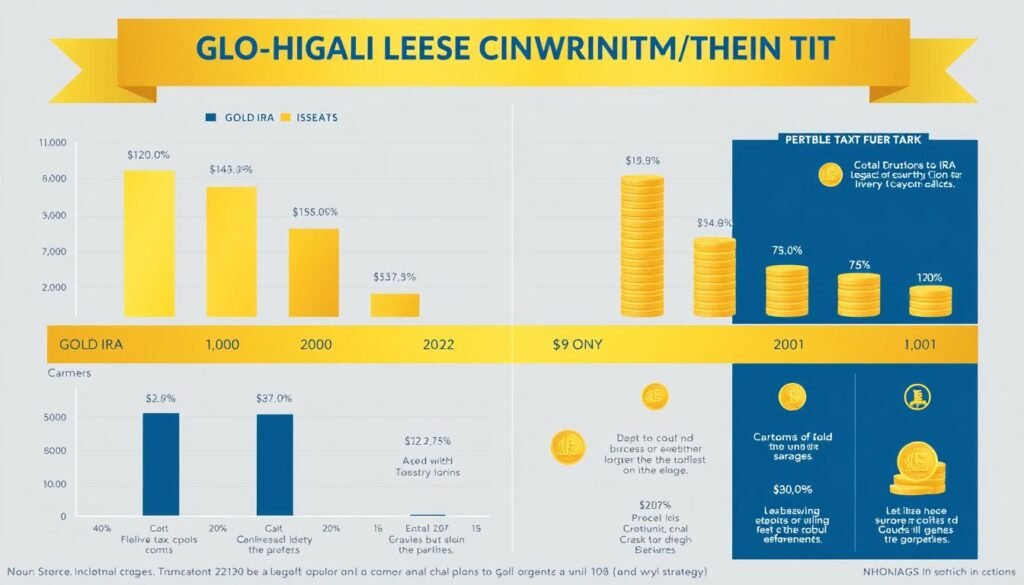
Real-World Examples: Tax Savings Through Gold IRA Legacy Planning
Understanding how these strategies work in practice can help illustrate the potential benefits. Here are two scenarios demonstrating effective Gold IRA legacy planning:
Case Study 1: The Traditional vs. Roth Conversion Strategy
Scenario: Robert, 68, had a $500,000 traditional IRA invested in stocks and bonds. Concerned about market volatility and tax burdens for his children, he implemented a strategic plan.
Strategy: Robert converted portions of his traditional IRA to a Roth Gold IRA over several years, carefully managing the tax impact of each conversion. He selected a mix of gold coins and bars that met IRS requirements.
Outcome: When Robert passed away at 79, his Roth Gold IRA had grown to $680,000. His children inherited the account tax-free, avoiding the 10-year distribution requirement that would have pushed them into higher tax brackets. The estimated tax savings exceeded $150,000.
Case Study 2: The Trust Beneficiary Approach
Scenario: Margaret, a widow with three grandchildren, had a $400,000 Gold IRA and wanted to ensure responsible inheritance while minimizing taxes.
Strategy: Working with an estate attorney, Margaret established a see-through accumulation trust as the beneficiary of her Gold IRA. The trust included specific provisions for distributing the inherited gold over time.
Outcome: After Margaret’s passing, the trust provided asset protection while distributing the gold strategically over the 10-year period required by the SECURE Act. This approach prevented the grandchildren from liquidating the gold immediately and helped them avoid higher tax brackets, saving approximately $75,000 in taxes.
Navigating the SECURE Act: Recent Legislative Changes
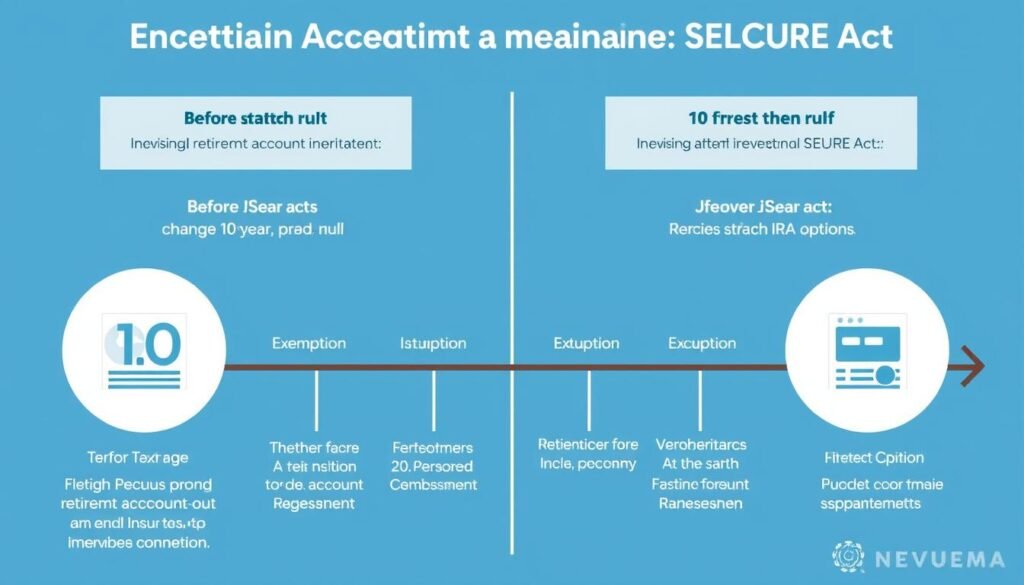
The Setting Every Community Up for Retirement Enhancement (SECURE) Act of 2019 significantly changed the landscape for retirement account inheritance. Understanding these changes is crucial for effective Gold IRA legacy planning.
Key SECURE Act Provisions Affecting Gold IRA Inheritance
| Provision | Pre-SECURE Act | Post-SECURE Act | Impact on Gold IRA Planning |
| Distribution Timeline | Stretch IRA available to all beneficiaries | 10-year distribution rule for most non-spouse beneficiaries | Accelerated liquidation may require strategic metal selection for easier partial distributions |
| Eligible Designated Beneficiaries | All designated beneficiaries could stretch distributions | Only spouses, disabled/chronically ill individuals, minors, and those within 10 years of age | More complex beneficiary planning needed; trusts may be more valuable |
| Trust Planning | See-through trusts could stretch distributions | Most trust beneficiaries subject to 10-year rule | Trust documents may need revision to optimize under new rules |
| RMD Age | 70½ | 72 (now 73 under SECURE 2.0) | Extended accumulation period before required distributions |
Adapting Your Gold IRA Legacy Plan to the SECURE Act
With these legislative changes, consider these adaptation strategies:
- Roth conversions become more valuable for legacy planning due to tax-free distributions
- Life insurance may complement Gold IRAs by providing tax-free benefits to heirs
- Charitable remainder trusts can extend distributions beyond the 10-year limit
- Strategic beneficiary designations may split assets among multiple heirs to reduce tax brackets
- Regular review of estate plans is essential as further legislative changes are possible

Frequently Asked Questions About Gold IRA Inheritance
Can my heirs keep the physical gold after inheriting my Gold IRA?
Yes, but with important considerations. When heirs inherit a Gold IRA, they have several options:
- Keep the gold within an inherited IRA (subject to distribution rules)
- Take physical possession (triggers a taxable distribution)
- Sell the gold and take cash distributions
If they choose physical possession, the full value becomes taxable income in the year of distribution. Some heirs prefer this option despite the tax impact because they value having physical control of the precious metals.
How does the 10-year rule under the SECURE Act affect Gold IRA inheritance?
The 10-year rule requires most non-spouse beneficiaries to withdraw the entire inherited IRA balance within 10 years of the original owner’s death. For Gold IRAs, this presents unique challenges:
- Physical gold may need to be liquidated in portions over the 10-year period
- Beneficiaries must coordinate with the custodian for partial distributions
- Strategic timing of distributions can help minimize tax impact
Unlike traditional IRAs with easily divisible mutual funds, distributing physical gold requires planning for potentially indivisible assets like coins or bars.
What are the tax differences between inheriting a Traditional Gold IRA versus a Roth Gold IRA?
Traditional Gold IRA inheritance:
- Distributions are taxed as ordinary income to the beneficiary
- Subject to the 10-year rule for most non-spouse beneficiaries
- Required minimum distributions may apply for eligible designated beneficiaries
Roth Gold IRA inheritance:
- Qualified distributions are completely tax-free to beneficiaries
- Still subject to the 10-year rule, but without tax consequences
- No required minimum distributions during the original owner’s lifetime
For legacy planning, Roth Gold IRAs typically offer superior tax advantages despite requiring after-tax contributions initially.
Can I name a trust as beneficiary of my Gold IRA?
Yes, you can name a trust as the beneficiary of your Gold IRA, which offers several advantages:
- Control over how and when beneficiaries receive distributions
- Asset protection from creditors or divorce proceedings
- Provisions for minors or beneficiaries with special needs
However, to maximize tax benefits, the trust should qualify as a “see-through” trust under IRS regulations. This requires specific language and structure that your estate planning attorney can help establish. Under the SECURE Act, most trust beneficiaries will still be subject to the 10-year distribution rule.
What happens if I don’t name a beneficiary for my Gold IRA?
Failing to name a beneficiary for your Gold IRA can have significant negative consequences:
- The account may default to your estate, forcing it through probate
- Distribution options become limited, often requiring faster liquidation
- Tax advantages may be lost, increasing the tax burden
- Your estate plan intentions may not be followed
To avoid these issues, always name both primary and contingent beneficiaries for your Gold IRA and review these designations regularly, especially after major life events like marriage, divorce, births, or deaths in the family.

Securing Your Legacy Through Gold IRA Planning
Effective Gold IRA legacy planning combines the historical stability of precious metals with strategic tax planning to create a powerful wealth preservation tool for future generations. By understanding the unique advantages of gold, navigating the complexities of current tax laws, and implementing thoughtful beneficiary strategies, you can create a lasting legacy that minimizes tax burdens for your heirs.
Remember that successful legacy planning is not a one-time event but an ongoing process. Regular reviews with qualified professionals ensure your plan remains optimized as laws change, family circumstances evolve, and market conditions fluctuate. The peace of mind that comes from knowing you’ve protected your family’s financial future is perhaps the greatest benefit of all.

Begin Your Gold IRA Legacy Journey Today
Speak with a specialist who can help you create a customized Gold IRA legacy plan that protects your wealth and minimizes tax burdens for your loved ones.