
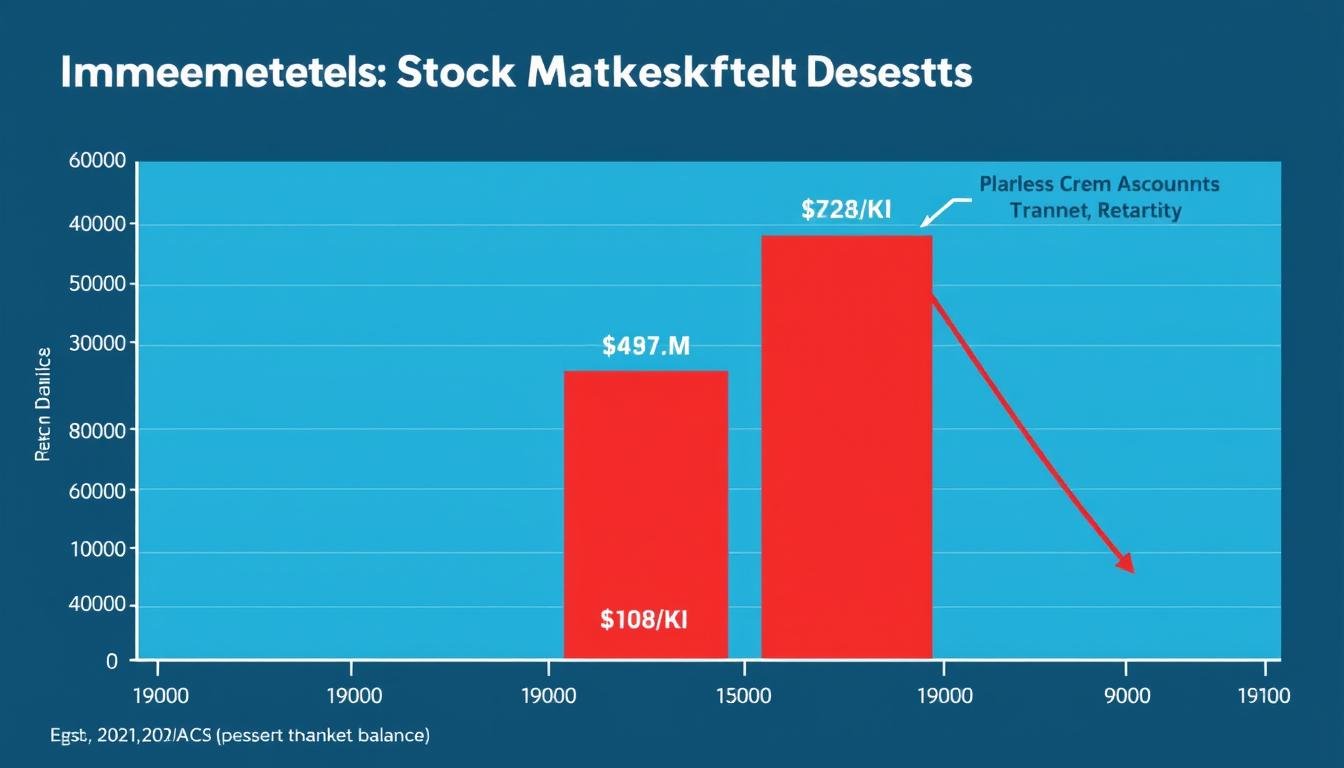
When the stock market takes a sudden plunge, many retirement savers experience that sinking feeling watching their 401(k) and IRA balances drop. Market crashes are inevitable parts of the economic cycle, but they don’t have to derail your retirement plans. This guide explains what actually happens to your retirement savings during market downturns and provides practical strategies to protect your nest egg before, during, and after a crash.
The Immediate Impact of Market Crashes on Retirement Accounts
When the stock market crashes, retirement accounts experience immediate changes based on their asset allocation. Understanding these impacts can help you respond appropriately rather than panic.
How Different Retirement Accounts React
401(k) and IRA Accounts
These self-directed retirement accounts directly reflect market performance. During a crash, the stock portion of your portfolio will decline in value, sometimes significantly. For example, during the 2008 financial crisis, the average 401(k) balance fell by about 24% according to Fidelity Investments data.
The impact varies based on your asset allocation. A portfolio with 80% stocks might drop 20-30% during a severe crash, while one with only 40% stocks might fall just 10-15%.
Pension Plans
Traditional pension plans are typically managed by professional investors and have diversified portfolios designed to weather market volatility. While they’re not immune to market crashes, the impact on your benefits is usually minimal if you’re already receiving payments.
However, employers with underfunded pension plans might face challenges during prolonged market downturns, potentially affecting future benefits for current workers.
The Crucial Role of Asset Allocation
Your retirement account’s reaction to a market crash depends heavily on how your assets are allocated between stocks, bonds, and cash equivalents:
| Asset Type | Typical Behavior During Crash | Recovery Pattern |
| Stocks | High volatility, potential for significant losses (20-40%) | Strong rebounds possible, historically recover over 1-5 years |
| Bonds | Lower volatility, may gain value as investors seek safety | Stable, predictable returns even during market stress |
| Cash/Money Market | Stable value, unaffected by market movements | No recovery needed, but may lose purchasing power to inflation |
The good news? Market crashes affect your retirement savings only on paper until you actually sell investments at depressed prices. This is why maintaining a long-term perspective is crucial.
Long-Term Risks: Why Panic Decisions Worsen Losses

The biggest threat to your retirement savings during a market crash isn’t the crash itself—it’s how you respond to it. Emotional reactions can transform temporary paper losses into permanent ones.
The Real Danger: Panic Selling
When markets plummet, our instinct is often to protect what remains by selling investments and moving to cash. This instinct, while understandable, typically leads to the worst possible outcome.
“The biggest mistake investors make during market downturns is selling at the bottom and missing the recovery. Those who stayed invested through the 2008 crisis and 2020 pandemic crash not only recovered their losses but saw substantial gains in the following years.”
Historical Perspective: Past Crashes and Recoveries
2008 Financial Crisis
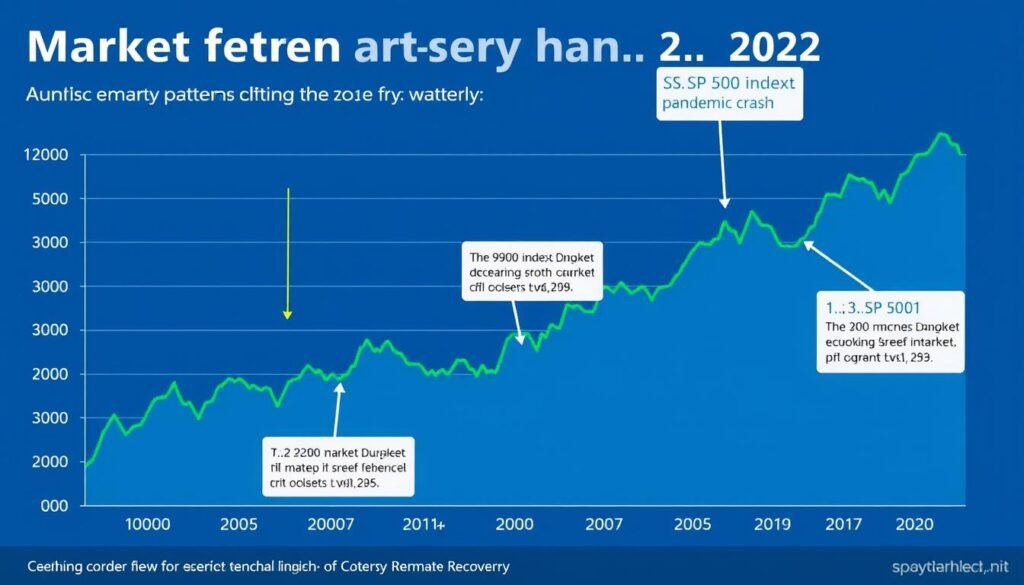
The S&P 500 fell approximately 57% from its October 2007 peak to its March 2009 bottom. However, those who remained invested saw their portfolios recover completely by 2013, and by 2020, the market had more than tripled from its 2009 low.
According to Fidelity, 401(k) investors who maintained contributions and stayed invested through the 2008 crash had account balances 50% higher by 2011 than those who sold stocks and stopped contributing.
2020 Pandemic Crash
The COVID-19 pandemic triggered a 34% drop in the S&P 500 between February and March 2020. Yet the market fully recovered by August 2020—just five months later—and continued to new highs.
Investors who panicked and sold in March 2020 locked in losses and missed one of the fastest recoveries in market history, with many still sitting in cash as the market reached new record highs.
Sequence of Returns Risk
For those near or in retirement, market crashes pose a special risk called “sequence of returns risk.” This occurs when you need to withdraw money during a market downturn, forcing you to sell more shares to generate the same amount of income.
For example, if you need $40,000 annually from a $1 million portfolio, you’d need to sell 4% of your investments in normal times. But if your portfolio drops to $700,000 during a crash, you’d need to sell nearly 6% to get the same $40,000—leaving fewer shares to benefit from the eventual recovery.
Protection Strategies: Safeguarding Your Retirement Before and During a Crash
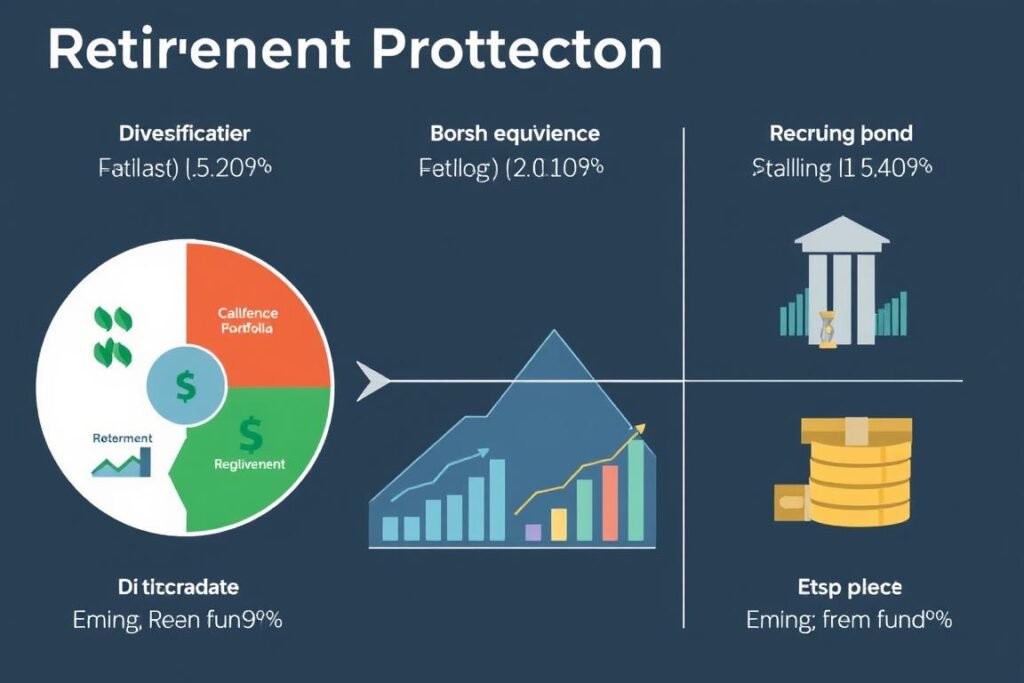
While you can’t prevent market crashes, you can implement strategies to minimize their impact on your retirement savings. These approaches work best when implemented before a crash occurs, but many can still help even during market turbulence.
Diversification: Your First Line of Defense
Proper diversification remains one of the most effective ways to protect your retirement savings from market volatility. This means spreading your investments across different asset classes, sectors, and geographies.
The Age-Based Rule for Asset Allocation
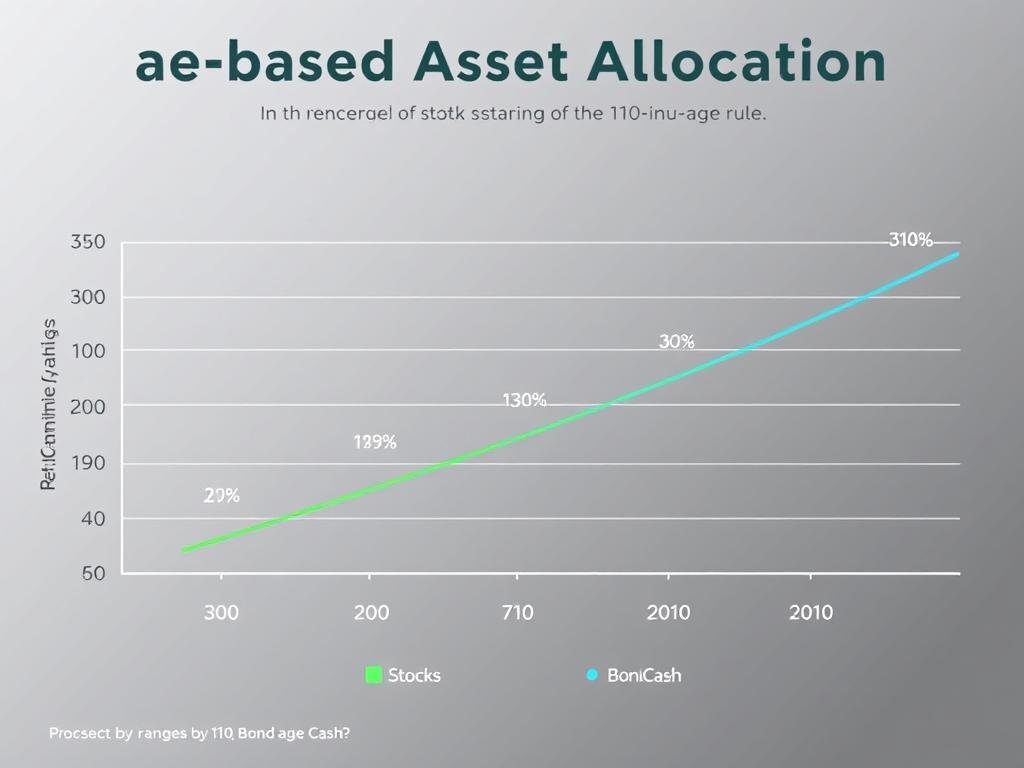
A common guideline for determining your stock allocation is to subtract your age from 110 or 120. For example, if you’re 40, you might aim for 70-80% in stocks and 20-30% in bonds and cash. If you’re 60, perhaps 50-60% in stocks and 40-50% in bonds and cash.
Regular Portfolio Rebalancing
Market movements naturally change your asset allocation over time. Rebalancing—returning your portfolio to its target allocation—helps maintain your desired risk level and can actually improve returns.
For example, if your target is 60% stocks and 40% bonds, but after a bull market your allocation has shifted to 70% stocks and 30% bonds, rebalancing would involve selling some stocks and buying bonds. This naturally enforces a “buy low, sell high” discipline.
Need Help Creating a Crash-Resistant Portfolio?
A financial advisor can help you develop a personalized strategy based on your age, goals, and risk tolerance. Get matched with qualified advisors in your area.
Maintain an Emergency Fund
Having 3-6 months of expenses in a cash emergency fund serves two crucial purposes during market crashes:
Prevents Forced Withdrawals
With cash reserves available, you won’t need to sell investments at depressed prices to cover unexpected expenses during a market downturn.
Provides Peace of Mind
Knowing you have cash available reduces anxiety during market volatility, making it easier to avoid panic selling your long-term investments.
Consider Bucket Strategies for Near-Retirees
If you’re approaching retirement, consider a “bucket strategy” that divides your savings into three categories:
Short-Term Bucket (1-2 years)
Cash and cash equivalents to cover immediate living expenses, allowing you to avoid selling stocks during downturns.
Mid-Term Bucket (3-10 years)
Conservative investments like bonds and CDs that provide income with moderate growth and stability.
Long-Term Bucket (10+ years)
Growth-oriented investments like stocks that can recover from market crashes and outpace inflation over time.
The Recovery Phase: How Markets Rebound and Rebuilding Strategies
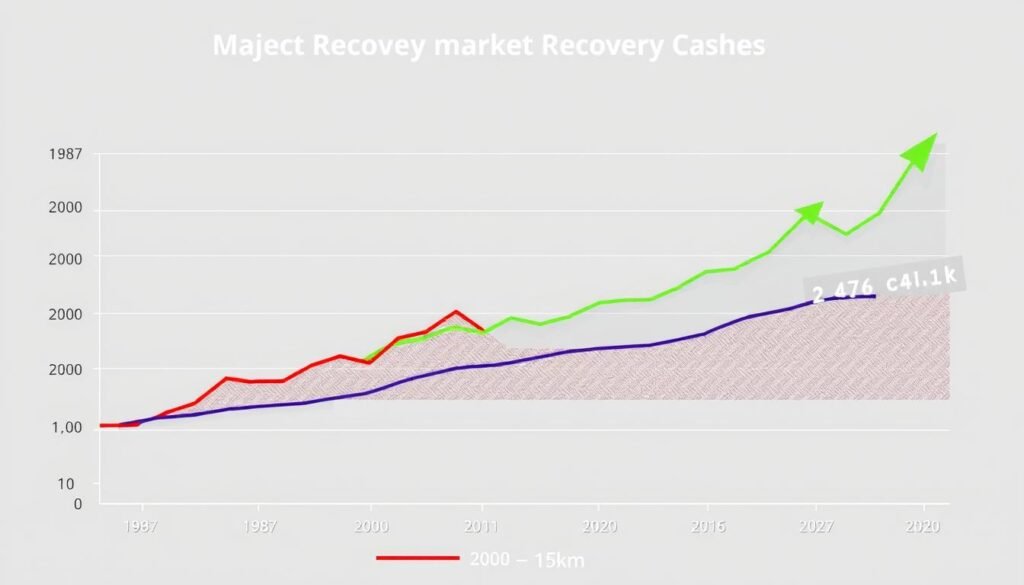
Market crashes, while painful, have always been temporary. Understanding how markets typically recover can help you maintain perspective and implement effective rebuilding strategies.
Historical Recovery Patterns
According to market research firm CFRA, since World War II, the S&P 500 has experienced:
| Decline Type | Average Frequency | Average Recovery Time |
| Pullbacks (5-9.9% drops) | About 3 times per year | 1.5 months |
| Corrections (10-19.9% drops) | Once per year | 4 months |
| Bear Markets (20-40% drops) | Every 3-5 years | 14 months |
| Major Bear Markets (40%+ drops) | Every 8-10 years | 24-58 months |
This historical perspective shows that while recoveries from severe crashes can take time, markets have always eventually rebounded to new highs.
Effective Rebuilding Strategies
Dollar-Cost Averaging
Continuing regular contributions to your retirement accounts during market downturns is one of the most powerful recovery strategies. This approach, known as dollar-cost averaging, means you automatically buy more shares when prices are low.
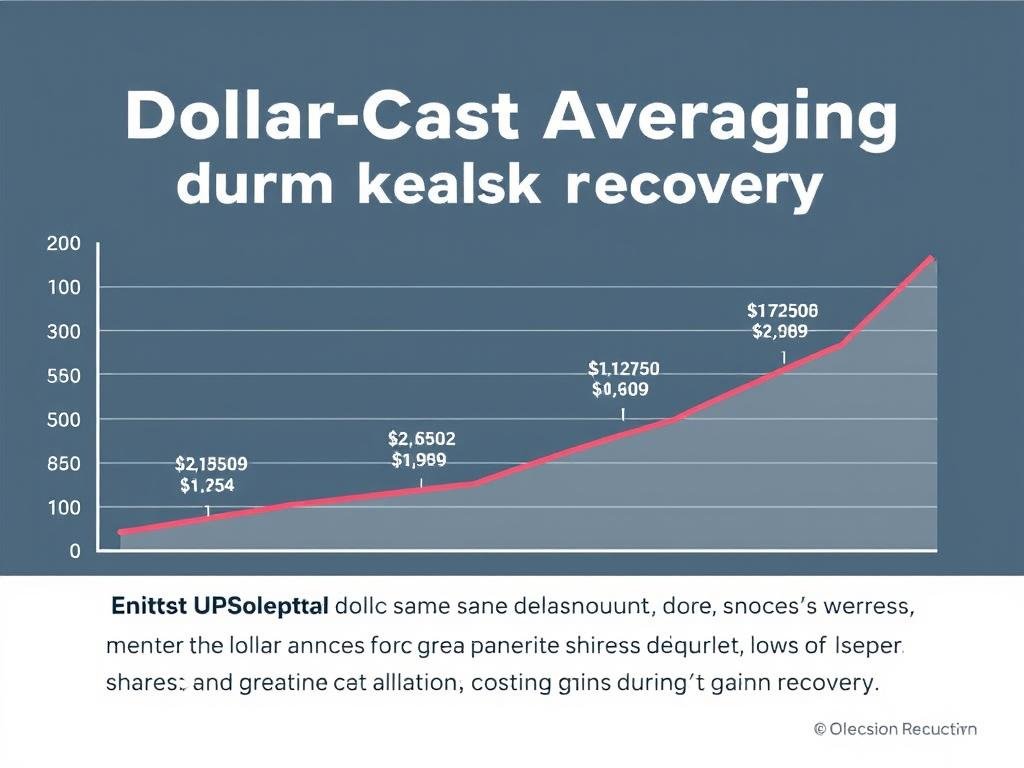
For example, a monthly $500 contribution might buy 5 shares when a fund costs $100 per share, but 10 shares when it drops to $50 per share. When the market recovers, you’ll own more shares than if you had stopped contributing during the downturn.
Adjusting Contributions
If possible, consider increasing your retirement contributions during market downturns. This allows you to “buy the dip” and potentially accelerate your recovery when markets rebound.
“Market crashes have historically been the best long-term buying opportunities. Investors who can increase their contributions during downturns often see significantly better long-term results than those who maintain steady contributions.”
Roth Conversion Opportunities
Market downturns can present opportunities for Roth IRA conversions. When your traditional IRA or 401(k) value is temporarily depressed, converting to a Roth means paying taxes on a lower amount, while all future recovery and growth becomes tax-free.
Rebalancing During Recovery
As markets begin to recover, different asset classes often rebound at different rates. Regular rebalancing ensures you maintain your target asset allocation and risk level throughout the recovery phase.
Age-Specific Advice: Tailoring Your Approach Based on Your Life Stage

Your age and proximity to retirement should significantly influence how you prepare for, respond to, and recover from market crashes. Here’s tailored advice for different life stages:
For Investors in Their 20s-30s (Early Career)
Recommended Approach
- Maintain a growth-oriented portfolio (80-90% stocks)
- View market crashes as buying opportunities
- Maximize contributions during downturns if possible
- Focus on long-term growth rather than short-term volatility
- Consider increasing international exposure for diversification
Approaches to Avoid
- Moving to conservative investments out of fear
- Stopping contributions during market downturns
- Checking account balances frequently during volatility
- Making emotional investment decisions
- Attempting to time the market
With 30+ years until retirement, younger investors have time as their greatest asset. Market crashes actually benefit long-term savers who continue investing through downturns, as they accumulate more shares at lower prices.
For Investors in Their 40s-50s (Mid-Career)
Recommended Approach
- Maintain a balanced portfolio (60-70% stocks)
- Begin gradually increasing bond allocation
- Ensure emergency fund is fully funded
- Consider defensive stock sectors (utilities, consumer staples)
- Rebalance portfolio at least annually
Approaches to Avoid
- Taking on excessive risk to “catch up” on savings
- Neglecting to adjust asset allocation as retirement approaches
- Making early withdrawals during downturns
- Overreacting to market volatility
- Failing to diversify across multiple asset classes
Mid-career investors need to balance growth with increasing protection. While still having 10-25 years until retirement, they should begin moderating risk while maintaining enough growth potential to build adequate savings.
For Investors in Their 60s+ (Near or In Retirement)
Recommended Approach
- Adopt a more conservative portfolio (40-50% stocks)
- Implement a bucket strategy for income needs
- Keep 1-2 years of expenses in cash equivalents
- Focus on dividend-paying stocks for income
- Consider bond ladders for predictable income
Approaches to Avoid
- Panic-selling during market downturns
- Being too conservative (all cash/bonds)
- Withdrawing too much during early retirement years
- Failing to plan for longevity (20+ years in retirement)
- Ignoring inflation’s impact on purchasing power
Near-retirees and retirees face the greatest risk from market crashes due to sequence of returns risk. However, even at this stage, maintaining some stock exposure is important for long-term growth that can sustain a 20-30 year retirement.
Get Personalized Retirement Protection Strategies
Your retirement plan should be tailored to your specific age, goals, and risk tolerance. Speak with a financial advisor who can help you create a personalized strategy to protect your savings through market volatility.
Frequently Asked Questions About Retirement Savings and Market Crashes

Should I stop contributing to my 401(k) during a market crash?
No, you should continue—or even increase—your contributions during a market crash. When prices are lower, your contributions purchase more shares, potentially increasing your returns when the market recovers. Stopping contributions during downturns is one of the most common and costly mistakes retirement savers make.
How long do market crashes typically last?
The duration varies, but since 1945, the average bear market has lasted about 13 months, with an average decline of 33%. By comparison, bull markets have averaged 67 months with gains of 279%. The 2020 pandemic-induced bear market was unusually brief, lasting just 33 days before beginning its recovery.
Should I move my retirement savings to cash during a crash?
Generally, no. Moving to cash during a crash locks in your losses and positions you to miss the recovery. Historically, some of the market’s best days occur shortly after its worst days. If you had missed just the 10 best market days between 2000 and 2020, your overall returns would have been cut in half compared to staying fully invested.
How can I tell if my retirement portfolio is properly diversified?
A properly diversified portfolio should include a mix of different asset classes (stocks, bonds, cash), sectors (technology, healthcare, utilities, etc.), and geographies (U.S., international developed markets, emerging markets). Your asset allocation should align with your age and risk tolerance. Many 401(k) plans offer free portfolio reviews that can help assess your diversification.
What if I’m already retired when a crash happens?
If you’re already retired during a market crash, try to reduce withdrawals from stock investments temporarily. Draw from cash reserves or bond allocations instead. Consider reducing discretionary spending temporarily to minimize the need to sell stocks at depressed prices. This approach helps preserve your portfolio’s recovery potential.
How often should I rebalance my retirement portfolio?
Most financial advisors recommend rebalancing at least annually or when your asset allocation drifts more than 5% from your targets. During periods of high volatility, you might consider checking quarterly. Many 401(k) plans offer automatic rebalancing features that maintain your desired allocation without requiring manual adjustments.
Conclusion: Building Resilience in Your Retirement Strategy

Market crashes are inevitable parts of the investing landscape, but they don’t have to derail your retirement plans. By understanding how crashes affect retirement savings, avoiding panic-driven decisions, and implementing protective strategies appropriate for your age, you can weather market volatility with confidence.
Remember these key principles:
By implementing these strategies, you can transform market crashes from threats into potential opportunities for your retirement savings. The most successful retirement investors aren’t those who avoid market volatility—they’re those who prepare for it and respond strategically when it occurs.
Ready to Protect Your Retirement Savings?
Get personalized guidance on how to safeguard your retirement accounts against market volatility. Our network of qualified financial advisors can help you create a resilient retirement strategy tailored to your specific needs.