
Tag: Precious metals investing

  • Gold IRA vs Silver IRA: Which Precious Metal Makes More Sense?

    Gold IRA vs Silver IRA: Which Precious Metal Makes More Sense?

    In times of economic uncertainty, many investors turn to precious metals to protect their retirement savings. Gold and silver IRAs have emerged as popular options for those seeking to diversify beyond traditional stocks and bonds. But which metal makes more sense for your financial future? This comprehensive comparison will help you determine whether a gold IRA vs silver IRA better aligns with your retirement goals, risk tolerance, and investment strategy.

    Understanding Gold and Silver IRAs: The Basics

    Precious metals IRAs are self-directed retirement accounts that allow you to hold physical gold, silver, platinum, or palladium instead of traditional paper assets. These specialized IRAs maintain the same tax advantages as conventional retirement accounts while providing exposure to tangible assets that often move independently from the stock market.

    What Is a Gold IRA?

    A Gold IRA holds physical gold in the form of IRS-approved coins or bullion. The gold must meet minimum purity requirements (99.5% pure) and be stored in an approved depository. Gold has historically served as a store of value during economic downturns and periods of currency devaluation.

    What Is a Silver IRA?

    A Silver IRA functions similarly but holds physical silver that meets IRS purity standards (99.9% pure). Silver offers a lower price point than gold and has significant industrial applications, which can influence its market dynamics differently than gold.

    Free Precious Metals IRA Guide

    Not sure which precious metal is right for your retirement? Get our comprehensive guide to understand all your options.

    Download Free IRA Guide

    Gold IRA vs Silver IRA: Key Differences

    When deciding between gold and silver for your retirement portfolio, several factors come into play. Each metal has distinct characteristics that affect its performance as an investment vehicle.

    Feature Gold IRA Silver IRA
    Price Volatility Lower volatility, more stable Higher volatility, 2-3x more than gold
    Entry Cost Higher (gold is ~80x more expensive per ounce) Lower price point, more accessible
    Industrial Demand Limited industrial applications Strong industrial demand (electronics, solar, medical)
    Storage Requirements Less space needed per dollar value More storage space required per dollar value
    Historical Performance 1,012% return over past 20 years 941% return over past 20 years
    Portfolio Diversification Stronger negative correlation to stocks Moderate correlation to economic activity
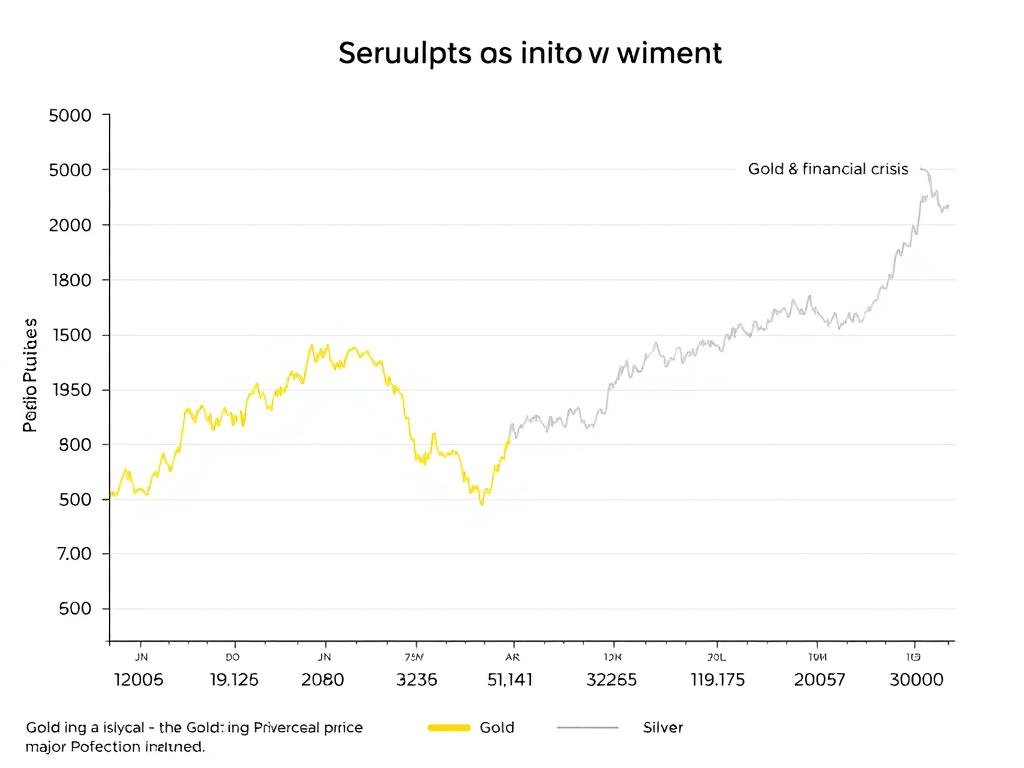
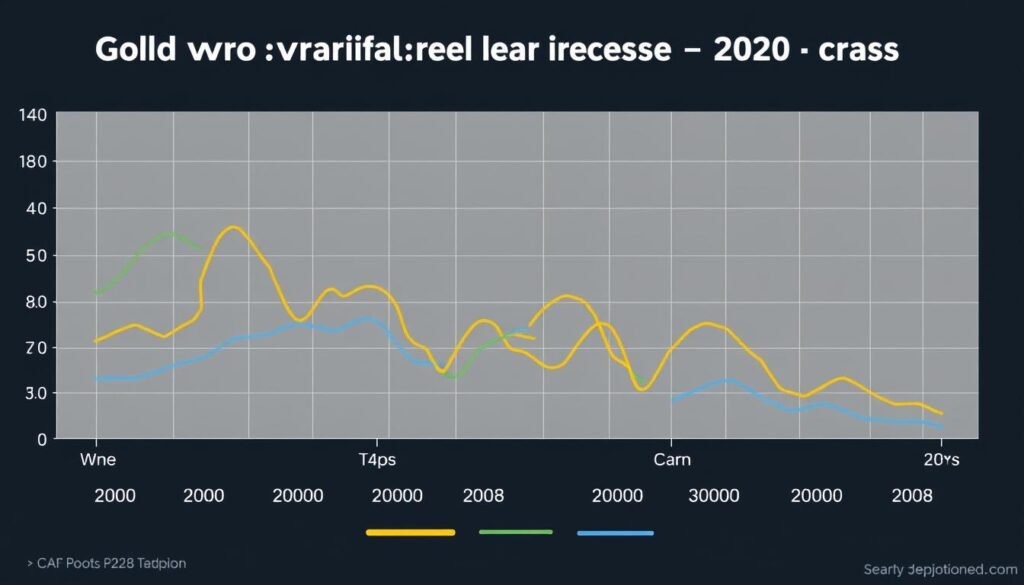
    Chart comparing gold vs silver IRA performance during economic downturns

    Historical Performance and Price Volatility

    Understanding how gold and silver have performed historically can provide insights into their potential future behavior in your retirement portfolio.

    Gold’s Track Record

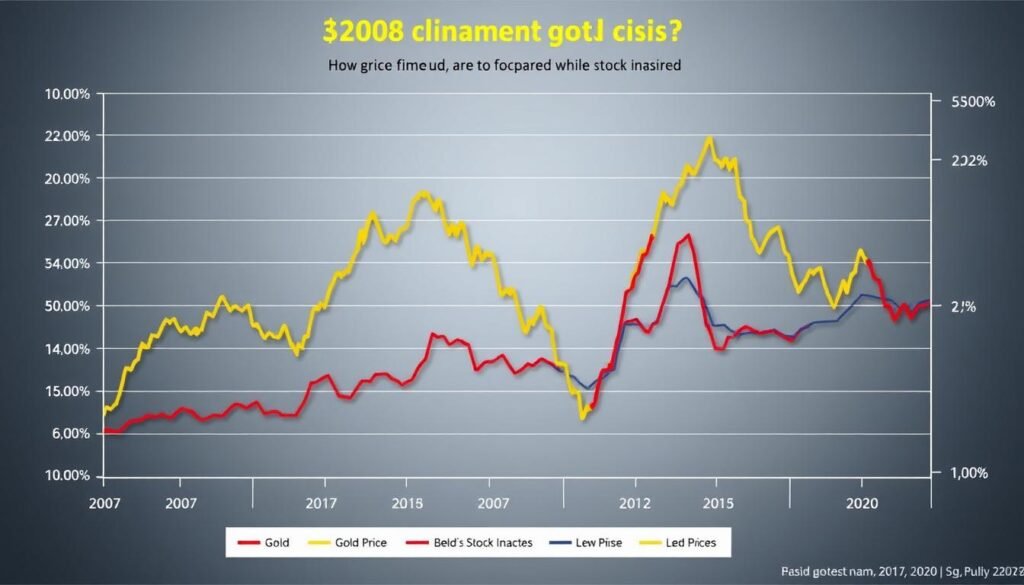
    Gold has demonstrated remarkable stability during economic downturns. During the 2008 financial crisis, gold prices increased while the stock market plummeted. This counter-cyclical movement makes gold an effective portfolio diversifier. Gold typically experiences less day-to-day price volatility than silver, making it a more predictable store of value.

    Silver’s Performance Patterns

    Silver prices can be two to three times more volatile than gold on any given day. This volatility creates both opportunity and risk. During economic expansions, silver often outperforms gold due to increasing industrial demand. However, during sharp economic contractions, silver can initially fall alongside industrial commodities before recovering as investment demand increases.

    Person analyzing gold and silver IRA investment options on computer screen

    Storage Requirements and Associated Costs

    Both gold and silver IRAs require secure storage at IRS-approved depositories, but there are important differences in how this affects your investment.

    Gold Storage Considerations

    Gold’s high value-to-volume ratio means it requires less physical space for storage. A $50,000 investment in gold can be held in a relatively small space, which typically results in lower storage fees as a percentage of your investment. Most custodians charge between 0.5% and 1% annually for gold storage and insurance.

    Silver Storage Challenges

    Silver’s lower price per ounce means it takes significantly more physical space to store the same dollar value. This can result in higher relative storage costs. For example, $50,000 in silver requires roughly 80 times more space than the same value in gold. Some custodians charge higher percentage fees for silver storage due to these space requirements.

    Secure vault storage facility for gold and silver IRA holdings

    “When evaluating storage costs, consider the total expense ratio rather than just the nominal fee. Silver’s higher storage costs as a percentage of investment value can impact long-term returns.”

    – Precious Metals Investment Advisor

    Liquidity and Market Dynamics

    The ability to buy and sell your precious metals efficiently can significantly impact your retirement strategy, especially when you begin taking distributions.

    Gold’s Market Liquidity

    Gold enjoys exceptional liquidity in global markets. It can be bought and sold quickly with minimal price impact, even in large quantities. The bid-ask spread (the difference between buying and selling prices) is typically tighter for gold, meaning you lose less value in transactions. This liquidity becomes particularly important when taking required minimum distributions (RMDs) from your IRA.

    Silver’s Market Characteristics

    While silver is also highly liquid, its market is smaller than gold’s. This can occasionally result in wider bid-ask spreads, especially during market stress. However, silver’s lower price point makes it easier to sell precise dollar amounts when needed for distributions. The silver market is also more influenced by industrial demand, which can create both opportunities and challenges for timing sales.

    Gold and silver market trading floor showing price boards and traders

    Minimum Investment Thresholds

    The initial investment required for gold and silver IRAs can vary significantly, affecting accessibility for different investors.

    Gold IRA Minimums

    Gold IRAs typically have higher minimum investment requirements due to gold’s higher price per ounce. Many custodians require initial investments between $15,000 and $25,000 for gold IRAs. This higher threshold can be a barrier for some investors, particularly those just beginning to diversify into precious metals.

    Gold American Eagle coins commonly used in Gold IRAs

    Silver IRA Minimums

    Silver IRAs often feature lower minimum investment requirements, sometimes starting at $5,000 to $10,000. This lower entry point makes silver IRAs more accessible to investors with smaller budgets or those who wish to start with a modest allocation to precious metals while maintaining diversification in other assets.

    Silver American Eagle coins commonly used in Silver IRAs

    Compare Top Precious Metals IRA Companies

    Find the best custodian for your gold or silver IRA with our detailed comparison of fees, minimums, and customer service.

    See Top-Rated IRA Companies

    Diversification Benefits and Inflation Hedging

    Both gold and silver can help diversify a retirement portfolio, but they offer different advantages in terms of correlation to other assets and protection against inflation.

    Gold as a Portfolio Diversifier

    Gold has historically maintained a low or negative correlation with stocks and bonds. This makes it an effective diversification tool that can help reduce overall portfolio volatility. During market downturns, gold often moves independently or even counter to stock market performance, providing a stabilizing effect on retirement savings.

    Silver’s Diversification Profile

    Silver offers moderate diversification benefits but tends to have a higher correlation with economic activity than gold. This dual nature – part industrial metal, part precious metal – means silver can sometimes follow broader market trends during economic expansions while still providing some protection during downturns.

    Inflation Protection Comparison

    Both metals have served as hedges against inflation, but with different characteristics:

    Gold’s Inflation Protection

    • Consistent historical performance during inflationary periods
    • Tends to maintain purchasing power over very long time horizons
    • Less volatile response to inflation data
    • Strong performance during currency devaluation

    Silver’s Inflation Response

    • Potentially higher percentage gains during inflationary periods
    • More volatile price movements in response to inflation data
    • Industrial demand can amplify inflation-driven price increases
    • May lag gold initially but can outperform during sustained inflation
    Diversified retirement portfolio chart showing gold and silver allocations

    When a Gold IRA Makes More Sense

    Gold IRAs tend to be the preferred choice in specific scenarios and for investors with certain priorities.

    Ideal Scenarios for Gold IRA Investment

    • Wealth Preservation Focus: If your primary goal is protecting existing wealth rather than aggressive growth, gold’s stability makes it a better choice.
    • Lower Risk Tolerance: Investors uncomfortable with significant price volatility will appreciate gold’s more measured price movements.
    • Nearing Retirement: Those closer to retirement age typically benefit from gold’s stability as they have less time to recover from market volatility.
    • Significant Economic Concerns: During periods of serious economic uncertainty, banking concerns, or geopolitical tension, gold often outperforms.
    • Larger Investment Amounts: The higher value-to-volume ratio makes gold more efficient for larger investment sums ($50,000+).

    Retired couple reviewing their gold IRA investment portfolio

    “Gold has consistently served as a financial anchor during times of uncertainty. For retirement investors focused on preservation rather than speculation, gold IRAs provide the stability and security that paper assets often lack during economic turbulence.”

    When a Silver IRA Makes More Sense

    Silver IRAs can be the better option in certain circumstances and for investors with specific goals.

    Ideal Scenarios for Silver IRA Investment

    • Growth Potential Priority: Investors seeking higher potential percentage returns might prefer silver’s more dynamic price movements.
    • Smaller Investment Budget: With a lower price point, silver allows meaningful precious metals exposure with less initial capital.
    • Longer Time Horizon: Younger investors with decades until retirement can better weather silver’s volatility while positioning for potential outperformance.
    • Industrial Demand Play: Those bullish on technologies that use silver (solar, electronics, medical) may benefit from increasing industrial consumption.
    • Higher Risk Tolerance: Investors comfortable with more significant price swings can potentially capture greater gains with silver.

    Young investor researching silver IRA options on laptop

    Risk Factors and Considerations

    Before investing in either a gold or silver IRA, it’s important to understand the potential drawbacks and limitations of precious metals as retirement assets.

    Common Risks for Both Gold and Silver IRAs

    • No Income Generation: Unlike stocks or bonds, physical precious metals don’t produce dividends or interest.
    • Storage and Insurance Costs: Annual fees can erode returns over time.
    • Price Volatility: Both metals experience price fluctuations, though to different degrees.
    • Potential Tax Implications: Precious metals in IRAs may be taxed as collectibles (28% maximum rate) rather than capital gains when distributed.
    • Dealer Markups: Purchasing physical metals involves premiums above spot price.

    Gold-Specific Considerations

    • Higher entry cost limits accessibility
    • May underperform during strong economic growth
    • Central bank policies can impact prices
    • Higher opportunity cost during bull markets

    Silver-Specific Considerations

    • Greater price volatility can be stressful
    • Industrial demand fluctuations affect price
    • Higher relative storage costs
    • More vulnerable to economic downturns initially
    Risk assessment chart for gold and silver IRA investments

    How to Get Started with a Precious Metals IRA

    If you’ve decided to invest in either a gold or silver IRA, the process follows similar steps regardless of which metal you choose.

    1. Choose a Self-Directed IRA Custodian

      Select a reputable custodian that specializes in precious metals IRAs. Look for transparent fee structures, strong customer reviews, and experience in the industry.

    2. Fund Your Account

      Transfer funds from an existing retirement account (401(k), traditional IRA, etc.) or make a new contribution within annual IRA limits.

    3. Select Your Metals

      Choose IRS-approved gold or silver products. For gold, this means 99.5% purity; for silver, 99.9% purity is required. American Eagle coins, Canadian Maple Leafs, and certain bars from accredited refiners qualify.

    4. Arrange Secure Storage

      Your metals must be stored in an IRS-approved depository. Your custodian will coordinate this, but you can often select from multiple storage facilities.

    5. Monitor and Manage

      Review your precious metals holdings regularly as part of your overall retirement strategy. Rebalance as needed based on market conditions and your changing financial goals.
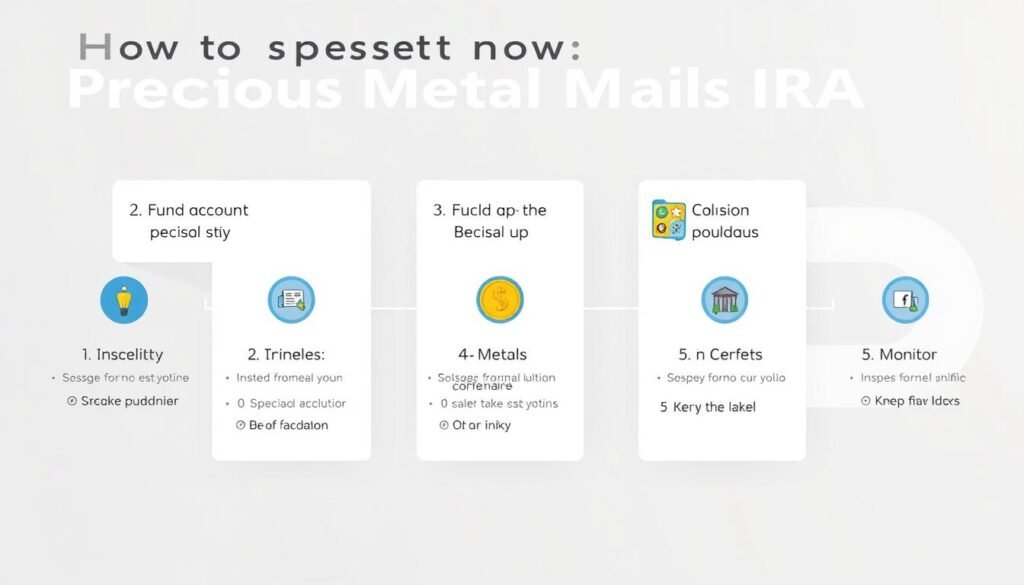
    Step-by-step process for setting up a gold or silver IRA

    Request Your Free Precious Metals IRA Guide

    Still unsure which precious metal is right for your retirement? Complete this form to receive our comprehensive guide that will help you make an informed decision.


    Your information is secure and will never be shared with third parties.

    Conclusion: Making the Right Choice for Your Retirement

    When deciding between a gold IRA vs silver IRA, there is no one-size-fits-all answer. The right choice depends on your specific financial situation, retirement timeline, and investment goals.

    Gold IRAs tend to be better suited for investors prioritizing stability, wealth preservation, and protection against severe economic downturns. With lower volatility and a stronger track record during crises, gold provides a reliable anchor for retirement portfolios, especially for those nearing retirement age.

    Silver IRAs may be more appropriate for investors with a longer time horizon, smaller initial investment budget, and higher risk tolerance. Silver’s industrial applications and potential for higher percentage gains make it attractive for those seeking growth alongside inflation protection.

    Many experienced investors choose to include both metals in their retirement strategy, leveraging gold’s stability alongside silver’s growth potential. This balanced approach can provide comprehensive precious metals exposure while mitigating the individual drawbacks of each metal.

    Regardless of which precious metal you choose, remember that diversification remains key. Most financial advisors recommend limiting precious metals to 5-15% of your overall retirement portfolio, using them as a complement to traditional assets rather than a replacement.

    Ready to Protect Your Retirement with Precious Metals?

    Speak with a precious metals specialist today to determine whether a gold IRA, silver IRA, or combination approach best suits your financial goals.
    Request Your Free Consultation

  • What Happens to Your Gold IRA When the Market Crashes?

    What Happens to Your Gold IRA When the Market Crashes?

    Market crashes can send shockwaves through traditional investment portfolios, leaving many retirement accounts devastated. During these turbulent economic periods, investors often wonder: what happens to gold IRA when market crashes? Understanding how gold performs during financial crises is crucial for those looking to protect their retirement savings. This comprehensive guide explores gold’s historical relationship with market downturns and explains why many investors turn to Gold IRAs as a safeguard against economic uncertainty.

    The Fundamental Relationship Between Gold and Market Crashes

    Gold has long been considered a safe-haven asset during times of economic uncertainty. When stock markets tumble, gold often moves in the opposite direction, providing a counterbalance to portfolio losses. This negative correlation between gold and equities is what makes gold particularly valuable during market crashes.

    Historically, gold has demonstrated resilience during significant market downturns. While it may experience short-term volatility alongside other assets, gold typically stabilizes and often appreciates as the crisis unfolds. This pattern was evident during the 2008 financial crisis when gold initially dipped due to liquidity needs but subsequently rose by over 25% while stocks continued to decline.

    The reason for this inverse relationship is straightforward: as confidence in paper assets and fiat currencies wanes during economic turmoil, investors seek tangible assets with intrinsic value. Gold, with its millennia-long history as a store of value, becomes increasingly attractive when other investments falter.

    How Gold IRAs Differ From Traditional IRAs During Market Crashes

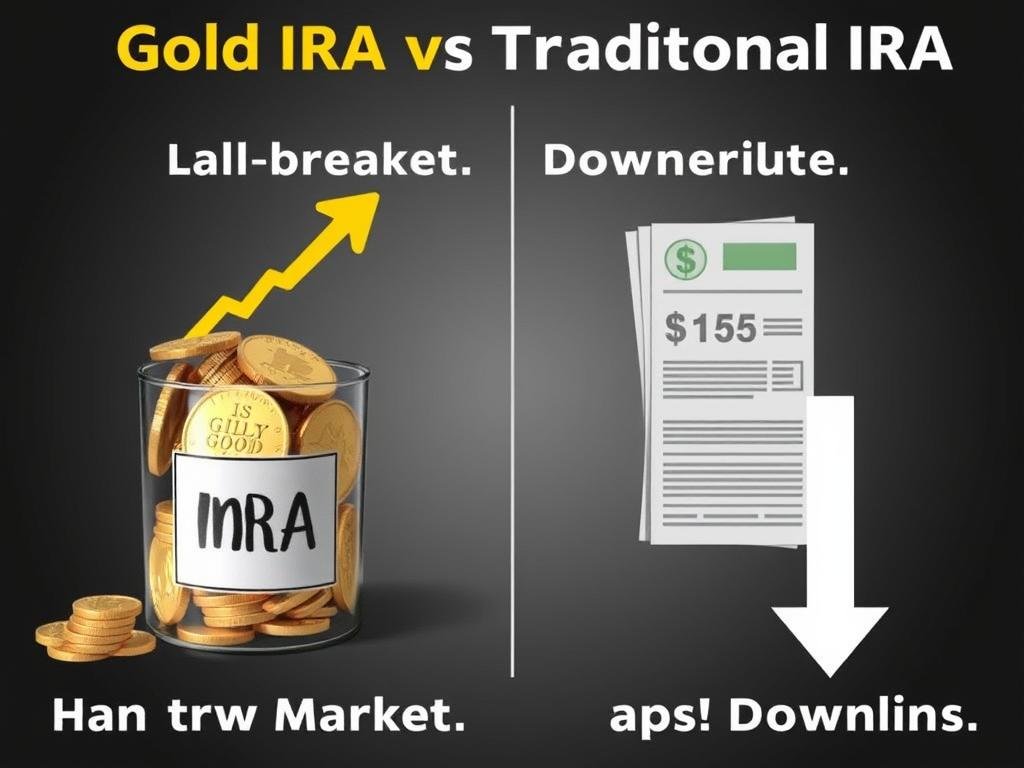
    Comparison of Gold IRA vs Traditional IRA performance during market downturn

    Traditional IRAs typically contain stocks, bonds, and mutual funds—assets that can experience significant devaluation during market crashes. In contrast, Gold IRAs hold physical precious metals, providing fundamentally different exposure during economic downturns.

    Traditional IRA During Crashes

    • Subject to market volatility and potential significant losses
    • Value tied directly to company performance and market sentiment
    • May face liquidity challenges during severe market stress
    • Recovery dependent on broader economic rebound
    • Vulnerable to currency devaluation and inflation

    Gold IRA During Crashes

    • Often moves counter to stock market direction
    • Value based on physical precious metal, not paper promises
    • Historically maintains purchasing power during currency devaluation
    • Not dependent on company performance or earnings
    • Provides portfolio diversification when it’s most needed

    The fundamental difference lies in what backs these retirement vehicles. Traditional IRAs represent claims on future corporate profits or debt obligations, while Gold IRAs contain physical precious metals with intrinsic value. This distinction becomes crucial during market crashes when paper assets face heightened scrutiny and potential devaluation.

    Protective Mechanisms of Gold IRAs During Market Volatility

    Gold IRA protective mechanisms during market volatility

    Gold IRAs offer several specific mechanisms that help protect retirement savings during market crashes and periods of economic uncertainty:

    1. Negative Correlation with Stocks

    Gold typically shows a negative correlation with stock markets, meaning it often moves in the opposite direction of equities. This inverse relationship helps offset losses in the stock portion of your retirement portfolio during market downturns.

    2. Inflation Protection

    Market crashes are frequently followed by monetary stimulus and currency devaluation, which can lead to inflation. Gold has historically maintained its purchasing power during inflationary periods, protecting the real value of your retirement savings when paper assets lose value.

    3. Currency Hedge

    During severe economic crises, central banks often implement policies that can weaken fiat currencies. Gold, priced in dollars but valued globally, serves as a hedge against currency devaluation, preserving wealth when paper money loses value.

    4. Physical Asset Security

    Unlike stocks or bonds that represent claims on future performance, Gold IRAs contain physical precious metals stored in secure, IRS-approved depositories. This tangible backing provides security during times when financial institutions face stress or uncertainty.

    Protect Your Retirement From Market Volatility

    Learn how a Gold IRA can help safeguard your retirement savings during economic uncertainty. Get our free guide to precious metals investing.

    Download Free Gold IRA Guide

    Gold vs. Other Retirement Assets During Market Crashes

    Performance comparison of gold versus stocks, bonds, and real estate during market crashes

    To truly understand the value of Gold IRAs during market turbulence, it’s essential to compare gold’s performance against other common retirement assets during historical crashes:

    Market Crash S&P 500 Bonds Real Estate Gold
    2000-2002 Dot-com Crash -49.1% +15.7% +16.2% +12.4%
    2008 Financial Crisis -56.8% +5.2% -30.5% +25.5%
    2020 COVID-19 Crash -33.9% +8.7% -10.3% +14.3%

    The data reveals a consistent pattern: while stocks typically suffer significant losses during market crashes, gold often maintains its value or appreciates. This performance difference is particularly important for retirement accounts, where preservation of capital becomes increasingly crucial as investors approach retirement age.

    Bonds also tend to perform relatively well during stock market crashes, but unlike gold, they face challenges during periods of rising inflation or interest rates—conditions that often follow economic crises as central banks implement stimulus measures.

    Real estate, another tangible asset, has shown mixed performance during market crashes. While it provides some diversification benefits, real estate can face liquidity challenges during severe downturns and is often affected by credit market freezes that typically accompany financial crises.

    Addressing Common Concerns About Gold IRAs During Crises

    Secure gold storage facility for Gold IRAs with security features

    Is my Gold IRA liquid during a market crash?

    Yes, Gold IRAs maintain liquidity even during market crashes. IRA custodians facilitate the buying and selling of precious metals within your account. While there might be slightly wider bid-ask spreads during extreme market volatility, gold remains one of the most liquid assets globally, with continuous markets operating worldwide. Unlike some real estate or private equity investments that can become illiquid during crises, gold can typically be converted to cash within 1-3 business days.

    How is my physical gold stored and is it secure during economic turmoil?

    Physical gold in a Gold IRA is stored in IRS-approved depositories with state-of-the-art security systems, including 24/7 monitoring, armed guards, and comprehensive insurance policies. These facilities operate independently from the banking system, providing an additional layer of security during financial crises. Your gold is held in segregated storage, meaning your specific metals are allocated to you and not commingled with others’ holdings, ensuring your ownership remains clear regardless of market conditions.

    Can I access my Gold IRA during a severe economic downturn?

    Your Gold IRA follows the same distribution rules as traditional IRAs, regardless of market conditions. While early withdrawals before age 59½ typically incur a 10% penalty plus taxes, exceptions exist for certain hardships. During economic downturns, you maintain the ability to take distributions, though it’s generally advisable to avoid liquidating assets during market lows. Some investors actually increase their gold holdings during crashes, viewing them as buying opportunities rather than times to sell.

    Important: While Gold IRAs provide significant protection during market crashes, they still follow standard IRA regulations regarding contributions, distributions, and required minimum distributions (RMDs). Consult with a financial advisor about how these rules apply to your specific situation.

    Practical Advice for Gold IRA Holders During Market Crashes

    Investor reviewing Gold IRA portfolio during market volatility

    What to Do During a Market Crash

    • Maintain perspective – Remember that gold typically performs its protective function over the medium to long term, even if there’s short-term volatility.
    • Consider rebalancing – Market crashes may present opportunities to rebalance your portfolio, potentially increasing your gold allocation while prices of other assets are depressed.
    • Stay informed – Monitor both gold markets and broader economic indicators to make informed decisions about your retirement savings.
    • Consult your advisor – Work with financial professionals who understand precious metals and can provide guidance specific to your situation.
    • Review your allocation – Ensure your gold holdings represent an appropriate percentage of your overall retirement portfolio based on your age and risk tolerance.

    What Not to Do During a Market Crash

    • Don’t panic sell – Emotional reactions to market volatility often lead to selling at the worst possible time.
    • Avoid excessive concentration – While increasing gold allocation may be prudent, maintain appropriate diversification across asset classes.
    • Don’t try to time the market – Even experts struggle to perfectly time market bottoms and tops; focus on long-term strategy instead.
    • Don’t ignore tax implications – Remember that transactions within your Gold IRA don’t trigger tax events, but distributions do.
    • Don’t forget your investment timeline – Your response to market crashes should align with your retirement horizon.

    Prepare Your Retirement for the Next Market Crash

    Speak with a Gold IRA specialist to learn how precious metals can help protect your retirement savings during economic uncertainty.

    Request Free Consultation

    Real-World Examples: Gold IRA Performance During Past Crashes

    Chart showing gold price performance during the 2008 financial crisis

    Case Study: 2008 Financial Crisis

    During the 2008 financial crisis, when the S&P 500 plummeted by nearly 57%, a hypothetical Gold IRA would have provided significant protection. While gold initially experienced a brief decline as investors sought liquidity, it quickly rebounded and ultimately gained over 25% from the start of the crisis to its conclusion.

    Consider this example: An investor with a $500,000 traditional IRA fully invested in an S&P 500 index fund would have seen their balance shrink to approximately $215,000 at the market bottom. In contrast, an investor with a $500,000 Gold IRA would have seen their balance grow to approximately $625,000 over the same period.

    Case Study: COVID-19 Market Crash

    The COVID-19 market crash of 2020 provides a more recent example. As global lockdowns triggered a swift 34% decline in the S&P 500, gold initially fell about 12% in the liquidity crunch but quickly recovered and ended the year up 25%. A $500,000 Gold IRA would have grown to approximately $625,000, while a traditional IRA invested in the broader market would have experienced significant volatility before eventually recovering.

    “During times of financial stress, gold has consistently demonstrated its value as a portfolio diversifier and wealth preserver. While past performance doesn’t guarantee future results, gold’s historical track record during crises makes a compelling case for its inclusion in retirement portfolios.”

    — Financial Analyst and Precious Metals Expert

    Potential Risks and Limitations of Gold IRAs During Extreme Conditions

    Investor analyzing gold market risks and limitations during extreme economic conditions

    While Gold IRAs offer significant protection during market crashes, they aren’t without potential limitations and risks that investors should understand:

    Gold IRA Strengths During Crashes

    • Historical tendency to preserve wealth during crises
    • Protection against currency devaluation
    • Portfolio diversification when most needed
    • Tangible asset backing
    • Global liquidity

    Gold IRA Limitations During Crashes

    • Potential short-term volatility
    • Possible premium increases on physical products
    • No dividend or interest income
    • Storage and insurance costs continue regardless of market conditions
    • Subject to potential government regulations

    Short-Term Liquidity Pressures

    During severe market dislocations, gold can experience short-term price volatility as institutional investors may need to sell profitable positions (including gold) to cover losses elsewhere or meet margin calls. This can temporarily pressure gold prices before the metal’s safe-haven characteristics reassert themselves.

    Premium Fluctuations

    Physical gold products like coins and bars carry premiums above the spot price of gold. During extreme market conditions, these premiums can increase due to higher demand and potential supply chain disruptions, affecting the net value of your Gold IRA holdings.

    Regulatory Considerations

    While extremely rare in modern Western economies, investors should be aware that governments have historically imposed regulations on gold ownership during severe economic crises. However, gold held within IRA structures has additional legal protections compared to direct ownership.

    Conclusion: Gold IRAs as a Protective Strategy During Market Crashes

    Diversified retirement portfolio with gold allocation providing stability during market volatility

    When examining what happens to gold IRA when market crashes, the historical evidence points to a clear conclusion: Gold IRAs typically provide significant protection during economic downturns, often preserving or even increasing in value while traditional paper assets decline.

    The unique properties of gold—its negative correlation with stocks, inflation-hedging capabilities, global recognition, and intrinsic value—make it a powerful diversification tool precisely when diversification benefits are most needed. While no investment is without risk, gold’s centuries-long track record as a store of value during turbulent times makes a compelling case for its inclusion in retirement portfolios.

    For investors concerned about market volatility and economic uncertainty, a Gold IRA offers a strategic approach to protecting retirement savings. By understanding both the strengths and limitations of gold during market crashes, investors can make informed decisions about incorporating precious metals into their long-term retirement strategy.

    Safeguard Your Retirement Against Market Uncertainty

    Learn how a Gold IRA can help protect your hard-earned savings from market crashes and economic volatility.

    Get Your Free Gold IRA Guide Today

    Additional Resources

    Gold IRA Rollover Guide

    Learn how to transfer existing retirement accounts into a Gold IRA without tax penalties.

    Gold Market Analysis

    Stay informed with our quarterly analysis of gold market trends and economic indicators.

    Retirement Calculator

    Calculate how adding gold to your portfolio might affect your retirement readiness.

  • Gold IRA Minimums for Small Investors: Is It Worth Starting?

    Gold IRA Minimums for Small Investors: Is It Worth Starting?

    Many potential investors believe that precious metals IRAs require substantial capital to get started. This common misconception prevents countless individuals from exploring gold IRAs as a viable option for portfolio diversification. The truth is that entry points for gold IRAs vary significantly across providers, with minimums ranging from as low as $2,000 to $50,000 or more. For small investors with limited capital, understanding these minimums and whether starting small is worthwhile becomes crucial to making informed retirement decisions.

    What Is a Gold IRA and How Does It Differ from Traditional IRAs?

    A Gold IRA (also called a precious metals IRA) is a self-directed individual retirement account that allows you to hold physical gold, silver, platinum, and palladium instead of traditional paper assets like stocks and bonds. Unlike conventional IRAs managed by financial institutions that limit you to stocks, bonds, and mutual funds, Gold IRAs are self-directed IRAs (SDIRAs) that give you direct control over alternative assets.

    The key differences between Gold IRAs and traditional IRAs include:

    Storage Requirements

    Physical precious metals must be stored in IRS-approved depositories, not at home or in a personal safe deposit box. This requirement ensures security and compliance with IRS regulations.

    Custodian Requirements

    You must work with a specialized custodian who handles the administrative aspects of your account, including purchasing metals, arranging storage, and managing paperwork.

    Approved Metals

    Only certain precious metals meeting specific purity standards qualify for inclusion in a Gold IRA. For gold, the minimum fineness is .995 (99.5% pure), with similar requirements for other metals.

    Fee Structure

    Gold IRAs typically have higher fees than traditional IRAs due to storage costs, insurance, and custodian fees. These fees can significantly impact smaller accounts.

    Despite these differences, Gold IRAs maintain the same contribution limits as traditional IRAs—$7,000 annually for 2025 ($8,000 if you’re 50 or older)—and follow similar rules regarding distributions and taxes.

    Current Gold IRA Minimum Investment Requirements

    Gold IRA providers vary widely in their minimum investment requirements. Understanding these minimums helps small investors identify accessible entry points into precious metals investing.

    Provider Minimum Investment Annual Fees Best For
    Noble Gold $2,000 – $10,000 ~$180 Entry-level investors
    Birch Gold Group $10,000 $180 Educational resources
    Goldco $25,000 $175-$225 Customer service
    American Hartford Gold $10,000 $175-$225 Experienced investors
    Augusta Precious Metals $50,000 $180-$280 High-value investors
    Monetary Gold $5,000-$10,000 $100+ Customer assistance
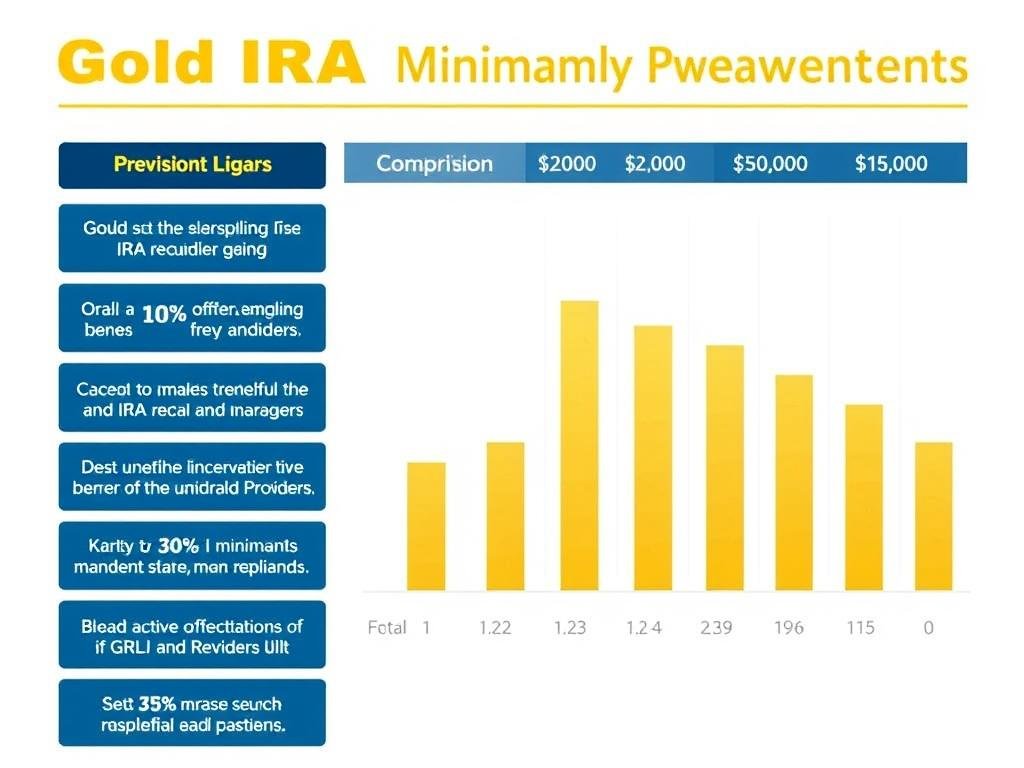
    Chart comparing gold ira minimums for small investors across different providers

    As the table shows, several reputable companies offer entry points accessible to small investors. Noble Gold and Monetary Gold provide some of the lowest minimums, while companies like Augusta Precious Metals cater to investors with more substantial capital.

    Is Starting Small Practical and Worthwhile?

    The practicality of starting a Gold IRA with a smaller amount depends on several factors, including fee structures, growth potential, and your overall retirement strategy.

    The Mathematics of Small Gold IRAs

    When evaluating whether a small Gold IRA makes financial sense, consider how fees impact your investment. Most Gold IRA providers charge flat annual fees regardless of account size.

    Example: If you invest $10,000 in a Gold IRA with annual fees of $180, those fees represent 1.8% of your account value annually. As your account grows to $25,000, the same fees drop to just 0.72% of your holdings.

    This fee structure creates a mathematical advantage for growing accounts. While the initial percentage may seem high, systematic contributions and potential precious metals appreciation can improve this ratio over time.

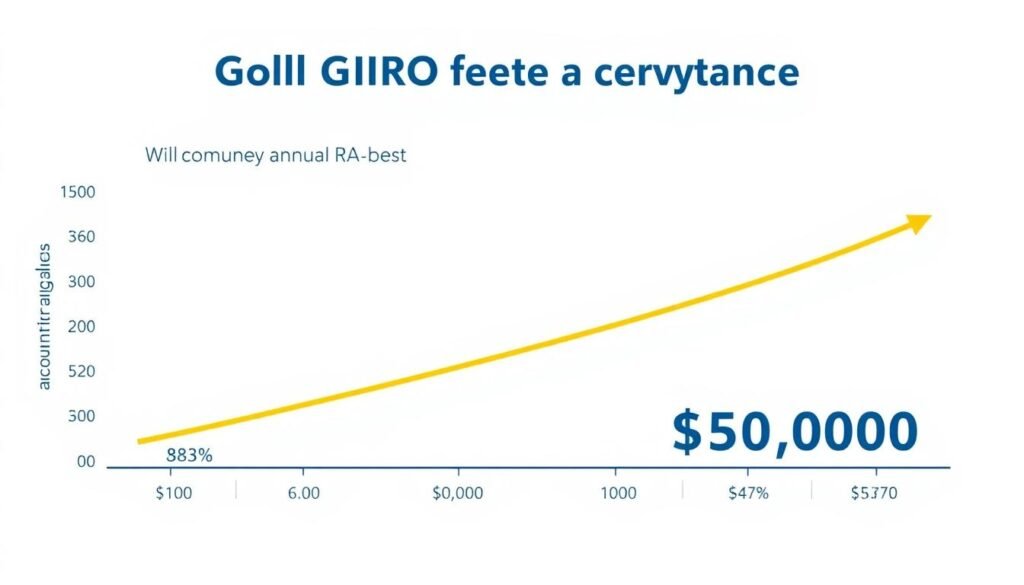
    Graph showing how fees impact small gold ira minimums for small investors over time

    Growth Strategies for Small Accounts

    Small investors can employ several strategies to grow their Gold IRAs effectively:

    • Annual Contributions – Adding the maximum allowed contribution each year ($7,000 for 2025, or $8,000 if you’re over 50)
    • Partial Rollovers – Moving a portion of an existing 401(k) or traditional IRA into precious metals
    • Strategic Metal Selection – Including silver alongside gold to acquire more ounces per dollar invested
    • Long-Term Perspective – Viewing the account as a 10-15 year strategy rather than seeking short-term gains

    With consistent contributions, a $10,000 initial investment could potentially grow to $25,000-$30,000 within 3-5 years, significantly improving the fee-to-value ratio.

    Pros and Cons of Gold IRAs for Small Investors

    Advantages

    • Portfolio Diversification – Adds non-correlated assets to your retirement strategy
    • Inflation Protection – Physical gold has historically preserved purchasing power during inflationary periods
    • Tax Benefits – Enjoys the same tax advantages as traditional or Roth IRAs
    • Flat Fee Advantage – Same annual costs whether your account holds $10K or $100K
    • Scalability – Easy to grow through annual contributions and rollovers

    Disadvantages

    • Higher Fee Impact – Fixed costs represent a larger percentage of smaller accounts
    • No Income Generation – Precious metals don’t pay dividends or interest
    • Limited Liquidity – Converting metals to cash takes several business days
    • Price Volatility – Gold can experience significant short-term price swings
    • RMD Complications – Required Minimum Distributions after age 73 may force partial liquidations
    Small investor reviewing gold ira minimums for small investors documentation

    For small investors, these pros and cons must be carefully weighed against your specific financial situation and retirement goals. The diversification benefits may outweigh the fee impact for many investors, especially those concerned about inflation or economic instability.

    Alternative Gold Investment Options for Those Below Minimums

    If you can’t meet the minimum requirements for a physical Gold IRA, several alternatives allow you to gain exposure to precious metals:

    Gold ETFs in Traditional IRAs

    Exchange-traded funds like GLD or IAU track gold prices and can be held in conventional IRAs with no minimum requirements beyond the cost of a single share (often under $200).

    Advantage: Lower fees, higher liquidity, no storage concerns

    Disadvantage: No physical metal ownership

    Precious Metals Mining Stocks

    Invest in companies that mine gold and other precious metals through any standard brokerage account or traditional IRA.

    Advantage: Potential dividends, leverage to metal prices

    Disadvantage: Company-specific risks beyond metal prices

    Physical Metals Outside an IRA

    Purchase gold or silver coins and bars directly for personal possession, starting with as little as the cost of a single ounce or even fractional coins.

    Advantage: Direct ownership, no account fees

    Disadvantage: No tax benefits, security concerns

    Alternative gold investments for those below gold ira minimums for small investors

    These alternatives allow you to gain exposure to precious metals with smaller amounts while building toward the minimums required for a physical Gold IRA. Many investors combine these approaches, using ETFs for immediate exposure while saving for a physical Gold IRA.

    Request Your Free Gold Investment Guide

    Learn more about all your gold investment options, including low-minimum alternatives to Gold IRAs.

    Get Your Free Guide

    Practical Tips for Small Investors Considering a Gold IRA

    Financial advisor explaining gold ira minimums for small investors to client

    Starting with the Right Provider

    Choose companies that specifically cater to smaller investors with reasonable minimums and transparent fee structures. Noble Gold and Birch Gold Group have established reputations for working with modest account sizes.

    Understanding the Fee Impact

    Calculate the percentage impact of fees on your initial investment and projected growth. For accounts under $10,000, annual fees of $180-$250 represent a significant percentage that must be offset by metals appreciation and account growth.

    Strategic Metal Selection

    Consider diversifying across different precious metals to maximize your physical holdings:

    • Gold – Primary stability component (60-70% of holdings)
    • Silver – Higher growth potential and more ounces per dollar (30-40% of holdings)
    • Platinum/Palladium – Consider small allocations (5-10%) as accounts grow beyond $25,000

    Growth Planning

    Create a systematic contribution plan to grow your account and improve the fee-to-value ratio. Set up automatic monthly or quarterly contributions if possible.

    “The key to successful small Gold IRAs is consistent growth through regular contributions. Even modest monthly additions can transform a small account into a substantial holding over 5-10 years.”

    – Retirement Planning Specialist

    Storage Considerations

    For smaller accounts, commingled storage is typically more cost-effective than segregated storage. As your account grows beyond $25,000-$30,000, you can consider upgrading to segregated storage for additional security and clarity.

    Addressing Common Concerns: Fees, Storage, and Liquidity

    Secure storage facility for gold ira minimums for small investors

    Understanding the Complete Fee Structure

    Gold IRAs typically involve several types of fees that small investors should understand:

    Fee Type Typical Cost Frequency Notes for Small Investors
    Setup Fee $50-$150 One-time Many providers waive this for accounts over $10,000-$25,000
    Annual Administration $75-$125 Annual Flat fee regardless of account size
    Storage & Insurance $100-$150 Annual Higher for segregated storage
    Transaction Fees $25-$40 Per transaction Minimize by making fewer, larger purchases
    Seller’s Premium 5-10% above spot Per purchase Higher for smaller purchases

    Storage Security and Options

    All IRS-approved depositories provide comprehensive security and insurance for your precious metals. Small investors typically have two main storage options:

    Commingled Storage

    Your metals are stored alongside others, with detailed accounting records tracking your specific ownership. This option is more affordable and suitable for accounts under $25,000.

    Segregated Storage

    Your exact coins and bars are stored separately under your name. This costs more but provides additional clarity and simplifies estate planning. Consider this option as your account grows.

    Liquidity Considerations

    Converting Gold IRA assets to cash typically takes 3-7 business days and involves several steps:

    1. Contact your custodian to initiate the sale
    2. Metals are transported from the depository to a dealer
    3. Sale is completed at current market prices
    4. Funds are deposited into your IRA account
    5. You can then take a distribution or reinvest

    For small investors, maintaining emergency funds outside your Gold IRA is essential, as you shouldn’t rely on these assets for immediate liquidity needs.

    Case Study: Growing a Small Gold IRA

    Growth chart of small gold ira minimums for small investors over time

    To illustrate how a small Gold IRA can grow over time, consider this hypothetical example:

    Starting Amount: $10,000 initial investment with Birch Gold Group

    Annual Fees: $180 ($80 administration, $100 storage)

    Contribution Strategy: $500 monthly contributions ($6,000 annually)

    Metal Allocation: 70% gold, 30% silver

    Five-Year Growth Projection

    Year Beginning Balance Annual Contribution Annual Fees Estimated Growth (3%) Ending Balance Fee Impact
    Year 1 $10,000 $6,000 $180 $480 $16,300 1.1%
    Year 2 $16,300 $6,000 $180 $669 $22,789 0.8%
    Year 3 $22,789 $6,000 $180 $864 $29,473 0.6%
    Year 4 $29,473 $6,000 $180 $1,064 $36,357 0.5%
    Year 5 $36,357 $6,000 $180 $1,271 $43,448 0.4%

    As this projection demonstrates, a small Gold IRA can grow substantially over time through consistent contributions. The fee impact decreases significantly as the account grows, dropping from 1.8% initially to just 0.4% by year five.

    “The power of systematic investing transforms even modest initial amounts into meaningful retirement assets. The key is consistency and patience.”

    This case study assumes conservative 3% annual growth in metal values. Actual performance may vary based on precious metals market conditions.

    Top Gold IRA Providers for Small Investors

    Comparison of top providers for gold ira minimums for small investors

    Based on minimum requirements, fee transparency, and services for smaller accounts, these providers stand out for small investors:

    Noble Gold

    Minimum: $2,000-$10,000

    Annual Fees: ~$180

    Highlights:

    • Lowest entry point for small investors
    • Free silver on qualifying purchases
    • Strong educational resources
    • Excellent customer service ratings

    Birch Gold Group

    Minimum: $10,000

    Annual Fees: $180

    Highlights:

    • Transparent fee structure
    • First-year fee waiver on $50,000+ accounts
    • Extensive educational materials
    • A+ BBB rating

    Monetary Gold

    Minimum: $5,000-$10,000

    Annual Fees: $100+

    Highlights:

    • Low minimum requirements
    • 24/7 client assistance
    • Free shipping on purchases
    • A+ BBB rating

    These providers specifically cater to investors starting with modest amounts, offering appropriate education, support, and fee structures for growing accounts.

    Frequently Asked Questions About Small Gold IRAs

    Person researching gold ira minimums for small investors on computer

    What is the absolute minimum to start a Gold IRA?

    The lowest minimum requirement currently available is approximately ,000-,000 through providers like Noble Gold. However, most reputable companies set minimums between ,000-,000 to ensure the account is economically viable given the fixed costs involved.

    How quickly can I grow a small Gold IRA?

    With consistent monthly or quarterly contributions, you can significantly grow a small account within 3-5 years. Adding the maximum annual contribution (,000 for 2025, or ,000 if over 50) can transform a ,000 initial investment into a ,000+ account in just a few years.

    Are the fees worth it for small accounts?

    For accounts under ,000, annual fees of 0-0 represent a significant percentage (1.8-2.5%). However, if you plan to grow the account through regular contributions and hold for the long term (10+ years), the diversification benefits and potential appreciation can outweigh the fee impact as your account grows.

    Can I roll over part of my 401(k) to meet the minimum?

    Yes, you can perform a partial rollover from an existing 401(k), 403(b), or traditional IRA to fund your Gold IRA. This is often the most efficient way to meet minimum requirements without needing to save additional capital.

    What happens if gold prices drop after I invest?

    Gold prices can be volatile in the short term. However, physical gold IRAs are typically long-term investments (10-20+ years), and historically, gold has maintained purchasing power over extended periods. Dollar-cost averaging through regular contributions can help mitigate the impact of price fluctuations.

    Can I add more money to my Gold IRA later?

    Yes, you can make additional contributions up to the annual IRA limits (,000 for 2025, or ,000 if over 50). You can also perform additional rollovers from other qualified retirement accounts at any time.

    Is Starting Small With a Gold IRA Worth It?

    Small stack of gold coins representing gold ira minimums for small investors

    For small investors considering a Gold IRA, the value proposition depends on your specific financial situation, investment timeline, and retirement goals. Starting small can be worthwhile if:

    • You’re committed to growing the account through regular contributions
    • You have a long-term investment horizon (10+ years)
    • You value portfolio diversification and inflation protection
    • You understand and accept the fee impact on smaller balances
    • You’re working with a reputable provider that specializes in smaller accounts

    While the fee-to-value ratio initially presents a challenge for accounts under $10,000, systematic growth through contributions and potential precious metals appreciation can transform a modest beginning into a substantial alternative asset position over time.

    The key is approaching Gold IRAs as a long-term strategy rather than a short-term investment. With patience, consistency, and proper planning, even small investors can successfully incorporate precious metals into their retirement portfolios.

    Ready to Explore Your Gold IRA Options?

    Compare providers that specialize in small investor accounts and receive personalized recommendations based on your investment capacity.

    Request Your Free Consultation

  • American Gold Eagles vs Bars in a Gold IRA

    American Gold Eagles vs Bars in a Gold IRA

    Surprising fact: in 2024, retirement rules let investors contribute up to $7,000 to a self-directed individual retirement account that holds physical metals — but those holdings must stay in an IRS-approved depository or face taxes and penalties.

    This introduction helps readers compare American Gold Eagles and bars inside a gold ira. It explains why a self-directed ira needs a specialty custodian and secure storage to keep tax benefits intact.

    Why it matters: coins often carry higher recognition and resale ease, while bars usually have lower premiums. Both choices affect cost, liquidity, and how well metals fit a balanced retirement plan.

    The article will cover custody rules, total cost of ownership, and how to weigh diversification versus long-term returns so investors can pick the best option for their accounts.

    Key Takeaways

    • Self-directed accounts holding physical metals require an approved custodian and depository for tax protection.
    • American Eagles may trade easier; bars often cost less per ounce—both affect liquidity and value.
    • Evaluate dealer spreads, custodian fees, insurance, and storage before buying.
    • Gold can hedge inflation, but stocks have historically offered higher long-term returns.
    • Compliance matters: personal possession can trigger taxable distributions and penalties.

    Why Consider Gold in Retirement? Setting the Stage for a Balanced, Self-Directed Strategy

    A small allocation to tangible assets can smooth returns when stocks stumble. Investors often add metals to a retirement account to hedge inflation economic uncertainty and to introduce a non-correlated holding alongside stocks and bonds.

    Inflation hedge and diversification during economic uncertainty

    Metals tend to hold or gain value during crises and high volatility. That behavior can reduce portfolio drawdowns when risk assets fall.

    Note: these benefits are most visible during sharp market stress, not every year. Treat this as insurance rather than a growth engine.

    How gold’s role compares to stocks over the long term

    Historically, broad equities delivered stronger long-run returns than bullion. Stocks have offered compounding growth, while metals often trade sideways between spikes.

    So, position metals as a complement, not the primary growth driver. Size allocations by time horizon, risk tolerance, and retirement goals.

    • Practical trade-offs: holding tangible metals changes liquidity, costs, and storage versus funds.
    • Plan first: buy gold for retirement as part of a written strategy, not a headline-driven reaction.
    • Self-directed work: these accounts require more involvement; vet custodians and depositories carefully.

    Learn more about structuring a self-directed individual retirement and how to buy gold for an account before you commit.

    Gold IRA Basics: How a Self-Directed Individual Retirement Account Holds Physical Metals

    Not all IRAs can store minted bars and coins — a self-directed option changes that. A self-directed individual retirement lets a retirement account hold approved bullion such as gold, silver, platinum, and palladium that meet IRS standards.

    How this account differs from standard retirement accounts

    A type self-directed individual structure functions like traditional and Roth IRAs for tax rules. You choose pretax or after-tax treatment, and distributions follow the usual timelines.

    Approved metals, purity, and contribution rules

    • Eligible forms: only IRS-approved bullion bars and specific coins from accredited mints; collectible or numismatic pieces do not qualify.
    • Purity standards: most gold must meet 99.5% purity, though some coins are exceptions under IRS guidance.
    • 2024 limits and age rules: contribution caps are $7,000 ($8,000 if 50+). Withdrawals before age 59½ typically incur a 10% penalty. Traditional accounts require RMDs at the statutory ages; Roths do not.

    Custodian and storage requirements

    The qualified custodian administers your account, coordinates purchases, and ensures assets meet rules. Your metals must be shipped directly to an IRS-approved depository.

    Important: taking possession of approved bullion triggers a taxable distribution and possible penalties. For an overview of how these accounts work, see this guide on gold ira basics.

    Physical Gold IRA: Step-by-Step to Open, Fund, Buy, and Store

    Before you buy, follow a stepwise path to open, fund, and secure metals inside a retirement account.

    Step 1: Choose a qualified custodian that handles self-directed accounts for precious metals and confirm they support the exact items you plan to buy.

    Step 2: Fund the account by contribution within annual limits or via a direct transfer or rollover from a 401(k) or another ira to avoid taxes. Confirm paperwork and timelines.

    Step 3: Use the custodian’s purchase flow to buy IRS-approved products so the dealer ships directly to an approved depository. Never have holdings sent to your home.

    • Confirm storage type (segregated vs non-segregated), insurance, and reconciliation procedures.
    • Keep invoices, spot-price records, and depository confirmations for your retirement plan file.

    Tax and timing: Distributions before age 59½ are generally taxed and may incur a 10% penalty. Plan for required minimum distributions on traditional accounts.

    Compare costs: Ask companies for written fee schedules, buy/sell spreads, and shipping insurance so you can compare total ownership expenses. For more on downsides, see this short guide on potential negatives of a gold ira.

    American Gold Eagles vs Gold Bars: What’s IRS-Eligible and What Fits Your Plan

    Deciding between minted coins and stamped bars affects fees, liquidity, and long-term value. Start by checking eligibility and how a choice supports your retirement goals.

    A high-contrast, cinematic image of a gold IRA featuring American Gold Eagle coins and gold bars. In the foreground, a stack of shimmering gold coins and bars, meticulously detailed. The midground showcases the iconic American Gold Eagle design, its intricate eagle motif glistening. In the background, a sleek, modern financial setting with minimalist architecture and indirect lighting, conveying a sense of stability and security. The overall mood is one of wealth, prestige, and the gravitas of a well-crafted precious metals investment portfolio.

    Purity and eligibility

    Most bullion held in a gold ira must meet a 99.5% purity threshold and come from an approved mint or refiner. The American Eagle coin is a notable exception the IRS allows despite slightly lower purity.

    Tip: confirm any item against the official IRA-approved gold list before purchase to avoid disallowed collectibles.

    Premiums and spreads

    Coins like Eagles often carry higher premiums because of brand recognition and U.S. Mint backing. Dealers sell above spot and buy below spot; that spread determines how quickly an investment breaks even.

    Bars usually cost less per ounce and lower initial markup, making them attractive for larger allocations where minimizing premiums is the priority.

    Liquidity, recognition, and resale

    Coins tend to be easier to resell thanks to wide recognition, while some large bars require assays or find fewer buyers. Consider whether you want to sell in small increments or move larger blocks of metal.

    • Ask dealers for written buy/sell quotes to compare spreads.
    • Match your choice to your plan: coins for resale ease, bars for cost efficiency.
    • Learn more on how these choices affect retirement holdings by understanding how a gold ira works.

    Total Cost of Ownership: Fees, Spreads, and Storage That Impact Long-Term Value

    Total ownership costs determine how fast your stake reaches breakeven and how much value remains for retirement. Start by knowing the spot price — the cash cost per troy ounce for immediate delivery. Dealers quote retail prices above spot and buy-back prices below spot; that difference is the spread and it matters for your breakeven timeline.

    How to compare quotes and compute the true spread

    Multiply total ounces by today’s spot to get melt value. Then compare that to the quoted retail price. Ask the dealer for a written buy-back price the same day to reveal the spread.

    Ongoing fees and red flags

    • Ongoing costs: custodian administration, approved depository storage, and insurance — request a full written schedule.
    • Beware extreme markups: CFTC cases exposed spreads over 300%. If a company won’t disclose fees in writing, treat it as a red flag.
    • Verify holdings: review SDIRA statements for melt value (weight × spot) to confirm you received the metals you paid for.

    Practical tip: get multiple quotes from different companies for identical products, quantities, and storage. Lower premiums and modest ongoing fees let more of your money work for long-term investments.

    For a deeper look at hidden charges and long-term cost impact, read this guide on true cost of holding metals in.

    Compliance and Rules to Avoid Penalties with Physical Gold in IRAs

    Clear compliance steps protect your retirement savings from surprise taxes and penalties.

    Keeping metals in your personal home or safe will usually trigger a taxable distribution. That means the ira account can lose tax-advantaged status and you may owe taxes plus penalties.

    Why home storage is not an option

    Do not take possession of items that an account is supposed to hold. A custodian must arrange delivery to an IRS-approved depository. Allowing personal possession risks immediate taxation and possible excise penalties.

    Which products qualify and how to verify

    Only bullion coins and bars from approved mints or accredited refiners meet eligibility. Collectible or numismatic coins are not allowed.

    A meticulously rendered image depicting a person's hands carefully holding several gleaming American Gold Eagle coins against a backdrop of a polished wooden table. The coins are captured in intricate detail, their intricate designs and reflective surfaces catching the warm, natural lighting that illuminates the scene. The hands, with their defined lines and wrinkles, convey a sense of reverence and responsibility as they gently cradle the valuable assets. The overall composition, framed by a clean, minimalist environment, evokes a mood of financial security, compliance, and the importance of safeguarding one's retirement investments in physical gold.

    Compliance Item What to Check Action Required
    Storage IRS-approved depository under custodian Confirm depository receipt for each shipment
    Product Eligibility Approved mints/refiners; bullion only Verify UPC/assay and custodian approval before buy
    Documentation Invoices, shipping, depository statements Keep copies in retirement file for audits

    Practical tip: review your custodian’s approved product list and require dealers to confirm eligibility in writing. Document every step to protect your account from unexpected taxes and to preserve long-term retirement benefits.

    Risk Management: Volatility, Fraud Red Flags, and Finding Reputable Companies

    Before adding bullion to a retirement plan, set position sizes that match your time horizon and risk tolerance. Market swings can be sharp; limit allocations so short-term volatility won’t derail retirement goals.

    Market risk and sizing

    Treat metals as a hedge, not a growth engine. Small, measured allocations help preserve purchasing power without exposing the whole account to price gyrations.

    Fraud warnings from regulators

    The CFTC and FINRA warn about scams that target older people. Red flags include unsolicited cold calls, pressure tactics, vague pricing, “free gifts,” and refusal to provide written spreads or buy-back quotes.

    How to vet dealers and firms

    Verify business addresses, operating history, and registrations. Search owner and salesperson names for disciplinary records and complaints.

    • Ask for all fees, commissions, storage, insurance, and buy-back prices in writing.
    • Compare multiple companies side-by-side to find transparent fee schedules.
    • Review your account statements for melt value and quantities; report discrepancies immediately to your custodian.

    Report suspected fraud to CFTC.gov/complaint or to FINRA. Seniors can call the FINRA Securities Helpline for Seniors at 844-574-3577 for guidance.

    Conclusion

    A clear retirement strategy makes the choice between minted coins and stamped bars much easier. American Gold Eagles offer strong recognition and easy resale, while bars usually lower premiums. Match the pick to your exit plan and liquidity needs.

    Open the correct type self-directed individual account, pick a trusted custodian, fund the account properly, and only buy items that meet rules. Insist on depository storage and never move holdings to your home to avoid taxes and penalties.

    Confirm spreads, fees, and buy-back terms in writing to protect retirement savings. Size this allocation as part of a diversified plan, then compare at least two best gold ira providers or gold ira companies for transparency and service.

    Document every step, ask questions, and partner with reputable firms so your precious metals strategy supports your broader individual retirement account goals.

    FAQ

    What is a self-directed retirement account that holds precious metals?

    A self-directed individual retirement account lets you hold alternative assets like IRS-approved bullion and certain coins instead of just stocks and bonds. It works like a traditional or Roth plan for tax treatment but requires a specialty custodian to manage account paperwork and an approved depository to store the metal. You still follow contribution limits and distribution rules set by the IRS.

    Why add bullion to retirement savings as an inflation hedge?

    Metals often move differently than equities and can help reduce portfolio volatility during inflationary or uncertain economic periods. Allocating a portion of retirement savings to bullion can provide diversification and may preserve purchasing power when paper assets face volatility.

    How does holding coins compare with bars inside a self-directed account?

    Coins like American Eagles are highly recognized and liquid but tend to carry higher premiums. Bars usually deliver lower spreads relative to spot price, making them cost-effective for larger allocations. Eligibility and purity rules can affect which options are allowed inside the account.

    What purity or eligibility rules should I know?

    The IRS allows certain high-purity metals; most bullion must meet minimum fineness standards (for example, 99.5% for many bars). The American Eagle coin is an exception because the U.S. Mint issues it, even though its purity differs from some bars. Always confirm IRS guidance and custodian policies before buying.

    How do I open and fund a self-directed account to buy approved bullion?

    First, choose a qualified custodian that supports precious metals. Open the account, then fund it by annual contribution, a trustee-to-trustee transfer, or a rollover from a 401(k) or existing IRA. After funding, instruct the dealer to purchase IRS-approved metal and ship it directly to the custodian’s approved depository.

    Can I store the metal at home or in a personal safe?

    No. Holding metal personally typically triggers a taxable distribution and penalties because IRS rules require storage at an approved third-party depository. Home storage myths can be costly, so use custodian-approved storage and get written confirmation of the arrangement.

    What fees should I expect over the life of the account?

    Expect dealer markups (spreads), custodian administrative fees, depository storage fees, and insurance costs. These expenses affect long-term returns, so request full, written fee schedules and compare quotes against spot price before committing.

    How do rollovers from a 401(k) work when buying metals?

    A trustee-to-trustee rollover moves assets directly from the plan administrator to your new self-directed account without creating a taxable event. Once funds land in the account, you can instruct purchases of IRS-approved bullion, following custodian and depository procedures.

    What tax and distribution rules apply when I take assets out?

    Tax treatment depends on account type: distributions from a traditional account are taxed as ordinary income, while Roth distributions may be tax-free if qualified. Required minimum distributions (RMDs) apply to traditional accounts after age 73 (subject to current law), and taking physical metal as a distribution has special handling and tax consequences.

    How do I avoid scams or fraudulent dealers?

    Watch for cold calls, pressure to buy immediately, inflated buy-back guarantees, and hidden fees. Verify dealers with the Commodity Futures Trading Commission, FINRA, and state regulators. Check complaint histories, read independent reviews, and ask for clear, written pricing and custody terms before purchasing.

    How liquid are holdings when I need to sell inside the account?

    Liquidity depends on the product and dealer network. American-minted coins and major bars are easier to sell at competitive prices. Expect dealer spreads and processing time; always confirm the custodian’s sell process and any payout timelines before selling.

    Are collectible or numismatic coins allowed in a retirement account?

    Generally no. The IRS treats collectibles differently and often disallows rare, numismatic coins in retirement accounts. Stick to approved bullion and government-minted coins that meet IRS fineness and manufacturer criteria to avoid disqualification and taxes.

    How should I size a metals position within my retirement portfolio?

    Position sizing depends on risk tolerance, time horizon, and overall goals. Many investors allocate a modest percentage—often 5–15%—to metals for diversification. Avoid concentrating too heavily in any single asset class and rebalance periodically as part of a holistic retirement plan.

    Can I combine tax advantages from different account types when buying bullion?

    Yes. You can hold bullion within traditional, Roth, or SEP-style self-directed accounts. Each offers different tax benefits: traditional contributions may be tax-deductible with taxable distributions later, while Roth contributions grow tax-free if rules are met. Consult a tax advisor to align metal holdings with your tax strategy.

    What documentation should I get when buying and storing bullion through my custodian?

    Obtain purchase invoices, chain-of-custody shipping records, depository storage agreements, insurance confirmations, and custodian account statements showing the asset details. Keep these records for tax reporting and future resale or distribution events.

  • Are Gold IRAs Scams or Legit?

    Are Gold IRAs Scams or Legit?

    Inflation hit a 40-year high in 2022, and that surge sent many retirement investors rushing toward precious metals as a safety play.

    That interest created opportunity — for legitimate firms and for bad actors.

    The core question is simple: can a gold ira be a safe part of retirement savings, or will you lose money to pressure sales and missing deliveries?

    Legitimate accounts require an IRS-approved custodian and a depository, and purchases must be eligible bullion, not collectibles. Red flags include guaranteed returns, urgent demands to move all savings, evasive answers about fees or delivery, and unsolicited pushy calls.

    Some companies have failed dramatically — for example, Regal Assets faced claims where roughly $10 million in client funds went missing and metals were not delivered. That’s why checking reviews, business registration, and a real address matters.

    Start with small orders, insist on plain-language contracts, and verify the custodian and depository independently. If something feels off, pause and get advice or report suspected ira scams to regulators like the SEC or FTC.

    Key Takeaways

    • Understand how a legitimate gold ira works before you consider moving retirement savings.
    • Watch for high-pressure sales, promises of guaranteed returns, and evasive fee answers.
    • Verify company reviews, registration, and physical address; don’t rely on one source.
    • Insist on IRS-approved custodians and depositories; home storage can trigger taxes and penalties.
    • Start small, keep documentation, and report suspected problems to regulators or local police.
    • Learn more detailed information and examples at this resource on gold ira scams.

    Gold IRAs: Legit investment vehicle, risky sales environment

    A properly structured metals account follows strict IRS rules — yet many investors face high-pressure sales that muddy the picture.

    What makes a gold IRA legitimate: IRS rules, custodians, depositories

    A compliant account requires an IRS-approved custodian and an approved depository. You cannot hold IRA metals at home or in a personal safe deposit box; doing so can trigger taxes and penalties.

    The custodian administers the ira, reports to the IRS, and works with the depository. Dealers sell the product, but they should not be the same entity that controls your account.

    Eligible assets are bullion coins and bars that meet purity standards—not collectibles. Stick to widely traded issues for liquidity and easier future sales.

    Why investors are targeted: inflation fears, uncertainty, and high commissions

    Inflation spikes and market uncertainty push many retirement investors toward precious metals. That demand draws aggressive sales tactics.

    In a commission-driven industry, representatives may push high-markup or “exclusive” items and urge full rollovers. Always verify company claims, read independent reviews, and confirm depository relationships like Delaware Depository, CNT, IDS, A‑Mark, or Brink’s directly before funding.

    • Separate roles: choose custodian, dealer, and depository deliberately.
    • Document everything: require written confirmations for pricing, fees, storage, and delivery timelines.
    • Stay in control: retain final approval on orders and transfers; never sign blind.

    Gold IRA scams: the most common tactics targeting retirement savings

    Many retirement investors face clever sales tactics that erode savings before delivery. Bad actors use urgency, jargon, and large hidden markups to make purchases look smarter than they are.

    “Some firms allegedly marked coins as much as 130% above spot, while typical markups often top 35%,” — regulatory actions and industry studies show the impact.

    • Overpriced exclusive coins: Dealers may push high-premium coins with markups from roughly 33% up to 130%+, which erodes value immediately.
    • High-pressure sales: Fear-based pitches that demand you move entire retirement accounts are a classic tactic to force quick decisions.
    • Fake or ineligible items: Some sellers place non-IRS-approved collectibles or impure pieces into accounts, which can void tax benefits.
    • Home storage claims: Promises of keeping metals at your home violate IRS rules and can trigger taxes and heavy fines.
    • “Free” offers: Zero-fee or complimentary metal promotions often hide huge spreads and commissions that inflate the real price.
    • Paid review pipelines: Affiliate “best company” lists may steer buyers to high-markup dealers rather than the best value.
    • Authority abuse: Granting power of attorney can let a rep make unauthorized moves or trades without clear consent.
    • Slow or missing delivery: Delays beyond advertised times (or 30 days under FTC rules) with evasive replies are a major red flag.

    Takeaway: insist on clear pricing, ask for spot and final per-coin prices, verify product eligibility, and never sign away control of your account. For additional regulatory context, see this Metals IRA warning.

    Real-world cases: Red Rock Secured markups and Regal Assets vanishing funds

    Real cases from recent years reveal how aggressive sales and weak controls can harm retirement savers.

    SEC action and alleged deceptive markups tied to Red Rock Secured

    In May 2023 the SEC charged three Red Rock Secured executives for pressuring people to liquidate retirement accounts and buy gold as the only safe option.

    The agency said the company touted 1–5% spreads while allegedly applying markups up to 130%.

    “Alleged 130% markups can wipe out value immediately, even if precious metal prices later rise.”

    Regal Assets collapse: investors left without metals or refunds

    Regal Assets, led by Tyler Gallagher, collapsed and left many investors with no metals and no refunds.

    Roughly $10 million in client funds reportedly went missing, underscoring counterparty risk when a dealer fails.

    • Examine Red Rock Secured: pressure to liquidate retirement accounts and deceptive pricing claims were central to the SEC case.
    • Understand impact: extreme markups erase potential gains and complicate recovery.
    • Documentation matters: insist on written, itemized quotes and delivery confirmations before you wire funds.
    • Separate roles: verify custodian and depository records directly so dealer problems don’t put assets at risk.
    • Start small: confirm delivery, then scale to limit exposure to any one company.

    Pricing transparency and fees: how reputable gold IRA companies should quote costs

    Transparent pricing protects your retirement value and makes comparing offers simple.

    Start by asking for the live spot price and a full per-ounce or per-coin quote. That lets you calculate the spread and spot hidden markups quickly.

    Typical bullion markups in the market often sit near 5–10% above spot, though the industry has seen averages up to 35% and isolated markups as high as 33–130%.

    A detailed, transparent gold IRA pricing display, illuminated by warm, directional lighting. In the foreground, a clean, minimalist spreadsheet showcases line items for account setup fees, annual maintenance costs, and precious metal storage charges. The middle ground features a magnifying glass hovering over the data, emphasizing the clarity and attention to detail. In the background, a serene, golden gradient backdrop evokes the wealth and reliability associated with a reputable gold IRA provider. The overall composition conveys an atmosphere of trust, professionalism, and financial transparency.

    What fees should appear up front

    Reputable companies disclose all costs: setup/application, annual custodial or management, storage and insurance, and transaction fees.

    Beware “zero-fee” pitches. If a company waives one fee, it may widen the spread so you still pay more overall.

    “Ask for spot, spread, and the full invoice before you wire funds—contracts should match salesperson promises.”

    Quick checklist and comparison

    Fee type Typical range Who charges it
    Bullion markup (spread) 5–10% common; up to 35% industry examples Dealer
    Setup / account opening $0–$100 one-time Custodian or company
    Annual custodial / management $50–$300 per year Custodian
    Storage & insurance 0.25%–1.0% of value annually Depository
    Transaction / shipping $25–$150 per order Dealer or custodian
    • Learn the math: get spot and total quote so you can see the spread.
    • Compare apples to apples: request SKU, mint, and weight to line up quotes across companies.
    • Separate costs: dealer price is different from custodian and depository fees—verify each.
    • Start small: place an initial order, confirm delivery at the depository, then scale.

    For more on buying physical metals and account cost details, see the buying physical metals guide and this cost guide for a gold IRA.

    Storage and IRS compliance: avoid “home” and choose approved depositories

    Keeping retirement metals at home is not just risky — it can be taxable. The IRS forbids storing IRA-owned precious metals in a personal safe or residence. A documented case shows a couple hit with more than $300,000 in taxes and penalties for non-compliant storage.

    Use an IRS-approved vault through a qualified custodian. Depositories such as Delaware Depository, CNT, IDS, A‑Mark facilities, and Brink’s provide insured, audited storage and formal custody procedures.

    “Store metals in an approved facility and confirm title and segregation with the depository to keep tax benefits intact.”

    • Follow the rules: IRA-owned metals must be held at an approved depository via your custodian—never at home.
    • Confirm custody: verify the account and asset list directly with the depository so records match your account.
    • Insurance and segregation: ask for proof of coverage and whether storage is segregated or pooled; both affect control and records.
    • Paperwork matters: retain itemized statements listing coins, bars, quantities, and serial numbers when applicable.
    • Control logistics: never allow a dealer to re-route shipments without your signed authorization to the custodian and depository.
    • Keep continuity: if you change custodian or depository, confirm that compliant storage continues to protect the account.

    For details on approved vault options and how depositories operate, see a guide to precious metals depository. For answers on whether you can store metals at home, review this explanation.

    How to choose a reputable gold IRA company, custodian, and depository

    Choosing a reputable company starts with basic checks. Confirm state incorporation, the BBB “File Opened” and “Business Started” dates, and a real street address you can find on Google Maps. These steps weed out fly-by-night operators quickly.

    Read reviews with skepticism. Look for repeating complaint patterns across multiple sites. Sudden waves of short, generic praise can signal paid reputation management rather than real customer experience.

    A high-quality image of a person researching and evaluating different gold IRA companies on a laptop, with a stack of financial documents and a calculator on the desk. The scene is well-lit and features a clean, minimalist office setting. The person's expression conveys a thoughtful, analytical demeanor as they carefully compare the features and reputations of various gold IRA providers. The background is slightly blurred, keeping the focus on the person and their decision-making process.

    Practical vetting steps

    • Call custodians and depositories: verify the business relationship the dealer claims.
    • Check regulatory standing: confirm the custodian’s experience handling self-directed accounts.
    • Avoid affiliate bias: cross-check “top list” sites by contacting referenced providers directly.

    “Demand clear, readable contracts that state pricing, spreads, buy/sell terms, and delivery timelines.”

    Trusted depository examples

    Commonly referenced, established vault options include Delaware Depository, CNT, IDS, A‑Mark, and Brink’s. Use these names when confirming where assets will be stored.

    Contracts and control

    Insist on plain-language contracts. The agreement should match salesperson quotes and must not force class-action waivers or give the dealer unchecked power over your account.

    Check Why it matters How to verify Red flag
    Incorporation & address Shows legal presence State records, Google Maps P.O. box only
    BBB file dates Longevity & complaint history BBB profile “File Opened”/“Business Started” No file or brand-new listing
    Custodian relationship Protects account compliance Call custodian directly Dealer named as sole controller
    Contract terms Limits unexpected losses Written plain-language agreement Hidden fees, vague buyback terms

    Document everything. Keep confirmations from the company, custodian, and depository. Test responsiveness with detailed questions about eligibility, shipping windows, and liquidation before you fund an account.

    Marketing claims to handle with caution: celebrity endorsements, “free kits,” and guarantees

    Endorsements and glossy offers can mask the true cost of buying physical metals for retirement.

    Why celebrity-backed pitches often mean higher markups and fees: firms that spend big on ads or celebrity deals usually pass those costs to buyers. Companies may appear trustworthy because of a familiar face, but that can correlate with wider spreads and bigger commissions.

    Free kits: education or a lead funnel?

    Some free kits provide useful information on custodians, depositories, and eligible coins. Others are designed to collect contact details and trigger high-pressure follow-ups.

    Use kits to learn rules, then verify specifics independently. If follow-up calls push fast rollovers or insist you buy immediately, pause and check reviews and custodian relationships.

    Beware of guarantees and cherry-picked performance

    Any promise of guaranteed returns or “risk-free” gains is a red flag. Past price moves do not predict future value, and buyback guarantees often hide tight conditions.

    “Trust clear, itemized quotes — not celebrity hype or blanket promises.”

    • Ask for line-by-line pricing showing spot, spread, and fees.
    • Cross-check “best company” lists with independent reviews.
    • Prefer transparent firms that prioritize education over urgent sales.

    Conclusion

    A clear, cautious approach separates smart retirement moves from costly mistakes.

    Bottom line: a gold ira can be a legitimate retirement option when you control the process, verify each counterparty, and follow IRS rules.

    Keep compliance first: store assets at an approved depository via a qualified custodian — never at home. Insist on transparent pricing, itemized fees, and signed contracts before you fund an account.

    Vet the company, read independent reviews, start with a small order, then confirm delivery and records. If you suspect fraud, document everything and report it to the SEC, FTC, CFTC, and local authorities.

    For details on buying physical metals and storage rules, see this guide to buy physical gold in my IRA.

    FAQ

    Are gold IRAs scams or legit?

    Precious-metal retirement accounts are a legitimate option under IRS rules when set up with an approved custodian and depository. The accounts allow certain coins and bars that meet IRS purity standards. The main risk is not the vehicle itself but aggressive or deceptive sales tactics from some dealers and promoters.

    What makes a gold IRA legitimate?

    A valid account follows IRS rules, uses an approved custodian, stores metals with an IRS-approved depository, and holds only permitted bullion or coins. Clear, written contracts, transparent pricing and independent custodial statements confirm legitimacy.

    Why are investors targeted by precious-metals sales teams?

    Sales teams often focus on retirement savers because inflation concerns and market uncertainty make people receptive to promises of safety. High commissions and large markups create incentives to push full transfers into metals or to recommend premium coins with big spreads.

    What are the most common deceptive pricing tactics?

    Some dealers sell “exclusive” or collectible coins with 33%–130%+ markups over bullion value. They may advertise “zero fees” or complimentary metal samples while hiding large spreads, commissions and transaction charges in small print.

    How do high-pressure sales pitches typically work?

    Agents use fear-based language—claiming imminent currency collapse or guaranteed returns—to rush decisions. They push account rollovers or large transfers quickly, discouraging independent research and comparison shopping.

    Can dealers push fake or impure products into accounts?

    Yes. Unscrupulous sellers sometimes offer items that don’t meet IRS purity rules or are non-IRA collectibles. That can create tax issues, penalties and difficulty when you try to liquidate holdings.

    Are “home storage” offers legitimate?

    No. Storing IRA metals at home or taking possession typically violates IRS rules and can trigger taxes and penalties. Reputable firms use insured, approved depositories and document custody through the custodian.

    What do “free gold” or “free silver” promotions hide?

    These promotions often mask high purchase markups or costly buyback spreads. The “free” item is usually a low-value sample while the real profit for the dealer comes from full-price purchases and commissions.

    How do affiliate review sites affect choice of company?

    Some review sites are paid or biased and steer readers to dealers that pay referral fees. Look for independent reviews, regulator records, and companies that show full, itemized pricing rather than affiliate-driven rankings.

    What are power-of-attorney abuses and unauthorized transactions?

    Some reps pressure clients into granting broad authority to move funds or buy products without explicit consent. That can lead to unauthorized purchases, unsuitable allocations or difficulty recovering funds if problems appear.

    What if a dealer delays delivery or becomes evasive?

    Slow delivery, vague tracking, or refusal to provide depository receipts are red flags. Demand written delivery timelines, custodial confirmations and immediate contact with the custodian or depository to verify holdings.

    What real-world examples highlight these risks?

    Recent enforcement actions and high-profile complaints show that firms can face SEC probes or civil suits over deceptive markups and disclosure failures. Such cases underscore the need for due diligence before transferring retirement assets.

    How should reputable companies present pricing and fees?

    Trusted firms list spot references, clear spreads, and exact markups for coins and bars. They disclose setup, custodial, storage and transaction fees upfront and provide sample invoices and a straightforward buy/sell policy.

    What fees should I expect to see up front?

    Expect a one-time setup fee, annual custodial and depository storage fees, and transaction or commission charges when buying or selling. Ask for a full fee schedule before you commit and compare multiple providers.

    Why use IRS-approved depositories?

    Approved depositories ensure compliance with custody rules, provide insured storage, and produce documentation your custodian needs. That protects tax status and limits exposure to theft or handling disputes.

    How do I vet a custodian, dealer, or depository?

    Check licensing, corporate filings, BBB records, state regulator databases and recent enforcement history. Request references, a sample custodial statement and proof of depository relationships before moving funds.

    How can I spot fake or manipulated online reviews?

    Look for review clusters with similar wording, recent bulk posts, or many five-star ratings without detail. Cross-check complaints on consumer protection sites, state regulators and independent forums for consistent patterns.

    Which depositories are considered reputable?

    Recognized names include Delaware Depository, Brink’s, CNT Depository, IDS and A-Mark’s facilities. Confirm the specific location, insurance coverage and the company’s relationship to your custodian before accepting storage.

    What contract terms should protect me?

    Seek plain-language agreements that explain buy/sell pricing, custody arrangements, fee schedules, cancellation rights and dispute resolution. Avoid contracts with hidden arbitration-only clauses or class-action waivers that limit remedies.

    Should I trust celebrity endorsements and “free kits”?

    Treat endorsements cautiously. Celebrity backing often increases marketing costs and markups. Educational kits can be helpful, but don’t let free materials substitute for independent verification of price and custodian practices.

    Are guarantees about future returns reliable?

    Guarantees or cherry-picked historical charts are not reliable predictors of future performance. Metals can help diversify, but they carry price risk and liquidity considerations; evaluate them as part of a broader retirement plan.

    What are the first steps before moving retirement funds into precious metals?

    Confirm the custodian’s IRS approval, verify depository arrangements, get itemized pricing and fees in writing, and allow time to compare providers. Consider consulting a fee-conscious financial advisor or tax professional.

  • Precious Metals: A Reliable Hedge in Times of Crisis

    Precious Metals: A Reliable Hedge in Times of Crisis

    Have you ever felt that tight knot of worry when headlines flash a tumbling stock market? That fear is familiar to many investors in the United States. It prompts a search for assets with lasting value and the calm of long-term history.

    One common question is: Can precious metals really protect against another 2008 crash? History offers clues. Gold climbed sharply after major shocks, and silver often moved with it. Both faced short dips during liquidity squeezes, then rallied as policy eased and currencies shifted.

    This article maps that two-step pattern and explains why tangible stores of value attract attention when confidence weakens. We’ll look at how rate cuts, quantitative easing, and expanding money supply can erode currency purchasing power and boost demand for gold and silver.

    For investors, metals are not perfect insurance, but they have cushioned portfolios in past crises. The following sections unpack short-term impacts, long-term policy tailwinds, and practical allocation ideas grounded in historical evidence.

    Key Takeaways

    • Gold and silver often dip early in liquidity stress, then gain as policy responses unfold.
    • Historical rallies show metals can diversify portfolios during market turmoil.
    • Monetary easing can weaken currency and increase safe-haven demand.
    • Metals act as a form of financial insurance, not a flawless hedge.
    • Evidence-driven allocation matters—balance risk, return, and correlation.

    Setting the Stage: What Trend Data Says About Precious Metals in Crises

    Across past turmoil, a two-stage reaction in safe-haven assets has emerged. History and data from major financial crisis periods show an early bout of volatility, then multi-year gains as policy easing and rising uncertainty lift demand. U.S. Mint coin sales spike after shocks, a clear retail signal that confidence shifts to tangible holdings.

    Early in sell-offs, gold and silver often wobble with broad market liquidity needs and margin calls. That initial liquidation is followed by sustained rallies as ETFs and futures draw inflows and deepen market access.

    Trend evidence also shows correlation breakdowns with the stock market during deep drawdowns, letting metals offset stock risk for some investors. Global buying—central banks and retail from around the world—adds durable support.

    • Initial volatility, then years-long upward cycles
    • Retail coin demand and ETF inflows boost liquidity
    • Macro tailwinds—policy easing, currency weakness, inflation—sustain performance

    Immediate Impacts When Markets Break: Flight to Safety vs. Liquidity Crunch

    In acute sell-offs, competing flows—flight to safety and forced selling—drive volatile swings. These dynamics explain why gold and silver can fall first, then rally hard as calm returns.

    Flight to Safety

    Flight to safety pushes capital out of the stock market and into safe-haven assets. ETF inflows accelerate, and retail demand for coins and bars spikes. Dealers often raise premiums because physical supply lags surging demand.

    Liquidity Stress

    At the same time, liquidity crunches force broad selling. Margin calls and redemptions can drive investors to liquidate holdings indiscriminately, including metal positions.

    Short-Term Volatility

    That mix creates sharp volatility: mechanical selling pressure can depress price temporarily. Then ETF and futures flows amplify moves both down and up in the first days of a crisis.

    • Rapid ETF inflows can restore a bid after initial weakness.
    • Physical premiums widen when retail demand outpaces inventory.
    • Forced liquidation may cause temporary price depression before recovery.
    Force Immediate Effect Typical Outcome
    Flight to safety ETF inflows; retail buying; premium expansion Price rebound after short dip
    Liquidity crunch Margin calls; redemptions; indiscriminate selling Temporary price depression
    Market microstructure Futures volatility; widened spreads Short-term swings, then stabilization

    Longer-Term Tailwinds After a Crash: Policy, Inflation, and Persistent Demand

    After the immediate shock subsides, policy choices often create years of supportive conditions for safe-haven assets. Rate cuts and quantitative easing loosen financial conditions and nudge investors toward higher-risk assets at first. Over time, however, that same policy mix raises concerns about inflation and currency debasement.

    Monetary policy response—lower rates and QE—boosts liquidity and can lower real yields. Negative real rates make non-yielding stores like gold and silver more attractive to investors seeking preserved purchasing power.

    Institutional Rebalancing and Market Access

    Central banks in China, Russia, Turkey, and India have increased gold reserves, signaling institutional confidence and adding steady demand. Meanwhile, ETFs and futures expanded access and liquidity, enabling faster rebalancing by large buyers.

    • Rate cuts and QE support reflation but raise inflation risks and currency worries.
    • Negative real rates historically favor non-yielding gold and silver for preservation.
    • Central banks and ETFs deepen market liquidity and improve price discovery.

    Money supply expansion and recurring geopolitical uncertainty keep multi-year demand in place. See the “policy + demand” equation as the core long-term thesis behind higher prices and sustained investor interest in this asset class.

    Can precious metals really protect against another 2008 crash?

    When markets seize up, certain tangible holdings have a track record of holding value or rebounding quickly.

    Evidence from 2008–2011 and the COVID shock

    History offers concrete examples. After the 2008 financial crisis, gold climbed from roughly $700 to over $1,800 per ounce — about a 157% rise by 2011. That surge helped offset heavy losses in the stock market for many portfolios.

    During the COVID shock, gold again advanced from near $1,500 to above $2,000. Silver moved higher too, though with larger swings. These episodes show how gold and silver can add meaningful cushion when systemic stress persists.

    A high-resolution, detailed illustration of gold bars and coins against a clean, minimalist background. The gold elements are brilliantly lit, casting warm reflections and highlights, capturing the luxurious and valuable nature of the precious metal. The composition features the gold items in the foreground, with a soft, slightly blurred background that suggests a modern, upscale setting, perhaps an office or study. The overall mood is one of stability, security, and financial strength, conveying the sense that gold is a reliable hedge against economic uncertainty.

    Why low/negative correlation to stocks matters during drawdowns

    Low or negative correlation means these holdings often move independently of equities in deep selloffs. That behavior smooths total portfolio volatility and reduces compounding losses during long drawdowns.

    Tactical timing is difficult. Short-term dips occur during initial liquidity squeeze, but prices frequently reverse as policy eases and confidence returns. For investors, building exposure well before panic lowers execution risk and uses history as a risk-management guide rather than a price forecast.

    • 2008 financial crisis: gold +157% (2008–2011)
    • COVID shock: gold ~1,500 → 2,000+
    • Low correlation helps portfolios in severe stress

    Gold vs. Silver: Safe Haven Hierarchy, Volatility, and Recovery Profiles

    In times of stress, gold tends to anchor value while silver shows deeper rallies during recoveries.

    Safe-haven status: Gold usually leads in panics. Investors shift to gold first, drawing liquidity and lifting prices. Silver often follows as conditions calm, adding upside once buyers re-enter.

    Volatility and market size

    Silver is more volatile because its market is smaller and liquidity is thinner. That amplifies moves in both directions.

    Industrial demand

    Silver’s heavy industrial use can be a headwind during slowdowns. In recoveries and energy transitions, industrial demand becomes a tailwind and can drive sharper gains.

    The gold-silver ratio

    The gold-silver ratio can spike near 100:1 in stress. Such extremes often flag relative value for silver. When the ratio normalizes, silver may outperform gold.

    Feature Gold Silver
    Safe-haven role Primary shelter; stable flows Secondary; follows during recovery
    Volatility Lower volatility Higher volatility; larger swings
    Demand drivers Investment, central banks Industrial + investment
    Supply dynamics Mine supply focused Byproduct supply; less responsive
    Opportunity signal Currency weakness lifts both High ratio or low prices can signal buy
    • Pairing strategy: use gold for stability and silver for higher-beta upside.
    • Size silver modestly; expect sharper swings and longer recovery paths.
    • Remember supply: silver’s byproduct nature limits quick production growth even when prices rise.

    Lessons from the Past: 2008, the 1970s Stagflation, and 1930s Monetary Resets

    Historic episodes show patterns in how tangible stores of value behave during deep economic stress.

    A dramatic close-up of a gleaming, faceted gold bar, illuminated by warm, directional lighting that casts intricate shadows across its surface. The polished metal reflects a glowing, golden hue, evoking a sense of wealth, history, and timeless value. The foreground is sharply in focus, while the background fades to a soft, atmospheric blur, keeping the viewer's attention centered on the precious metal. The overall mood is one of solidity, stability, and enduring worth - a fitting symbol of the resilience of gold during periods of economic turbulence.

    2008 Financial Crisis to 2011: Retail Demand and Rapid Gains

    The 2008 financial crisis kicked off a strong run for gold. Between 2008 and 2011, gold advanced roughly 157% while U.S. Mint coin sales surged as retail buyers sought shelter.

    Retail flows and institutional buying combined to lift prices over that period, illustrating how demand can shift quickly when trust in markets falters.

    1970s Stagflation: Currency Debasement and Outperformance

    The 1970s showed a different stress: persistent inflation and weak growth. Gold jumped from $35 to more than $800 in that period as currency purchasing power eroded.

    Inflationary episodes rewarded stores of value, and silver participated strongly during recovery phases with notable cyclical upside.

    1930s Revaluation: Debt, Devaluation, and Monetary Role

    In the 1930s the U.S. revalued gold from $20.67 to $35 to address heavy debt loads and restore confidence. That devaluation reset monetary anchors and shifted the balance between sovereign debt and currency.

    • 2008–2011: dramatic gold climb and record coin demand.
    • 1970s: currency debasement drove steep price moves for gold and silver.
    • 1930s: revaluation used to manage debt and rebuild trust.

    Common thread: different crises—banking, inflationary, or monetary—have each reinforced gold’s backstop role. While history does not repeat exactly, it often rhymes, offering useful signals for investors today as world markets face new risks.

    How Safe-Haven Mechanics Work: Intrinsic Value, Scarcity, and Correlation Benefits

    Finite supplies of metal contrast sharply with fiat currency that central banks can expand. That basic difference explains much of the long-term appeal for investors who want a physical store of value.

    Intrinsic value and limited supply vs. fiat expansion: Gold and silver are physical, tangible assets that cannot be printed. Their scarcity helps preserve purchasing power over long periods, especially in inflationary regimes when fiat supply grows.

    Diversification and correlation benefits

    Historically, these assets show low or negative correlation to equities. That math reduces portfolio volatility during severe drawdowns.

    How it helps: Adding a measured allocation can lower overall risk and offset losses when markets slide. Think of metals as financial insurance—wealth preservation rather than a high-return chase.

    Behavior in shocks vs. reflation

    During liquidity shocks, prices can dip as investors sell anything liquid. In prolonged policy-driven reflation, scarcity and demand outside the credit system tend to lift price over time.

    • Scarcity underpins long-run purchasing power.
    • Low/negative correlation smooths portfolio swings.
    • Metals act as insurance that pays off when volatility spikes.

    These dynamics have repeated across many periods, which is why investors include gold in plans. For a deeper look at recent movements and how policy shapes price, see this piece on gold performance in turmoil.

    Central Banks and Institutions: Signals from the Big Buyers

    Major reserve purchases by state actors have reshaped global demand dynamics for gold.

    Reserve accumulation by China, Russia, Turkey, and India shows a strategic choice to diversify holdings. Each central bank added bars or coins to blunt currency risk and geopolitical friction. That official demand acts as a persistent bid in the world market.

    Policy and reserve implications

    Buying signals hedging of monetary policy and sanctions risk. Large banks hold gold to reduce exposure to single-currency shocks.

    Product development and liquidity

    ETFs and futures have made gold and silver easier to trade. Broader market access tightened spreads and helped execution for investors.

    • Sustained official demand supports longer-term value.
    • ETF growth deepens liquidity and reduces friction.
    • Supply limits mean heavy official and private buying can tighten availability.
    Driver Effect Implication
    Official reserves Steady demand for gold Persistent price support
    ETF & futures Deeper market liquidity Tighter spreads, better access
    Supply constraints Limited near-term increase Higher volatility during surges

    Stagflation, Rates, and Yield Curves: Macro Signals Favoring Metals

    When growth stalls but prices keep climbing, investors often look to assets that hold value through uneven cycles.

    Negative growth with persistent inflation

    Stagflation is a period of weak or negative GDP growth paired with steady inflation in essentials. That mix erodes real returns on stocks and bonds.

    In such times, gold and silver often outperform because they store purchasing power while yields fall short.

    Yield curve inversions and rapid rate moves

    An inverted yield curve has preceded recessions by roughly 6–18 months. It signals slowing activity and likely policy shifts.

    Since 2020, long-term rates have moved sharply. Rising debt-servicing costs pressure borrowers and raise default risk.

    • Rapid rate moves increase chances of monetary intervention that can weaken the currency.
    • Default fears and monetization concerns tend to lift safe-haven demand for gold and silver.
    • Inflation concentrated in essentials keeps real yields low, another tailwind for metal prices.
    • Markets often reallocate from risk assets to stores of value as signals worsen.

    Practical takeaway: track bond-market signals and the inflation path. When yield curves invert and inflation persists, the macro setup historically gives durable support to gold and silver versus stock-heavy allocations during these crises.

    Currency Devaluation and Purchasing Power: The Everyday Impacts

    Walking into a café today highlights a slow but steady shift in what money buys. A cup that cost about $2 a decade ago now often lists near $5 in many U.S. cities. That simple change is a clear sign of declining purchasing power.

    A bustling city street, lined with storefronts and pedestrians. In the foreground, a person stands before a display of various currencies, their expression conveying the struggle to maintain purchasing power as the value of their local currency fluctuates. The middle ground features a towering bank building, its imposing architecture symbolizing the influence of financial institutions on everyday economic decisions. In the background, a hazy skyline suggests an atmosphere of uncertainty and economic instability. Diffuse natural lighting casts a warm, golden glow, creating a sense of unease and a longing for stability. The scene evokes the everyday impacts of currency devaluation on individuals, their daily lives, and the broader economic landscape.

    Housing costs tell the same story. Rents and home prices have outpaced typical wage gains. Even when paychecks rise in nominal terms, real labor value can fall if prices climb faster.

    From Coffee to Housing: How Inflation Shows Up in Real Life

    Higher coffee bills and worsening housing affordability are concrete ways currency slipping affects daily life. These are not just “price hikes” but signals of broader money erosion in the economy.

    Labor Value Erosion and Wealth Preservation with Metals

    When wages lag, families lose spending power. Over multiple business cycles, that erosion can drain savings held in cash and short-term instruments.

    Gold and silver have historically preserved buying power better than cash in periods of steady currency weakening. They do this because they are tangible assets outside corporate earnings and debt markets.

    Practical takeaways:

    • Think in real terms: what your money buys now vs. years ago.
    • Recognize that sustained currency slippage can undermine savings.
    • Consider adding physical gold or silver to a broader plan to preserve flexibility and value.
    Everyday Effect What it Signals How metals help
    Rising coffee & grocery prices Falling purchasing power of money Gold and silver can offset some loss of buying power
    Housing affordability decline Long-term currency erosion Tangible assets store value outside debt markets
    Wages lagging costs Real labor value drops Metals preserve wealth when cash loses value

    From Thesis to Tactics: Portfolio Allocation and Implementation

    A tactical framework helps investors turn a macro thesis into a practical allocation. Start by defining goals: wealth preservation, inflation hedging, or crisis insurance. That clarifies how much exposure feels appropriate for your plan.

    Allocation Ranges: Calibrating Exposure

    Conservative investors often target 5–20% of assets in gold and silver. In pronounced monetary stress, some analyses support 20–30% or more, depending on risk tolerance.

    Build positions before volatility spikes and use dollar-cost averaging to lower timing risk. Periodic rebalancing keeps the allocation aligned with objectives and market moves.

    Vehicles and Trade-Offs

    Physical bullion gives direct ownership and no counterparty risk. ETFs offer liquidity and ease of trading. Mining stocks provide operating leverage to price moves, while IRAs give tax advantages for long-term holdings.

    Selecting Mining Stocks

    Prioritize management track records, jurisdiction stability, reserve quality, and low all-in sustaining costs (AISC). These factors influence how miners amplify gains when metal prices rise and how they fall during selloffs.

    Risk Management: Rebalancing and Time Horizons

    Use position sizing and diversify across physical, ETFs, and stocks to balance liquidity needs with long-term goals. Rebalance on a schedule or when allocations drift materially.

    Practical rules: phase entries with DCA, align exposure to your time horizon, and trim positions into euphoria. Track inflation and currency signals to adjust exposure as market dynamics change.

    • Target range: 5–20% normal, higher in severe monetary stress.

    • Vehicles: bullion (no counterparty), ETFs (liquid), miners (levered), IRAs (tax-efficient).
    • Due diligence: leadership, jurisdiction, reserves, AISC.

    For a wider view on commodity allocations and market cycles see this commodities outlook, and for long-term inflation options review inflation-proof options. The goal is a resilient portfolio that preserves purchasing power through shifting market and economic conditions.

    Conclusion

    History shows that tangible stores of value often play a stabilizing role when markets unravel.

    Yes: gold and silver have helped portfolios weather severe downturns, from the 2008 financial era through the COVID shock. Their low correlation to stocks and steady retail and institutional demand gave investors relief when equity markets plunged.

    Drivers are clear: safe‑haven flows, policy responses that pressure currencies, and long‑cycle reallocations into tangible assets. Gold usually leads in crises while silver offers higher‑beta recovery upside when supply tightens and the gold‑silver ratio normalizes.

    Short‑term dips can occur during liquidity squeezes, but longer trends after major shocks favored value preservation. Right‑size allocations inside a broader plan, watch yield curves and currency moves, and favor resilient positioning over exact timing.

    Takeaway: treat these assets as long‑term financial insurance — not a perfect hedge, but a proven way to help preserve purchasing power and balance stock market risk in times of severe stress.

    FAQ

    How did gold and silver behave during the 2008 financial turmoil and the years that followed?

    In 2008 both metals saw short-term volatility. Silver and gold dipped initially as investors sold assets to meet margin calls and raise cash. From late 2008 into 2011, gold rallied strongly — rising roughly 150% by some measures — driven by aggressive monetary easing, low real rates, and investor demand for stores of value. Silver outperformed in the rally but remained more volatile due to its smaller market and industrial links.

    Why can metals drop when markets crash, even though they are considered safe havens?

    During acute stress, liquidity needs force broad selling, including in safe assets. ETFs and futures see outflows, dealers widen bid-ask spreads, and physical premiums can spike while spot prices fall. That creates a short-term dip followed by a recovery as panic subsides and demand shifts back to stores of value.

    How do central bank policies after a crash influence metal prices?

    Rate cuts, quantitative easing, and balance sheet expansion increase money supply and often lower real yields. Those conditions typically favor higher gold and silver prices because they weaken fiat purchasing power and make non-yielding stores of value more attractive to investors and institutions.

    Is gold a better hedge than silver during prolonged market stress?

    Gold is generally the primary hedge due to deeper markets, lower volatility, and stronger central bank demand. Silver can amplify gains but swings more sharply because of smaller market size and links to industrial demand, which can weaken in recessions.

    How important is the gold-silver ratio for timing opportunities?

    The ratio highlights relative valuation. Extreme deviations historically present trade opportunities: a very high ratio can signal silver undervaluation relative to gold, while a very low ratio can indicate the opposite. It’s a useful guide but not a timing guarantee.

    Can institutional demand, like central bank buying, change the outlook for metals after a crisis?

    Yes. Persistent reserve accumulation by countries such as China, Russia, India, and Turkey supports structural demand. That institutional flow, combined with retail and ETF interest, can lift prices and tighten physical markets over time.

    What role does inflation and stagflation risk play in metal performance?

    Metals tend to benefit when inflation erodes currency value, especially if real rates turn negative. In stagflation — where growth is weak but inflation remains — gold historically outperforms because it preserves purchasing power when bonds and stocks suffer.

    How should investors think about allocation and vehicle choice after a major market event?

    Allocation depends on objectives and time horizon. Many advisors suggest a modest allocation (commonly 5–15%) to bullion, ETFs, or miners for diversification. Physical coins and bars offer settlement certainty; ETFs provide liquidity and ease of trading; miners add leverage but introduce operational risk.

    Are there scenarios where metals fail to preserve wealth after a systemic shock?

    Yes. In hyperliquidity events where price discovery breaks, short-term price dislocations can erode nominal value. Political moves, confiscation risk in extreme cases, or prolonged deflationary shocks can also pressure metal prices. Diversification and prudent custody mitigate some risks.

    What lessons from the 1970s and 1930s are relevant when considering metals today?

    The 1970s showed metals protecting purchasing power during sustained inflation and currency debasement. The 1930s highlighted how monetary resets and policy shifts change real asset dynamics. Together they underline that macro policy and monetary regime changes drive long-term metal performance more than short-term equity moves.

    How do supply factors and mining industry dynamics affect price recovery after a crash?

    Mining output, exploration pipelines, and all-in sustaining costs influence medium-term supply. Low investment during downturns can tighten future supply, supporting higher prices later. Conversely, large-scale hedging or recycled scrap can add supply and temper rallies.

    Should retail investors prioritize physical holdings, ETFs, or mining stocks for crisis protection?

    Each vehicle has trade-offs. Physical bullion offers direct ownership and no counterparty risk but costs storage and insurance. ETFs provide liquidity and low transaction friction. Mining equities offer upside leverage but carry operational, jurisdictional, and equity-market risk. A blended approach often balances benefits.

    How soon do metals typically rebound after the initial liquidity-driven sell-off?

    Timing varies. In 2008–2009, metals began rebounding within months as policy responses became clear. In the COVID shock of 2020, metals recovered quickly once fiscal and monetary backstops appeared. Expect recovery once liquidity stress eases and buyers return, but be prepared for volatility.

    What macro signals should investors watch that favor a shift into gold or silver?

    Key signals include aggressive rate cuts or QE, rising inflation expectations, negative real yields, persistent currency weakness, central bank reserve buying, and yield-curve stress. These conditions historically correlate with stronger metal performance.