
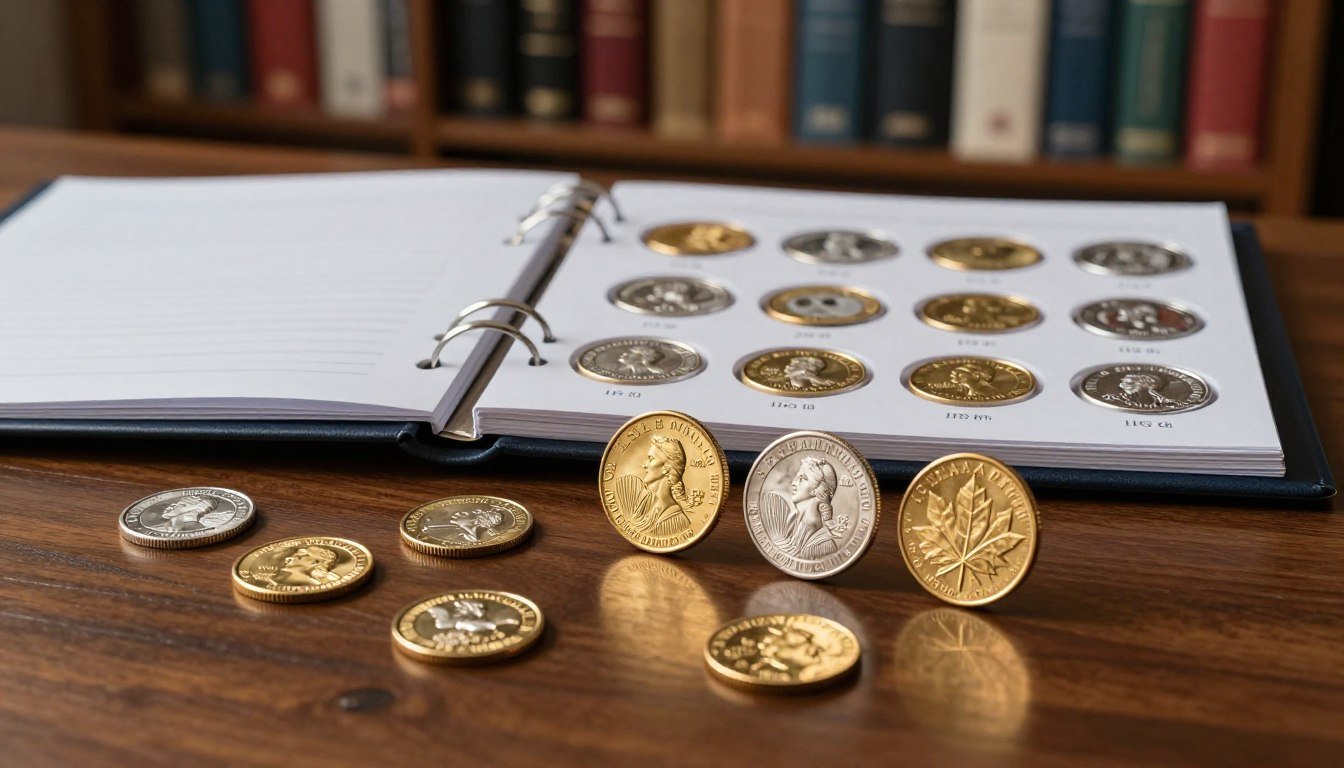
When Clara found an old coin in her father’s toolbox, she thought she’d hit a retirement windfall. She soon learned that sparkle doesn’t equal suitability for an IRA and that some coins can trigger taxes or penalties.
This guide clears the fog. You’ll get a practical list of which physical metals meet the rules for retirement accounts and which popular pieces are actually collectibles that don’t belong in a tax-advantaged plan.
Geared for U.S. investors weighing precious metal options, the piece promises a clear buyer’s roadmap. Expect simple rules, a complete coin list that fits the rulebook, and steps to buy and store metals correctly with a custodian and depository.
Why now? With inflation worries and volatile markets, protecting retirement savings through thoughtful diversification feels urgent. This article stays educational and compliance-first, not a sales pitch.
Key Takeaways
- Learn which physical coins meet eligibility for IRA holdings and why rules matter.
- Avoid costly mistakes by distinguishing collectible pieces from permitted bullion.
- Get an at-a-glance list of every coin accepted for retirement accounts.
- Follow a simple roadmap to buy and store metals with an approved custodian.
- Protect long-term retirement value amid inflation and market uncertainty.
Why gold belongs in retirement accounts right now
Rising prices and rough market swings have many savers asking whether a slice of bullion belongs in their nest egg.
Inflation and dollar uncertainty drive this interest. When stocks fall, some investors turn to precious metals as a different kind of holding. That shift is about resilience, not guaranteed gains.
Safe haven behavior means gold can move independently from equities during stress. Prices still swing, but adding metal can reduce the chance that the whole portfolio drops in sync.
Diversification matters. A mix of stocks, bonds, and physical gold may smooth long-term outcomes and guard retirement value from one-sided risks.
A gold IRA is a self-directed retirement account that holds approved bullion coins or bars in custody instead of only stocks or mutual funds. The tax rules mirror a typical IRA, but custody, storage, and product rules add steps.
- Why consider it now: inflation pressure and volatile market cycles.
- Goal: protection and portfolio balance, not quick gains.
- Next question for investors: which products qualify and how to buy them correctly.
| Reason | How it helps | What to check |
|---|---|---|
| Inflation hedge | Preserve purchasing power over decades | Purity and storage rules |
| Market diversification | Reduces correlation with stocks | Costs and liquidity |
| Long-term value | Alternate store of wealth | Eligible bullion types |
What makes IRS approved gold eligible for an IRA
Clear, simple rules determine which bullion and coins belong in a retirement plan.
The law in plain English
IRC Section 408(m)(3) creates a carve-out: retirement accounts generally may not hold collectibles, but certain coins and bullion that meet specific standards can be allowed.
That relief is conditional. The product must meet purity and custody requirements, and the purchase must follow the same tax and storage rules that apply to other IRA assets.
Minimum fineness and purity standards
IRA-eligible bullion usually must meet minimum fineness levels. A commonly cited threshold is .995 (99.5%) purity for gold bullion.
If a coin or bar falls short, the purchase can fail the test and trigger unwanted tax consequences. Always verify a product’s purity and that it must meet the listed standards.
Coin vs. collectible pitfalls
Not every popular piece qualifies. For example, the South African Krugerrand is often marketed widely but has about 91.67% purity and typically does not meet the usual minimum fineness test.
Think eligibility, not appearance. A rare or pretty coin can be a collectible and thus a bad option for an IRA.
Proof vs. bullion — what to watch
Some proof coins are allowed when the product is explicitly recognized as meeting the required purity. Other proof versions of the same design may be restricted.
Confirm the exact product type, its purity, and that it will be held by an irs-approved depository under a custodian’s control to keep your account compliant.
| Criteria | Why it matters | Example |
|---|---|---|
| Minimum fineness / purity | Ensures bullion meets legal standards | .995 threshold; Krugerrand (91.67%) fails |
| Custodial storage | Prevents personal possession tax issues | Must be in an irs-approved depository |
| Product type | Distinguishes bullion from numismatic collectibles | American Gold Eagle bullion allowed; some proofs checked case-by-case |
If you want extra reading on practical purchase kits or how to hold physical metal in iras, see this review of kits and a detailed guide on buying physical metal for an IRA: free kit review and buying physical gold in an IRA.
Every IRS-accepted gold coin you can hold in a gold IRA
Use this buyer-ready checklist to pick coin series that align with retirement rules and storage needs.
Note: eligibility depends on the specific series and form, not a coin’s general popularity. Confirm exact product details with your custodian before purchase.
American Gold Eagle bullion coins
Cornerstone choice for many IRA holders. They offer strong recognition, liquidity, and steady dealer demand that can narrow price spreads at sale.
American Gold Eagle proof coins
Certain proof issues are accepted, but buyers must confirm the year and packaging with the custodian before adding them to an account.
American Gold Buffalo uncirculated coins
Uncirculated Buffalo coins are allowed. Avoid Buffalo proof versions, which are typically excluded and can cause costly compliance problems.
Canadian Gold Maple Leaf coins
Widely trusted worldwide. These bullion pieces are favored for clear purity and straightforward resale in global markets.
Austrian Philharmonic & Australian Kangaroo/Nugget
These sovereign-mint options complement U.S. pieces and help diversify a precious metal allocation.
Chinese Panda, British Britannia, Queen’s Beasts, Lunar Series
Panda coins and modern British series appear on accepted lists. For Britannia, verify the issue year (many lists cite coins from 2013 onward). Watch for special or limited editions that may be treated as collectibles.
| Coin series | Common form | Key buyer note |
|---|---|---|
| American Gold Eagle | Bullion; select proofs | High liquidity; confirm proof acceptance |
| American Gold Buffalo | Uncirculated only | Avoid Buffalo proofs |
| Canadian Maple Leaf | Bullion | Strong global recognition |
| Britannia / Queen’s Beasts / Lunar | Modern bullion series | Check year and avoid collectible editions |
Bottom line: Pick from this list and you move from guesswork to a clear retirement metals strategy that fits custody and purity rules.
Gold bars and rounds as an IRA option
Bars and rounds give a direct, concentrated route to physical metal exposure inside a retirement account.
When they make sense: Bars and rounds are a smart option when you want simple weight and lower per-ounce premiums. This works best if the pieces come from a NYMEX/COMEX list or a national mint and meet custody rules for an IRA.
What “approved refinery” means in practice: Verify the manufacturer is on recognized exchange or mint lists, keep invoices and assay papers, and use dealers who provide clear chain-of-custody documents for your custodian and depository.
Minimum fineness is non-negotiable. Any bar or round added to an account must meet the stated minimum fineness standards. Don’t assume any shiny piece qualifies.
Practical tradeoffs: coins often sell in smaller units and can be easier to liquidate. Bars concentrate value, which can save on storage and sometimes lower price spreads, but may be harder to sell quickly and need stronger verification against counterfeits.
Choose with balance: weigh price efficiency, resale flexibility, and custody security. Use reputable custodians, vetted dealers, and documented assays so your investment supports long-term retirement value.

How to buy physical gold for a self-directed IRA without breaking IRS rules
Owning physical metal inside retirement savings starts with paperwork, not the shiny piece.
Open the right account
Choose a self-directed IRA that specifically permits physical holdings. This account type gives you legal access to coins, bars, and other approved items under IRA rules.
Pick a qualified custodian
Select a custodian with real precious-metals experience. Confirm the custodian lists fees, custody procedures, and references from other retirement investors.
Fund the account safely
Use contributions, direct transfers, or rollovers to fund the account. Avoid indirect rollovers unless you can complete the move in 60 days to prevent tax penalties.
Direct purchases through your custodian
Tell the custodian which IRA-eligible coins or bullion to buy. Do not buy pieces yourself and then try to add them to the account.
Red flags to avoid
Steer clear of “home storage” pitches and aggressive checkbook-IRA marketing. Those strategies can jeopardize tax status and the account’s protections.
| Step | Action | Key warning |
|---|---|---|
| Open | Establish a self-directed IRA account | Confirm account type allows physical holdings |
| Choose | Select a custodian with metals expertise | Watch opaque fee schedules |
| Fund | Use contribution, transfer, or rollover | Avoid missed 60-day rollover deadlines |
| Buy | Custodian purchases coins/bullion for the account | Never store personal items as IRA assets |
Do it right and the process makes holding physical metal a disciplined retirement investment instead of a risky loophole.
Storage, custody, and distributions: staying compliant from purchase to retirement
Proper storage and custody make the difference between a compliant retirement holding and a costly mistake.
In a self-directed IRA the rules focus on control. Your custodian must hold title and arrange secure storage. Keeping holdings at home can be treated as an improper distribution.
Why you can’t store IRA metal at home
Control matters as much as purity. When an account owner holds physical items, the account loses its separation. That can trigger taxes and penalties.
How a depository model works and what insurance covers
Custodians place metals with a depository under documented chain-of-custody. An irs-approved depository operates audited controls and follows strict requirements for retirement accounts.
Depositories typically carry insurance that covers storage loss and often transit. This protection gives investors security without personal possession.

Taking distributions: cash vs. in-kind and tax basics
At distribution, you can sell assets inside the account and take cash, or request an in-kind distribution and receive physical bullion. Either choice is treated as an IRA event by the custodian.
Traditional distributions are generally taxable, while qualified Roth distributions are generally tax-free. Early withdrawals before 59½ may incur a 10% penalty unless an exception applies.
| Topic | What the custodian/depository does | Investor takeaway |
|---|---|---|
| Control | Holds title and records transactions | Do not hold metals personally |
| Storage | Secure, audited vault with insurance | Better protection than home storage |
| Distribution | Processes sale or in-kind transfer | Expect tax reporting and possible penalties |
Bottom line: follow custody rules, use a qualified custodian and depository, and plan distributions so your retirement value stays protected and compliant.
Costs, risks, and buyer beware tips for gold IRA investors
Before you commit cash, understand the real cost and risk profile that comes with holding bullion inside a retirement account. This section breaks down the practical items that affect returns and compliance.
Common fees: custodian, storage, insurance, and transaction costs
Know the full cost stack. Typical fees include custodian/admin charges, storage and insurance, and transaction spreads when buying or selling.
These fees can erode investment returns over time. Ask for a written schedule of all fees before you move assets into a gold IRA.
Price swings and long-term value
Gold is volatile and does not pay dividends or interest. Returns depend entirely on price appreciation driven by dollar moves, geopolitics, and demand.
Use metal as a portfolio hedge, not a guaranteed return generator. Keep expectations realistic about long-term value.
Liquidity: coins vs. bars
Coins often trade easier with tighter spreads. Bars can offer lower per-ounce premiums but may be harder to sell quickly.
Counterfeit risk is higher for large bars, so verified assays and reputable sourcing matter when liquidity becomes urgent.
How to spot high-commission collectible pitches
Beware sales language that stresses “rare,” “graded,” or “limited” while downplaying purity and standards. Those pitches often carry steep markups and may not qualify for retirement accounts.
Red flag: pushy buyback promises without clear written terms.
Due diligence checklist
- Verify custodian experience, written fees, and client references.
- Confirm depository security, insurance, and chain-of-custody procedures.
- Check dealer buyback policies and ask for purity documentation and assays.
- Get all costs in writing and confirm that chosen coins or bars meet required standards.
Bottom line: disciplined due diligence and clear cost accounting help investors build a retirement-ready position in physical gold that fits portfolio goals and the rules of custodial storage.
Conclusion
Smart decisions — not headlines — make physical metal a practical part of a long-term nest egg.
Not all coins qualify for an IRA, but a clear list of eligible pieces and simple custody rules makes the path actionable. Choose an eligible product, buy through your custodian, and keep holdings in an insured depository to stay inside the rules.
Use the coin list as a shopping filter. Confirm availability and eligibility with the custodian before you order. Balance inspiration with realism: price swings and fees matter, so size positions and hold with patience.
When you respect the IRS structure and follow the right storage and custody steps, physical gold can move from headline risk to a deliberate piece of a retirement strategy built to endure.
FAQ
What coins can I hold in a retirement account that accepts precious metals?
You can hold a selection of government-minted gold coins and certain bullion bars and rounds that meet federal rules. Common options include American Gold Eagle bullion and proof issues, American Gold Buffalo uncirculated pieces, Canadian Gold Maple Leaf, Austrian Gold Philharmonic, Australian Kangaroo/Nugget, Chinese Gold Panda, and British issues like the Britannia, The Queen’s Beasts, and Shēngxiào Lunar Series. Each item must meet purity and form standards to qualify for retirement accounts that permit physical metals.
Why consider adding gold to a retirement portfolio right now?
Gold can act as an inflation hedge and a safe-haven asset when markets wobble. It also provides diversification beyond stocks and bonds, helping reduce overall portfolio correlation. For long-term savers, a measured allocation to precious metals can smooth returns and preserve purchasing power over decades.
How does a gold-held retirement account differ from a typical IRA?
A self-directed retirement account that holds physical metals lets you hold tangible assets rather than only securities or cash. It requires a specialized custodian and secure storage. Rules govern eligible products, custody, and distributions, so the account functions like a traditional IRA in tax treatment but with stricter handling and asset requirements.
What determines whether a coin or bar is eligible for a retirement account?
Eligibility depends on federal rules about purity, form, and issuer reputation. Coins must meet minimum fineness standards and not be treated as numismatic collectibles. Bars and rounds typically must come from recognized refiners or national mints with accepted certifications. Following these standards keeps tax privileges intact and prevents penalties.
What are the minimum fineness and purity standards I should know about?
Eligible items must meet specific minimum purity thresholds—commonly .995 for silver and .999 or .9999 for many gold coins and bars depending on the product. Government-minted coins often exceed these levels. Verify each coin or bar’s stamped purity and manufacturer credentials before purchase to ensure compliance.
Are proof coins allowed, and what’s the difference between proof and bullion?
Proof coins are collectible, high-quality strikes with mirrored fields and frosted design elements. Bullion coins are struck for investment and carry standard purity marks. Some proof coins can qualify if they meet purity and form rules, but many proofs are considered numismatic and may trigger different tax consequences. Choose investment-grade bullion when you want straightforward eligibility.
Can numismatic or collectible coins be used in a retirement metals account?
Rare or collectible coins with significant numismatic premiums are often treated as collectibles and can create tax complications or make an item ineligible. Stick to investment-grade bullion or widely recognized government issues unless you’ve verified eligibility with your custodian and understand tax impacts.
What should I know about buying gold bars and rounds for an account?
Bars and rounds are eligible when they come from recognized refiners or national mints and meet minimum purity standards. Consider tradeoffs: bars often carry lower premiums over spot price but vary in liquidity. Choose well-known refiners approved on major exchanges to reduce counterfeiting risk and improve resale prospects.
How do I buy physical metals for a self-directed retirement account without breaking the rules?
Open a self-directed account that permits precious metals, select a custodian experienced with metals, and fund the account by contribution, transfer, or rollover. Direct the custodian to purchase eligible coins or bullion from reputable dealers. Avoid private buys for “home storage” or schemes that sidestep proper custody and reporting.
Why can’t I store retirement metals at home?
Federal rules require assets held in these retirement accounts to be in secure, third-party custody to preserve tax-advantaged status. Home storage risks loss, theft, and noncompliance, which can trigger taxes, penalties, and disqualification of the tax treatment for that property.
What storage and insurance options are standard for precious metals in retirement accounts?
Custodians use insured depositories or vaults operated by private companies or government mints. Insurance typically covers theft, damage, and loss while in transit or storage. Ask the custodian about coverage limits, policy details, and whether premiums are included in storage fees.
How do distributions work when I hold physical metals in a retirement account?
At distribution, you can liquidate metals for cash or, in some cases, take physical possession depending on account rules and tax implications. Liquidation often makes sense to avoid logistical and tax complexities. Understand tax treatment and early-withdrawal penalties for traditional versus Roth-style accounts before taking distributions.
What fees should I expect with a precious-metals retirement account?
Common fees include custodian setup and annual administration, storage and insurance, transaction and shipping charges, and dealer markups on purchases. Compare fee schedules across custodians and dealers to understand total cost of ownership over time.
How volatile is the price of gold and what does that mean for long-term value?
Prices fluctuate with macroeconomic trends, currency moves, and market sentiment. Short-term swings can be sharp, but over long horizons precious metals often preserve purchasing power. A disciplined allocation and buy-hold approach help manage volatility for retirement horizons.
Are coins easier to sell than bars when I need liquidity?
Popular government-minted coins typically offer better liquidity because dealers and investors recognize them and accept them readily. Large bars may sell at tighter markets but can require verified provenance. Balance liquidity needs with premium costs when choosing form and weight.
How can I spot high-commission pitches or risky numismatic offers?
Watch for aggressive sales tactics, promises of guaranteed high returns, and large markups above spot value for “rare” pieces. Request transparent invoices, compare dealer buyback policies, and verify the dealer’s reputation with independent reviews and industry bodies before you commit.
What due diligence should I do on custodians, dealers, and depositories?
Check licensing, years in business, client reviews, and third-party audits. Confirm the custodian’s metals experience, the dealer’s buyback policy and pricing, and the depository’s security and insurance terms. Make sure all parties provide clear, written agreements explaining fees, custody, and transfer procedures.