
When Elena left her company, she feared a messy transfer that could cost her savings. She sat at her kitchen table with a stack of statements and a phone call to the plan administrator. After a short, clear process, she moved her account into a custodian-held vehicle built for IRS-approved metals and avoided unexpected tax hits.
This guide mirrors that experience. It explains what a 401(k) to custodian-held account is and why “without penalties” depends on following IRS rules precisely.
We will preview two paths—direct transfer and the 60-day indirect path—and focus on lowering tax risk, avoiding timing mistakes, and protecting retirement savings. Expect step-by-step actions, documentation tips for tax records, and clear notes on what qualifies as eligible metals and approved storage.
Fees, spreads, and custodian choice matter more than the idea of owning a metal itself. This guide aims to help you build a resilient portfolio with practical steps, not promises.
Key Takeaways
- Follow IRS rules closely to avoid taxes and penalties.
- Direct transfers are usually simpler and reduce withholding risk.
- Only IRS-approved precious metals and approved storage qualify.
- Track documentation for tax records and plan administrator rules.
- Evaluate fees, spreads, and custodians as long-term value drivers.
Why a 401(k) to Gold IRA Move Can Strengthen Your Retirement Savings
Some savers move a portion of their retirement into tangible assets to lower reliance on stocks and bonds during stress. This is not about quick wins. It is about preserving purchasing power and steady long-term value.
Gold as a hedge against inflation and economic uncertainty
Many investors use gold as a hedge when inflation rises. The goal is to protect purchasing power, not chase short-term gains. That discipline can matter during long retirement horizons.
Portfolio diversification beyond stocks and bonds
Adding precious metals can reduce single-market dependence. A measured allocation complements paper assets inside a typical 401(k) plan. Diversification is risk management, not a full replacement.
The appeal of tangible assets during market volatility
Tangible holdings can feel stabilizing when market volatility spikes. Prices still move up and down, so this is a balanced tool for resilience. The benefits depend on correct execution and approved storage rules.
| Benefit | Why it helps | Key risk |
|---|---|---|
| Inflation hedge | May preserve purchasing power | Price swings can be large |
| Diversification | Reduces dependence on stocks bonds | Allocation must be limited |
| Behavioral guardrail | Encourages long-term discipline | Costs and fees lower net value |
What a Gold IRA Is and How It Works in the United States</h2>
Holding tangible precious metals inside a tax-advantaged account requires a custodian and clear IRS compliance. This structure is commonly called a gold ira and is usually a self-directed iras setup created after the Taxpayer Relief Act of 1997.
A gold ira is an ira account type that permits approved physical precious metals—gold, silver, platinum, and palladium—rather than only paper investments like mutual funds or equities.
A self-directed approach and the key roles
The account owner directs investment choices. A custodian administers the account and handles reporting. A dealer supplies compliant metals. An approved depository provides secure storage.
“The tax benefits depend on following IRS rules for types, storage, and prohibited transactions.”
| Role | Responsibility | Why it matters |
|---|---|---|
| Account owner | Selects investments | Controls allocation and compliance |
| Custodian | Administers and reports | Maintains tax-advantaged status |
| Depository | Stores metals securely | Prevents prohibited personal use |
Note: The label “gold ira” is common, but the account can hold other IRS-approved metals. Not all 401(k) plans allow immediate transfers while you remain employed; learn what to ask your plan administrator next by visiting do you pay tax on a gold.
Before You Start: Eligibility, Timing, and Plan Administrator Rules</h2>
Before you request a transfer, confirm whether your retirement account sits with a former employer or an active workplace plan. That single fact shapes timing, paperwork, and risk.
Former employer 401(k) vs current employer plans
Accounts held by a former employer are often simpler to move. Plans tied to your current employer may block transfers or limit options.
Tip: Check your summary plan description for explicit rules before you call the administrator.
In-service withdrawals and common age requirements
An “in-service withdrawal” lets some workers move funds while still employed. Many plans require age 59½, though years of service or other requirements can differ.
What to ask your plan administrator before requesting rollovers
- Are rollovers permitted from this plan?
- Do you support a direct transfer to an IRA custodian and what forms are needed?
- What are the check issuance, withholding, and distribution timelines in days?
“A short call to your plan administrator often prevents costly timing errors and tax penalties.”
Be proactive. Knowing eligibility and exact process up front empowers you to protect funds and move confidently.
Gold IRA rollover Options: Direct Rollover vs Indirect Rollover</h2>
How the money flows—straight between custodians or through your hands—makes a big difference for taxes and timing.
Direct transfers send retirement funds from your 401(k) custodian straight to the IRA custodian. This path avoids the common withholding pitfall and lowers the chance of triggering taxes or penalties.
Custodian-to-custodian transfers
Path of the money: plan custodian → receiving custodian.
This method reduces handling errors and keeps the process clean for tax reporting.
Indirect moves and the 60-day clock
If your plan issues a distribution to you, the 60-day deadline starts. You must redeposit the amount within those days or the distribution becomes taxable.
Mandatory withholding risk
Indirect rollovers commonly trigger a mandatory 20% federal withholding. If you want a full tax-free transfer, you must replace the withheld portion when you complete the rollover.
| Option | Path | Key risk |
|---|---|---|
| Direct rollover | Custodian → custodian | Minimal withholding, lower tax risk |
| Indirect rollover | Custodian → you → redeposit | 60 days, 20% withheld, possible taxes |
| Practical note | Preferred for most moves | Execute cleanly and keep records |
“The smartest retirement moves are the ones you execute cleanly, with deadlines respected and records preserved.”
Next: a step-by-step checklist will show how to complete a direct transfer without triggering taxes.
How to Roll Over a 401(k) to a Gold IRA Without Penalties
A well-executed transfer begins before any funds move—choose the right custodial partner first. Start with a custodian who shows transparent fees, experience with precious metals, and a clear direct-transfer process. Open the self-directed account and confirm it accepts compliant metals before you request any distribution.
Request the transfer and fund the account
Contact your plan administrator and request a custodian-to-custodian transfer. Ask that checks or wires be titled “FBO [Your Name]” to the receiving custodian. Direct transfers avoid mandatory withholding and cut tax risk.
Buy compliant metals and arrange storage
Select a reputable dealer and place an order that meets IRS fineness rules. Arrange storage with an approved depository—home storage will invalidate tax benefits. Keep shipment audits and deposit receipts.
| Step | Action | Why it matters |
|---|---|---|
| Choose custodian | Verify fees and transfer process | Reduces tax and compliance risk |
| Open account | Confirm precious-metals acceptance | Prevents rejected transfers |
| Fund & document | Wire or check titled FBO; save receipts | Paper trail defends tax reporting |
| Storage & confirm | Use approved depository; audit receipt | Finalizes assets into account |
Finish line: verify the depository audit, confirm metals are booked to your account, and save all confirmations. For more on holding physical metals inside a tax-advantaged account, see can I buy physical gold in my.
IRS Rules That Protect (or Threaten) Your Tax-Advantaged IRA Rollover
IRS rules set the guardrails that keep tax-favored retirement accounts intact or put those benefits at risk. Follow them and your tax status stays secure. Break them and the account can become a taxable distribution with penalties.

Eligible precious metals and fineness standards
Not every bar or coin qualifies. The IRS requires minimum fineness: gold 99.5%, silver 99.9%, and platinum and palladium 99.95%.
Buy only items that meet these standards to avoid accidental disqualification of your assets.
Storage requirements: why home storage is prohibited
IRA-held metals must sit in an IRS-compliant depository. Home storage or personal possession voids the tax benefit.
Approved depositories provide documented custody and receipts that prove the assets remain in the account.
Prohibited transactions and practical examples
- Do not buy metals from yourself or a disqualified person.
- Do not use IRA metals for personal use or loan them to family members.
- Avoid deals with disqualified persons such as certain relatives or business partners.
“Compliance is part of the investment—protect the structure and you protect the savings.”
| Rule | What it means | Consequence if broken |
|---|---|---|
| Fineness standards | Use only IRS-approved metals and minimum purity | Disallowed holdings, possible distribution |
| Storage | Keep metals in an approved depository | Loss of tax-advantaged status, taxes and penalties |
| Prohibited transactions | No self-dealing or personal use | Account disqualification or excise taxes |
Choosing IRS-Approved Precious Metals for Your Gold IRA</h2>
Start with a clear IRS checklist: metal category, minimum fineness, approved form, and secure custody. These four points decide whether a purchase stays tax-qualified or not.
What qualifies: the four eligible categories
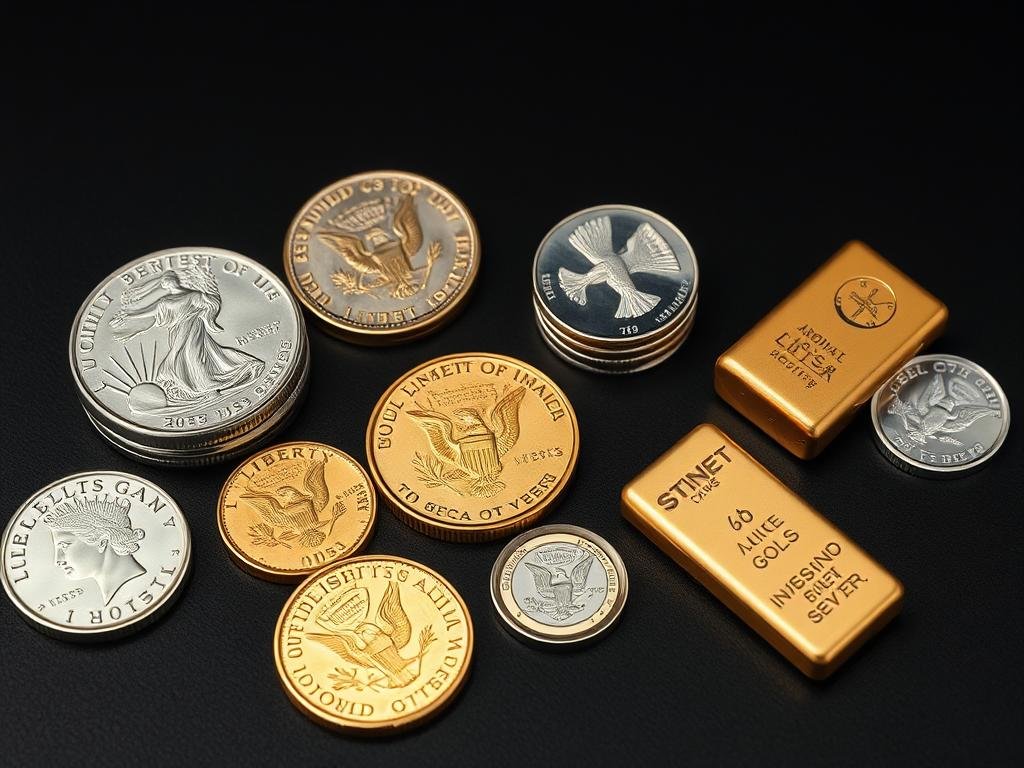
Gold, silver, platinum, and palladium are the approved precious metals when they meet IRS purity rules. Each type can play a different role in a diversified plan.
Common compliant examples and why fineness matters
Well-known coins and bars often qualify, but labels don’t guarantee compliance.
- American Gold Eagles and Canadian Gold Maple Leafs are common qualifying coins.
- Many bullion bars and rounds qualify if they meet the minimum fineness standards.
- Ask your custodian and dealer to confirm the specific product’s eligibility before purchase.
“Fineness is the gatekeeper—buying the wrong product can cost you the account’s tax treatment.”
| Checklist item | Why it matters | Action |
|---|---|---|
| Metal type | Only four categories allowed | Verify with custodian |
| Fineness | IRS sets minimum purity | Check assay or certificate |
| Form & custody | Coin/bar and approved storage required | Confirm dealer and depository |
Goal: own precious metals to support long-term value while keeping the retirement account protected. Coordinate early with the custodian to avoid mistakes.
Storage and Security: How Your Metals Are Held and Insured</h2>
How your metals are stored affects compliance, insurance, and your long-term confidence in retirement holdings. An IRS-approved depository is a licensed facility that provides controlled access, inventory controls, regular audits, and insurance to protect the asset while it remains in the account.
What “secure storage” typically includes
Secure storage means restricted access, chain-of-custody records, and independent audits. Insurance policies cover theft and damage. These practices keep precious metals compliant with tax rules and preserve the value of your investment.
Allocated vs segregated: practical differences
Allocated storage gives you an equivalent metal held on your behalf. Segregated storage keeps your specific bar or coin separate. Segregated often costs more but offers exact-item control.
| Type | Cost & Logistics | Peace of Mind |
|---|---|---|
| Allocated | Lower fees, simpler handling | Good for standard accounts |
| Segregated | Higher fees, specific tracking | Best if you want exact bars/coins |
Ask your custodian for written proof of storage arrangements, audit reports, and insurance details. These documents make the process traceable and protect retirement assets.
“How metals are held matters as much as which metals you buy.”
Choosing the Best Gold IRA Custodian for a Self-Directed IRA</h2>
Picking the right custodian is the single biggest step that shapes how smoothly your self-directed account will run. A knowledgeable custodian reduces paperwork errors and keeps your investments compliant with IRS requirements.

Reputation and experience with precious metals accounts
Look for years in operation, specialization in precious-metals accounts, and a clean complaint history. Banks, trust companies, or specialized firms can all serve as custodians.
Compare setup, annual, transaction, and storage pass-through costs
Transparent pricing matters. Ask for a written fee schedule covering account setup, annual administration, transaction processing, and any storage pass-throughs to depositories.
Customer support that prevents process and compliance errors
Good support answers timeline questions, explains how purchases are authorized, and supplies tax-ready documentation. These services help investors avoid costly mistakes during a transfer.
| What to ask | Why it matters | Expected answer |
|---|---|---|
| Funding timeline | Affects deadlines | Typical wire/check days |
| Purchase authorization | Controls order flow | Written procedures |
| Storage proof | Compliance record | Depository receipts/audits |
The best custodian helps you stay compliant while building a sustainable retirement plan. Choose one that offers clear processes, solid experience, and responsive support so your account moves forward with confidence.
Traditional IRA vs Roth IRA for Precious Metals: Tax Outcomes to Consider</h2>
Deciding between a traditional ira and a roth ira changes when taxes are paid and how distributions affect your retirement plan. The choice does not change the physical investments you may hold inside the account; it changes tax timing and required distributions.
Traditional: potential tax deduction and tax-deferred growth
A traditional ira can offer a tax deduction on contributions if you meet income and participation rules. Earnings grow tax-deferred until you take distributions.
At distribution, withdrawals are taxed as ordinary income. Required minimum distributions begin at age 73 and shape long-term planning.
Roth: after-tax contributions and tax-free qualified withdrawals
A roth ira is funded with after-tax money. Qualified withdrawals—typically after age 59½ and meeting the five-year rule—are tax-free.
Roth accounts have no RMDs during the owner’s lifetime, which gives more flexibility for estate and retirement planning.
Withdrawals, early distribution penalties, and planning
Early withdrawals before 59½ often trigger a 10% penalty plus tax on taxable amounts unless an exception applies. This rule applies to both iras when funds are taken improperly.
Match the account type to your expected tax bracket in retirement and consult a qualified tax professional for personalized guidance.
“Choose the wrapper that aligns with your long-term tax and distribution goals.”
Costly Mistakes Investors Make During a Gold IRA Rollover</h2>
Simple timing mistakes can turn a planned transfer into a costly tax event. Missing a deadline or buying the wrong product often causes the biggest damage.
Missing the 60-day window on an indirect rollover
Failing to complete an indirect rollover within 60 days converts the distribution to a taxable event. That can trigger income tax and early-withdrawal penalties.
Also, mandatory 20% withholding on distributions creates a funding gap you must replace to finish a full transfer.
Buying unapproved metals that can jeopardize account status
Not all coins or bars meet IRS standards. Purchasing noncompliant precious metals risks losing tax-advantaged status.
Always confirm product eligibility with your custodian before you buy.
Overlooking hidden fees and spreads that erode long-term value
Dealer premiums, custodian charges, storage pass-throughs, and wide spreads can quietly shave returns. Repeated fees matter more over decades than one headline price.
“Verify before you buy, document every step, and prioritize compliance over quick gains.”
| Common Error | Immediate Cost | Long-Term Effect |
|---|---|---|
| Missed 60-day deadline | Taxable distribution + penalties | Permanent loss of retirement value |
| 20% withholding gap | Insufficient funds to complete transfer | Out-of-pocket replacement reduces savings |
| Unapproved metals | Account disqualification risk | Tax bills and compliance headaches |
| Hidden fees & spreads | Lower net purchase power | Compounded erosion of value over years |
Practical habit: verify eligibility, confirm fees in writing, and keep clear records. The goal is not just owning precious metals — it is owning them inside a compliant, efficient structure that strengthens retirement outcomes.
Conclusion</h2>
Finish strong: follow the right steps and the move preserves tax benefits and long-term value. With a direct transfer, a reputable custodian, and an approved depository, you reduce withholding and penalty risk.
Why it matters: a measured allocation to tangible metals can diversify your portfolio and support retirement savings against volatility and inflation.
Compliance is the foundation — verify IRS fineness standards, approved storage, and avoid prohibited transactions. Gather plan rules, compare custodian fees and support, then request a custodian-to-custodian transfer to move funds cleanly.
Next step: act calmly and deliberately. Protect your assets, document every step, and build a resilient retirement investment that stands the test of time.
FAQ
What is the difference between a direct custodian-to-custodian transfer and an indirect rollover from a 401(k) to a precious metals IRA?
A direct transfer sends funds straight from your former employer plan to the custodian of your self-directed account, avoiding withholding and tax risk. An indirect rollover gives you funds first and requires redeposit within 60 days; missing that window can trigger taxes and penalties and a mandatory 20% withholding if the plan paid you directly.
Which types of precious metals qualify for tax-advantaged retirement accounts under IRS rules?
The IRS accepts certain gold, silver, platinum, and palladium coins and bars that meet fineness standards. Typical compliant items include American Eagles and certain bullion bars from accredited refiners. Confirm fineness and product eligibility with your custodian and dealer before purchase.
Can I keep purchased metals at home or in a personal safe?
No. IRS rules prohibit personal possession for tax-advantaged accounts. Metals must be held by an IRS-approved depository or approved trustee in secure, insured storage to maintain the account’s tax status.
How do I choose a reputable custodian and dealer for a self-directed precious metals account?
Look for custodians with demonstrated experience handling precious metals IRAs, clear fee schedules, and strong client service. Choose dealers who provide transparent pricing, third-party assay documentation, and delivery to approved depositories. Read reviews and verify independent accreditation.
What fees should I expect when moving retirement savings into metals-based holdings?
Common charges include account setup and annual custody fees, transaction or dealer markups, storage pass-throughs, and depository handling or audit fees. Compare total cost projections, not just one line item, to understand long-term impact on savings.
How can I complete a transfer without incurring early withdrawal penalties or taxes?
Use a direct rollover or trustee-to-trustee transfer. Verify your former plan administrator will send funds directly to your new custodian. Document each step and keep records showing funds moved between qualified accounts to avoid reporting errors and penalties.
What are the risks of doing an indirect rollover and how can I mitigate them?
The main risks are missing the 60-day redeposit deadline and losing the 20% withheld by your plan, which becomes taxable if not replaced. Mitigate risk by requesting a direct transfer, working closely with both administrators, and planning timing around bank holidays and processing windows.
Are distributions different if I use a traditional versus a Roth precious metals account?
Yes. Traditional accounts generally offer tax-deferred growth with taxable withdrawals later, while Roth accounts use after-tax contributions and qualified withdrawals are tax-free. Each choice affects future tax liability and required minimum distribution rules.
How do storage options like allocated versus segregated affect security and cost?
Allocated storage assigns specific bars or coins to your account but may be pooled with other clients’ holdings; segregated storage keeps your items separate. Segregation often costs more but offers clearer chain-of-custody and reduced counterparty risk.
What documentation should I get when purchasing metals inside a retirement account?
Obtain purchase invoices showing date, serial numbers (if applicable), product fineness, assay certificates, and depository receipts. Keep custodian transfer paperwork and audit confirmations to support tax filings and compliance reviews.
Can I transfer a current employer 401(k) into a self-directed precious metals account while still working?
In-service rollovers depend on your plan’s rules and age requirements. Some plans allow in-service distributions at certain ages or circumstances. Ask your plan administrator for options and restrictions before initiating any move.
What common mistakes cause investors to lose tax-advantaged status when moving funds to physical assets?
Common errors include buying noncompliant products, holding metals personally, missing the 60-day deadline on indirect transfers, and failing to follow custodian instructions. Working with experienced custodians and following IRS guidelines prevents these issues.
How often should I review my portfolio after adding physical metals for diversification?
Review allocation annually or after major market events. Measure performance, rebalance to target allocations between equities, bonds, and tangible assets, and reassess costs and storage arrangements to keep your retirement plan aligned with goals.
If my former plan withheld 20% during an indirect distribution, how can I avoid taxes on that amount?
To avoid taxes, you must replace the withheld amount from other funds when completing the rollover within 60 days, effectively rolling over the full distribution. Otherwise, the withheld portion may count as a taxable distribution and possibly an early withdrawal.