
Picture this: a neighbor in Ohio slid a small gold coin across my kitchen table and asked if it was the one thing that would save his savings. He’d just closed a CD and felt uneasy about rising costs and shifting yields.
That moment matters: many U.S. investors ask the same question—can gold protect purchasing power or should they choose income-generating options?
This article promises a clear buyer’s guide. By the end, you can compare gold to I Bonds, TIPS and short Treasuries, cash vehicles, REITs, commodities, and select energy deals using a repeatable framework.
We define an inflation hedge in portfolio terms: preserving purchasing power, lowering volatility, and improving real outcomes—not a guarantee of no losses. Our data-driven approach uses late-2025 U.S. yield anchors and translates them into practical choices for 2026.
The core tension is simple: gold can shine in uncertainty but yields and after-tax real return matter more in a rate-aware year. This guide helps investors build portfolios that work across different inflation and interest-rate paths.
Key Takeaways
- Learn a repeatable framework to compare gold and alternatives.
- Understand what protecting purchasing power truly means.
- See how yield, taxes, and volatility shape real returns.
- Preview contenders: I Bonds, TIPS, cash options, REITs, and commodities.
- Get clear next steps based on income, safety, or growth goals.
Why inflation still matters to U.S. investors heading into 2026
Price rises quietly chip away at what your paycheck buys each month. When groceries, services, and rent climb, purchasing power falls and everyday choices change. That metric — what your dollar will buy next month — matters more than account balances alone.
Money parked in low-yield accounts can lose value even if the nominal balance sits still. For many savers, savings feel safe but are not protected when real costs rise.
Fixed income can disappoint when yields lag price gains. Lower-than-expected returns from bonds prompt some investors to rotate into Treasuries as rising rates make them relatively attractive. That rotation adds market volatility.
Higher borrowing costs also cool big-ticket demand — homes and autos see fewer buyers when interest rates climb. The result: sectors shift, earnings forecasts wobble, and investors face choppy markets.
- Why it matters: protecting purchasing power is planning for several scenarios, not a single bet.
- Practical take: build portfolios that tolerate spikes and slow burns alike.
| Impact | Real-world sign | Who feels it | Investor response |
|---|---|---|---|
| Loss of purchasing power | Higher grocery and rent costs | Households and retirees | Shift to income or inflation-linked assets |
| Weak real savings | Low bank yields vs. price growth | Savers with cash holdings | Consider higher-yield cash or short bonds |
| Market volatility | Rotations into Treasuries | Equity investors | Rebalance and diversify across income sources |
What makes a great inflation hedge in 2026
A useful inflation defense starts by asking what you want: steady cash flow, price gains, or both.
Income that can rise with prices matters because coupons, rent, and some distributions adjust over time. Assets that pay and reset with cost measures tend to protect purchasing power more reliably than those that only hope for price appreciation.
Income that rises vs. price-only gains
Some instruments deliver rising income (CPI-linked coupons, rental streams). Others depend on market value moves (precious metals, some commodities).
Correlation and rate sensitivity
A good hedge should move for a reason when inflation rates change, not just during panic. Also watch interest rates: higher policy rates can cut bond prices and drag down assets that look like inflation plays.
Liquidity, costs, and real protection
Protection is a spectrum: stability, inflation linkage, crisis ballast, or long-term value. Consider liquidity and implementation costs, including after-tax costs. A hard-to-sell position or high fees can erase nominal gains.
| Trait | Income-linked | Price-only | Practical note |
|---|---|---|---|
| Typical payout | Rents, CPI coupons | Market appreciation | Income aids cash flow; price gains need timing |
| Correlation to inflation rates | High | Variable | Look for structural links to prices |
| Interest-rate sensitivity | Medium (depends on duration) | High for long-duration assets | Rising rates can hurt nominal value |
| Liquidity & costs | Medium — varies by market | High to low — storage or trading fees | Prefer accessible instruments with low fees |
Practical takeaway: the best option is often a blend that balances adjustable income, inflation linkage, and optionality within your overall portfolio.
Inflation hedge 2026: the scorecard we’ll use to compare gold and alternatives
We need a practical way to compare protections so investors can act with confidence.
The scorecard below is designed to be reused. It weighs the things that matter most when prices or rates surprise: what you keep after costs, how an asset behaves in stress, and how it fits alongside stocks, bonds, and cash.
- Real return potential — net gains after inflation, tax, and fees.
- Reliability under stress — drawdowns and timing risk during shocks.
- Diversification value — how the asset moves next to stocks, bonds, and cash.
- Liquidity & complexity — ease of buying, selling, and managing.
- Tax & fee drag — real costs that shave long-term outcomes.
Real return means exactly this: the money left to fund your lifestyle after price rises, taxes, and fees are deducted. That simple concept drives the scorecard.
Drawdowns matter. Even strong long-term protections can suffer brutal short stretches. The scorecard flags typical holding periods needed to reach the stated benefit and highlights whether timing risk is high or low.
Finally, the “sleep-well-at-night” factor judges whether an average investor can hold the position through volatility without panic-selling. Use this style for each asset: what it does well, where it fails, who it suits, and how to buy it.
For background on fiscal and debt signals that shape stress scenarios, see a recent debt and fiscal warnings.
Gold in 2026: where it shines and where it disappoints
Gold often resurfaces as a go-to safe asset when markets wobble and headlines turn grim. Investors buy it for crisis comfort and for diversification when confidence in policy or markets dips.
Safe-haven demand and stress periods
When uncertainty peaks—market shocks or geopolitical tensions—gold tends to rally as traders seek perceived refuge. That reaction is psychological and liquidity-driven. Results vary by timeframe: spikes can be short-lived.
The zero-yield tradeoff
Gold pays no interest payments or rental income. Your return depends on price moves and timing, not coupons or rent.
How to buy and what it costs
- Physical: storage, insurance, and dealer spreads add costs but offer tangible ownership.
- ETFs: lower friction, trading convenience, and modest fees—but no physical delivery unless you redeem.
Practical role: gold can add diversification and crisis ballast, but it is a store of value, not a regular income source. Decide if you want a short-term hedge, long-term insurance, or speculative upside—and keep allocations modest within a diversified portfolio.
I Bonds: inflation-linked protection with a real 2026 data point
When you want steady, built-in protection for cash, some government issued products stand out. I Bonds are purpose-built for preserving purchasing power and suit conservative savers and investors who value stability over speculation.
How they work
I Bonds combine a fixed rate that stays with the bond and an adjustment tied to price changes that resets every six months. That structure links returns to measured price moves while keeping a steady baseline return.
What the numbers look like
I Bonds issued from November 2025 through April 2026 carried a 0.90% fixed rate plus a 3.12% semiannual adjustment, producing a 4.03% composite yield (Matthew Frankel, CFP; updated Dec 18, 2025). Use this real data point to set expectations for returns on similar issues.
Buyer’s guide
Consider access limits, required holding periods, and early-withdrawal rules. There are annual purchase caps and a minimum one-year lock. Cash needs within a year make I Bonds less suitable for emergency funds.
- Who they suit: conservative investors who want principal stability and linked returns.
- Trade-off: predictable payments vs. the upside potential of price-only plays.
“I Bonds are designed to pay you; gold requires price appreciation to pay you.”
Action step: Decide whether I Bonds belong in core protection money, a rate-aware cash bucket, or longer-term savings, and check purchase limits at TreasuryDirect before allocating.
TIPS and short-term Treasuries: rate-aware inflation defense
For investors who want yield that tracks price moves, Treasury Inflation-Protected Securities are a direct, rate-aware option.
How TIPS adjust principal
TIPS link principal to CPI: the principal rises with measured price changes and coupons scale with that adjusted principal. That design helps part of your bond allocation keep pace with real cost changes.
What TIPS do well and their tradeoffs
They tie income to price measures, not to guesswork about nominal yields. But TIPS still move with real yields. Taxes on inflation adjustments can bite unless held in tax-advantaged accounts.
Short-term Treasuries and rate flexibility
Short maturities cut price sensitivity when interest rates climb. With the one-year Treasury near 3.65% in late 2025, short-term Treasuries offered meaningful safe yield for those who value liquidity and lower volatility.
| Tool | Primary benefit | Key tradeoff |
|---|---|---|
| TIPS | Direct CPI linkage; protects real returns | Sensitive to real yields; tax on adjustments |
| Short-term Treasuries | Lower price risk; liquidity | Less protection if prices jump sharply |
| Combined approach | Balance of linkage and flexibility | Requires active allocation and monitoring |
Implementation ideas: ladder maturities, use Treasury ETFs for convenience, and pair with I Bonds for long-term core protection vs. short-term cash needs.
Choice guide: pick TIPS for explicit inflation linkage, short Treasuries for rate-response and liquidity, or blend both to steady portfolio value over time.
Cash, CDs, and money market accounts when rates are elevated
When short-term yields climb, holding cash becomes a deliberate choice, not a default.
Higher yields make liquid balances an active part of portfolio planning. As of November 2025, reputable banks offered savings interest around 3.5% or more, so many investors treated cash as a legitimate competitor to risk assets.
When cash-like tools help
Use them for: emergency reserves, near-term bills, dry powder for buying dips, and peace of mind during market swings.
Compare the options
- High-yield savings: flexible access and variable rates.
- CDs: locked rates and certainty for a fixed period.
- Money market accounts/funds: liquidity with competitive yields.
| Tool | Liquidity | Typical benefit |
|---|---|---|
| High-yield savings | High | Easy access; competitive short-term returns |
| CDs | Low (fixed term) | Rate lock; higher yield if you accept time constraint |
| Money market | High | Institutional-style yields; easy transfers |
Buyer’s checklist: match liquidity to need, confirm FDIC/NCUA coverage, check rate terms, and plan how quickly you can move money when opportunities arise.
Balance is key: cash protects timing and reduces short-term risk, but too much can weaken long-term growth after prices rise. Treat cash as a strategic sleeve, not a permanent home for all savings.
Real estate and REITs as an inflation hedge through rental income and values
Property can protect purchasing power by converting higher costs into stronger rental income and asset values. Rents tend to climb over time with price pressure, which supports cash flow and helps sustain property values.
How that works: commercial and residential landlords raise leases as costs rise, so growing rental income can reinforce valuations for owners and for funds that own buildings.
REIT logic for everyday investors: listed funds translate property cash flow into tradable shares. A simple index option is Vanguard Real Estate ETF (VNQ), which gives broad real estate exposure without landlord duties.
Watch interest-rate sensitivity: REIT share prices can lag when interest rates climb, even if underlying rents improve. That volatility matters for investors who need near-term liquidity.
| Choice | Pros | Cons |
|---|---|---|
| REITs (VNQ) | Liquidity, low workload | Rate-sensitive share moves |
| Direct property | Control, potential tax advantages | Higher work, lower liquidity |
| Combined | Balance of income and access | Requires monitoring |
Tax angles: depreciation and deductible expenses can cut taxable net income, but after-tax results vary by structure and holding period.
“Pick the real estate lane that matches your time, tolerance for hands-on work, and need for liquidity.”
- Passive exposure: VNQ or similar ETFs.
- Active ownership: expect management, financing, and local market work.
- Decision guide: choose based on liquidity needs, time commitment, and whether you want control or a simpler investment vehicle.
Commodities beyond gold: broad exposure to inflationary periods
Commodities often lead when real-world costs accelerate, offering exposure beyond what gold alone can deliver. These markets tie directly to physical demand and replacement costs. That link can create divergent moves from stocks and bonds during inflationary periods.

Why commodity-linked businesses can outperform when prices run hotter
Companies that mine, process, or transport raw materials can see revenue climb as underlying prices rise. Tight supply, higher replacement costs, and sudden demand shocks push earnings up faster than many paper assets.
Real performance snapshot
The SPDR S&P Metals & Mining ETF (XME) gained 13% in 2022 while the S&P 500 returned -18% (Matthew Frankel, CFP; updated Dec 18, 2025). That contrast shows how commodity-linked exposure can behave very differently in stress.
Hard vs. soft commodities and drivers
Hard commodities (metals, energy) respond to industrial cycles and replacement-cost dynamics. Soft commodities (agriculture) react to weather, planting decisions, and inventory changes. Geopolitics and transport disruptions can affect both.
Portfolio role and implementation
- Commodities add diversification but carry high volatility and cyclicality.
- Implementation: broad commodity ETFs, sector ETFs, or selective commodity-linked equities.
- Size positions modestly and rebalance to capture returns without blowing up risk budgets.
“Commodities can be powerful in inflationary periods, but expect bumps and discipline in sizing and rebalancing.”
Oil and gas vs. gold in 2026: income, inflation linkage, and tax angles
Energy deals often pitch a “triple advantage”: commodity appreciation, monthly income, and tax benefits. This is a buyer’s guide comparison, not a promise.
The “triple advantage” explained
Commodity upside means returns can rise with oil and gas prices, unlike gold which relies solely on price moves.
Monthly income refers to cash distributions that historically fall in an ~8%-15% annual cash-on-cash range. Expect wide variability based on commodity demand, decline curves, and operator execution.
Tax benefits cited for 2026 include 100% deduction of Intangible Drilling Costs (IDC) and accelerated/bonus depreciation for Tangible Drilling Costs (TDC). These rules can boost after-tax income and change how yields compare to other assets.
Who this suits and access limits
This lane favors accredited investors. Typical minimums run roughly $50,000–$500,000. These deals are illiquid and operationally complex, so cap exposure to avoid concentration risk within a wealth plan.
Due diligence checklist
- Operator track record — look for delivery history and aligned economics.
- Production history — decline curves and reserve audits matter.
- Basin quality — geology and infrastructure affect costs and output.
- Cost structure & waterfall — fees, carried interest, and payout priority determine realized income.
- Reporting cadence — regular, transparent statements reduce surprise risk.
- Alignment — incentives should favor investors, not just sponsors.
“Gold is liquid and simple with zero yield; oil and gas can pay monthly but bring illiquidity and operational risk.”
| Feature | Gold | Oil & Gas |
|---|---|---|
| Income | None | Potential monthly distributions (8%-15% range) |
| Liquidity | High | Low to medium |
| Tax profile | Simple (capital gains) | Complex (IDC/TDC benefits) |
Practical takeaway: use energy investments as a tactical sleeve if you can accept concentration and perform deep due diligence. For simple, liquid protection, gold remains easy to own but offers no cash flow. Seek tax and legal advice before making large investment decisions in either lane.
Stocks that can fight inflation through pricing power and essentials demand
Certain stocks offer a defensive edge by keeping margins intact as prices climb.
Pricing power means a company can pass higher costs to buyers without losing sales. Look for strong brands, sticky contracts, and limited competition. Those traits let firms protect margin and steady cash flow.
Pricing power: passing higher costs through without losing customers
Signs of real pricing power include steady gross margins, repeat customers, and the ability to raise list prices gradually. Durable margins hint that management can protect value even as input prices rise.
“Things people need” sectors: utilities, consumer staples, and insurance
Utilities, consumer staples, and insurance supply essentials that keep demand stable. These sectors often show resilience when consumers cut discretionary spending.
Balance-sheet strength when interest rates are high: why cash-rich companies can win
High borrowing costs punish weak balance sheets. Cash-rich, low-debt firms can fund growth, buy back shares, or weather slow patches. That flexibility helps them gain market share when rivals struggle.
Screening cues for investors include margin stability, free cash flow, debt maturity schedules, and disciplined capital allocation. These metrics help spot stocks that may protect real value and support long-term growth.
“Quality equity selection complements inflation-linked bonds and real assets; it does not replace them.”
| Trait | Why it matters | What to check |
|---|---|---|
| Pricing power | Preserves margins | Stable gross margin history |
| Essential demand | Revenue resilience | Low sales volatility |
| Strong balance sheet | Survives rate shocks | Low net debt, ample cash |
Building an inflation-resistant portfolio for 2026
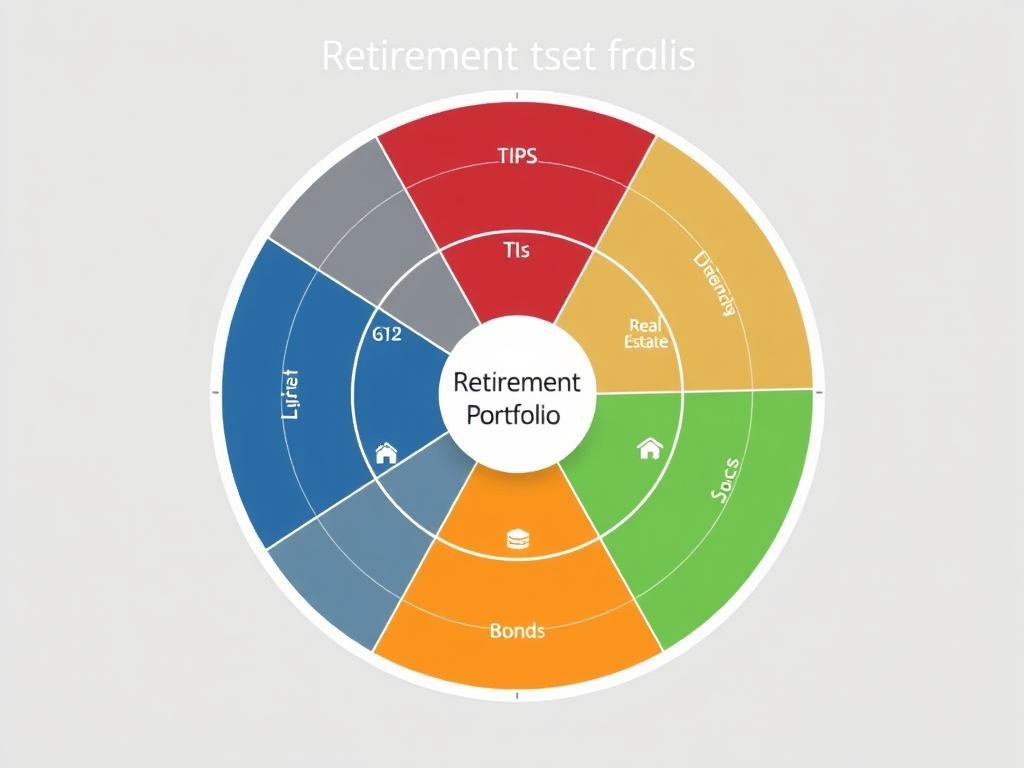
Think of asset sleeves that each serve a clear job: preserve, produce, or grow. That simple structure helps you combine I Bonds, TIPS, real estate, commodities, and quality stocks into a coherent portfolio.
Asset allocation ideas that blend protection, real assets, and growth
Core protection sleeve: I Bonds, short Treasuries and TIPS to anchor real returns and reduce volatility.
Real-asset sleeve: a mix of real estate (REITs and select property exposure) and commodities to capture price-linked upside.
Quality growth sleeve: stocks with pricing power and strong balance sheets to preserve purchasing power over time.

Mixing traditional and alternative investments for diversification and resilience
Combine assets so that stocks bonds moves don’t dominate outcomes. Alternatives often behave differently when rates shift, which improves diversification.
Small allocations to commodities and estate real assets can offset equity drawdowns and add real cash flow or replacement-cost exposure.
Rebalancing rules when markets rotate or rates change
Rebalance on clear thresholds, not emotion. Trim what surged and add to what lagged. Typical triggers: a 5–7% allocation drift or quarterly reviews.
If inflation rises or rates climb, shorten duration in bonds, reduce REIT sensitivity, and review commodity sizing to limit volatility.
Action checklist:
- Write a written allocation plan and define rebalancing triggers.
- Keep cash as a tactical buffer and opportunity fund, not a permanent home.
- Monitor how assets react to rate moves and update sizing rules.
“Document the plan, follow the triggers, and let process beat panic when markets rotate.”
| Sleeve | Example assets | Primary role |
|---|---|---|
| Core protection | I Bonds, TIPS, short Treasuries | Preserve real value, low volatility |
| Real assets | REITs, direct estate, commodities | Price linkage, income, diversification |
| Quality growth | Pricing-power stocks, cash-flow businesses | Long-term growth and inflation resilience |
Risks, taxes, and decision support before you buy
Every protection comes with trade-offs; know what you pay for before you allocate capital. Assess the true cost: volatility, fees, illiquidity, and the time you must hold an asset to realize its benefit.
Market swings and liquidity limits
Volatility can erase paper gains fast. Commodities and crypto-like investments often move sharply, which hurts portfolios sized beyond a clear plan.
Liquidity risk matters. Estate holdings, some commodity positions, and private deals can be hard to exit without taking a haircut. That limits your flexibility when markets turn.
Policy shifts that reshape after-tax returns
Tax rules change outcomes. Gold, REIT dividends, bond interest, and private energy deals all face different tax treatments that alter net returns.
Regulatory updates or new guidance can flip a favorable structure into a costly one overnight. Build scenarios that stress-test tax and rule changes over time.
Decision checklist and when to call a pro
Before you commit, run a short checklist:
- What you’re buying and how it earns.
- How it’s taxed and your likely after-tax returns.
- How you exit and expected liquidity timing.
- What you can lose and how long you can wait.
- What to monitor weekly or quarterly.
Seek tax or legal advice for complex assets, large allocations, accredited-only offerings, or when a specific tax outcome drives the thesis. A professional can model after-tax scenarios and clarify legal risk.
Practical next step: document the answers to these questions, then compare options on a net-return and liquidity basis. For more on planning and adjustment, see how to adjust for inflation in.
| Risk | Typical vulnerable assets | Mitigation |
|---|---|---|
| Volatility | Commodities, crypto-like assets | Limit sizing; use stop rules; rebalance |
| Liquidity | Private deals, direct estate holdings | Keep buffer cash; stagger exits; use shorter maturities |
| Tax & policy | REITs, energy partnerships, bonds | Model after-tax returns; consult advisor |
Conclusion
Not every protection fits every goal—start by matching tools to needs, not headlines.
Gold can serve as crisis ballast or long-term value, but it is not the single best answer for all outcomes. Income-linked and CPI-linked instruments often deliver steadier real results once you include taxes, fees, and interest-rate risk.
Scorecard summary: income matters, interest and rates matter, and after-tax real returns matter most. I Bonds and TIPS give direct linkage. Short Treasuries and cash tools buy flexibility. Real estate offers rent-linked dynamics. Commodities add price exposure.
For advanced investors, oil and gas deals can add monthly income and tax benefits but demand deep due diligence and tight sizing.
Simple action plan: pick 1–2 core protections, add one diversifier, set rebalancing rules, and follow the process over predictions. Revisit allocations as prices, inflation, and your life time horizon change.
Perspective: price pressure is a force, not a verdict. Investors who build resilient portfolios protect wealth and keep moving toward goals. Use this buyer’s guide to keep allocations aligned with real needs, not fear.
FAQ
Is gold still a reliable store of value compared with real estate, stocks, and bonds?
Gold can protect purchasing power during geopolitical turmoil and severe market stress, but it pays no interest or rental income. Real estate and certain stocks offer rising cash flow that can outpace price-only appreciation. A balanced approach—mixing physical gold or gold ETFs with income-producing assets like rental property, dividend-paying stocks, or TIPS—gives better protection for both value and income.
How does rising prices affect savings and fixed-income holdings?
When prices climb, cash and fixed-rate bonds lose purchasing power. Short-duration Treasuries and Treasury Inflation-Protected Securities (TIPS) adjust to help preserve real returns. I Bonds combine a fixed rate with a semiannual adjustment tied to CPI, making them useful for savers who want predictable, inflation-linked income.
What should investors look for in an effective inflation defense?
Focus on income that can rise with prices, low sensitivity to interest-rate swings, and reasonable liquidity and costs. Evaluate after-tax real returns, drawdown risk, and how an asset complements stocks, bonds, and cash in your portfolio. Diversification across real estate, commodities, quality equities, and inflation-linked bonds reduces concentration risk.
Are I Bonds a practical option right now and how do they work?
I Bonds are issued by the U.S. Treasury and pay a composite rate combining a fixed coupon and a semiannual inflation adjustment. They suit conservative investors seeking protection without market price volatility. Consider purchase limits, a one-year minimum holding, and penalties for early redemption within five years when matching them to your goals.
How do TIPS differ from short-term Treasuries for inflation protection?
TIPS adjust principal with CPI, so coupon payments rise with inflation; they help preserve real principal. Short-term Treasuries carry less price volatility when rates rise and can offer attractive nominal yields, making them a choice for investors prioritizing stability over inflation indexing.
When do cash, CDs, or money market accounts make sense during higher rates?
Elevated yields can turn cash into an active allocation rather than a drag. High-yield savings, short-term CDs, and money market funds provide liquidity and meaningful nominal returns, useful as a defensive sleeve while you wait for buying opportunities or as part of a laddered income strategy.
Can real estate and REITs keep pace with rising consumer prices?
Rents often track inflation over time, giving direct property owners rising income and potential capital appreciation. REITs offer easier access and liquidity for everyday investors—Vanguard Real Estate ETF (VNQ) is a common example—but REIT share prices can lag when interest rates climb due to financing costs and yield compression.
What are the trade-offs between direct rental properties and REITs?
Direct ownership provides control, leverage benefits, and tax tools like depreciation, but requires hands-on management and has liquidity limits. REITs provide diversification, professional management, and instant exposure with lower operational burden, though they expose investors to stock-market volatility.
How do commodities and energy assets compare to gold for protecting portfolios?
Broader commodities and energy businesses often benefit directly from price inflation because they link to raw-material demand and supply constraints. Oil and gas can offer commodity upside plus cash distributions and tax advantages for certain structures, but they bring higher volatility and operational risk compared with bullion.
Which sectors of the stock market tend to perform better during price rises?
Companies with strong pricing power and essential-demand businesses—utilities, consumer staples, and insurance—tend to hold margins and pass costs to customers. Firms with robust balance sheets and high cash reserves also withstand higher interest rates better than leveraged peers.
How should I build a portfolio that resists purchasing-power erosion?
Blend inflation-linked instruments (I Bonds, TIPS), real assets (real estate, commodities), and quality equities that generate cash flow. Rebalance periodically, maintain liquidity for opportunities, and set allocation bands that reflect your time horizon, risk tolerance, and tax situation.
What tax and regulatory issues should investors consider with alternatives like oil, gas, and real estate?
Alternative assets often have complex tax treatments—depreciation, IDC deductions, and passthrough structures can change after-tax returns. Regulatory shifts and state rules can affect profitability. Always review tax implications and seek professional legal or tax advice for large or illiquid investments.
How do interest-rate movements alter the effectiveness of different inflation defenses?
Rising rates typically pressure long-duration assets and REIT share prices, while improving yields for cash and short-term bonds. Inflation-linked securities and income-producing real assets tend to fare better over time, but timing risk and drawdowns mean diversification and disciplined rebalancing remain essential.
What practical steps should an everyday investor take today to protect wealth?
Audit your portfolio for exposure to cash, long-duration bonds, and non-inflation-linked assets. Add a mix of short-term Treasuries or high-yield cash vehicles, inflation-protected bonds, real estate exposure via REITs or rental property, and a modest allocation to commodities or energy where suitable. Prioritize liquidity, lower fees, and clear due diligence on any alternative investments.