
Tag: Gold IRA storage

  • Gold IRA Storage Offshore vs Domestic: Which Option Is Safer?

    Gold IRA Storage Offshore vs Domestic: Which Option Is Safer?

    When investing in a Gold IRA, the security of your precious metals becomes a paramount concern. Unlike traditional paper assets, physical gold requires specialized storage solutions that protect your investment from theft, damage, and potential government intervention. The decision between domestic and offshore storage isn’t merely a logistical choice—it’s a strategic one that can significantly impact the safety and accessibility of your retirement assets.

    With increasing economic uncertainty and growing concerns about financial privacy, more investors are questioning whether their gold is truly secure within U.S. borders. This comprehensive analysis examines both domestic and offshore storage options for Gold IRAs, providing you with the critical information needed to determine which approach offers superior protection for your precious metals investment.

    Domestic Gold IRA Storage: U.S. Depository Options

    Storing your Gold IRA assets within the United States offers several advantages, particularly regarding accessibility and regulatory clarity. Let’s examine the key aspects of domestic storage options to understand their security profile.

    Security Features and Protocols

    U.S.-based depositories implement multi-layered security systems designed to protect precious metals against virtually any threat. These facilities typically feature:

    Advanced security systems at a domestic gold IRA storage facility showing surveillance and vault access controls
    • UL-rated Class 3 vaults with reinforced concrete walls and ceilings
    • 24/7 armed security personnel and continuous surveillance
    • Advanced biometric access controls and motion detection systems
    • Dual-control protocols requiring multiple authorized personnel for vault access
    • Regular third-party audits and inventory verification

    Major domestic depositories like Delaware Depository, Brink’s, and International Depository Services (IDS) maintain security standards that exceed most banking institutions, with facilities specifically designed for precious metals storage.

    Insurance Coverage and Protections

    One significant advantage of domestic storage is comprehensive insurance coverage:

    • All-risk insurance policies through Lloyd’s of London or similar providers
    • Coverage against theft, damage, natural disasters, and mysterious disappearance
    • Typical coverage limits of $1 billion or more per facility
    • Individual account segregation ensuring your specific assets are insured

    Unlike bank deposits, FDIC and SIPC protections don’t apply to physical precious metals. However, the private insurance carried by reputable depositories often provides more comprehensive coverage specifically designed for precious metals.

    Regulatory Compliance and IRS Requirements

    Domestic storage facilities are fully aligned with IRS regulations governing Gold IRAs:

    IRS-approved gold coins and bars for gold IRA storage showing proper documentation
    • All IRS-approved depositories meet the strict requirements of IRC Section 408(m)
    • Proper segregation of IRA assets from non-IRA holdings
    • Detailed record-keeping and reporting systems for IRS compliance
    • Simplified annual reporting and valuation for tax purposes

    This regulatory alignment ensures your Gold IRA remains tax-compliant, avoiding potential penalties or disqualification of your retirement account.

    Accessibility and Convenience Factors

    Domestic storage offers practical advantages for U.S.-based investors:

    • Physical inspection visits can be arranged with advance notice
    • Faster processing for deposits and withdrawals (typically 1-3 business days)
    • Simplified logistics for eventual distribution when taking required minimum distributions
    • No international shipping complications or customs concerns

    These convenience factors can be significant, especially for investors who may need to access their metals during retirement or in emergency situations.

    Free Domestic Gold Storage Comparison Guide

    Discover which U.S. depositories offer the best security features, lowest fees, and most comprehensive insurance for your Gold IRA. Our detailed comparison includes exclusive insights from security experts.

    Download Free Guide

    Offshore Gold IRA Storage: International Options

    Storing your Gold IRA assets internationally presents a different security profile with unique advantages for investors concerned about jurisdiction-specific risks. Let’s examine the key aspects of offshore storage options.

    Security Measures in Different Jurisdictions

    Top international depositories implement world-class security systems, often exceeding U.S. standards:

    Swiss vault facility showing advanced security measures for offshore gold IRA storage
    • Swiss facilities feature mountain bunkers with military-grade protection
    • Singapore’s vaults implement cutting-edge biometric security and robotic retrieval systems
    • Dubai’s gold storage facilities maintain 24/7 armed security and advanced surveillance
    • Most facilities operate in free-trade zones with additional security perimeters
    • Many offshore vaults are located away from major population centers, reducing civil unrest risks

    Jurisdictions like Switzerland, Singapore, and the Cayman Islands have long histories of protecting valuable assets and maintaining political neutrality during global conflicts.

    International Insurance Considerations

    Insurance for offshore storage presents both advantages and potential complications:

    • Most premium facilities maintain all-risk insurance through Lloyd’s of London syndicates
    • Coverage typically includes theft, damage, and mysterious disappearance
    • Some jurisdictions offer additional government-backed guarantees
    • Insurance documentation may be in local languages, requiring translation
    • Claims processes may involve international legal considerations

    Reputable offshore facilities like Strategic Wealth Preservation (SWP) in the Cayman Islands maintain insurance coverage comparable to top U.S. depositories, though policy details and claim procedures may differ.

    Jurisdictional Risks and Political Stability

    The political environment of your chosen offshore jurisdiction significantly impacts storage safety:

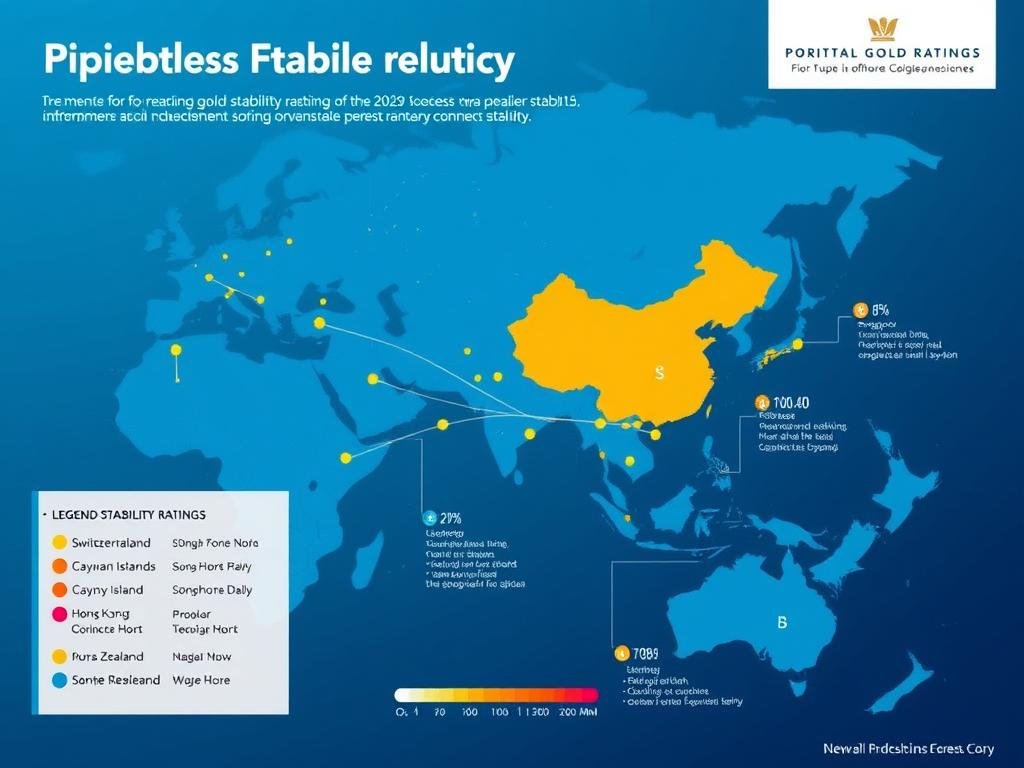
    Map showing political stability ratings of popular offshore gold storage jurisdictions
    • Switzerland: Long history of neutrality and strong property rights protection
    • Singapore: Exceptional political stability and strong rule of law
    • Cayman Islands: British Overseas Territory with stable governance
    • New Zealand: Consistently ranked among the world’s most stable democracies
    • Hong Kong: Previously stable but facing increasing uncertainty regarding Chinese influence

    Political stability metrics, sovereign debt levels, and historical respect for private property rights should all factor into your jurisdiction selection.

    Privacy and Confidentiality Aspects

    Offshore storage can offer enhanced privacy protections, though with important limitations for IRA assets:

    • Many jurisdictions maintain stronger financial privacy laws than the U.S.
    • Some facilities offer anonymous numbered accounts (though not applicable for IRA holdings)
    • Reduced exposure to domestic litigation risks
    • Protection from potential future domestic reporting requirements

    It’s crucial to note that while offshore storage offers privacy advantages, IRA assets still require reporting to the IRS regardless of storage location. The privacy benefits primarily apply to non-IRA precious metals holdings.

    Offshore Gold Storage Jurisdiction Guide

    Understand the unique advantages and potential risks of different offshore jurisdictions. Our comprehensive guide includes political stability ratings, privacy laws, and insurance considerations for each major gold storage location.

    Get Your Free Guide

    Direct Safety Comparison: Offshore vs. Domestic

    When directly comparing the safety profiles of offshore and domestic gold IRA storage options, several key factors emerge that can help guide your decision.

    Physical Security Measures Comparison

    Security Feature Domestic Storage Offshore Storage
    Vault Construction UL-rated Class 3 vaults with reinforced concrete Varies by jurisdiction; Swiss facilities often exceed U.S. standards
    Armed Security 24/7 armed guards at all major facilities 24/7 armed security, often with military or police backgrounds
    Surveillance Comprehensive CCTV coverage with 90+ day retention Similar or superior systems; some with longer retention periods
    Access Controls Biometric systems with multi-factor authentication Comparable systems; some with additional diplomatic-level protocols
    Geographic Isolation Typically in industrial areas near transportation hubs Often in remote locations or purpose-built secure zones

    From a purely physical security standpoint, both options can provide exceptional protection, with specific facilities in each category potentially offering advantages based on their unique security implementations.

    Insurance Protection Levels

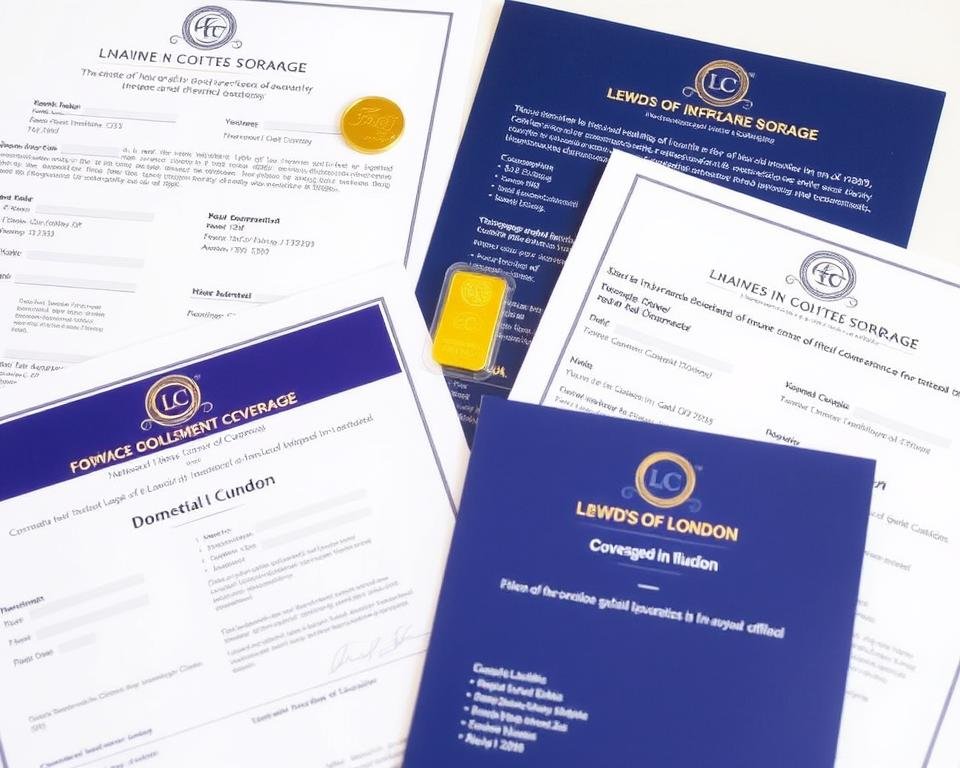
    Insurance documentation for gold IRA storage showing coverage details for both domestic and offshore options

    Insurance coverage represents a critical safety component for stored precious metals:

    • Both domestic and premium offshore facilities typically secure coverage through Lloyd’s of London
    • Coverage limits generally range from $150 million to over $1 billion per facility
    • Domestic facilities may offer more standardized claim processes under U.S. law
    • Some offshore jurisdictions provide additional government guarantees or protections
    • Segregated storage options in both locations provide clearer insurance documentation

    The insurance differential between top-tier domestic and offshore facilities is minimal, with both offering comprehensive coverage. The primary difference lies in the legal jurisdiction governing claims processes.

    Regulatory Oversight Differences

    Regulatory frameworks vary significantly between domestic and offshore options:

    • Domestic facilities operate under comprehensive U.S. regulatory oversight
    • IRS-approved domestic depositories must maintain specific compliance standards
    • Offshore facilities follow local regulatory requirements, which vary by jurisdiction
    • Some offshore jurisdictions may have less stringent regulatory frameworks
    • IRA assets require IRS reporting regardless of storage location

    While domestic facilities offer the advantage of operating within a familiar regulatory environment, certain offshore jurisdictions like Singapore and Switzerland maintain equally rigorous oversight systems specifically designed for precious metals storage.

    Geopolitical Risk Assessment

    Geopolitical risk comparison chart for gold IRA storage offshore vs domestic safer options

    Geopolitical considerations represent perhaps the most significant differentiator between storage options:

    Domestic Storage Risks:

    • Potential for future government intervention or policy changes
    • Historical precedent of gold confiscation (Executive Order 6102 in 1933)
    • Exposure to U.S. economic instability and sovereign debt concerns
    • Vulnerability to domestic litigation and asset seizure

    Offshore Storage Risks:

    • Varying political stability across jurisdictions
    • Potential for changing international relations affecting access
    • Currency exchange considerations when accessing assets
    • Jurisdictional risks specific to each country or territory

    Diversification across multiple storage locations—both domestic and offshore—represents the most robust approach to mitigating geopolitical risks.

    Recovery and Accessibility in Emergency Scenarios

    How quickly and easily you can access your gold during various emergency scenarios differs significantly:

    • Domestic storage offers faster physical access for U.S. residents
    • Offshore facilities may require international travel or shipping arrangements
    • Domestic assets may be more vulnerable to government freezes during national emergencies
    • Offshore assets could be protected from domestic financial crises
    • Both options typically offer liquidation services, though domestic facilities may provide faster settlement

    Your personal emergency scenarios and contingency plans should heavily influence this aspect of your decision-making process.

    Expert Opinions on Gold IRA Storage Safety

    Financial security expert discussing gold IRA storage offshore vs domestic safer options

    Industry experts offer valuable perspectives on the safety considerations of different storage options:

    “The ideal approach for most investors is geographic diversification. Keeping all assets in one jurisdiction—whether domestic or offshore—creates unnecessary concentration risk. Consider splitting holdings between a reputable U.S. depository and a stable offshore jurisdiction like Singapore or Switzerland.”

    — Richard Cayne, CEO of Meyer International, precious metals security consultant

    “While physical security is comparable between top-tier facilities worldwide, the real differentiator is jurisdictional risk. The U.S. has a historical precedent of gold confiscation, while countries like Singapore have consistently maintained strong property rights protections without such interventions.”

    — Mark Yaxley, General Manager at Strategic Wealth Preservation

    “For IRA investors specifically, the regulatory clarity of domestic storage offers significant advantages. The IRS requirements are unambiguous, and the reporting process is streamlined. Offshore storage introduces additional compliance considerations that must be carefully navigated.”

    — Edmund C. Moy, 38th Director of the United States Mint

    These expert insights highlight that safety is multidimensional, encompassing physical security, jurisdictional considerations, and regulatory compliance. The “safer” option depends on which risks you prioritize mitigating.

    Practical Considerations for Investors

    Beyond the safety comparison, several practical factors should influence your storage decision:

    Cost Comparison

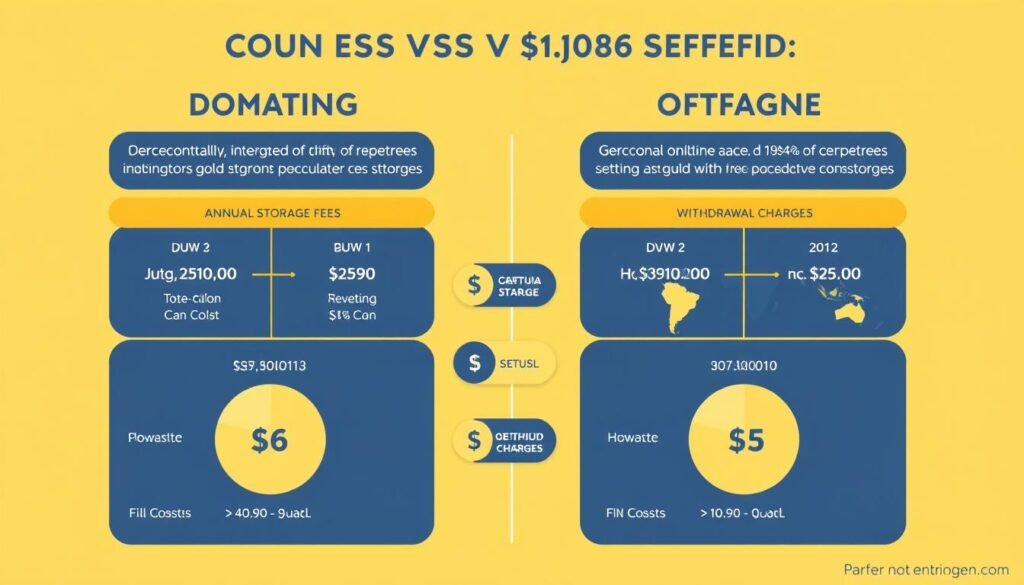
    Cost comparison chart for domestic vs offshore gold IRA storage options

    Storage costs can significantly impact long-term investment returns:

    • Domestic storage typically costs 0.5-1% of asset value annually
    • Offshore storage generally ranges from 0.7-1.5% annually
    • Both options may offer flat-fee structures for larger holdings
    • Additional costs may include setup fees, withdrawal charges, and shipping expenses
    • Segregated storage commands premium pricing in both locations

    While offshore storage tends to be marginally more expensive, the cost differential has narrowed in recent years as competition has increased.

    IRS Compliance Requirements

    Maintaining IRS compliance is essential regardless of storage location:

    • All Gold IRA assets must be stored in IRS-approved depositories
    • Annual reporting requirements apply regardless of storage location
    • Offshore storage requires additional FBAR (FinCEN Form 114) filing if account value exceeds $10,000
    • FATCA reporting may apply to certain offshore arrangements
    • Working with experienced custodians familiar with international storage is crucial

    The additional reporting requirements for offshore storage create extra administrative steps but don’t necessarily increase tax liability when properly managed.

    Custodian Considerations

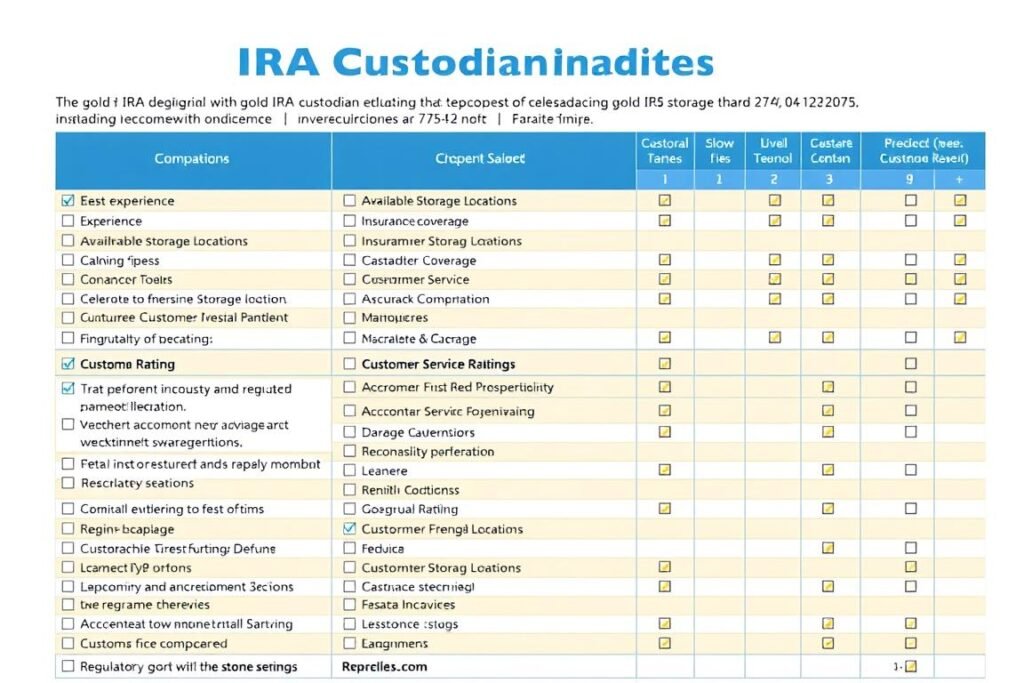
    Gold IRA custodian evaluation checklist for domestic and offshore storage options

    Not all Gold IRA custodians support offshore storage options:

    • Major custodians like Equity Trust and GoldStar Trust work with select offshore facilities
    • Specialized international custodians may offer more offshore options
    • Custodian fees often differ between domestic and offshore arrangements
    • Response times for transactions may vary based on storage location
    • Customer service quality becomes especially important with offshore storage

    Thoroughly vetting potential custodians’ experience with your preferred storage location is essential before establishing your Gold IRA.

    Distribution Planning

    Consider how storage location affects eventual distributions:

    • Required Minimum Distributions (RMDs) may be more complex with offshore storage
    • Physical possession distributions require shipping arrangements
    • Liquidation options and metal-to-cash conversion costs may differ
    • Tax withholding considerations apply regardless of storage location

    Your anticipated distribution timeline and preferences should factor into your storage decision, especially if you plan to take physical possession of metals during retirement.

    Free Gold IRA Storage Consultation

    Speak with a storage security specialist to determine which option best aligns with your specific risk concerns and investment goals. Our experts can help you navigate the complex considerations of domestic vs. offshore storage.

    Schedule Your Free Consultation

    Conclusion: Which Option Is Truly Safer?

    Secure gold storage facility showing both domestic and offshore security features for gold IRA storage

    The question of whether domestic or offshore gold IRA storage is safer doesn’t have a one-size-fits-all answer. The “safer” option depends on which risks you prioritize mitigating:

    Domestic Storage Advantages

    • Simplified IRS compliance and reporting
    • Faster physical access for U.S. residents
    • Potentially lower costs and administrative burden
    • Clearer legal protections under U.S. law
    • Easier integration with existing retirement planning

    Offshore Storage Advantages

    • Diversification beyond U.S. jurisdiction
    • Protection from potential domestic financial crises
    • Enhanced privacy in certain jurisdictions
    • Reduced exposure to U.S.-specific political risks
    • Access to specialized storage facilities

    For many investors, the optimal approach is diversification—storing precious metals across multiple locations to mitigate concentration risk. This strategy acknowledges that different storage options excel at protecting against different risk categories.

    When evaluating safety, consider your personal risk profile, investment timeline, and specific concerns. An investor primarily worried about domestic economic instability might find offshore storage more secure, while someone concerned about administrative simplicity and physical access might prefer domestic options.

    Regardless of which option you choose, working with reputable custodians and storage providers with proven track records is essential. The security of your gold ultimately depends more on the specific facility and provider than on whether it’s located domestically or offshore.

    Download Your Comprehensive Gold IRA Storage Safety Guide

    Get our complete analysis of domestic and offshore storage options, including facility comparisons, jurisdiction risk assessments, and a customizable decision matrix to determine which option best aligns with your specific concerns.

    Get Your Free Guide Now

    Frequently Asked Questions About Gold IRA Storage

    Can I store my Gold IRA at home?

    No, IRS regulations explicitly prohibit home storage of Gold IRA assets. Despite marketing claims from some companies about “home storage Gold IRAs” using LLC structures, these arrangements violate IRS requirements and can result in disqualification of your entire IRA and significant tax penalties. All Gold IRA precious metals must be stored in an IRS-approved depository.

    Which countries are considered the safest for offshore gold storage?

    Switzerland, Singapore, and the Cayman Islands consistently rank among the safest jurisdictions for offshore gold storage. These locations combine political stability, strong property rights protections, robust financial privacy laws, and world-class security infrastructure. New Zealand and Canada are also considered highly secure options with stable governance and strong rule of law.

    How do I verify that my gold is actually stored where my custodian claims?

    Reputable storage facilities provide several verification methods: regular third-party audit reports, detailed inventory statements with unique bar numbers and weights, photographic verification services, and scheduled in-person visits (with advance notice). Always choose facilities that maintain transparent verification processes and regular independent audits.

    What happens to my offshore-stored gold if international relations deteriorate?

    This risk varies by jurisdiction. Countries with long histories of neutrality like Switzerland have maintained asset protection even during world wars. Most reputable offshore facilities maintain contingency plans for geopolitical disruptions, including alternative shipping arrangements and liquidation options. Working with storage providers that maintain facilities in multiple jurisdictions provides additional protection against country-specific disruptions.

    Still Have Questions About Gold IRA Storage?

    Our gold storage specialists can help address your specific concerns and provide personalized guidance on the safest options for your precious metals investment.

    Or request our comprehensive guide to gold storage security:

    Download Free Storage Guide

  • Commingled vs Segregated Gold IRA Storage

    Commingled vs Segregated Gold IRA Storage

    Surprising fact: over 60% of precious metals account holders pay higher ongoing fees because they didn’t plan storage up front.

    A self-directed gold IRA holds physical gold, silver, platinum, and palladium with tax advantages similar to traditional retirement accounts. How your metals are stored — commingled with identical bars or segregated by serial number — shapes access, insurance, and distribution.

    Your custodian must use an IRS-approved depository; you can’t keep physical metal at home. That choice affects whether you receive the exact coins or like-for-like items when you take distributions.

    This guide aims to help you compare storage types, fees, and top companies so you can open or optimize an account with confidence. We’ll cover IRS rules, purity standards, contribution limits, and clear fee examples.

    For a deeper primer on how these accounts work and rules to watch, see this detailed overview: how a gold IRA works when you.

    Key Takeaways

    • Storage choice matters: commingled lowers costs; segregated gives exact-item control.
    • Custodians coordinate with IRS-approved depositories — home storage is not allowed.
    • Expect higher fees for buying, storage, and insurance versus paper investments.
    • Use storage alignment with account size and distribution plans.
    • Metals can hedge inflation but balance with historical stock returns for allocation.

    Why storage choice matters for your Gold IRA today

    Storage selection shapes what you actually own and how much it costs. If you prefer the exact bars and coins you buy, dedicated holding protects that claim. Pooled holding often delivers like-for-like items instead.

    IRS rules require approved depositories, and keeping metals at home can trigger taxes and penalties as a distribution. That rule makes the storage decision a legal and financial choice, not just a comfort one.

    Storage models drive annual fees, insurance approaches, and liquidity timing. Some vaults charge flat rates; others scale by value. Access procedures also affect when you can sell or take delivery during rapid price swings.

    Feature Commingled (Pooled) Segregated (Dedicated)
    What you receive Like-for-like replacement Your exact bars/coins
    Typical cost Lower, value-based or flat Higher, storage and handling add up
    Access & timing Faster processing, flexible liquidity Longer handling for in-kind delivery
    Security Institutional vault protocols Same protocols; private compartments

    Balance cost, estate plans, and emotion. Many investors weigh cheaper pooled options against the peace of mind of owning specific items. Check depository partners like Delaware Depository or IDS of Texas for institutional security that exceeds retail vaults.

    Gold IRA

    Holding tangible metals inside an individual retirement account gives investors a different path to diversify savings.

    A gold ira is a self-directed account that lets you own approved bullion — gold, silver, platinum, and palladium — while keeping familiar tax advantages.

    Contribution limits mirror traditional IRAs: $7,000 for 2024, or $8,000 if you’re 50 or older. Distributions are allowed after age 59½; early withdrawals typically face a 10% penalty.

    Traditional brokers rarely offer these accounts. You must use a specialty custodian who opens the account, buys the metals, and arranges storage at an IRS-approved depository to meet compliance requirements.

    Approved metals must meet strict fineness standards and are treated differently than collectibles. Holding approved bullion in this account differs from owning paper-based options like ETFs inside a standard ira.

    “Think of this account as a regulated way to add tangible assets to your retirement mix.”

    Expect higher costs for buying, storing, and insuring physical holdings compared with paper-only investments. Still, many choose these iras for diversification and as a hedge against inflation.

    • Self-directed ownership of physical metals.
    • Same contribution and distribution rules as other IRAs.
    • Requires a specialty custodian and approved storage.

    Commingled storage explained: how pooled precious metals are held

    In commingled storage, your metals sit in a pooled inventory that the custodian tracks by account balance and ledger entries. Records—not serial numbers—show ownership.

    What “like-for-like” means

    What “like-for-like” means when you take distributions

    With a like-for-like distribution, you receive the same type and fineness of metal you owned. You may not get the exact bars or coins you bought, but the quality and weight match the original holding.

    Typical depositories and fee structures for pooled assets

    Major depositories such as Delaware Depository and IDS of Texas offer institutional security, audits, and broad coverage. Pooled vaulting spreads handling and insurance across many accounts.

    • Lower annual fees: flat-rate plans are common and can favor larger balances.
    • Better liquidity: pooled bars and coins are easier to match and ship for sales or distributions.
    • Custodial reconciliation: custodians reconcile pooled lots with precise reporting to meet IRS rules.

    “Pooled storage reduces cost and speeds processing, but you trade away the exact serial-numbered items you first purchased.”

    Weigh cost savings against the desire to hold specific bars. For a deeper comparison of commingled vs segregated storage, see commingled vs segregated storage.

    Segregated storage explained: dedicated compartments for your physical gold

    Segregated vaulting sets aside your exact bars and coins in a labeled compartment under the depository’s control.

    Segregated storage means your specific items are held separately, with serial numbers, photos, and a dedicated record. The custodian works with an approved depository to keep those pieces isolated from pooled inventory.

    When you want your exact bars and coins back

    On distribution or sale, you can receive the identical serialized items you bought. That certainty appeals to collectors and investors who value precise ownership of physical gold and other metals.

    • Why costs are higher: extra handling, private space, and detailed recordkeeping add to annual fees.
    • Best for those who expect in-kind distributions or want collectible-grade control within an IRA.
    • Some custodians allow upgrades from pooled to segregated as account balances grow.

    Confirm depository practices for audits, insurance coverage, and photo/serial logs before you commit. Custody remains with the approved vault to meet retirement account rules while you keep exact-item ownership.

    Trade-off: higher fees in exchange for certainty and peace of mind about your assets.

    IRS rules that shape storage: custodians, approved metals, and facilities

    IRS regulations define strict custody and storage standards for physical precious holdings within retirement vehicles.

    The law requires an approved custodian or trustee to administer individual retirement accounts and to place assets in an IRS-approved depository. Owners may not hold physical property at home; doing so usually counts as a distribution and can trigger taxes and penalties.

    Custodian responsibilities for individual retirement accounts

    Custodians set up the account, execute purchases, coordinate storage, and file required reports. They also issue annual statements and help with required minimum distributions when applicable.

    “A qualified custodian keeps records, arranges compliant storage, and ensures reporting to meet federal requirements.”

    Purity standards for gold, silver, platinum, and palladium

    Approved metals must meet fineness rules. Typical thresholds: gold 99.5%+, similar standards apply to silver, platinum, and palladium. Products must come from approved refiners or mints and often remain in original packaging.

    Home possession is not allowed regardless of commingled or segregated selection. Confirm a provider’s approved product list — common bullion coins and bars that meet purity and origin standards are usually listed.

    Requirement What it means Common examples
    Custodian Administers the account and compliance Specialty trustees, record-keeping, reporting
    Storage IRS-approved depositories only Delaware Depository, IDS of Texas
    Purity Minimum fineness and approved origins Gold 99.5%+, stamped bars and bullion coins

    Fees side-by-side: setup, storage, insurance, and administration

    Understanding fee structures helps you choose a provider that fits your account size and goals.

    Common categories include a one-time setup, annual administration, storage and insurance, plus transaction spreads and liquidation charges.

    Flat-rate vs asset-based pricing and trade-offs

    Flat rates are simple: many companies charge $100–$160 annually for storage/insurance. Examples: Birch Gold Group ($100 storage, $125 management), American Bullion ($160 annual), and Augusta Precious Metals ($100 storage).

    Asset-based pricing scales with value. Monetary Gold uses $100 up to $100,000, then $1 per $1,000 above that. Flat fees favor larger balances; asset-based pricing can be fairer for small accounts.

    How commingled vs segregated storage changes annual costs

    Commingled vaulting usually carries lower storage and insurance than segregated holding. Segregated setups add handling and tracking, which explains higher fees for exact-item control.

    Fee type Typical flat range Example companies
    Setup $25–$75 one-time American Bullion $25; Birch $50; Augusta $50
    Annual storage/insurance $100–$160 Birch $100; Goldco $100–$150; Monetary Gold tiered
    Admin/management $80–$125 Goldco $80; Birch $125; Augusta $125

    Tip: Ask about shipping, liquidation, and in-kind distribution fees. Some providers waive first-year charges above deposit thresholds.

    Compare total price and long-term impact. Small differences in annual fees add up, so choose companies that match your balance and distribution plans.

    Security and access: what to expect from IRS-approved depositories

    Approved depositories provide institutional security, strict access controls, and continuous monitoring. Facilities such as Delaware Depository and IDS of Texas operate 24/7 surveillance, biometric entry, and layered alarms to protect stored metals.

    Insurance and audits are standard. Depositories typically carry high-limit policies and undergo regular third-party audits. Chain-of-custody documentation records every shipment, receipt, and movement inside the vault.

    How the flow works: your custodian places the buy order, the merchant ships directly to the approved facility, and the depository logs the incoming assets. The custodian then reconciles holdings to your account statement.

    Investors do not pick up metals in person. Instead, you instruct the custodian to sell or request an in-kind distribution, and the depository handles release under documented procedures.

    Both commingled and segregated options share this same secure environment; their difference lies in allocation, not perimeter security.

    • Ask which depositories a provider uses and how insurance limits apply.
    • Confirm audit frequency and whether photos/serial records are kept.
    • Verify any depository fees passed through and how they change as balances grow.

    “Using an IRS-approved facility preserves compliance and helps you avoid taxable events tied to improper storage.”

    Expect timely confirmations, periodic statements, and responsive service for distribution or liquidation requests. Good custodial service makes security transparent and simple for account holders.

    Performance perspective: diversification, inflation hedge, and market context

    Investors often add bullion to portfolios to temper volatility and guard purchasing power.

    Why people buy it: many seek diversification, an inflation hedge, and a perceived safe haven when markets wobble. Physical precious metals can hold value when paper markets slip.

    Historically, equities have outpaced bullion over long stretches. For example, the S&P 500 produced strong gains while metal prices were mostly flat from 1980–2006.

    That said, bullion has outperformed during crises and spikes in uncertainty. It can cushion retirement accounts during sharp drawdowns and reduce sequence-of-returns risk.

    Aspect Equities Physical bullion
    Long-term returns Higher on average Lower but less correlated
    Crisis performance Often falls with markets Often rises or stabilizes
    Liquidity & cost High liquidity, low fees Lower liquidity, storage/admin fees

    Practical tips: right-size allocations to balance upside potential and opportunity cost. Watch spot price trends and macro drivers before buying, and include storage and admin fees in your planning.

    “Treat performance as part of a wider plan—costs and custody shape real returns.”

    Roundup: top Gold IRA companies and their storage options

    Compare fees, minimums, and storage partners to pick a provider that fits your account size and service needs.

    Birch Gold Group

    Positioning: transparent published fees and flexible storage options.

    Setup $50, storage/insurance $100, and management $125. Birch waives first-year fees on deposits above $50,000 and works with IRS-approved depositories that support pooled or dedicated vaulting.

    Goldco

    Positioning: low barrier to entry and live support.

    No minimum purchase. Setup $50, storage $100–$150 by product, and $80 admin. Goldco emphasizes buyback offers and live chat to simplify sales and purchases.

    American Hartford Gold

    Positioning: predictable annual cost structure.

    Minimum $10,000 purchase. Tiered admin fees: $75 for accounts up to $100k, $125 above. Typical storage runs about $100, making fees easy to forecast.

    American Bullion

    Positioning: Delaware Depository partner and promotional savings.

    $25 setup and $160 annual; free first-year storage for qualifying $50,000+ deposits. Good for buyers who want a known depository and clear promotions.

    Monetary Gold

    Positioning: service-focused with scaled insurance pricing.

    Minimums around $5k–$10k. Storage/insurance $100 up to $100k, then $1 per $1,000. 24/7 client assistance suits active purchasers and service-minded investors.

    Augusta Precious Metals

    Positioning: tailored to larger accounts and education-focused support.

    $50,000 minimum, $50 application, $125 annual custodian, and $100 storage. Flat fees favor bigger balances and long-term holders.

    Tip: Confirm whether each company supports pooled or segregated storage, ask about upgrade paths, and compare markups, buyback policies, and shipping or in-kind fees before purchase.

    Bottom line: pick a firm whose minimums, published fees, and depository partners match your goals. For many, the best gold ira provider blends clear pricing, reliable service, and the storage choice that fits your exit plan.

    Choosing between commingled and segregated: which fits your retirement account?

    Choosing the right storage model affects costs, delivery time, and how you document your holdings. Both commingled and segregated options meet IRS custody rules, but they serve different priorities.

    Cost sensitivity vs asset specificity

    Commingled tends to be cheaper and more efficient for many investors. It reduces annual handling and insurance costs and speeds matching for sales or distributions.

    Segregated costs more but returns the exact serialized bars or coins you purchased. Choose this if you value item-specific ownership or collectible-grade pieces.

    Portfolio size, frequency of distributions, and exit plans

    Match storage to how you intend to use the account.

    • Profile mapping: cost-conscious buyers often favor pooled holding; collectors and those planning in-kind delivery lean to segregated.
    • Fee math: flat fees favor larger balances; scaled insurance can help small accounts up to thresholds like $100k.
    • Distribution plans: frequent in-kind withdrawals or sentimental attachment argue for segregated storage.
    • Liquidity: pooled vaulting usually enables faster matching and shipping for sales.
    • Upgrade flexibility: confirm whether your custodian and depository (for example, Delaware Depository) let you start pooled and move to dedicated compartments later.
    • Total cost of ownership: include shipping, handling, buyback spreads, and paperwork when comparing models.

    Tip: Verify how each option appears on statements for tax reporting and personal records before you complete any purchase.

    Tax advantages and account types: Traditional, Roth, and SEP Gold IRAs

    Pick the right account type first — tax treatment changes how your metals grow and exit.

    Traditional accounts are tax-deferred: contributions reduce current taxable income and gains are taxed on withdrawal. Withdrawals before age 59½ typically face income tax plus a 10% penalty.

    Roth accounts use after-tax funds. Qualified withdrawals are tax-free, making Roth particularly useful if you expect a higher future bracket.

    SEP plans suit self-employed owners and small businesses. In 2024, contributions can reach 25% of compensation or $69,000, whichever is lower.

    Account type Tax treatment 2024 limit / note
    Traditional Tax-deferred on growth Standard IRA limits; penalties if
    Roth (roth ira) After-tax; qualified withdrawals tax-free Income limits for contributions
    SEP Employer-funded, tax-deferred Up to 25% compensation or $69,000

    Remember: all gold iras require an approved custodian and IRS-approved storage regardless of account type. The choice of account is separate from storage, but both affect your overall retirement plan.

    Tip: Match your account choice to current and expected future tax brackets, and consult a tax professional to coordinate contributions and RMDs.

    Contribution limits, rollovers, and withdrawals for gold IRAs

    Knowing contribution limits and rollover timing helps you move retirement funds without creating a taxable event.

    Current limits

    The 2024 annual contribution limit is $7,000. Account owners aged 50 and older can add a $1,000 catch-up for a total of $8,000.

    How annual limits apply

    Limits are shared across all your iras and retirement accounts. That means contributions to any traditional or Roth account reduce what you can add to a metals account in the same year.

    Rollovers and transfers

    Direct custodian-to-custodian transfers avoid withholding and help prevent unintended taxes. Ask both custodians to process a trustee-to-trustee transfer so funds move without distribution paperwork.

    Rolling over a 401(k) typically requires a direct rollover request and timely coordination. Most plans and custodians complete direct rollovers in days to a few weeks. Keep confirmation slips and transaction IDs.

    Tip: some providers waive first-year storage or setup fees for large rollovers. Ask about promotions when you transfer significant balances.

    • Early withdrawals: distributions before age 59½ usually face income tax plus a 10% penalty.
    • Record-keeping: save rollover confirmations, transfer paperwork, and final statements for tax reporting.
    • Fees vs contributions: storage and admin charges do not count toward contribution limits; they are paid separately or drawn from cash inside the account.
    Topic What to know Action
    2024 limit $7,000; $8,000 if 50+ Plan contributions across all iras to avoid excess
    Shared limits One cap across traditional, Roth, and self-directed accounts Track total contributions and adjust deposits
    Direct rollover Custodian-to-custodian avoids withholding Request trustee transfer and keep confirmations
    401(k) rollover Allowed; timing varies by plan Initiate direct rollover; check for fee waivers

    Bottom line: confirm limits before contributing, use direct transfers to move employer plans, and keep detailed records to avoid taxes and penalties.

    A well-lit, high-resolution illustration showcasing the key aspects of contribution limits for a gold-based Individual Retirement Account (IRA). In the foreground, a stack of gold bars representing the maximum annual contribution amount, rendered with intricate detail and a warm, metallic sheen. In the middle ground, a magnifying glass inspecting the fine print of IRA regulations, emphasizing the importance of understanding the nuances of rollovers and withdrawals. The background features a clean, minimalist design with subtle infographic elements, such as charts and graphs, providing visual context around the financial implications of gold IRA contribution limits.

    What you can hold: bars, coins, and IRA-approved precious metals

    Approved bullion comes in bars, rounds, and coins — but not every piece qualifies for retirement storage.

    The IRS permits highly refined precious metals: gold, silver, platinum, and palladium that meet strict fineness standards.

    Typical requirements include minimum purity (for example, gold at 99.5%+), production by approved mints or refiners, and often original mint packaging.

    Collectible or numismatic coins usually are excluded. Custodians accept standard bullion products, not pieces valued for rarity or condition.

    How items are recorded: custodians log bars, rounds, and coins on account records by type, weight, and fineness. That paperwork ensures accurate reporting and seamless custody at approved depositories like Delaware Depository or IDS of Texas.

    • Accepted categories: gold, silver, platinum, palladium meeting fineness standards.
    • Verify product eligibility before purchase to avoid rejection.
    • Spot price and dealer spreads affect total purchase cost separate from storage and admin fees.

    “Confirm purity, refiner, and packaging up front to prevent costly mistakes.”

    Setup guide: how to open and fund a gold IRA with the right custodian

    Begin by narrowing custodians with clear fees and strong customer ratings before you open an account. Focus on BBB/BCA scores, published fee schedules, and which depositories each firm uses.

    Compare companies, fee schedules, and custodian options

    Check markups, storage pricing, and whether the custodian supports both commingled and segregated storage. Ask which IRS-approved vaults they partner with — common names include Delaware Depository and IDS of Texas.

    Fund the account: transfer, rollover, or new contribution

    Open the account by completing the application and ID verification. Choose Traditional, Roth, or SEP based on tax needs.

    Fund via a direct transfer from another ira, a trustee-to-trustee rollover from a 401(k), or a new contribution within annual limits. Direct transfers avoid withholding and reduce tax risk.

    Direct the purchase and confirm storage type

    Instruct your custodian to purchase approved bullion and verify product eligibility and purity before the purchase. Then specify commingled or segregated storage and confirm related annual costs and upgrade options.

    Tip: Request timelines for settlement, vaulting confirmation, and online access to inventory and statements.

    Step What to check Why it matters
    Due diligence Ratings, fees, depository partners Ensures transparency and security
    Account opening Application, ID, account type Meets legal requirements and tax goals
    Funding Transfer, rollover, contribution Avoids withholding and preserves tax status
    Purchase & storage Product eligibility, commingled vs segregated Defines ownership, cost, and delivery options

    Ongoing service matters. Confirm how the custodian handles RMDs, buyback support, in-kind distributions, and future purchases so the account runs smoothly.

    Risks and costs: liquidity, fees, and opportunity cost vs equities

    Physical holdings carry clear trade-offs: no yield and higher ongoing fees. Since metal does not produce income, total return depends entirely on price gains minus setup, storage, insurance, and admin costs.

    That matters because fees reduce net performance. Setup charges, annual administration, storage, and insurance add up. Dealers also apply buy/sell spreads that further cut realized returns.

    Liquidity varies by custodian and storage model. Some custodians match pooled inventory quickly for a sale. Segregated holdings may take longer to verify and ship, and shipping or handling fees can apply.

    Opportunity cost: over long periods, equities have often outpaced precious metals. For investors seeking growth, replacing core equity exposure with only physical metal can lower lifetime returns.

    Still, tangible metals can stabilize portfolios in market stress. Use them as a complement, not a replacement, for growth assets. Align allocation size with your time horizon and risk tolerance to limit opportunity cost.

    Reminder: early withdrawals usually incur income tax plus a 10% penalty. Review distribution rules and tax timing before you request in-kind delivery or take funds.

    Risk / Cost Impact What to check
    Non-yielding asset Returns depend on price appreciation Include fees when modeling net return
    Annual fees Reduces compound growth Compare setup, admin, storage, insurance
    Liquidity Sale/shipping timelines and charges Ask custodians about typical turnaround and costs
    Opportunity cost Potentially lower long-term gains vs equities Match allocation to goals and horizon

    Action items for investors: read buyback terms, shipping and handling policies, and fee schedules before buying. Factor all charges into your retirement planning so there are no surprises at distribution.

    Alternatives to physical metals in retirement accounts

    Paper-based exposure can be a practical alternative to holding bullion in a vault. Many investors use exchange-traded funds or miner stocks inside a regular brokerage-style account to gain commodity exposure without depository logistics.

    A serene retirement account landscape, captured in soft, warm lighting. In the foreground, a stack of colorful retirement account statements, their pages gently fluttering. Behind, a neatly organized array of investment options - mutual funds, ETFs, and other financial instruments, each represented by stylized icons. In the distance, a tranquil skyline, hinting at the long-term growth potential of these accounts. The overall atmosphere conveys a sense of financial security and stability, inviting the viewer to envision a comfortable, worry-free retirement.

    Gold ETFs and mining stocks in traditional or roth ira

    ETFs such as SPDR Gold Shares (GLD) and producer equities trade like stocks. They offer higher liquidity, lower day-to-day costs, and easy access in most retirement accounts.

    Benefits include simpler trading, typical brokerage pricing, and avoidance of storage and insurance charges.

    Non-gold self-directed accounts for other alternatives

    Non-gold SDIRAs allow real estate, private equity, and digital assets as part of a diversified plan. These options avoid vault fees but also do not give you direct title to physical metal.

    • Trade-offs: no physical claim; fund structure or company performance can diverge from spot.
    • Compare costs: include expense ratios and brokerage commissions vs storage/admin fees for physical holdings.
    • Fit: use these options to complement or substitute a gold holding depending on goals and fee sensitivity.

    “Verify provider policies on eligible assets and custodial capabilities before you commit.”

    Conclusion

    Conclusion

    Decide with purpose: commingled vaulting favors lower costs and faster matching, while segregated holding gives exact-item control at higher annual fees.

    Follow IRS rules: use an approved custodian and approved depository, confirm purity standards, and mind contribution limits for 2024 ($7,000 or $8,000 if 50+). For a clear primer on rules and storage compliance, see should you get a gold IRA.

    Practical next step: shortlist two to three providers, request full fee sheets, confirm storage options and buyback policies, and compare total costs for your expected account size. Align storage choice with planned distributions, liquidity needs, and your preference for exact coins or like-for-like replacements.

    Final nudge: balance diversification benefits with fees and opportunity cost so your retirement plan stays resilient and practical.

    FAQ

    What is the difference between commingled and segregated storage?

    Commingled storage pools physical precious metals from multiple investors into a single inventory. Segregated storage assigns a dedicated compartment or specific serial-numbered bars and coins to one account. Commingled usually costs less, while segregated gives you direct claim to exact items.

    Why does storage choice matter for my retirement account today?

    Storage affects cost, control, and the ability to receive specific assets at distribution. It also influences insurance coverage, audit trails, and how quickly your custodian can process transfers or distributions when you retire.

    What should I know about IRS-approved storage for individual retirement accounts?

    The IRS requires third-party custodians and approved depositories to hold physical metals for retirement accounts. Facilities must meet security and auditing standards, and custodians handle paperwork, annual valuations, and reporting for tax compliance.

    How does “like-for-like” work when taking distributions from commingled holdings?

    With pooled inventories, distributions are typically fulfilled by delivering items of equivalent weight and purity rather than the exact bar or coin you originally bought. That keeps logistics simpler but means you may not get the identical serial-numbered piece.

    What types of depositories handle pooled assets and how are they insured?

    Major depositories such as Delaware Depository and Brink’s offer pooled storage options. They provide vault security, third-party audits, and insurance policies that cover loss or theft, though coverage specifics vary by provider and plan.

    When should I choose segregated storage to ensure I get my exact bars and coins back?

    Opt for segregated storage if you prefer ownership of specific serial-numbered bars or collectible coins, plan to take physical possession, or want clearer provenance for estate planning or sale.

    What responsibilities does a custodian have for an individual retirement account holding precious metals?

    Custodians open and maintain the account, ensure IRS compliance, arrange purchases and transfers, coordinate storage with approved depositories, and handle required tax reporting and beneficiary paperwork.

    What purity standards apply to metals held in retirement accounts?

    The IRS sets minimum purity requirements for acceptable metals. For example, most acceptable bullion must meet .999 or .995 fine standards depending on the metal type. Your custodian can confirm whether a specific coin or bar qualifies.

    How do fees compare between commingled and segregated storage?

    Commingled storage usually charges lower annual storage and insurance fees, often on a flat or asset-based schedule. Segregated storage carries higher fees due to dedicated space, individual auditing, and extra handling costs.

    What is the trade-off between flat-rate and asset-based pricing?

    Flat-rate pricing gives predictable costs regardless of account size, while asset-based fees scale with holdings. Flat rates can favor larger accounts, but asset-based pricing may be fairer for smaller balances.

    How can storage choice change my annual costs?

    Choosing segregated storage can increase annual expenses because of specialized insurance and handling. Commingled options lower those line-item costs but reduce specificity of holdings.

    What security and access should I expect from an IRS-approved depository?

    Expect high physical security, restricted access, climate control, independent audits, and insured holdings. Access for inspections or distributions typically requires coordination through your custodian and the depository.

    How does holding physical metals affect portfolio diversification and inflation protection?

    Physical metals can diversify a portfolio and act as a hedge against inflation and currency risk. They tend to have lower correlation with stocks, but returns vary with market cycles, liquidity, and storage costs.

    Which companies offer storage options and what distinguishes them?

    Companies such as Birch Gold Group, Goldco, American Hartford Gold, American Bullion, Monetary Gold, and Augusta Precious Metals each partner with IRS-approved depositories and differ by fee structure, minimums, and service levels. Compare transparency, storage types, and customer service when choosing.

    How do I decide between commingled and segregated storage for my retirement account?

    Consider cost sensitivity versus the desire for asset specificity. Evaluate portfolio size, how often you’ll take distributions, and whether you want specific serial-numbered items for sale or personal possession.

    Can I hold metals in Traditional, Roth, or SEP retirement accounts?

    Yes. Self-directed Traditional, Roth, and SEP accounts can hold permitted bullion and coins following IRS rules. Tax treatment differs—Roth contributions may allow tax-free qualified withdrawals, while Traditional and SEP follow standard tax-deferred rules.

    What are the contribution limits, rollovers, and withdrawal rules for retirement accounts holding metals?

    Contribution limits follow IRS IRA and SEP caps and catch-up provisions for eligible savers. Rollovers from 401(k)s and other IRAs are allowed when done correctly. Withdrawals follow the usual tax and penalty rules unless qualifying for a penalty-free distribution.

    What types of items can I hold inside an approved retirement account?

    You can hold bullion bars and certain government-minted coins that meet purity standards. Collectible coins and lower-purity pieces typically do not qualify. Check with your custodian before purchasing specific items.

    How do I open and fund a retirement account for physical metals with the right custodian?

    Compare companies by fees, service, and depository partners. Fund the account via transfer, rollover, or new contribution. Direct your custodian to purchase specified items and confirm whether you want commingled or segregated storage.

    What are the main risks and costs associated with holding physical metals instead of equities?

    Risks include lower liquidity, storage and insurance fees, and potential opportunity cost if equities outperform. Metals can also have sharp price swings. Weigh these trade-offs against diversification and inflation protection benefits.

    What alternatives exist to holding physical metals inside retirement accounts?

    Alternatives include exchange-traded funds that track bullion prices, shares of mining companies, or self-directed accounts holding other alternative assets like real estate or private equity. Each option has different liquidity, fees, and tax implications.