
Tag: Gold IRA allocation strategies

  • How Much of Your Retirement Should Be in a Gold IRA? (Case Studies)

    With economic uncertainty and inflation concerns on the rise, many retirement investors are turning to gold IRAs as a potential safe haven. But the critical question remains: exactly how much of your retirement portfolio should be allocated to gold? This comprehensive guide examines real-world case studies and expert recommendations to help you determine the optimal gold IRA allocation for your specific situation.

    Diversified retirement portfolio with gold coins alongside traditional investments showing how much retirement should be in gold ira case studies

    Diversification with gold can help protect retirement savings against market volatility

    The Strategic Role of Gold in Retirement Planning

    Diversification has long been the cornerstone of sound retirement planning. Traditional retirement portfolios typically consist of stocks, bonds, and cash. However, these assets often move in correlation with each other, especially during economic downturns. Gold, with its historically low correlation to paper assets, offers a unique diversification opportunity.

    According to the Investment Company Institute, approximately $13.6 trillion was invested in IRAs as of 2023, yet only about 0.5% of that amount is allocated to alternative assets like gold. This suggests that many investors may be missing an opportunity to properly diversify their retirement savings.

    “Gold has served as a store of value for thousands of years, and it continues to provide a hedge against inflation, currency devaluation, and economic uncertainty—all critical considerations for retirement planning.”

    The Taxpayer Relief Act of 1997 made it possible to include gold in an IRA, yet a survey by Gold IRA Guide revealed that 64% of investors were unaware of this option. This knowledge gap may explain why gold remains underutilized in retirement planning despite its potential benefits.

    Expert Recommendations on Gold IRA Allocation

    Financial advisors and investment experts offer varying recommendations on the ideal percentage of retirement savings to allocate to gold IRAs. These recommendations typically fall into three categories:

    Conservative Approach (5-10%)

    Most traditional financial advisors recommend limiting gold exposure to 5-10% of your retirement portfolio. This conservative approach provides some inflation protection while minimizing the impact of gold’s price volatility on overall returns.

    This allocation is often recommended for investors who are primarily concerned with stability and who have a well-diversified portfolio of traditional assets.

    Moderate Approach (10-15%)

    For investors seeking stronger protection against inflation and economic uncertainty, a moderate allocation of 10-15% to gold may be appropriate. This level provides meaningful diversification benefits while still maintaining a strong position in growth-oriented assets.

    This approach is often suggested for investors with a 5-15 year time horizon before retirement.

    Aggressive Approach (15-20%)

    Some experts, particularly those concerned about long-term inflation and currency devaluation, recommend allocating 15-20% of retirement savings to gold. This higher allocation provides substantial protection against economic instability.

    This strategy may be suitable for investors with significant concerns about the long-term stability of traditional financial markets.

    Financial advisor explaining gold IRA allocation charts to a retired couple

    Important: These recommendations serve as general guidelines. Your optimal allocation should be based on your specific financial situation, risk tolerance, retirement timeline, and overall investment strategy.

    Case Study 1: Conservative Approach (5-7% Allocation)
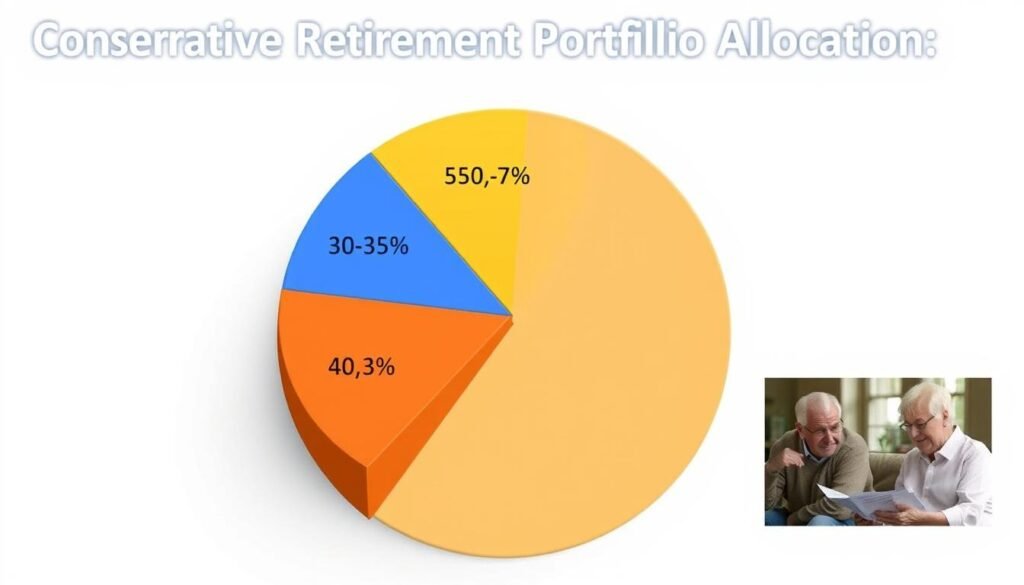
    Conservative gold IRA allocation pie chart showing 5-7% in gold

    Profile: Robert and Susan, Ages 68 and 65

    Robert and Susan are recently retired with a combined retirement portfolio of $1.2 million. They have a conservative risk tolerance and primarily seek to preserve their capital while generating steady income.

    Portfolio Allocation:

    • 55% in blue-chip stocks and dividend-paying equities
    • 35% in high-quality bonds and fixed income
    • 5% in cash and cash equivalents
    • 5% in a gold IRA

    Rationale for 5% Gold Allocation:

    Robert and Susan chose a 5% gold allocation to provide a modest hedge against inflation without significantly impacting their income-generating potential. Their financial advisor recommended this conservative approach given their age and income needs.

    Results:

    During a recent market correction where stocks declined by 15%, their gold holdings appreciated by 8%, helping to offset some of the losses in their equity portfolio. The 5% allocation provided stability without compromising their income requirements.

    Is a Conservative Gold Allocation Right for You?

    If you’re approaching or in retirement and prioritize income and stability, a conservative gold allocation might be appropriate for your situation.

    Assess Your Gold IRA Needs

    Case Study 2: Moderate Approach (10-15% Allocation)
    Moderate gold IRA allocation chart showing 10-15% in gold for balanced portfolios

    Profile: Michael, Age 52

    Michael is a mid-career professional with approximately $750,000 in retirement savings. He has a moderate risk tolerance and is concerned about potential inflation and economic instability over the next 10-15 years before his planned retirement.

    Portfolio Allocation:

    • 50% in diversified equity investments
    • 30% in corporate and government bonds
    • 5% in cash reserves
    • 15% in a gold IRA

    Rationale for 15% Gold Allocation:

    Michael chose a 15% allocation to gold based on his concerns about long-term inflation and his desire to have meaningful protection against economic uncertainty. With 10-15 years until retirement, he has time to weather short-term fluctuations in gold prices.

    Results:

    Over a five-year period that included significant market volatility, Michael’s portfolio experienced 22% less overall volatility compared to a similar portfolio without gold exposure. During an inflationary period where consumer prices rose 7%, his gold holdings appreciated by 12%, helping to preserve his purchasing power.

    4.2
    Moderate Allocation Effectiveness

    Inflation Protection

    4.5

    Portfolio Stability

    4.2

    Growth Potential

    3.8

    Explore a Moderate Gold IRA Strategy

    If you’re 10-15 years from retirement and concerned about economic uncertainty, a moderate gold allocation might provide the balance you need.

    Request a Portfolio Analysis

    Case Study 3: Aggressive Approach (15-20% Allocation)
    Aggressive gold IRA allocation strategy with 20% in physical gold

    Profile: Jennifer, Age 45

    Jennifer is a business owner with $500,000 in retirement savings. She has a higher risk tolerance and significant concerns about long-term inflation, currency devaluation, and economic instability. With 20+ years until retirement, she can withstand short-term volatility.

    Portfolio Allocation:

    • 45% in growth-oriented stocks and equity funds
    • 25% in diversified bonds
    • 10% in alternative investments (REITs, commodities)
    • 20% in a gold IRA

    Rationale for 20% Gold Allocation:

    Jennifer chose a 20% allocation to gold based on her belief that significant economic challenges lie ahead. With a longer time horizon until retirement, she can afford to take a more aggressive position in gold to protect against what she sees as inevitable inflation and potential currency devaluation.

    Results:

    During a period of unexpected inflation and currency volatility, Jennifer’s portfolio outperformed traditional 60/40 stock/bond portfolios by approximately 3.5% annually. When a major market correction occurred, her gold holdings appreciated by 25%, significantly offsetting losses in her equity positions.

    “I view my gold allocation as insurance against worst-case economic scenarios. Even if those scenarios don’t materialize, I sleep better knowing I have meaningful protection against inflation and economic instability.”

    — Jennifer, Business Owner

    Is an Aggressive Gold Strategy Right for You?

    If you have significant concerns about long-term economic stability and a longer time horizon until retirement, a higher gold allocation might align with your goals.

    Schedule a Gold IRA Consultation

    Key Factors Influencing Gold IRA Allocation Decisions
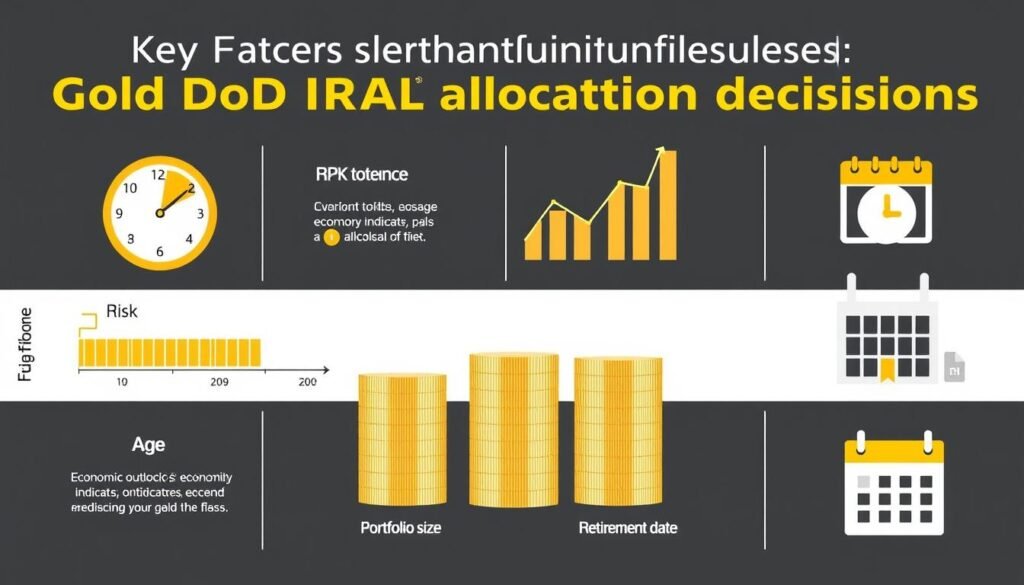
    Factors affecting gold IRA allocation decisions

    Several critical factors should influence your decision on how much of your retirement to allocate to a gold IRA:

    Age and Retirement Timeline

    Younger investors with longer time horizons can generally afford to allocate a higher percentage to gold, as they have more time to weather short-term volatility. Older investors nearing or in retirement may prefer a more conservative allocation to minimize volatility.

    Risk Tolerance

    Your personal comfort with investment risk should heavily influence your gold allocation. Risk-averse investors might prefer a smaller allocation (5-10%), while those comfortable with volatility might opt for a larger position (15-20%).

    Economic Outlook

    Your perspective on inflation, currency stability, and overall economic conditions should impact your gold allocation. Those with significant concerns about economic stability may justify higher allocations.

    Overall Portfolio Size

    Larger portfolios can often accommodate higher percentage allocations to gold without compromising other investment objectives. Investors with smaller portfolios may need to be more selective with their allocations.

    Income Requirements

    Since gold doesn’t generate income like dividends or interest, investors with high current income needs may need to limit their gold allocation to ensure sufficient cash flow from their portfolio.

    Existing Portfolio Composition

    Your current asset allocation should inform your gold IRA decision. If you already have significant exposure to inflation-protected assets, you might require a smaller gold allocation.

    Expert Tip: Consider reviewing your gold allocation annually or whenever significant economic changes occur. Rebalancing may be necessary to maintain your target allocation as different assets perform differently over time.

    Gold IRA: Pros and Cons vs. Traditional Retirement Assets
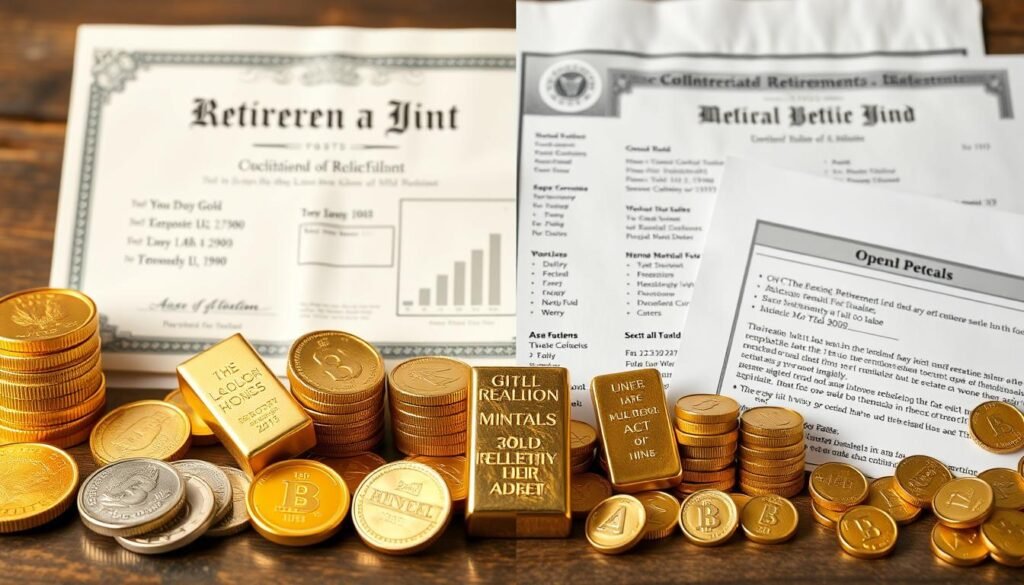
    Gold coins and bars compared to stock certificates and bond documents

    Advantages of Gold IRAs

    • Inflation Hedge: Gold has historically maintained purchasing power during inflationary periods
    • Portfolio Diversification: Low correlation with stocks and bonds reduces overall portfolio volatility
    • Currency Protection: Provides a hedge against currency devaluation
    • Crisis Protection: Often performs well during economic and geopolitical crises
    • Tangible Asset: Physical backing unlike paper assets
    • Tax Benefits: Same tax advantages as traditional IRAs

    Disadvantages of Gold IRAs

    • Storage Costs: Annual fees for secure storage and insurance
    • No Income Generation: Unlike stocks and bonds, gold doesn’t pay dividends or interest
    • Price Volatility: Can experience significant short-term price fluctuations
    • Higher Fees: Setup and maintenance fees are typically higher than traditional IRAs
    • Liquidity Concerns: May take longer to sell physical gold compared to stocks or bonds
    • Potential for Underperformance: May underperform stocks during strong bull markets

    Performance Metric Gold IRA Stock-Heavy Portfolio Bond-Heavy Portfolio
    Inflation Protection High Moderate Low
    Income Generation None Moderate to High Moderate
    Growth Potential Moderate High Low
    Volatility Moderate High Low
    Crisis Performance Strong Poor Moderate

    Practical Steps for Implementing a Gold IRA Strategy
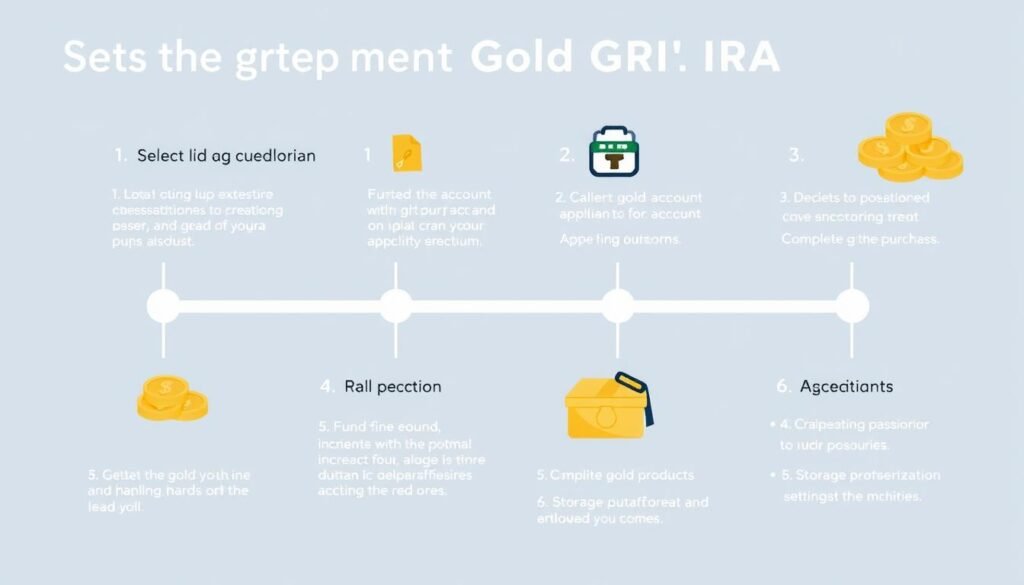
    Step-by-step process for setting up a gold IRA

    If you’ve decided to include gold in your retirement strategy, follow these steps to properly implement a gold IRA:

    1. Select a Reputable Gold IRA Custodian

      Choose a custodian that specializes in precious metals IRAs. Look for companies with strong reputations, transparent fee structures, and excellent customer service. Research customer reviews and check for any regulatory issues.

    2. Open a Self-Directed IRA

      Complete the necessary paperwork to establish a self-directed IRA that allows alternative assets like precious metals. This can be a traditional IRA (tax-deductible contributions) or a Roth IRA (tax-free withdrawals), depending on your tax situation.

    3. Fund Your Gold IRA

      You can fund your gold IRA through a direct contribution (subject to annual limits), a transfer from an existing IRA, or a rollover from a qualified retirement plan like a 401(k). Each method has specific rules and potential tax implications.

    4. Select IRS-Approved Gold Products

      The IRS has specific requirements for gold products that can be held in an IRA. Generally, gold must be 99.5% pure and come in the form of coins or bars from approved mints and refiners. Common eligible products include:

      • American Gold Eagles
      • Canadian Gold Maple Leafs
      • Australian Gold Kangaroos
      • Credit Suisse and other approved gold bars
    5. Arrange for Secure Storage

      IRS regulations require that gold in an IRA be stored in an approved depository. You cannot take personal possession of the gold. Your custodian will arrange for storage at a secure facility, typically for an annual fee.

    6. Monitor and Rebalance

      Regularly review your gold allocation as part of your overall retirement strategy. As gold prices fluctuate, you may need to rebalance to maintain your target allocation percentage.

    Important: Be wary of high-pressure sales tactics or dealers charging excessive premiums above the spot price of gold. Always compare prices and fees across multiple providers before making a decision.

    Ready to Add Gold to Your Retirement Strategy?

    Our gold IRA specialists can help you determine the right allocation for your situation and guide you through the setup process.

    Get Your Free Gold IRA Guide

    Frequently Asked Questions About Gold IRA Allocation

    Common questions about gold IRA allocation percentages

    What is the minimum amount I should allocate to a gold IRA?

    While there’s no universal minimum, most financial advisors suggest at least 5% allocation to achieve meaningful diversification benefits. However, the appropriate minimum depends on your overall portfolio size, risk tolerance, and financial goals.

    Can I have too much gold in my retirement portfolio?

    Yes. Most experts advise against allocating more than 20-25% of your retirement savings to gold. Since gold doesn’t generate income and can experience periods of underperformance relative to stocks, an excessive allocation could potentially limit your portfolio’s long-term growth and income generation.

    How often should I rebalance my gold IRA allocation?

    Most financial advisors recommend reviewing your allocation at least annually or whenever gold prices experience significant movements (±15-20%). Rebalancing helps maintain your target allocation and can potentially enhance returns through disciplined buying and selling.

    Should I adjust my gold allocation as I approach retirement?

    Many financial advisors suggest maintaining or slightly increasing your gold allocation as you approach retirement to provide additional stability and inflation protection when you can least afford significant losses. However, this should be balanced against your income needs in retirement.

    How does a gold IRA affect required minimum distributions (RMDs)?

    Gold IRAs are subject to the same RMD rules as traditional IRAs once you reach age 73 (as of 2023). This means you’ll need to take distributions based on the value of your gold holdings. Since physical gold must be sold to take distributions, it’s important to consider liquidity when planning for RMDs.

    Conclusion: Finding Your Optimal Gold IRA Allocation

    Balanced retirement portfolio with optimal gold IRA allocation

    Determining how much of your retirement should be in a gold IRA is a highly personal decision that depends on multiple factors including your age, risk tolerance, economic outlook, and overall financial situation. The case studies presented in this article demonstrate that different allocation strategies can be appropriate for different investors.

    Based on historical data and expert recommendations, most retirement investors should consider allocating between 5% and 20% of their portfolio to gold, with the specific percentage depending on their individual circumstances:

    • Conservative investors (5-10%): Ideal for those nearing or in retirement with a focus on stability and income
    • Moderate investors (10-15%): Appropriate for mid-career professionals seeking balanced protection against economic uncertainty
    • Aggressive investors (15-20%): Suitable for younger investors with significant concerns about long-term inflation and economic stability

    Remember that gold should be viewed as one component of a well-diversified retirement strategy, not as a standalone investment. Regular portfolio reviews and potential rebalancing are essential to maintain your target allocation as market conditions change.

    Get Personalized Gold IRA Allocation Guidance

    Speak with a gold IRA specialist to determine the optimal allocation for your specific retirement goals and concerns.





    Your information is secure and will never be shared with third parties.

  • Optimal Gold IRA Allocation: 5%, 10%, or 20%?

    Optimal Gold IRA Allocation: 5%, 10%, or 20%?

    Surprising fact: nearly one in four U.S. retirement savers say they consider precious metals to protect savings from inflation.

    This guide helps you weigh a 5%, 10%, or 20% stake as part of a balanced portfolio. Choosing a target percent is about risk management, diversification, and long-term goals.

    What this account is: a self-directed individual retirement account that can hold IRS-approved physical gold, silver, platinum, and palladium. Rules require a specialty custodian and storage at an approved depository.

    We’ll walk through the investor profile, time horizon, market outlook, storage costs, and IRS limits. Note contribution caps for traditional iras: $6,500 (2023) and $7,000 (2024), plus catch-up at 50+.

    Bottom line: metals can hedge inflation and volatility, but stocks have historically led long-run returns. A clear strategy—objectives, tolerance, and mix with mutual funds or ETFs—makes choosing 5%, 10%, or 20% practical and disciplined.

    Key Takeaways

    • Decide percent based on risk tolerance, timeline, and market view.
    • This type of account requires an IRS-approved custodian and depository.
    • Contribution limits mirror traditional IRAs; distributions typically begin at 59½.
    • Precious metals can hedge inflation but usually complement, not replace, stocks.
    • Compare physical gold to paper proxies and factor in storage and fees.
    • Start with clear goals to align metals with your retirement strategy.

    Why Your Retirement Portfolio Might Need Gold Right Now

    Many retirement savers add a small stake in precious metals to soften market shocks and protect purchasing power. A modest metals position tends to have low correlation with stocks and bonds, so it can cushion sharp drawdowns when equities fall.

    As of January 2024, the price stayed above $2,000 per ounce, showing steady demand for precious metals during uncertainty. That pricing backdrop keeps physical gold attractive as a potential hedge against inflation and policy or geopolitical risk.

    Remember: over long horizons, stocks have historically outpaced metal returns. Still, precious metals often hold value in crises, so a measured percentage can improve risk-adjusted returns without chasing top performance every year.

    • Low correlation: helps reduce portfolio volatility.
    • Store of value: useful when inflation pressures rise.
    • Tax-sheltered option: adding metals via a gold ira keeps assets inside a tax-advantaged account when held with an approved custodian and compliant depository.

    Align any investment strategy with your goals, timeline, and sequence-of-returns risk. Many investors recalibrate their allocation as valuations or macro conditions change. A small, well-defined metals position can be a practical stabilizer in a diversified retirement portfolio — not a replacement for stocks.

    For help picking providers, see our guide to the best gold ira providers.

    Gold IRAs Explained: Structure, Tax Advantages, and Rules

    A self-directed precious-metals retirement account gives investors legal ownership of approved bullion alongside traditional holdings.

    What it allows: the account can hold IRS-approved coins and bars of gold, silver, platinum, and palladium. Holders may also gain exposure through miner stocks, mutual funds, or etfs, but physical metal in an account must meet IRS purity rules.

    Contribution limits: traditional and Roth limits were $6,500 in 2023 and $7,000 in 2024, with a $1,000 catch-up for those 50+. SEP limits rise to the lesser of 25% of compensation or $66,000 (2023) and $69,000 (2024).

    Custody and storage rules

    Assets must be held by an IRS-approved custodian and stored in an approved depository. Home storage or a personal safe deposit box counts as a distribution and can trigger taxes and penalties.

    Account Type Tax Treatment 2024 Limit
    Traditional Pre-tax, tax-deferred growth $7,000 (+$1,000 if 50+)
    Roth After-tax, qualified tax-free withdrawals $7,000 (+$1,000 if 50+)
    SEP Employer contributions, higher caps Up to $69,000 (2024)
    • Specialty custodians handle setup, reporting, and compliance.
    • Verify coin/bar eligibility and custodian credentials before funding.
    • Proper storage preserves tax advantages and avoids unintended distributions.

    The Case for Precious Metals Diversification

    Adding a measured share of precious metals can steady a retirement portfolio when stocks wobble. Diversification spreads risk across different market drivers so one shock does not sink the whole plan.

    Correlation basics: when equities fall, metals often move differently. That helps smooth returns over time and can blunt big drawdowns that hurt retirees.

    Risk management alongside stocks, bonds, and funds

    A small metals sleeve reduces reliance on a single return driver. It complements stocks, bonds, and mutual funds rather than replaces them.

    Using gold to hedge inflation and uncertainty

    Gold and other precious metals tend to keep value when paper assets struggle. They don’t pay dividends, so think of them as stabilization, not income producers.

    Role Strength Trade-off
    Precious metals Low correlation, hedge inflation No yield, storage costs
    Stocks Long-term growth, dividends Higher volatility
    Bonds Income, lower short-term swings Sensitivity to rates
    • Even modest exposure can reduce sequence risk for retirees.
    • Decide size by risk tolerance and time horizon, then rebalance regularly.
    • For details on holding physical metal in retirement accounts see buy physical gold in my IRA.

    Gold IRA allocation: choosing between 5%, 10%, or 20%

    A small, balanced, or defensive metals position can alter both downside risk and long-term return potential.

    When a 5% stake makes sense

    A 5% slice acts as a starter sleeve that adds diversification without denting growth from stocks. It helps reduce volatility and sequence risk while leaving most capital in higher-return assets.

    Who may prefer 10%

    A 10% position is a middle ground. Investors who want more visible downside cushioning select this share. It offers meaningful protection in turbulent markets while still keeping upside intact for long-term gains.

    Why some choose 20%

    In periods of market stress or high inflation concerns, a 20% defensive stance prioritizes value preservation. This strategy trades some expected returns for stability and lower portfolio drawdowns.

    Target Share Primary Goal Typical Investor
    5% Small hedge, maintain growth focus Growth-oriented, long horizon
    10% Balanced protection and upside Moderate risk tolerance
    20% Defensive preservation of value Near-retiree or cautious investors

    Practical tips: map your choice to withdrawal needs, time horizon, and comfort with price swings. Set rebalancing thresholds to trim gains or add after drops. Keep storage and liquidity in mind as the metal sleeve grows, and consider a touch of silver to diversify within metals while keeping gold as the anchor.

    Document your plan in writing so you stick to the strategy and avoid chasing short-term price moves. For guidance on how these choices affect retirement timing and distributions, see how a gold IRA works when you.

    Matching Allocation to Risk Tolerance and Time Horizon

    Your time horizon and comfort with swings should guide how much you set aside in precious metals.

    Conservative investors often cap metals near 5–10% to limit volatility while keeping most assets in stocks and quality bonds.

    Moderate investors may favor 10% (or a bit more during stress) to balance downside protection with long-run growth in retirement savings.

    Profiles: conservative, moderate, aggressive

    Aggressive investors with long horizons usually keep metals closer to 5% so equities drive growth while still holding a stabilizer.

    Psychological fit matters: pick a mix you can stick with when markets wobble.

    Near-retirees vs. younger investors

    Near-retirees face sequencing risk during early withdrawals. Even a small metals sleeve can reduce the impact of early drawdowns.

    Younger investors can ride market cycles and may need less defensive positioning.

    Investor Type Suggested Metals Share Primary Rationale
    Conservative 5–10% Limit volatility; preserve capital for near-term withdrawals
    Moderate ~10% Balance protection with growth over medium term
    Aggressive ~5% Prioritize equity-driven returns; small stabilizer
    Near-retiree 10–20% (case-by-case) Mitigate sequencing risk when withdrawals start

    Remember that accounts and iras must follow custody and storage rules regardless of risk profile.

    Review regularly — adjust as life, income needs, or the market environment changes. Keep fees, liquidity, and tax effects in mind when sizing metals within your plan.

    Fitting Gold Into a Traditional Retirement Portfolio Mix

    A targeted metals sleeve serves as ballast, reducing the worst drops when stocks correct. Use metals to complement, not replace, core holdings.

    Stocks, bonds, and precious metals roles across market cycles

    Keep stocks for long-term growth and bonds for income and stability. Add precious metals as a defensive layer that can hold value when equity markets fall.

    Correlation dynamics and smoothing overall portfolio returns

    Intuition: metals often move differently than stocks and bonds. That low or negative correlation can reduce portfolio volatility and smooth returns over time.

    • Practical blueprint: hold core stocks and bonds in tax-advantaged or taxable accounts. Use a gold ira sleeve for physical metal that meets custody and purity rules.
    • For liquidity, consider gold etfs or mutual funds outside an account that must store bullion.
    • Include platinum and palladium only as niche diversifiers; most long-term investors rely on gold as the anchor.
    • Rebalance on a schedule or when thresholds hit to keep risk in check and avoid emotional trading.
    Placement Primary Role Liquidity
    Core stocks & mutual funds Growth and income High (trades easily)
    Bonds Stability, income High to moderate
    Gold IRA sleeve (physical) Downside hedge, store of value Lower (requires custodian/depository)
    Gold ETFs / mutual funds Liquid exposure to metals High (trades like a security)

    Summary: integrate metals in small, measured amounts; align each asset with the right account type; and rebalance simply to preserve your intended risk profile over market cycles.

    A sleek, modern financial portfolio with a prominent gold bar at the center, set against a minimalist backdrop of gray and white tones. The gold bar glistens under soft, directional lighting, casting subtle shadows that add depth and dimension. The composition emphasizes the importance of gold as a key component in a well-diversified retirement investment strategy, conveying a sense of stability, security, and long-term growth. The overall mood is one of sophistication, stability, and prudent financial planning.

    Gold vs. Silver, Platinum, and Palladium in Your IRA

    Not all bullion behaves the same in stress or growth cycles. Each metal has distinct price drivers, liquidity, and practical rules that affect how it fits into a retirement sleeve.

    Gold as a store of value and safe-haven asset

    Gold often anchors a metals sleeve because it tends to keep value during market turmoil. Investors rely on it for long-term stability rather than yield.

    Silver’s dual role: investment and industrial demand

    Silver moves with both investor sentiment and factory activity. That dual role can add cyclical torque to returns but also raises volatility compared with gold.

    Platinum and palladium: scarcity, auto catalysts, and diversification

    Platinum and palladium are scarce and tied to catalytic-converter demand. Their price swings often reflect auto-market cycles and supply constraints, making them specialized diversifiers.

    Metal Primary Driver Pros Cons
    Gold Safe-haven, monetary sentiment High liquidity, stable store of value No yield, storage costs
    Silver Investment demand + industrial use Amplifies gains in cycles, lower unit cost Higher volatility, larger bid-ask spreads
    Platinum Auto catalysts, industrial supply Diversifies metal-specific risks Less traded, supply-driven price swings
    Palladium Auto catalyst demand, limited supply Strong upside in tight markets Liquidity and storage premiums

    All metals held in a gold ira must meet IRS purity and custody rules. That affects which coins and bars qualify and how you arrange storage with a specialty custodian.

    Practical takeaway: let gold serve as the stable anchor, and use small, targeted positions in silver, platinum, or palladium to fine-tune diversification. Check product availability, liquidity, and storage implications before you commit. For trading and product options, compare offerings like those at Fidelity’s precious metals page.

    Physical Metals or Paper Products? Comparing Your Options

    Choosing direct ownership or fund-based exposure affects costs, liquidity, and how closely your holdings track spot prices.

    Physical bullion and coins give direct, segregated ownership of assets held for retirement. They must meet IRS purity rules and be acquired by your custodian for the ira account. Home storage is not allowed; approved storage keeps tax advantages intact.

    Paper alternatives: ETFs and mutual funds

    Gold etfs and precious metals mutual funds offer higher liquidity and easier trading. They avoid storage costs but add management fees and vehicle-specific risks. Funds may track spot prices closely but do not always give you direct, physical ownership inside the account.

    Option Pros Cons
    Physical gold / silver / platinum Direct ownership, in-kind distributions possible Storage fees, premiums, less liquid
    ETFs / funds Highly liquid, easier to trade Management costs, no segregated metal ownership

    IRA eligibility rules: most gold bars/coins must be .995 fine; Gold American Eagle coins can be .9167. Krugerrands are not eligible. Silver must be .999; platinum and palladium must be .9995. Custodians must buy qualifying metal for the account; you cannot roll in personal coins.

    Decide by goals: pick physical for direct control and potential distribution in kind. Choose funds for tactical moves and liquidity. Factor in premiums, spreads, and storage to estimate true value over time.

    Compliance Essentials: Custodians, Storage, and Prohibited Practices

    Proper custody and storage decisions protect your assets and preserve tax benefits. Use a specialty custodian that knows self-directed accounts and has clear fee schedules.

    How to choose a specialty custodian

    Look for experience with precious metals, transparent fees, strong client service, and clear custodial agreements. Verify licensing and read approved product lists before you sign.

    Segregated vs. commingled storage

    Segregated storage keeps your specific bars or coins separate. Commingled storage pools metals but still tracks ownership. Insurance, audit access, and sale turnaround often differ between the two.

    Why home storage counts as a distribution

    The IRS requires that IRA metals be held by an approved trustee or depository. Taking physical possession—such as keeping items at home—can trigger a distribution and immediate tax and penalty consequences if you are under 59½.

    • Licensing and trustee approvals
    • Fee transparency and custodial agreement
    • Insurance, chain-of-custody, and approved storage options
    • Documented reporting and tax-compliance support

    “Even a small misstep—like taking personal possession—can jeopardize an account’s tax-advantaged status.”

    Stay in regular contact with your custodian so storage terms, reporting, and any sales or distributions stay compliant as your investment plan evolves.

    Costs, Fees, and Liquidity Considerations

    Know what you pay up front and each year. A typical gold ira includes a one‑time setup fee, an annual custodial charge, and storage/insurance fees tied to the depository.

    Setup, annual, and storage fees

    Setup fees cover account opening and paperwork. Annual fees pay for reporting and custody. Storage charges and insurance depend on whether holdings are segregated or commingled.

    Liquidity and distributions

    Mutual funds and etfs trade intraday and offer quick exits. Physical holdings require custodian coordination and can take days to settle.

    Fee Type Typical Range Impact Tip
    Setup $0–$150 One-time onboarding cost Compare waivers for transfers
    Annual custodial $50–$250 Recurring drag on returns Ask for bundled pricing
    Storage/insurance 0.25%–1% of value Grows in dollars as position rises Pick common coins/bars to lower premiums
    Liquidation/transfer $25–$150 Costs when selling or moving Confirm turnaround times

    Distributions at 59½ are allowed without the 10% early penalty. You can take cash or request distribution in kind, but tax treatment differs for traditional vs. Roth accounts.

    “Ask custodians for a full fee schedule in writing to avoid surprises.”

    Practical tips: factor spreads and premiums over spot into your all‑in price. Larger metals shares raise absolute storage costs, so include fees in return estimates. Rebalance with cost awareness, and choose liquid, widely traded bars or coins to speed sales when markets move. For a critical view on downsides, see exploring the negatives of a gold.

    Understanding Risks: Volatility, Returns, and Regulations

    Short-term price swings and long-term trends tell very different stories for metals.

    Historical patterns: over multi-decade windows, gold often shines in crises yet has lagged equities in long bull markets. For example, the metal moved sideways from 1980–2006 while the S&P 500 earned strong returns. That shows why investors should expect bursts of outperformance and long quiet stretches.

    Market drivers and short-run volatility

    Inflation expectations, dollar moves, and interest rates all sway price behavior. These forces can amplify volatility and produce sharp weekly moves, so keep positions sized to match your comfort with swings.

    Regulatory and compliance guardrails

    Only IRS-approved assets qualify for a gold ira and iras must use an approved custodian and storage. Anti-money-laundering checks apply when opening accounts and funding purchases.

    Risk Area What to watch Effect if ignored
    Volatility Short-term price swings Emotional selling, poor timing
    Compliance Custodian, storage, AML Taxes, penalties, loss of tax status
    Liquidity & fees Storage costs, spreads Lower net returns
    Metal-specific risk Platinum & palladium demand swings Idiosyncratic price moves
    • Match position size to volatility tolerance.
    • Confirm IRS-approved assets and custodian procedures.
    • Factor storage fees and liquidity into return forecasts.
    • Keep long-term strategy separate from short-term trading impulses.

    Key takeaway: knowing historic returns, market drivers, and strict compliance rules helps investors build a steadier metals sleeve that supports retirement goals without surprise taxes or penalties.

    How to Set Up and Fund a Gold IRA the Right Way

    Begin with a custodial partner that understands precious metals and retirement account rules.

    Step-by-step: Open a self-directed account with a reputable specialty custodian. Confirm which coins and bars meet IRS purity standards before you fund the account.

    Next, choose how to move money. Use a direct custodian-to-custodian transfer, a rollover from an eligible retirement account, or a new annual contribution. Follow custodian instructions exactly to avoid taxes or penalties.

    A meticulously arranged workspace with a desktop computer, various financial documents, and a gold IRA account statement prominently displayed. The scene is illuminated by soft, warm lighting, creating a sense of professionalism and financial security. In the foreground, a hand is carefully filling out a form, symbolizing the process of setting up a gold IRA. The background features a bookshelf with financial literature, conveying the importance of research and education in this endeavor. The overall composition reflects the care and attention required to properly establish a gold-backed retirement account.

    Custodian role and storage

    The custodian must execute purchases and arrange delivery to an IRS-approved depository. Investors may not take personal possession of physical gold held in the account.

    Funding Method Typical Steps Key Benefit
    Transfer Custodian-to-custodian move; no tax event Fast and penalty-free
    Rollover Distribute then redeposit within 60 days or use trustee-to-trustee Preserves tax status when done correctly
    New contribution Add within annual caps (see custodian rules) Simple for ongoing savings

    Record keeping: keep trade confirmations, storage receipts, and account statements for every transaction. Update beneficiaries and review fees and rebalancing on a schedule so metals complement your broader retirement plan.

    For a primer on account mechanics and rules, see how gold IRAs work.

    Conclusion

    A small, deliberate stake in precious metals often acts as portfolio ballast during turbulent markets.

    Keep the metal sleeve modest—commonly 5–10%, up to 20% for defensive needs—so equities remain the engine of long-term growth. Balance diversification with liquidity and decide whether physical gold or fund exposure fits your plan.

    Remember: a compliant gold ira needs an approved custodian, eligible products, and IRS‑approved storage to preserve tax benefits. Factor setup, annual, and storage fees into any investment decision.

    Document your target percent and rebalancing rules. Align the metals sleeve with your broader retirement account strategy, and consult a fiduciary advisor when calibrating rollovers or withdrawal plans. Thoughtful implementation of precious metals can add resilience and long-term value to a retirement portfolio.

    Learn more about account rules at what is a gold ira.

    FAQ

    What percentage of my retirement savings should I dedicate to gold, 5%, 10%, or 20%?

    The right share depends on your goals, timeline, and risk tolerance. A 5% stake can improve diversification with little drag on growth. Ten percent suits investors seeking a meaningful hedge while keeping equity upside. A 20% weighting is defensive and may suit those worried about severe market stress or high inflation, but it can reduce long-term growth potential.

    Why consider adding precious metals to a retirement portfolio now?

    Precious metals can reduce portfolio volatility and provide a hedge against inflation, currency weakness, and systemic risk. They often perform differently than stocks and bonds, helping smooth returns during turbulent markets and offering tangible asset exposure that many investors find reassuring.

    What is a self-directed individual retirement account and what metals are allowed?

    A self-directed individual retirement account lets investors hold alternative assets beyond stocks and bonds. IRS-approved metals include physical gold, silver, platinum, and palladium that meet minimum fineness standards. You must use an approved custodian and storage facility for physical holdings.

    How do Traditional, Roth, and SEP retirement accounts differ for precious metal investing and what were contribution limits for 2023–2024?

    Traditional IRAs offer tax-deferred growth, Roth IRAs provide tax-free withdrawals after qualified distribution, and SEP IRAs serve self-employed and small-business owners with higher contribution limits. Contribution limits change by year: for 2023 and 2024, annual caps applied to Traditional and Roth accounts and higher employer-based limits applied to SEPs. Check IRS updates for exact dollar amounts when planning contributions.

    Who are IRS-approved custodians and depositories, and why must physical metals be held there?

    Custodians administer the account and coordinate storage with depositories that meet IRS rules. The IRS requires that physical bullion in retirement accounts be held by an approved third-party depository to prevent personal possession, which would trigger distributions, taxes, and penalties.

    How do precious metals help with risk management alongside stocks, bonds, and mutual funds?

    Metals typically show low correlation with equities and bonds, so adding them can reduce portfolio drawdowns during equity declines. They act as a volatility ballast and provide an asset that often rises when traditional markets face inflationary or systemic pressures.

    Can metals be used to hedge inflation and economic uncertainty?

    Yes. Historically, bullion has preserved purchasing power over long periods and often rallies when inflation expectations rise or during currency weakness. While not a perfect short-term hedge, metals can protect capital over uncertain economic cycles.

    When is a 5% allocation most appropriate?

    A 5% position fits investors focused on growth who still want some protection against unexpected shocks. It limits opportunity cost while adding diversification benefits with minimal changes to long-term expected returns.

    Who might prefer a 10% allocation in an individual retirement account?

    A balanced investor seeking a meaningful hedge without sacrificing equity exposure often favors 10%. It offers stronger protection in downturns while preserving capacity for market-driven gains over time.

    Why would some investors choose a defensive 20% allocation during market stress?

    Investors anticipating prolonged market volatility, high inflation, or geopolitical instability may raise metals exposure to 20% to protect capital and reduce portfolio correlation to stocks. This approach trades some upside for downside protection.

    How should allocation match risk tolerance and time horizon?

    Conservative investors and near-retirees typically choose higher metals weighting to preserve capital. Moderate investors may use 5–10%, while aggressive, long-horizon investors often keep exposure low to maximize growth. Time horizon affects how much volatility you can tolerate before needing funds.

    How do allocations differ for near-retirees versus younger investors?

    Near-retirees usually prefer lower volatility and may increase metals for capital preservation. Younger investors can tolerate more equity risk and may keep metals minimal, focusing on long-term compound growth instead of short-term hedging.

    How do stocks, bonds, and precious metals play different roles across market cycles?

    Stocks drive growth in expanding economies, bonds provide income and downside cushioning, and precious metals act as a hedge during inflationary or crisis periods. Together they smooth returns by offering varying responses to economic conditions.

    What are correlation dynamics between precious metals and other assets?

    Metals often show low or negative correlation with equities during stress, which helps reduce portfolio volatility. Correlations can shift over time, so periodic rebalancing maintains intended risk exposure.

    How do gold, silver, platinum, and palladium differ as IRA holdings?

    Gold serves mainly as a store of value and safe haven. Silver mixes investment demand with significant industrial use, adding cyclical exposure. Platinum and palladium are rarer and tied to automotive catalysts and industrial cycles, offering diversification but higher price swings.

    Should I pick physical bullion or paper products like ETFs and mutual funds?

    Physical bullion offers tangible ownership and protection from counterparty risk but requires approved storage and may incur higher fees. ETFs and mutual funds provide liquidity and lower transaction friction but represent indirect exposure and may not qualify for certain IRA physical-holding rules.

    Which products are IRA-eligible and what are the minimum fineness rules?

    Eligible products meet IRS fineness standards and include certain bullion and coins. The rules specify minimum purity levels and accepted forms. Some collectible coins are excluded, so verify eligibility before purchasing.

    How do I choose a specialty custodian for a metals retirement account?

    Look for custodians with experience in precious metals IRAs, transparent fee schedules, reputable storage partners, and strong customer service. Check reviews, regulatory standing, and how they handle rollovers and distributions.

    What’s the difference between segregated and commingled storage?

    Segregated storage keeps your bars or coins in a distinct, labeled holding for your account. Commingled storage pools assets from multiple clients, which can be cheaper but may reduce individual traceability. Both must be IRS-approved.

    Why is home storage for retirement metals not allowed?

    Holding physical metals at home is treated as a distribution by the IRS because it gives personal access to retirement assets, triggering taxes and potential early-withdrawal penalties unless specific rules are met.

    What fees should I expect with a precious metals retirement account?

    Expect set-up fees, annual custodian charges, storage and insurance fees, and possible transaction or transaction markup costs. Compare providers to understand total ongoing expenses versus alternatives like ETFs or mutual funds.

    How liquid are metals in an IRA, and what happens at age 59½?

    Liquidity depends on the metal and market conditions; dealers buy and sell bullion but spreads can widen. At 59½, qualified distributions avoid early withdrawal penalties, though tax treatment depends on account type (traditional vs. Roth).

    How has precious metal performance historically compared to the stock market?

    Metals have offered strong returns during inflationary periods and crises but generally lag equities over long bull markets. They reduce downside risk but rarely match stocks’ long-term compound growth in stable, expanding markets.

    What regulatory and compliance issues should investors watch for?

    Ensure custodian and depository compliance with IRS rules, anti-money-laundering requirements, and reporting standards. Missteps can trigger audits, penalties, or disallowed holdings, so work with reputable, transparent firms.

    How do I set up and fund a precious metals retirement account properly?

    Steps include selecting a qualified custodian, opening the account, funding via transfer, rollover, or contribution, choosing IRS-approved metals, and arranging approved storage. Follow custodian instructions closely to avoid taxable events.

    How do transfers and rollovers work without triggering penalties?

    Direct trustee-to-trustee transfers and 60-day rollovers (one per 12 months) are common methods. To avoid taxes and penalties, use direct transfers when moving funds between retirement accounts and coordinate with custodians for rollovers involving physical metals.