
Many potential investors believe that precious metals IRAs require substantial capital to get started. This common misconception prevents countless individuals from exploring gold IRAs as a viable option for portfolio diversification. The truth is that entry points for gold IRAs vary significantly across providers, with minimums ranging from as low as $2,000 to $50,000 or more. For small investors with limited capital, understanding these minimums and whether starting small is worthwhile becomes crucial to making informed retirement decisions.
What Is a Gold IRA and How Does It Differ from Traditional IRAs?
A Gold IRA (also called a precious metals IRA) is a self-directed individual retirement account that allows you to hold physical gold, silver, platinum, and palladium instead of traditional paper assets like stocks and bonds. Unlike conventional IRAs managed by financial institutions that limit you to stocks, bonds, and mutual funds, Gold IRAs are self-directed IRAs (SDIRAs) that give you direct control over alternative assets.
The key differences between Gold IRAs and traditional IRAs include:
Storage Requirements
Physical precious metals must be stored in IRS-approved depositories, not at home or in a personal safe deposit box. This requirement ensures security and compliance with IRS regulations.
Custodian Requirements
You must work with a specialized custodian who handles the administrative aspects of your account, including purchasing metals, arranging storage, and managing paperwork.
Approved Metals
Only certain precious metals meeting specific purity standards qualify for inclusion in a Gold IRA. For gold, the minimum fineness is .995 (99.5% pure), with similar requirements for other metals.
Fee Structure
Gold IRAs typically have higher fees than traditional IRAs due to storage costs, insurance, and custodian fees. These fees can significantly impact smaller accounts.
Despite these differences, Gold IRAs maintain the same contribution limits as traditional IRAs—$7,000 annually for 2025 ($8,000 if you’re 50 or older)—and follow similar rules regarding distributions and taxes.
Current Gold IRA Minimum Investment Requirements
Gold IRA providers vary widely in their minimum investment requirements. Understanding these minimums helps small investors identify accessible entry points into precious metals investing.
| Provider | Minimum Investment | Annual Fees | Best For |
| Noble Gold | $2,000 – $10,000 | ~$180 | Entry-level investors |
| Birch Gold Group | $10,000 | $180 | Educational resources |
| Goldco | $25,000 | $175-$225 | Customer service |
| American Hartford Gold | $10,000 | $175-$225 | Experienced investors |
| Augusta Precious Metals | $50,000 | $180-$280 | High-value investors |
| Monetary Gold | $5,000-$10,000 | $100+ | Customer assistance |
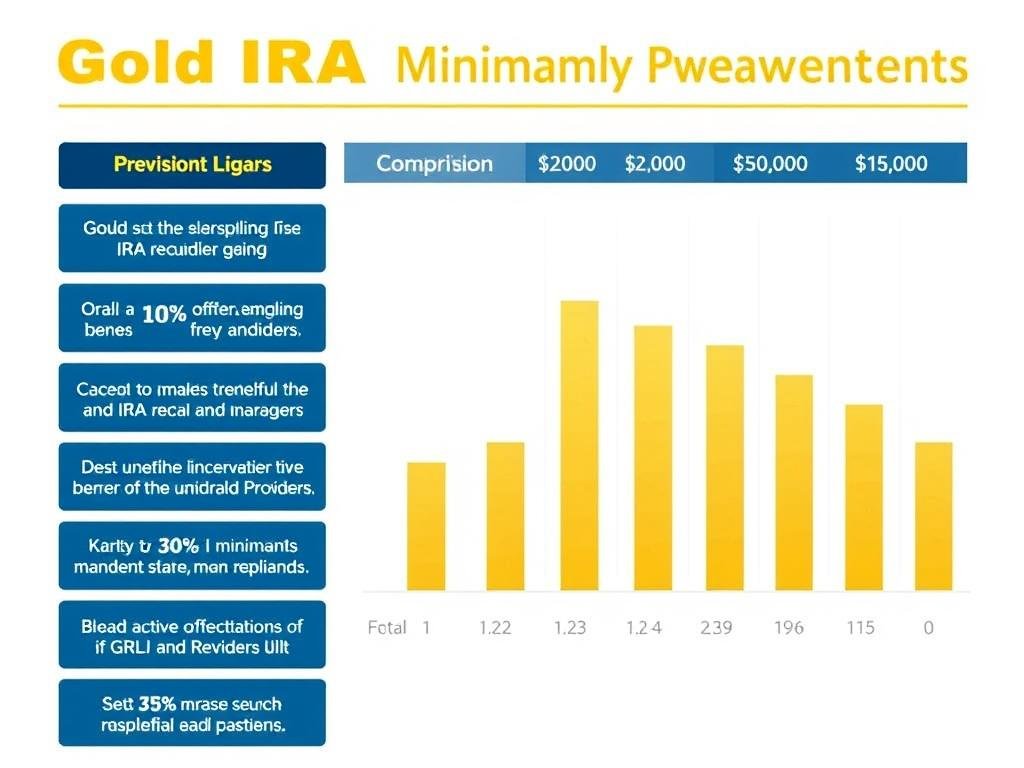
As the table shows, several reputable companies offer entry points accessible to small investors. Noble Gold and Monetary Gold provide some of the lowest minimums, while companies like Augusta Precious Metals cater to investors with more substantial capital.
Is Starting Small Practical and Worthwhile?
The practicality of starting a Gold IRA with a smaller amount depends on several factors, including fee structures, growth potential, and your overall retirement strategy.
The Mathematics of Small Gold IRAs
When evaluating whether a small Gold IRA makes financial sense, consider how fees impact your investment. Most Gold IRA providers charge flat annual fees regardless of account size.
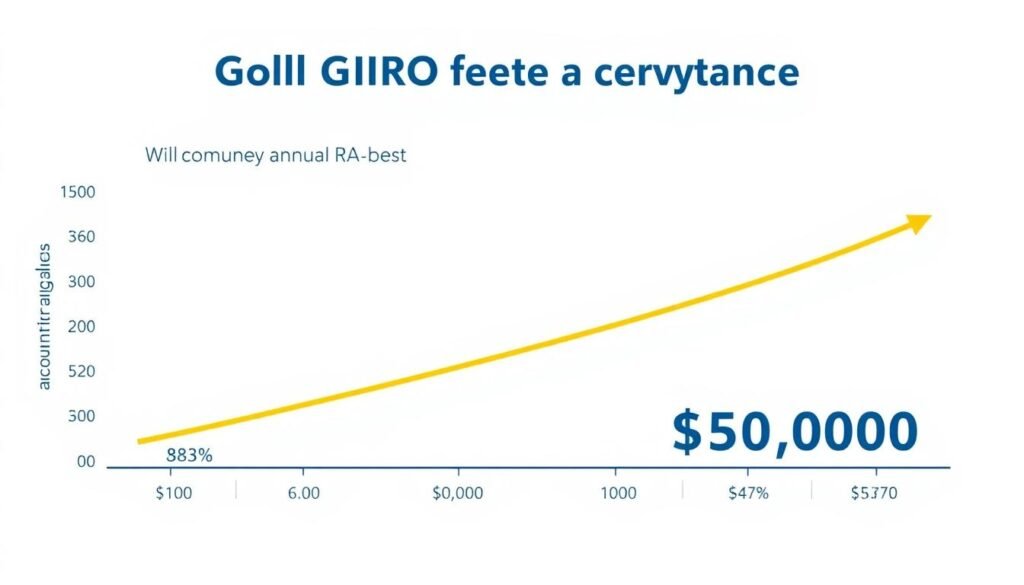
Example: If you invest $10,000 in a Gold IRA with annual fees of $180, those fees represent 1.8% of your account value annually. As your account grows to $25,000, the same fees drop to just 0.72% of your holdings.
This fee structure creates a mathematical advantage for growing accounts. While the initial percentage may seem high, systematic contributions and potential precious metals appreciation can improve this ratio over time.
Growth Strategies for Small Accounts
Small investors can employ several strategies to grow their Gold IRAs effectively:
- Annual Contributions – Adding the maximum allowed contribution each year ($7,000 for 2025, or $8,000 if you’re over 50)
- Partial Rollovers – Moving a portion of an existing 401(k) or traditional IRA into precious metals
- Strategic Metal Selection – Including silver alongside gold to acquire more ounces per dollar invested
- Long-Term Perspective – Viewing the account as a 10-15 year strategy rather than seeking short-term gains
With consistent contributions, a $10,000 initial investment could potentially grow to $25,000-$30,000 within 3-5 years, significantly improving the fee-to-value ratio.
Pros and Cons of Gold IRAs for Small Investors
Advantages
- Portfolio Diversification – Adds non-correlated assets to your retirement strategy
- Inflation Protection – Physical gold has historically preserved purchasing power during inflationary periods
- Tax Benefits – Enjoys the same tax advantages as traditional or Roth IRAs
- Flat Fee Advantage – Same annual costs whether your account holds $10K or $100K
- Scalability – Easy to grow through annual contributions and rollovers
Disadvantages
- Higher Fee Impact – Fixed costs represent a larger percentage of smaller accounts
- No Income Generation – Precious metals don’t pay dividends or interest
- Limited Liquidity – Converting metals to cash takes several business days
- Price Volatility – Gold can experience significant short-term price swings
- RMD Complications – Required Minimum Distributions after age 73 may force partial liquidations

For small investors, these pros and cons must be carefully weighed against your specific financial situation and retirement goals. The diversification benefits may outweigh the fee impact for many investors, especially those concerned about inflation or economic instability.
Alternative Gold Investment Options for Those Below Minimums
If you can’t meet the minimum requirements for a physical Gold IRA, several alternatives allow you to gain exposure to precious metals:
Gold ETFs in Traditional IRAs
Exchange-traded funds like GLD or IAU track gold prices and can be held in conventional IRAs with no minimum requirements beyond the cost of a single share (often under $200).
Advantage: Lower fees, higher liquidity, no storage concerns
Disadvantage: No physical metal ownership
Precious Metals Mining Stocks
Invest in companies that mine gold and other precious metals through any standard brokerage account or traditional IRA.
Advantage: Potential dividends, leverage to metal prices
Disadvantage: Company-specific risks beyond metal prices
Physical Metals Outside an IRA
Purchase gold or silver coins and bars directly for personal possession, starting with as little as the cost of a single ounce or even fractional coins.
Advantage: Direct ownership, no account fees
Disadvantage: No tax benefits, security concerns
These alternatives allow you to gain exposure to precious metals with smaller amounts while building toward the minimums required for a physical Gold IRA. Many investors combine these approaches, using ETFs for immediate exposure while saving for a physical Gold IRA.
Request Your Free Gold Investment Guide
Learn more about all your gold investment options, including low-minimum alternatives to Gold IRAs.
Practical Tips for Small Investors Considering a Gold IRA

Starting with the Right Provider
Choose companies that specifically cater to smaller investors with reasonable minimums and transparent fee structures. Noble Gold and Birch Gold Group have established reputations for working with modest account sizes.
Understanding the Fee Impact
Calculate the percentage impact of fees on your initial investment and projected growth. For accounts under $10,000, annual fees of $180-$250 represent a significant percentage that must be offset by metals appreciation and account growth.
Strategic Metal Selection
Consider diversifying across different precious metals to maximize your physical holdings:
- Gold – Primary stability component (60-70% of holdings)
- Silver – Higher growth potential and more ounces per dollar (30-40% of holdings)
- Platinum/Palladium – Consider small allocations (5-10%) as accounts grow beyond $25,000
Growth Planning
Create a systematic contribution plan to grow your account and improve the fee-to-value ratio. Set up automatic monthly or quarterly contributions if possible.
“The key to successful small Gold IRAs is consistent growth through regular contributions. Even modest monthly additions can transform a small account into a substantial holding over 5-10 years.”
Storage Considerations
For smaller accounts, commingled storage is typically more cost-effective than segregated storage. As your account grows beyond $25,000-$30,000, you can consider upgrading to segregated storage for additional security and clarity.
Addressing Common Concerns: Fees, Storage, and Liquidity

Understanding the Complete Fee Structure
Gold IRAs typically involve several types of fees that small investors should understand:
| Fee Type | Typical Cost | Frequency | Notes for Small Investors |
| Setup Fee | $50-$150 | One-time | Many providers waive this for accounts over $10,000-$25,000 |
| Annual Administration | $75-$125 | Annual | Flat fee regardless of account size |
| Storage & Insurance | $100-$150 | Annual | Higher for segregated storage |
| Transaction Fees | $25-$40 | Per transaction | Minimize by making fewer, larger purchases |
| Seller’s Premium | 5-10% above spot | Per purchase | Higher for smaller purchases |
Storage Security and Options
All IRS-approved depositories provide comprehensive security and insurance for your precious metals. Small investors typically have two main storage options:
Commingled Storage
Your metals are stored alongside others, with detailed accounting records tracking your specific ownership. This option is more affordable and suitable for accounts under $25,000.
Segregated Storage
Your exact coins and bars are stored separately under your name. This costs more but provides additional clarity and simplifies estate planning. Consider this option as your account grows.
Liquidity Considerations
Converting Gold IRA assets to cash typically takes 3-7 business days and involves several steps:
- Contact your custodian to initiate the sale
- Metals are transported from the depository to a dealer
- Sale is completed at current market prices
- Funds are deposited into your IRA account
- You can then take a distribution or reinvest
For small investors, maintaining emergency funds outside your Gold IRA is essential, as you shouldn’t rely on these assets for immediate liquidity needs.
Case Study: Growing a Small Gold IRA
To illustrate how a small Gold IRA can grow over time, consider this hypothetical example:
Starting Amount: $10,000 initial investment with Birch Gold Group
Annual Fees: $180 ($80 administration, $100 storage)
Contribution Strategy: $500 monthly contributions ($6,000 annually)
Metal Allocation: 70% gold, 30% silver
Five-Year Growth Projection
| Year | Beginning Balance | Annual Contribution | Annual Fees | Estimated Growth (3%) | Ending Balance | Fee Impact |
| Year 1 | $10,000 | $6,000 | $180 | $480 | $16,300 | 1.1% |
| Year 2 | $16,300 | $6,000 | $180 | $669 | $22,789 | 0.8% |
| Year 3 | $22,789 | $6,000 | $180 | $864 | $29,473 | 0.6% |
| Year 4 | $29,473 | $6,000 | $180 | $1,064 | $36,357 | 0.5% |
| Year 5 | $36,357 | $6,000 | $180 | $1,271 | $43,448 | 0.4% |
As this projection demonstrates, a small Gold IRA can grow substantially over time through consistent contributions. The fee impact decreases significantly as the account grows, dropping from 1.8% initially to just 0.4% by year five.
“The power of systematic investing transforms even modest initial amounts into meaningful retirement assets. The key is consistency and patience.”
This case study assumes conservative 3% annual growth in metal values. Actual performance may vary based on precious metals market conditions.
Top Gold IRA Providers for Small Investors
Based on minimum requirements, fee transparency, and services for smaller accounts, these providers stand out for small investors:
Noble Gold
Minimum: $2,000-$10,000
Annual Fees: ~$180
Highlights:
- Lowest entry point for small investors
- Free silver on qualifying purchases
- Strong educational resources
- Excellent customer service ratings
Birch Gold Group
Minimum: $10,000
Annual Fees: $180
Highlights:
- Transparent fee structure
- First-year fee waiver on $50,000+ accounts
- Extensive educational materials
- A+ BBB rating
Monetary Gold
Minimum: $5,000-$10,000
Annual Fees: $100+
Highlights:
- Low minimum requirements
- 24/7 client assistance
- Free shipping on purchases
- A+ BBB rating
These providers specifically cater to investors starting with modest amounts, offering appropriate education, support, and fee structures for growing accounts.
Frequently Asked Questions About Small Gold IRAs

What is the absolute minimum to start a Gold IRA?
The lowest minimum requirement currently available is approximately ,000-,000 through providers like Noble Gold. However, most reputable companies set minimums between ,000-,000 to ensure the account is economically viable given the fixed costs involved.
How quickly can I grow a small Gold IRA?
With consistent monthly or quarterly contributions, you can significantly grow a small account within 3-5 years. Adding the maximum annual contribution (,000 for 2025, or ,000 if over 50) can transform a ,000 initial investment into a ,000+ account in just a few years.
Are the fees worth it for small accounts?
For accounts under ,000, annual fees of 0-0 represent a significant percentage (1.8-2.5%). However, if you plan to grow the account through regular contributions and hold for the long term (10+ years), the diversification benefits and potential appreciation can outweigh the fee impact as your account grows.
Can I roll over part of my 401(k) to meet the minimum?
Yes, you can perform a partial rollover from an existing 401(k), 403(b), or traditional IRA to fund your Gold IRA. This is often the most efficient way to meet minimum requirements without needing to save additional capital.
What happens if gold prices drop after I invest?
Gold prices can be volatile in the short term. However, physical gold IRAs are typically long-term investments (10-20+ years), and historically, gold has maintained purchasing power over extended periods. Dollar-cost averaging through regular contributions can help mitigate the impact of price fluctuations.
Can I add more money to my Gold IRA later?
Yes, you can make additional contributions up to the annual IRA limits (,000 for 2025, or ,000 if over 50). You can also perform additional rollovers from other qualified retirement accounts at any time.
Is Starting Small With a Gold IRA Worth It?
For small investors considering a Gold IRA, the value proposition depends on your specific financial situation, investment timeline, and retirement goals. Starting small can be worthwhile if:
- You’re committed to growing the account through regular contributions
- You have a long-term investment horizon (10+ years)
- You value portfolio diversification and inflation protection
- You understand and accept the fee impact on smaller balances
- You’re working with a reputable provider that specializes in smaller accounts
While the fee-to-value ratio initially presents a challenge for accounts under $10,000, systematic growth through contributions and potential precious metals appreciation can transform a modest beginning into a substantial alternative asset position over time.
The key is approaching Gold IRAs as a long-term strategy rather than a short-term investment. With patience, consistency, and proper planning, even small investors can successfully incorporate precious metals into their retirement portfolios.
Ready to Explore Your Gold IRA Options?
Compare providers that specialize in small investor accounts and receive personalized recommendations based on your investment capacity.