
With economic uncertainty and inflation concerns on the rise, many retirement investors are turning to gold IRAs as a potential safe haven. But the critical question remains: exactly how much of your retirement portfolio should be allocated to gold? This comprehensive guide examines real-world case studies and expert recommendations to help you determine the optimal gold IRA allocation for your specific situation.

Diversification with gold can help protect retirement savings against market volatility
The Strategic Role of Gold in Retirement Planning
Diversification has long been the cornerstone of sound retirement planning. Traditional retirement portfolios typically consist of stocks, bonds, and cash. However, these assets often move in correlation with each other, especially during economic downturns. Gold, with its historically low correlation to paper assets, offers a unique diversification opportunity.
According to the Investment Company Institute, approximately $13.6 trillion was invested in IRAs as of 2023, yet only about 0.5% of that amount is allocated to alternative assets like gold. This suggests that many investors may be missing an opportunity to properly diversify their retirement savings.
“Gold has served as a store of value for thousands of years, and it continues to provide a hedge against inflation, currency devaluation, and economic uncertainty—all critical considerations for retirement planning.”
The Taxpayer Relief Act of 1997 made it possible to include gold in an IRA, yet a survey by Gold IRA Guide revealed that 64% of investors were unaware of this option. This knowledge gap may explain why gold remains underutilized in retirement planning despite its potential benefits.
Expert Recommendations on Gold IRA Allocation
Financial advisors and investment experts offer varying recommendations on the ideal percentage of retirement savings to allocate to gold IRAs. These recommendations typically fall into three categories:
Conservative Approach (5-10%)
Most traditional financial advisors recommend limiting gold exposure to 5-10% of your retirement portfolio. This conservative approach provides some inflation protection while minimizing the impact of gold’s price volatility on overall returns.
This allocation is often recommended for investors who are primarily concerned with stability and who have a well-diversified portfolio of traditional assets.
Moderate Approach (10-15%)
For investors seeking stronger protection against inflation and economic uncertainty, a moderate allocation of 10-15% to gold may be appropriate. This level provides meaningful diversification benefits while still maintaining a strong position in growth-oriented assets.
This approach is often suggested for investors with a 5-15 year time horizon before retirement.
Aggressive Approach (15-20%)
Some experts, particularly those concerned about long-term inflation and currency devaluation, recommend allocating 15-20% of retirement savings to gold. This higher allocation provides substantial protection against economic instability.
This strategy may be suitable for investors with significant concerns about the long-term stability of traditional financial markets.

Important: These recommendations serve as general guidelines. Your optimal allocation should be based on your specific financial situation, risk tolerance, retirement timeline, and overall investment strategy.
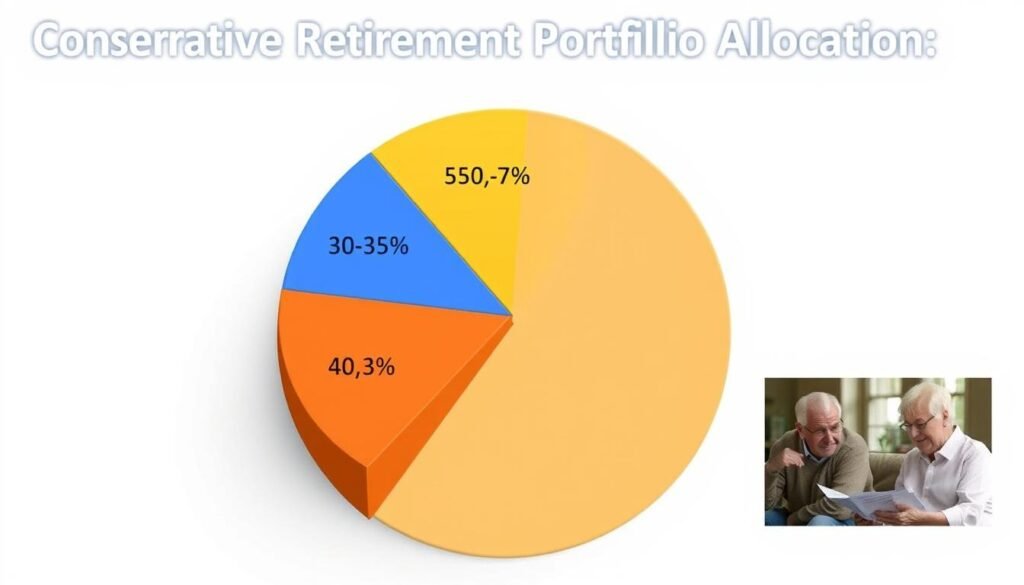
Case Study 1: Conservative Approach (5-7% Allocation)
Profile: Robert and Susan, Ages 68 and 65
Robert and Susan are recently retired with a combined retirement portfolio of $1.2 million. They have a conservative risk tolerance and primarily seek to preserve their capital while generating steady income.
Portfolio Allocation:
- 55% in blue-chip stocks and dividend-paying equities
- 35% in high-quality bonds and fixed income
- 5% in cash and cash equivalents
- 5% in a gold IRA
Rationale for 5% Gold Allocation:
Robert and Susan chose a 5% gold allocation to provide a modest hedge against inflation without significantly impacting their income-generating potential. Their financial advisor recommended this conservative approach given their age and income needs.
Results:
During a recent market correction where stocks declined by 15%, their gold holdings appreciated by 8%, helping to offset some of the losses in their equity portfolio. The 5% allocation provided stability without compromising their income requirements.
Is a Conservative Gold Allocation Right for You?
If you’re approaching or in retirement and prioritize income and stability, a conservative gold allocation might be appropriate for your situation.
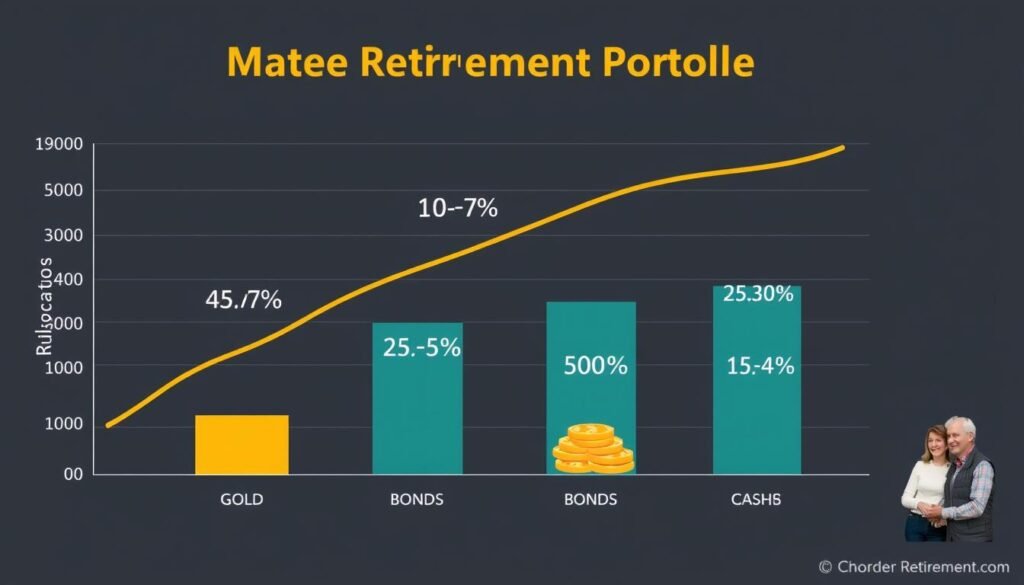
Case Study 2: Moderate Approach (10-15% Allocation)
Profile: Michael, Age 52
Michael is a mid-career professional with approximately $750,000 in retirement savings. He has a moderate risk tolerance and is concerned about potential inflation and economic instability over the next 10-15 years before his planned retirement.
Portfolio Allocation:
- 50% in diversified equity investments
- 30% in corporate and government bonds
- 5% in cash reserves
- 15% in a gold IRA
Rationale for 15% Gold Allocation:
Michael chose a 15% allocation to gold based on his concerns about long-term inflation and his desire to have meaningful protection against economic uncertainty. With 10-15 years until retirement, he has time to weather short-term fluctuations in gold prices.
Results:
Over a five-year period that included significant market volatility, Michael’s portfolio experienced 22% less overall volatility compared to a similar portfolio without gold exposure. During an inflationary period where consumer prices rose 7%, his gold holdings appreciated by 12%, helping to preserve his purchasing power.
Explore a Moderate Gold IRA Strategy
If you’re 10-15 years from retirement and concerned about economic uncertainty, a moderate gold allocation might provide the balance you need.
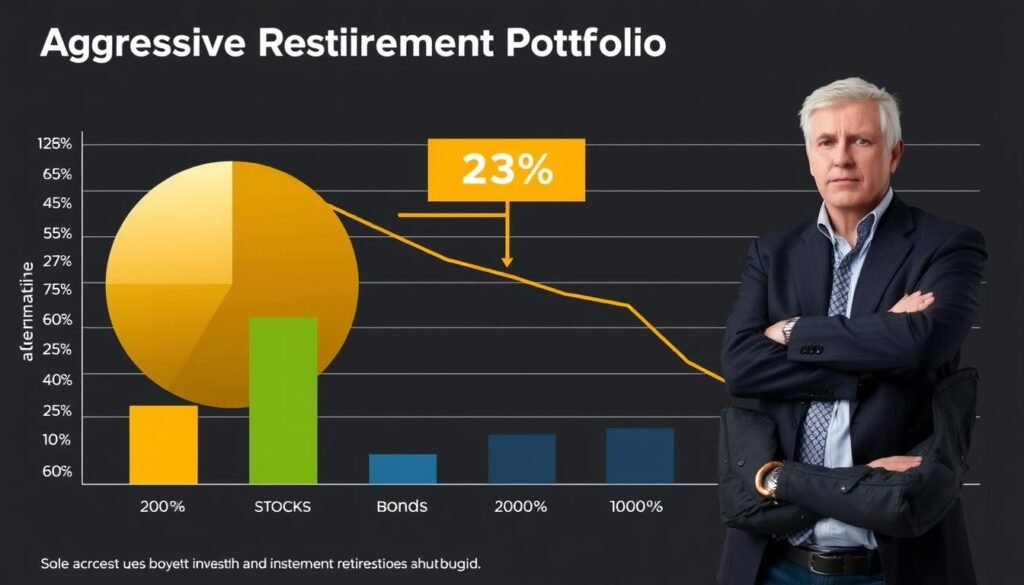
Case Study 3: Aggressive Approach (15-20% Allocation)
Profile: Jennifer, Age 45
Jennifer is a business owner with $500,000 in retirement savings. She has a higher risk tolerance and significant concerns about long-term inflation, currency devaluation, and economic instability. With 20+ years until retirement, she can withstand short-term volatility.
Portfolio Allocation:
- 45% in growth-oriented stocks and equity funds
- 25% in diversified bonds
- 10% in alternative investments (REITs, commodities)
- 20% in a gold IRA
Rationale for 20% Gold Allocation:
Jennifer chose a 20% allocation to gold based on her belief that significant economic challenges lie ahead. With a longer time horizon until retirement, she can afford to take a more aggressive position in gold to protect against what she sees as inevitable inflation and potential currency devaluation.
Results:
During a period of unexpected inflation and currency volatility, Jennifer’s portfolio outperformed traditional 60/40 stock/bond portfolios by approximately 3.5% annually. When a major market correction occurred, her gold holdings appreciated by 25%, significantly offsetting losses in her equity positions.
“I view my gold allocation as insurance against worst-case economic scenarios. Even if those scenarios don’t materialize, I sleep better knowing I have meaningful protection against inflation and economic instability.”
Is an Aggressive Gold Strategy Right for You?
If you have significant concerns about long-term economic stability and a longer time horizon until retirement, a higher gold allocation might align with your goals.
Key Factors Influencing Gold IRA Allocation Decisions
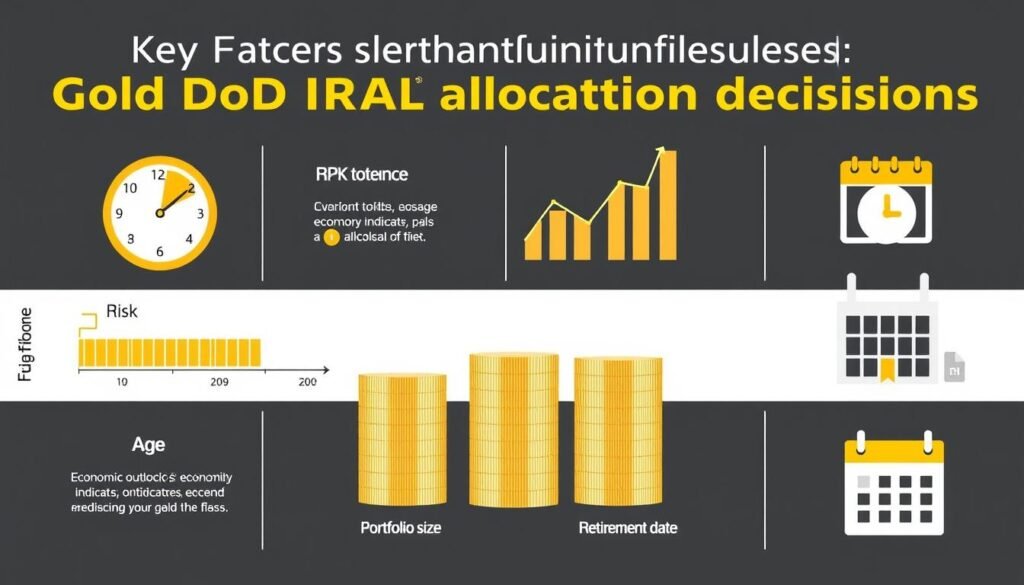
Several critical factors should influence your decision on how much of your retirement to allocate to a gold IRA:
Age and Retirement Timeline
Younger investors with longer time horizons can generally afford to allocate a higher percentage to gold, as they have more time to weather short-term volatility. Older investors nearing or in retirement may prefer a more conservative allocation to minimize volatility.
Risk Tolerance
Your personal comfort with investment risk should heavily influence your gold allocation. Risk-averse investors might prefer a smaller allocation (5-10%), while those comfortable with volatility might opt for a larger position (15-20%).
Economic Outlook
Your perspective on inflation, currency stability, and overall economic conditions should impact your gold allocation. Those with significant concerns about economic stability may justify higher allocations.
Overall Portfolio Size
Larger portfolios can often accommodate higher percentage allocations to gold without compromising other investment objectives. Investors with smaller portfolios may need to be more selective with their allocations.
Income Requirements
Since gold doesn’t generate income like dividends or interest, investors with high current income needs may need to limit their gold allocation to ensure sufficient cash flow from their portfolio.
Existing Portfolio Composition
Your current asset allocation should inform your gold IRA decision. If you already have significant exposure to inflation-protected assets, you might require a smaller gold allocation.
Expert Tip: Consider reviewing your gold allocation annually or whenever significant economic changes occur. Rebalancing may be necessary to maintain your target allocation as different assets perform differently over time.
Gold IRA: Pros and Cons vs. Traditional Retirement Assets
Advantages of Gold IRAs
- Inflation Hedge: Gold has historically maintained purchasing power during inflationary periods
- Portfolio Diversification: Low correlation with stocks and bonds reduces overall portfolio volatility
- Currency Protection: Provides a hedge against currency devaluation
- Crisis Protection: Often performs well during economic and geopolitical crises
- Tangible Asset: Physical backing unlike paper assets
- Tax Benefits: Same tax advantages as traditional IRAs
Disadvantages of Gold IRAs
- Storage Costs: Annual fees for secure storage and insurance
- No Income Generation: Unlike stocks and bonds, gold doesn’t pay dividends or interest
- Price Volatility: Can experience significant short-term price fluctuations
- Higher Fees: Setup and maintenance fees are typically higher than traditional IRAs
- Liquidity Concerns: May take longer to sell physical gold compared to stocks or bonds
- Potential for Underperformance: May underperform stocks during strong bull markets
| Performance Metric | Gold IRA | Stock-Heavy Portfolio | Bond-Heavy Portfolio |
| Inflation Protection | High | Moderate | Low |
| Income Generation | None | Moderate to High | Moderate |
| Growth Potential | Moderate | High | Low |
| Volatility | Moderate | High | Low |
| Crisis Performance | Strong | Poor | Moderate |
Practical Steps for Implementing a Gold IRA Strategy
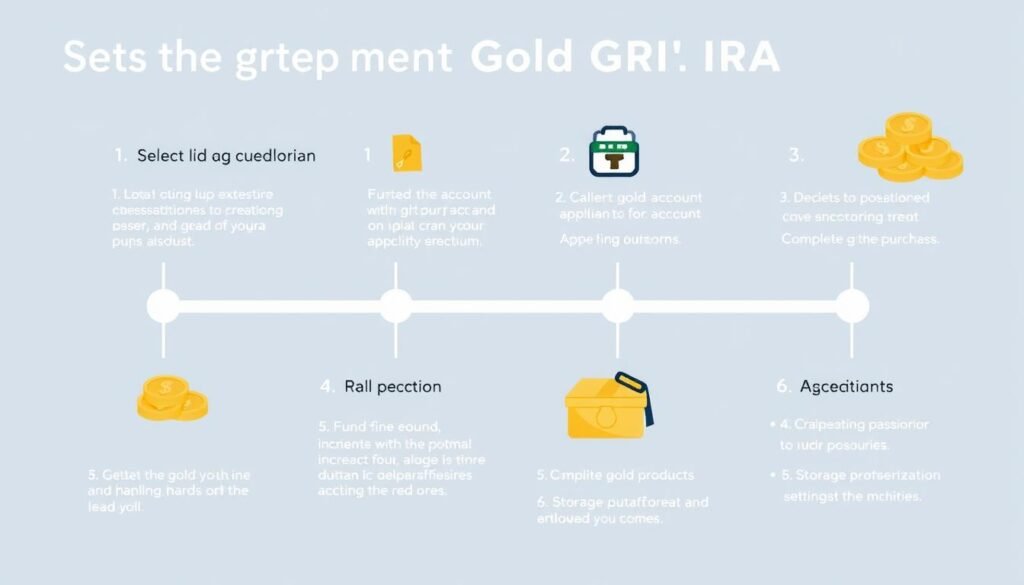
If you’ve decided to include gold in your retirement strategy, follow these steps to properly implement a gold IRA:
-
Select a Reputable Gold IRA Custodian
Choose a custodian that specializes in precious metals IRAs. Look for companies with strong reputations, transparent fee structures, and excellent customer service. Research customer reviews and check for any regulatory issues.
-
Open a Self-Directed IRA
Complete the necessary paperwork to establish a self-directed IRA that allows alternative assets like precious metals. This can be a traditional IRA (tax-deductible contributions) or a Roth IRA (tax-free withdrawals), depending on your tax situation.
-
Fund Your Gold IRA
You can fund your gold IRA through a direct contribution (subject to annual limits), a transfer from an existing IRA, or a rollover from a qualified retirement plan like a 401(k). Each method has specific rules and potential tax implications.
-
Select IRS-Approved Gold Products
The IRS has specific requirements for gold products that can be held in an IRA. Generally, gold must be 99.5% pure and come in the form of coins or bars from approved mints and refiners. Common eligible products include:
- American Gold Eagles
- Canadian Gold Maple Leafs
- Australian Gold Kangaroos
- Credit Suisse and other approved gold bars
-
Arrange for Secure Storage
IRS regulations require that gold in an IRA be stored in an approved depository. You cannot take personal possession of the gold. Your custodian will arrange for storage at a secure facility, typically for an annual fee.
-
Monitor and Rebalance
Regularly review your gold allocation as part of your overall retirement strategy. As gold prices fluctuate, you may need to rebalance to maintain your target allocation percentage.
Important: Be wary of high-pressure sales tactics or dealers charging excessive premiums above the spot price of gold. Always compare prices and fees across multiple providers before making a decision.
Ready to Add Gold to Your Retirement Strategy?
Our gold IRA specialists can help you determine the right allocation for your situation and guide you through the setup process.
Frequently Asked Questions About Gold IRA Allocation

What is the minimum amount I should allocate to a gold IRA?
While there’s no universal minimum, most financial advisors suggest at least 5% allocation to achieve meaningful diversification benefits. However, the appropriate minimum depends on your overall portfolio size, risk tolerance, and financial goals.
Can I have too much gold in my retirement portfolio?
Yes. Most experts advise against allocating more than 20-25% of your retirement savings to gold. Since gold doesn’t generate income and can experience periods of underperformance relative to stocks, an excessive allocation could potentially limit your portfolio’s long-term growth and income generation.
How often should I rebalance my gold IRA allocation?
Most financial advisors recommend reviewing your allocation at least annually or whenever gold prices experience significant movements (±15-20%). Rebalancing helps maintain your target allocation and can potentially enhance returns through disciplined buying and selling.
Should I adjust my gold allocation as I approach retirement?
Many financial advisors suggest maintaining or slightly increasing your gold allocation as you approach retirement to provide additional stability and inflation protection when you can least afford significant losses. However, this should be balanced against your income needs in retirement.
How does a gold IRA affect required minimum distributions (RMDs)?
Gold IRAs are subject to the same RMD rules as traditional IRAs once you reach age 73 (as of 2023). This means you’ll need to take distributions based on the value of your gold holdings. Since physical gold must be sold to take distributions, it’s important to consider liquidity when planning for RMDs.
Conclusion: Finding Your Optimal Gold IRA Allocation

Determining how much of your retirement should be in a gold IRA is a highly personal decision that depends on multiple factors including your age, risk tolerance, economic outlook, and overall financial situation. The case studies presented in this article demonstrate that different allocation strategies can be appropriate for different investors.
Based on historical data and expert recommendations, most retirement investors should consider allocating between 5% and 20% of their portfolio to gold, with the specific percentage depending on their individual circumstances:
- Conservative investors (5-10%): Ideal for those nearing or in retirement with a focus on stability and income
- Moderate investors (10-15%): Appropriate for mid-career professionals seeking balanced protection against economic uncertainty
- Aggressive investors (15-20%): Suitable for younger investors with significant concerns about long-term inflation and economic stability
Remember that gold should be viewed as one component of a well-diversified retirement strategy, not as a standalone investment. Regular portfolio reviews and potential rebalancing are essential to maintain your target allocation as market conditions change.
Get Personalized Gold IRA Allocation Guidance
Speak with a gold IRA specialist to determine the optimal allocation for your specific retirement goals and concerns.